Best Lawn Aerators for Compacted Soil
Need a lawn aerator? See our top core, manual, and tow-behind picks, how to test for compaction, and what to do after you pull plugs.
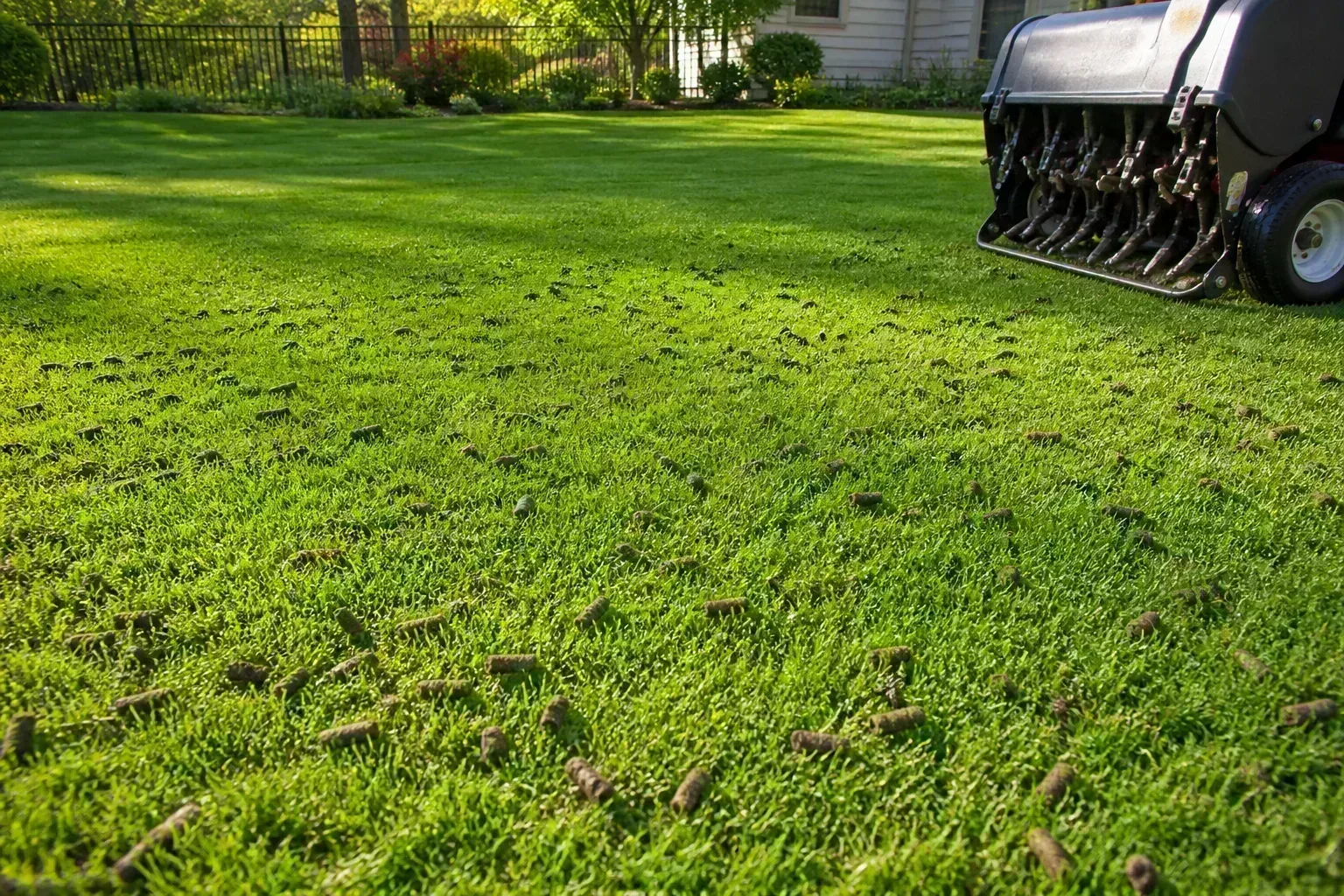
The best lawn aerator is not the one with the longest feature list. It is the one that matches your soil, lawn size, and how often you are willing to do the job. A hollow-tine core aerator removes soil plugs and relieves compaction. A spike tool only pokes holes—and on heavy clay it can make compaction worse. A dethatcher removes thatch but does not open the mineral soil the way plug aeration does.
For most homeowners with a riding mower and a medium-to-large cool-season lawn, the Brinly-Hardy 40-Inch Tow-Behind Plug Aerator (PA-40BH) is the strongest buy-it-once option. If you are treating a small yard or a few high-traffic patches, the Yard Butler Lawn Coring Aerator (ID-6C) delivers real plug aeration without a rental fee. This guide walks through how to know you need aeration, which tool type fits, and what to do after the plugs are on the lawn.
Quick answer: our top picks
- Best overall tow-behind: Brinly-Hardy 40-Inch Tow-Behind Plug Aerator PA-40BH for medium and large lawns when you already own a lawn tractor or zero-turn mower.
- Best value manual core: Yard Butler Lawn Coring Aerator ID-6C for lawns under about 2,000 square feet or for spot-treating compacted paths.
- Best for very large yards: Agri-Fab 48-Inch Tow Plug Aerator 45-0299 when coverage per pass matters more than upfront cost.
- Best manual for tight spots: Landzie Hollow-Core Fork Aerator for corners, tree rings, and small patches where a tow unit cannot reach.
- When thatch is the problem, not soil hardness: Greenworks 13 Amp 14-Inch Corded Dethatcher DT13B00 as a dethatcher/scarifier—not a substitute for core aeration on compacted clay.
Prices shift by retailer and season. Use manufacturer pages for current specs; use the sections below to see whether each tool fits your lawn before you click buy.
Do you actually need a lawn aerator?
Aeration helps when roots cannot access air, water, or fertilizer because the soil profile is tight. It does not fix every thin lawn. Shade, wrong grass species, disease, drought stress, and dog urine spots need different repairs. Buying an aerator because the grass looks brown in August—without checking whether the soil is actually hard—is an expensive guess.
Signs compaction is involved include footprints that stay visible after the lawn should have bounced back, water pooling in traffic lanes after rain, fertilizer sitting on the surface instead of moving in, and a screwdriver that refuses to sink into moist soil with moderate hand pressure. If those clues line up, aeration belongs on your calendar. If they do not, fix irrigation, mowing height, and shade first.
Utah State University Extension notes that traffic compresses loam and clay soils over time, shrinking the pore spaces that hold air and water. UGA Cooperative Extension describes aeration as removing soil plugs to improve air and water movement through the root zone. Those are the problems a real core aerator targets.
The screwdriver test for compaction
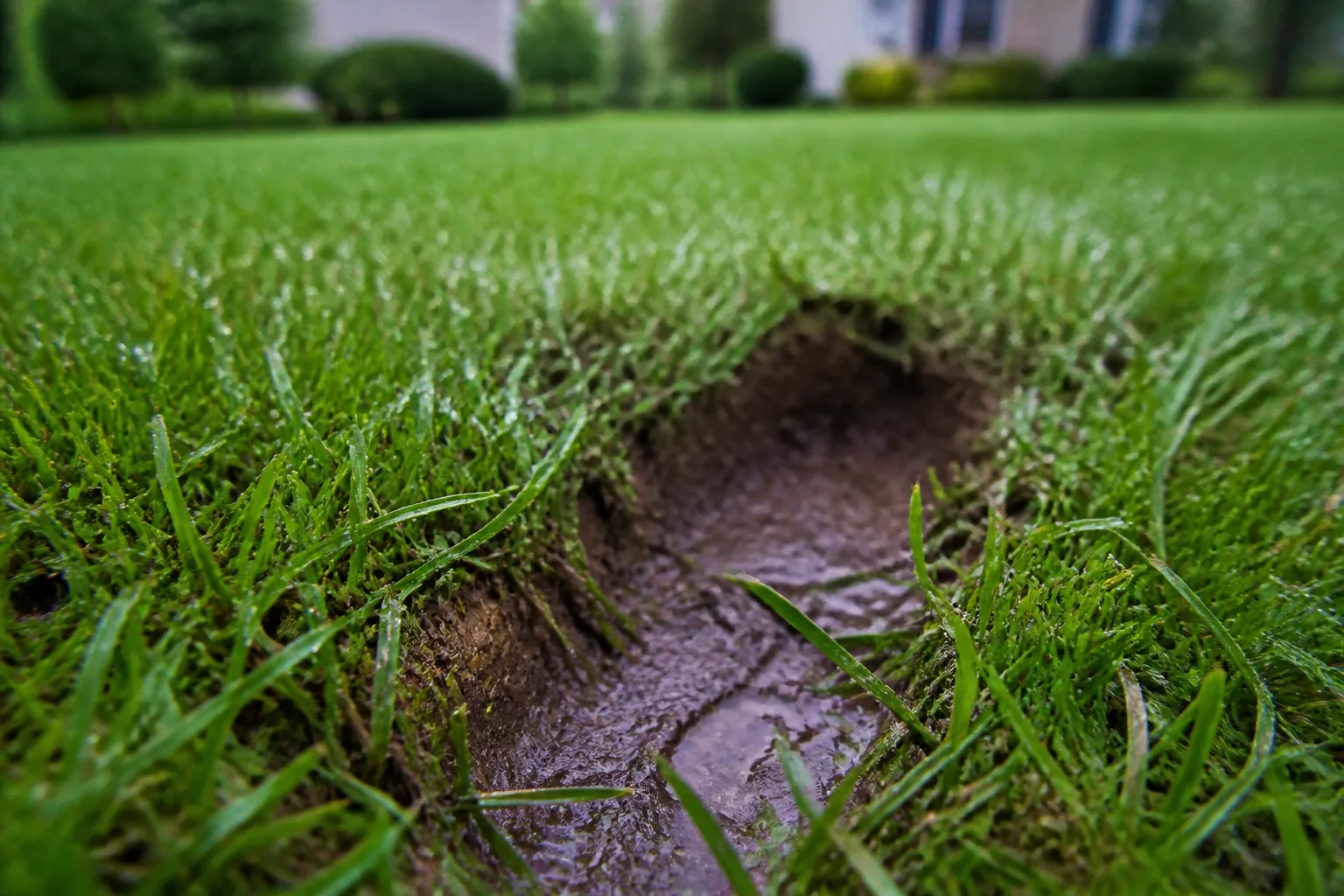
On a day when the soil is moist but not muddy, push a long screwdriver straight down in the worst-looking area and in a healthier patch for comparison.
- Moist soil, easy push: Compaction may not be your main issue. Look at watering, shade, and disease before you buy hardware.
- Moderate resistance in traffic lanes only: Spot aeration with a manual core tool may be enough this year.
- Hard refusal across large sections: Plan full-lawn core aeration with a tow-behind unit or a rental walk-behind, then overseed if density is the goal.
Repeat the test in spring and fall. Summer drought can make any lawn feel concrete-hard even when the underlying structure is fine.
When aeration is a waste of time
Skip or postpone aeration when:
- Soil is saturated. Tow-behind weight plus wet clay smears the profile and tears turf. Wait until the ground passes the screwdriver test without squishing.
- Grass is dormant. Aerating dormant cool-season turf in midsummer heat stresses plants without meaningful recovery. Time the job for active growth windows—see our dethatcher vs. aerator guide for cool- vs warm-season timing.
- The problem is pure thatch with soft soil underneath. A thick organic mat above mineral soil calls for dethatching or core aeration to break the mat—not spike sandals alone.
- You will not follow up. Pulling plugs opens the lawn temporarily. Weeds love disturbed soil. If you will not overseed, water, or at least mow plugs back in, the visual mess may outweigh the benefit.
Most home lawns benefit from core aeration about once per year, according to USU Extension. Heavily used clay lawns, sports areas, and dog runs may need twice-yearly work.
Core vs spike vs dethatcher: pick the right job
Lawn tools get lumped together because they all disturb the surface. The jobs are different. Choosing wrong costs money and can leave compaction untouched.
Hollow-tine core aerators
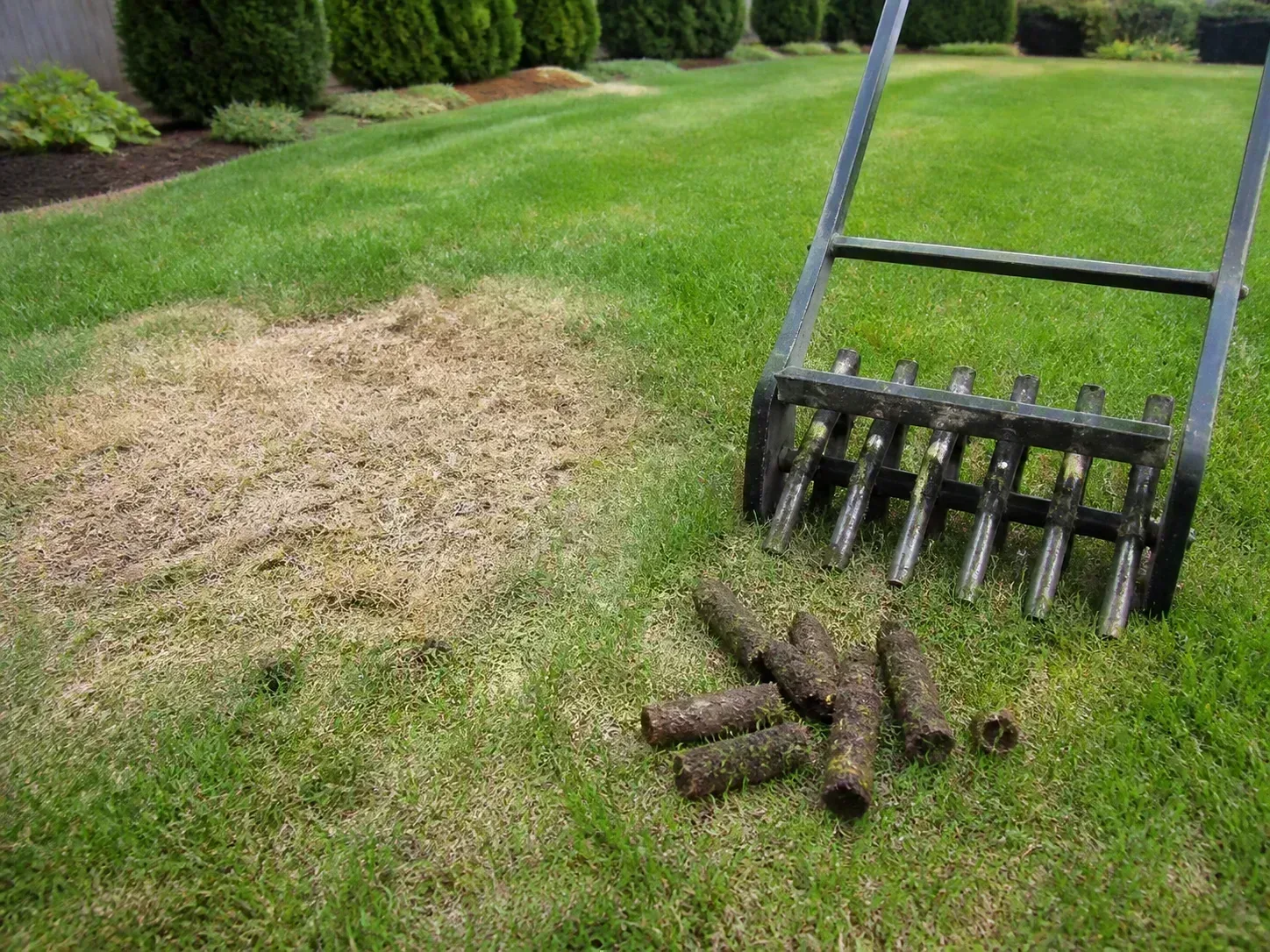
Core aerators use hollow metal tines on a drum, axle, or hand tool to pull cylinders of soil and thatch out of the ground. USU Extension recommends penetration of 3–4 inches and leaving cores on the surface so soil can sift back into the turf. Cores can be broken up with a rake or mower.
Core aeration is the right default for clay, loam, and high-traffic home lawns when compaction is the diagnosis. It physically removes soil, creating pore space that spike tools do not.
Spike and fork tools
Spike aerators—including rolling drums, sandals, and solid fork tines—push soil aside without removing a plug. USU Extension warns that solid-tine aerification is less effective at loosening soil and can increase compaction if done improperly.
Spike tools still have a place: lightly opening the surface before overseeding on sandy or already-loose soil, or for very small patches where a few holes help water penetrate. They are a poor primary tool for heavy clay that already repels water.
The Landzie fork in our picks uses hollow tines and behaves more like a manual core tool on a small footprint—closer to plug aeration than a pure spike roller.
Dethatchers and scarifiers
Dethatchers use vertical blades or tines to pull organic debris out of the turf canopy. Scarifiers set deeper to score the soil surface. They can help when a measured thatch layer is thick enough to block water—but they are not interchangeable with plug aeration on compacted mineral soil.
If your plug test shows a thick felt-like mat above the soil, read dethatcher vs. aerator before you buy. Many lawns need core aeration only; some need dethatching first, then aeration, in a planned sequence.
Match the aerator type to your lawn size
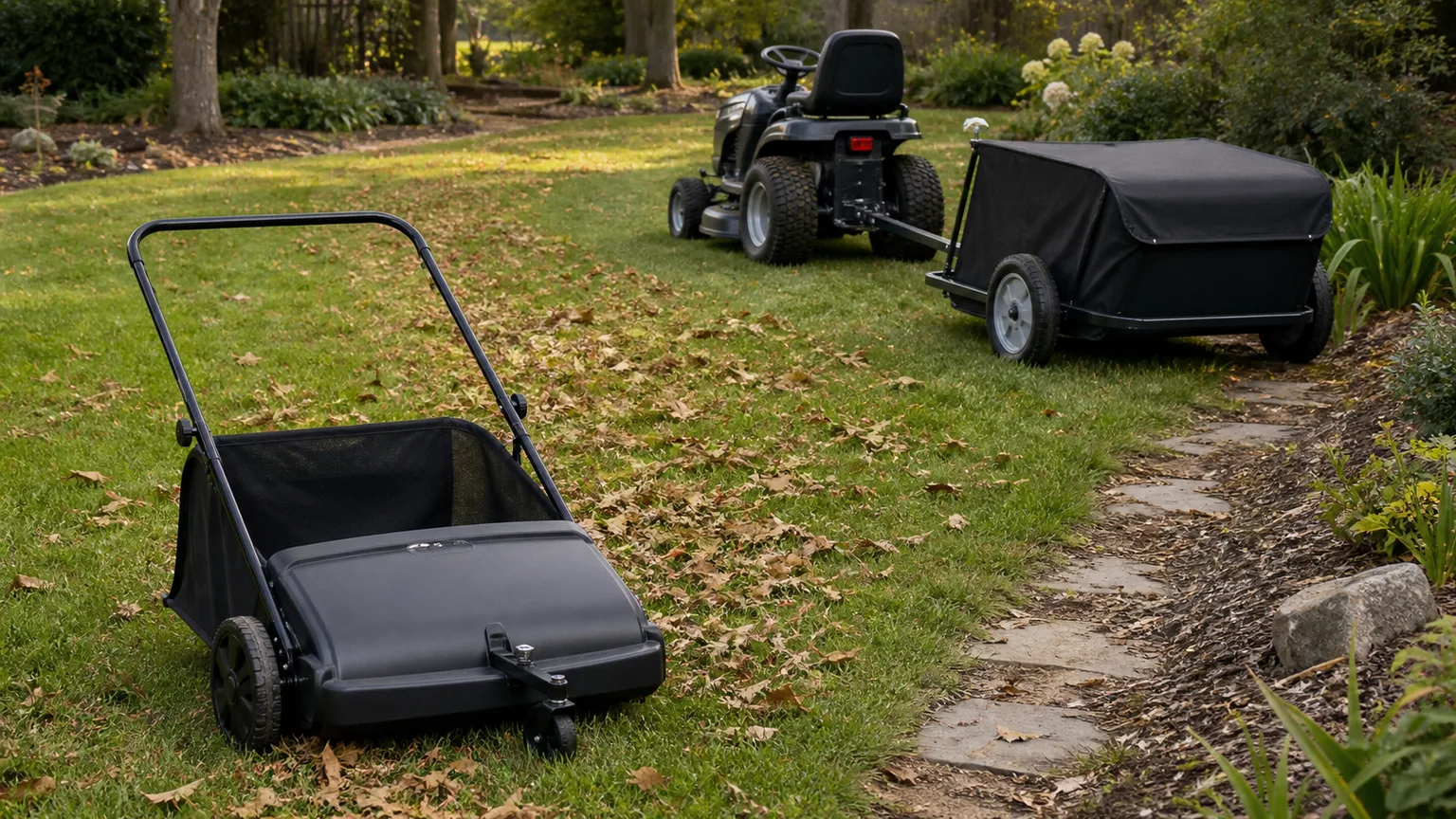
Use lawn area to sanity-check whether manual labor is realistic.
| Lawn size (approx.) | Realistic tool | Why |
|---|---|---|
| Under 2,000 sq ft | Manual core aerator | One person can finish in an evening; purchase often beats one rental plus delivery hassle. |
| 2,000–8,000 sq ft | Manual for spots or rental walk-behind / tow-behind | Full manual coverage gets slow; tow-behind saves hours if you own a tractor. |
| 8,000+ sq ft | Tow-behind plug aerator | Width and weight tray cover ground faster than any handheld tool. |
| Acres | 48-inch tow unit or commercial rental | Time per pass dominates; prioritize width and hitch compatibility. |
Manual core aerators typically cover a few square inches per step. Tow-behind units at 40–48 inches wide cut swaths with every pass of the mower. That math matters more than brand loyalty when your back is the alternative.
How we compared lawn aerators
We evaluated current models on aeration type (core vs spike vs dethatch), tine depth and count, working width, weight capacity, hitch compatibility, assembly, clogging behavior on clay, storage footprint, and the lawn sizes each tool can realistically finish in one session.
Manufacturer specifications establish what a machine is designed to do; they cannot predict your soil moisture or slope. We pair specs with use cases and name limitations—manual tools on large lawns, tow units without a tractor, dethatchers sold as aeration shortcuts—so you can shortlist before comparing prices.
For timing, recovery, and overseeding after aeration, see our lawn aeration for a thicker lawn guide. The product picks below assume you have already decided aeration is warranted.
Best overall: Brinly 40-Inch Tow-Behind Plug Aerator
The Brinly-Hardy PA-40BH is the best default for homeowners who own a riding mower and want to aerate an entire lawn in an afternoon instead of a weekend of foot work.
Why it wins: Twenty-four heat-treated plug spoons on a 40-inch span pull roughly 3-inch cores while you drive. A 150-pound capacity weight tray lets you add pavers or sandbags so tines penetrate hard clay—critical on compacted suburban soils. The universal hitch fits most lawn tractors and many zero-turn machines with a compatible receiver.
What to know before buying: You need a riding mower or lawn tractor. Assembly takes patience; keep the hardware organized and confirm every spoon bolt before the first pass. The unit is heavy even empty, so plan storage on a wall hook or trailer rather than dragging it across the garage floor.
Best for: Medium and large cool-season lawns, annual aeration on clay or loam, homeowners who already tow carts or spreaders.
Skip if: Your entire lawn fits on a city lot you mow with a push mower—manual core or rental walk-behind is simpler.
Key specs: Tow-behind plug aerator | 40-inch width | 3-inch plug depth | 24 plug spoons | 66 lb unit weight | 150 lb max tray load
Best value manual core: Yard Butler Lawn Coring Aerator
The Yard Butler ID-6C is the tool we recommend when you want real plug aeration without financing a tow-behind or scheduling a rental.
Why it wins: Two hollow steel tines pull cores about 3.5 inches deep with foot pressure. The tool is light enough to store on a garage hook, inexpensive enough to own outright, and effective on compacted patches that tow units miss—tree rings, side yards, and gate areas.
What to know before buying: Coverage is entirely manual. On a 10,000-square-foot lawn, full aeration is a workout spread across multiple sessions unless you enjoy the exercise. Spacing between holes is up to you; overlap passes slightly for even coverage.
Best for: Small lawns, spot repairs, renters who cannot tow equipment, and homeowners proving whether aeration helps before investing in a tractor attachment.
Skip if: You need to aerate more than a few thousand square feet in one day.
Key specs: Manual plug aerator | two 3.5-inch cores | 8.75-inch tool width | about 3.7 lb
Best for large yards: Agri-Fab 48-Inch Tow Plug Aerator
The Agri-Fab 45-0299 trades a higher price tag for eight extra inches of cutting width and 32 galvanized plug knives per pass.
Why it wins: On acre-plus properties, width is time. The 48-inch drum covers more ground each lap than 40-inch competitors. A weight tray (up to about 140 pounds) helps knives reach target depth on firm soils. Galvanized knives resist rust when you store the unit wet.
What to know before buying: You still need a lawn tractor and level ground clearance for turns. The larger footprint demands more storage space. If your lawn is a typical suburban quarter-acre, the Brinly 40-inch model is usually the better value; step up to Agri-Fab when passes across the property actually count.
Best for: Large residential lots, small pastures used as turf, and anyone aerating annually on expansive cool-season grass.
Skip if: You do not have tractor access or your lawn is small enough that the extra width never pays back in saved time.
Key specs: Tow-behind plug aerator | 48-inch width | 3-inch knives | 32 plug knives | about 92.5 lb unit weight | weight tray included
Best manual for small patches: Landzie Hollow-Core Fork Aerator
The Landzie hollow-core fork aerator sits between a coring step tool and a broad fork—useful when you need deep holes in a tight area without dragging a tow-behind through gates.
Why it wins: Angled hollow tines reach about 5.25 inches with moderate foot pressure, deeper than many manual corers. The cushioned handle is easier on wrists during repeated presses. It arrives assembled and stores on a wall hook at roughly 7 pounds.
What to know before buying: Tines can clog in very dry, sticky clay; keep a hose nearby. Coverage per step is small—treat it as a precision tool for high-traffic corners, not a whole-lawn solution. Despite marketing photos, think manual core spots, not a substitute for a tow-behind on open ground.
Best for: Spot treating compaction at patios, play sets, mailbox paths, and side yards where tow equipment will not fit.
Skip if: You need uniform holes across thousands of square feet—use Yard Butler for wider manual coring or rent a drum aerator.
Key specs: Manual hollow-tine fork | 5.25-inch tine length | 9-inch working width | about 7 lb | stainless steel construction
Best dethatcher when thatch—not compaction—is the problem
The Greenworks 13 Amp 14-Inch Corded Dethatcher DT13B00 is not a plug aerator. It belongs on this list because shoppers constantly confuse dethatching with aeration—and because a thick thatch layer can mimic compaction symptoms at the surface.
Why we include it: The tool behaves like a lightweight electric mower with spring tines or scarifier blades. It pulls dead material out of the canopy and can improve water penetration when thatch—not mineral soil—is blocking roots. Fold-down handles and push-button start make it approachable for medium lawns without gas maintenance.
What to know before buying: Scarifying or aggressive dethatching stresses turf. Do it during active growth, not on dormant summer lawns. The collection bag fills quickly on thick thatch; many users get better results bag-off and rake debris afterward. It will not remove deep soil plugs or fix hardpan clay.
Best for: Homeowners who measured a thick thatch layer and need mechanical removal before or instead of aeration this season.
Skip if: Your screwdriver test shows hard mineral soil and thin thatch—buy or rent a core aerator instead.
Key specs: Corded dethatcher/scarifier | 14-inch width | 13 amp motor | five height positions | about 28.7 lb
Renting vs buying a lawn aerator
| Situation | Rent | Buy |
|---|---|---|
| Aerate once, small lawn | Gas walk-behind rental (~$60–$90/day) often wins | Manual core pays for itself in one skipped rental |
| Aerate yearly, 0.25–1 acre with tractor | Tow rental if available locally | Brinly or Agri-Fab pays back in 2–4 seasons |
| Spot-treat only | Manual purchase | Yard Butler or Landzie |
| Uncertain whether aeration helps | Rent walk-behind once, test half the lawn | Wait on tow purchase until you see results |
Call local hardware and equipment rental shops early in spring and fall—walk-behind core aerators disappear the same weekends everyone overseeds. If you buy tow-behind, confirm hitch pin size and whether your mower manual allows towing on slopes you actually mow.
How to aerate without damaging sprinklers or roots
Mark irrigation heads, valve boxes, and shallow cables before the first pass. Hollow tines can snap plastic heads flush with the soil. Walk the lawn once without aerating engaged to spot obstacles.
Soil moisture: Aim for moist, not wet. Colorado State University PlantTalk recommends aerating when soil is moist enough for tines to penetrate but not so wet that holes smear shut.
Depth: Target 3–4 inches of penetration on home lawns. Add tray weight on tow units if spoons skim the surface.
Pattern: Overlap passes slightly. On slopes, follow your mower manual for towing direction—many recommend avoiding steep downhill towing.
Trees: Stay outside the dripline of young trees; repeated coring inside it can damage surface roots. Mature trees tolerate occasional aeration but do not core directly against trunks.
After aeration: plugs, overseeding, and watering
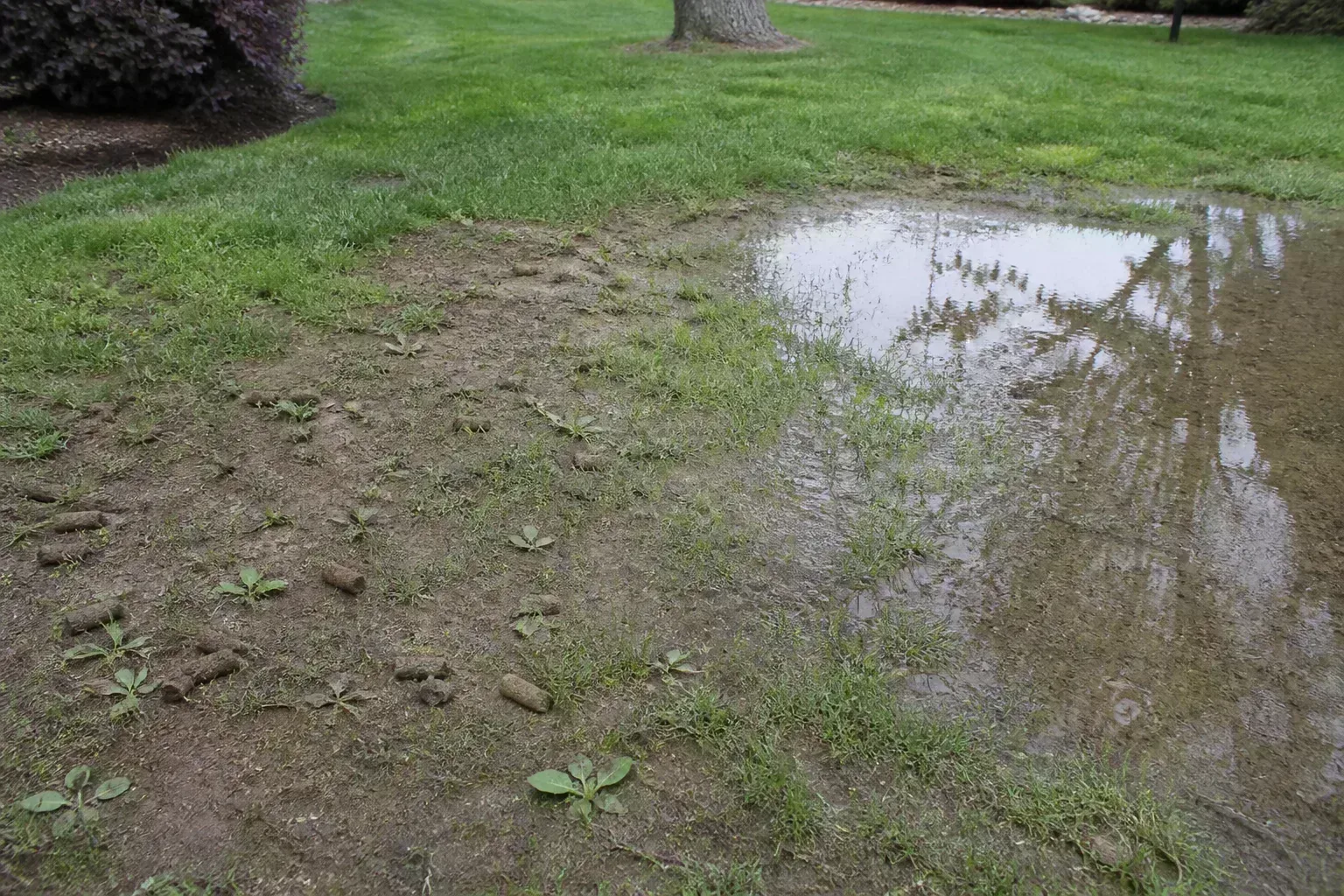
Leave cores on the lawn unless they pile so thick they smother grass. USU Extension advises breaking them up with a rake or mower so soil filters back into holes.
If thickness is the goal, overseed the same day while holes are open. Spread compatible seed at label rates, lightly rake into cores, and keep the seed zone evenly moist for two to four weeks. Starter fertilizer helps when a soil test supports it.
Water lightly and frequently at first, then transition to deeper, less frequent irrigation as new grass roots. Avoid heavy foot traffic until new seedlings establish. If you applied crabgrass pre-emergent earlier in spring, overseeding may conflict—plan herbicide and seeding on the same calendar, not as surprises.
For a full spring thickness playbook, see does aeration create a thicker lawn.
Conclusion
The best lawn aerator for your yard is the one that pulls real soil plugs on the schedule your grass type can recover from. For tractor owners maintaining medium and large lawns, the Brinly-Hardy PA-40BH balances width, weight capacity, and storage practicality. For smaller spaces and spot work, the Yard Butler ID-6C and Landzie fork deliver core aeration without a rental line. Step up to the Agri-Fab 48-inch when acreage makes width the bottleneck.
Before any purchase, run the screwdriver test, confirm you are treating compaction rather than shade or disease, and decide whether you will overseed and water afterward. A dethatcher like the Greenworks DT13B00 solves a different problem—useful when thatch is measured and excessive, but not a shortcut past plug aeration on hard clay. Match the tool to the job, time the work for active growth, and let the cores do what extension guides promise: open the root zone so air, water, and nutrients reach grass where it actually lives.



