7 Best Robotic Lawn Mowers for 2026
Find the best robotic lawn mower for your yard: wire-free, boundary-wire, slope-ready, small-lawn, and large-property picks with honest trade-offs.
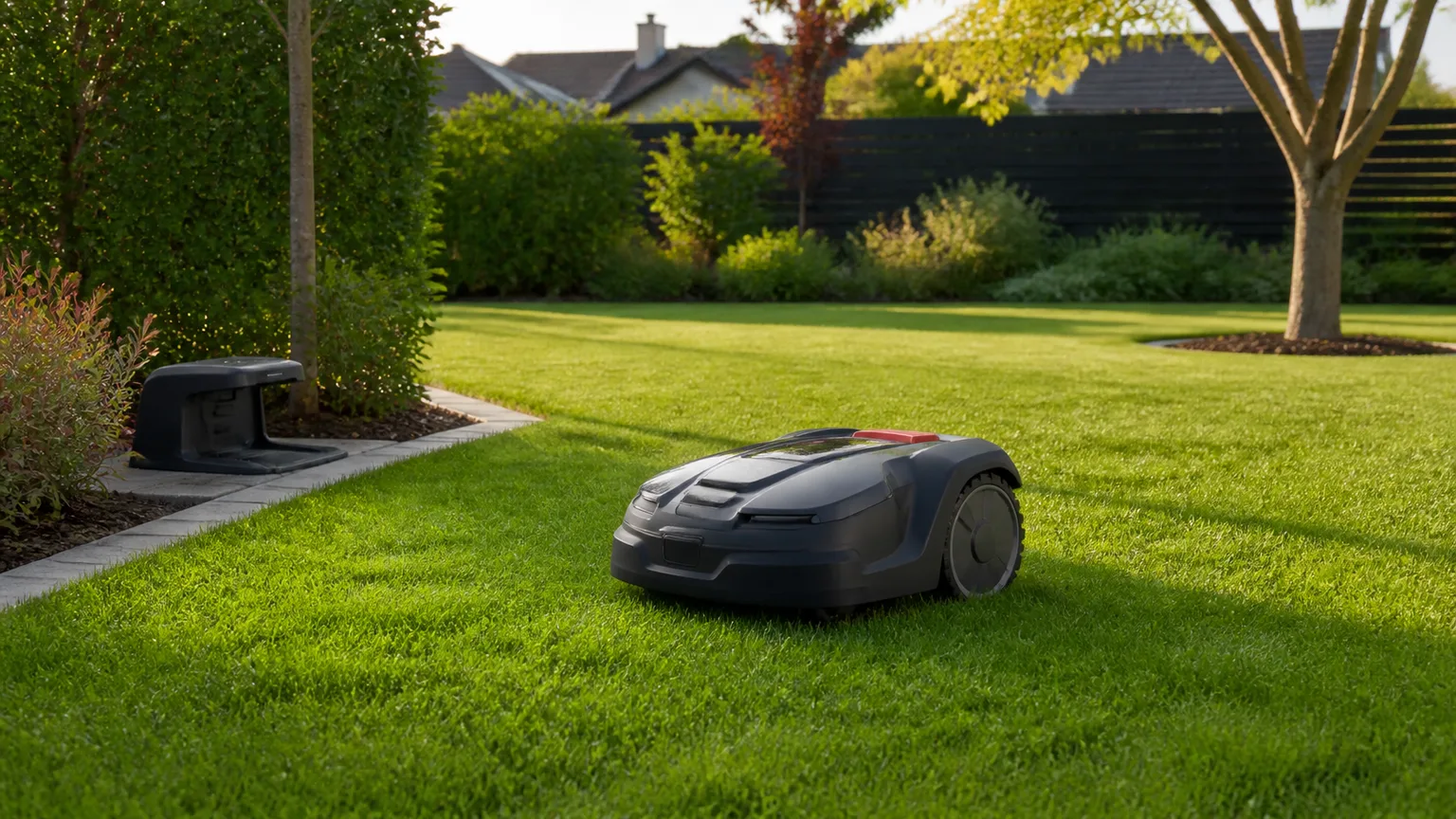
The best robotic lawn mower is the one that can map your actual grass, return to its dock, stay inside the intended boundary, and keep cutting without constant rescue missions. That sounds obvious, but it rules out many attractive machines before price enters the conversation.
This guide separates the field by the problems homeowners actually have: large or complex lawns, steep slopes, tight boundaries, small flat yards, weak satellite views, and the desire to avoid buried perimeter wire. The recommendations combine current manufacturer specifications with independent 2026 testing from CNET, Bob Vila, and TechRadar. They are recommendations, not a claim that one mower wins on every property.
Before buying, measure the grass area, not the size of your lot. Then check the steepest sustained slope, the narrowest passage, the amount of tree cover, the distance from the dock to power, and whether a robot can operate without crossing a sidewalk or property line. If any of those details are uncertain, a cheaper boundary-wire machine—or a conventional mower—may be the more dependable choice.
The short list: match the mower to the property
| Best for | Recommended model | Why it stands out | Main limitation |
|---|---|---|---|
| Complex yards and all-terrain performance | Segway Navimow X4 | Four-wheel drive, wide cutting deck, Network RTK, and panoramic obstacle sensing | Large, expensive, and still dependent on a suitable map and dock location |
| Fast wire-free mapping without an RTK antenna | ECOVACS GOAT A3000 LiDAR | Dual LiDAR, camera vision, quick charging, and automatic mapping | Availability and variant names can change; base model may be sold out |
| Steep slopes | Mammotion LUBA 3 AWD | All-wheel drive and a published 80%/38.6° slope rating | Premium platform; real traction depends on surface, moisture, and layout |
| Small flat lawns | eufy E15 | Compact, quiet, wire-free mapping with a simple use case | Limited to about 0.2 acre, flat terrain, and compatible grass types |
| Multi-zone yards | ANTHBOT Genie 3000 | RTK plus four-camera vision, 20 zones, and 0.89-acre capacity | App and RTK setup require more patience than the marketing suggests |
| Low-cost boundary control | Worx Landroid WR147 | Perimeter wire keeps the mower inside a defined area and the platform has a long accessory history | Wire installation is real work; verify the exact WR147 kit and coverage |
| Large properties and year-round equipment | Yarbo Lawn Mower Pro | Six-acre capacity, 20-inch deck, heavy-duty build, and a modular system | It is a large-property system, not an economical choice for a small lawn |
The table is a starting point, not a substitute for measuring. A mower rated for a larger property may still be a poor fit if the grass is split into disconnected zones, the dock cannot see the sky, or the border includes a drop-off that the sensors were never designed to interpret.
The 7 best robotic lawn mowers for 2026
1. Segway Navimow X4: best overall for large or complex yards
The Segway Navimow X4 is the strongest all-around choice when you have a large lawn, slopes, rough transitions, and a budget that can support a premium machine. Segway’s current X4 page describes a 17-inch dual-disc, 12-blade cutting system, Network RTK positioning, panoramic cameras and time-of-flight sensors, multi-zone management, rain sensing, and an IP66 dust- and water-resistance rating. The page also reports an 85%/40.3° slope test, which is a useful performance ceiling—not a guarantee for every wet, rutted hill.
The reason to choose it is the combination of traction, coverage, and boundary intelligence. A wide deck means fewer passes than an 8-inch compact mower, while Network RTK can avoid the need for a dedicated local antenna when network coverage is available. The X4 family also offers models sized around one to 1.5 acres, so match the exact X430 or X450 capacity to your measured grass rather than treating “X4” as one specification. Check the official Navimow X4 specifications before ordering because the variant determines the capacity, drive system, and included positioning setup.
Buy it if: your lawn is large, sloped, irregular, or divided into several zones, and you value a wide cut and strong obstacle mapping. Skip it if: you have a small, simple lawn and would be paying for four-wheel drive, a large deck, and premium navigation you will not use.
2. ECOVACS GOAT A3000 LiDAR: best for fast mapping without an RTK antenna
The ECOVACS GOAT A3000 LiDAR is a compelling choice for homeowners who want wire-free navigation but do not want to install a boundary wire or position an RTK reference station. Its manufacturer lists dual LiDAR, a forward 3D time-of-flight sensor, an AI camera, automatic mapping, a 45-minute charge time, a 12.99-inch cutting width, an app-adjustable 1.2-to-3.6-inch height range, and a claimed 27° slope limit.
That sensor mix is most useful when the yard has trees, beds, patio edges, and objects that a simple bump sensor would find the hard way. CNET’s hands-on testing found the GOAT quick to map and mow, while also noting that LiDAR did not automatically create a dramatically better cut than every other wire-free system. That is the right way to think about it: LiDAR can make setup and perception easier, but it does not eliminate the need to clear toys, define no-go zones, or check missed edges.
One important 2026 caveat is stock. The ECOVACS product page currently flags the base A3000 as sold out and points shoppers toward a PRO version. Treat the A3000 recommendation as a capability match, then verify which A-series variant is actually available, what it includes, and whether the warranty and service terms apply in your region.
Buy it if: you want fast, wire-free mapping and your lawn is below the model’s real capacity after accounting for trees, beds, and charging. Skip it if: you need a readily available budget mower, depend on a permanent physical boundary, or cannot get service and replacement blades where you live.
3. Mammotion LUBA 3 AWD: best for steep slopes and difficult traction
The Mammotion LUBA 3 AWD is the most slope-focused pick in this group. Mammotion lists all-wheel drive, four in-wheel motors, tri-fusion positioning using 360-degree LiDAR, Network RTK, and dual-camera AI vision, plus an advertised ability to handle slopes up to 80%, or 38.6 degrees. Its larger models use a 15.7-inch dual-cutting system and can cover substantially more area than a compact backyard robot.
The advantage of AWD is not merely a bigger number on a slope chart. Four driven wheels can reduce spin and sideways drift when the surface changes, especially near the bottom or top of a hill. But do not read 38.6° as permission to send the machine onto any embankment: wet grass, loose soil, exposed roots, a sharp drop-off, and a narrow turning area can make a lower-rated slope unsafe. Mammotion’s LUBA 3 page also describes lift detection, wildlife-safety modes, rain detection, and IPX6 water resistance; these features reduce risk but do not replace a cleared mowing area.
Buy it if: traction is the reason other robot mowers fail on your property. Skip it if: the lawn is flat and small, or if your “slope” is actually a rough bank with exposed soil, stairs, drainage channels, or no safe turning zone.
4. eufy E15: best for a small, flat lawn
The eufy E15 makes sense when the lawn is compact, open, and mostly flat. Eufy specifies a mapping area of about 0.2 acre, an 8-inch cutting width, a 1-to-3-inch cutting range, a maximum slope of 18 degrees, noise below 56 decibels, and a 90-to-110-minute charging time. It uses camera-based V-FSD positioning rather than a perimeter wire or RTK reference station.
The fit is unusually clear—and so are the boundaries. Eufy says the E15 is intended for grass under 3.5 inches, terrain variation under 1.2 inches, and lawns without dense Zoysia or St. Augustinegrass. It also depends heavily on visual sensing, so low light, thick grass hiding obstacles, steep edges, and complex property lines are reasons to choose another model. Read the E15’s official pre-purchase and safety notes rather than assuming “wire-free” means “works anywhere.”
Buy it if: your grass area is a small, flat rectangle and you want a quiet, low-installation machine. Skip it if: you need to cross slopes, maintain dense warm-season turf, mow at night, or create a boundary that is not physically obvious.
5. ANTHBOT Genie 3000: best for multi-zone mapping at a mid-size scale
The ANTHBOT Genie 3000 is a practical middle ground for a homeowner who has more than one mowing area but does not need a six-acre machine. The manufacturer lists a recommended 0.89-acre capacity for the Genie 3000, full-band RTK plus four-camera 3D vision, 20 mowing zones, a 24°/45% maximum slope, a 1.2-to-2.8-inch cutting range, IPX6 protection, rain detection, GPS tracking, and a noise level at or below 58 decibels.
Multi-zone support matters when the front and back lawns are separated or when a side strip needs a different schedule. The catch is that “multi-zone” does not always mean the robot can magically travel over steps, gates, gravel, or a public walkway. You may need a clear connecting route or have to move the mower, and the RTK reference station still needs a sensible installation position with a good view of the sky.
TechRadar’s Genie review found the mower’s obstacle avoidance and mapping impressive in testing but criticized parts of the smart-scheduling experience. That is useful context: the Genie can be a good hardware fit while the app still demands occasional attention. Buy it if: you want a configurable multi-zone map and good obstacle sensing. Skip it if: you want a completely invisible setup or the only place for the RTK station is under dense tree cover.
6. Worx Landroid WR147: best when you prefer a physical boundary wire
The Worx Landroid WR147 is the sensible choice for a small lawn where precise physical containment matters more than a no-wire installation. The WR147 is sold as a 1/4-acre Landroid M package with boundary wire, pegs, a charging station, and a three-year warranty. Worx also lists a rain sensor, a washable deck, app control, a floating blade disc, and an immediate blade stop when the mower is lifted.
Boundary wire is not old technology that should automatically be dismissed. A correctly installed wire gives the mower a fixed answer at a property line, flower bed, or path where satellite drift or visual interpretation could be inconvenient. It also creates the main downside: installation takes planning, the wire must remain unbroken, and a future bed redesign may require moving it. The Worx WR147 page mixes references to nearby Landroid variants, so confirm the exact model number, capacity, battery, and included wire before checkout.
Buy it if: you want a lower-cost robot with a defined, controllable boundary and your lawn is small enough for the WR147 variant. Skip it if: you rent, expect to redesign the yard often, or cannot install and troubleshoot wire.
7. Yarbo Lawn Mower Pro: best for very large properties and modular yard work
The Yarbo Lawn Mower Pro belongs in a different class from the compact backyard robots. Yarbo lists a six-acre maximum mowing size, a 20-inch cutting width, dual 300-watt cutting motors, a 120-minute mowing time per charge, a 20-to-102-mm cutting-height range, a two-inch vertical obstacle clearance, IPX6 protection, rain detection, and automatic recharge-and-resume behavior.
Its strongest reason to exist is the larger property where mowing is only one of several recurring chores. The Y Series system can share a base with other modules for tasks such as snow removal or leaf work, but that modularity means a larger storage footprint, more setup, and a much higher ownership commitment than a compact mower. The Yarbo Lawn Mower Pro specifications are the right place to confirm whether you are pricing the mower module, the core system, or a bundle.
Buy it if: you maintain several acres and genuinely value a modular all-season platform. Skip it if: your lawn is under an acre, you want a small dock hidden beside a garden bed, or you do not have a secure place to store a large machine and its accessories.
The Hookii Neomow X Pro is worth watching because the official Hookii page lists LiDAR and vision navigation, 1.5-acre coverage, rain detection, and a 24° slope rating. However, that same page currently says the X series is out of stock in North America, so it is not a responsible active recommendation for a U.S. buyer until availability changes. This is a good reminder that a strong specification sheet is not enough: stock, parts, software support, and warranty service are part of the product.
How to choose a robotic mower without buying the wrong one
Measure grass area, then match navigation to the yard
Start by measuring only the areas the mower must cut. Exclude the house, driveway, beds, pond, patio, and woods. If the lawn has separate areas, measure each one and write down whether a robot can travel between them without crossing a step, gate, gravel strip, or public path.
Then add a capacity buffer. A robot’s advertised maximum assumes a particular mowing schedule, terrain, grass height, and charging pattern. Trees, slopes, narrow passages, wet-weather pauses, and repeated edge passes all consume time. If your grass area is close to the published maximum, step up one capacity tier or accept that the mower may need several charge cycles to finish.
Navigation choice should follow the property:
- Boundary wire: best when you want a fixed, unambiguous line and can install wire permanently. It is labor at the beginning, not recurring mapping uncertainty.
- RTK or Network RTK: best for larger open lawns that can maintain positioning data. Trees, buildings, and weak network coverage can complicate the map.
- LiDAR plus vision: useful for three-dimensional perception and wire-free mapping, including some yards where satellite-based positioning is awkward. It still needs careful dock placement and a clean map.
- Camera-first systems: attractive on simple, well-lit lawns. They are less forgiving when darkness, glare, tall grass, or hidden objects removes visual information.
Do not confuse wire-free with boundary-free. Every mower still needs a boundary concept: a wire, a virtual map, a satellite position, a camera-recognized edge, a physical barrier, or a combination. The more ambiguous your property line, the more important it is to choose a system that lets you edit a no-go zone and verify the map before the first automated schedule.
Treat slope, edges, weather, and obstacles as separate tests
Slope claims are easy to compare badly. Manufacturers may quote degrees or percentages, and the number often comes from controlled testing. Measure the steepest continuous section, not the average yard, and consider whether the mower must turn sideways, stop, reverse, or cross the slope when the grass is wet. If a slope leads to a pond, retaining wall, street, or stair, a no-go zone and physical barrier are more important than the maximum climbing number.
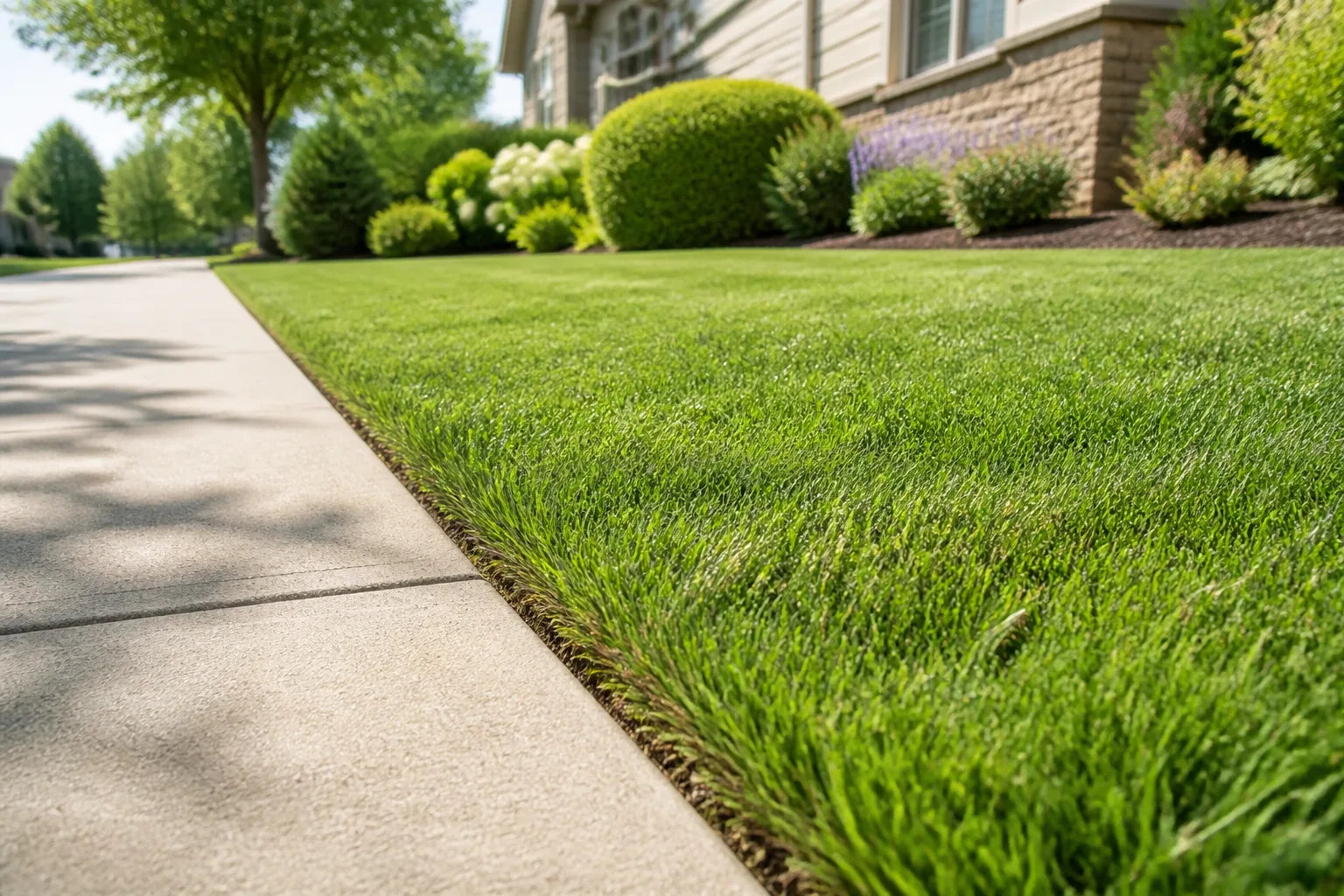
Edges are another separate problem. A mower can stay inside its map and still leave a strip along a wall, raised bed, curb, or fence because the body cannot place its blades close enough. Look for edge-cutting hardware or a map setting that brings the mower close to hardscape, then budget for occasional string trimming. The hardscape scene above is the visual target: tidy edging is not the same as simply keeping the robot off the sidewalk.
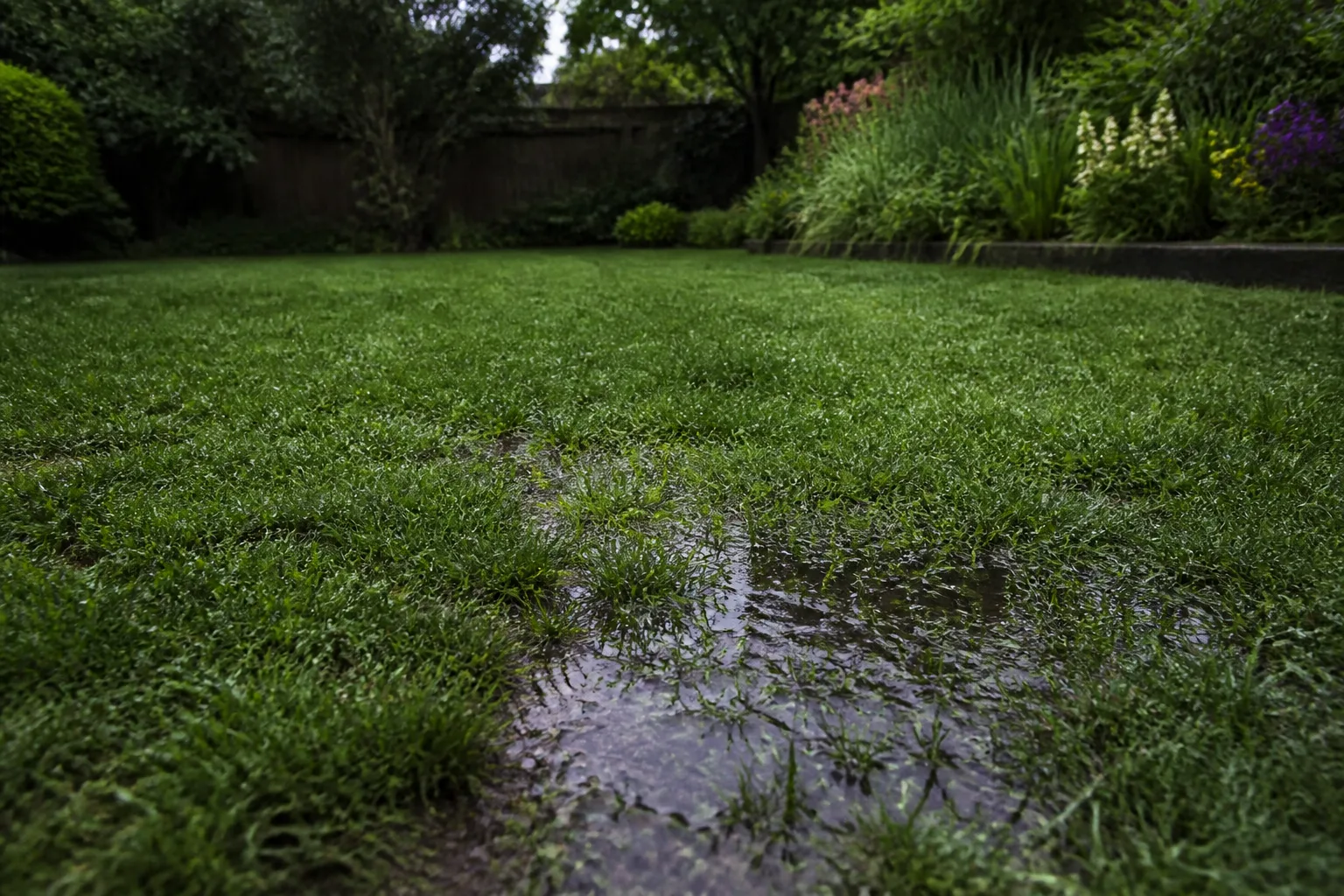
Weather resistance protects the machine; it does not make saturated soil a good mowing surface. A rain sensor can pause the robot, and an IP rating describes resistance to water and dust, but you should still avoid scheduling a small, heavy machine to repeatedly cross soft ground after a storm. Wet wheel tracks can compact soil and create the very ruts that later confuse navigation.
Obstacle detection is a backup, not a yard-cleaning service. Pick up toys, balls, hoses, branches, pet waste, and small tools before every schedule. Sensors can miss low, narrow, dark, or partly buried objects, and a mower that avoids an obstacle may leave a ring of tall grass around it. If you have dogs or outdoor wildlife, use supervised early runs, close no-go zones, and the manufacturer’s wildlife or nighttime settings; never treat an app badge as a guarantee of animal safety.
Setup, maintenance, and the work a robot does not remove
The first mowing day is a small installation project. Put the dock on a stable, level surface with power nearby and enough straight approach space for the mower to return cleanly. Depending on the navigation system, you may need a clear view of the sky, a reference station, an outdoor Wi-Fi signal, a cellular plan, or a perimeter wire that stays away from the mower’s blade path.
Map while you are present. Walk the boundary slowly, check every narrow passage, mark holes and drop-offs as no-go areas, and watch how the mower turns at corners. Let it complete several supervised runs before enabling an unattended schedule. Independent testers repeatedly find that setup and mapping are where the “hands-free” promise is won or lost; Bob Vila’s 2026 testing evaluates setup, navigation accuracy, obstacle avoidance, slope climbing, app usability, and ease of ownership for exactly that reason.
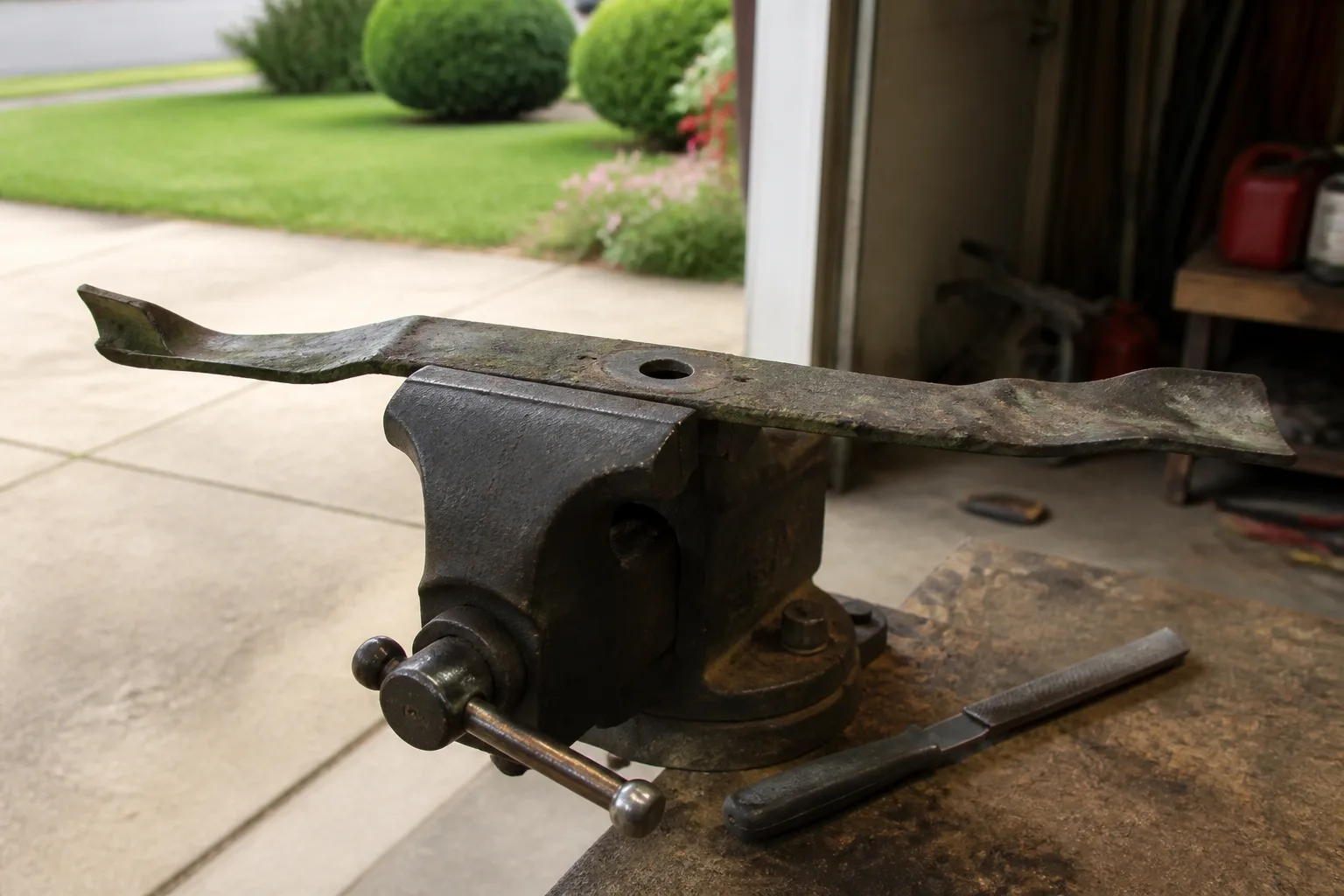
Routine maintenance is lighter than pushing a mower, not zero. Inspect the cutting deck, wheels, sensors, and charging contacts for stuck grass. Replace or rotate blades according to the manual and whenever the cut becomes ragged, the mower vibrates, or the battery seems to work harder. Before touching the underside, power the mower off, remove the battery or safety key when the design allows it, and follow the manufacturer’s lockout instructions.
Keep software and maps current, but do not install a firmware update immediately before leaving for a trip. Check that alerts reach your phone, the mower can return to the dock after a low-battery run, and the map still matches the yard after you move a bed, fence, or trampoline. If the mower repeatedly stops in one place, treat that as a site problem to diagnose—soft soil, a root, a narrow turn, poor positioning, or a hidden boundary wire—not as an invitation to keep restarting it.
Winter storage depends on your climate and manual. In freezing or persistently wet regions, bring the mower and battery indoors if the manufacturer says to do so, clean and dry the deck, protect the charging station, and store the battery at the recommended charge level. In mild climates, a covered dock and occasional mowing may be acceptable, but the schedule should follow actual grass growth rather than a calendar.
Who should skip a robotic lawn mower
Choose a different tool if the lawn is frequently overgrown, full of loose debris, mostly rough soil, or too steep for a stable automated route. Robot mowers are designed to maintain grass with frequent light cuts; they are not brush cutters, field mowers, or rescue machines for a neglected lawn. CNET’s testing notes make the same practical point: keep the grass from getting too long, because a robot is not meant to recover an overgrown property in one pass.
They are also a poor fit when the lawn is open to a street, a neighbor’s yard, or a shared walkway and you cannot create a reliable boundary. A GPS map may be accurate enough for many properties, but accuracy is not the same as a legal property survey. If a small drift could send the machine into traffic or onto someone else’s land, use a physical barrier or skip the robot.
Finally, skip the purchase if you are unwilling to maintain the machine and check it occasionally. The value is not “never think about mowing again.” The value is trading weekly cutting labor for setup, map checks, blade care, debris clearing, seasonal storage, and the occasional rescue when reality differs from the map.
Conclusion
For a large, complex property, the Segway Navimow X4 is the broadest current fit because it combines all-terrain drive, a wide deck, Network RTK, obstacle sensing, and multi-zone controls. The ECOVACS GOAT A3000 LiDAR is the better match when fast wire-free mapping and quick charging matter, while the Mammotion LUBA 3 AWD earns its place on genuinely steep ground. Smaller or more specific lawns should look first at the eufy E15, ANTHBOT Genie 3000, or boundary-wire Worx Landroid WR147; very large properties may justify the Yarbo Lawn Mower Pro.
Measure the grass, not the lot. Check the steepest slope, the narrowest passage, the dock location, the boundary risk, and the service situation before you compare prices. A robotic mower is a worthwhile luxury when the property fits its navigation and maintenance model; when it does not, a conventional mower is still the more automated choice because it works without asking you to debug the yard.



