37 Blue Flowers for Every Garden Site and Season
Compare 37 blue flowers by season, sun, soil, and spread. Find true-blue annuals, shade-loving spring bloomers, and realistic hydrangea choices for your climate.
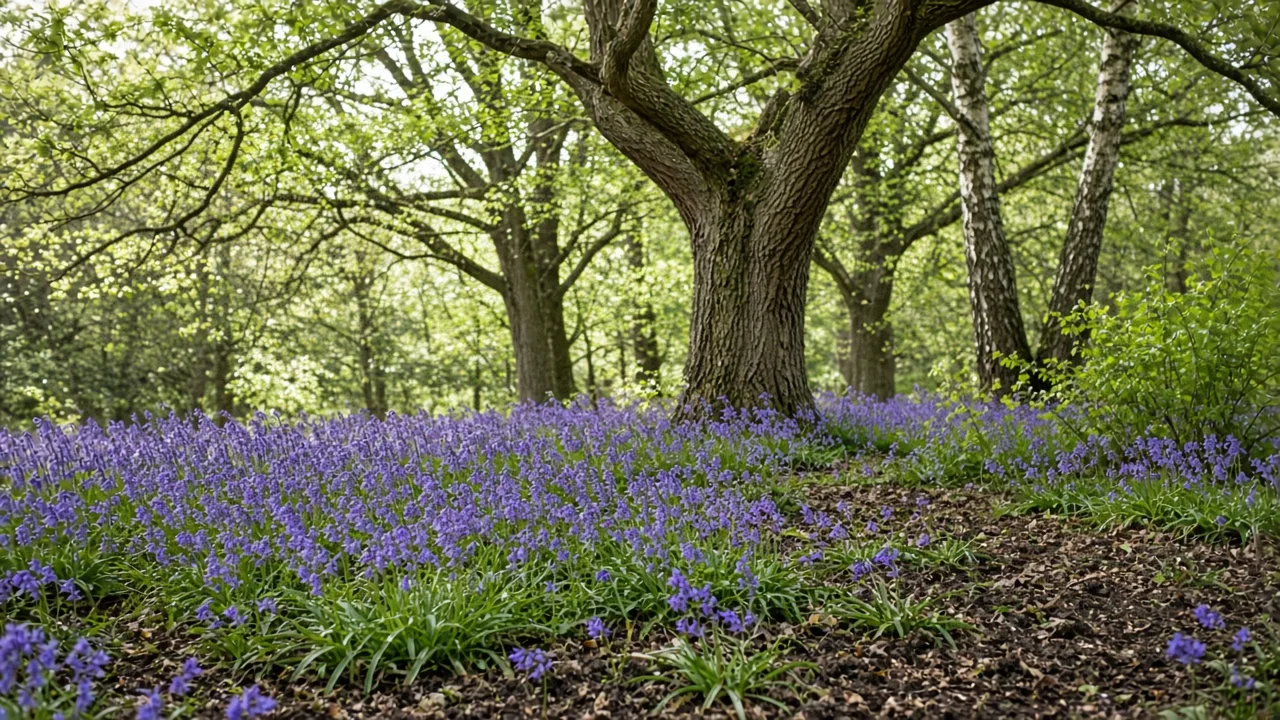
A blue flower can be the detail that cools a hot-colored border, brightens a spring woodland edge, or draws the eye toward a path. The catch is that “blue” covers a broad range in plant catalogs: some flowers are clear sky blue, while others lean lavender, indigo, or violet. Bloom color also looks different in sun, shade, and photographs, so the named species or cultivar matters more than a generic tag.
The 37 plants below span spring bulbs, shade perennials, annuals, shrubs, and vines. Use the season and site notes to narrow the list first. A shade-loving spring ephemeral will not solve a sunny summer border, and a spectacular cool-climate poppy may sulk through a hot, humid summer. For an overall plan, choose plants that fit your soil and climate, then repeat blue in a few places so it reads as a deliberate color rather than an isolated dot.
Choose blue flowers for your site before choosing a shade
Start with the site’s light, summer moisture, and winter temperatures. “Part shade” can mean a few hours of direct sun or bright filtered light under a tree; those are not interchangeable conditions. Likewise, a plant described as drought tolerant after establishment may still need regular watering during its first season, and a spring ephemeral may disappear above ground by midsummer even when it is perfectly healthy.
The word blue also needs a reality check. Many garden flowers sold as blue appear lavender or purple in person; Iowa State Extension explains that true blue coloration depends on several pigment and flower-cell conditions working together, not merely on a label. If a particular shade is essential, look for a named cultivar in bloom at a local nursery or a reliable grower’s current photographs. A useful overview of how garden catalogs use the color is available from Fine Gardening’s blue-flower guide and Iowa State Extension.
For a low-risk start, use annuals such as cornflower, love-in-a-mist, or flax where you can sow seed directly and edit the planting next year. For lasting structure, choose clumping perennials such as blue star, Siberian iris, or sea holly. Reserve self-seeders and naturalizing bulbs for places where spreading is welcome; “easy to grow” can mean “hard to keep in one spot.”
Early spring: bulbs and woodland flowers
Spring blue usually comes in two useful forms: small bulbs that flower before trees leaf out, and perennials that thrive in cool, moist shade. Bulbs give a strong early display in groups, while woodland plants can bridge the gaps between them. Plan for the foliage after flowering too: bulbs need their leaves to recharge, and several woodland species retreat underground for summer.
Small bulbs for naturalizing
-
Glory of the snow (Chionodoxa luciliae) is a very low bulb for the front of a border, rock garden, or the sunny edge of a deciduous tree canopy. Its blue, star-shaped flowers with pale centers appear early, but the leaves should be allowed to yellow naturally before you clear the bed. Plant it in fall in soil that drains well; it is too small to make much impact as a single bulb, so use a group.
-
Siberian squill (Scilla siberica) offers intense blue bells shortly after winter and can carpet an open lawn or bed over time. That same ability to naturalize is a management choice: put it where expansion is welcome, not next to a carefully edited perennial border or a nearby natural area. Plant fall bulbs in well-drained soil, and let the foliage die back without mowing it early.
-
Hyacinth (Hyacinthus orientalis) is the choice when fragrance and a compact, upright flower spike matter as much as color. Plant bulbs in fall where they get sun during spring growth and where excess winter water drains away; a soggy bed is a poor bulb site. Hyacinths can return for several years, though blooms often become smaller, so treat them as a planned seasonal feature rather than a permanent mass.
-
Grape hyacinth (Muscari armeniacum) makes short blue spikes that pair well with taller bulbs and the front edges of beds. It can multiply through offsets and seed, so remove spent flower heads if you want to limit seedlings while leaving the green leaves in place until they fade. It is a useful small-space bulb, but not a good choice where every plant must stay exactly in its original clump.
-
English bluebells (Hyacinthoides non-scripta) are best suited to a cool, dappled woodland-style setting with room for seasonal spread. Do not confuse them with Spanish bluebells or hybrids: the Royal Horticultural Society explains the visual differences and hybridization concern. Buy nursery-grown bulbs rather than digging wild plants, and check local guidance before planting near native bluebell populations; in North American gardens, Virginia bluebells may be the more ecologically appropriate spring choice. All parts of bluebells are toxic if eaten, and the sap can irritate skin, so wear gloves when handling them, as the RHS advises.
Spring ephemerals and shade perennials
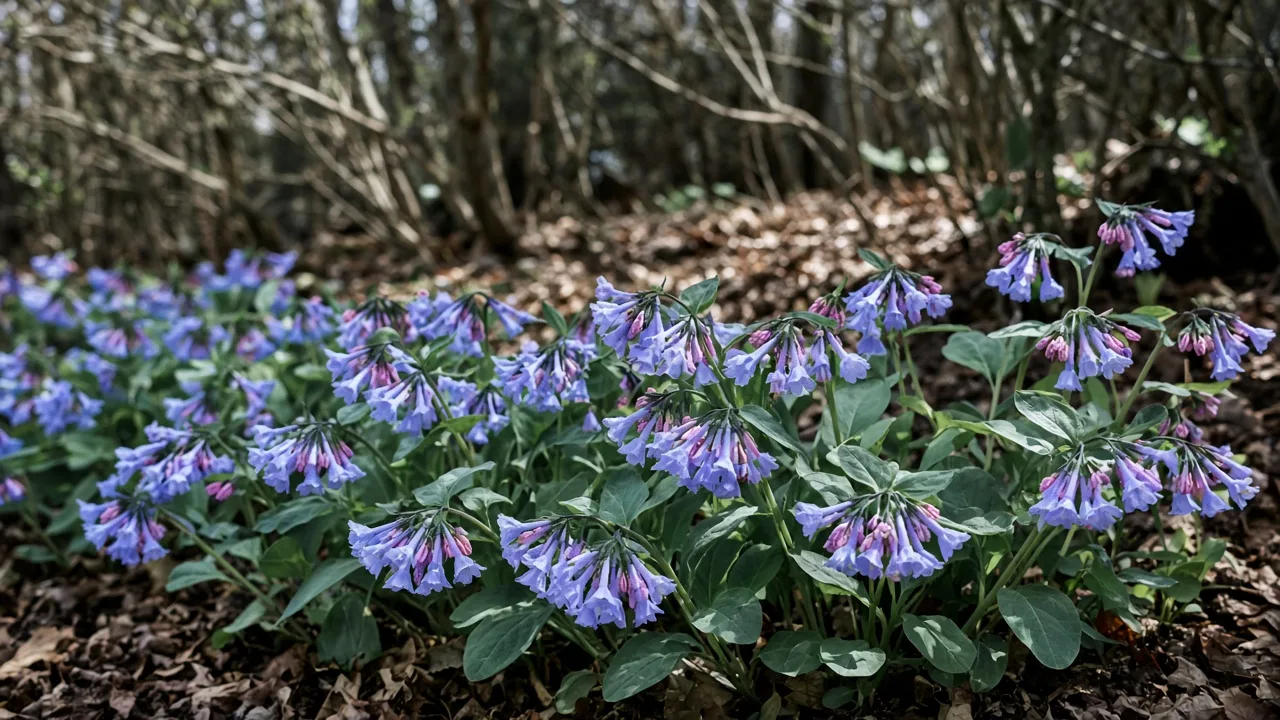
- Virginia bluebells (Mertensia virginica) are an eastern North American woodland ephemeral: their pink buds open into soft blue bells in spring, then the foliage naturally fades as the canopy fills in. Give them humus-rich soil that stays evenly moist in spring, and mark the spot so you do not dig into dormant roots later. Plant them with later-emerging ferns or perennials that can cover the space after the bluebells rest.
-
Lungwort (Pulmonaria) is a dependable shade-garden plant when the cultivar is chosen for flower color as well as foliage. Some selections bloom blue; others are pink or purple, while spotted or silvered leaves stay decorative after the flowers fade. Give it cool shade and moisture without stagnant water. In hot, dry shade it can look stressed, so mulch lightly and water during dry spells rather than expecting it to cope like a drought-tolerant groundcover.
-
Brunnera (Brunnera macrophylla), often called Siberian bugloss, combines small spring blue flowers with heart-shaped leaves. The species’ foliage is green, while many popular cultivars are grown for silver patterning; compare a plant in person if the flowers are your main reason for buying it. It suits moist, well-drained shade under deciduous trees and works especially well along a path where you can see both the leaves and tiny flowers.
-
Forget-me-not (Myosotis sylvatica) is a short-lived biennial often grown as a self-sowing spring annual. Its tiny blue flowers make a soft edge around bulbs and shrubs, but it will seed freely if flowers are left to mature. Thin seedlings while they are small, or deadhead before seed forms if you want the patch to remain contained. It is better for a relaxed cottage planting than for a formal bed that must stay sharply outlined.
-
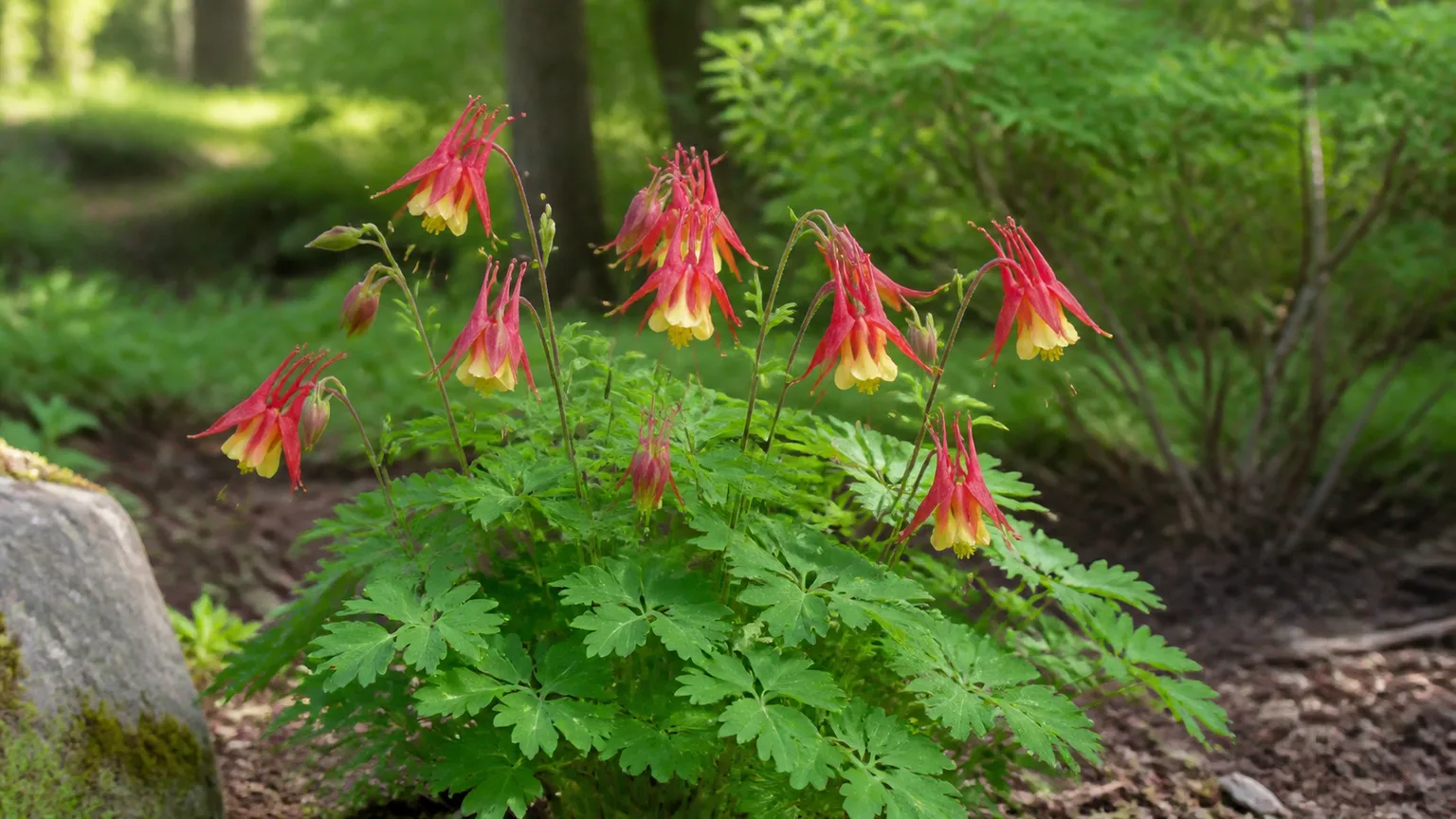
Columbine (Aquilegia species and hybrids) fills the gap between spring bulbs and early-summer perennials. Blue-and-white selections have spurred flowers that suit the middle of a border and provide nectar to long-tongued pollinators. Choose a cultivar with the color and mature size you want, since seedlings may cross and produce different flowers. Columbines prefer drainage and some afternoon protection in hot climates; they are often short-lived, but self-sown replacements may appear.
- Birdbill dayflower (Commelina dianthifolia) is a small, regionally specialized choice for rocky, well-drained ground in the American Southwest. Its blue flowers open in the morning and may be gone by midday, so it is a plant to appreciate during a garden walk rather than a long-lasting cut flower. Match its native mountain habitat and drainage needs; it is not a substitute for a moisture-loving bluebell in a wet woodland bed.
Late spring and early summer: annuals and long-lived perennials
This is the easiest window for building a varied blue display: combine one or two durable clumps with annual seed-grown flowers that can fill spaces quickly. Keep the mature heights in mind. Airy annuals look good in a mixed meadow or cottage border, while a compact perennial is more practical where stems must not flop across a walkway.
Reliable perennial structure
-
Blue star (Amsonia species) produces clusters of small, star-shaped blue flowers above an upright mound. Eastern blue star and Arkansas blue star are native options in different parts of North America; choose a species suited to your region rather than assuming all plants sold as “blue star” are interchangeable. Give the clump room to mature, then enjoy its clean foliage and, in many selections, strong golden fall color.
-
False indigo (Baptisia australis) is a long-lived eastern North American perennial with indigo-blue flower spikes and decorative seed pods. Its deep taproot helps an established plant tolerate dry periods, but also makes transplanting difficult; decide on its permanent position before planting. It is a substantial anchor for a sunny border and pollinator garden. NC State Extension notes that it grows best in full sun and well-drained soil.
-
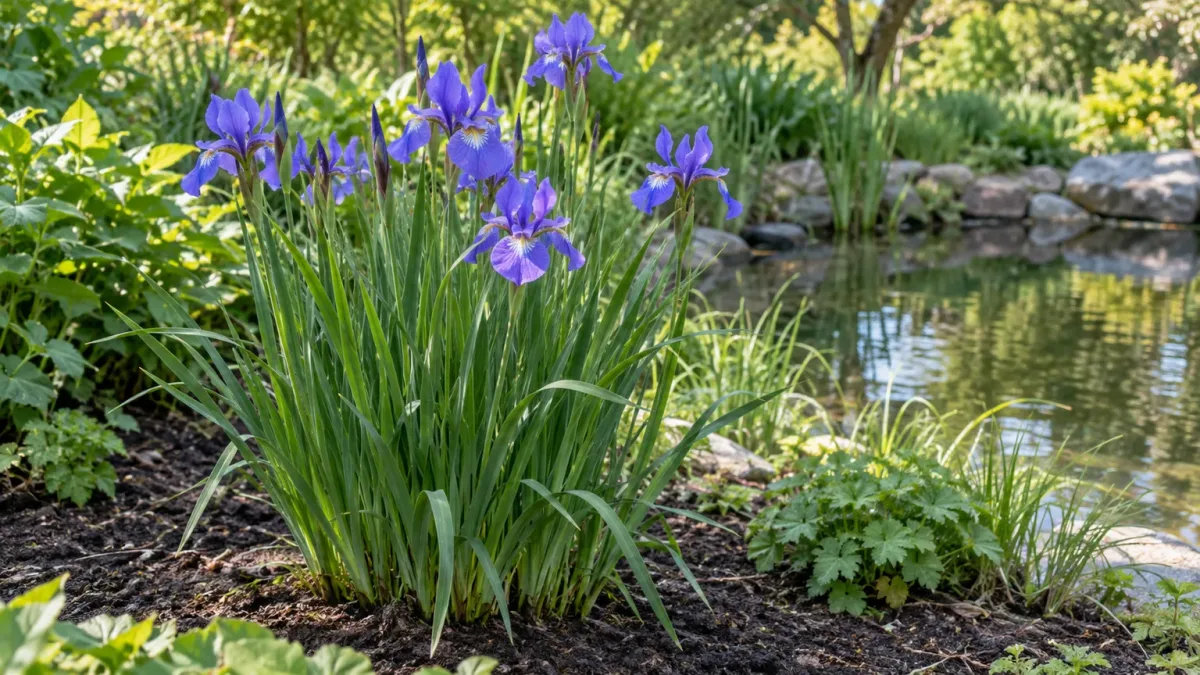
Siberian iris (Iris sibirica) brings blue or violet-blue flowers and upright, grasslike leaves to a border with consistent moisture. It tolerates damper conditions than many bearded irises, but still needs a site that does not keep its roots cold and waterlogged year-round. Keep the foliage until it yellows so the clump can store energy, and divide an overcrowded planting when flowering declines. This is a good choice near a rain garden’s upper edge, not in permanently deep water.
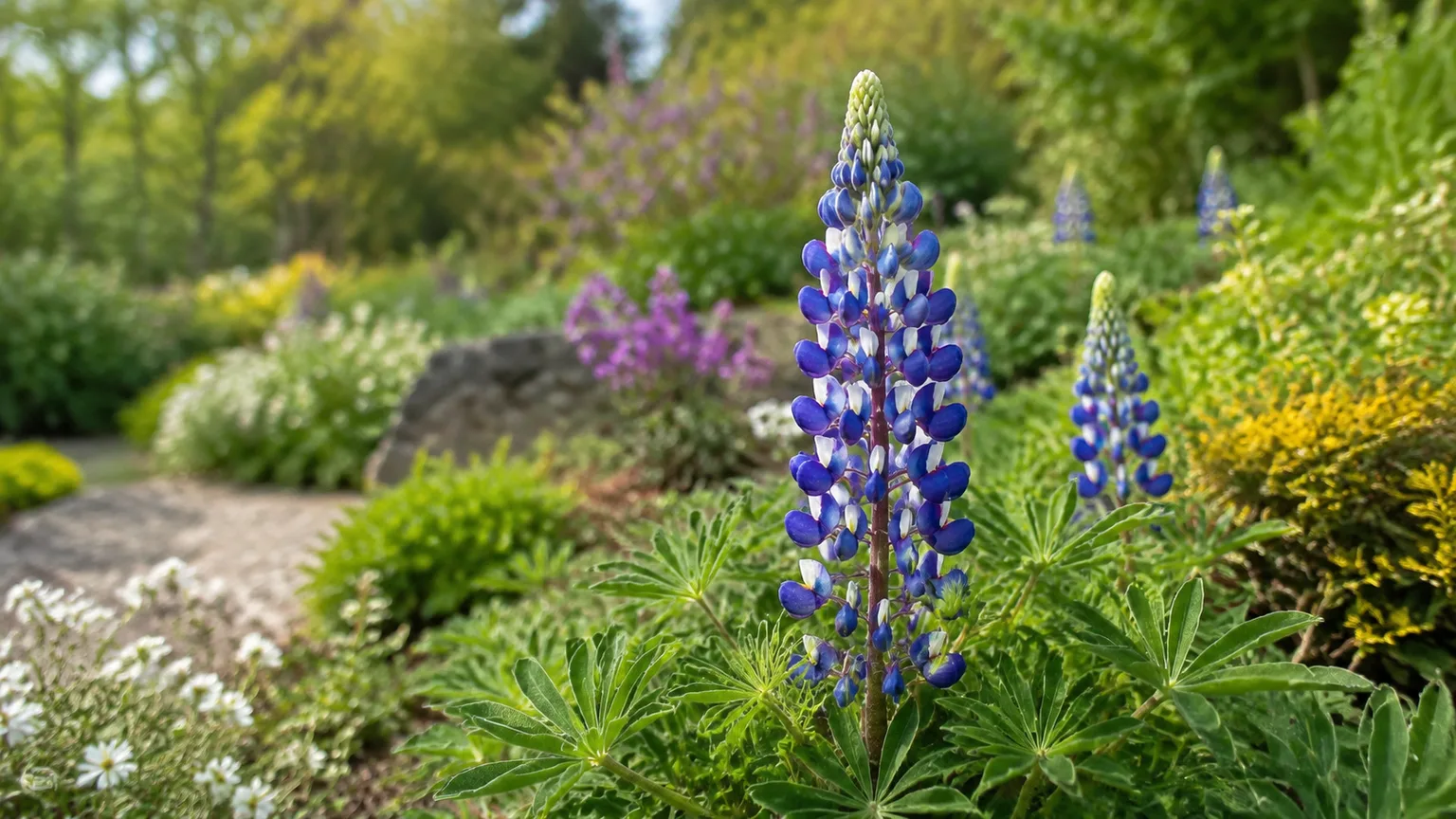
- Lupine (Lupinus species and hybrids) is hard to beat for tall flower spires in blue, especially in cool-summer gardens. Species differ greatly, so select a locally appropriate lupine rather than buying a generic mix without checking its contents. They need drainage, and established plants resent root disturbance. Some are short-lived in warm or humid conditions; treat them as a striking seasonal feature and avoid heavy nitrogen feeding, since lupines are legumes.
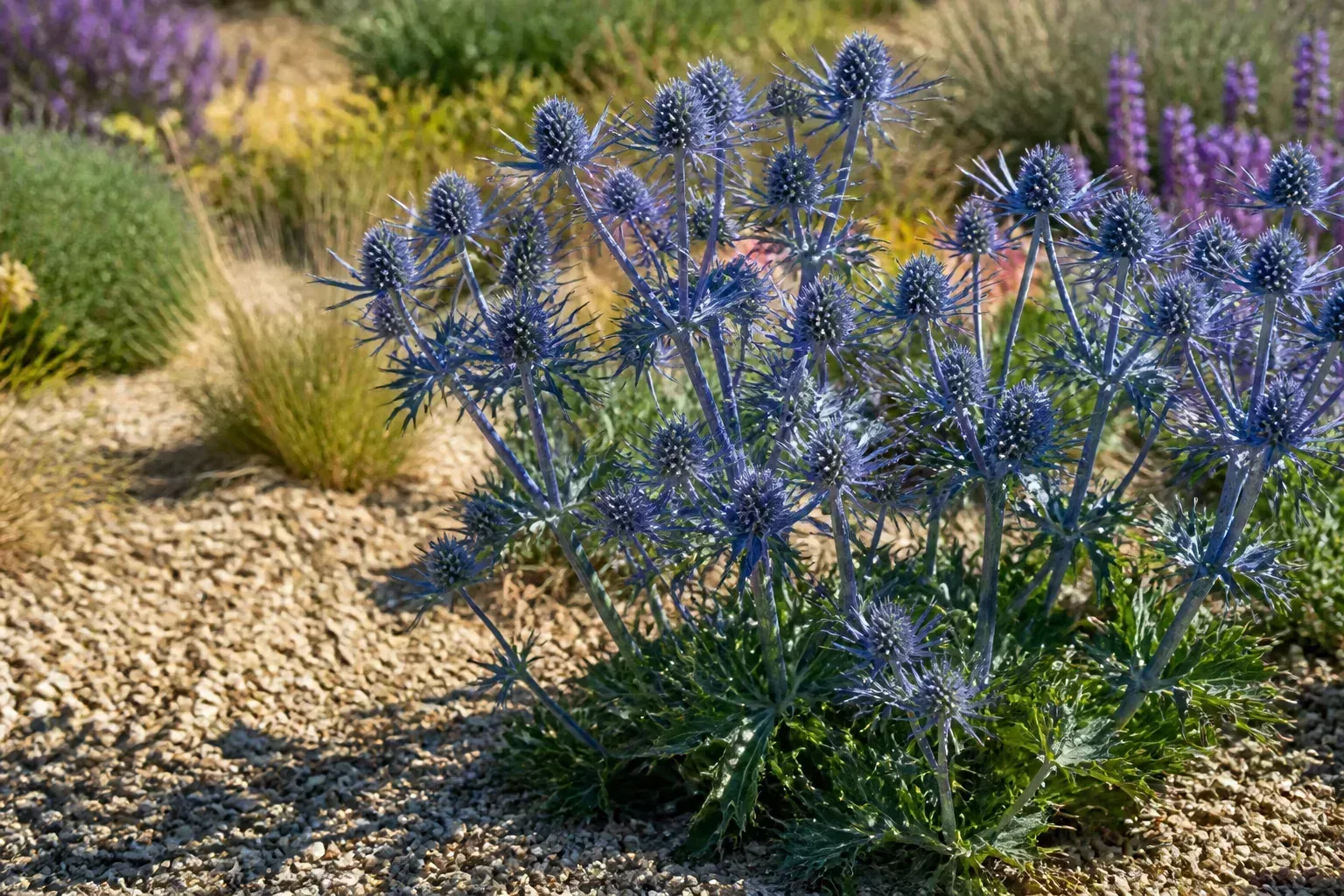
- Sea holly (Eryngium planum) adds a metallic blue, thistle-like silhouette above stiff stems. Its drought tolerance is useful in a sunny, sharply drained border, but it is a poor fit for rich, wet soil. The long taproot makes it difficult to move once established, so choose the final location first. Leave some flowerheads standing for winter texture or cut stems while the bracts are colorful; both choices suit its architectural form.
- Fairy thimbles (Campanula cochleariifolia) are tiny alpine bellflowers for crevices, troughs, and the gaps between paving stones. Their lavender-blue flowers sit just above a low mat, so they disappear behind taller plants in a conventional border. They need sharp drainage and do best where roots stay cooler than the exposed rock around them. Use them as a detail at eye level near a path, not as a broad groundcover expected to withstand traffic.
Fast color from seed and seasonal plants
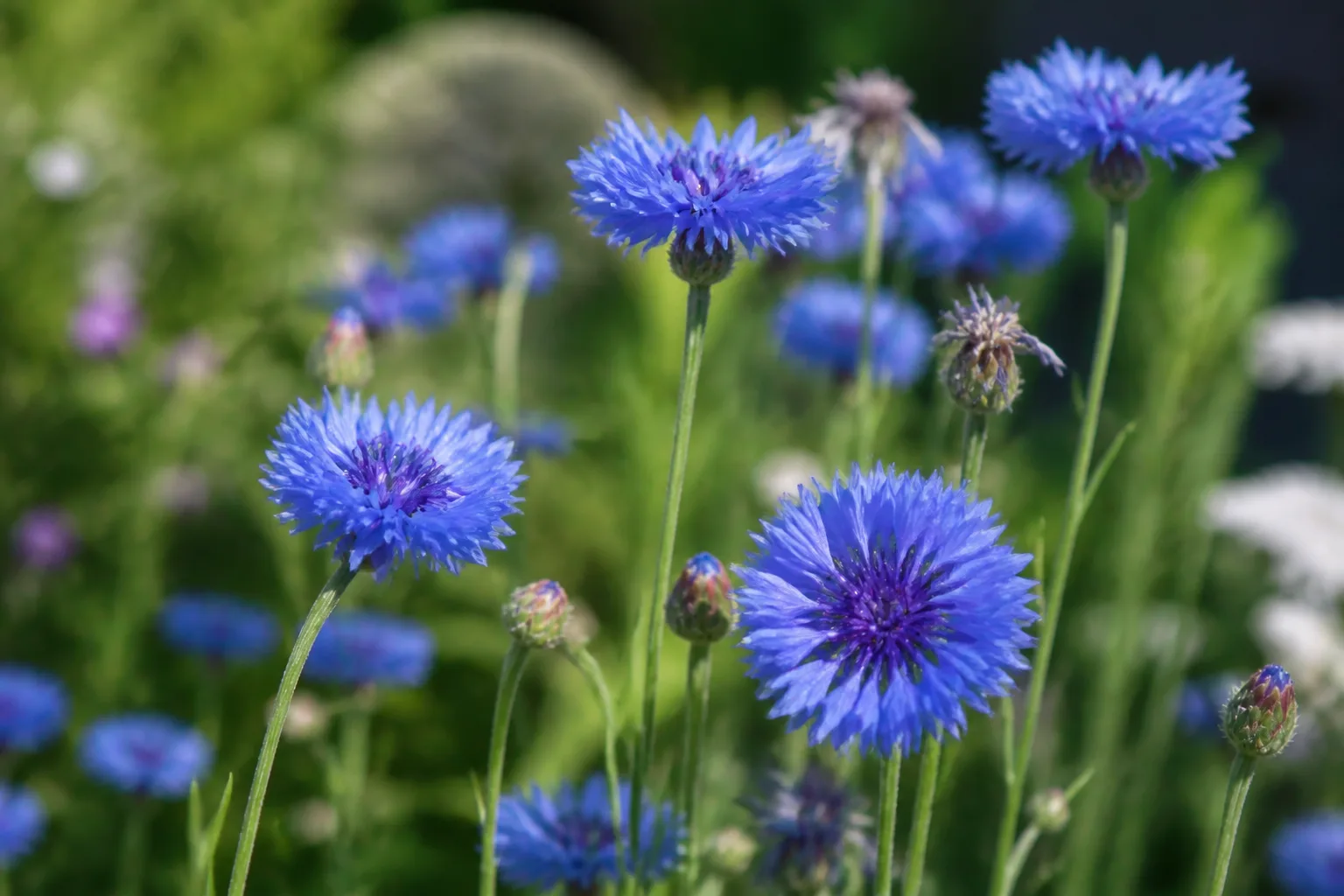
- Cornflower (Centaurea cyanus), also called bachelor’s button, is one of the clearest blue annuals and one of the simplest to sow directly. Scatter seed in a sunny, well-drained patch in fall or early spring according to your climate, then thin seedlings so air can move through the stems. It suits cutting gardens and informal borders. Let a few heads set seed only if you want volunteers; remove them where you need the planting to stay tidy.
-
Love-in-a-mist (Nigella damascena) is an annual with blue flowers framed by feathery foliage and unusually attractive seed pods. Sow where it should grow because it dislikes disturbance, and barely cover the seed if sowing outdoors; the plants are usually more successful from direct sowing than transplanting. It can reseed abundantly, so deadhead some stems and leave others for seed only where the next generation is welcome.
-
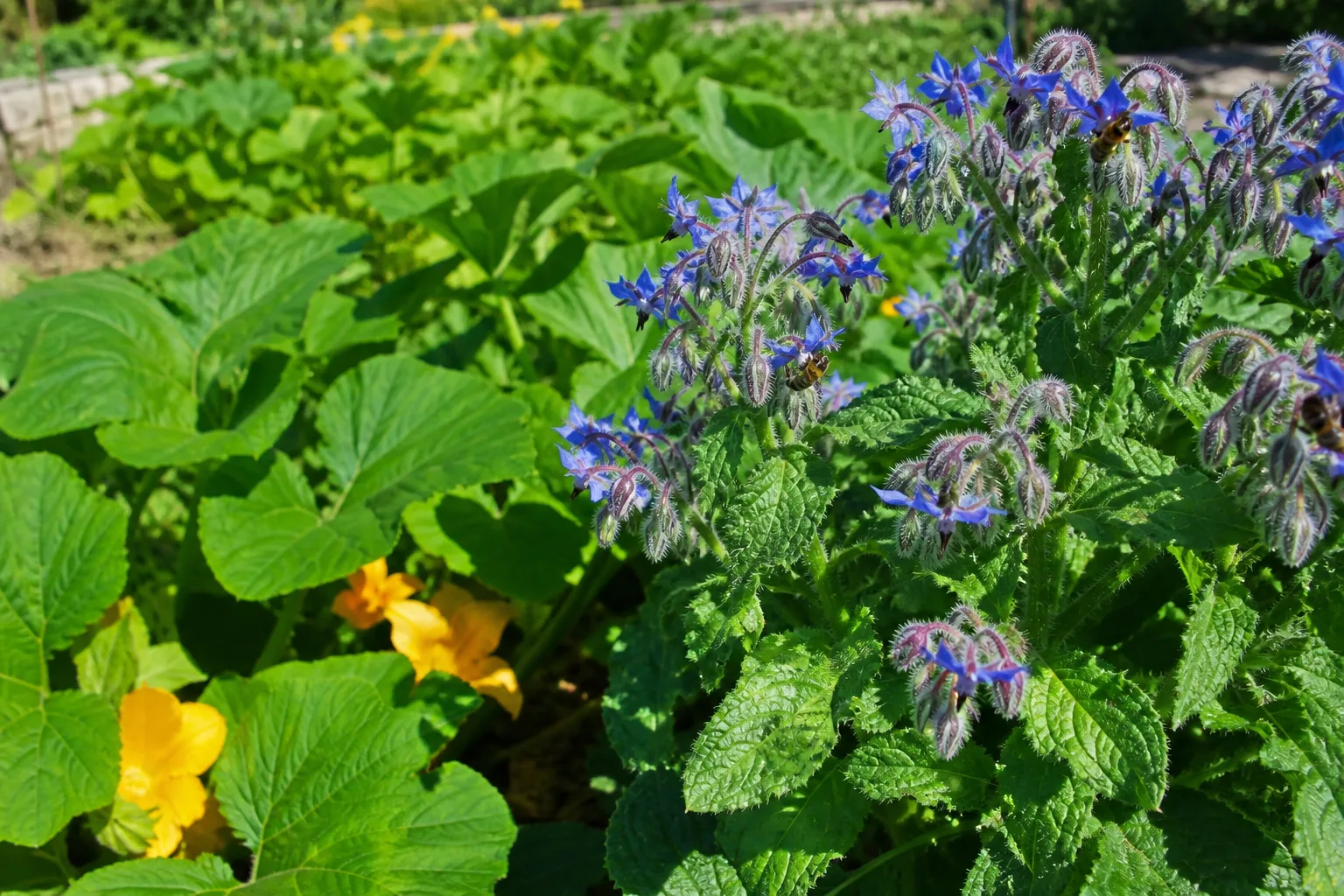
Borage (Borago officinalis) is a branching annual with star-shaped blue flowers that bees visit and leaves with a cucumber-like scent. It self-sows readily, and its mature foliage can feel coarse, so put it behind lower plants or near a vegetable bed where a loose habit is acceptable. Treat it as an ornamental pollinator plant unless you have checked reliable food-safety guidance for the plant and its intended use; a garden label alone is not a reason to eat it.
-
Common flax (Linum usitatissimum) is an annual with delicate, sky-blue flowers on slender stems. Individual blooms are brief, but a mass of plants creates a light haze through late spring and summer. Direct-sow it in full sun and loose, drained soil; it is less suited to transplanting than to a prepared patch. Do not confuse it with perennial ornamental flax, which is a different species and has a different garden habit.
-
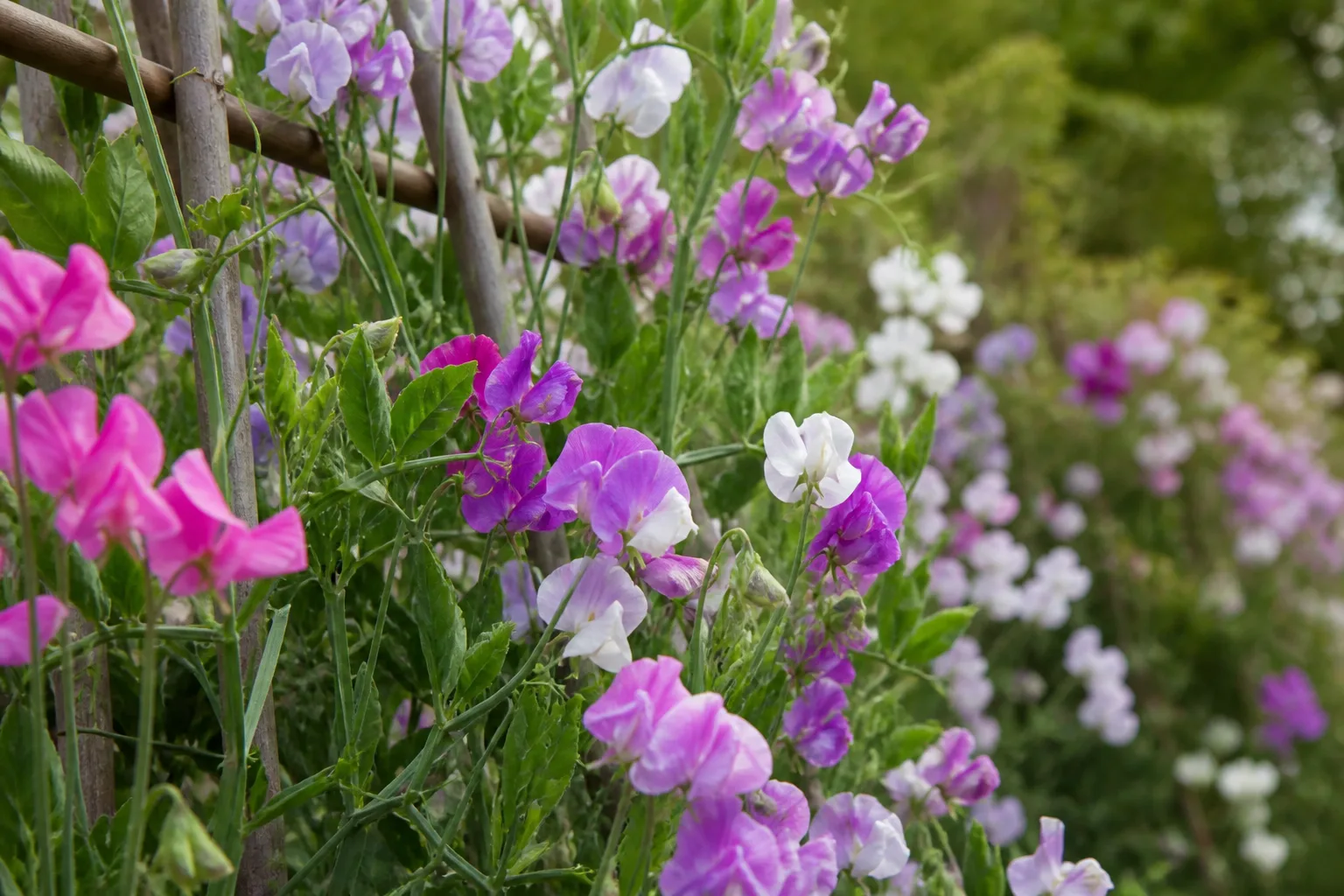
Sweet pea (Lathyrus odoratus) gives the blue palette height, fragrance, and cut flowers when grown on a support. Sow into cool weather and install the trellis before the vines tangle; heat can shorten the display, while regular cutting or deadheading helps keep flowers coming. Not every cultivar is fragrant, and blue shades vary. Because seeds and plant parts should not be eaten, place it where children and pets are not likely to snack on it.
-
Desert bluebells (Phacelia campanularia) are a spring annual wildflower native to the deserts of southeastern California. They are a strong choice for a sunny, low-water garden in a matching climate, where cool-season growth and well-drained soil suit their natural rhythm. They can reseed and form a patch, so allow that only where it will not crowd slower plants. In regions outside its native range, consider local annual wildflowers that fill the same role.
-
Flax (the common flax described above) and cornflower are particularly useful when you want to trial blue in a bed before committing to a permanent perennial. Sow small patches in two different locations, compare how the light changes the color, and save seed only from plants that perform well. This is a practical way to learn whether your garden favors a crisp blue or a softer blue-violet before you buy expensive cultivars.
-
Himalayan blue poppy (Meconopsis betonicifolia, also sold under related botanical naming) has luminous blue flowers, but it is not a reliable choice for every garden. It needs cool summers, even moisture, rich but well-drained soil, and protection from drying heat; many gardeners in hot-summer regions will get better results from blue delphiniums or columbines. Buy from a specialist grower and follow the named species’ instructions rather than assuming every “blue poppy” has the same needs.
-
Blue Diamond impatiens (Impatiens namchabarwensis) is an unusual blue-flowered species for cool, moist shade, but availability and performance can be inconsistent. Treat it as a seasonal plant where winters freeze, and confirm the botanical name because common-name listings can be imprecise. Give it steady moisture without waterlogging and remove seed capsules if you do not want volunteers. It is a collector’s choice, not the simplest route to dependable blue color.
Summer into fall: height, heat, and longer bloom
For color after spring bulbs fade, use a mix of repeat-blooming annuals, late perennials, and shrubs. Match plants to the hardest part of the site—often afternoon heat, winter wet, or a short growing season—rather than selecting only by a midsummer flower photograph. Several plants below are blue-violet rather than pure blue, but their shape and bloom timing make them valuable in a blue scheme.
Tall spikes and strong focal points
-
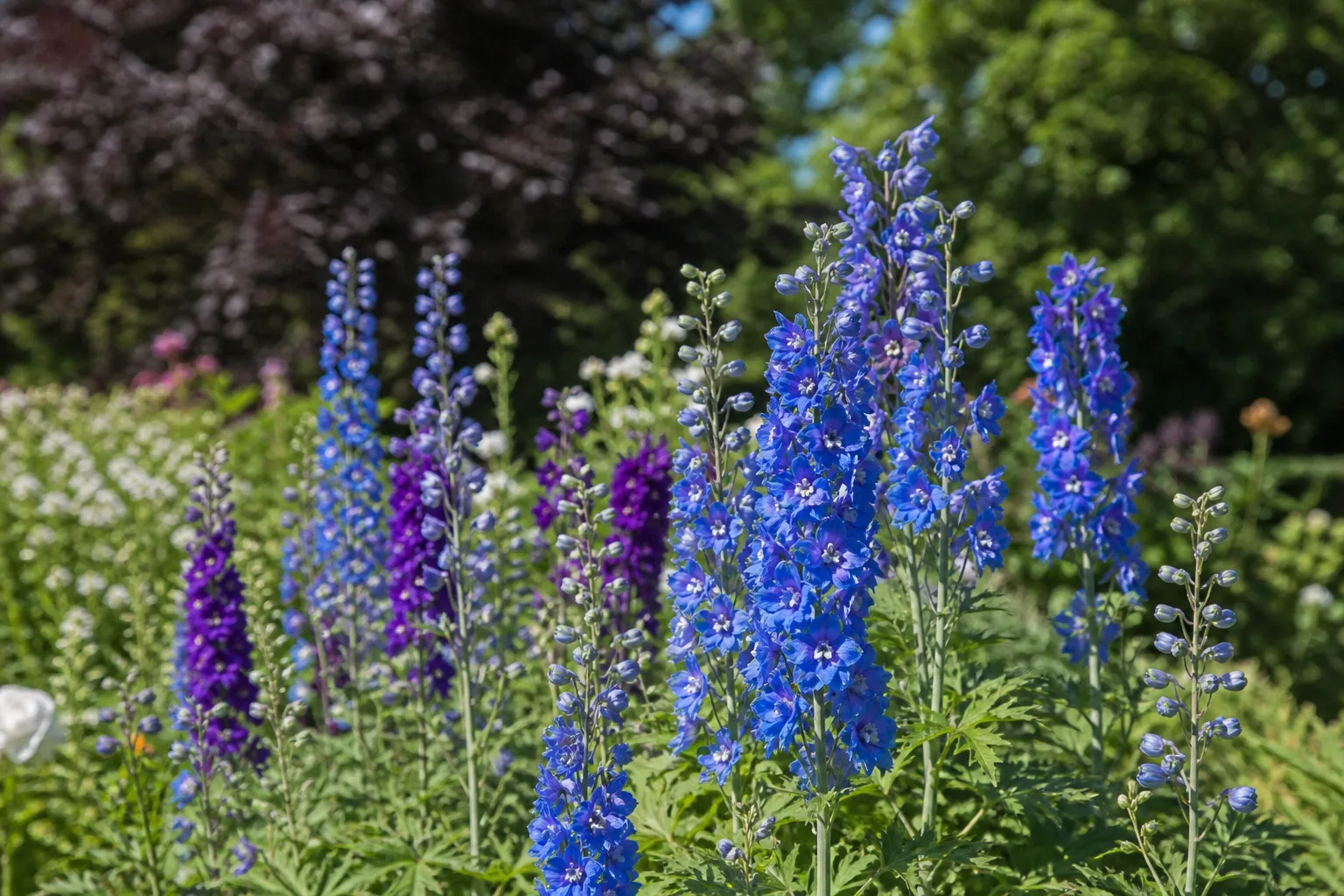
Delphinium (Delphinium species and hybrids) produces some of the tallest blue flower spikes, especially in regions with long, cool springs. The trade-off is maintenance: stems may need support, pests can damage young growth, and hot, humid weather shortens plant life. Choose a cultivar whose height fits the bed and stake it before the spikes lean.
-
Globe thistle (Echinops species) makes round, steel-blue flowerheads above deeply cut foliage. It handles sun and lean, well-drained soil better than wet clay, and the sturdy flower spheres work in fresh or dried arrangements. Its spiny texture contrasts with soft flowers, so site it behind a path edge rather than where people brush against it. Leave seedheads for structure, or cut them before seed disperses if you want to limit seedlings.
-
Blue mist shrub (Caryopteris × clandonensis) is a compact, late-summer shrub whose blue flowers arrive when many spring perennials are finished. Cultivars range from pale to deeper blue, and some have golden foliage, so check both traits before purchase. It needs full sun and good drainage; in colder climates the top may die back, and wet winter soil is more damaging than ordinary cold. Prune according to the local cultivar guidance, usually in spring after winter damage is clear.
-
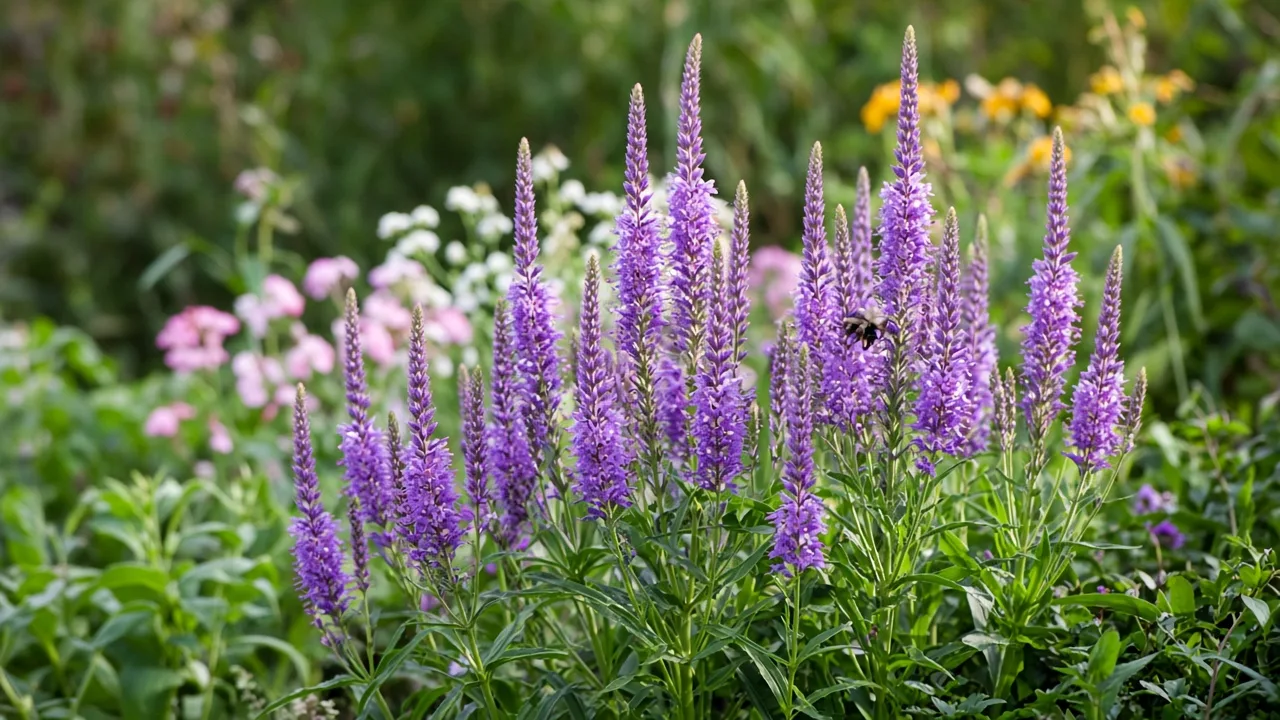
Speedwell (Veronica species) includes two very different blue-flowering forms. Upright V. spicata makes a border-ready flower spike, while creeping species such as V. filiformis create a low mat that can wander into lawn or paving. Match the species to the job, deadhead upright selections for a tidier repeat display, and keep creeping types where their spread will not become a nuisance.
Dry-site, warm-climate, and container choices
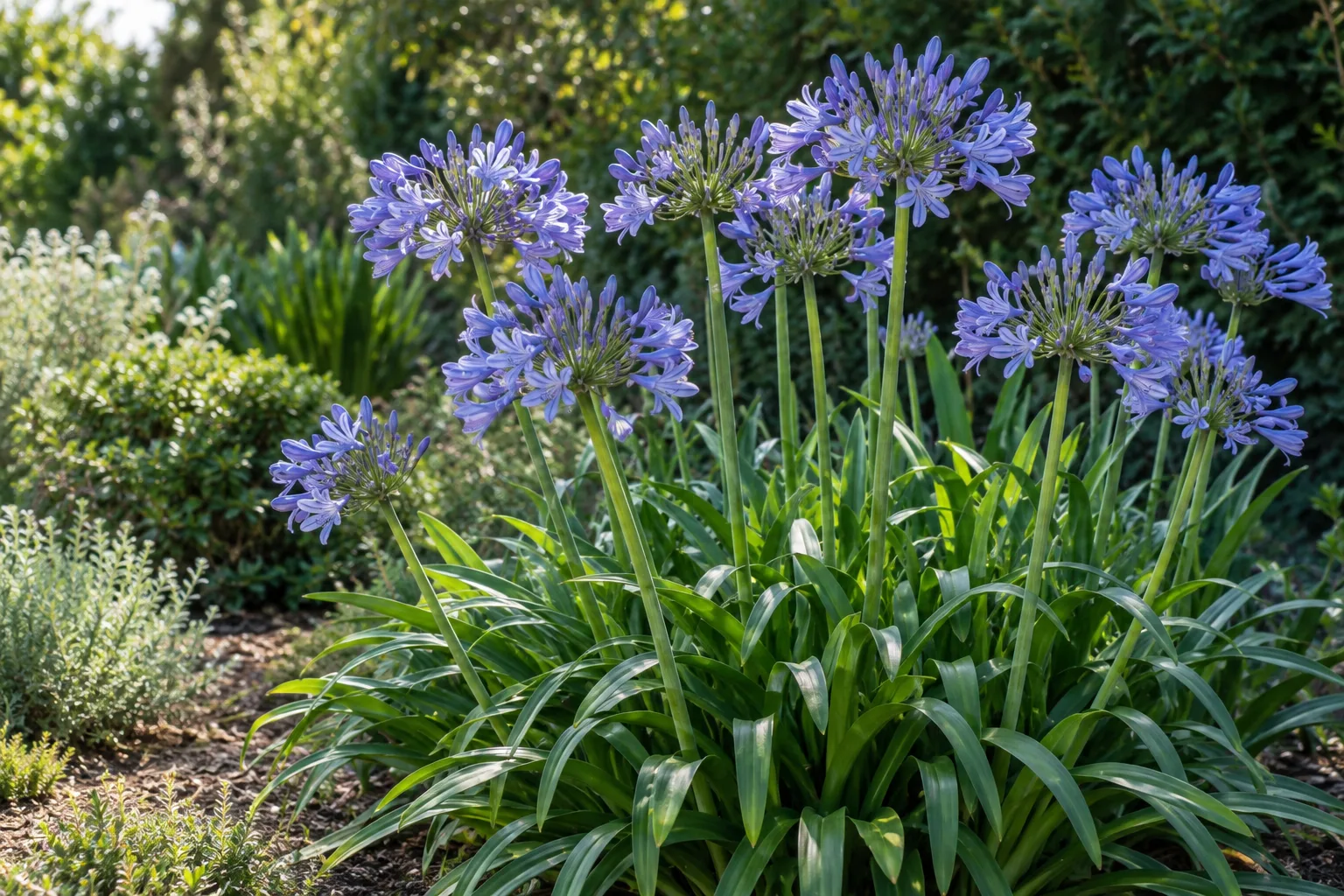
- African lily (Agapanthus africanus) carries rounded blue flower clusters above strap-shaped leaves in summer. In frost-prone gardens, grow it in a substantial container that can be moved to a bright, protected place for winter; in mild climates, give it sun and sharply drained soil. Its flowers suit a patio or poolside border, but do not treat it like a true lily or plant it in a waterlogged bed.
-
‘Black and Blue’ sage (Salvia guaranitica ‘Black and Blue’) has dark calyces and vivid blue tubular flowers that appeal to hummingbirds. It is a warm-climate perennial; where winters are cold, grow it as an annual or in a pot that can be protected. Give it sun to part shade and room to grow, then check local guidance because vigorous salvias can spread beyond the space intended for them.
-
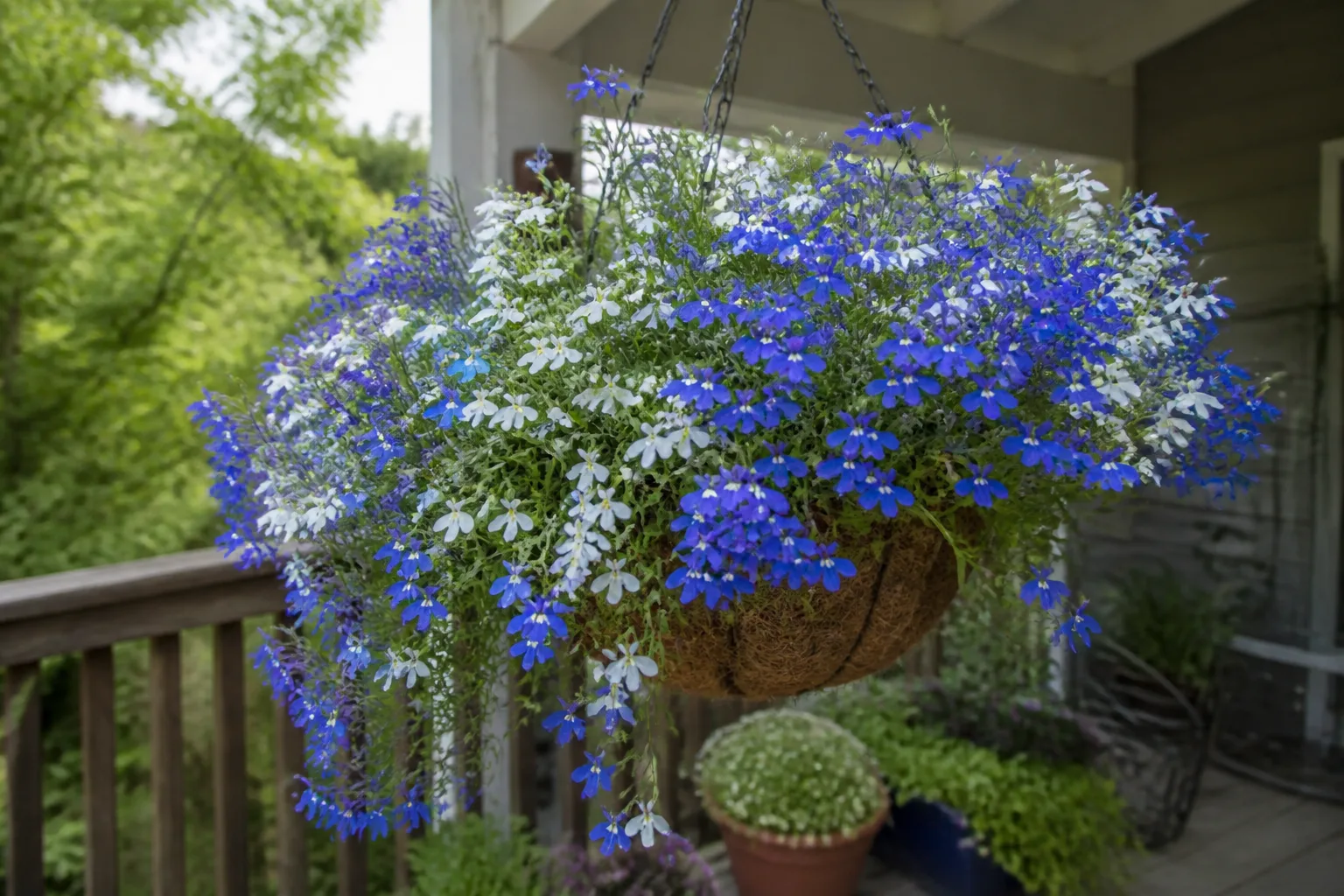
Lobelia (Lobelia erinus) is a compact blue annual for hanging baskets, window boxes, and the front edge of containers. It flowers best with consistent moisture and tends to fade when a pot dries repeatedly in summer heat. Trailing cultivars spill over a rim; upright forms make dense mounds. Treat it as an annual outside frost-free climates, and refresh or replace plants if a hot spell stops the display rather than overfeeding them.
-
Blue spur (Plectranthus ciliatus) is a warm-climate, spreading perennial with blue-purple flowers and a loose, substantial habit. It can be useful where a large tropical-looking groundcover is wanted, but its underground growth makes it a poor pick for a small, tightly edged bed. Give it space or grow it in a container, and check whether it is suitable for your region before planting outdoors.
-
Blue passionflower (Passiflora caerulea) adds elaborate blue-violet flowers to a sunny trellis or fence. It needs a sturdy support and enough airflow around its foliage; in warm climates it can grow vigorously, while cold winters can kill it back or prevent reliable flowering. Check local invasive-plant guidance before planting a fast-growing vine, then prune it to keep it within the structure and away from gutters or neighboring shrubs.
-
Chicory (Cichorium intybus) is a naturalized wildflower with clear blue daisies on wiry stems, often opening in the morning and closing later in the day. It thrives in sunny, drained ground and can look at home in a meadow-style planting, but many gardeners consider it a weed because it self-sows and spreads. Use it only where that informal habit is acceptable and local rules allow it; it is not a neat, clump-forming perennial.
-
Gentian (Gentiana species) is not one plant with one set of needs. Some species are alpine, others woodland or meadow plants; bottle gentian and other eastern North American species often need reliably moist soil, while alpine types demand cool roots and sharp drainage. Buy a named species from a nursery that can tell you its habitat and flowering season. The saturated blue flowers are worth the effort only when the site matches that species.
-
Fairy thimbles and sea holly illustrate why the word “blue” should not be the only filter: one is a petite alpine bellflower for a crevice, the other a tall, sun-loving perennial for dry soil. They can both sit in a blue planting, but their water and scale requirements are opposites. Put them in separate micro-sites rather than watering the whole bed to satisfy the thirstier plant.
-
Agapanthus, lobelia, and blue diamond impatiens are useful container candidates for different reasons: height and bold globes, trailing blue flowers, and shade-tolerant novelty. Use pots with open drainage, choose a mix that holds moisture without staying saturated, and match the container’s winter location to the least cold-hardy plant. A container makes seasonal care easier, but it does not cancel a plant’s heat or light needs.
When blue hydrangeas really stay blue
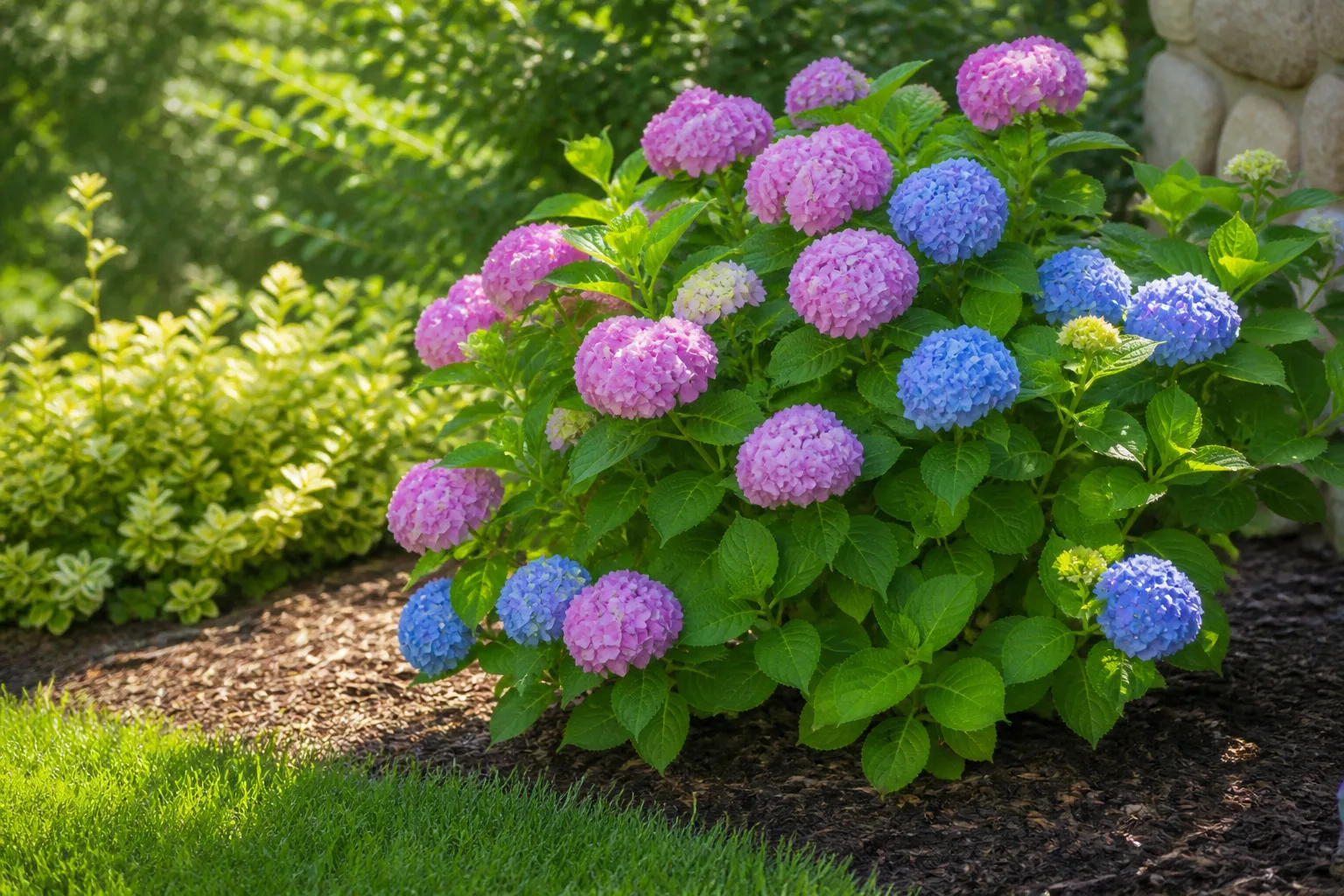
Hydrangeas are the famous exception to the rule that a flower’s color is mainly set by its genetics. Some bigleaf hydrangeas (Hydrangea macrophylla) and mountain hydrangeas (H. serrata) can shift toward blue when the cultivar can access aluminum in acidic soil. The RHS growing guide and Fine Gardening’s explanation of hydrangea color both make the key point: soil acidity alone is not a magic dye, and the cultivar must be capable of changing color. White cultivars generally stay white, and other hydrangea species do not become blue simply because the soil is acidic.
Before adding a soil acidifier or aluminum sulfate, test the soil and confirm the species and cultivar. If the pH is naturally high or the bed is near concrete or limestone, changing the color can be difficult and repeated amendments may harm roots or nearby soil. A container with a suitable acidic growing medium can give you more control, but the plant still needs reliable moisture, drainage, and a cultivar bred to change color. If the color outcome matters more than the shrub itself, choose a known blue cultivar in bloom rather than trying to convert an unsuitable plant.
Build a blue garden that changes through the seasons
A successful blue border is not 37 plants crowded together. Select perhaps three to five that solve different jobs: one early bulb group, one shade or spring perennial, one summer anchor, and one annual or late bloomer. Repeat the chosen hue at two or three points in the bed so the eye moves through the planting. Blue tends to recede visually, so a small isolated clump may disappear at a distance; larger groups or a clear contrast with white, silver foliage, or yellow-green leaves make it easier to read.
Build the sequence around foliage as well as flowers. Virginia bluebells can vanish after spring; combine them with later foliage rather than filling the gap with another plant that also disappears. Pair a tall delphinium or lupine with a shorter front-edge plant such as lobelia, but keep moisture-compatible plants together. Use bulbs beneath deciduous trees, where they can flower before the canopy closes, and save full-sun choices such as sea holly or cornflower for the open side of the garden.
Blue flowers can support pollinators, but color alone does not guarantee a useful food source. Penn State Extension explains that flower shape, nectar and pollen, bloom timing, flower depth, and scent also affect visits. Build a succession of different flower forms rather than relying on one brief flush, and prefer locally native species where they fit your conditions. Gardeners’ World’s blue-flower selection and the RHS blue and purple pollinator planting guide are useful references for combining plants across a season.
Planting, maintenance, and containment
Buy bulbs and perennials for the conditions you can provide, not the plant label’s best-case photograph. Check the mature width as well as height; many blue-flowering plants look delicate in a nursery pot but spread into substantial clumps. When planting a new bed, group species with similar drainage and moisture needs. A blue hydrangea and a sea holly may share a color scheme, but the hydrangea wants more even moisture while sea holly needs a much drier root zone.
Water new plantings deeply enough to moisten the root ball and surrounding soil, then adjust frequency to the weather and soil texture. Avoid keeping bulbs, delphiniums, or alpine plants in soggy ground. Let bulb foliage and spring-ephemeral leaves fade naturally, remove only what has yellowed, and deadhead annuals when you want continued flowers or fewer seedlings. Conversely, keep seedheads if you want a controlled self-sown patch or winter interest.
Before planting any self-seeding annual, vigorous vine, or naturalizing bulb, decide where its offspring may land. Cornflower, borage, love-in-a-mist, forget-me-not, chicory, Siberian squill, and grape hyacinth differ in how readily they spread, but each is easier to manage when you deadhead before seed matures or plant it in a bounded area. Check regional invasive-species lists for nonnative plants, especially near waterways, woodlands, or protected habitats. For plants known to be toxic, use a reliable local poison-control or extension reference and site them where children and pets cannot chew them.
Common mistakes with blue-flowering plants
The first mistake is assuming a catalog’s “blue” will look the same in your garden. Check photographs from more than one source and favor a named cultivar; if possible, see the plant in bloom. The second is forcing an unsuitable plant into the wrong climate: Himalayan blue poppy struggles with hot summers, while tropical blue selections need winter protection in cold regions. A similar-looking alternative that matches your site will usually outperform the famous but fragile choice.
Another mistake is treating every blue plant as a full-sun perennial. This list includes bulbs, annuals, biennials, shrubs, vines, and shade ephemerals. Their lifespans and after-flowering behavior vary: a forget-me-not may finish after setting seed, a Virginia bluebell may disappear underground, and a blue mist shrub may be damaged to the ground in winter but resprout in spring. Those are normal life-cycle patterns, not automatically signs of failure.
Finally, do not alter soil just to chase hydrangea color without identifying the hydrangea and testing the soil. Nor should you plant something that spreads freely simply because it offers the exact shade of blue you want. A smaller, well-sited group of dependable plants is easier to maintain and more convincing than a dense collection that competes for water, light, and space.
Conclusion
The best blue flowers are the ones whose site requirements, bloom window, and growth habit fit your garden. Start with a few reliable choices—spring bulbs for early color, a locally appropriate perennial for structure, and annuals for inexpensive experiments—then add a specialized plant only when you can provide its conditions. If you want a particular blue, buy a named cultivar and check it in bloom; if you want a low-maintenance planting, prioritize drainage, local climate, and how the plant spreads.
A blue garden can be a spring carpet, a cool border of summer spikes, or a few strong container accents. Combine those forms across the year and leave space for foliage after flowers fade. That makes the color feel intentional while letting each plant grow in the conditions it actually needs.



