Do Bags of Water With Pennies Keep Flies Away?
Do bags of water with pennies keep flies away? See what the evidence says, then use sanitation, screens, fans, and traps that target the real source.
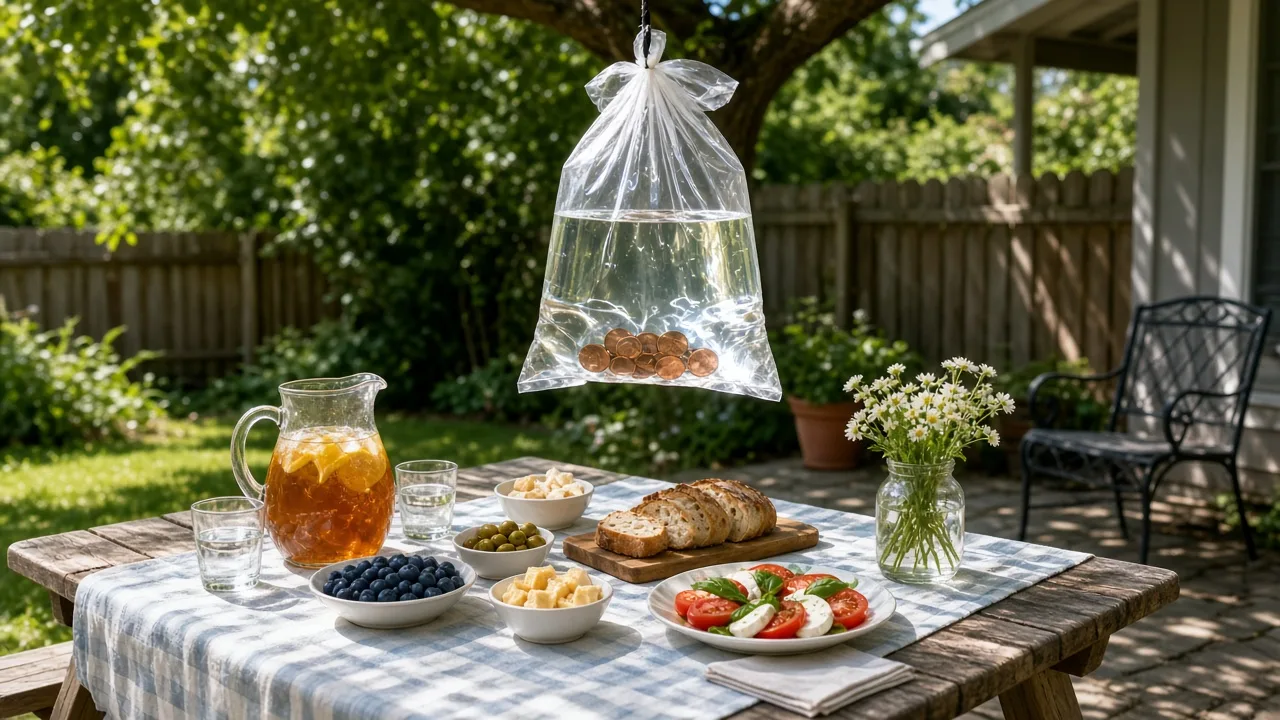
The short answer: treat the penny bag as a curiosity, not control
If you hang a clear bag of water with a few pennies near the patio and the flies keep landing on the table, that result is not surprising. The setup has a plausible visual story behind it, but it does not remove the garbage, compost, pet waste, fallen fruit, or open door that is bringing flies into the area. It also does not create a dependable barrier around food.
The fairest answer is more precise than a simple yes or no: a small, older study found that transparent bags of water could repel some house flies under particular laboratory and field conditions, but it did not prove that pennies are the active ingredient or establish a reliable household recipe. Treat the bag as an optional experiment at most. For control, put your effort into source reduction, exclusion, airflow, and correctly placed traps.
That order matters because adult flies are the visible part of a larger problem. A house fly can arrive from somewhere else, but a persistent group usually means the property offers food, moisture, shelter, or a place to reproduce. The CDC’s integrated pest management guidance recommends inspection, correct identification, threshold-based decisions, and two or more control measures that remove what pests need to survive.
Why a bag of water with pennies seems plausible
The idea sounds scientific because it borrows real facts about insect vision. A fly has compound eyes made of many small visual units, and a clear bag full of water can bend, reflect, and distort light. In bright sun, the bag may also move, flash, or create a large unfamiliar shape near an opening. Those effects could change the flight path of an individual insect for a moment.
The leap comes when a possible visual disturbance is presented as a tested repellent system. Flies do not approach a yard based on sight alone: odors, food, warmth, moisture, shelter, and the opportunity to lay eggs all compete with visual cues. A hungry fly may avoid one shiny object and still fly around it to reach a trash can, a dripping bin, or a plate of fruit.
What the method is supposed to do
Most explanations describe the water as a lens and the pennies as extra reflective surfaces. Some versions claim the distorted reflection confuses the fly’s compound eyes; others say the bag resembles a predator or wasp nest. Those explanations are hypotheses, not a general rule that every fly recognizes and obeys.
There is also no established reason to think the pennies themselves provide a special chemical or magnetic effect. Copper in a coin is not an insecticide at the distance involved, and adding more coins does not give you a measured dose of a proven repellent. If a bag appears to work, the more defensible explanation is a temporary response to a visual object, sunlight, movement, or a change in the observer’s behavior.
That last possibility is easy to miss. Someone who hangs a bag may also wipe the table, move the trash, close the door, stop serving food, or spend less time outside while evaluating it. A before-and-after impression cannot tell you which change caused fewer flies.
What the small study actually found
The strongest useful evidence is a 1997 paper titled “Behavior of house fly, Musca domestica, in relation to transparent plastic bags with water”. Researchers used laboratory-reared house flies in a dark-room apparatus with ultraviolet lamps and also ran outdoor and enclosed-box tests. The abstract reports that a transparent bag containing water showed more than 30% repellency on average.
That is worth acknowledging, but it is not a blank check for the viral DIY. The study used specific bag sizes, water volumes, light conditions, fly populations, and test arrangements; it did not provide a dependable number of bags per patio, a universal hanging height, a working time, or a penny-specific advantage. In one set of color tests, yellow water was more attractive and green was less attractive, which shows how strongly a result can depend on the exact visual setup.
The study also predates much of today’s online advice and was not a long-term home infestation trial. It does not answer whether a bag keeps flies away from a family meal, whether it works in shade, whether condensation attracts flies, or whether a leaking bag creates a new moisture source. A later review of alternative house-fly controls places optical bags among methods that need context and evaluation, while emphasizing sanitation and exclusion as the foundation.
If you are determined to test the trick, use an A/B comparison rather than a memory test. Put a clear water bag in one similar, non-food location and an empty bag of the same material in another; observe the same time period, light, wind, food exposure, and number of flies, then repeat on more than one day. Keep the test away from children, electrical equipment, and serving surfaces, secure it so it cannot leak, and remove it if condensation or a puddle appears. That can satisfy curiosity without treating a few quiet minutes as proof of control.
Identify the fly before choosing a fix
“Flies” are not one pest with one life cycle. The right first action for a house fly is different from the right first action for a fruit fly, drain fly, stable fly, or fungus gnat. Misidentification is one reason a person can clean the kitchen and still see insects because the real source is a compost bin, a drain, a dead animal, or damp potting mix.
| What you notice | More likely | First place to inspect |
|---|---|---|
| Gray fly about 1/4 inch long, often resting on walls or food areas | House fly | Garbage residue, pet waste, compost, manure, fallen produce, entry gaps |
| Shiny blue, green, or bronze adults; sudden cluster indoors | Blow fly or flesh fly | Outdoor bin, carrion, meat scraps, wall or attic void |
| Small tan flies around fruit, wine, vinegar, or fermenting produce | Fruit fly | Overripe produce, recycling, bottles, drains, garbage disposal, compost |
| Tiny fuzzy flies resting near a sink or drain | Drain fly | Slime inside the drain, overflow, trap, or wet organic buildup |
| Tiny dark flies rising from plant pots | Fungus gnat | Overly wet potting mix and decaying organic material |
House flies, blow flies, and stable flies
The common house fly, Musca domestica, is gray, strongly mobile, and associated with garbage, animal feces, manure, and other decaying organic material. Illinois public-health guidance explains that filth flies can feed and lay eggs on such material before landing on food or preparation surfaces. That is why “just keep swatting” is frustrating: killing adults does not remove the next generation.
Under favorable conditions, house-fly development can move from egg to egg in about a week, and a female can produce around 1,000 eggs during her lifetime, according to the research review above. The exact speed varies with temperature, moisture, food quality, and species, but the practical lesson is stable: a warm, wet, nutrient-rich source can turn a few adults into a recurring problem quickly.
Shiny blow flies or flesh flies point you toward meat scraps, animal remains, or a carcass rather than a bowl of fruit. Stable flies are different again because they bite; their immature stages can develop in wet manure, rotting straw, feed, or yard waste. A bag of water does not address any of those sources, and a scented plant will not compensate for a concealed animal or a wet waste pile.
Fruit flies, drain flies, and fungus gnats
Fruit flies are much smaller than house flies and are often concentrated around fermenting or overripe produce. Epic Gardening’s fruit-fly guide notes that adults and larvae are closely tied to ripe or decomposing fruits and vegetables, and recommends removing breeding material, cleaning drains and disposals, and refrigerating produce when practical.
Drain flies look moth-like because of their fuzzy wings and usually rest near plumbing. Scrubbing the drain opening alone may not be enough if the organic film is deeper in the trap or overflow channel. Fungus gnats, meanwhile, are a potting-mix problem; letting containers stay constantly wet can support the fungi their larvae feed on.
This distinction changes the trap, too. A vinegar-and-soap jar can be useful for fruit flies because the fermenting smell attracts them and the soap breaks surface tension. It is a poor answer for a patio full of house flies, and placing a sweet bait beside your dinner may draw more activity into the exact space you are trying to protect.
Locate the food or breeding source
Before buying spray or hanging five more bags, follow the flies. Watch where they settle when food is covered and the room is quiet, then inspect the nearest wet, organic, or animal-related material. The Illinois Department of Public Health’s house-fly guidance calls inspection the key to sanitation because you cannot remove a breeding site you have not found.
Indoor sources worth checking
Start with the places that stay damp or hold residue. Lift the liner from the kitchen trash can and wash the bottom and lid; check the compost caddy, recycling container, mop head, pet-food area, and any sticky spill beneath an appliance. A clean-looking bin can still have a thin, fermenting film that supplies odor and moisture.
If the flies are tiny, do not stop at the fruit bowl. Check onions, potatoes, wine or beer bottles, recycling, the garbage disposal, sink overflow, and drains. For drain flies, a flashlight and a clear overnight cover over the drain can help show whether adults are emerging there; cleaning should target the organic film, not simply perfume the opening.
Also consider sources that are unpleasant but informative. A sudden wave of large shiny flies indoors can signal a dead rodent or bird in a wall, chimney, attic, or crawlspace. If sanitation is good and the insects keep appearing from one room, inspect hidden voids or call a qualified pest professional rather than filling the air with aerosol.
Outdoor sources that keep the cycle going
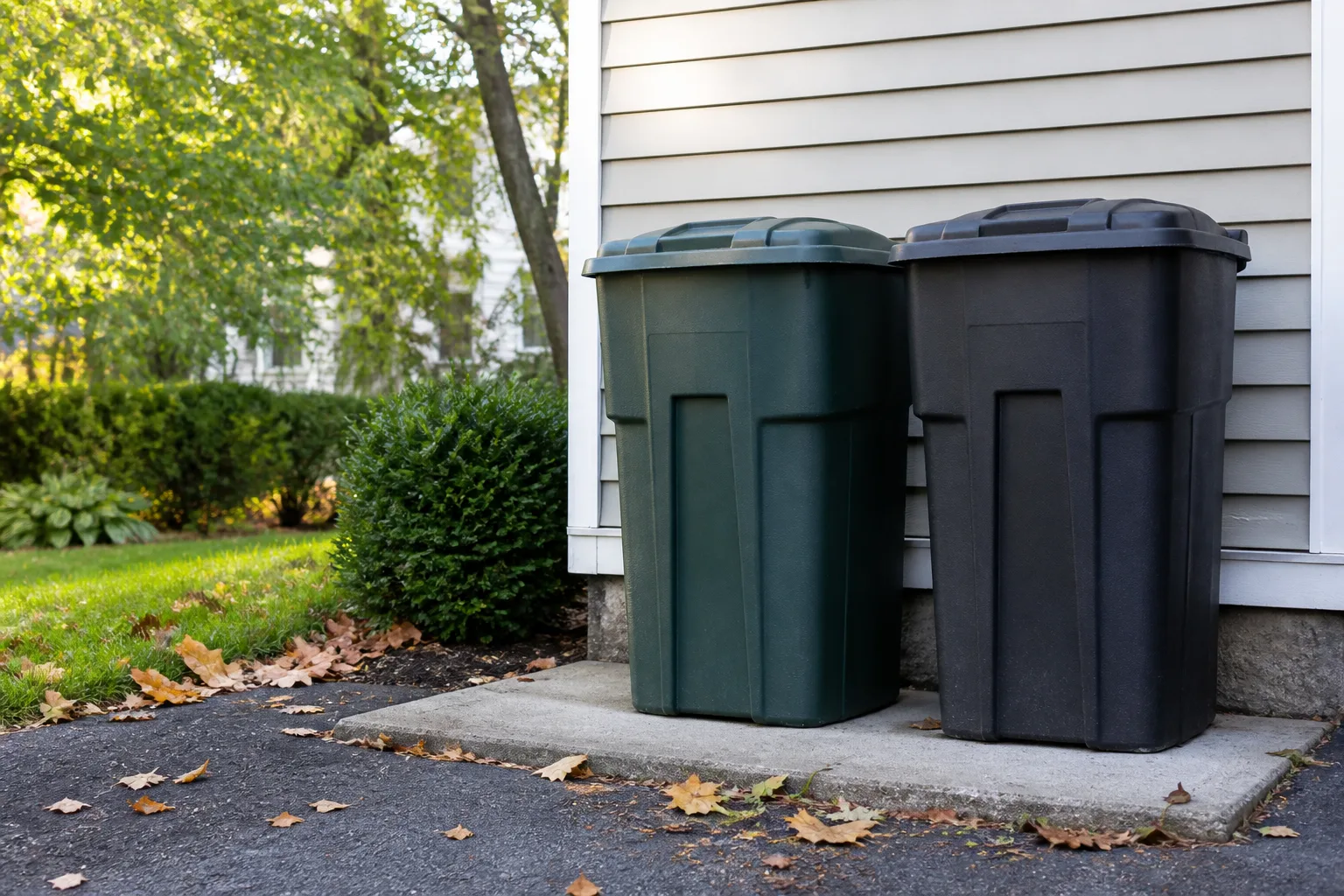
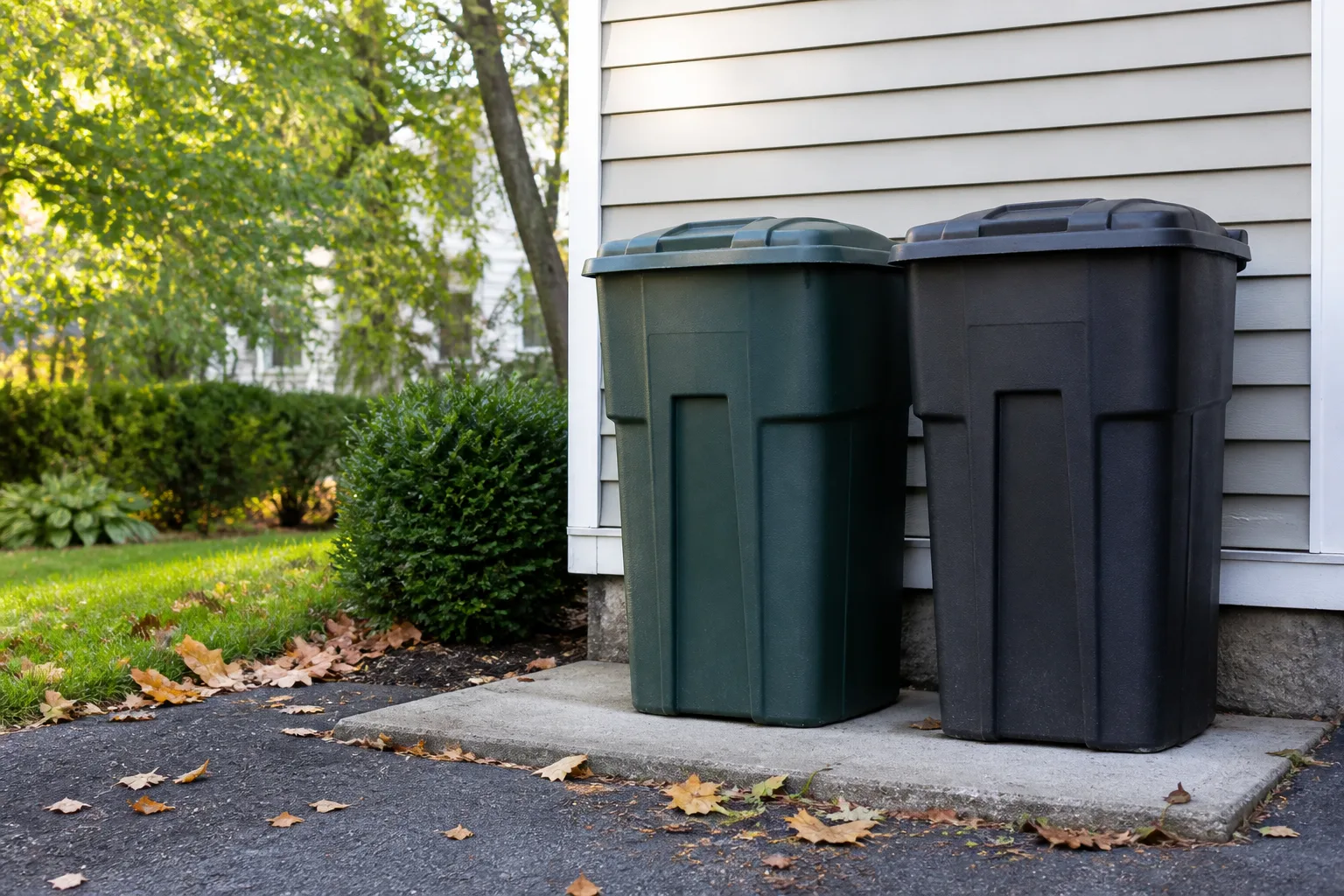
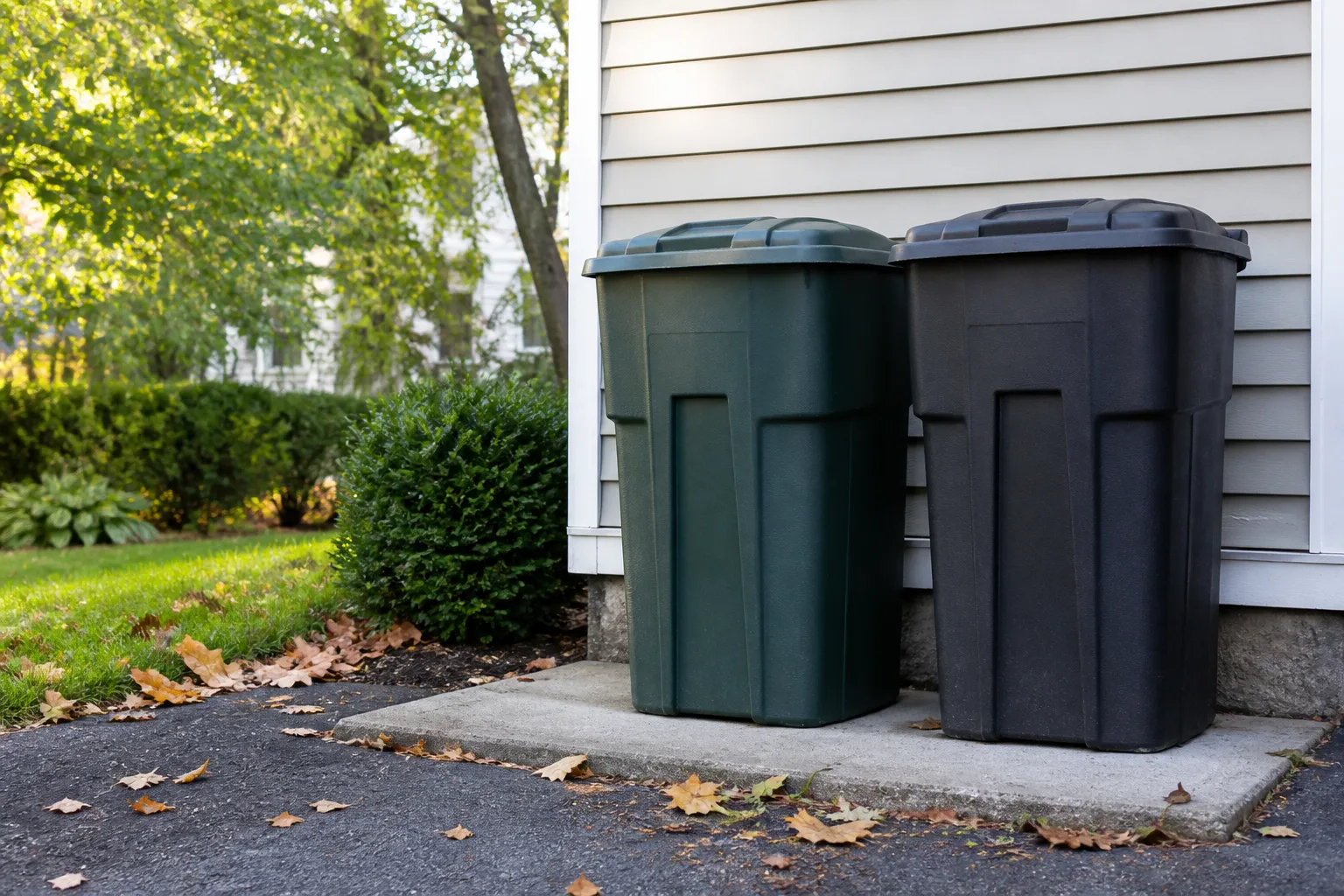
Outside, inspect the underside and bottom seam of garbage cans, the area beneath a leaking hose bib, wet leaves, grass clippings, open compost, fallen fruit, animal droppings, and any carcass. The San Diego County fly guidance specifically recommends tight garbage lids, regular cleaning of cans, dry or covered manure, prompt removal of dog waste, and tightly covered compost.
Move the source away from the house and eating area when you can, then correct it. A tight lid helps, but it is not a substitute for rinsing residue from the can; a covered compost pile helps, but it still needs balanced, managed material rather than a wet layer of fruit scraps at the surface. Pick up windfall fruit before it collapses into the soil, and remove wet organic piles that are too close to doors or seating.
Do not create a new attractant while trying to remove one. A penny bag that sweats onto a windowsill, drips onto a deck, or tears above a doorway adds water and cleanup without reducing the odor that brought the flies. If you use any hanging object outdoors, inspect it after rain and wind and take it down before it leaks.
Use a source-first control sequence
Think in layers rather than in a single magic trick. A reliable sequence is inspect and identify, remove the source, block entry, protect the target area, then trap or kill the remaining adults. That is the home version of integrated pest management: manage the conditions that let the insect feed, breed, and enter, and use adult control only where it adds value.
Remove food, moisture, and egg-laying material
Make the first pass boring and thorough. Seal indoor trash, rinse food residue from containers, wipe sugary spills, cover pet food when it is not being eaten, refrigerate vulnerable produce, clean drains where small flies are emerging, and remove pet waste and fallen fruit outdoors. Keep compost covered and avoid leaving wet organic matter pressed against a wall, fence, or bin.
Moisture deserves its own check because it is easy to overlook. Empty water that collects in trays, buckets, toys, tarps, and bins; repair leaks; let cleaned surfaces dry; and avoid leaving a soaked rag or mop in a warm room. Not every pool of water breeds house flies, but damp organic material is a high-value combination for several filth-fly species.
Give the correction time to work. Adult flies already present may live long enough to keep bothering you after the source is removed, so judge progress over several days rather than expecting an instant empty yard. If numbers stay the same or increase after thorough cleanup, assume you missed a source or that flies are arriving from a neighboring property, shared dumpster, livestock area, or hidden void.
Exclude flies with screens, doors, and moving air
Exclusion is more dependable than trying to repel every fly that can smell food. Repair holes in window and door screens, close gaps around frames, keep doors shut when possible, and check vents or pet doors that connect directly to a waste area. The county guidance recommends screens in good repair and notes that small flies may require finer mesh than large house flies.
For an open patio, a fan is a practical temporary barrier. Point it across the seating or serving zone so the moving air disturbs the flies’ approach and makes landing difficult; do not aim it at the trash can, compost, or a pile of food scraps. Research summarized in the house-fly control review describes fans and air curtains as exclusion tools, and a practical Gardening Know How guide likewise recommends a fan directed at an outdoor table.
Use common sense with the setup. A fan should be stable, protected from rain, and positioned so its cord cannot cross a walkway; airflow that scatters napkins, ash, or crumbs can create more cleanup. A fan protects people and food for as long as it runs, but it does not reduce the population once it is switched off.
Cover the food itself. Mesh cloches, lidded containers, and covered drinks reduce the odor plume and landing surface that flies use; serve smaller portions and replace covers promptly after serving. This is especially useful when the source is outside your control, such as a nearby communal bin or a warm-weather event in a shared courtyard.
Trap the adults you cannot keep out
Traps are a second line, not a substitute for sanitation. For occasional house flies indoors, a swatter or a discreet sticky strip in a low-traffic location may be enough. For persistent indoor activity, a glue-board UV trap can catch adults without the visible fragments associated with some electrocution-style devices; keep any trap away from food preparation and follow its placement and replacement instructions.
Outdoor bait traps require more careful placement. The San Diego County recommendations advise putting attractant-lure traps around the property perimeter and away from people because a lure can draw flies toward the trap—and therefore toward the patio—if you hang it beside the table. Empty or replace it according to the product directions, and do not let a full trap become its own odor source.
For fruit flies, use a small vinegar trap near the affected produce or drain while you remove the breeding source. A jar with a shallow amount of vinegar, wine, or beer and a few drops of dish soap can catch adults, but it will not stop a new generation if a bottle film, disposal, or compost pile remains. Cover or discard the trap when children or pets can reach it, and keep it away from food that will be served.
The goal is not to collect the largest number of flies. It is to reduce contact where people eat, verify that the population is falling, and avoid turning a lure into a dining-room centerpiece. That decision alone makes a properly placed trap more useful than a reflective bag that neither captures nor excludes anything.
Where scents and fly-repelling plants fit
Fragrant plants can be a pleasant supporting measure around a porch, window, or patio edge. Basil, mint, lavender, rosemary, and lemongrass contain aromatic compounds that people often find useful for creating a less appealing immediate area, and University of Georgia Extension lists several of these plants while warning that they will not make a garden insect-free.
The limitation is scale. The same extension article notes that it is unclear how many plants are needed or how close they must be to repel insects effectively. One pot of basil beside a door may add fragrance; it does not seal the doorway, neutralize a garbage bin, or stop a house fly arriving from a compost pile. Mint can also spread aggressively, so grow it in a container if you want it near the seating area.
The same caution applies to citronella candles, citronella-scented products, and peppermint oil. A scent may briefly alter where an insect lands, but fragrance fades outdoors and wind breaks up the concentration. The house-fly research review warns that many “natural” compounds promoted online have not been adequately evaluated for effectiveness or safety, and a concentrated essential oil can irritate skin, damage foliage, stain surfaces, or create a pet-safety issue.
Never assume that a homemade essential-oil spray is safe to apply to skin, food, pets, or edible plants. If you use a labeled product, follow that product’s directions; if you use a plant, treat it as landscaping and an adjunct to screens and sanitation, not as your primary fly-control system.
When spray, pesticide, or professional help is warranted
For one or two flies, a swatter, screen repair, covered food, and a fan are usually proportionate. For a recurring problem, look for the source before escalating. Repeatedly spraying adult flies can give short-lived relief while leaving the breeding material untouched, and frequent use of the same insecticide can select for resistant flies.
If a pesticide is genuinely needed, use only a product registered and labeled for the site and pest, read the directions, and keep people, pets, food, and pollinators away as the label requires. Do not fog a kitchen, spray a food surface with a garden product, pour insecticide into a drain, or use a skin repellent as an area treatment. For personal protection from biting insects, the CDC’s repellent guidance lists EPA-registered active ingredients such as DEET, picaridin, IR3535, and oil of lemon eucalyptus, but that category protects a person; it does not repair a fly-breeding source.
Call a qualified pest professional when you find maggots, a large sudden emergence, a suspected dead animal, repeated flies after sanitation and exclusion, or a source you cannot safely reach. Businesses, food-preparation areas, childcare settings, and homes with vulnerable occupants deserve a lower threshold for professional assessment because the cost of contaminated surfaces or an uncontrolled infestation is greater than the cost of a bag of coins.
Before the appointment, record where the flies are concentrated, when they appear, what they look like, recent weather, garbage or compost changes, and what you have already cleaned. That information is more useful than simply reporting that “the water bag did not work,” because it helps the professional trace the route and life stage.
Conclusion
A clear bag of water with pennies may disturb some house flies in certain light and test conditions, and one small study did find measurable repellency from a transparent water bag. But the evidence does not establish pennies as a magic ingredient, a universal recipe, or a durable solution for a patio or home.
Use the bag only if you enjoy testing a harmless visual curiosity and can keep it leak-free. For a result you can count on, identify the fly, remove the food or breeding material, repair screens, protect food, run a fan across the people-and-table zone, and place traps away from the area you want to keep fly-free. That sequence targets why flies are present instead of asking one shiny object to solve the entire problem.



