Why Watering Amaryllis with Ice Cubes Is a Bad Idea
Ice cubes work for some orchids, but amaryllis bulbs need warm, even moisture. Learn why pros skip the ice-cube trick and how to water correctly.
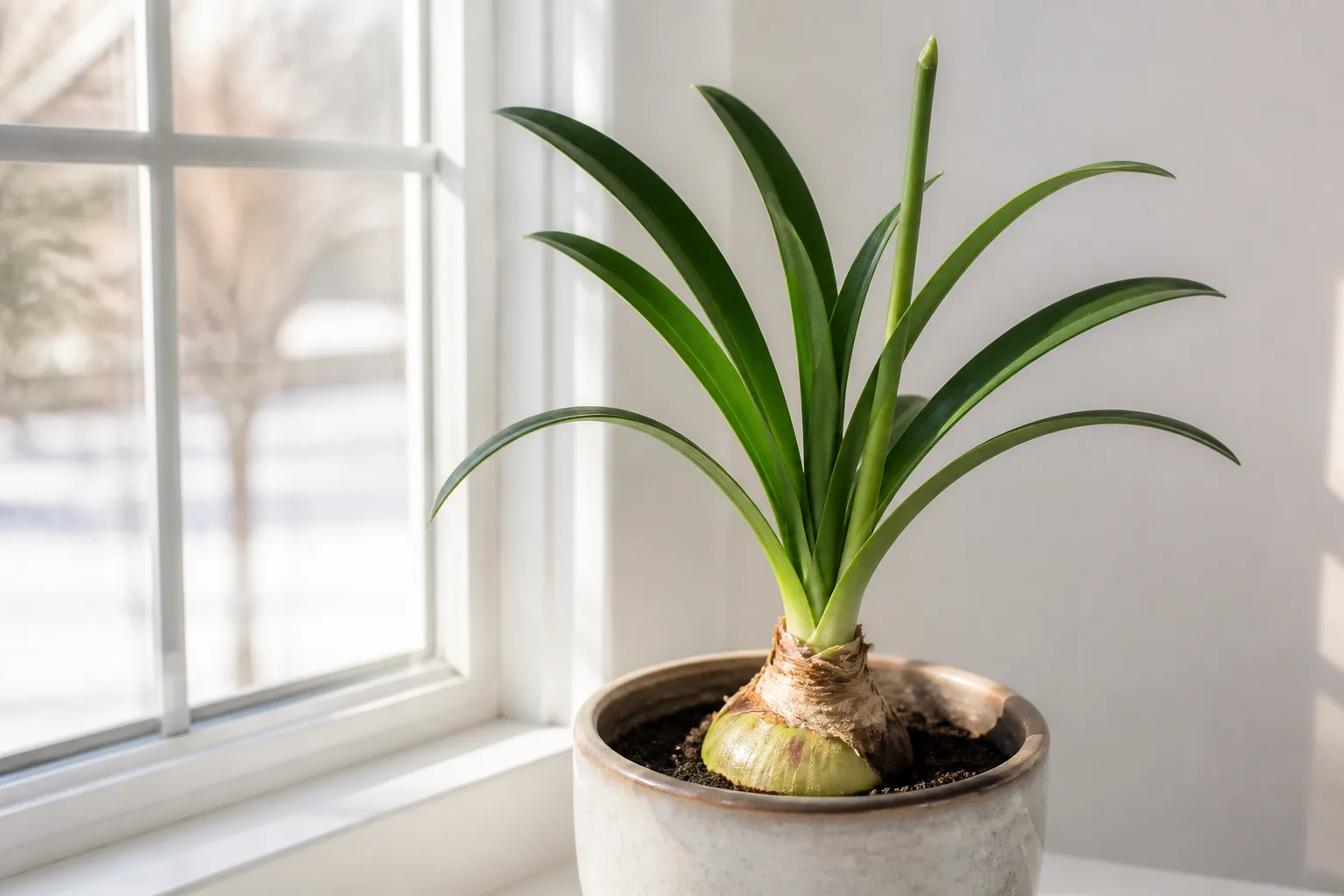
You bought a Hippeastrum bulb for the holidays, set it on the windowsill, and someone on social media said you could water it with a single ice cube—same trick they use on their moth orchid. The logic sounds tidy: slow melt, controlled sip, no soggy soil. For amaryllis, that convenience comes with the wrong temperature and the wrong wetting pattern at the same time. Watering amaryllis with an ice cube is a bad idea because subtropical bulbs in dense potting mix need warm, even moisture—not a cold drip on one corner of the root zone.
The Short Answer: Do Not Water Amaryllis with Ice Cubes
No—do not water amaryllis with ice cubes. Store-bought amaryllis are warm-climate bulbs that grow best around 65–75°F during active growth, according to North Carolina Cooperative Extension. Ice delivers water near 32°F (0°C) directly against roots and the basal plate where leaves emerge. That cold shock can slow growth and stress tissue that evolved for steady warmth. The melt also wets one small patch of soil while leaving other roots dry—a poor match for a bulb sitting in standard potting mix rather than open orchid bark.
If you want a low-maintenance rhythm, use room-temperature water on a simple finger-test schedule instead of a freezer shortcut. Your bulb will thank you with steadier leaves, fewer rot scares, and a better shot at flowers next year. For the full post-bloom calendar, see our amaryllis care after blooming guide.
Why the Ice-Cube Trick Went Viral in the First Place
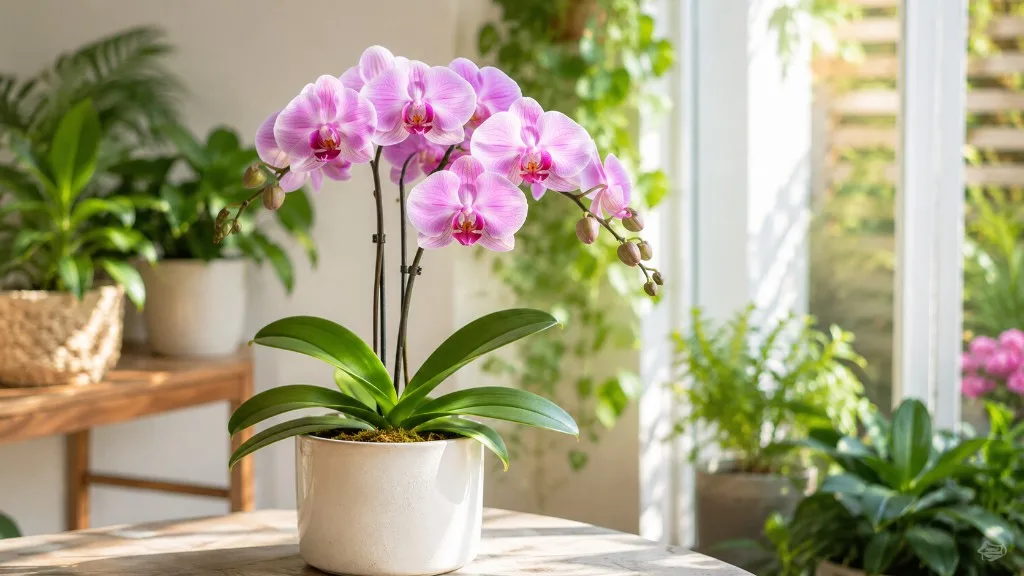
Ice-cube watering did not start with amaryllis. It spread through Phalaenopsis orchid care because commercial growers and retailers promoted a measured weekly dose—often three cubes for a standard moth orchid—that melted slowly through chunky bark. The method promised beginners a way to avoid the classic orchid killer: leaving roots swimming in waterlogged moss.
Orchids, Marketing, and the “One Cube a Week” Promise
Orchid bark and coconut husk drain fast. Water poured from a can can run straight through before roots absorb much. An ice cube sitting on top melts over minutes, releasing moisture in small pulses that the porous medium can catch. Ohio State University greenhouse research found that weekly ice-cube irrigation in bark-based media could support healthy Phalaenopsis growth under a controlled protocol. That is a very different plant, pot, and medium than a Hippeastrum bulb half-buried in peat-based potting soil on a winter windowsill.
The hack traveled sideways onto other tall, waxy-leaved houseplants—including amaryllis—because they look vaguely “orchid-like” in a gift-shop display. Appearance is not biology. Copying orchid rules onto a storage bulb in soil is how good intentions produce stressed plants.
Amaryllis and Orchids Are Not the Same Watering Problem
Both amaryllis and moth orchids are sold as elegant indoor flowers. That is where the similarity ends for watering purposes.
Bulb in Potting Soil vs Epiphyte in Bark
Amaryllis (Hippeastrum hybrids) are subtropical bulbs native to warm regions of South America and southern Africa. UF/IFAS Gardening Solutions describes them as subtropical bulbs typically grown in well-drained potting media, with at least half to two-thirds of the bulb often left above the soil line. Roots and basal plate need moisture, but the bulb itself should never sit in standing water.
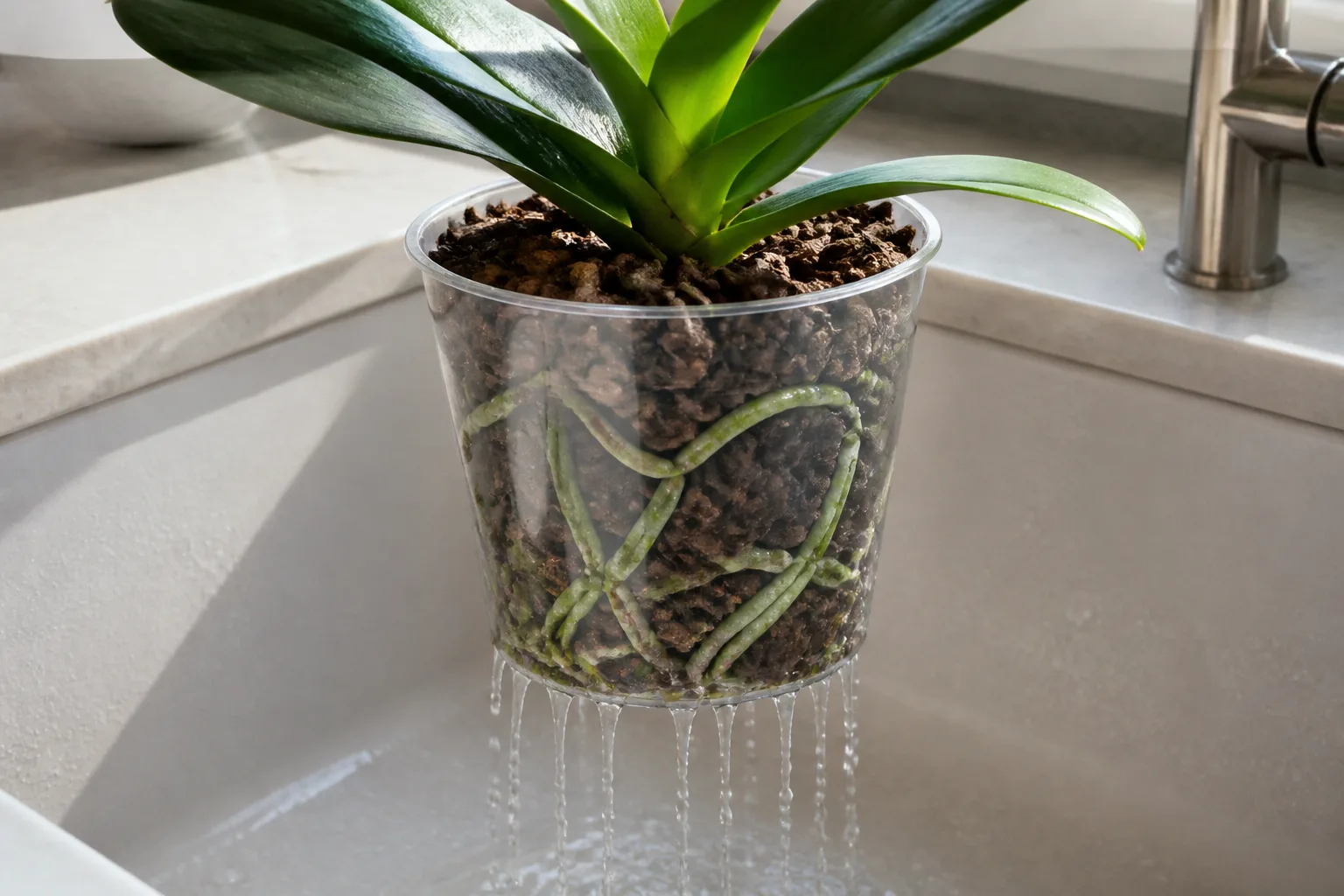
Phalaenopsis orchids are tropical epiphytes that cling to tree branches in nature. Home culture uses open bark mixes with air gaps around thick, photosynthetic aerial roots. Water moves differently through bark than through fine potting soil. Our Phalaenopsis orchid care guide explains why soak-and-drain in bark is the baseline—and why even for orchids, ice cubes remain controversial.
| Factor | Amaryllis (Hippeastrum) | Moth orchid (Phalaenopsis) |
|---|---|---|
| Plant type | Storage bulb in soil | Epiphyte in bark/moss |
| Preferred active temp | 65–75°F (18–24°C) | Warm days; cooler nights for rebloom |
| Media | Peat-based potting mix | Chunky bark, often clear pot |
| Watering goal | Even root-zone moisture | Brief soak, fast drain, air to roots |
| Ice-cube fit | Poor—cold + uneven in soil | Debated; designed for bark trials |
Warm-Season Bulb Biology vs Aerial Roots
During active growth, the RHS Hippeastrum growing guide recommends keeping compost moist without drying out completely, with ideal temperatures around 21°C (70°F) for strong development. The bulb is actively storing starch in fleshy scales for next year’s trumpet blooms. Cold, localized wetting at the soil surface does not mimic the warm rains of its native dry-wet cycle—it mimics a refrigerator leak on one side of the pot.
Orchid roots can tolerate brief temperature swings in bark that drains in minutes. Amaryllis roots live in a denser matrix that holds cold water longer around the basal plate, the junction where leaves and flower stalks emerge. That is the most rot-prone real estate on the whole plant.
What Cold Water and Ice Do to a Tropical Bulb
Tropical houseplants generally dislike cold water for the same reason you would not ice-bath a tomato seedling: root metabolism slows, uptake becomes erratic, and tender new tissue stalls.
Temperature Shock on Roots and New Shoots
Even room-temperature tap water straight from a cold pipe can surprise heat-loving bulbs. Ice is more extreme. As cubes melt, the soil directly beneath them can sit at temperatures far below what NC State Extension lists as the amaryllis sweet spot. Stressed roots absorb less efficiently. New leaf tips and emerging stalks may stall or show delayed growth while the plant recovers.
Cold damage is not always dramatic yellow leaves on day one. It often shows up as smaller leaves, a weaker stalk, or a bulb that refuses to rebloom because it never banked enough energy—a problem we cover in why your amaryllis didn’t bloom. Skipping ice is one of the easiest ways to avoid stacking stress on top of an already demanding rebloom cycle.
Why Ice Cubes Give Amaryllis the Wrong Kind of Drink
Convenience is the ice-cube method’s only real selling point for amaryllis. The hydrology works against you.
Uneven Wetting and Missed Dry Zones
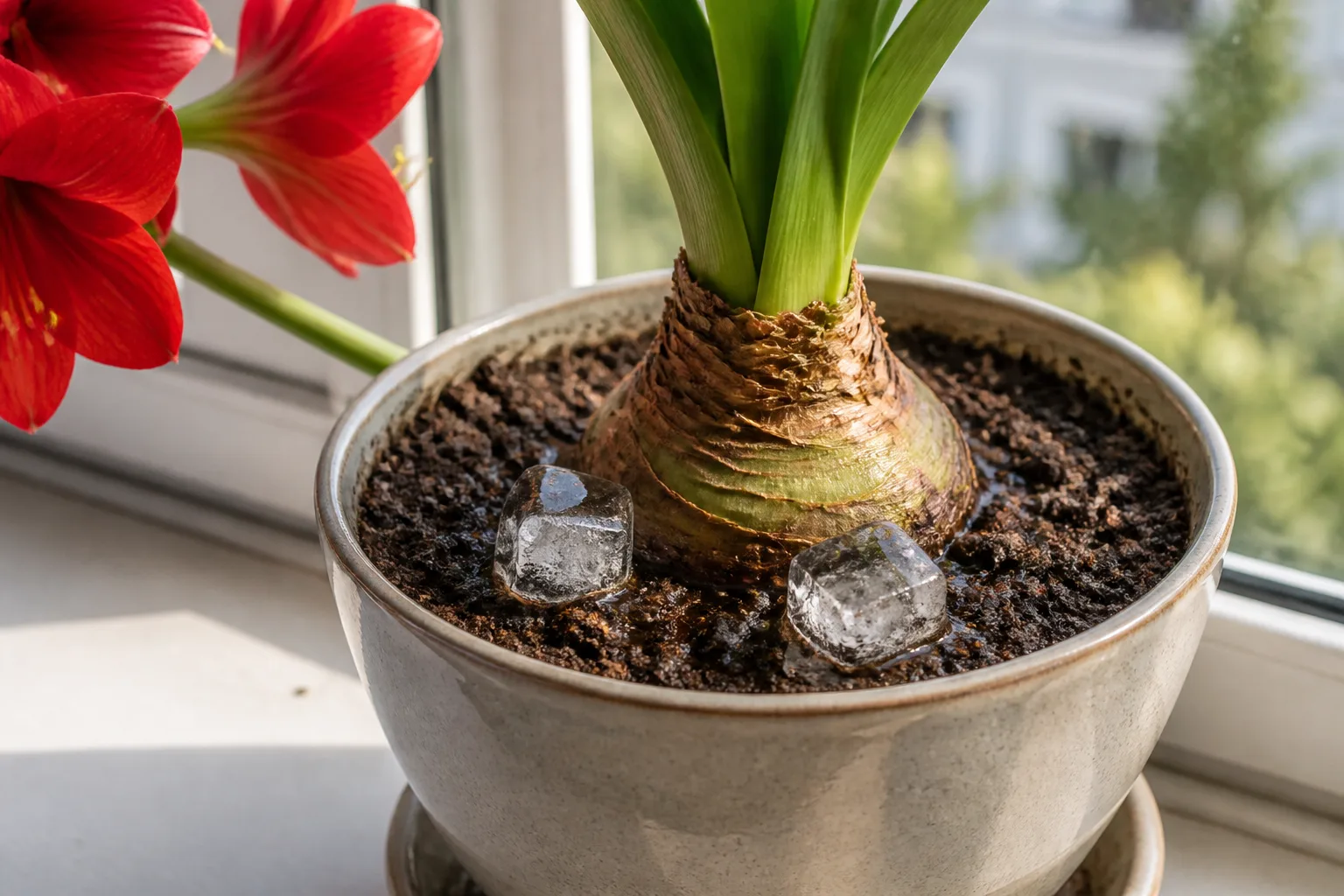
Potting mix wicks moisture outward from the melt point—but slowly, and not always to the full depth of the container. One cube on the soil surface can leave dry pockets lower in the pot while the top inch looks damp. You think you watered; half the root zone stayed thirsty. Next week you add another cube on a slightly different spot. The pattern becomes random partial hydration.
Amaryllis in active leaf growth needs consistent moisture through the root ball, not roulette. The RHS advises regular watering during the growing season so compost does not dry out entirely. A thorough soak followed by partial drying of the top layer matches that goal. Ice cubes do not.
Water Pooling at the Bulb Neck Invites Rot
Good amaryllis culture means water the soil an inch or so away from the bulb neck, not directly on the papery tunic or the green shoot base. Ice cubes are almost always placed on the soil surface right beside the bulb because that is where the pot is visible on a windowsill. As the cube melts, cold water can sheet down the bulb and collect where leaves emerge.
UF/IFAS is explicit: keep soil moist but not over-watered, with excellent drainage. Bulbs that sit in wet crowns develop basal rot—a soft, foul-smelling base that kills the plant from the inside out. Fungal issues on the neck are far more likely when cold water lingers in a dense mix than when you pour warm water at the pot rim and let it drain freely.
The Orchid Ice-Cube Debate (And Why It Still Does Not Transfer)
Fairness matters: ice cubes are not universally condemned for orchids. Ohio State’s greenhouse trials showed Phalaenopsis could perform well with weekly ice in bark under specific conditions. Missouri Botanical Garden’s Phalaenopsis culture sheet still advises against ice because cold can shock tropical roots and cubes often under-deliver water compared with a proper soak.
Even if you accept ice for a moth orchid in bark—a position our Phalaenopsis guide treats with nuance—that evidence does not license ice on amaryllis. Different organ, different medium, different thermal mass, different failure mode. Transferring orchid hacks to bulbs is how social media plant care goes wrong.
How to Water Amaryllis the Right Way, by Growth Stage
Amaryllis watering is not one schedule year-round. The bulb cycles between active growth and dry rest. Match water to the stage and you avoid most rot and rebloom failures.
During Active Bloom and Leaf Growth
From the moment roots appear until late summer, treat amaryllis as a thirsty foliage plant that still hates wet feet.
Check the top two inches of soil with your finger. When that layer feels dry, water thoroughly with room-temperature water until a little runs from the drainage holes. Empty the saucer within thirty minutes. NC State Extension notes that watering about once a week is typical when the surface is dry—more often in bright, warm rooms; less in cool, dim ones.
Pour at the inside edge of the pot, not over the bulb neck. During bloom, slightly moist soil supports the tall stalk; during leaf growth after flowers fade, steady moisture fuels the starch bank you need for next winter’s show. If you are running the full rebloom calendar, leaf-phase watering details live in our how to get amaryllis to rebloom guide.
Stopping Water for Dormancy and Rebloom
Amaryllis needs a cool, dry rest before it can flower again. The RHS recommends moving plants to about 13°C (55°F) for eight to ten weeks in late autumn, stopping feed, and reducing water until the plant is semi-dormant. UF/IFAS likewise shifts focus to outdoor leaf growth after bloom, then seasonal rest.
Plan to stop regular watering eight to twelve weeks before you want flowers. Let leaves yellow naturally, trim spent foliage, and store the dry pot in a cool basement or garage. An ice cube during dormancy is especially pointless—it adds unwanted moisture with cold shock when the bulb should be sleeping.
Room-Temperature Water at the Sink: A Simple Sequence
Forget the freezer. This five-step routine works for gift bulbs, repotted veterans, and soil-free kits alike.
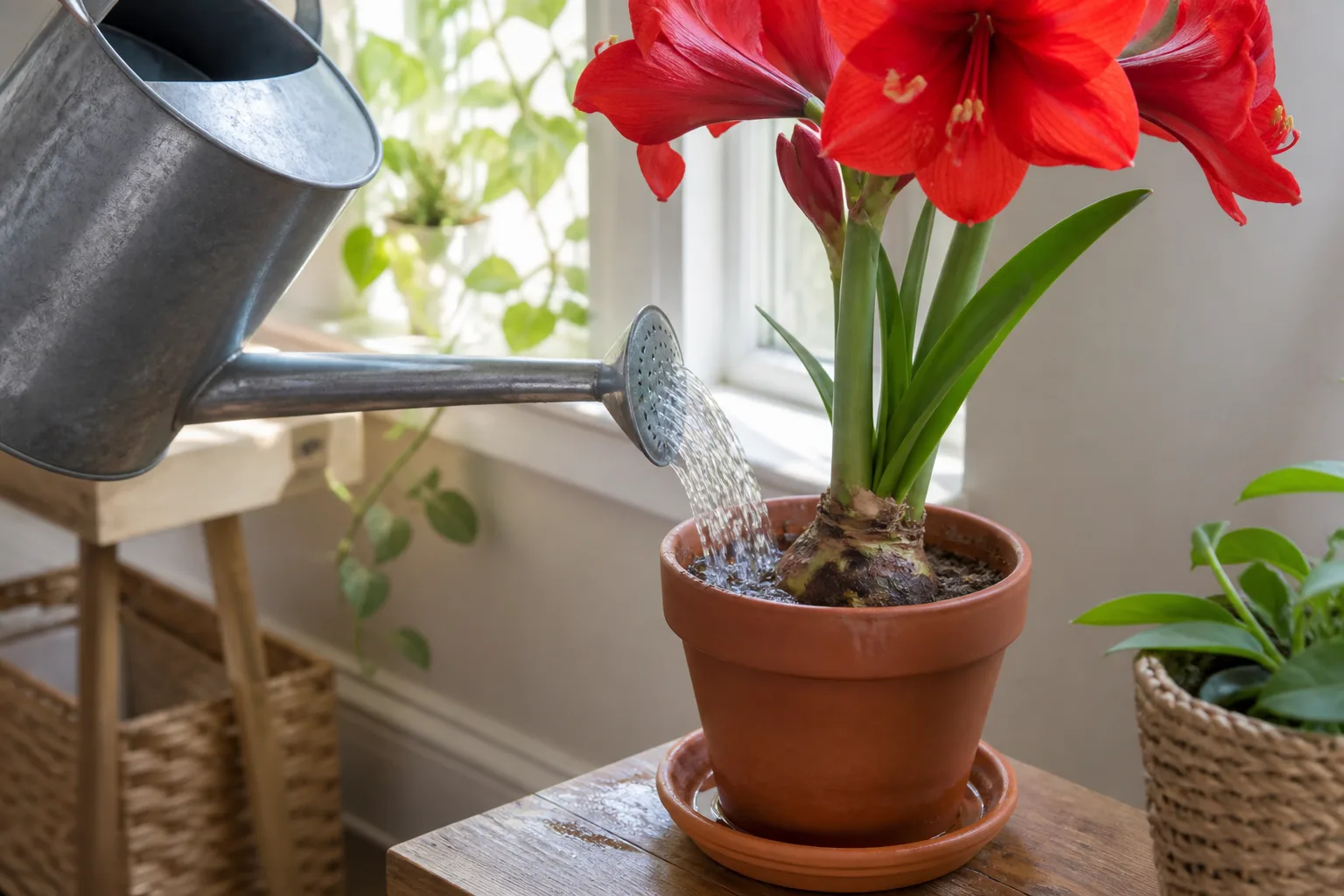
Step 1 — Test dryness. Stick your finger into the soil to the second knuckle. Dry at two inches? Time to water. Still cool and damp? Wait.
Step 2 — Use lukewarm water. Fill a watering can or bowl and let icy tap water sit until it feels neutral on your wrist—roughly 65–75°F. If you would not shower in it, do not give it to a tropical bulb.
Step 3 — Water at the rim. Tilt the pot and pour slowly around the inside edge, circling until the mix darkens evenly. Avoid the bulb neck and any green shoot tissue.
Step 4 — Drain completely. Never let the pot sit in a full cachepot or saucer. Amaryllis bulbs rot from the bottom up when drainage fails.
Step 5 — Log the date. A note on the fridge beats guessing. Adjust weekly frequency for season, sun, and pot size rather than defaulting to a fixed cube count.
Soil-free kits with pebbles and water reservoirs follow the kit instructions, but still skip ice—cold water in a shallow reservoir chills the basal plate the same way.
Common Amaryllis Watering Mistakes Beyond Ice Cubes
Ice cubes are one bad habit among several. Avoid these and your bulb survival rate climbs fast.
Watering on a calendar instead of the soil. Bright south windows dry pots in four days; dim offices take two weeks. The finger test beats both.
Leaving the pot in a decorative foil wrapper. Holiday gift sleeves trap runoff and keep the bulb base wet. Remove foil or punch drainage holes before the first soak.
Splashing the neck during bloom. Even room-temperature water on the crown encourages fungal spotting. Aim for the soil ring.
Overwatering during dormancy. A sleeping bulb wants dryness, not a weekly cube or splash “just in case.”
Underwatering during leaf growth. Crispy leaf tips after bloom often mean the starch bank is starving—future flowers pay the price.
Using softened water without thinking. Sodium-heavy softener discharge can accumulate in soil over months. Rainwater or filtered tap is gentler for long-term pot culture.
Watch for soft spots at the bulb base, mushy roots, yellow limp leaves with wet soil, or white mold on the surface—all signs to stop watering, improve drainage, and inspect the bulb before rot spreads.
Conclusion
Watering amaryllis with an ice cube is a bad idea because the trick was built for orchids in bark, not for warm-climate bulbs in potting soil. Ice delivers cold, uneven moisture to the most rot-sensitive part of the plant while skipping the deep, warm soak the root zone actually needs. Room-temperature water on a simple dryness test—poured at the pot edge, drained fully, reduced during dormancy—matches how extension guides describe Hippeastrum culture and sets you up for healthier leaves and repeat blooms. Skip the freezer hack; your amaryllis is not a moth orchid, and it does not have to be watered like one.