9 Colorful Houseplants That Are Easy to Grow
Choose colorful houseplants for beginners by window light and watering style. Compare nine easy picks, pet cautions, and first-week care.
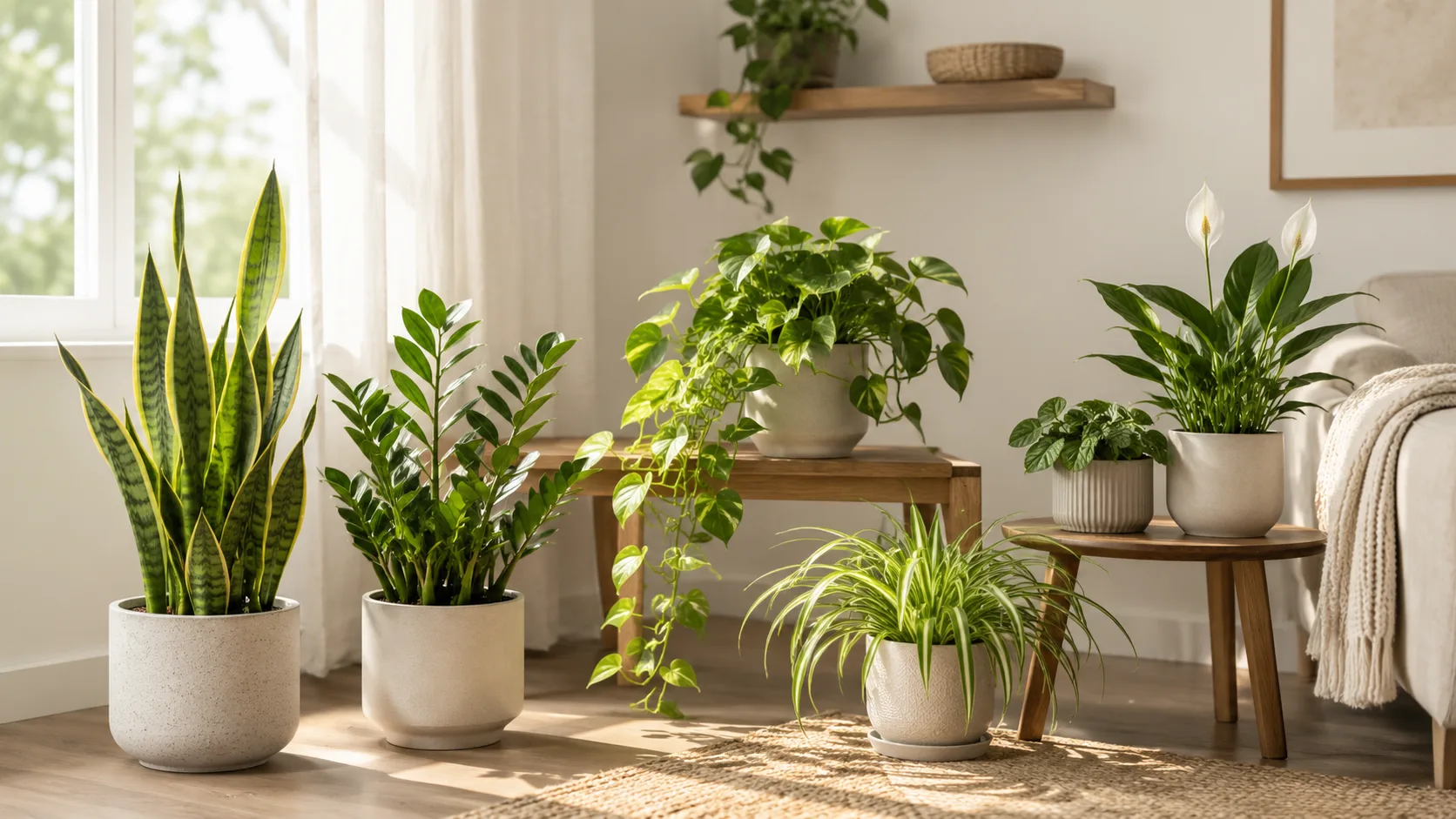
Colorful houseplants are not automatically difficult. The trick is to choose a plant whose natural rhythm matches your room: a dry-air survivor for a forgetful waterer, a moisture lover for someone who checks plants often, or a bright-window plant for a home with strong natural light.
The nine plants below cover purple, pink, silver, red, bronze, lime, and striped foliage. “Easy” is conditional, though. A croton in a dark corner will struggle, while an aglaonema may be perfectly happy there; a Rex begonia needs steadier moisture than a Raven ZZ; and a bromeliad may require a different watering method from an ordinary potted plant. Use the care notes as a buying filter, not as a promise that every cultivar behaves identically.
Pick by light and watering style, not color alone
Start with the window you actually have
Look at the spot before you look at the plant tag. A bright east window with gentle morning sun is a flexible location for coleus, croton, oxalis, many dracaenas, and colorful begonias once they are acclimated. A few feet back from a bright south or west window can suit bromeliads and variegated aglaonemas, while a dim hallway is better reserved for the most shade-tolerant options, such as Raven ZZ and many green-centered Chinese evergreens.
Color is often a light signal. Red, pink, silver, purple, and strongly variegated leaves may keep better contrast when the plant receives adequate brightness, but “more light” does not mean “put it against hot glass at noon.” Move a new plant closer over a week, watch the leaf temperature and edges, and use a sheer curtain when direct rays are harsh.
Match the plant to your watering habits
Ask how you actually care for plants during a busy week. If you routinely forget for ten days, start with Raven ZZ, a sturdy dracaena, or a dry-down-tolerant croton rather than Rex begonia or a moisture-loving coleus. If you enjoy checking soil twice a week, you have more choices, including oxalis, spiderwort, and begonias.
For every choice, drainage matters more than a decorative pot. A container must have a drainage hole, and the saucer must be emptied after watering. Moist soil is not the same as waterlogged soil: roots need both water and air, and a large pot that stays wet can damage a supposedly easy plant faster than a missed watering.
9 colorful houseplants for beginners
1. Raven ZZ plant
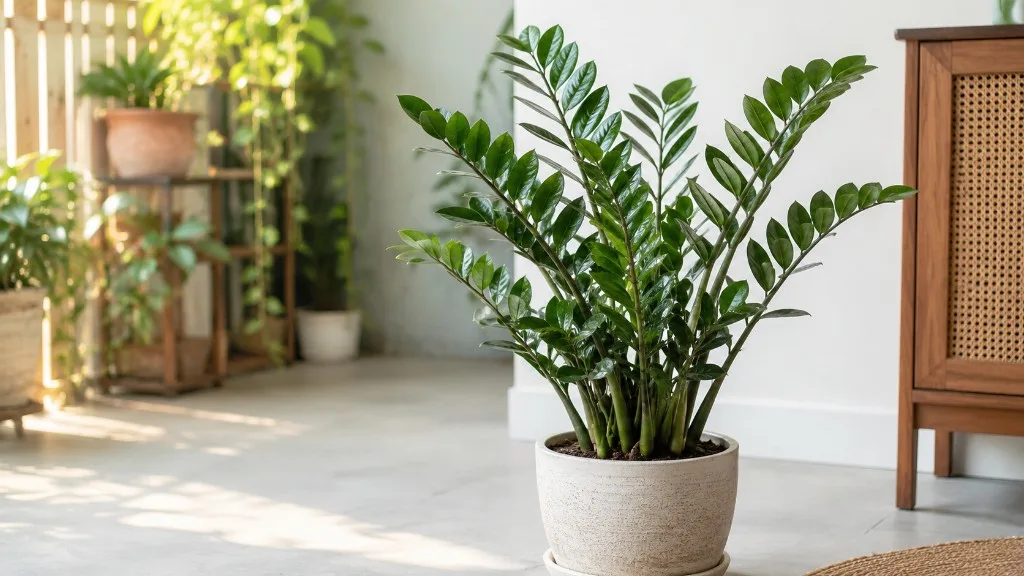
Raven ZZ is a strong first choice if you want dramatic color with a forgiving watering routine. Its new leaves emerge green and deepen toward a glossy charcoal-purple, so it gives you a changing display rather than a fixed splash of paint. The plant also has thick underground rhizomes that store water, which is why it would rather recover from a dry spell than sit in soggy mix.
Give it bright indirect light for faster, fuller growth, but it can tolerate a lower-light position. In deep shade, expect slower growth and less dramatic color development. Let the potting mix dry substantially before watering again, then soak thoroughly and let the pot drain; do not add small sips every few days to “keep it happy.”
Raven ZZ is best for the beginner who wants a sculptural plant and cannot promise daily attention. It is not the best match for someone who waters by habit, and it should be kept away from pets that chew plants rather than treated as a pet-safe selection.
2. Croton
Crotons earn their place for leaves painted in yellow, orange, red, green, and bronze. They are among the most rewarding colorful plants in a bright room, but they are also the one on this list I would not put in a dark beginner corner. NC State Extension describes crotons as needing bright light for the best leaf color, with some direct sun, and notes that plants can lose lower leaves in too much shade. See the NC State croton profile for the botanical and growing details.
Use a bright east or west window, or filter stronger southern light during the hottest part of the day. Keep the mix lightly dry between waterings rather than permanently wet, and make sure the pot drains freely. A new croton can drop leaves after the move from a greenhouse or shop; that transition shock is a reason to stabilize its light, temperature, and watering, not to move it repeatedly or flood the pot. Gardening Know How’s croton care guide also highlights this reluctance to be moved.
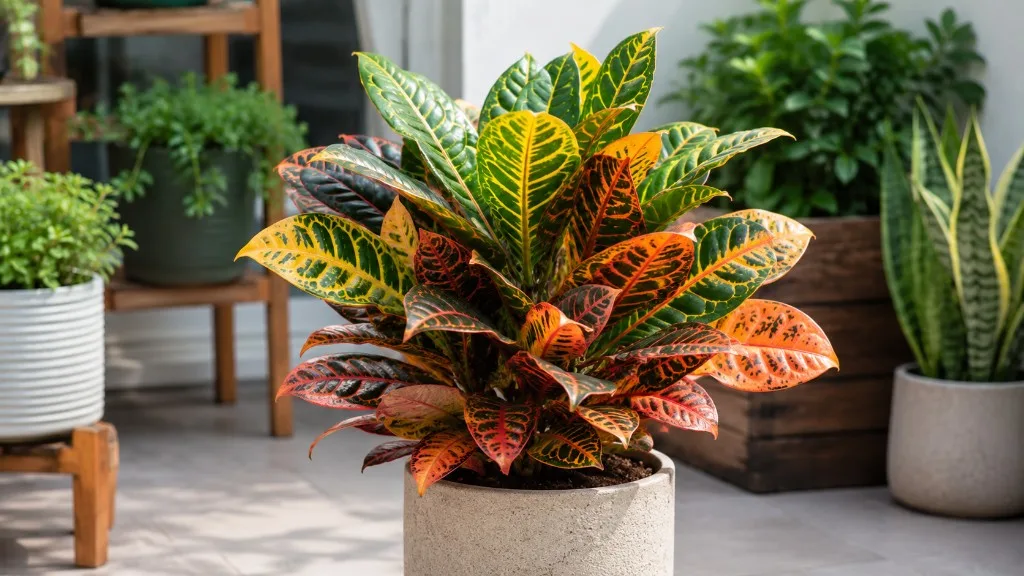
Choose croton when vivid color is more important to you than absolute neglect tolerance. It can be beginner-friendly in the right window; the wrong window turns it into a frustrating plant very quickly.
3. Purple shamrock
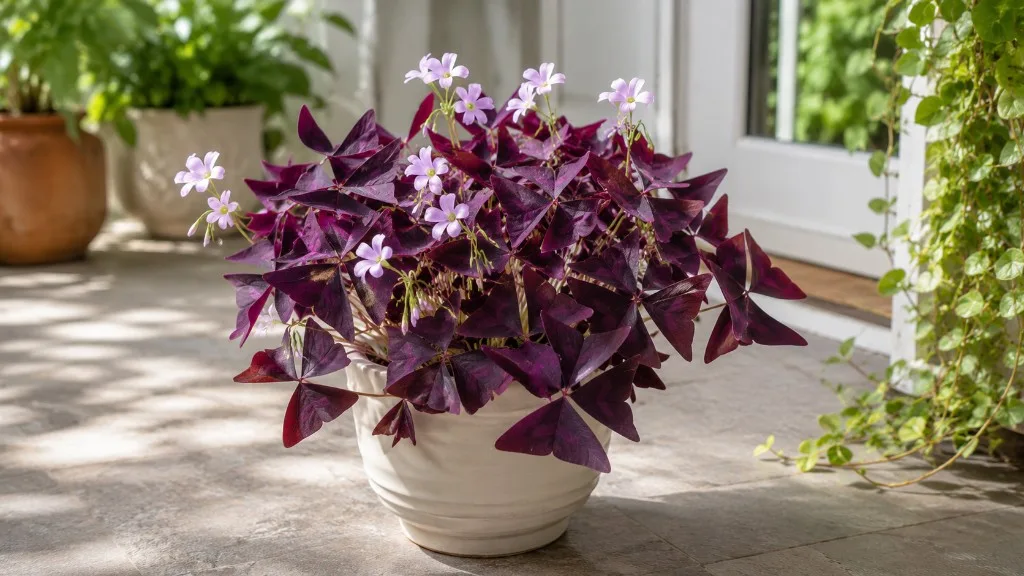
Purple shamrock, or Oxalis triangularis, has triangular leaflets in plum, violet, and wine shades that fold and open in response to light. It makes a small pot feel colorful without needing a large plant, and its underground bulbs allow it to return after a period of dormancy.
Keep the mix lightly and evenly moist while it is actively growing, but never leave the pot standing in water. Bright indirect light or gentle morning sun keeps the leaves compact and colorful; harsh hot afternoon sun can scorch them. If the foliage fades or dies back after a season, do not immediately discard the pot. Reduce watering while dormant, then resume gradually when new growth appears.
Oxalis is easy for a beginner who can distinguish “resting” from “dead.” It is not a good plant for a windowsill that becomes oven-hot or for anyone who keeps watering a dormant pot on a fixed weekly schedule.
4. Aglaonema
Aglaonema is the best all-rounder here when the room is not especially bright. Cultivars range from silver and cream to pink, red, and patterned green, and the plant stays useful even when it is grown mainly for foliage. NC State Extension calls Chinese evergreen one of the easiest houseplants for home or office conditions; its Aglaonema profile describes diffuse sun or good indirect light, tolerance of drier air, and reduced watering in winter.
Give a mostly green cultivar a lower-light position if needed, but place pink, red, or heavily variegated cultivars nearer a bright window so they do not become leggy or lose contrast. Water when the upper part of the mix has dried rather than keeping it saturated. Brown tips can point to very dry air or a draft, while yellowing in wet mix is a reason to inspect drainage before adding fertilizer.
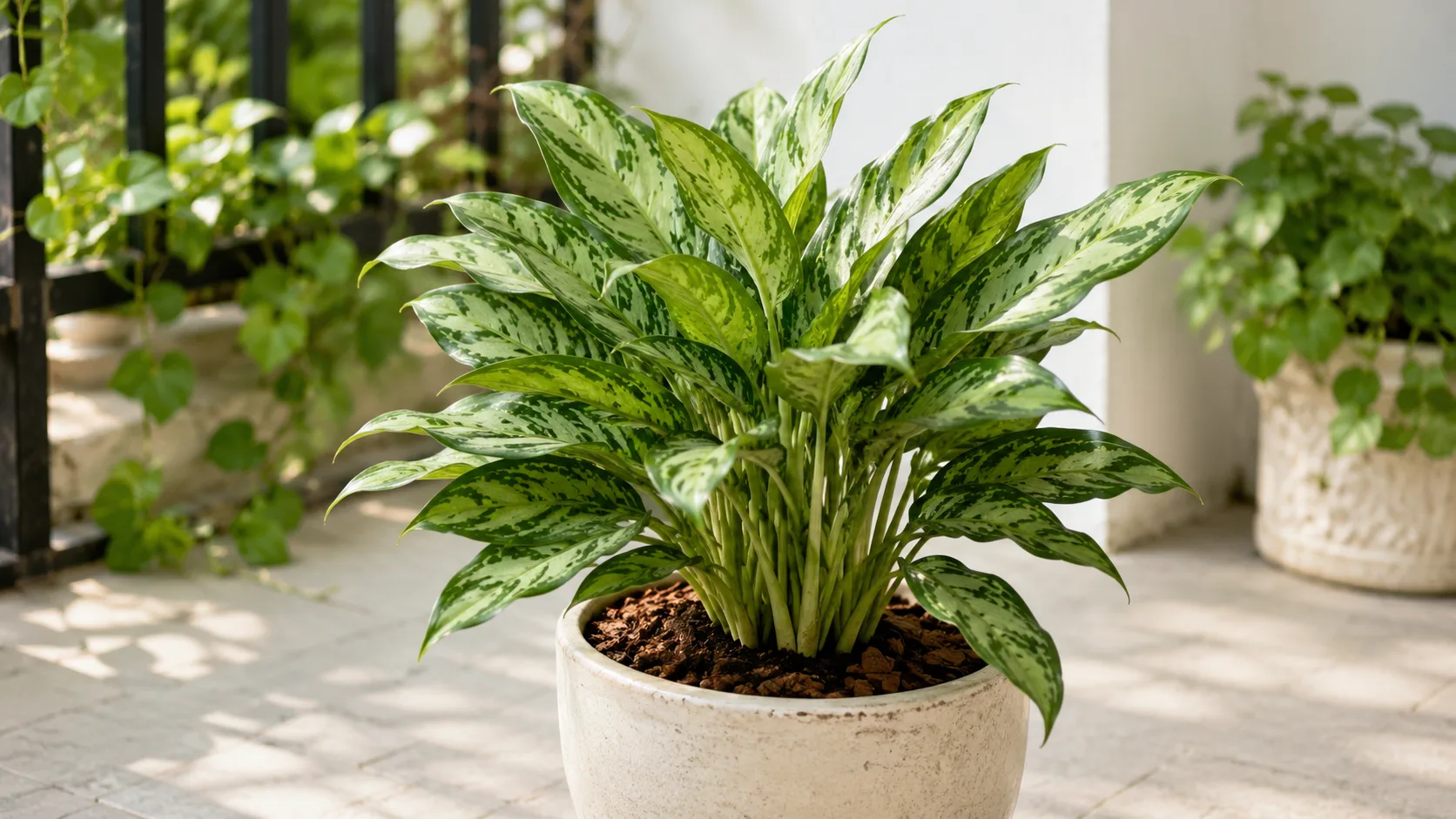
Aglaonema is a sensible first purchase for an apartment with indirect light and an inconsistent schedule. It is also one of the plants for which a pet household should check the exact name before buying: the ASPCA Chinese evergreen listing identifies it as toxic to dogs, cats, and horses because of insoluble calcium oxalates.
5. Coleus
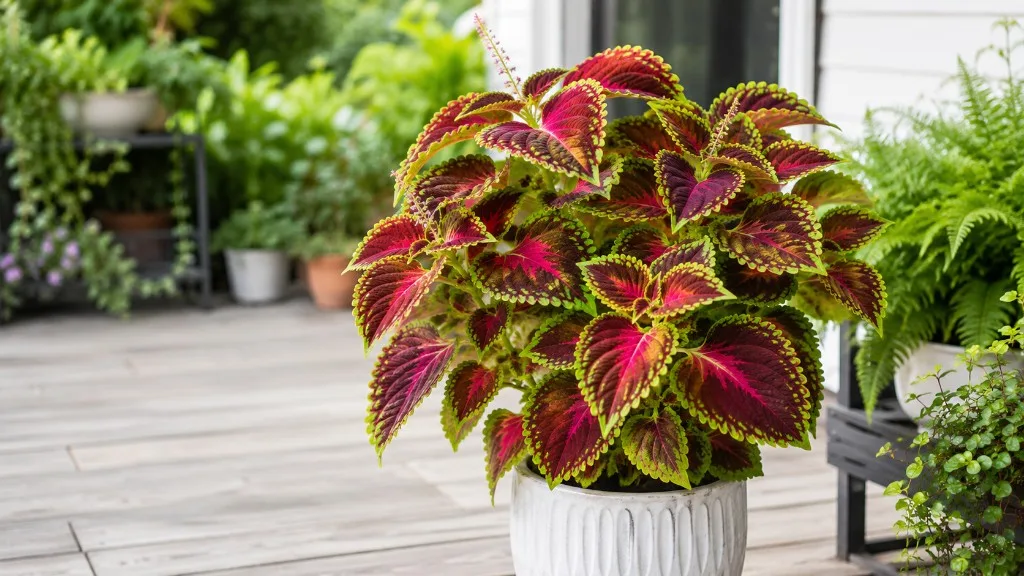
Coleus brings neon lime, magenta, burgundy, copper, and green patterns to a windowsill, and it grows quickly enough to make a beginner feel successful. It is also easy to multiply: take a healthy stem cutting below a node, remove lower leaves, and root it in water or a clean, lightly moist medium.
Indoors, give coleus bright morning light and filtered light later in the day. Keep the soil evenly but lightly moist, using a free-draining mix so frequent watering does not become stagnant root conditions. Pinch the growing tips when the plant gets tall; this encourages branching and gives you a fuller, more colorful pot instead of one lanky stem.
Coleus can spend summer outdoors in warm weather, but move it outside gradually and bring it in before cold nights. Its flexibility is a benefit, but its fast growth means it may need more pinching and watering than the slow, drought-tolerant plants on this list.
6. Spiderwort
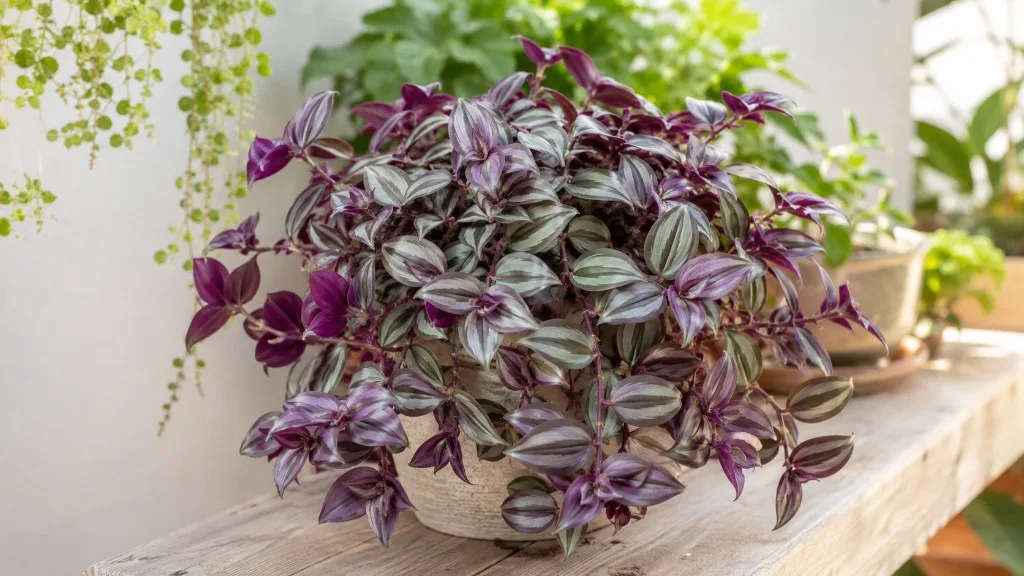
Spiderwort, especially Tradescantia zebrina, makes color easy to display because its striped silver, green, purple, and burgundy leaves trail over a shelf or hanging pot. It grows quickly, roots readily from cuttings, and can be trimmed back whenever the stems become sparse.
Give it bright indirect light to keep the stripes strong. A little gentle sun can deepen the purple, but a sudden shift into hot direct light can scorch the leaves. Water when the top layer begins to dry, then drain fully; the plant is flexible, but repeatedly wet soil produces weak, bare growth and root problems.
Spiderwort is a good choice if you want an obvious payoff from small maintenance jobs. Pinch the tips, rotate the pot, and re-root a few cuttings when the base looks thin. Treat it as an indoor plant unless you know your local conditions and can control its spread; vigorous trailing plants can escape cultivation in warm outdoor settings.
7. Bromeliad
Bromeliad is a group rather than one care profile, but it is a reliable route to long-lasting pink, red, orange, or patterned color. Aechmea, Guzmania, and Neoregelia are common examples, while Tillandsia offers a different, mostly rootless display. The RHS bromeliad growing guide emphasizes bright light, warmth, humidity, and free-draining conditions, which is a more useful starting point than treating every bromeliad like an ordinary leafy pot plant.
Give a container bromeliad bright filtered light and keep it away from cold drafts and heaters. For rosette types with a central “well,” use soft water when possible, keep the well fresh, and empty and refill it periodically so it does not become stagnant. Still water the compost as the type requires; the central cup does not replace root moisture. For bromeliads without a well, keep the mix moist but never wet and allow excess water to drain.
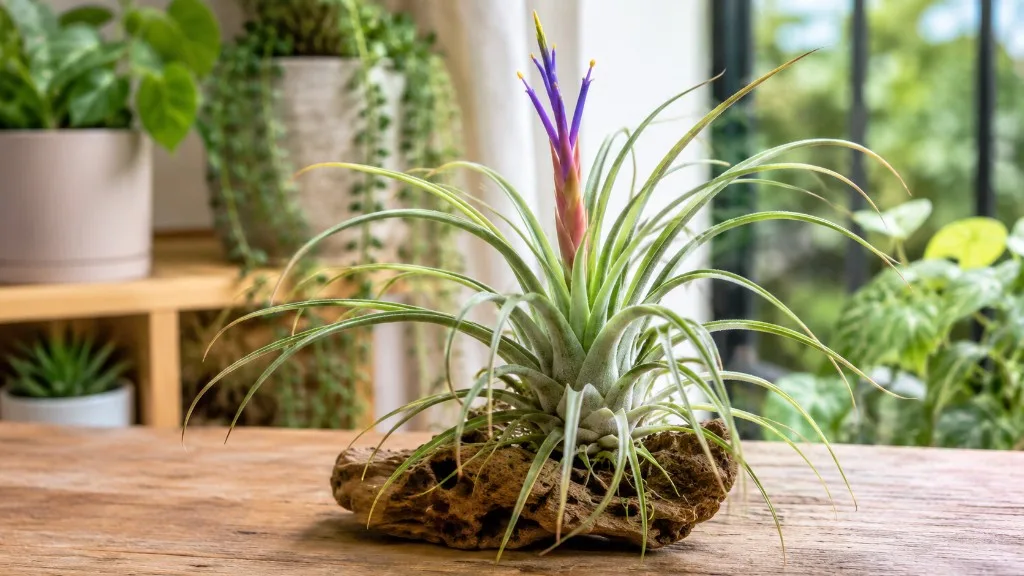
Bromeliads are colorful and visually forgiving, but their care becomes easier when you identify the type before watering. A plant sold in bloom may eventually produce offsets as the original rosette declines, so a fading flower spike is not automatically a sign that you failed.
8. Rex begonia
Rex begonias are grown for leaves that can look metallic silver, rose, plum, green, or spiraled rather than for dependable flowers. They are beautiful beginner plants when the room provides bright filtered light, stable warmth, and a grower who can keep moisture consistent without making the pot soggy.
The RHS rates begonias as moderate difficulty and recommends bright filtered light; its begonia houseplant advice also warns against direct sun, overwatering, and wet leaves or crowns for Rex and other rhizomatous begonias. Let the surface of the mix begin to dry before watering, but do not allow the root ball to become bone dry for long. Water the soil, not the fuzzy leaves, and leave space around the plant for airflow.
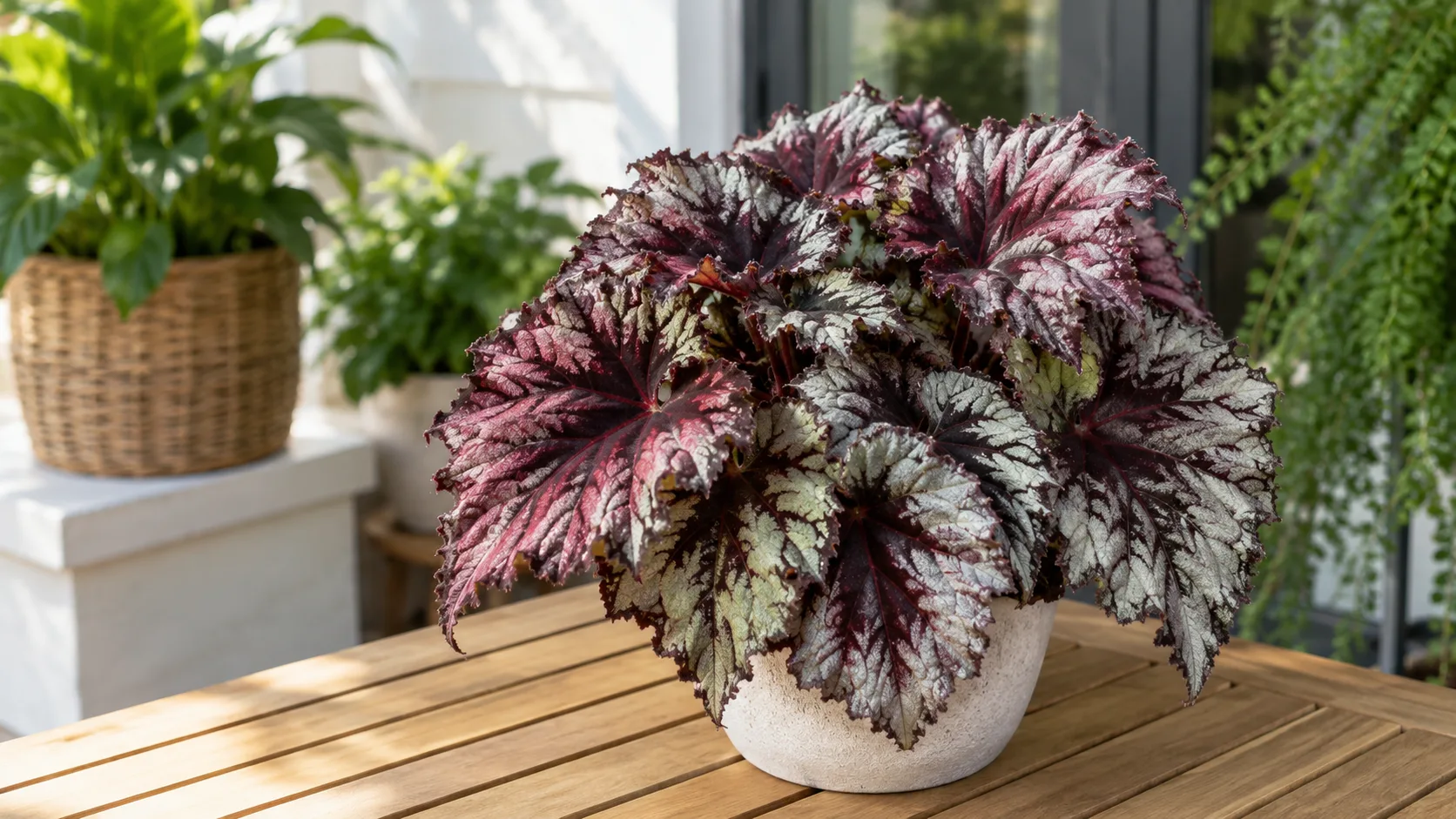
Choose Rex begonia when you enjoy observing a plant and adjusting its position. It is not the easiest option for a dark, dry, drafty room, but it is an excellent step up from a first ZZ or aglaonema if you want foliage with more pattern and are ready to pay attention.
9. Dracaena
Dracaena comes in more colors than the familiar plain green cane. Look for striped, lime-edged, red-margined, or pink-toned cultivars when you want a taller plant that can anchor a room. Its upright form suits a floor pot or a narrow corner, and many dracaenas cope better with missed waterings than plants with thin, soft leaves.
Place it in bright indirect light for the strongest striping, although it can tolerate less light with slower growth. Let the upper mix dry before watering thoroughly, and do not leave the pot in a cachepot full of runoff. If leaf tips turn brown, check the watering pattern, dry air, salt buildup, and proximity to a heater before assuming the plant needs more fertilizer.
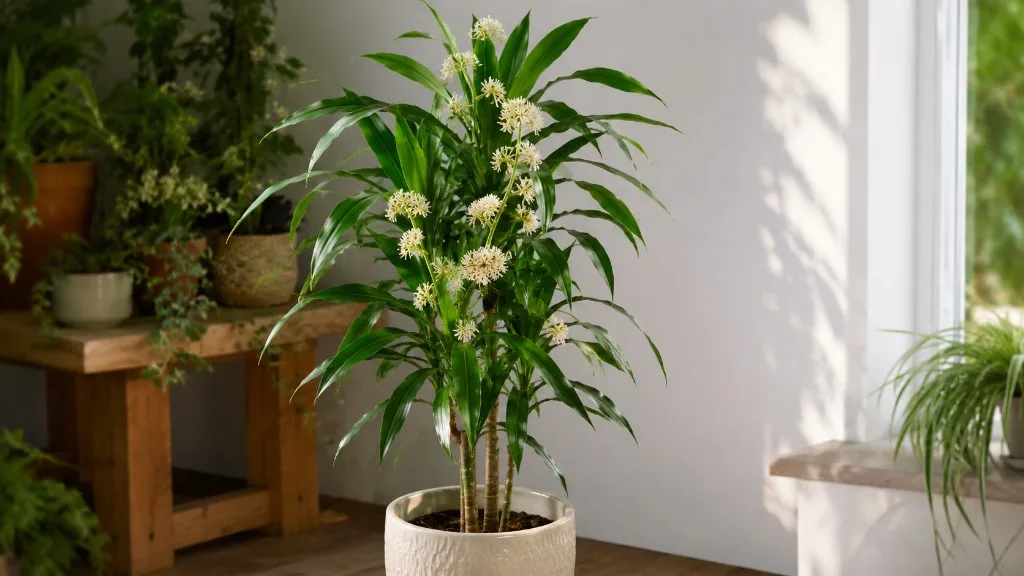
Dracaena is a good compromise for someone who wants color and height without the constant moisture of coleus or Rex begonia. Because it grows from canes, it may look sparse after lower leaves naturally age; prune only when you understand where new shoots can emerge.
Keep colorful leaves healthy after you bring them home
Give enough light without scorching the foliage
Move a new plant in stages. Start with the light level it had at the shop, then shift it closer to the window over several days. A sudden change from filtered greenhouse light to afternoon sun can cause bleached patches and crisp edges even when the species ultimately prefers bright conditions.
Use the plant’s growth as feedback. Long gaps between leaves, leaning, smaller new leaves, and fading variegation usually mean the plant needs more usable light or a closer position. Pale, papery patches on the window-facing side point more toward excessive direct light or heat. A grow light can help in a dim home, but keep it on a consistent schedule and follow the manufacturer’s distance guidance rather than placing it directly against foliage.
Water by soil and pot, not by calendar
Check the mix with a finger or a wooden skewer, lift the pot to learn its dry weight, and look at the plant’s current growth. Then water deeply enough to wet the root ball and let excess drain. Do not let a decorative cover pot hide standing water, and do not assume misting the leaves replaces watering the soil.
The main exceptions are the plants that prefer more even moisture, such as coleus, active oxalis, and Rex begonia. Even for those plants, “moist” means damp with air-filled pores, not a saturated mud pocket. A pot that is too large, a dense mix, or a missing drainage hole can make a careful watering routine fail.
For humidity, prioritize location and airflow over constant misting. A bathroom or kitchen can help if it has light and ventilation. A correctly built pebble tray keeps the pot above the waterline; it should never turn the drainage hole into a wick. Humidity can soften crispy edges, but it will not fix underwatering, root rot, poor light, or a pest outbreak.
Pet safety and first-week setup
“Colorful” is not a safety category. Some plants on this list can irritate pets if chewed, and the exact cultivar or common name on a shop tag may be incomplete. The ASPCA plant database warns that any plant material can cause gastrointestinal upset and recommends checking the exact plant listing; it lists both Chinese evergreen and shamrock plant as toxic to dogs and cats. Keep chewed plants out of reach and contact a veterinarian or animal poison service if ingestion occurs.
When a new plant arrives, inspect the undersides of leaves, stems, and the soil surface. Isolate it from your collection for roughly two weeks when possible, remove dead leaves, check that water can escape, and discard any water trapped in a cover pot. Do not repot, fertilize, move it through three rooms, and expose it to hot sun all on the same day; change one variable at a time so you can tell what the plant is responding to.
If the shop used a decorative sleeve or foil around the pot, remove it or create a clear drainage path. Leave the plant in its nursery pot until you know how it handles your home, unless the mix is staying wet, roots are circling badly, pests are present, or the container has no usable drainage.
Troubleshooting faded color, brown tips, and wilt
When a colorful plant changes, start with the newest leaves and the soil—not with fertilizer. New leaves can emerge a different shade before they mature, and some plants naturally deepen or soften color with age. If the whole plant is fading while growth is stretched and leaning, increase light gradually. If only the window-facing tissue is bleached and crispy, reduce harsh direct exposure.
Brown tips are usually a pattern clue rather than a diagnosis. Check whether the pot is drying completely, whether a heater or air conditioner blows across the leaves, whether fertilizer salts are accumulating, and whether roots are sitting wet. Trim only the dead edge if you want a cleaner appearance; cutting healthy green tissue will not repair the underlying cause.
Wilting with wet soil deserves more caution than wilting with dry soil. Dry soil calls for a thorough drink and a better schedule. Wet soil calls for checking drainage and roots, because adding more water can turn temporary stress into root rot. If you see sticky residue, webbing, cottony clusters, or scale-like bumps, isolate the plant before treating it and inspect nearby plants as well.
Leaf drop after purchase is especially common with croton and can happen after a sharp change in light, temperature, or humidity. Keep conditions steady for a couple of weeks, remove only clearly dead material, and resist the urge to “make up” for dropped leaves with extra water or fertilizer. A plant that still has firm stems and healthy new growth may be acclimating rather than failing.
Conclusion
The easiest colorful houseplant is the one that fits your room and your habits. Choose Raven ZZ or aglaonema for more forgiving indirect-light conditions, croton or coleus for a bright window, oxalis or spiderwort for fast color and easy propagation, bromeliad for a bold tropical display, Rex begonia for patterned foliage with closer attention, and dracaena for a taller, relatively flexible plant.
Whatever you choose, start with drainage, introduce light gradually, and water according to the mix and the plant’s growth—not a calendar. That small amount of matching prevents the most common beginner failures and lets the color remain the reward instead of becoming the reason a plant struggles.