5 Common Lawn Fertilizing Mistakes to Avoid
Avoid lawn fertilizer damage with clear advice on rates, NPK, timing, spreader calibration, watering, and recovery after an overapplication.
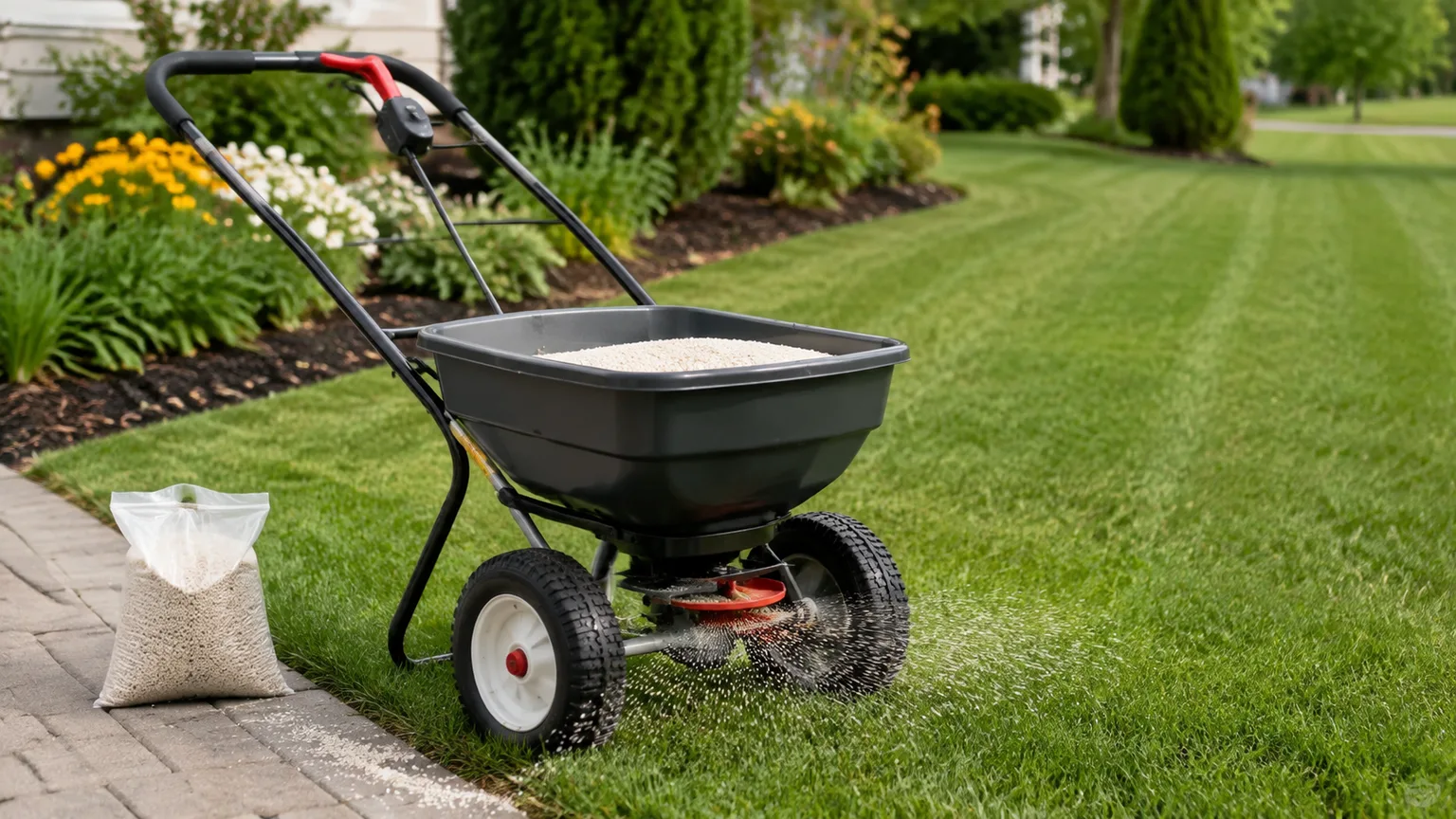
A fertilizer bag cannot tell whether your lawn is hungry, dormant, drought-stressed, compacted, or already carrying more nutrients than it needs. That is why the safest lawn fertilizing routine starts with observation and measurement, not a promise that a darker green color is always better.
The five errors below are connected. A wrong product applied at the wrong rate with an uncalibrated spreader, just before heavy rain, can burn turf and send nutrients into stormwater. Use the sequence here to decide whether to fertilize, how much to apply, and what to do if the lawn reacts badly.
Start with a lawn diagnosis, not a fertilizer bag
Before buying anything, identify the grass and inspect the pattern of the problem. A uniformly pale lawn during active growth may point toward low nitrogen, but yellow strips can also come from mower scalping, poor irrigation coverage, compacted soil, insects, disease, or shade. Fertilizer is not a general-purpose cure for every thin or brown patch.
Take a few notes: grass type if known, recent mowing height, irrigation or rainfall, last fertilizer date, product used, and whether the discoloration follows a spreader path. A lawn that declines within a day or two of an application deserves a different response from one that has faded gradually over a hot, dry month.
The timing of symptoms is particularly useful because fertilizer injury and nutrient deficiency move at different speeds. A deficiency usually develops over time and affects the lawn broadly, while a concentrated spill can create a sharply defined patch. Neither pattern is conclusive by itself, but recording it keeps you from applying a second product before you know what happened.
For a useful baseline, collect a soil sample according to your local cooperative extension’s directions. A soil test can show whether phosphorus, potassium, lime, or pH correction is actually needed; the grass color alone cannot. NC State Extension’s lawn and environment guidance also makes the broader point: test first, then use the result to choose nutrients rather than applying a complete fertilizer by habit.
Error 1: Guessing the rate or assuming more is better
The fastest route to fertilizer burn is treating the recommended amount as a suggestion. Too much soluble salt around the roots can make water harder for grass to take up, while granules that sit on wet blades can scorch the leaf tissue. Overapplication also encourages a flush of soft top growth that may need more mowing and water without fixing compacted soil or poor light.
The opposite mistake is applying so little that you cannot evaluate the result, then adding another dose a few days later. This creates an accidental double application. A measured, modest treatment followed by an appropriate wait is easier to assess than repeated guesses.
Calculate nitrogen before you calculate product
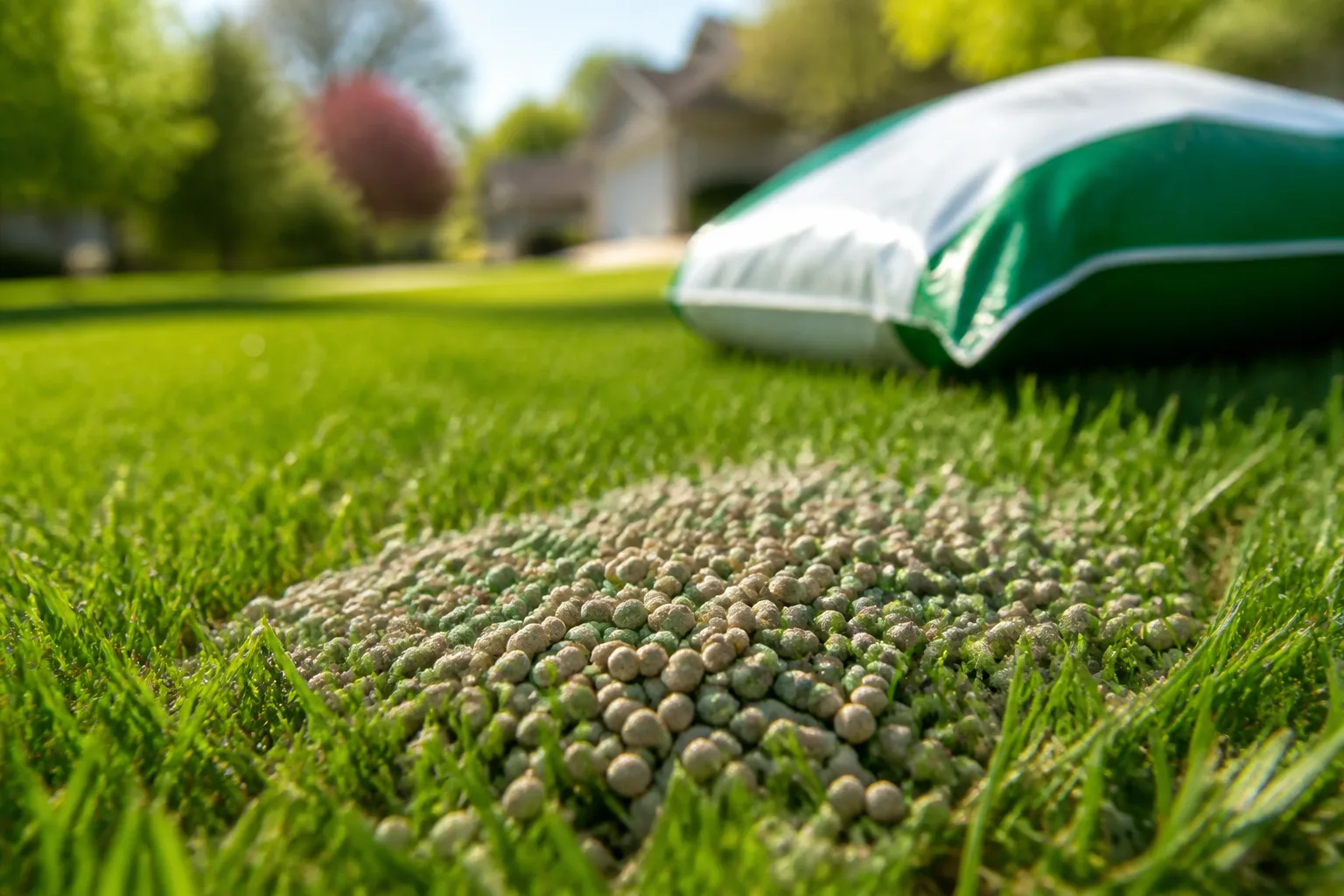
The first number on a fertilizer label is the percentage of nitrogen by weight. NC State Extension describes a typical lawn feeding as 1 pound of nitrogen per 1,000 square feet, while noting that many lawns do well with only 1 or 2 pounds of nitrogen per 1,000 square feet for the entire year. That is a reference point, not permission to exceed the product label or local recommendation.
Use this formula:
Pounds of product = desired pounds of nitrogen ÷ nitrogen fraction.
For a 24-6-6 fertilizer, the nitrogen fraction is 0.24. To supply 1 pound of nitrogen, divide 1 by 0.24: you need about 4.17 pounds of product per 1,000 square feet. If the lawn is 5,000 square feet, that becomes roughly 20.8 pounds of product. A 10-10-10 fertilizer would require 10 pounds of product for the same nitrogen target, but it would also add far more phosphorus and potassium by weight.
Measure the lawn instead of using the lot size from a property listing. Break an irregular yard into rectangles or triangles, add the areas, and subtract beds, patios, driveways, and house footprints. If you are unsure of the lawn’s size, underbuying and making a conservative application is safer than emptying a bag because it “looks about right.”
Error 2: Choosing a formula before testing the soil
“All-purpose” is a convenient label, not a diagnosis. A high-nitrogen product may be reasonable for a hungry, actively growing turf under the right conditions, but a lawn with adequate nitrogen, excess phosphorus, or a pH problem needs a different response. Feeding nutrients that are already abundant wastes money and increases the chance of runoff.
The USDA Fertilizer Recommendation Support Tool explains why soil-test recommendations are best interpreted through local systems: the tool is meant to augment, not replace, state recommendations. For a home lawn, that means using a lab or extension service that understands regional soils and turf rather than treating a generic internet schedule as universal.
Read NPK as a nutrient analysis, not a product score
NPK numbers are percentages, not a three-part quality rating. Nitrogen supports leafy green growth, phosphorus is associated with root development, and potassium supports functions including drought and disease tolerance. NC State’s fertilizer facts use the same order and show how the numbers translate into pounds in a bag.
For established grass, do not add phosphorus automatically unless a soil test or local guidance calls for it. New seeding can have different starter-fertilizer needs, but starter fertilizer is not a reason to spread a phosphorus-rich product over an established lawn every season. Likewise, lime is a soil amendment for a pH need, not a routine substitute for fertilizer.
Compare products by the nutrient your lawn actually needs and the release pattern you can manage. Slow-release nitrogen can reduce the risk of a sudden surge, but it still burns grass when overapplied. Liquid and granular products both work when used according to their labels; the form changes application and watering instructions, not the need for measurement.
Error 3: Fertilizing by the calendar instead of grass growth
“Spring fertilizer” is too broad to be a reliable plan. Grass species respond to different temperatures, and the best month shifts with latitude, elevation, irrigation, weather, and whether the lawn is actively growing. A bag applied to dormant turf is more likely to sit unused or move away in runoff than become useful root-zone nutrition.
Match cool-season and warm-season grass to its active window
Cool-season grasses such as tall fescue, Kentucky bluegrass, perennial ryegrass, and fine fescue generally do their strongest growing in the cooler parts of the year. A fall application is often especially valuable for these grasses, with spring feeding used carefully before summer stress. Avoid pushing lush spring growth so hard that the lawn enters heat and drought with shallow roots and a high water demand.
Warm-season grasses such as Bermudagrass, Zoysiagrass, St. Augustinegrass, centipedegrass, and bahiagrass grow most actively as soil and air temperatures rise. They usually receive nutrition during the warm growing season, not while brown winter dormancy is being mistaken for hunger. NC State’s nitrogen guide for lawns shows how rates and dates vary among turf types, including lighter feeding for established centipedegrass.
Soil temperature can be a useful check, but it is not a universal magic number. The Turf Science Institute’s grass-type timing guide gives a practical comparison of roughly 50–65°F soil for cool-season growth and 70–90°F for warm-season growth, while also warning that heat can push even warm-season turf toward stress or dormancy. Use those ranges as context alongside your grass, local extension calendar, rainfall, and the label.
Error 4: Feeding stressed, dormant, or newly planted grass
A struggling lawn often looks as though it needs food, but stress can prevent it from using fertilizer safely. Do not fertilize grass that is dormant, frozen, severely wilted, or under extreme heat unless a local recommendation and the product label specifically support that treatment. NC State Extension advises against fertilizer on frozen ground or dormant turf because it is more likely to move in runoff or wind than be absorbed.
Know when heat, drought, seed, and sod change the plan
If the lawn is dry, address the water problem first. Water slowly enough to soak the root zone without creating runoff, and avoid using fertilizer as a substitute for irrigation. If the soil is compacted, roots are shallow, or shade has increased, nutrients alone will not restore density; solve the limiting condition before reaching for another bag.
New grass also needs a different decision. Starter fertilizer may be applied when seeding if the soil test and label support it, but a routine high-nitrogen treatment immediately afterward can injure tender growth. Practical guidance from LawnStarter’s fertilizer-mistake guide suggests waiting several weeks after seed germination and about a month for sod to establish before switching to a regular feeding routine. Treat those periods as a starting point, then follow the seed, sod, and fertilizer labels for your product and region.
Mowing matters here, too. Never use fertilizer to compensate for scalping. Set the mower for the grass type, remove no more than about one-third of the blade at a time, and let the lawn recover from a severe cut before adding another stressor.
Error 5: Trusting a spreader setting without calibrating it
The number printed on a spreader dial is not a universal application rate. Granule size, product density, wheel speed, wear, humidity, and even how fast you walk can change how much lands on the lawn. Hand-tossing fertilizer is especially risky because a few extra handfuls along an edge can create a visible burn line.
Use the right spreader and a measured test run
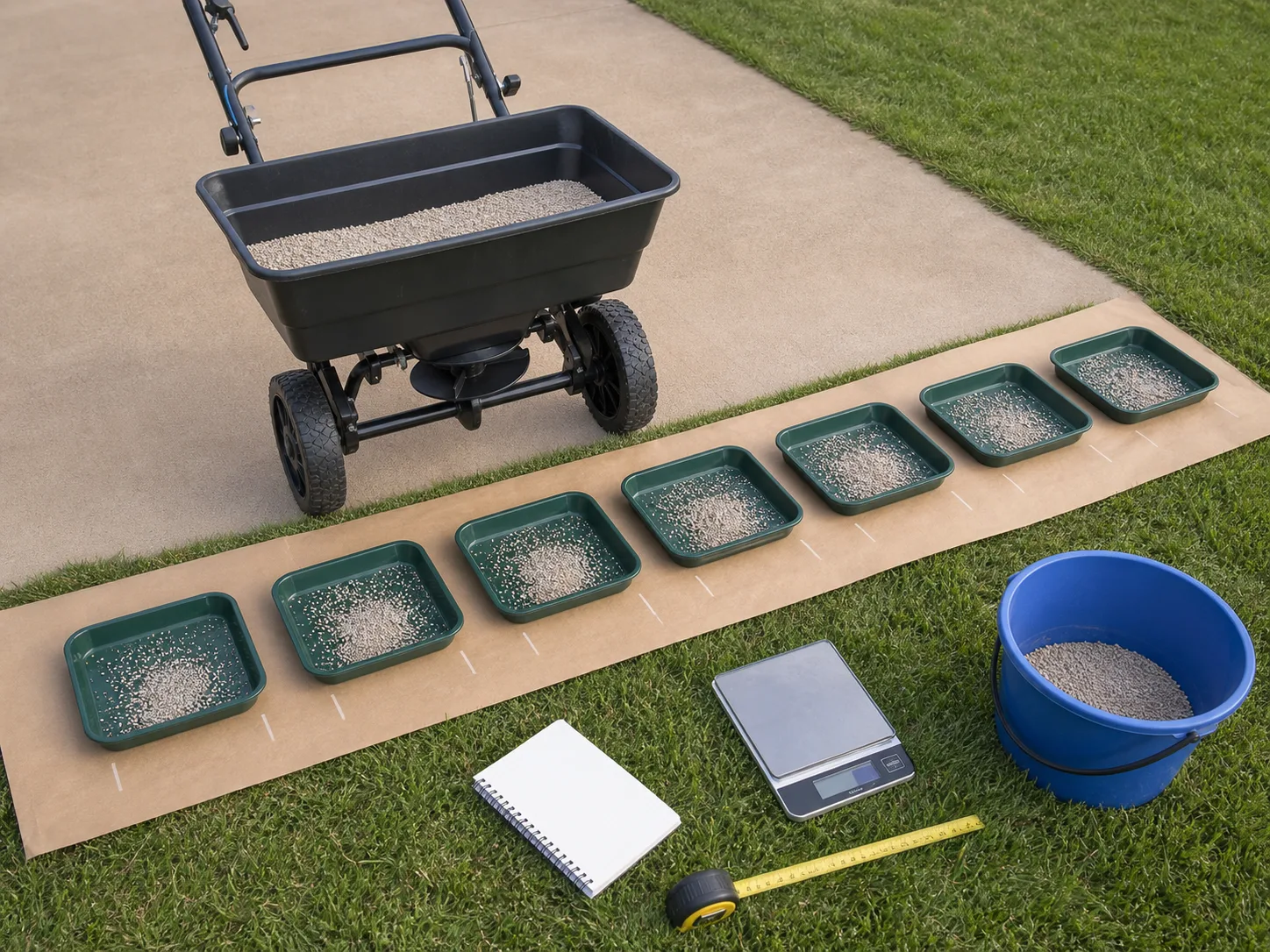
A broadcast spreader covers a large open lawn efficiently but can throw material beyond the target area. A drop spreader gives more precise edges around beds and pavement but requires careful overlapping of wheel tracks. Whichever you use, sweep granules off sidewalks and driveways and back onto the lawn; do not blow them toward a storm drain.
Calibrate before the real application:
- Read the bag’s coverage and target rate, then weigh the amount needed for a small test area.
- Mark a known test strip, such as 1,000 square feet or a smaller fraction of it.
- Set the spreader low, walk at a steady pace, and collect or weigh what remains.
- Adjust the opening gradually until the measured amount matches the calculated target.
- Apply in two perpendicular passes at half-rate when the product label permits; this reduces striping without doubling the dose.
The existing calibration scene in this fertilizer-spreader guide illustrates why a measured test run beats trusting a dial. Keep the spreader moving before opening the gate, close it before stopping, and fill or empty it over turf rather than hardscape. Store unused product sealed and dry so moisture does not change the flow.
Let weather decide the application window
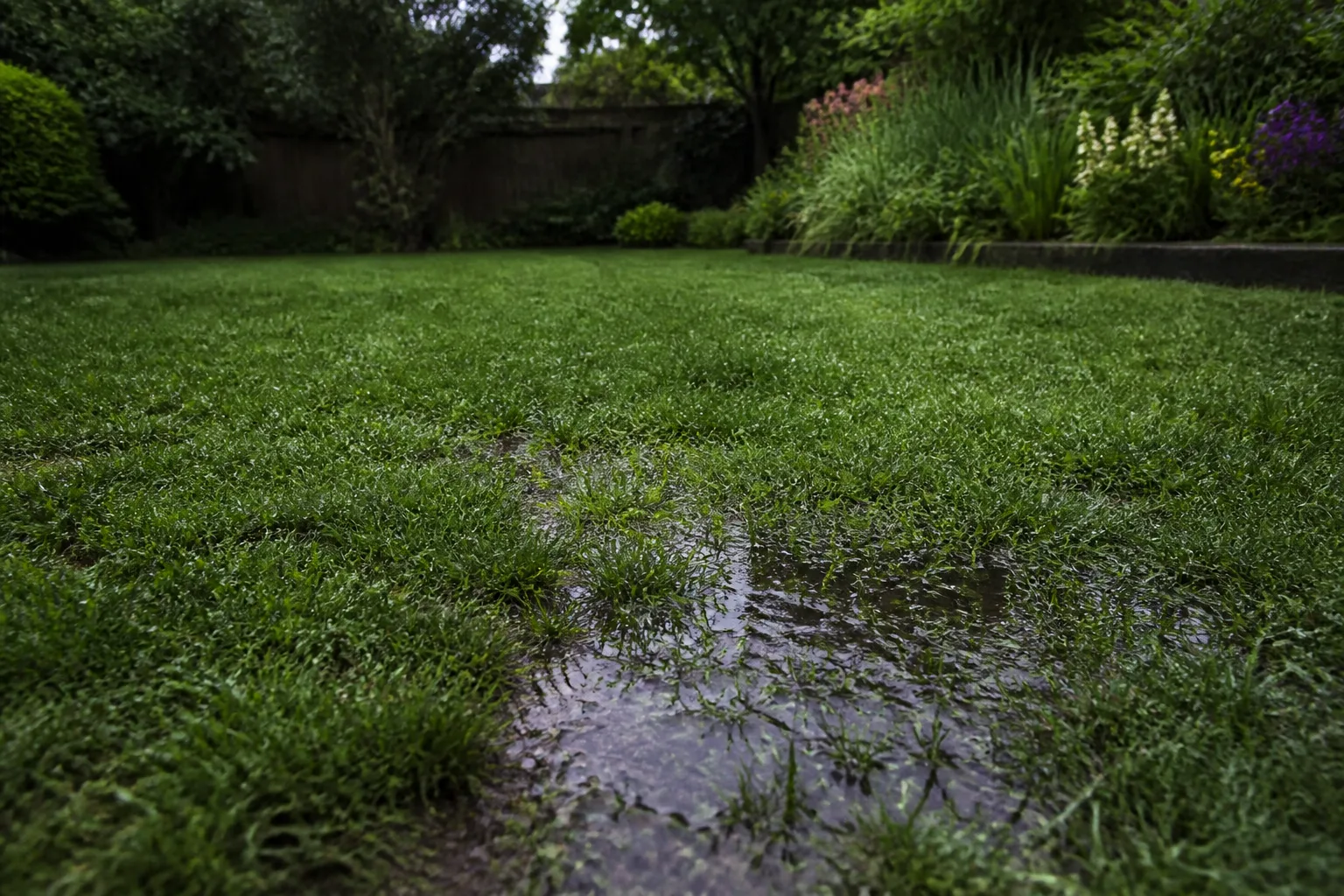
Avoid spreading before heavy rain. NC State Extension specifically warns that fertilizer can be washed away in runoff before turf absorbs it, and NOAA’s Runoff Risk overview explains the purpose of decision tools that help avoid nutrient applications before unfavorable hydrologic conditions. A forecast that says “rain later” is not automatically a free irrigation session; intense rain, saturated soil, slope, and nearby drains all raise the risk.
Choose a calm window with moist but not waterlogged soil and enough time to follow the label’s watering instructions. Avoid windy conditions that move granules into beds, ponds, or neighboring property. If the forecast changes after you apply, do not automatically add more product after the storm; first inspect coverage and wait for the lawn to show a genuine need.
Pay attention to slope and drainage, not just the percentage chance of rain. A flat, well-drained lawn can tolerate a different window from a sloping yard that sends water toward a curb inlet. Leave a vegetated buffer near water where possible, and treat any visible flow off the lawn as a signal to pause and change the application or irrigation plan.
Water granular fertilizer in, but do not wash it away
Granular fertilizer generally needs water to move from leaf surfaces into the soil. A light, even watering after application can reduce the chance that granules remain on blades, but flooding the lawn can carry nutrients past the root zone or into street runoff. The right amount depends on the product label, soil texture, slope, irrigation system, and current moisture.
Liquid fertilizer may have a different wait time before irrigation because some products are designed for foliar uptake. Read that product’s directions rather than applying a universal “water immediately” rule. LawnStarter’s practical application guidance is useful for understanding the distinction, but the label remains the controlling instruction.
Watch the first irrigation for puddling or runoff. If water is leaving the lawn before it infiltrates, stop the cycle, let the surface drain, and use shorter cycles with breaks between them. Watering cannot rescue an application that was vastly over the calculated rate, and it should never be used to hide a spill moving toward a drain.
If fertilizer burned your lawn, stop adding inputs
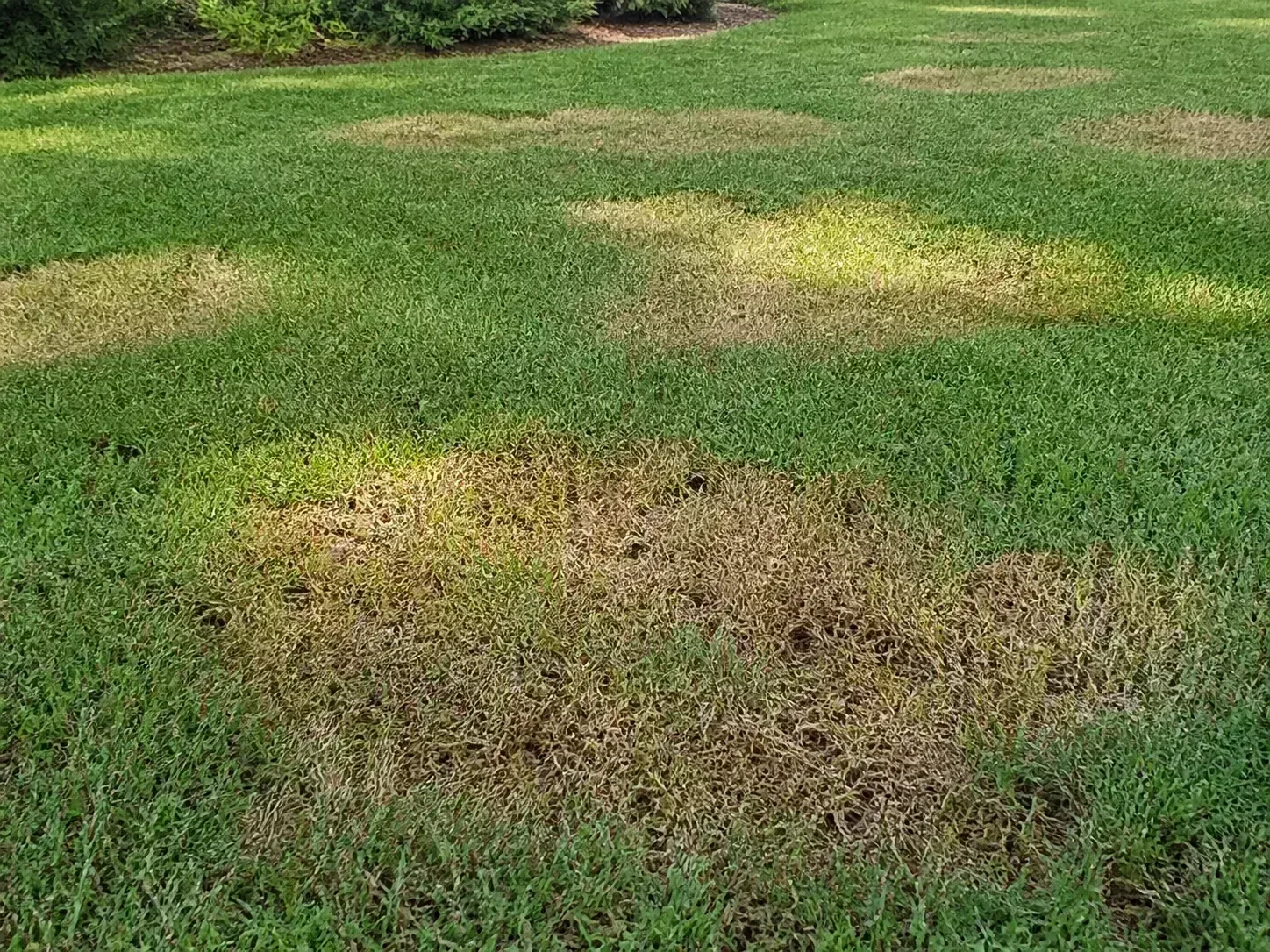
The first response to a suspected overapplication is not more fertilizer, lime, seed, or a “green-up” product. Stop feeding, keep people and pets away from concentrated spills, and check the product label for cleanup instructions. If granules landed on pavement, sweep them back onto the intended turf when safe; do not hose them into a street or drain.
For a modest granular mistake on living turf, careful irrigation may dilute salts and move them below the most concentrated root-zone layer. Do it slowly and only when the soil can absorb the water; repeated flooding can turn a lawn injury into runoff and erosion. A large spill, contaminated drainage area, or product containing additional herbicides or pesticides is a reason to contact your local extension service or a qualified lawn professional for product-specific guidance.
Separate fertilizer burn from look-alike lawn damage
Fertilizer burn often appears quickly after application and follows the spread pattern: streaks, arcs, an overfilled edge, or a dark-to-brown band where the spreader overlapped. Leaf tips may turn brown, while the crown and roots can remain alive. A lawn-and-pest specialist’s diagnostic guide notes that drought, overwatering, mowing too short, pests, and disease can create similar yellow or brown symptoms.
Check the roots before tearing everything out. Living grass usually has firm, light-colored roots anchored in the soil; brown, mushy, or easily detached roots indicate more severe damage. If only the tips are scorched and the crown remains healthy, pause fertilizer, maintain sensible moisture, mow correctly, and give the grass time to replace damaged tissue.
Do not reseed the day after a burn just because the surface looks ugly. Wait long enough to see which areas recover, then loosen compacted soil and reseed only genuinely bare patches during the proper seeding window. A thin lawn caused by shade or drainage will not be fixed by adding seed alone.
Build a simple, grass-specific feeding schedule
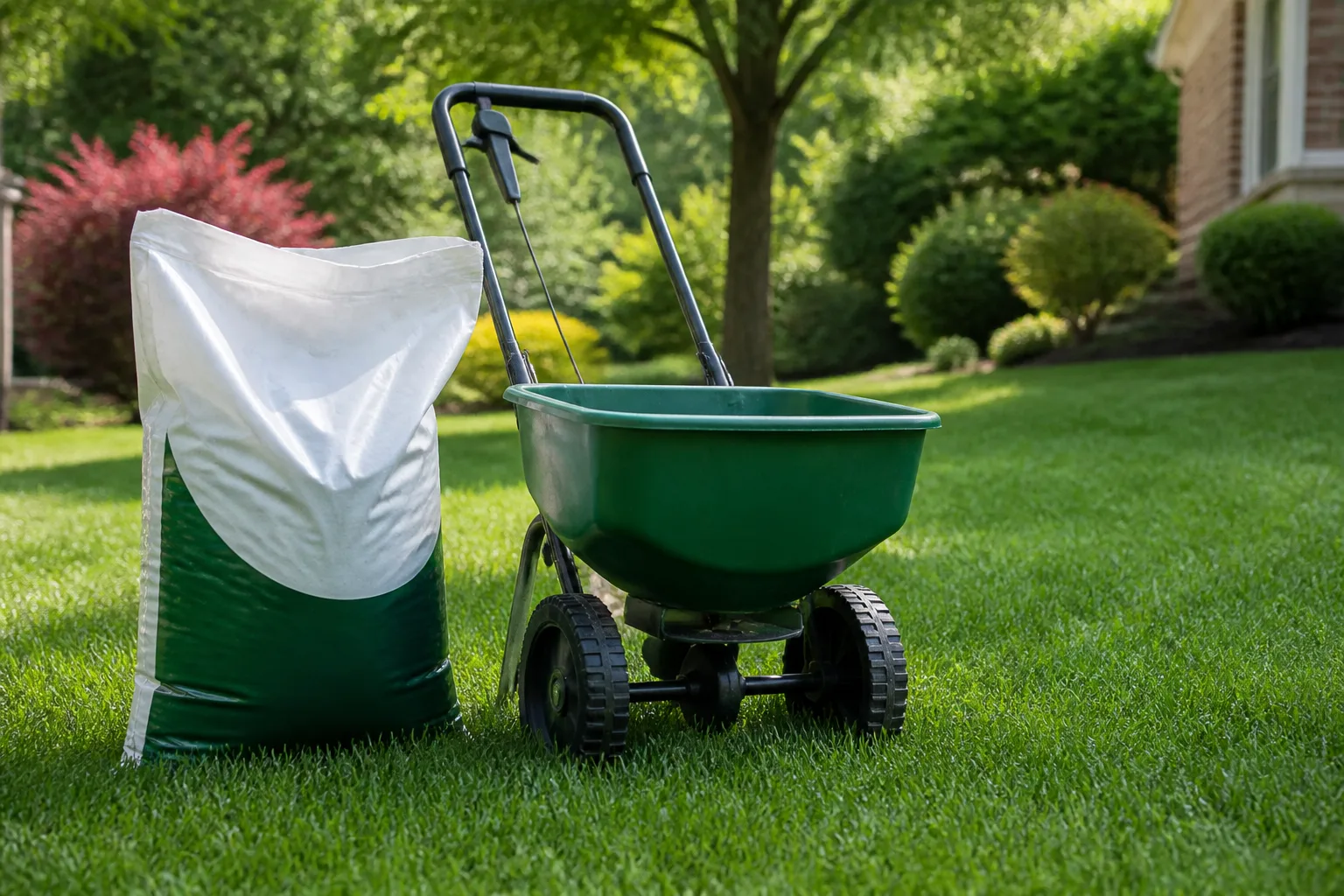
For a new routine, start with one soil test and one calendar tied to active growth. Record product, NPK analysis, calculated amount, area covered, weather, and date. This turns “I think I fertilized recently” into a usable record and prevents accidental back-to-back applications.
| Lawn situation | Safer starting approach |
|---|---|
| Established cool-season lawn | Prioritize the active fall window; use spring nutrition sparingly and avoid forcing growth before heat. |
| Established warm-season lawn | Feed during active warm-season growth; pause during winter dormancy or severe heat and drought. |
| New seed or sod | Use only an appropriate starter plan first; wait for establishment before routine feeding. |
| Unknown nutrient status | Soil test before selecting phosphorus, potassium, lime, or a complete fertilizer. |
| Lawn beside a drain, pond, or steep slope | Use conservative rates, keep product off hardscape, and avoid rain or saturated soil. |
Application spacing is product-specific. A slow-release product may last longer than a quick-release one, and a local program may divide the annual nitrogen target into several smaller treatments. Do not combine a calendar reminder with a bag’s “feeds for X weeks” claim without checking whether another product was already applied.
Grass clippings can also change the amount you need to buy. NC State Extension says recycling clippings can reduce the nitrogen you add by about one-third, provided the clippings are not excessively long, wet, or contaminated with a product that should not be returned to the lawn. Leaving clippings in place is not a substitute for a soil test, but it is a simple way to return nutrients and reduce waste.
When skipping fertilizer is the responsible choice
Skip the application when you cannot identify the grass, calculate the area, read the label, or operate the spreader consistently. Skip it when the lawn is frozen, dormant, severely drought-stressed, newly disturbed, waterlogged, or about to receive intense rain. Waiting for a suitable window is a lawn-care decision, not neglect.
Also skip fertilizer when the real job is mowing, irrigation repair, drainage correction, shade management, aeration, or pest diagnosis. A dense lawn comes from several conditions working together: enough light, healthy roots, appropriate mowing, usable moisture, and nutrients in proportion to demand. Fertilizer is one tool inside that system, not the system itself.
Conclusion: Feed the lawn you have, not the color you imagine
The most damaging lawn fertilizing errors are rarely caused by one mysterious product. They come from stacking small assumptions: guessing the rate, buying a formula before testing, following a generic calendar, feeding stressed grass, trusting a spreader dial, and ignoring the forecast.
Measure the lawn, calculate nitrogen, match the product to a soil need, apply only during active growth, calibrate the equipment, and keep nutrients away from pavement and runoff. If the lawn browns afterward, stop adding inputs and diagnose the pattern before trying to repair it. That slower, evidence-led routine produces steadier turf and fewer expensive surprises.