11 Deer-Resistant Flower Bulbs for Your Spring Garden
Compare 11 deer-resistant flower bulbs by browsing risk, bloom season, light, and soil. Learn which choices are dependable, which are risky, and how to plant.
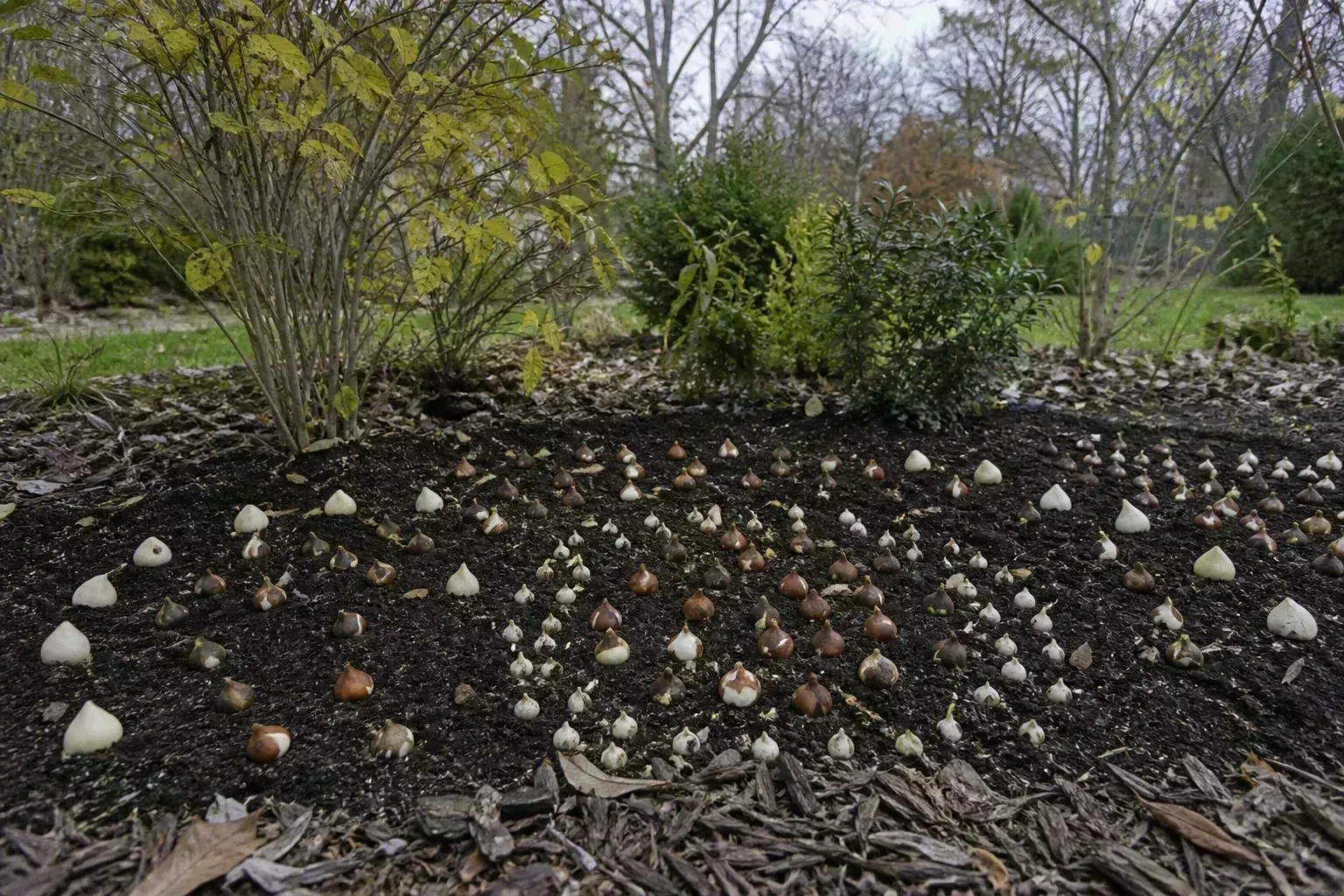
If deer browse your tulips before they open, build the next spring display around plants they are less likely to eat. Daffodils, ornamental alliums, snowdrops, and several other spring bulbs are better bets, but “deer-resistant” describes a pattern, not a guarantee. A hungry herd can sample plants it usually ignores, and the same species may fare differently in two nearby gardens.
That distinction matters when you spend a fall afternoon planting. The Royal Horticultural Society (RHS) says deer damage varies with food availability, season, plant choice, and garden; its survey of 740 gardeners found some plants had a 20 percent or lower reported chance of damage, while other familiar bulbs were much more vulnerable. Use plant ratings to set expectations, then match each bulb to your soil and light. The RHS deer-resistant plant guidance explains both the survey and why local results differ.
How to read deer resistance
Think in tiers instead of a yes-or-no label. Daffodils, hyacinths, snowdrops, alliums, crown imperial, and netted iris have useful deer-resistance records in university or horticultural references. Siberian squill and lily-of-the-valley are also often left alone, but they come with major toxicity or spread cautions. Crocuses and grape hyacinths are less reliable than many lists imply; the RHS survey places both among plants that can be susceptible to deer damage.
The quick comparison below is a planning guide, not a promise. “Stronger choice” means a good backbone for a deer-prone bed; “variable” means plant it only if you can tolerate some losses or protect it when browsing starts.
| Flowering bulb or geophyte | Deer confidence | Best garden role | Main caution |
|---|---|---|---|
| Hyacinth | Stronger choice | Fragrant mid-spring color in sun or light shade | Bulbs can irritate skin and are toxic if eaten |
| Daffodil | Stronger choice | Reliable early-to-late spring color, beds, and lawns | Toxic; leave foliage until it yellows |
| Snowdrop | Stronger choice | Very early color under deciduous trees | Toxic if eaten; dislikes very dry summer soil |
| Glory-of-the-snow | Promising, locally variable | Early blue, pink, or white drifts | Check local naturalizing behavior |
| Crocus | Variable | Early color in lawns, rock gardens, and borders | Deer and squirrels may damage it |
| Siberian squill | Strong resistance, high caution | Blue woodland-edge drifts | Highly toxic and can spread |
| Grape hyacinth | Variable | Blue mid-spring edging or containers | Deer preferences vary; can multiply |
| Ornamental allium | Stronger choice | Sunny, well-drained borders and pollinator plantings | Some Allium plants are toxic to pets if eaten |
| Crown imperial | Stronger choice | Tall mid-spring focal point | Needs drainage; plant bulb on its side |
| Lily-of-the-valley | Strong browsing resistance | Fragrant groundcover for shade | Rhizomatous, potentially aggressive, and toxic |
| Netted iris | Good choice | Low, very early color in sunny, drained spots | Small display; contact or ingestion can irritate |
“Bulb” is also a convenient garden term rather than a strict description of every plant here. Crocuses grow from corms, lily-of-the-valley spreads by rhizomes, and the rest of the list includes true bulbs. The distinction matters when you plan planting depth, transplanting, or long-term spread.
11 flower bulbs and geophytes to consider
1. Hyacinths
Common hyacinths (Hyacinthus orientalis) are a strong choice when you want compact, intensely fragrant flowers in mid-spring. Their dense flower spikes come in many colors, and they work in a border, a container, or near a path where the scent is easy to enjoy. They prefer sun to partial shade and fertile, well-drained soil; if the site stays waterlogged, bulbs may rot.
The fragrance is a bonus for people, not a deer-control method you can count on. North Carolina State Extension lists hyacinth as deer resistant, but also flags the plant as poisonous and notes that contact with the bulb or sap may cause skin irritation. Wear gloves when planting, and place the bulbs where children and pets will not chew them. See the NC State Extension profile for hyacinth.
2. Daffodils
Daffodils (Narcissus species) are the safest place to start if deer have repeatedly eaten your spring flowers. They offer far more than the familiar yellow trumpet: miniature cultivars, white flowers, fragrant jonquils, and varieties that bloom at different points in spring let you build a longer display. Most need sun or part shade and soil that drains well, especially while the bulbs are dormant.
RHS includes daffodils among bulbs that naturalize well, and its deer guidance marks Narcissus as having a low reported chance of damage in the 740-gardener survey. That is a useful signal, not a universal 20 percent prediction for every garden or every herd. Daffodils are also toxic if eaten, especially the bulbs, so do not let their resistance to deer be mistaken for safety around pets or children. The NC State Extension daffodil profile describes the genus’s deer resistance and poisonous characteristics.
If you plant daffodils in lawn, wait until the leaves turn yellow before mowing the area. The green foliage is still feeding next year’s bulb; cutting or braiding it soon after flowering weakens the display over time.
3. Snowdrops
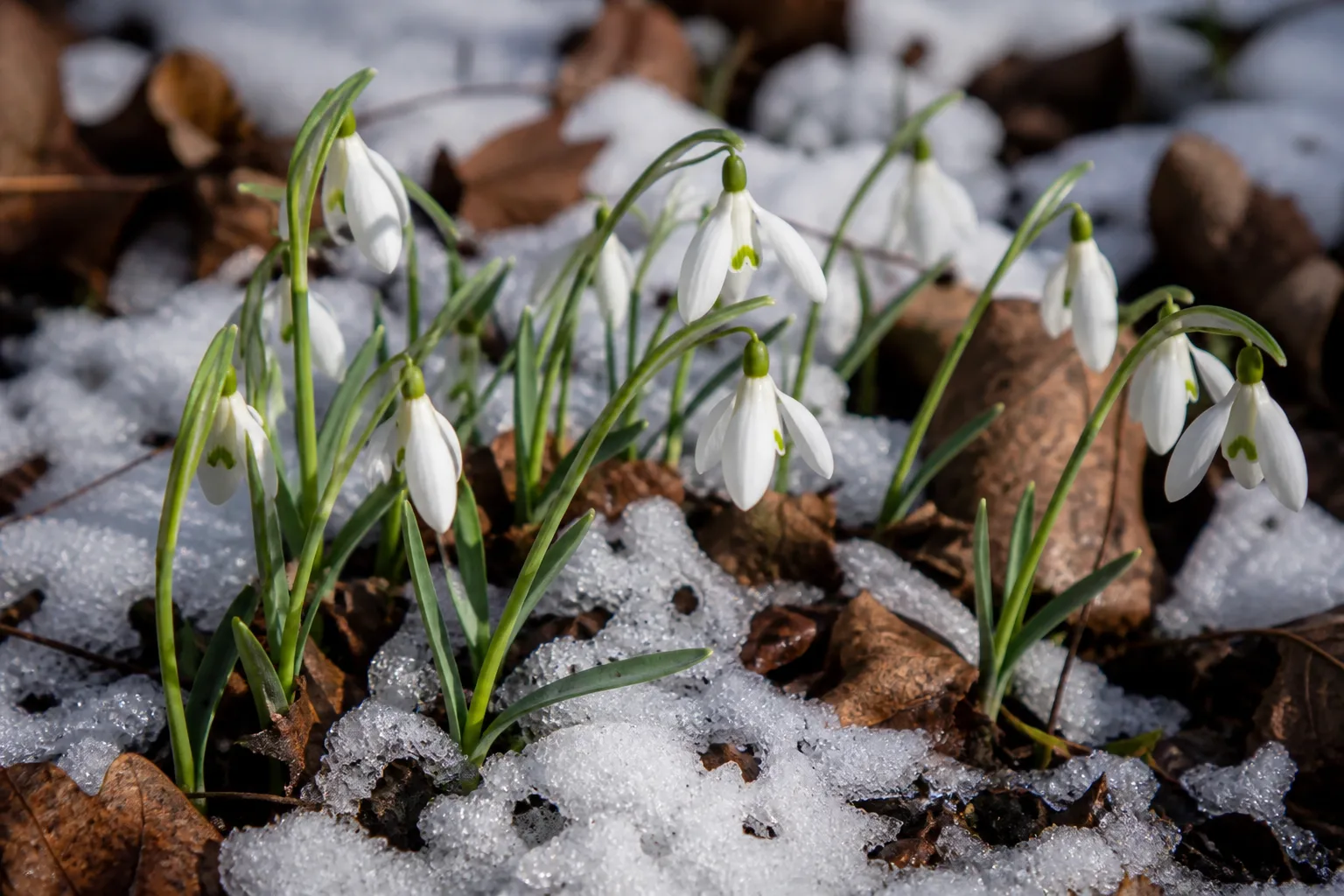
Snowdrops (Galanthus nivalis) are among the first flowers to appear, sometimes pushing through cold ground while the rest of the bed is still dormant. Their small white bells are best planted in groups beneath deciduous trees, along a woodland edge, or in a rock garden where a low-growing flower can be seen. They tolerate partial shade but need more moisture during growth than a hot, dry site usually provides.
Snowdrops can increase through offsets and seed, gradually forming a colony. The RHS recommends planting spring bulbs in autumn, and its snowdrop guide notes that the plants prefer partial shade and dislike very dry summer soil. NC State Extension lists snowdrop as deer resistant and warns that the bulb is toxic if eaten. Read the RHS snowdrop guide and NC State Extension’s snowdrop profile before choosing a spot.
4. Glory-of-the-snow
Glory-of-the-snow is sold under Chionodoxa names and may also be classified within Scilla. Its star-shaped flowers can be blue, pink, or white, giving you an early color option that is less formal than a row of larger bulbs. It is a useful front-of-border or woodland-edge plant where small flowers can be planted in a drift instead of scattered as single dots.
This is a reasonable choice to trial, but local deer pressure and the plant’s tendency to naturalize deserve more attention than a label saying “resistant.” Start with a small group, see whether deer browse it in your yard, and let it spread only if you like the result. The RHS lists related early bulbs for naturalizing in grass and under deciduous trees; its bulb-naturalizing guide also explains why early bulbs can make use of light before trees leaf out.
5. Crocuses
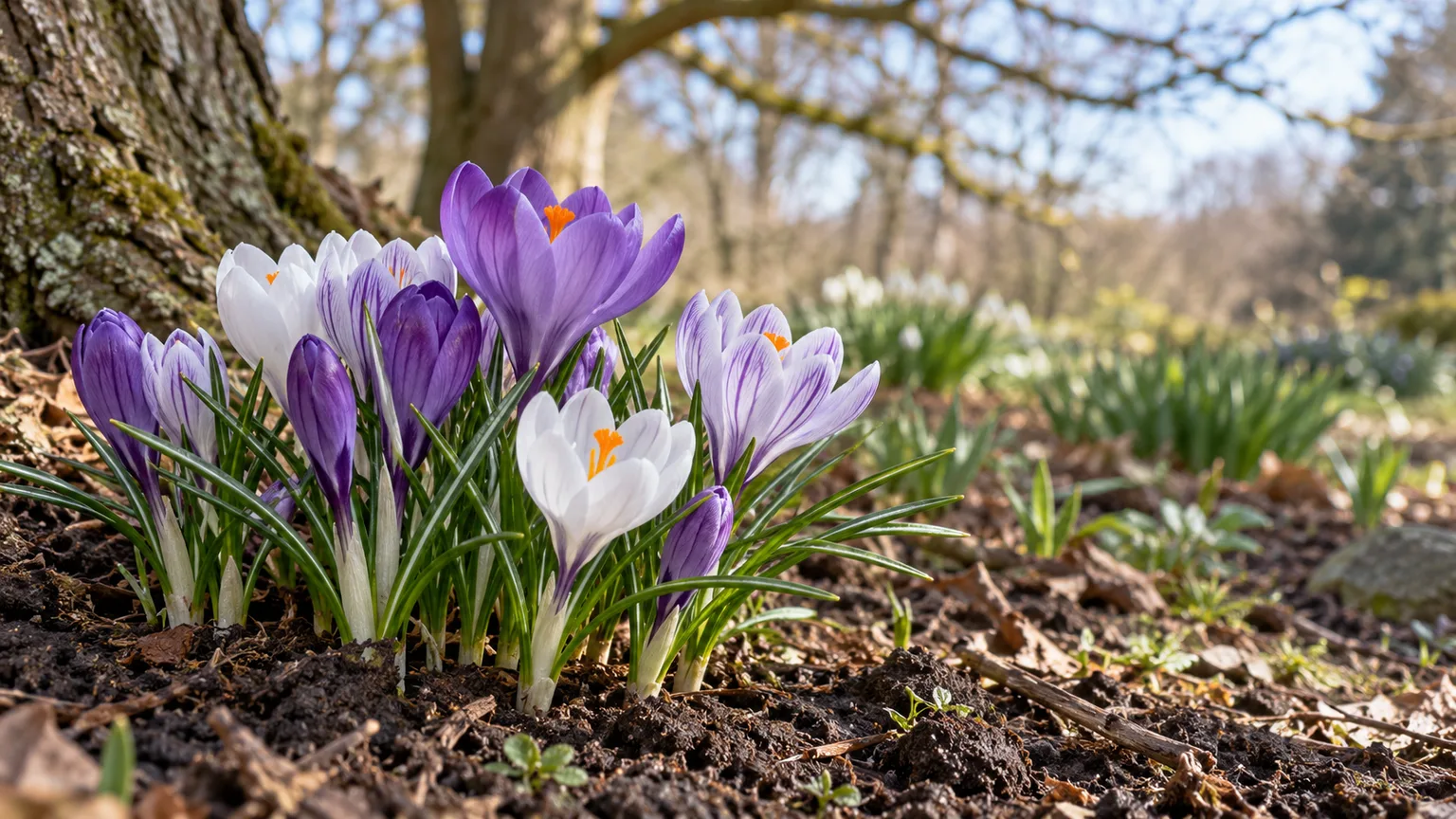
Crocuses are valuable for late-winter and early-spring color, especially in lawns and rock gardens, but they should not be your main deer-defense planting. The RHS lists crocus among plants that were very susceptible to damage in its gardener survey. Some gardeners report less browsing on Crocus tommasinianus than on larger-flowered crocuses, but even that is a trial, not protection you should assume.
There is a second culprit to consider: squirrels may dig up crocus corms, and rabbits can nibble the foliage. If you want to try them, begin with a modest patch near other plants you can afford to lose, then protect the patch if damage appears. The Savvy Gardening guide to deer-resistant bulbs discusses the difference between tommies and other crocuses; the RHS’s deer-resistance survey is a reminder to keep expectations measured.
6. Siberian squill
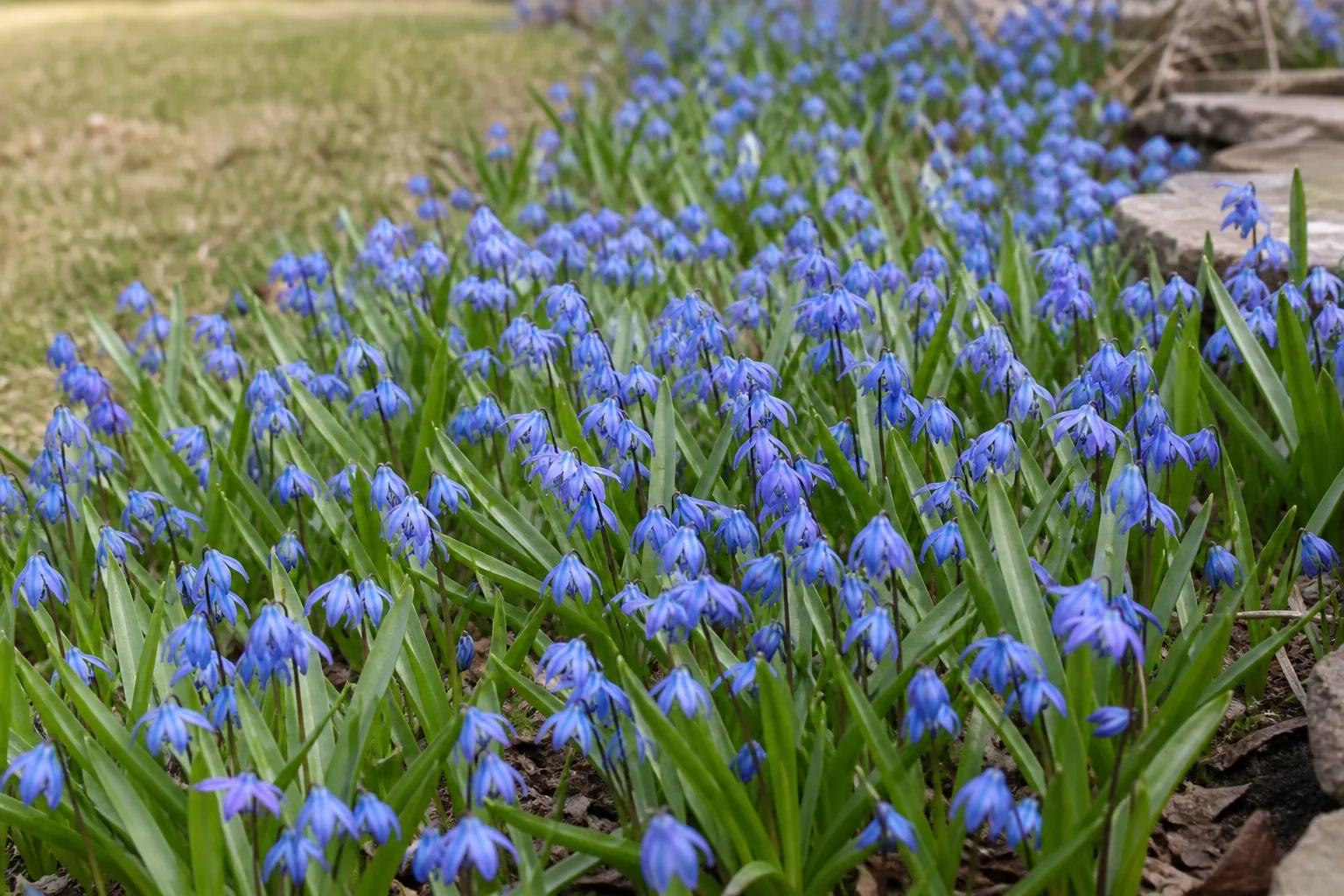
Siberian squill (Scilla siberica) produces vivid blue flowers early in spring and can form a dramatic carpet beneath deciduous trees. North Carolina State Extension tags it as deer resistant and describes it as suitable for beds, borders, rock gardens, lawns, and woodland gardens. That makes it an effective option where you want strong color before later perennials fill in.
Its cautions are unusually important. NC State rates the plant as highly poisonous, with ingestion potentially fatal, and notes that contact can irritate skin. It can also naturalize and spread; do not let the blue drift expand into a lawn or woodland unless that is an intentional, locally appropriate choice. Check regional invasive-plant guidance before buying a large quantity. The NC State Extension Siberian squill profile includes the toxicity warning.
7. Grape hyacinths
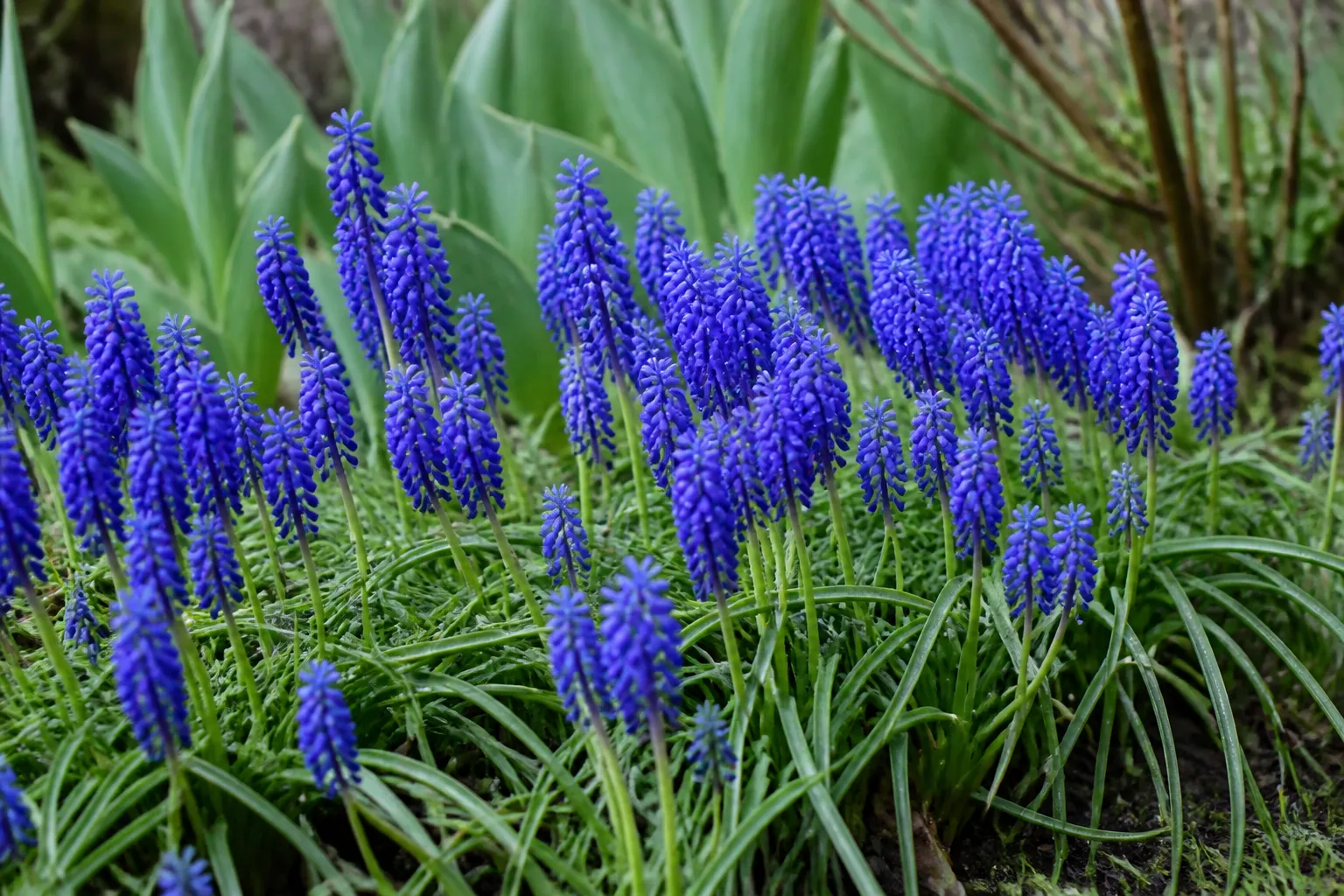
Grape hyacinths (Muscari species) make dense, blue or purple flower spikes in mid-spring and are often used to edge a bed or weave through larger bulbs. They are small enough for containers and can naturalize, which makes them an easy way to create a repeated patch of color.
Their deer rating is mixed. Some horticultural lists recommend them, but the RHS survey found grape hyacinths among plants that can be susceptible to browsing. Treat them as supplemental color rather than the backbone of a bed that deer visit nightly. If you plant them, start where you can watch the new growth, and remove unwanted offsets before the colony becomes larger than you intended.
8. Ornamental alliums
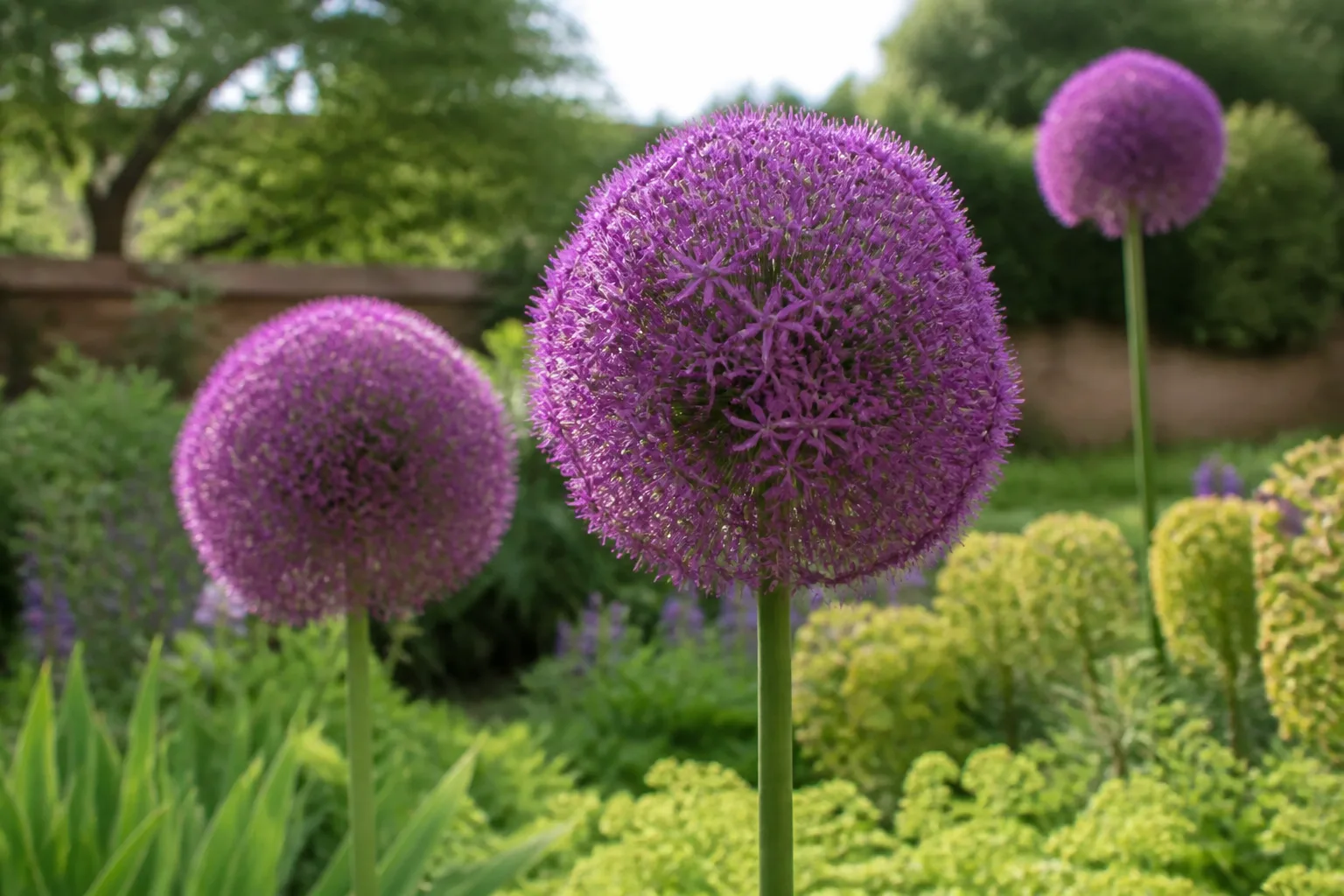
Ornamental alliums bring late-spring or early-summer height after many small bulbs have finished. Depending on the species, their flowers can form airy clusters or large purple spheres; most perform best in a sunny site with well-drained soil. Their onion-like odor and flavor help explain why deer tend to leave them alone, and the flower heads provide a distinctive shape among softer, lower spring flowers.
The genus includes many species and forms, so check the mature height and whether a chosen allium spreads by seed or offsets. Do not rely on planting alliums beside tulips to shield the tulips; nearby scent is not a dependable physical barrier. Also keep the plant away from pets that may chew it: Cornell’s veterinary guidance lists Allium foods, including onions, garlic, leeks, and chives, as potentially toxic to dogs and cats, and NC State describes ornamental allium as poisonous in large quantities. See NC State Extension’s allium profile and Cornell’s small-animal toxin guidance.
9. Crown imperial
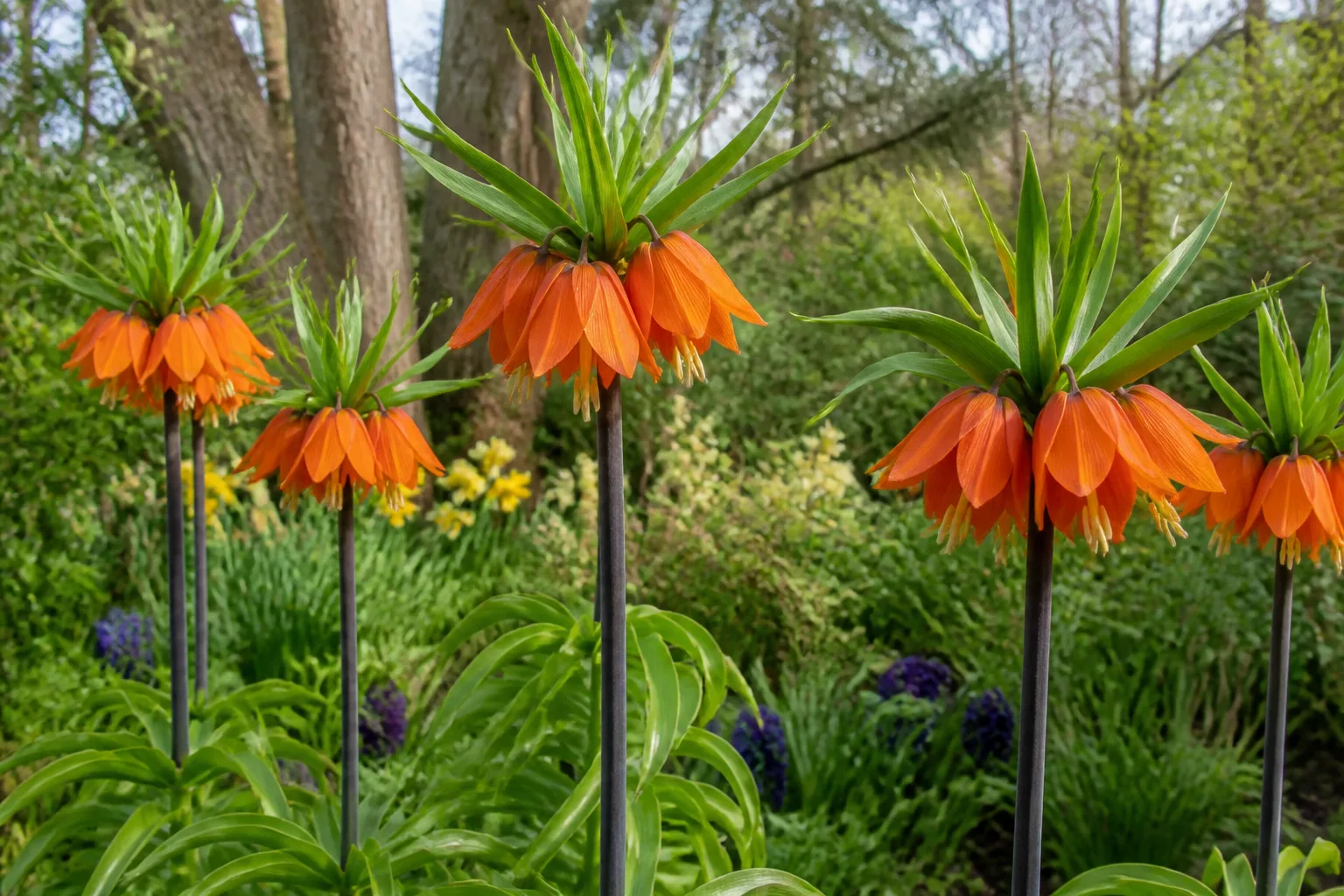
Crown imperial (Fritillaria imperialis) is the tall, architectural choice on this list. It can reach several feet, with orange, red, or yellow bell-shaped flowers hanging beneath a crown of leaves. Use it as a repeated focal point near the back of a sunny border rather than as a low groundcover. The substantial plant needs room, and it is most successful in fertile soil that drains well.
NC State Extension identifies crown imperial as deer resistant and notes that the bulb’s unusual odor is said to repel wildlife. The bulbs are fragile, so choose the site before planting and avoid moving them once established. Plant each bulb on its side; water collecting in the hollow top can contribute to rot. The NC State Extension profile for crown imperial gives its fall-planting and drainage guidance.
10. Lily-of-the-valley
Lily-of-the-valley (Convallaria majalis) is not a true bulb. It is a rhizomatous perennial that makes a fragrant white spring display and can cover shady ground where many bulbs receive too little light. NC State Extension describes it as resistant to deer and rabbits and suitable for partial to full shade.
Think carefully before planting it. Dense rhizomes can crowd out other plants, and NC State reports that the species is invasive in some states and may become aggressive in cool, moist regions. The plant is also poisonous, including its berries, so avoid sites where children or pets might sample it. If you need a contained planting, use a pot or a place with hard boundaries and check local invasive-plant advice first. See NC State Extension’s lily-of-the-valley profile.
11. Netted iris
Netted iris (Iris reticulata) is a compact, early-spring iris that can bloom when the garden still looks bare. Its blue, violet, or purple flowers suit a rock garden, border edge, or container, and the low stature makes it easy to place near a path. It is a better fit for sun or partial shade and a well-drained site than for a soggy bed.
NC State Extension describes netted iris as deer tolerant and recommends keeping it moist during active growth, then allowing the site to dry as the bulb goes dormant. It is a useful small-scale choice, but it will not provide the visual impact of tall alliums or a mass of daffodils. The same profile notes low-level toxicity and possible irritation from plant parts, so wear gloves if you are sensitive and keep bulbs out of reach. Read the NC State Extension profile for netted iris.
Choose bulbs for your garden’s light, soil, and season
Start with the spot, then choose the plant. For a sunny, well-drained border, build around daffodils, hyacinths, alliums, crown imperial, and netted iris. For an area beneath deciduous trees, snowdrops and glory-of-the-snow can use the brighter spring period before the canopy closes. Lily-of-the-valley will tolerate shade but is a spreading groundcover, not a tidy little bulb to tuck anywhere.
Bloom sequence is another useful filter. Snowdrops and crocuses provide very early flowers; daffodils, hyacinths, squill, and grape hyacinths follow; alliums and crown imperial extend the show into later spring. A mixture gives you more weeks of color and avoids relying on one plant group. For a naturalistic look, repeat small bulbs in clusters or drifts; for a formal bed, use fewer types in larger groups.
Plant in fall, at the right depth
Most hardy bulbs that flower in spring are planted in fall, while the ground is workable and before it freezes solid. The exact calendar depends on your region, soil temperature, and species, so use local extension advice and the supplier’s planting directions rather than copying a date from another climate. The RHS gives the same broad seasonal rule and notes that some bulbs have different planting windows; its bulb planting guide is a useful starting point.
Depth should follow the bulb’s size and species guidance, not deer pressure. A general bulb rule is to plant at about two to three times the bulb’s own depth, but the package or an extension profile may give a more precise instruction. Planting deeper does not stop deer from eating leaves and flower buds after they emerge. It can instead make the planting harder to manage, especially in heavy or wet soil.
Drainage matters as much as depth. Many spring bulbs are dormant during summer, when persistently wet soil can rot them; crown imperial is a good example of a bulb that should not sit with water trapped in its hollow top. If your bed stays waterlogged, choose a better-drained spot or grow suitable bulbs in containers rather than trying to fix the problem with a thick layer of gravel at the bottom of a planting hole.
After flowering, leave foliage in place until it yellows naturally. That time allows leaves to replenish the bulb for next year. In a lawn, delay mowing until the leaves have died back; the RHS recommends leaving at least six weeks after daffodils flower before mowing, and preferably waiting until foliage turns straw-colored.
Protect vulnerable bulbs and identify the animal
If the bed is visited by deer every day, even a resistant planting can be sampled. Physical exclusion is the most dependable way to protect a high-value display: fence the whole area where practical, or place a temporary cage or mesh barrier directly over a small patch of bulbs. Repellents can help in some settings, but performance varies with rain, new growth, deer pressure, and product instructions; follow the label and do not expect a one-time treatment to last all season.
Also check what kind of damage you have before changing the plant list. Deer usually browse leaves, stems, and flower buds above ground. A bulb that has vanished, been pulled up, or gnawed below the soil line points more toward squirrels, voles, mice, or other rodents. The RHS bulb guides identify squirrels as a concern with tulips and crocuses, and a bulb cage may help with digging damage even when choosing a less-palatable plant would not.
Do not count on a “protective ring” of daffodils or an allium scent barrier around tulips. A mixed planting can look attractive and may lower the proportion of palatable plants in a bed, but it does not physically block a deer from reaching the plant it wants. If you keep tulips because you love them, protect those bulbs directly and treat any blooms that survive as a bonus.
Safety and spread belong in the plant choice
Many bulbs that deer tend to avoid contain bitter or toxic compounds. That explains part of their resistance, but it also means a deer-resistant planting may be a poor fit in a play area or a garden where a pet chews plants. Daffodils, hyacinths, snowdrops, Siberian squill, lily-of-the-valley, crown imperial, and alliums all warrant a careful look at their toxicity notes; hyacinth bulbs can also irritate skin. Store unused bulbs in labeled bags, wear gloves when handling irritating bulbs, and do not leave loose bulbs where a child or animal can mouth them.
The Cornell University College of Veterinary Medicine lists allium foods as potentially toxic to dogs and cats. NC State Extension describes Siberian squill as highly poisonous and warns that lily-of-the-valley can be poisonous and invasive in some regions. When the garden includes pets or young children, choose plants with those risks in mind, restrict access where needed, and contact a veterinarian or animal poison-control service promptly if a pet eats a bulb or plant part. The Cornell veterinary guidance explains when to seek species-specific help.
Naturalizing can also change a garden more than expected. Snowdrops, daffodils, and other small bulbs can increase over time, while Siberian squill and lily-of-the-valley may spread beyond the original clump. Before planting a large drift, check whether a species is invasive or discouraged in your state or region, then decide whether you want it to stay in a defined bed, move through lawn, or remain contained.
Conclusion
For the most dependable spring color in deer country, start with daffodils, snowdrops, ornamental alliums, hyacinths, crown imperial, or netted iris, then add smaller bulbs according to the light and moisture your garden offers. Treat crocuses and grape hyacinths as trial plants when deer pressure is high, and think through toxicity and naturalizing before planting Siberian squill or lily-of-the-valley.
The best plan is not to search for a truly deer-proof bulb; there isn’t one. Choose plants with a stronger resistance record, plant them at the depth and site they need, leave their leaves until they die back, and protect the specific flowers you cannot afford to lose.



