Does Aloe Vera Flower? Bloom Time, Care, and Expectations
Aloe vera can bloom, but it needs maturity, bright light, and a healthy dry-down cycle. See realistic indoor and outdoor care, timing, and post-bloom steps.
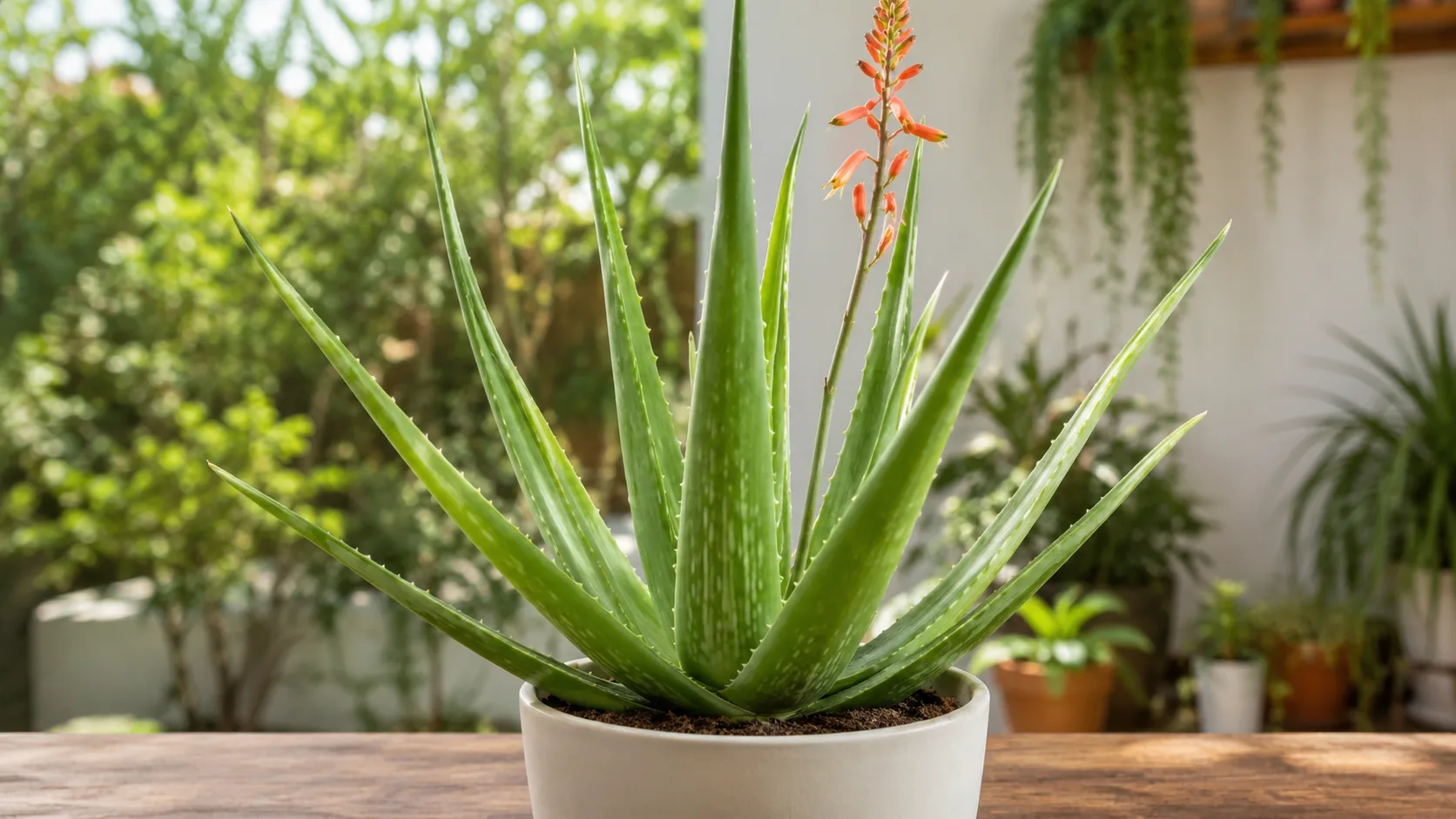
Yes—aloe vera can flower. A mature, healthy rosette may send up a tall stalk from its center, with clusters of tubular flowers that are usually yellow to yellow-orange. A bloom is possible on a potted plant, too, but it is uncommon indoors because most homes provide less sustained light and seasonal warmth than the plant gets outside. The Missouri Botanical Garden describes flowering as a feature of mature plants and lists yellow blooms; NC State Extension notes that an aloe at least three years old can send up a stalk with orange to yellowish flowers. (Missouri Botanical Garden, NC State Extension)
Think of flowering as a sign that the plant has reached a reproductive stage and has enough resources—not as a yearly deadline or a reward for one fertilizer trick. The best way to improve the odds is to keep an established aloe healthy, give it strong light it can tolerate, protect it from cold, and let its soil dry between thorough waterings. A plant that never flowers can still be healthy and well cared for.
What Does an Aloe Vera Flower Look Like?
A flower stalk rises from the middle of the leaf rosette, often well above the foliage. Small, pendant or outward-facing flowers form a cluster near the top of the stalk; botanists call the whole flowering structure an inflorescence, and a simple unbranched cluster is often called a raceme. Aloe vera flowers are commonly yellow or yellow-orange, while other aloe species can bloom in red, coral, pink, or orange. That distinction matters when you identify a plant from a photo: a red flower may be a different aloe, not proof that every Aloe vera plant should produce red blooms. (Penn State Extension, Missouri Botanical Garden)
The stalk can look surprisingly different from the plant’s familiar leaves. It is usually smooth and narrow compared with the thick, fleshy foliage, and buds develop in a tight cluster before opening gradually. A mature plant may carry one stalk or more than one; the exact display depends on the plant’s size and growing conditions. Flowers do not open all at once, so the spike can change appearance over several days or weeks.
Flower Spike or Pup: How to Tell the Difference
A pup is a small aloe rosette that develops at the base or along the outer edge of the mother plant. It already has short, pointed leaves arranged around its own center. A flower stalk, by contrast, is a narrow, upright stem that rises from the center of the mature rosette and eventually develops buds. If the new growth looks like a miniature aloe with leaves, it is an offset; if it looks like a plain stem with a bud cluster forming above it, it is likely a flower spike.
Do not cut a new structure just because it appears in the center. Give it a few days to show its shape: new leaves stay leafy and widen into a rosette, while a stalk elongates upward and carries buds. The distinction helps you avoid removing a developing flower—or mistaking a pup for one and missing an easy opportunity to propagate the plant later.
When Does Aloe Vera Bloom?
There is no single month that applies to every aloe vera. Plants growing outdoors in warm climates often flower in the warmer part of their local growing cycle, while a houseplant may bloom irregularly or not at all. The Missouri Botanical Garden lists summer as a typical bloom period for aloe vera; treat that as a regional expectation, not a worldwide calendar, because hemisphere, latitude, rainfall, and the length of the warm season shift the pattern. (Missouri Botanical Garden)
Once flowers appear, the individual blooms usually open in sequence rather than in one burst. In a warm outdoor setting, a mature aloe may flower once in a growing season, while a potted indoor plant may skip years; repeat blooms can happen in especially favorable climates. Horticulture guides describe the show as lasting several weeks, but the exact duration depends on temperature, light, and how quickly the flowers open. A hot, dry spell may shorten the display; cooler but frost-free weather can slow it. Treat any date range as a regional pattern, not a guarantee that your plant has missed its chance if it has not bloomed by a certain week.
Why the Blooming Season Shifts by Region
Aloe vera’s schedule follows growth, not a fixed calendar. In the Northern Hemisphere, a plant that spends summer outside may flower in spring or summer; in the Southern Hemisphere, comparable conditions arrive at a different time of year. Indoor plants also experience less pronounced seasonal changes, so a mature aloe may send up a stalk at an unexpected time or skip flowering in a given year.
Use your plant’s recent conditions as the better guide. Has it had several months of strong light and active growth? Did it avoid prolonged cold and constantly wet soil? Those clues say more about readiness than the date on a calendar. If your climate has a short summer, the main goal is a long, bright, frost-free growing period rather than trying to force a bloom before the weather turns.
Why Indoor Aloe Vera Rarely Flowers
Aloe vera will tolerate indoor life, but tolerating a room is not the same as getting the light needed to flower. A window can look bright to you and still deliver only a short stretch of direct sun to the plant. Indoor plants also tend to stay at a steady temperature, grow more slowly in winter, and spend their early years in small nursery pots. Any one of those factors can delay flowering; several together make blooms less likely.
A plant’s age is another common blind spot. Many nursery aloes are propagated from offsets, and the date you bought yours tells you nothing about how long it has been growing. The plant may be older than it looks, or it may still be juvenile despite having a full pot of leaves. A healthy rosette in a bright room can still remain foliage-only for years. That is normal; do not respond by withholding water, moving it abruptly into intense sun, or feeding it heavily.
How Old Does Aloe Vera Need to Be to Flower?
Aloe vera generally needs to be mature before it flowers. NC State Extension says a plant at least three years old can produce a flower stalk. Treat three years as a rough developmental guide, not a promise or a precise age test. A plant raised from seed, a pup separated from a parent, and a nursery plant with an unknown history will not reach maturity on the same visible schedule. (NC State Extension)
Size alone is not a reliable clock. A large, stretched plant may be old but light-starved; a compact plant with firm leaves may be healthy but still young. Better readiness clues are a settled rosette, repeated active growth, strong roots, and a history of bright conditions. Even mature plants do not bloom on command, especially in containers, so think of age as one condition among several rather than the switch that turns flowers on.
How to Encourage Flowering Without Stressing the Plant
Start with health, not a bloom booster. Aloe needs a mature rosette, strong light, warm growing conditions, and a root zone that drains quickly. Do not try to create those conditions all at once: a sudden move from a shaded room to hot direct sun can scorch leaves, and extra water or fertilizer cannot compensate for inadequate light. Change one thing at a time and watch how the plant responds over several weeks.
For a potted plant, use a container with drainage holes and a coarse, fast-draining cactus or succulent mix. The pot should comfortably hold the root ball, but it does not need to be dramatically oversized or deliberately cramped. Repot only when roots crowd the container, the mix has broken down, or drainage has become poor; repotting is a maintenance step, not a reliable flowering trigger. (Penn State Extension, NC State Extension)
Prioritize Strong Light, Then Acclimate
Light is usually the first condition to improve. Place indoor aloe where it receives several hours of direct sun and bright light for the rest of the day; a sunny window or sunroom is often better than a shelf several feet back from the glass. In the Northern Hemisphere, an unobstructed south- or west-facing window often supplies stronger light, while in the Southern Hemisphere the sun-facing direction is generally reversed. The goal is sustained usable brightness, not a particular compass point. The Missouri Botanical Garden recommends bright light for flowering, and Penn State Extension describes full to partial sun as a good growing range. (Missouri Botanical Garden, Penn State Extension)
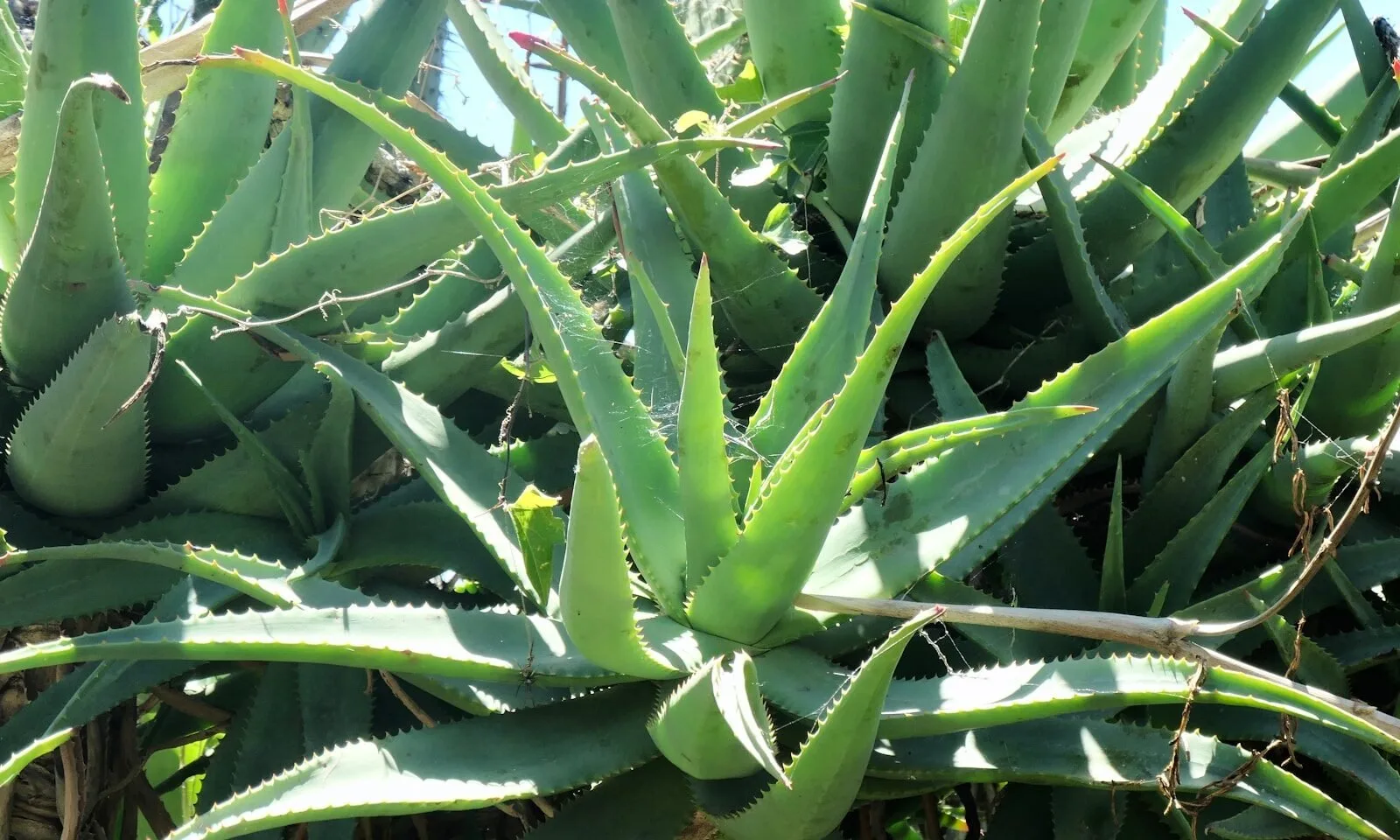
If the plant has been in dim light, increase direct exposure gradually. Start with gentle morning sun or a few hours outside in bright shade, then add more sun over the next week or two. Watch for bleached, tan, or dry patches that were not there before; those are signs the leaves received more intense light than they were acclimated to. Move the plant back to bright filtered light while it recovers, then try again more slowly.
A grow light can help when a bright window is not available, but it is a supplement, not a guarantee of flowering. Choose a plant light, keep it at the distance recommended by its manufacturer, and use a timer for a consistent daytime schedule. If the leaves lean strongly toward one side or become unusually long and weak, the light is not reaching the rosette evenly; rotate the pot periodically or adjust the setup.
Give It Warm Growing Conditions and Protect It From Cold
Aloe vera is a warm-climate succulent, so flowering is more likely during a long, frost-free growing period than after a cold, dim winter. A warm outdoor summer can provide the light and day-to-night variation that a heated room does not. Do not use a cold snap as a seasonal signal: cold exposure can damage leaves and roots rather than “rest” the plant into blooming.
In cooler regions, treat aloe as a patio plant for the warm season and bring it inside before chilly nights arrive. The Missouri Botanical Garden advises moving summered containers indoors before nighttime temperatures fall below about 50°F; that is a conservative cue, not a promise that the plant can safely tolerate every brief dip. Check your local forecast, keep the pot out of cold rain, and avoid leaving it outdoors where frost is possible. (Missouri Botanical Garden)
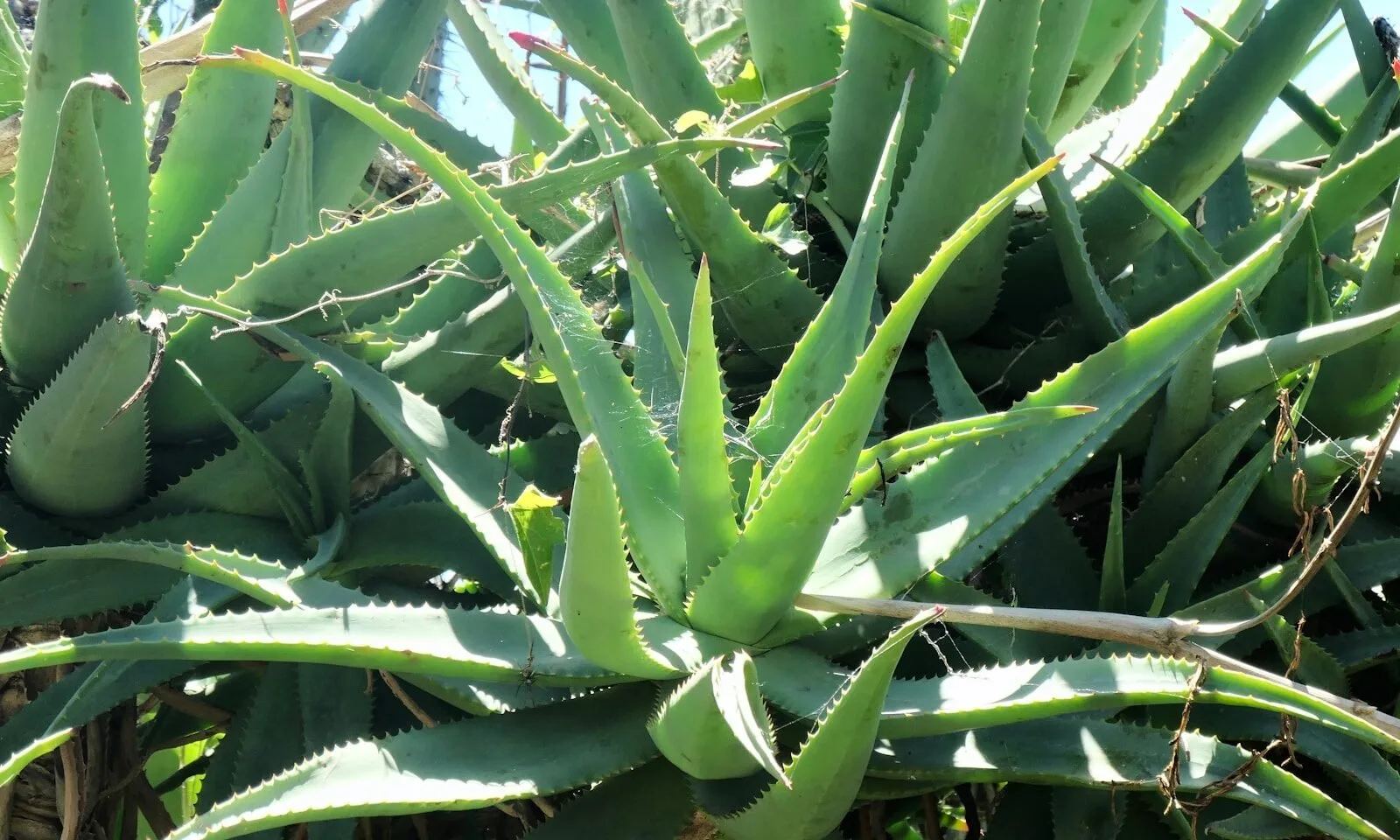
If you move a houseplant outdoors, give it time to adjust. Begin in a sheltered spot with morning sun, then increase direct exposure over several days. Keep it protected from strong wind and prolonged rain while it adapts. The point is to build light tolerance without scorching the leaves or saturating the roots—not to leave a tender indoor plant on a hot patio all at once.
Let the Soil Dry Between Deep Waterings
Do not water more often just because a flower stalk appears. Aloe stores water in its leaves, and roots that stay wet are vulnerable to rot. Let the mix dry through most or all of the pot before watering thoroughly, then let excess drain from the bottom. Empty any saucer so the pot does not sit in runoff. In cooler, darker months, growth slows and the mix dries more slowly, so check the soil rather than following a rigid weekly schedule. (NC State Extension, Penn State Extension)
A dry top layer is not always a dry root ball. Push a finger or a wooden skewer several inches into the mix; if it comes out cool and damp, wait. If the whole pot is dry and the leaves are firm, water deeply and let it drain. Wrinkled or thinner leaves can indicate the plant is using stored water, but mushy bases, darkening leaves, or a sour smell point toward excess moisture or rot, not a need to water for flowers.
Skip Bloom-Boosting Shortcuts
Aloe does not need a special high-phosphorus “bloom booster” to produce a stalk. Fertilizer cannot make a juvenile plant mature or replace low light, and heavy feeding can push soft, weak growth or leave salts in a small pot. If the plant is actively growing in old, depleted mix, a modest application of a balanced succulent fertilizer at the label’s low rate may support general growth. Skip it if the plant is stressed, dormant, recently repotted, or already growing well.
Do not try to induce flowers by withholding water for months, crowding roots, or keeping the plant in harsh full sun before it is acclimated. Those methods target a flower at the cost of the plant’s condition. A steady cycle—bright light, warm weather, dry soil between deep soaks, and a healthy root system—is a safer route, and flowering may still take another season.
Why Is My Aloe Vera Not Flowering?
Start by separating “not flowering” from “unhealthy.” If the leaves are firm, the center is producing new growth, and the roots are not sitting in wet mix, the plant may simply be too young or may not have received enough sustained light to bloom. A missing flower spike by itself is not a diagnosis. In a cool climate, a potted aloe may live for years as a foliage plant without producing an inflorescence.
Look for a pattern before you change care. An aloe that has spent the summer in bright outdoor light but never flowers may need more maturity or may be a different aloe species than its label suggests. One that has been in a dim room, recently repotted, or moved repeatedly has several reasons to postpone flowering. Correct the most likely limiting condition first, then give the plant a full growth cycle to respond.
Troubleshoot in the Right Order
Use this sequence so you do not change several variables at once:
- Confirm the plant is established. If it is a small offset or a recent purchase with unknown age, give it time to build a mature rosette.
- Track direct light for a week. Note how many hours reach the leaves, not just whether the room looks bright. Improve light gradually if the plant receives little or none.
- Check the root zone. Make sure the pot drains freely and the soil dries between waterings. If the base is soft or roots smell rotten, address that problem before thinking about blooms.
- Review temperature and season. Protect aloe from frost and prolonged cold; in a cool region, a safe summer outdoors may improve conditions.
- Stop when the plant is healthy. If maturity, light, warmth, and drainage are reasonable, let it grow. More fertilizer, more water, or a harsher sun exposure is not a dependable next step.
This order matters because overcorrecting can turn a healthy plant into a stressed one. For example, an aloe that has never flowered indoors may need more light, but shifting it directly into scorching afternoon sun can create permanent leaf damage. If you see a new problem after a change, return to the last stable setup before trying another adjustment.
What to Do While Your Aloe Vera Is Blooming
Once the buds appear, keep the routine steady. Leave the plant in bright light, continue watering only when the mix has dried, and do not increase fertilizer simply because the stalk is growing. A spike uses energy, but it is part of a normal life cycle; a healthy aloe can support it while continuing to maintain its leaves. Avoid rotating or carrying the plant unnecessarily if the stalk is tall and heavy, because a sudden twist can snap it.
Check that the pot is stable and the stalk has room to rise. Keep the plant away from doorways, curious pets, and strong drafts. The flower stalk may look dramatic, but the most helpful care is still familiar aloe care: light, dry-down watering, drainage, and protection from cold.
What to Do After Aloe Vera Flowers Fade
Aloe vera does not normally die after flowering. It is a perennial that can flower again when it remains mature and conditions suit it; this is different from a monocarpic plant that dies after a single flowering event. After the blooms fade, the stalk gradually dries. You can leave it in place briefly while you decide whether you want to collect seed or remove it for appearance. (Missouri Botanical Garden)
If you do not want seed, there is no need to rush to cut a stalk while it is still carrying open flowers. Waiting until it has turned brown and dry makes it easy to distinguish from living growth. The rosette itself should remain firm and green; a fading flower stalk is not the same as a collapsing crown or rotting base.
Cut the Stalk Only When It Is Spent
Use clean, sharp pruning shears or a knife and cut the dry stalk as close to its base as you can without nicking the crown or nearby leaves. If the stalk is tall, steady it with your free hand well away from the blade path, or have someone support the upper portion. Do not pull or twist the stalk; that can tear tissue at the center of the plant.
The cut end may remain visible for a short time and then dry. Keep water from pooling in the crown and continue the normal dry-down routine. Removing the stalk is mainly a tidy-up step after flowering, not a treatment that makes aloe vera bloom again. A healthy plant can grow a new stalk in a later season if its age and conditions support it.
Leave Seed Pods If You Want to Try Seeds
If the flowers were pollinated, they may develop into dry seed capsules after the petals fall. Leave the stalk until the capsules turn brown and begin to split; cutting them green can end seed development. Flowering does not guarantee seed, since the flowers must be pollinated before capsules can form. Check the stalk as the petals fade, and remove it after any capsules have finished if you want to collect them.
Growing aloe from seed is slower and less predictable than separating a well-rooted pup, so do it because you want to experiment, not because the plant needs it. If you do collect seed, sow it promptly in a clean, free-draining medium and keep it lightly moist while it germinates; do not use the mature aloe watering routine for a seed tray. For most home growers, leaving the capsules to finish or removing the spent stalk and keeping the parent plant healthy is the simpler choice.
Conclusion
Aloe vera flowers when a mature plant has enough light, warmth, and healthy roots to move into reproduction. Its usual yellow to yellow-orange blooms rise on a stalk from the center of the rosette, and a potted indoor plant can flower even though it is far less likely to do so than one growing outdoors in a warm, bright climate. Timing shifts by region, and the age estimate is only a guide.
Improve the conditions gradually: give the plant stronger light without scorching it, keep the mix fast-draining, water after it dries, and protect it from cold. If it flowers, enjoy the display and let the stalk finish before cutting it unless it is damaged. If it does not, do not punish the plant trying to force a bloom; a healthy aloe is a success even without a flower spike.