Drip Irrigation vs. Sprinkler: Which Saves More Water?
Learn when drip irrigation saves more water, when sprinklers make sense, and how to design either system around soil, plants, weather, and runoff.
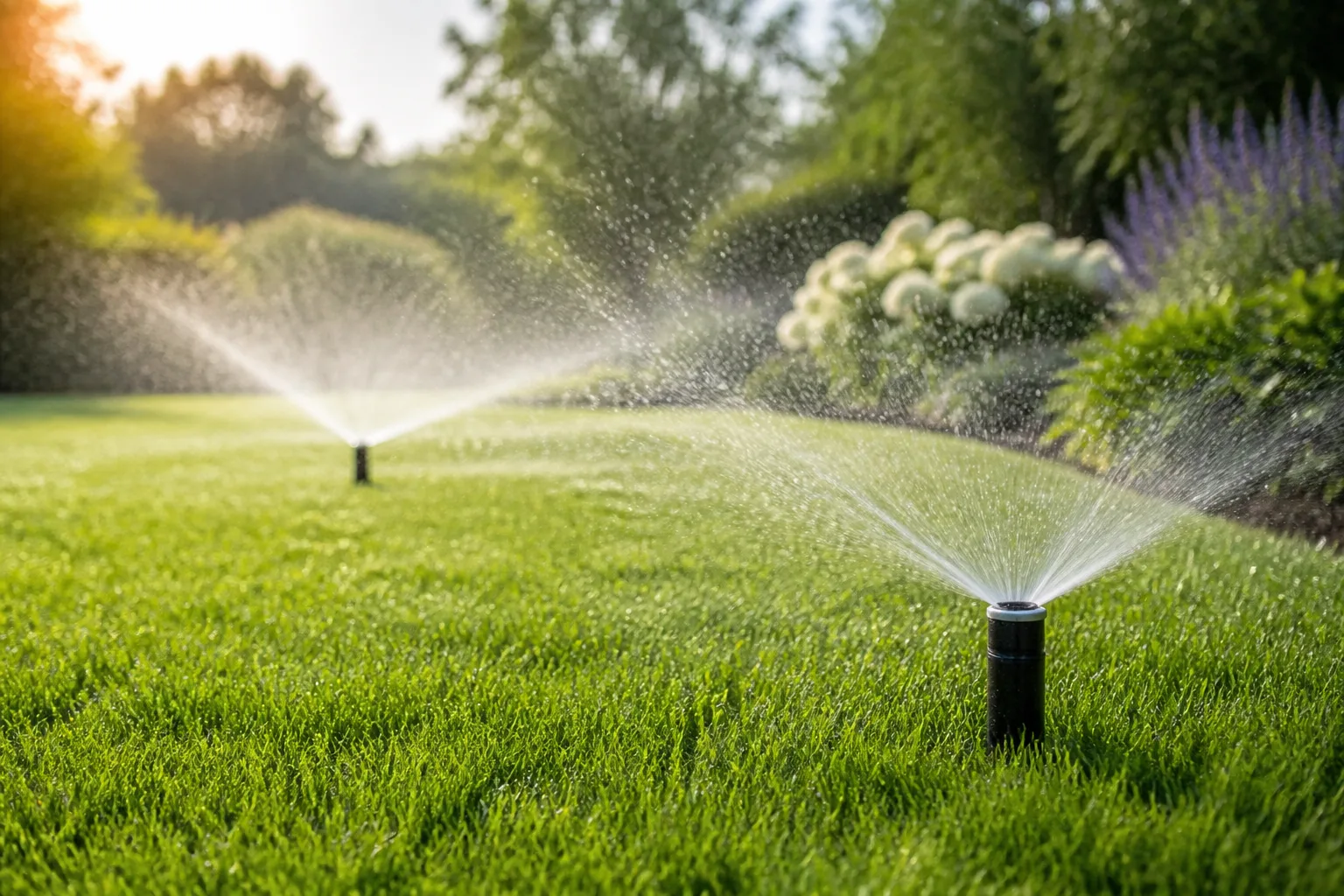
If the only question is which system can deliver water with less waste, drip irrigation usually wins. It releases a measured flow at or near the soil, so less water is blown away, lands on paving, or evaporates from foliage before it reaches the roots.
That answer changes when the area is a lawn, a newly seeded bed, or another open surface that needs an even sheet of moisture. Sprinklers are built for broad coverage, and a correctly designed sprinkler zone can be more practical than trying to place individual emitters across turf. The best choice is usually made zone by zone, not for the whole property at once.
The comparison below draws on Colorado State University Extension’s guidance on home drip irrigation, irrigation guidance from the Southeastern Colorado Water Conservancy District, and practical watering advice from the Royal Horticultural Society and Fine Gardening. The goal is not to crown a universal winner. It is to help you match the delivery method to the plants, soil, slope, and shape of the space.
The short answer: drip usually saves more water, but not everywhere
Colorado State University Extension describes drip irrigation as exceeding 90 percent efficiency, compared with roughly 50 to 70 percent for sprinkler systems. Those are application-efficiency figures: they describe how much of the water applied is likely to reach the intended soil or root zone under the system’s operating conditions.
They do not guarantee that a drip-irrigated yard will use less water. A controller that runs too long, emitters placed away from expanding roots, a clogged line that sends you back to hand watering, or a poorly filtered system can erase the advantage. A sprinkler can also be surprisingly effective when its heads are spaced for overlapping coverage, its nozzles match, and its schedule responds to rain and soil moisture.
Use this default decision rule:
| Landscape area | Better default | Why |
|---|---|---|
| Lawn or athletic-style turf | Sprinklers | The whole surface needs fairly uniform coverage. |
| Shrub and perennial beds | Drip or emitter tubing | Water can be placed at the root zones without wetting paths. |
| Sloped beds or wind-exposed sites | Drip | Slow, low-volume application reduces drift and runoff. |
| Containers and rows of vegetables | Drip or microirrigation | Flow can be matched to individual pots or rows. |
| Newly sown lawn or dense seedbed | Gentle sprinkler or hose attachment | Germinating seed needs consistent surface moisture. |
| Mixed property | Separate zones or a hybrid | Each area can use the method it actually needs. |
How the two systems put water into the landscape
The hardware difference is also a plant-health difference. Sprinklers throw water through the air and ask it to land evenly across a target. Drip systems move water through tubing and release it slowly at selected points, asking the soil to spread that water outward and downward.
Neither method is automatically deep watering. Depth comes from the amount applied, the infiltration rate of the soil, the root-zone layout, and how long the water is allowed to soak before the next cycle. That is why a short sprinkler run on compacted clay may create runoff while a long drip run beside one plant may create a wet pocket and leave roots farther away dry.
Drip irrigation targets the root zone
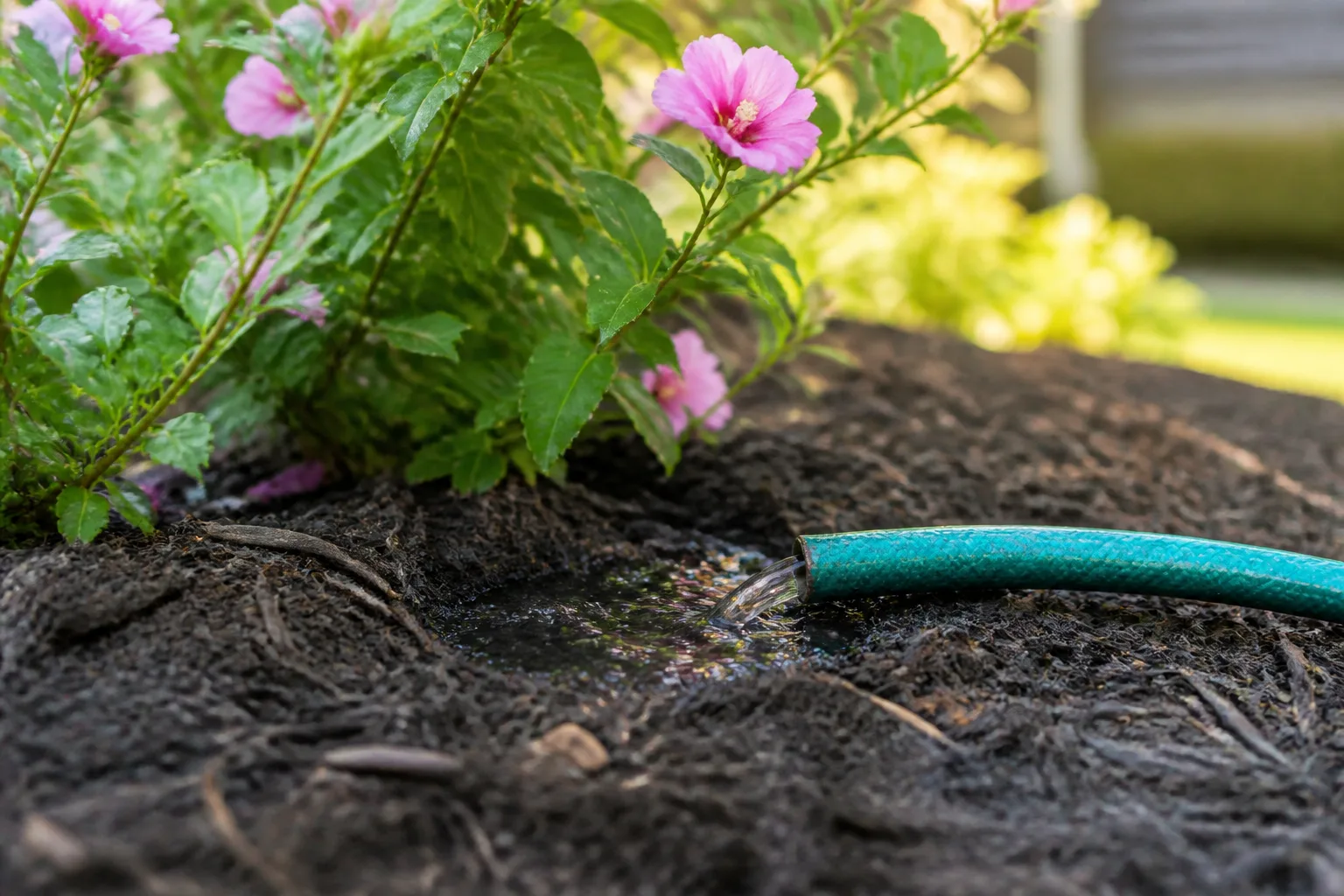
Drip irrigation uses low-flow emitters, emitter tubing, or related microirrigation devices to release water close to a plant’s roots. The surface may look almost dry while water is moving below the mulch, which is useful around shrubs, perennials, vegetables, trees, and containers where wetting the entire surrounding area serves no purpose.
The advantage is control. You can give a thirsty shrub several emitters, a drought-adapted perennial a lower flow, and a line of vegetables evenly spaced outlets. Water stays off leaves and hardscape, and a covered line loses less water to surface evaporation than an exposed spray pattern.
The limitation is that the system must be designed around growth. Colorado State University Extension notes that emitter placement should account for plant size and soil texture; sandy soil spreads water less sideways than loam or clay, so a single emitter may wet too small an area. As a tree or shrub expands, emitters need to move outward or increase in number rather than remain pressed against the trunk.
Sprinklers trade precision for coverage
Sprinklers are good at one job drip does poorly: covering a large, open area with a consistent pattern. Pop-up sprays suit smaller lawns, while rotors or impact heads cover larger areas more slowly. The choice of head and nozzle changes the precipitation rate, radius, and run time, so “sprinkler” is not one uniform technology.
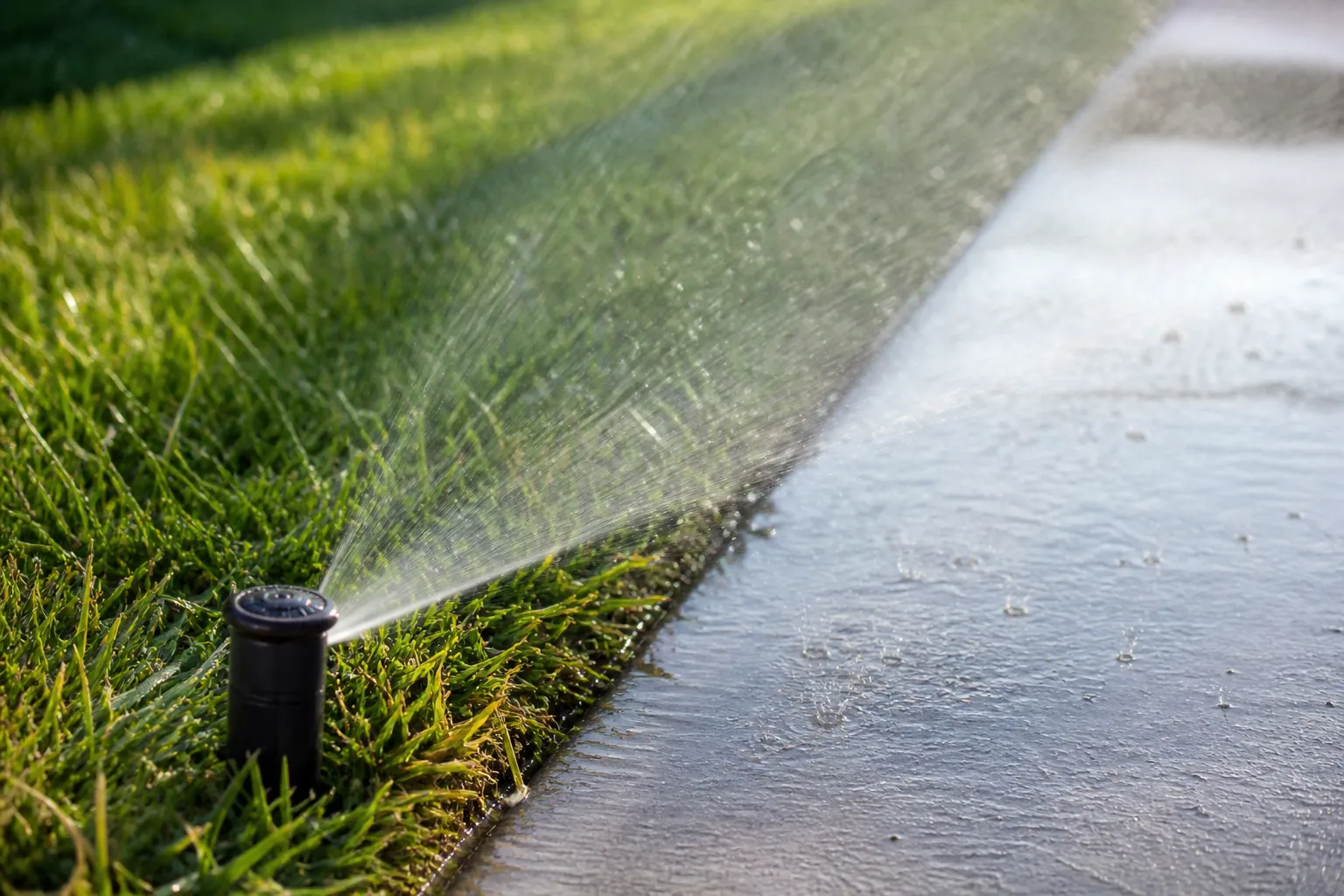
The trade-off is exposure. Droplets can be carried by wind, land on foliage, evaporate before infiltration, or run onto walks and driveways. The RHS comparison of garden watering methods warns that sprinklers can waste water through evaporation and runoff, particularly on compacted or clay soils.
Sprinklers also create a valuable visual signal: you can see a dry head, a tilted nozzle, a blocked filter, or water pooling at the edge of a zone. Drip is quieter and more targeted, but a hidden leak or blocked emitter can go unnoticed unless you inspect the system.
The water-savings claim needs a qualifier
The commonly quoted percentages are useful for choosing a direction, but they are not a promise about your meter. What matters at home is the amount of water applied, the amount that reaches the rooting depth, and whether the plants are receiving more than they can use.
Application efficiency is not the same as your water bill
Imagine two systems covering the same garden. The drip system applies water at the roots but runs for two hours every night because the owner assumes slow flow means unlimited watering. The sprinkler system runs twice a week, early in the morning, with matched heads and a catch-can test that confirms even coverage. The “more efficient” hardware can still produce the larger bill if its schedule is wrong.
The RHS recommends watering deeply and less frequently when the plant and soil allow it, then checking below the surface instead of following a rigid once-a-week rule. That principle matters more than a timer’s label. A smart controller is helpful only when its seasonal adjustments, rain shutoff, and run times reflect the actual landscape.
Track water use in one zone at a time. Note the meter reading before and after a cycle if you can isolate the zone, or use the controller’s flow information if it provides it. A simple log of run time, recent rainfall, soil moisture, and visible runoff will often reveal waste faster than buying new parts.
Where drip earns its advantage
Drip is the stronger water-saving choice when the landscape contains separate plants with open soil between them, especially if those plants have different water needs. It is also well suited to conditions that punish overhead spray:
- Slopes where water begins moving downhill before it infiltrates.
- Windy sites where spray drifts beyond the bed.
- Narrow beds beside walls, fences, or paths where overspray causes staining or waste.
- Shrub and tree plantings where water should reach the expanding root area rather than the trunk or pavement.
- Vegetable rows and containers that benefit from predictable, localized moisture.
Drip is not a substitute for correcting bad soil. If a bed is compacted or poorly drained, slow application can still keep the root zone saturated. Improve infiltration, add appropriate organic matter where it fits the soil, and make sure water is not collecting against foundations or on the downhill side of a bed.
When sprinklers are the better choice
Sprinklers make sense when the planting is continuous and the goal is coverage rather than individual-plant precision. They are also easier to reposition when a lawn expands, new seed is spread, or a bed changes shape from season to season.
Turf, seed, and large open areas
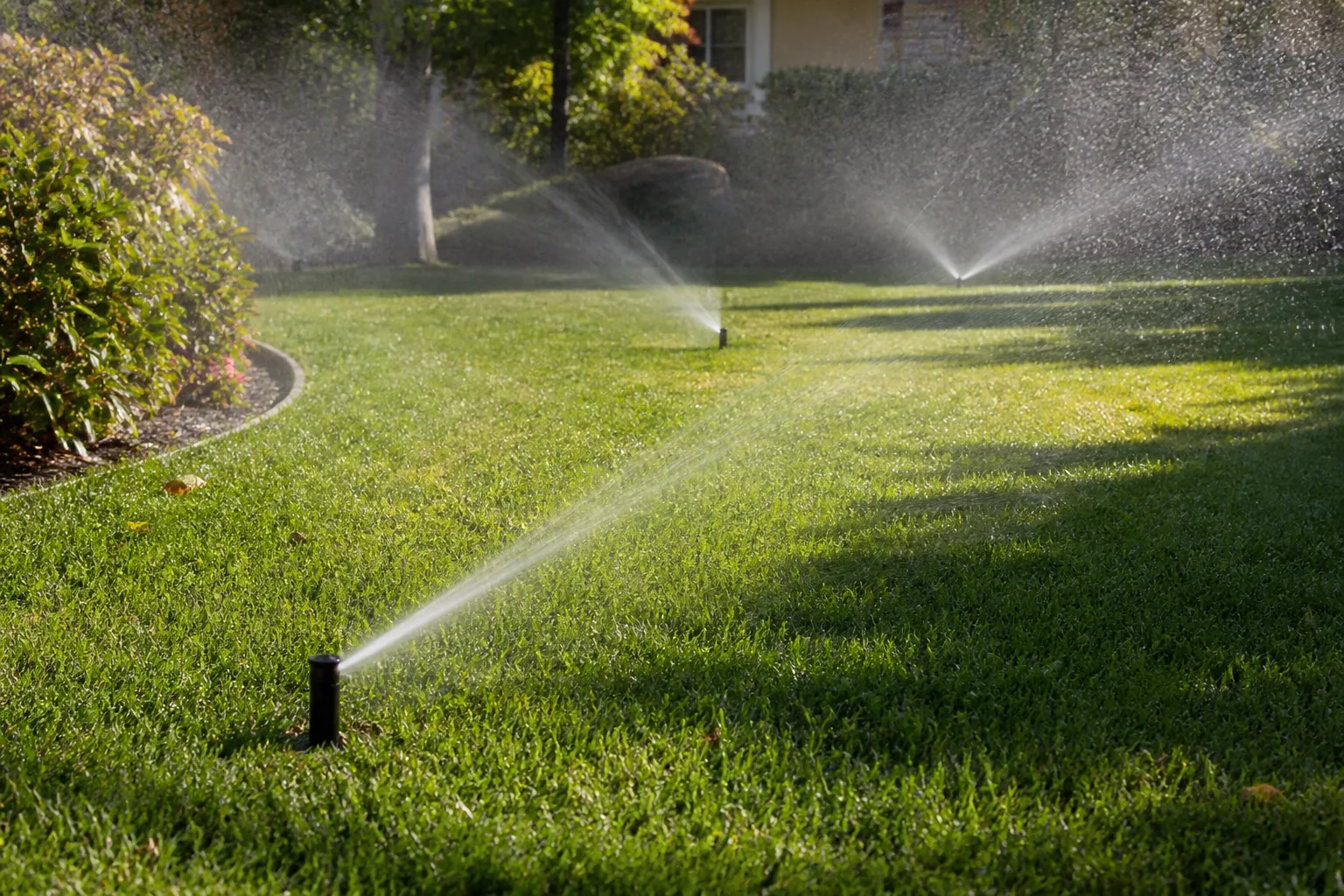
A lawn needs water across a connected surface. A drip line placed around the perimeter or in widely spaced runs may leave dry strips between lines, while a properly laid sprinkler pattern can apply water evenly across the entire root zone. The water district guidance from Southeastern Colorado emphasizes head-to-head coverage: each sprinkler should reach the neighboring head so dry gaps do not tempt you to overwater the rest of the zone.
New seed and fresh sod are another exception. Until roots are established, the upper soil surface must remain consistently moist. A gentle, low-angle sprinkler or hose attachment can be easier to adjust for that short establishment window than a permanent row of emitters. Once the turf is rooted, reduce frequency and increase soak depth as the grass and climate allow.
Sprinklers are also useful for frost-sensitive plantings or beds with dense, low ground cover where a broad, gentle pattern is intentional. In each case, inspect what the water is doing: if it reaches the sidewalk, hits a wall, or beads on compacted soil, the nozzle, pressure, schedule, or soil needs attention.
Use a water audit before you buy or replace anything
Before replacing a system, measure the one you have. A water audit distinguishes a hardware problem from a scheduling or coverage problem, and it can prevent an expensive conversion that does not address the actual waste.
For a sprinkler zone, place several identical shallow, straight-sided containers across the lawn—near a head, halfway between heads, at the far edge, and in any visibly dry area. Run the zone for a measured time, then compare the water depth in each container. Large differences mean the pattern is uneven; water outside the lawn means the radius or alignment needs correction; pooling means the application rate is faster than the soil can absorb.
For drip, run the zone long enough to inspect every branch. Look for water at the end of the line, around each emitter, and at low points where drainage can occur after the valve closes. A dry emitter, a burst connector, or a wet patch that never dries tells you more than the timer’s programmed duration.
Test source flow before adding emitters or sprinkler heads. Fill a bucket from the same faucet or connection, record the time, and convert that measurement to gallons per hour. The total demand of the components on a zone must remain within the usable flow of the source and the tubing. If the pressure drops at the far end, splitting the zone is often more effective than increasing the run time.
Design the system around zones, soil, and roots
An irrigation zone is a group of outlets controlled together. The best zones have similar plant water needs, similar sun and wind exposure, similar soil, and compatible hardware. A sunny lawn, a shaded foundation bed, and a row of containers should not be treated as one thirsty surface.
Keep zones and emitters matched to the plants
Keep sprinkler heads and drip emitters on separate zones. Their pressure, flow, and run-time requirements are different, so mixing them under one valve can leave one side under-watered while the other receives too much. Colorado State University Extension also cautions against mixing drip emitters and higher-flow microsprays on the same zone unless the design accounts for the difference.
For beds, sketch the mainline and each branch before you install. Mark the location of valves, filters, pressure regulators, flush ends, buried utilities, trees, and future planting areas. A map saves time when a line is cut, a connector is buried, or a plant grows beyond its original root ball.
Place emitters over the active root area, not automatically at the stem. A young shrub may start with emitters near the original root ball; as its canopy expands, move them toward the drip line and add outlets if the soil is not being wetted broadly enough. For a row, use emitter tubing or evenly spaced outlets rather than placing one dripper at the first plant and hoping water travels sideways.
Sand, loam, and clay spread water differently. Fine Gardening offers a useful starting framework—one-gallon-per-hour emitters cover a smaller diameter in sandy soil than in clay—but it also emphasizes checking the actual soil and plant response. Treat any spacing rule as a starting point, then dig or use a soil probe after irrigation to see where the wetting front reached.
Make either irrigation method use less water
Water conservation is a system-and-behavior result. A low-flow emitter attached to a cracked line is not efficient, and a sprinkler with matched coverage is not wasteful simply because it sprays through the air.
Schedule for weather, moisture, and runoff
Run irrigation when evaporation and wind are lower, commonly early morning, while complying with local watering rules. Pause or reduce the cycle after meaningful rainfall, and adjust for the season rather than leaving a summer program in place during cool spring or fall weather.
Use cycle-and-soak scheduling on slopes or compacted soil: apply a short cycle, pause long enough for infiltration, then repeat if the root zone still needs more water. This is more useful than one long cycle that creates a stream at the bottom of the bed. Mulch can slow surface evaporation, but it does not excuse overwatering; check the soil below the mulch.
Base the next adjustment on evidence. If the root zone is dry at the target depth, increase the duration or add correctly placed emitters. If it is wet for days, shorten the cycle, increase the interval, correct drainage, or move water away from the saturated area. Wilting at the hottest part of a summer afternoon is not, by itself, proof that the schedule is too short.
Prevent overspray, pressure problems, and clogged emitters
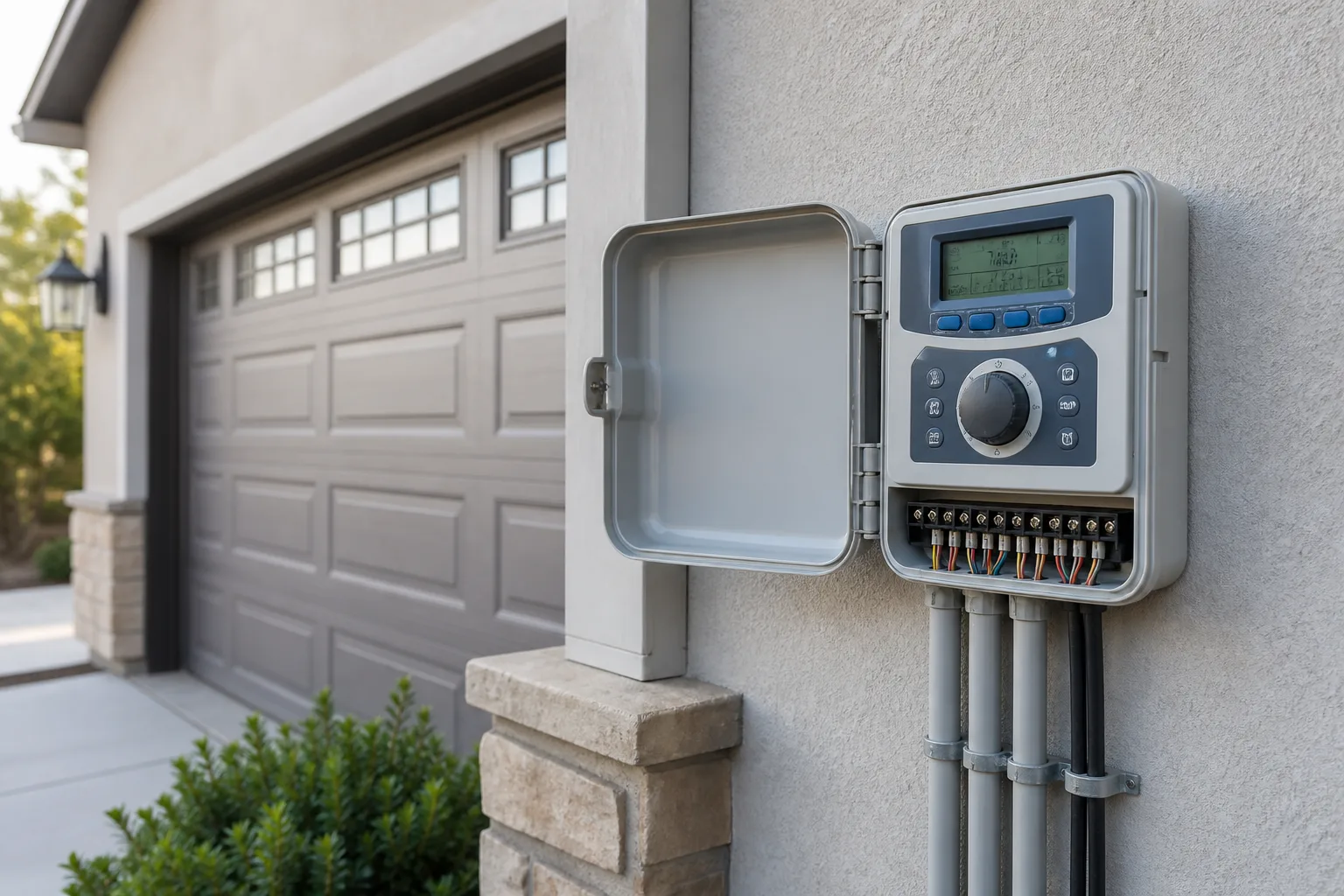
For drip, the usual connection sequence is backflow protection, valve, filter, and pressure regulator, followed by the distribution tubing. A filter keeps sand, algae, and sediment from reaching small passages; a regulator protects low-pressure parts from the higher pressure available at many hose bibs. Follow local plumbing and backflow requirements, especially when connecting to potable water.
Flush new lines before installing or opening emitters, then flush again after repairs. Inspect filters and emitters during the season, especially when using well or pond water. If a plant suddenly wilts while nearby plants are fine, check its emitter before adding more water to the entire zone.
For sprinklers, keep nozzles level, clear grass from pop-up heads, replace damaged seals, and confirm the spray does not hit pavement or walls. Use matching heads and nozzles within a station where possible, and do not compensate for one blocked head by extending the whole zone’s run time. Correct the head or split the zone instead.
Installation and maintenance are the hidden trade-off
Small surface drip systems are often easier for a homeowner to install because they do not require the trenching that permanent in-ground sprinkler lines need. Tubing can be staked and covered with mulch, and the layout can change as plants are added. The downside is visibility: lines can become a trip hazard, get sliced by a shovel, or be disturbed by animals and other garden work.
Sprinkler systems take more planning when installed underground, but the heads are usually easier to see and adjust once the system is in place. The buried lines are protected from many surface hazards, while the heads remain vulnerable to mower damage, soil settlement, root intrusion, and poor alignment.
Winter changes the maintenance calculation. In freezing climates, disconnect and store exposed drip filters, regulators, and backflow devices as appropriate, drain low points, and flush lines in spring. In-ground sprinkler systems may need a professional blowout depending on local practice and system design. In warm climates, either system may remain installed, but filters, valves, heads, and emitters still need seasonal inspection.
Common mistakes that erase the savings
The most expensive irrigation mistakes are often small design decisions repeated every day:
- Running a drip zone overnight: Low flow does not mean unlimited flow. Check the soil and calculate the output of the emitters.
- Putting one emitter at a large shrub: Roots spread beyond the stem, and one outlet may create a tiny wet pocket.
- Burying drip tubing too deeply: You may not notice a leak or clogged emitter until a plant shows stress.
- Skipping the filter or pressure regulator: Clogs, disconnected fittings, and uneven output follow quickly.
- Mixing high-flow microsprays with low-flow emitters: The two devices need different run times and often different zones.
- Using too few sprinkler heads: Dry spots lead to longer run times and overwatering in the already-wet areas.
- Ignoring wind and hardscape: A spray that leaves the bed is water you paid for but your plants cannot use.
- Following a calendar without checking the soil: Weather, soil, plant age, and shade can change the need from week to week.
The practical answer for a mixed yard
For most properties, the best water-saving layout is a hybrid. Use sprinklers for the lawn or newly seeded open areas, drip or emitter tubing for perennial and shrub beds, and a separate low-flow zone for containers or vegetable rows. Keep zones independent so each area can be paused, shortened, or expanded without changing the rest of the yard.
If you already own sprinklers, start with the water audit rather than removing them. Replace mismatched nozzles, correct head spacing, reduce overspray, repair leaks, and add a rain or soil-moisture control if the controller supports it. Convert only the zones where the landscape has changed from turf to individual plantings, or where slope, wind, and runoff make overhead watering a persistent problem.
If you are building from scratch, map plants and hardscape first. Group plants by water need, size the source flow, choose a delivery method for each zone, add required backflow protection and pressure control, and leave accessible flush points. A less glamorous system that you can inspect and adjust will save more water than a sophisticated controller attached to poorly placed outlets.
Conclusion
Drip irrigation usually saves more water than sprinklers when the job is watering individual plants, beds, shrubs, trees, containers, or sloped ground. It reduces evaporation, wind drift, runoff, and wetting outside the root zone—but only when filters, pressure, emitters, zones, and schedules are correct.
Sprinklers remain the better tool for lawns, new seed, sod, and large open areas that need even coverage. Their water use falls sharply when heads overlap correctly, nozzles match, the spray stays on the landscape, and the controller responds to weather and soil moisture.
The decision is not drip versus sprinkler for the entire yard. It is a series of smaller choices: what is planted, how the soil accepts water, where the water can travel, and whether you can verify that the system is working. Audit the zone you have, fix the waste you can see, and use drip, sprinklers, or both where each one solves the actual problem.



