12 Dwarf Trees for Small Yards: Easy Picks With Real Curb Appeal
Twelve dwarf trees for small yards and single-story homes—mature sizes, zones, spring bloomers, evergreens, and which "compact" picks still outgrow a walkway.
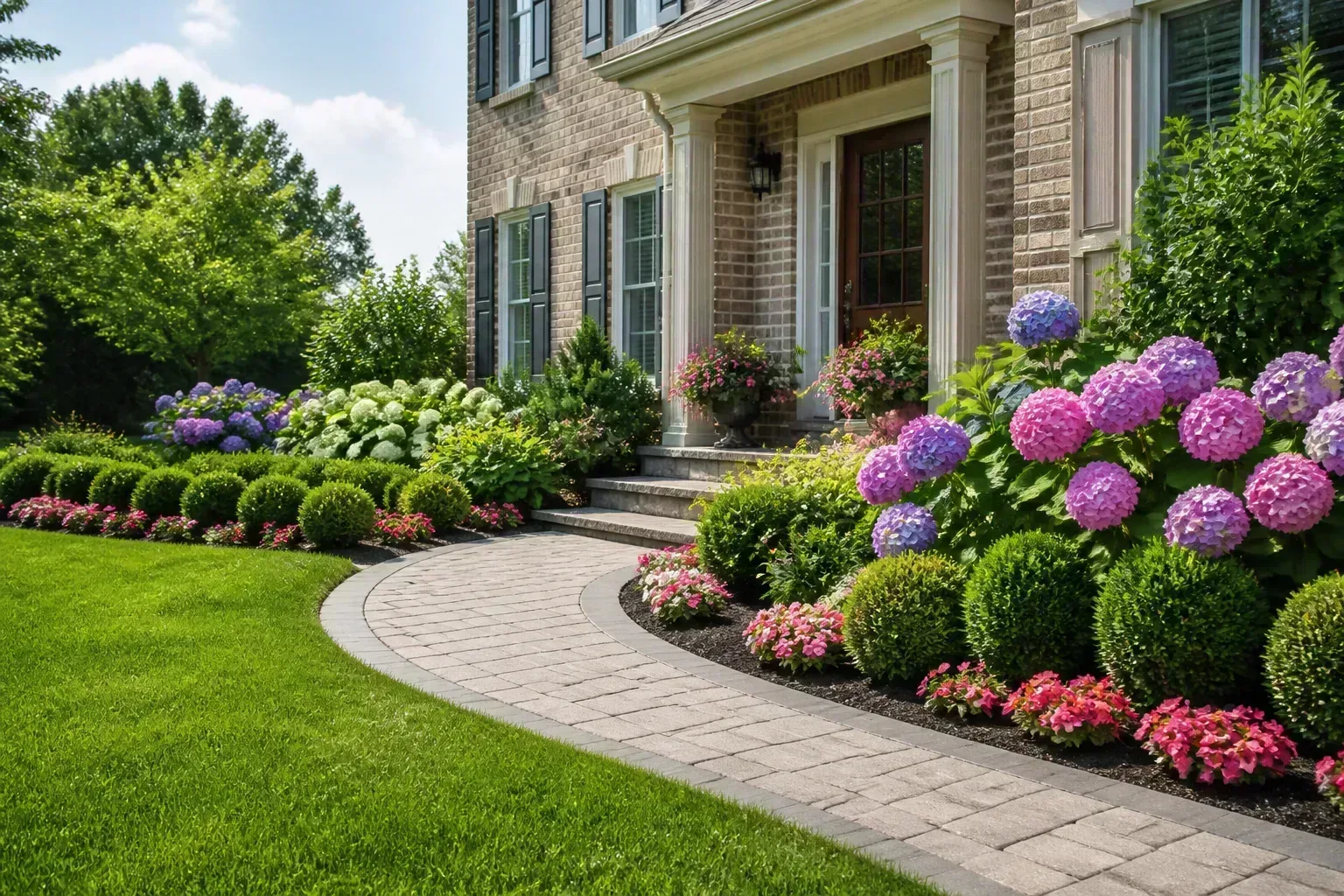
A single-story home with a 40-foot lot can look swallowed by the wrong tree in ten years. The fix is not necessarily the shortest plant at the garden center. It is the tree whose mature canopy, seasonal mess, and root needs actually match the bed you measured before you left the house.
The twelve picks below are proven small-yard performers: spring showpieces, sculptural foliage, compact evergreens, and native options that support birds and pollinators. Each profile includes realistic height and spread ranges, sun and zone notes, and the maintenance invoice that pretty labels often hide. Use them to build a short list, then confirm the exact cultivar on the pot tag before you dig.
What “Dwarf” Really Means Before You Buy
“Dwarf” is relative. A dwarf Japanese maple is small compared with a 60-foot sugar maple, but ‘Bloodgood’ can still reach 20 feet with age. A dwarf Alberta spruce stays conical and slow, yet many specimens top 10 to 13 feet after decades. Marketing language sells hope; mature dimensions protect your siding.
The Piedmont Master Gardeners guide to compact woody plants makes an important distinction: sizes printed on tags are often approximate ten-year dimensions, and plants may keep growing beyond that number. Treat every height in this article as a planning range, then read the cultivar name on the label.
Nursery Tags Often Describe Ten Years, Not Forever
When a tag says a tree reaches 8 feet, ask whether that means eight years or eight decades. Grafted weeping cherries and dissectum maples are often sold at near-final height because the rootstock or graft point controls vigor. Seed-grown star magnolia and pagoda dogwood, by contrast, can surprise you with continued upward growth.
If you need a tree to stay under a window ledge forever, look for named dwarf cultivars with a documented mature spread, not the word “dwarf” alone. For more cultivar options beyond this list, see our guide to dwarf trees for landscaping.
Width and Root Zone Matter as Much as Height
A 12-foot tree with a 15-foot spread will eat a narrow foundation bed faster than a 18-foot tree with a narrow vase shape. Measure your bed width and half the listed mature spread. That number is your minimum setback from pavement, not a suggestion.
Shallow-rooted ornamentals such as dogwoods and maples compete with lawn and can heave pavers if planted too close. Keep the trunk out of the drip line of your roof, and plan mulch—not lawn—under the canopy to reduce mower damage and watering swings.
How to Site a Tree Beside a Single-Story Home
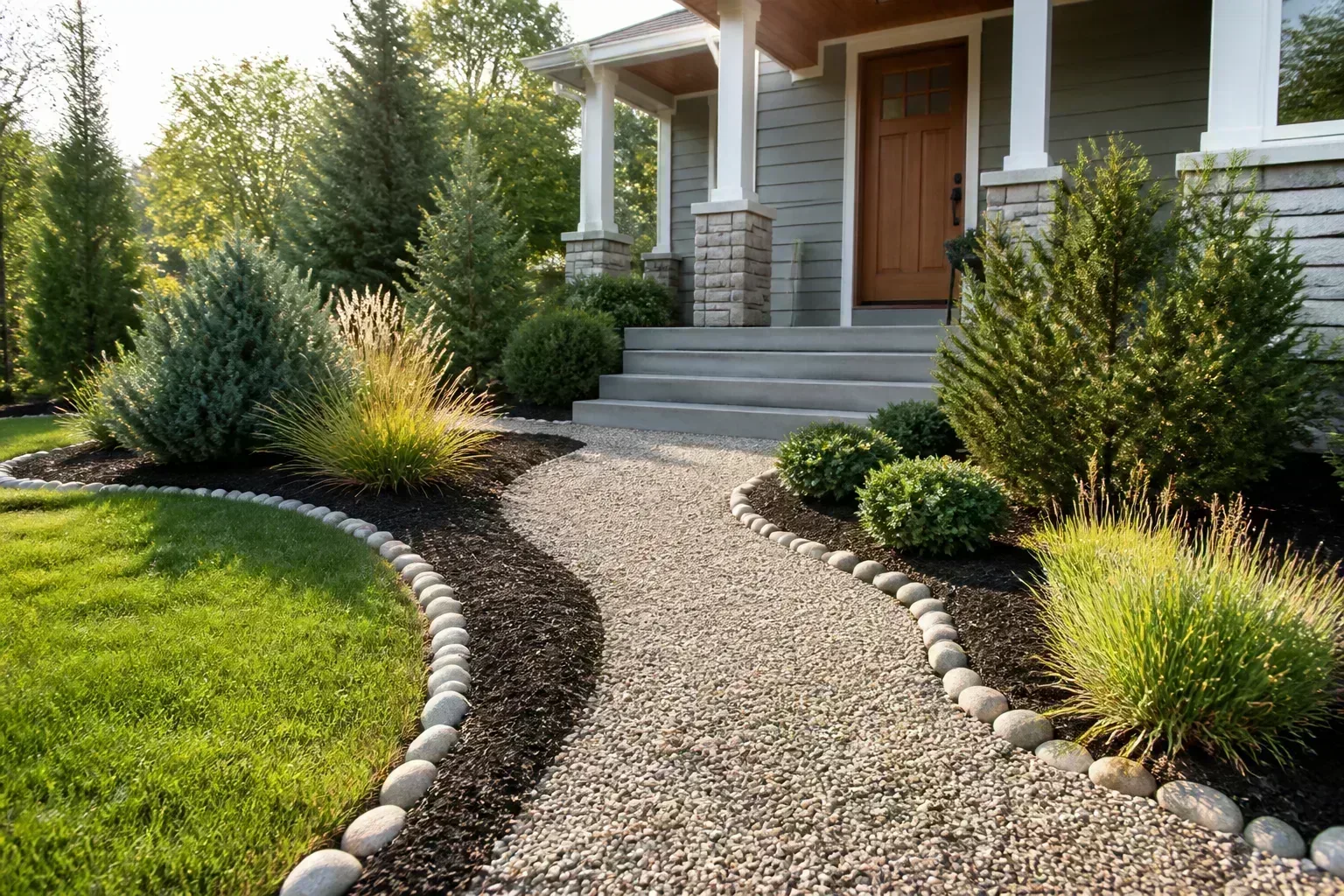
Single-story homes look best when the tallest plant is lower than the roof ridge at maturity, or when one intentional accent breaks that rule without blocking windows. A weeping cherry beside the entry can work; a spreading crabapple centered in a 10-foot-wide bed will not.
Walk the site at the hour when sun hits hardest. South and west walls create heat that stresses Alberta spruce and laceleaf maples. North foundations may suit pagoda dogwood or redbud but will not flower well for sun-hungry quince.
Clearance for Eaves, Walkways, and Overhead Lines
Use these practical minimums before purchase:
- House wall: at least half the tree’s mature spread, more if branches will scrape siding or clog gutters with petals and fruit.
- Walkway or driveway: allow branch spread plus 2 feet so guests are not ducking under limbs or stepping on fallen fruit.
- Overhead utilities: stay well inside recommended line-clearance distances from your utility provider; many “small” trees still reach 20 feet.
Plant in early spring or early fall so roots establish before summer heat or winter freeze-thaw cycles. The first growing season needs deep watering twice weekly in absence of rain—not daily sprinkles. Mulch 2 to 3 inches deep, keeping it off the trunk flare. For broader front-bed design context, our low-maintenance front yard landscaping guide pairs well with any tree on this list.
Twelve Dwarf Trees Worth the Planting Hole
The table below is a fast screen. Profiles that follow add cultivar notes, wildlife value, and when to skip a plant.
| Tree | Approx. mature height | Spread | Sun | USDA zones | Best small-yard job |
|---|---|---|---|---|---|
| Flowering quince | 3–10 ft | 3–10 ft | Full sun | 5–9 | Early spring color on a fence or corner |
| Dwarf weeping cherry | 4–6 ft | 6–8 ft | Full sun | 5–8 | Entry focal point, spring drama |
| Dwarf Japanese maple | 3–10 ft | 3–12 ft | Part shade | 5–8 | Foliage specimen, patio anchor |
| Sargent crabapple | 6–10 ft | 8–12 ft | Full sun | 4–8 | Flowers, fruit, birds |
| Saskatoon serviceberry | 6–12 ft | 4–8 ft | Sun–part shade | 2–8 | Native edible fruit, four-season interest |
| Corkscrew hazel | 8–10 ft | 8–10 ft | Sun–part shade | 4–8 | Winter branch sculpture |
| ’Merlot’ redbud | 10–12 ft | 8–10 ft | Sun–part shade | 6–9 | Purple spring blooms, backdrop tree |
| Dwarf Alberta spruce | 10–13 ft | 3–5 ft | Full sun | 3–8 | Narrow evergreen punctuation |
| Powder puff tree | 10–15 ft | 10–15 ft | Full sun | 9–11 | Warm-climate whimsical blooms |
| Star magnolia | 15–20 ft | 10–15 ft | Sun–part shade | 4–8 | Early white spring flowers |
| Fringe tree | 12–20 ft | 12–20 ft | Sun–part shade | 3–9 | Native fragrant late-spring bloom |
| Pagoda dogwood | 15–25 ft | 20–32 ft | Sun–part shade | 3–7 | Layered native specimen |
Flowering Quince (Chaenomeles spp.)
Flowering quince is often sold as a shrub, but it can be trained to a short single-trunk tree for tropical-looking spring color in a cold climate. Scarlet, orange, pink, or white flowers open on bare wood in early spring, and some selections produce hard, tart fruit usable in preserves after cooking.
Expect 3 to 10 feet tall and wide depending on species and pruning. It tolerates drought once established and handles cold better than its lush flowers suggest. Full sun gives the heaviest bloom. Site it where late-winter color matters—along a fence, at a corner, or in a courtyard—and accept some spiny twigs near paths.
Skip it if you want a tidy lawn tree with no thorns or if you need deep shade performance.
Dwarf Weeping Cherry
Grafted weeping cherries such as Prunus ‘Pendula’ forms deliver cascading branches and pink spring flowers without the 25-foot footprint of standard flowering cherries. Many dwarf grafts stay near 4 to 6 feet above the graft point, making them natural entry or patio specimens.
They need full sun and good airflow to reduce fungal leaf issues. Weeping forms are grafted: watch for suckers from the rootstock below the graft and remove them immediately. Bloom is spectacular but brief; underplant with low evergreens or spring bulbs so the base does not look empty the rest of the year.
Skip it if your site is shaded or you cannot commit to occasional sucker removal.
Dwarf Japanese Maple (Acer palmatum)
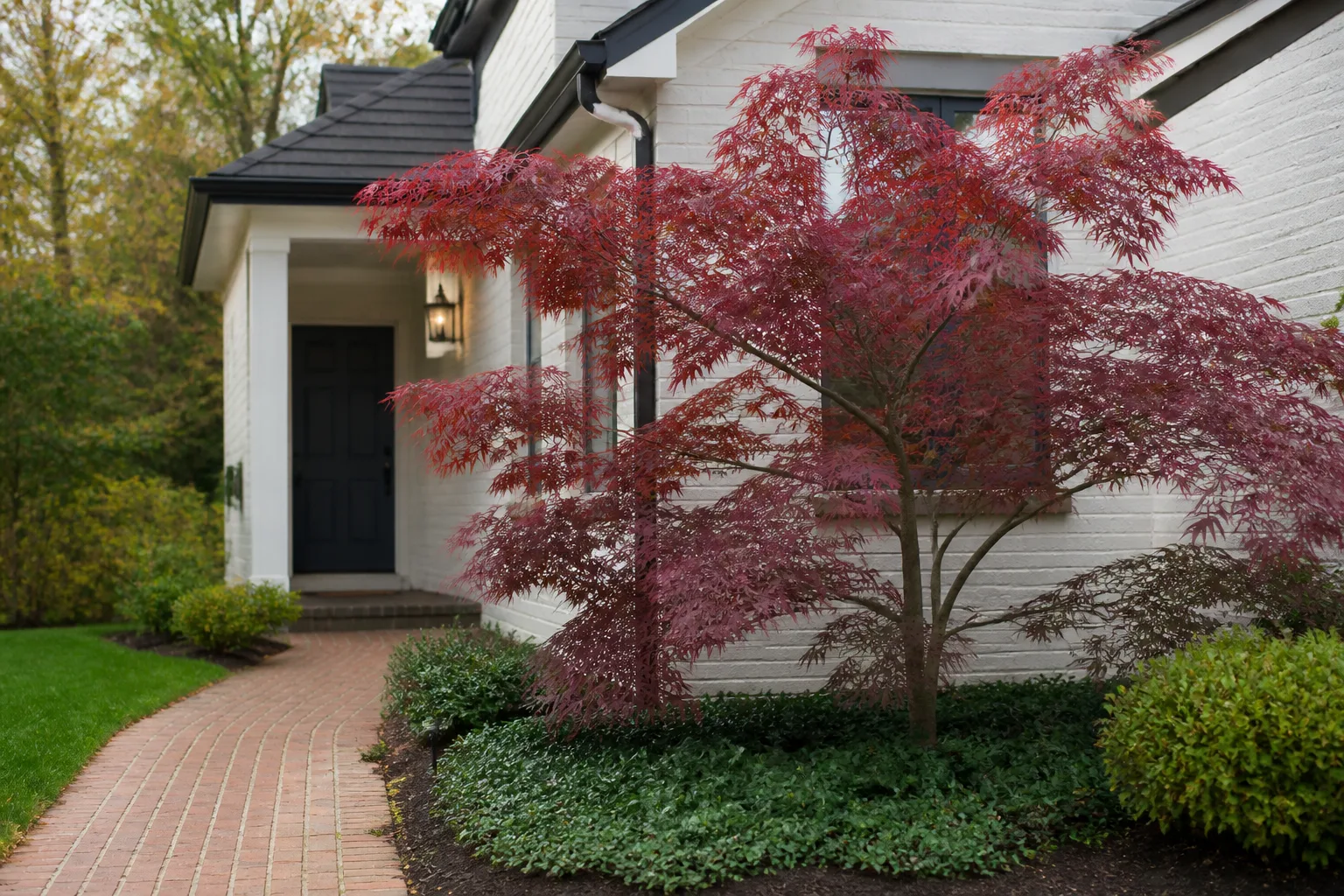
Japanese maple is the small-yard foliage tree that never goes out of style—when you match cultivar to microclimate. NC State Extension notes slow to moderate growth, layered branching, and sensitivity to drought, wind, and leaf scorch in harsh sun.
Dwarf and dissectum cultivars such as ‘Crimson Queen’, ‘Coonara Pygmy’, and ‘Shaina’ typically range from 3 to 10 feet tall. Weeping red forms hug the ground; upright dwarfs can frame a window. Afternoon shade and even moisture matter more than fertilizer. Protect from drying winter winds in exposed lots.
Skip it if the only open spot is blazing south-facing pavement or if you need a zero-maintenance foundation plant.
Sargent Crabapple (Malus sargentii)
Sargent crabapple offers pink buds, white flowers, and red fruits under 10 feet for many years—exactly the scale flowering crabapples promise when you choose disease-resistant cultivars. Colorado State University Extension recommends selecting varieties with resistance to apple scab, fire blight, and cedar-apple rust for long-term curb appeal.
Birds love the small fruits; you may not love fruit on a walkway. Plant away from front steps if drop bothers you. Other dwarf crabapples such as ‘Lollipop’ and ‘Aros’ offer similar scale with different habits—confirm mature width on the tag.
Skip it if your yard is wet and poorly drained or if you refuse any fruit cleanup.
Saskatoon Serviceberry (Amelanchier alnifolia)
Saskatoon serviceberry is a North American native that earns its space with white spring flowers, edible blueberry-like summer fruit, and orange fall color. It grows relatively fast—often 1 to 2 feet per year when young—and tolerates cold, sun, and light shade better than many ornamentals.
Use it as a backyard bird tree, a naturalistic hedge component, or a small focal point where you want food and wildlife value. Fruit is best cooked or dried; birds usually finish what you do not harvest. Amelanchier relatives such as downy serviceberry (A. arborea) grow taller—verify species before buying.
Skip it if you need a formal symmetrical cone or cannot tolerate multi-stem habit without pruning.
Corkscrew Hazel (Corylus avellana ‘Contorta’)
Harry Lauder’s walking stick is grown for twisted, contorted branches that catch winter light and hold yellow catkins in late winter. Summer foliage is ordinary; this is a sculpture tree for close viewing near a path, not a distant backdrop.
Most plants reach 8 to 10 feet tall and wide as a multi-stem shrub or small tree. Edible hazelnuts may form, but crop quality is secondary to branch character. Give sun to part shade and decent drainage. Prune only to remove dead wood or competing leaders.
Skip it if you want summer flowers or need a narrow vertical accent.
‘Merlot’ Redbud (Cercis canadensis)
‘Merlot’ redbud pairs wine-colored spring buds with heart-shaped foliage and a manageable 10- to 12-foot height for many landscapes. It works as a specimen behind lower perennials or as a soft backdrop along a fence. Other small redbuds such as ‘Lavender Twist’ (weeping) and ‘Ace of Hearts’ offer similar scale with different form.
Redbuds bloom on bare wood in early spring and appreciate relief from intense afternoon heat in zones 8 and 9. They are not true dwarfs—species trees get much larger—so buy a named cultivar for tight sites.
Skip it if your soil stays waterlogged all winter or the site is fully shaded.
Dwarf Alberta Spruce (Picea glauca ‘Conica’)
Dwarf Alberta spruce is the classic conical evergreen for entry pots and foundation accents in cold climates. Slow growth and dense needles create a formal punctuation mark year-round. Expect 10 to 13 feet at maturity in many gardens, not the 3-foot tabletop size of a young nursery pot.
It prefers full sun, cool roots, and steady moisture. Heat and humidity stress plants in the South; spider mites appear when roots dry repeatedly. Keep it away from radiating pavement and water deeply during drought.
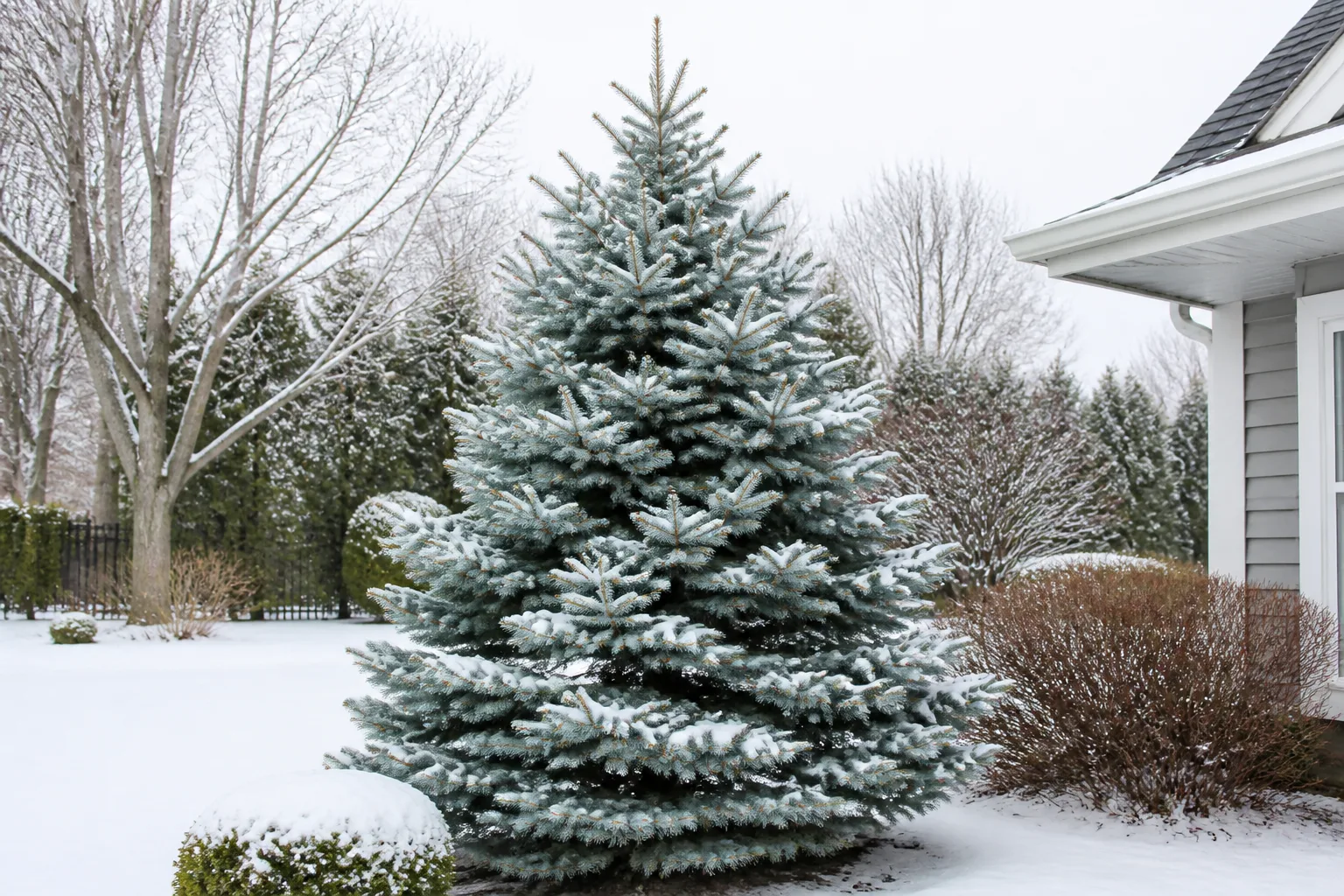
Skip it if you are in a hot, humid microclimate without irrigation or need a shade-tolerant evergreen.
Powder Puff Tree (Calliandra haematocephala)
Powder puff tree brings red or pink spherical flowers that look like makeup brushes—a genuine conversation piece in zones 9 through 11. It can bloom repeatedly in warm weather with full sun and good drainage.
At 10 to 15 feet, it is the largest warm-climate pick here. Use it as a patio tree or tropical-accent screen where winters stay mild. It is not hardy where Alberta spruce thrives; do not treat this as a national default.
Skip it if you garden where ground freezes regularly or your lot is only 8 feet wide.
Star Magnolia (Magnolia stellata)
Star magnolia is among the earliest spring bloomers, with fragrant white star-shaped flowers on bare branches. NC State Extension lists typical sizes of 15 to 20 feet tall and 10 to 15 feet wide—smaller than many Magnolia species but still a real tree, not a shrub forever.
Plant in moist, well-drained, slightly acidic soil with protection from harsh wind. Late frosts can brown early blooms; avoid low frost pockets and southern walls that force buds open too soon. Compact cultivars such as ‘Royal Star’ and ‘Dwarf’ selections reduce size slightly but read the tag.
Skip it if your bed is under 12 feet wide or you cannot tolerate occasional frost-nipped flowers.
Fringe Tree (Chionanthus virginicus)
Old man’s beard, the native fringe tree, produces airy white fragrant flowers in late spring when early cherries have finished. It stays smaller than many shade trees—often 12 to 20 feet—and attracts pollinators and birds.
Fringe tree tolerates a range of soils when drainage is decent and works in sun or part shade. It is an excellent native alternative to imported flowering pears when you want spring bloom without brittle branch structure. Give it room; the cloud of flowers reads best with sky behind the canopy.
Skip it if you need instant impact in year one—this slow starter rewards patience.
Pagoda Dogwood (Cornus alternifolia)
Pagoda dogwood is prized for horizontal, tiered branches that create a pagoda silhouette and creamy white late-spring flowers. NC State Extension notes mature dimensions of 15 to 25 feet tall and 20 to 32 feet wide—wider than many “small tree” lists admit.
It is a beautiful native specimen for part shade and cool summer climates, with blue-black fruit and red fall color. Shallow roots dislike heat and transplant shock; mulch generously and avoid moving established plants. For dogwood pruning context, tiered branch structure is best preserved with minimal cutting.
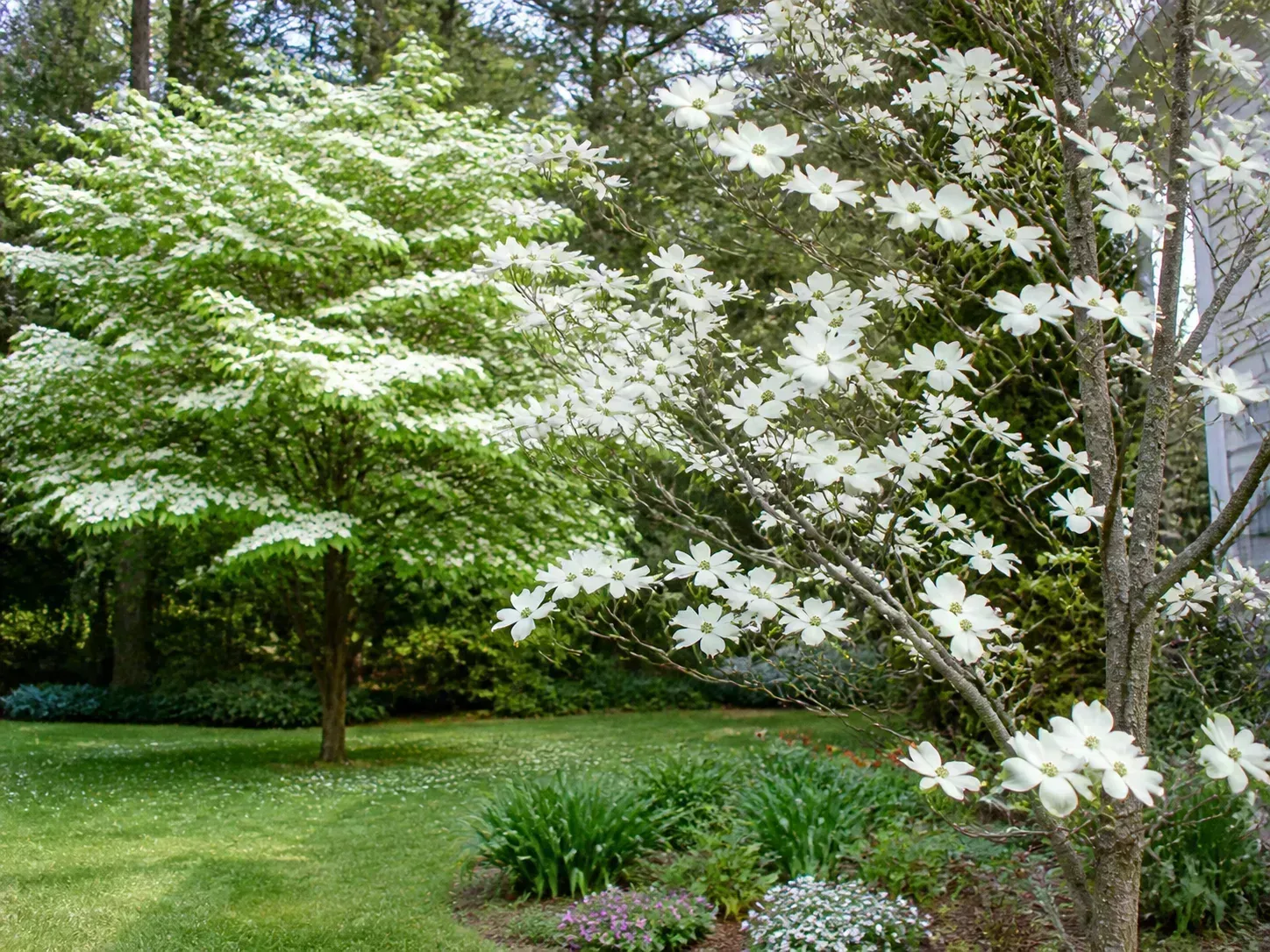
Skip it if your lot is a narrow side yard or you need a tree under 10 feet wide at maturity—this one wants space to layer.
Conclusion
The best dwarf tree for your small yard is the one whose mature spread fits the bed you measured, whose seasonal habits you can live with, and whose hardiness matches your actual microclimate—not the one with the prettiest spring photo on a pot tag. Flowering quince, weeping cherry, and crabapple deliver curb appeal in sun; Japanese maple, redbud, and pagoda dogwood handle softer light; Alberta spruce holds winter structure; serviceberry and fringe tree add native wildlife value; powder puff rewards warm-climate gardeners who have the space.
Shortlist two or three trees from the table, verify cultivar size at the nursery, plant with proper clearance from the house, and water through the first year like the tree’s life depends on it—because establishment does. For wider comparisons and container options, continue with our dwarf trees for landscaping and disease-resistant trees for low-maintenance yards guides.



