28 Best Dwarf Trees for Landscaping
Choose from 28 dwarf trees for landscaping, with mature-size ranges, site-fit notes, fruiting caveats, and planting rules for small yards and patios.
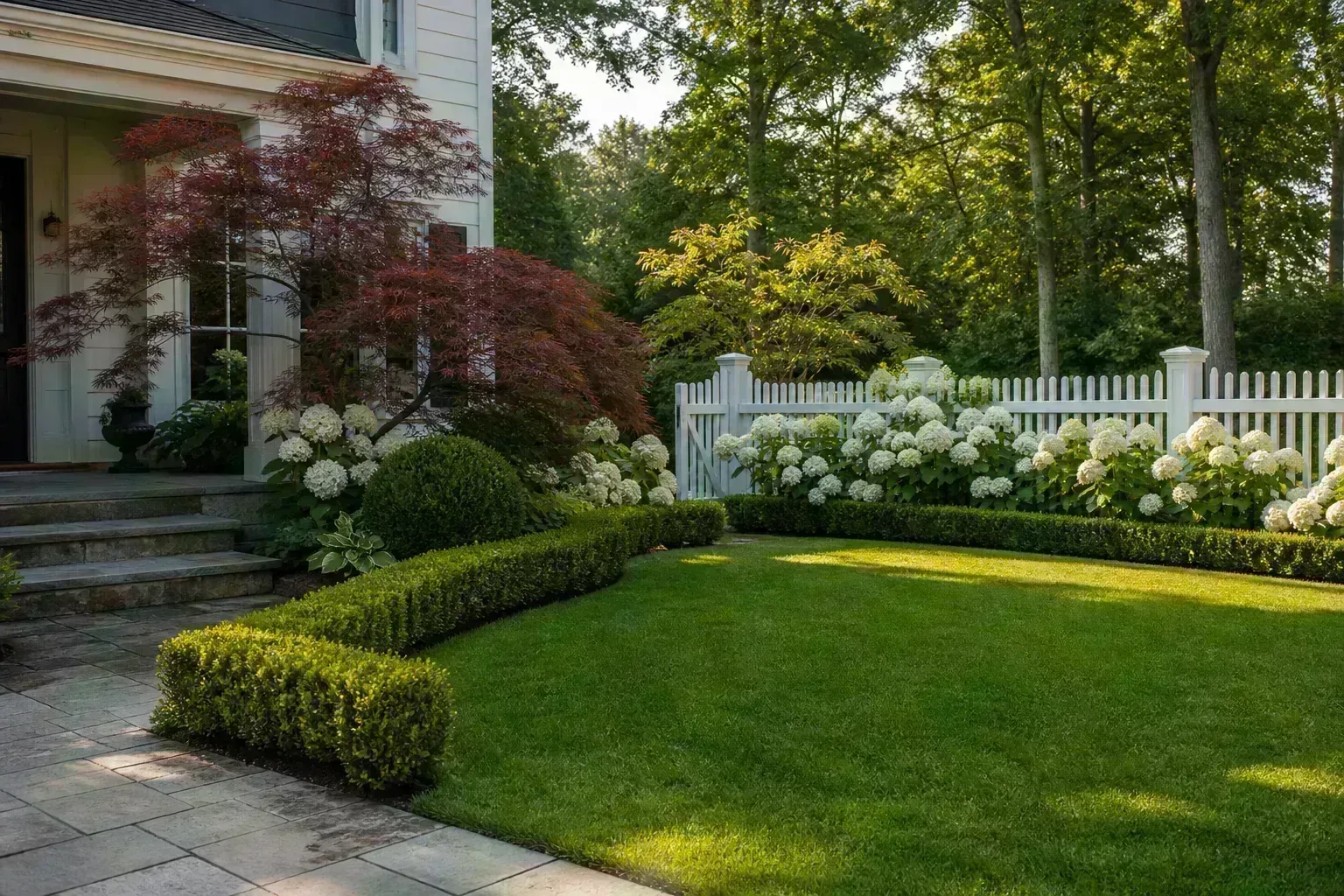
The best dwarf tree for a small yard is not necessarily the shortest tree at the garden center. It is the tree whose mature canopy, root-zone needs, seasonal behavior, and maintenance actually fit the site. A three-foot conifer can be a better choice beside a walkway than a “small” tree that eventually spreads 25 feet.
The 28 choices below include true compact trees, dwarf cultivars, grafted fruit trees, and shrubs that can be trained onto a single trunk. That distinction matters. A trained shrub may need annual editing to keep its tree shape, while a naturally slow-growing conifer may hold its form with very little pruning.
Start With Mature Size, Not the Nursery Tag
There is no single universal height that makes a plant a dwarf tree. “Dwarf” is relative to the normal species, and “compact” may describe a cultivar that is simply shorter or narrower. Some trees are grafted onto dwarfing rootstock, while others are naturally small; plant tags also commonly describe a ten-year size rather than a guaranteed lifetime maximum.
The Piedmont Master Gardeners guide to compact woody plants makes the useful point that sizes are approximate and plants may continue growing beyond the number printed on a tag. Treat every height and width below as a planning range, then confirm the exact cultivar, rootstock, local climate, and mature spread before you dig.
Dwarf, compact, grafted, and trained are different
- Dwarf cultivar: A genetically selected plant that grows smaller or more slowly than the species, such as Japanese cedar ‘Globosa Nana’ or dwarf Alberta spruce.
- Compact cultivar: A reduced-size selection that may still become a substantial tree, such as a 15-foot hedge maple or a 20-foot witch hazel.
- Grafted fruit tree: A desired fruiting variety joined to rootstock that controls vigor and eventual size. The rootstock name is as important as the apple or cherry variety.
- Trained shrub: A multi-stemmed shrub pruned to one trunk and a raised crown, such as a hydrangea tree or chaste tree. It is a design form, not a magically miniature tree.
Use the table as a fast screen, not as a substitute for a nursery label. “Under 15 feet” is a reasonable first filter for a small-yard list, but a tree’s width, branch angle, root disturbance tolerance, and seasonal drop can matter more than its height.
| Tree or selection | Approximate mature height | Best landscape job | Main watch-for |
|---|---|---|---|
| Japanese maple (Acer palmatum) | 2–25 ft. | Focal point, shade garden, patio | Cultivar size and leaf scorch |
| Japanese cedar ‘Globosa Nana’ (Cryptomeria japonica) | About 3 ft. | Tiny evergreen accent or pot | Do not let the root zone dry out |
| Crape myrtle (Lagerstroemia indica) | 4–25 ft. | Summer flowers and bark | Warm climate and full sun |
| Royal Star magnolia (Magnolia stellata) | 15–20 ft. | Spring specimen | Broad crown for a “small” tree |
| Dwarf flowering crabapple (Malus spp.) | 4–10 ft. | Flowers, fruit, wildlife | Disease resistance and fruit drop |
| Dwarf cherry (Prunus avium) | 8–18+ ft. | Edible fruit and spring bloom | Chill hours and pollination |
| Hinoki cypress (Chamaecyparis obtusa) | 4–10 ft. | Slow evergreen structure | Drainage and cultivar width |
| Dwarf Alberta spruce (Picea glauca ‘Conica’) | 10–13 ft. | Formal conical accent | Heat, humidity, and airflow |
| ‘Covey’ redbud (Cercis canadensis) | 5–6 ft. | Weeping spring specimen | Heat stress and branch shape |
| Wintersweet (Chimonanthus praecox) | 10–15 ft. | Winter fragrance | Usually trained from a shrub |
| Harlequin glorybower (Clerodendrum trichotomum) | 10–20 ft. | Late-season flowers and fruit | Multi-stem growth and space |
| Franklin tree (Franklinia alatamaha) | 8–10 ft. | Late-summer white flowers | Sharp drainage |
| ‘Carnival’ hedge maple (Acer campestre) | About 15 ft. | Variegated foliage | Protect from drying exposure |
| Hardy orange (Citrus trifoliata) | 8–15 ft. | Thorny barrier and fruit display | Sharp thorns |
| ‘Miss Grace’ dawn redwood (Metasequoia glyptostroboides) | About 8 ft. at 10 years | Weeping or staked accent | Moisture and long-term size |
| Yellowhorn (Xanthoceras sorbifolium) | 8–25 ft. | Unusual spring flowers | May exceed a tight site |
| Mountain witch alder (Fothergilla latifolia) | 6–10 ft. | Fragrance and fall color | Suckering and shrub-like habit |
| Dwarf chestnut oak (Quercus prinoides) | 12–25 ft. | Wildlife and acorns | Needs room beyond the first decade |
| Dragon Lady holly (Ilex × aquipernyi ‘Meschick’) | 10–20 ft. | Narrow evergreen screen | Female plant needs a male pollinator |
| ‘Fastigiata’ Spanish fir (Abies pinsapo) | About 10 ft. | Blue-green vertical accent | Cool, well-drained site |
| Witch hazel (Hamamelis virginiana) | 15–20 ft. | Fall flowers and structure | Can become taller in good conditions |
| Amur maple (Acer tataricum subsp. ginnala) | About 20 ft. | Red fall color | Check regional invasive guidance |
| Dwarf apple (Malus spp.) | 4–15 ft. | Edible fruit in a small yard | Rootstock, chill, and pollination |
| Dwarf mandarin (Citrus reticulata) | 8–10 ft. | Patio or warm-climate fruit | Frost and container wintering |
| Dwarf Meyer lemon (Citrus × limon ‘Meyer’) | About 10 ft. | Patio fruit and fragrance | Frost, light, and drainage |
| Weeping cherry (Prunus pendula) | 10–12 ft. | Spring focal point | Cascading branches need clearance |
| Hydrangea tree (Hydrangea spp.) | 2–20 ft. | Summer flower standard | Trained shrub needs pruning |
| Chaste tree (Vitex agnus-castus) | 8–20 ft. | Warm-climate purple flowers | Sun and winter hardiness |
Measure the Site Before You Buy
Start with the mature width, not the trunk caliper or the size of the plant in its nursery pot. A young tree can look absurdly small in a broad bed and still fill the entire planting area within a few seasons. Sketch the expected canopy as a circle, then mark the house, fence, paving, septic field, low roof, and plants that need to remain in sun.
Canopy width and overhead utilities matter
Davey Tree’s small-space tree guidance offers a practical starting rule: use about half the expected mature crown spread as the minimum distance from a house, then adjust for the actual branch habit and site. A narrow columnar tree and a weeping tree do not use space the same way even if both are 15 feet tall.
Look up before planting. Branches under utility lines, eaves, gutters, and roof edges create a future pruning problem, and roots can conflict with paving or compacted construction soil. Call the appropriate utility-locating service before digging and check local street-tree or HOA rules if the planting is near a public right-of-way.
Match sun, moisture, and hardiness
A tree can be small enough but still be wrong for the site. Japanese maple, for example, is flexible about light but can scorch in reflected afternoon heat; crabapple flowers and fruits best in full sun; Spanish fir and Alberta spruce are poor bets for many hot, dry lowland gardens; and citrus needs a frost-free outdoor climate or a serious container-overwintering plan.
Do not use a hardiness-zone number as the whole decision. Wind exposure, summer heat, winter wet, soil depth, reflected heat from walls, and the length of the growing season can make two gardens in the same zone behave very differently. The tree should match both the winter low and the root-zone moisture pattern: a plant that tolerates drought once established may still fail in a shallow, dry strip during its first summer.
Best Tiny Trees and Conifers for Small Spaces
These are the best choices when the site is genuinely tight or when you want a strong focal point without a broad, fast-growing canopy. They are especially useful beside patios, steps, courtyards, and narrow beds where a tree needs to look intentional from every angle.
Japanese maple
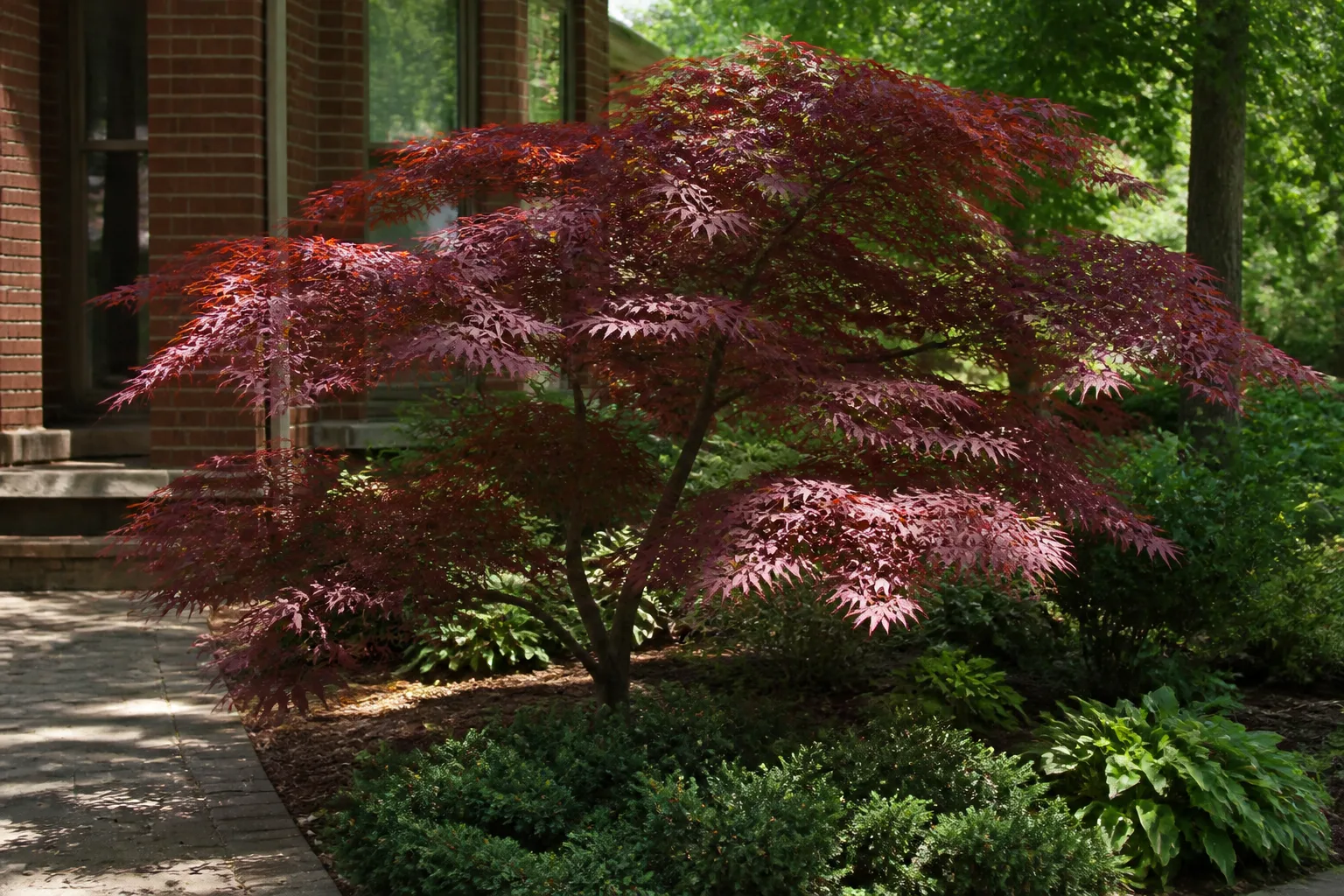
Japanese maple is the most adaptable design choice on this list because the group includes upright, spreading, laceleaf, red-leaved, and truly small cultivars. Some selections stay near two to six feet, while others become 20 feet or more, so buy the cultivar name rather than a generic “dwarf Japanese maple.”
Give it morning sun or filtered light where summers are hot, consistent moisture without standing water, and protection from desiccating wind. A small maple works beautifully as the center of a courtyard or shade-border composition, but do not cram it against a path just because the trunk is narrow; the branch spread is the part people eventually walk into.
Japanese cedar, Hinoki cypress, and dwarf Alberta spruce
Japanese cedar ‘Globosa Nana’ is a very small, blue-green evergreen mound that suits a pot, rock garden, or front-door composition. It is a better “tiny tree” candidate than a full-size cedar, but it still dislikes being allowed to bone-dry, especially in a container or exposed winter site.
Hinoki cypress gives a slow, layered evergreen silhouette, with cultivars such as ‘Confucius’, ‘Fernspray Gold’, and ‘Tetragona Aurea’ filling different size and color roles. Dwarf Alberta spruce supplies the classic dense cone and can make a strong formal accent, but it is less forgiving where summer heat, high humidity, or poor airflow keeps the interior wet.
The UC Integrated Pest Management profile for firs makes the broader conifer lesson clear: many firs perform best near their natural mountain conditions, grow slowly in hot, dry or windy lowlands, and can face pests, root rots, and poor-water-management stress. Apply that same caution to conifers generally—choose one that fits your climate rather than trying to rescue a cool-site plant with extra irrigation.
Best Flowering Dwarf Trees for a Small Yard
Flowering trees earn their place in a small landscape when their display is strong enough to serve as the focal point and their after-bloom behavior is manageable. The most useful choices below also contribute fall color, fruit, bark, fragrance, or a distinctive branching habit, so the planting is not finished when the petals fall.
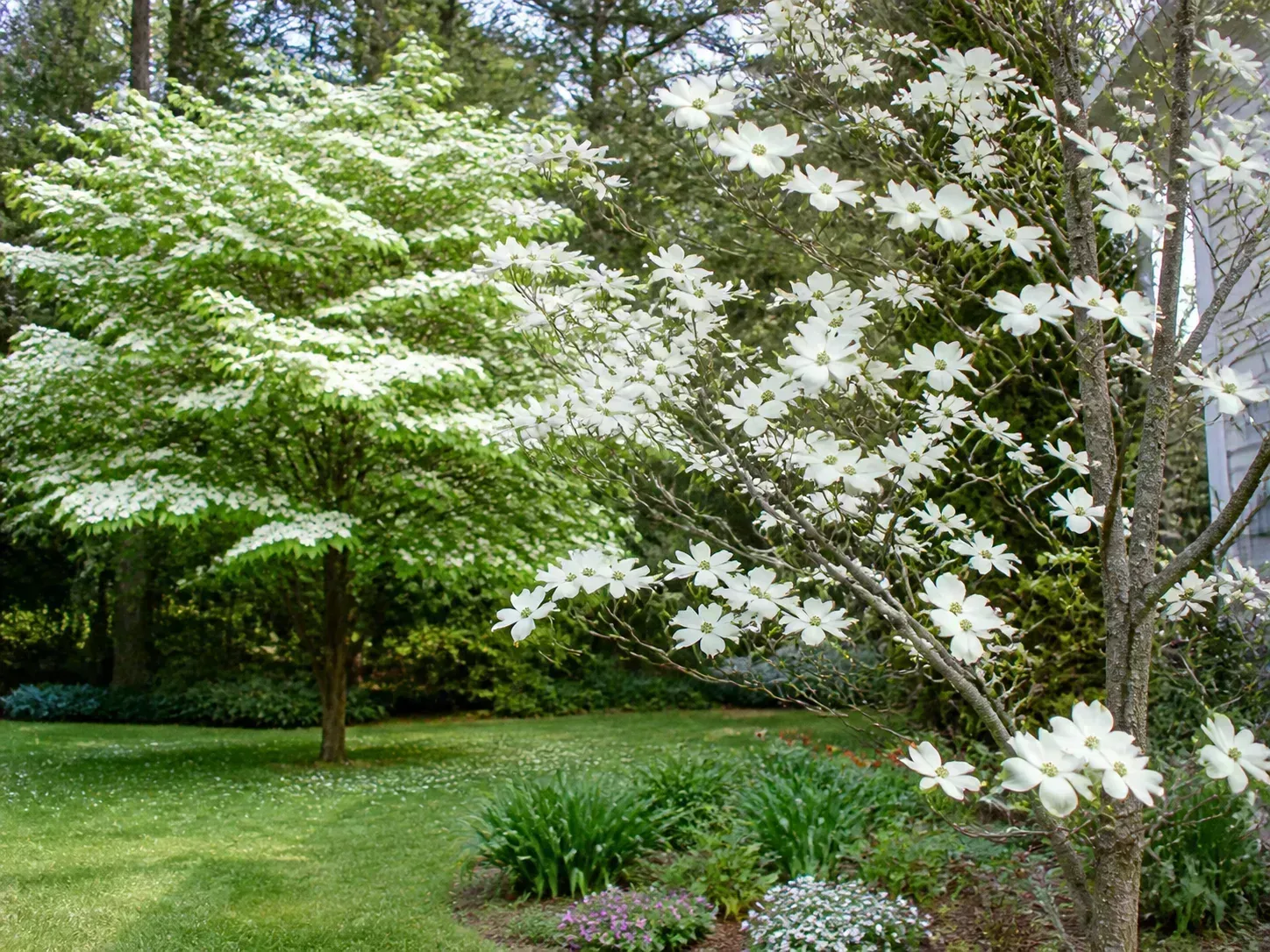
Crape myrtle, Royal Star magnolia, crabapple, redbud, and weeping cherry
Crape myrtle is a warm-climate favorite for long summer bloom, attractive bark, and a naturally small-to-medium habit. Choose a cultivar by its final height and width, give it full sun, and resist the urge to cut every branch back to stubs each year; a light structural approach preserves the plant’s natural framework.
Royal Star magnolia offers fragrant white flowers before the leaves emerge and works well as a specimen in a lawn or mixed bed. At 15 to 20 feet, it is compact compared with a Southern magnolia but not a tiny foundation shrub, so give its crown room and keep it away from a narrow walkway.
Dwarf flowering crabapple delivers spring bloom, colorful fruit, fall foliage, and wildlife value in one package. Colorado State University Extension’s flowering crabapple guide notes that dwarf selections can fall around four to 10 feet, but cultivar choice matters for disease resistance, fruit persistence, and mature habit. Full sun improves flower and fruit production, and planting in a mulched bed rather than overfertilized turf can reduce avoidable disease pressure.
Crabapples are grafted, so watch the base for rootstock suckers and remove them promptly rather than letting them become competing trunks. The same CSU guide explains that overly deep planting can increase suckering and that selecting for resistance matters because scab, fire blight, rust, powdery mildew, and other problems vary by cultivar.
‘Covey’ redbud is a compact, weeping North American native form that makes an excellent small focal point when its low branches are allowed to cascade. It is more about early spring flowers and heart-shaped foliage than shade, and it deserves a site with decent drainage and some relief from brutal reflected heat.
Weeping cherry creates an instant spring picture with cascading branches, but its width is easy to underestimate. Plant it where the branch tips can hang without blocking a path, and inspect the graft union and mature spread before buying; a weeping crown still needs horizontal room.
Wintersweet, glorybower, Franklin tree, hedge maple, yellowhorn, and witch hazel
Wintersweet is normally grown as a shrub but can be trained to a single trunk. Its fragrant yellow winter flowers make it valuable near a patio or entry where the scent is close enough to notice, although the training work and eventual eight- to 12-foot width make it a better focal plant than a squeezed foundation specimen.
Harlequin glorybower brings summer flowers followed by showy purple and blue fruit. It can be trained into tree form over several seasons, but an untrained plant is more naturally a multi-stemmed shrub; allow for that habit if you want a low-maintenance planting rather than a pruning project.
Franklin tree is a collector-friendly small tree with fragrant, five-petaled white flowers in late summer. Its chief decision rule is drainage: do not put it in a basin that stays saturated after rain, even if the soil is rich. It rewards a well-prepared, moisture-consistent site more than a heavy feeding schedule.
‘Carnival’ hedge maple earns attention for silver-and-lime variegated leaves and pinkish new growth. Use it where the foliage can be viewed close up, and confirm the crown width; variegation may slow vigor, but it does not turn a 15-foot tree into a miniature bonsai.
Yellowhorn is an unusual spring-flowering tree with white starry blooms and green fruit capsules. Some plants stay in the small-tree range, while others approach 25 feet, so it belongs on the “verify the exact selection” side of this list. Full sun and well-drained soil support the best display.
Witch hazel is one of the most useful fall-flowering choices for a small yard, with citrus-scented yellow flowers and good seasonal structure. It can become taller than a nursery specimen suggests, so treat it as a small shade-tree candidate rather than a shrub to wedge under a window.
Best Evergreens and Wildlife Trees
Evergreen trees give a small garden its bones, while native or wildlife-supporting selections can do more than decorate the space. The trade-off is that a wildlife tree may have fruit, acorns, suckers, thorns, or leaf litter—features that are useful ecologically but deserve an intentional location.
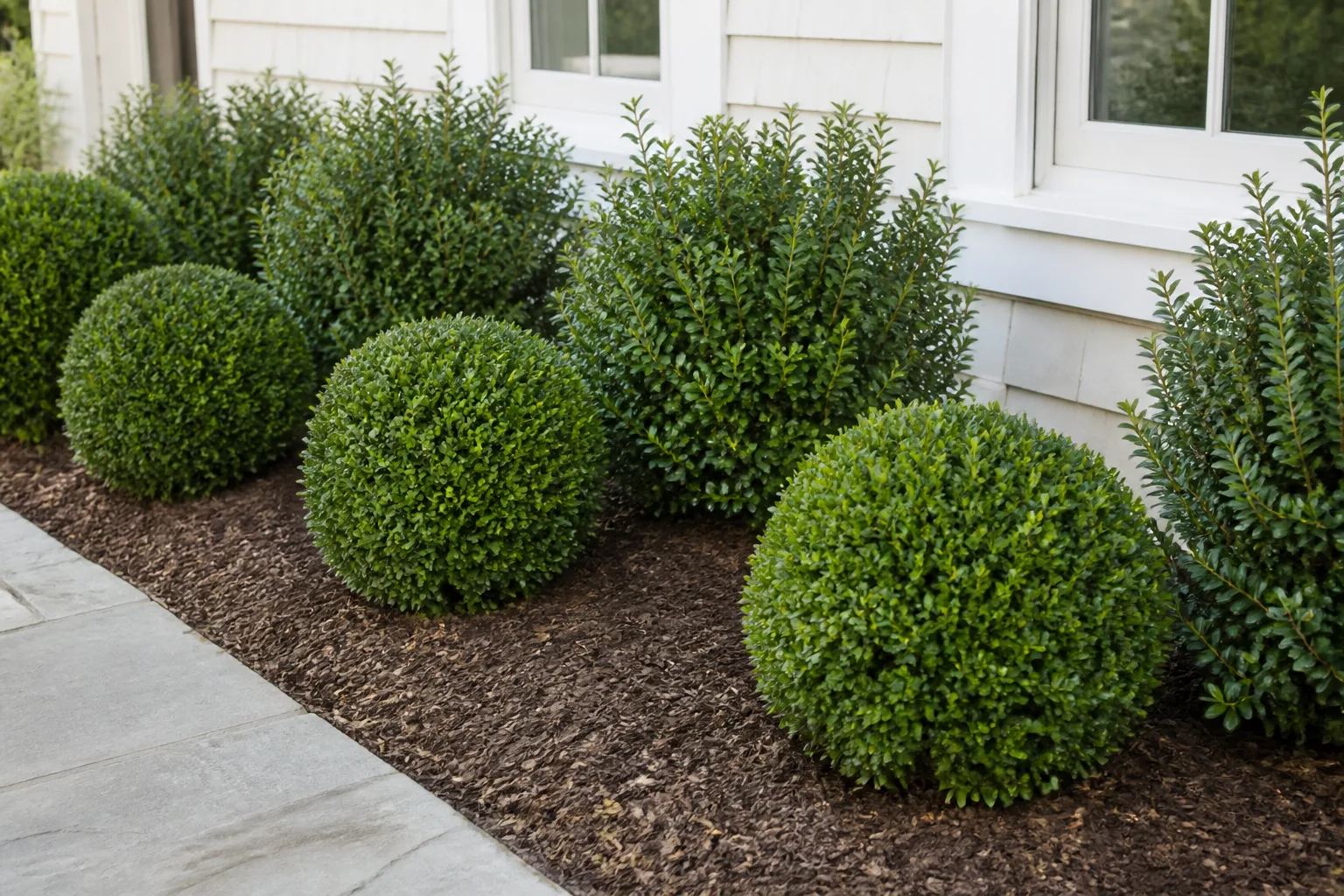
Dawn redwood, Dragon Lady holly, and Spanish fir
‘Miss Grace’ dawn redwood is a weeping cultivar of a species that is enormous in standard form. It may reach only about eight feet in ten years and can be left prostrate or staked upright, but that ten-year figure is not a promise that it can never grow larger. Give it moist, well-drained soil and room to express its eventual branch structure.
Dragon Lady holly is a narrow, pyramidal evergreen that makes sense where vertical structure matters more than broad shade. The NC State Plant Toolbox profile explains that hollies are dioecious: a female plant needs a compatible male nearby to produce berries. It also records low-severity poison characteristics for the fruits, so do not place the berrying plant where young children are likely to sample them.
‘Fastigiata’ Spanish fir gives a blue-green, upright evergreen accent at about 10 feet. It is best reserved for climates and sites that resemble its preferred cooler, well-drained conditions; in a hot, humid or dry lowland garden, the tree can become a high-maintenance experiment rather than an easy small-space solution.
Chestnut oak, mountain witch alder, hydrangea tree, chaste tree, and Amur maple
Dwarf chestnut oak is a strong choice when wildlife value matters more than a perfectly tidy patio edge. Oaks support a wide range of insects and birds, and this smaller species can produce acorns, but a 12- to 25-foot plant still needs a real bed rather than a narrow strip beside paving.
Mountain witch alder is a slow-growing shrub that can be trained onto a trunk, with fragrant spring flowers and red, orange, and yellow fall color. It may sucker around the base, so remove unwanted shoots if you want to keep the single-trunk silhouette and prevent the plant from widening into a colony.
Hydrangea tree is a standard-trained hydrangea, not a separate tree species. It can be a spectacular summer-flowering accent in a small garden, but the trunk and crown need occasional structural pruning, and the plant performs best where moisture is consistent rather than in a hot, dry gravel strip.
Chaste tree suits warm, sunny gardens where purple flower spikes and a drought-tolerant mature habit are useful. It can be pruned hard and kept multi-stemmed or tree-shaped, but cold-climate gardeners should verify winter survival before treating it as a permanent small tree.
Amur maple grows quickly for a small tree and colors strongly in fall, which is both its appeal and its warning. It can volunteer readily in some regions; check your state or local invasive-plant guidance before planting, and skip it if your goal is a low-spread native planting or if nearby natural areas make escape a concern.
Best Dwarf Fruit and Citrus Trees
Fruit trees are some of the most rewarding small-yard choices because they combine flowers, foliage, and food. They are also the group where a generic “dwarf” label is least useful: rootstock, chill hours, pollination compatibility, pruning, disease pressure, and winter protection all affect whether the tree earns its space.
Cherry, apple, mandarin, lemon, and hardy orange
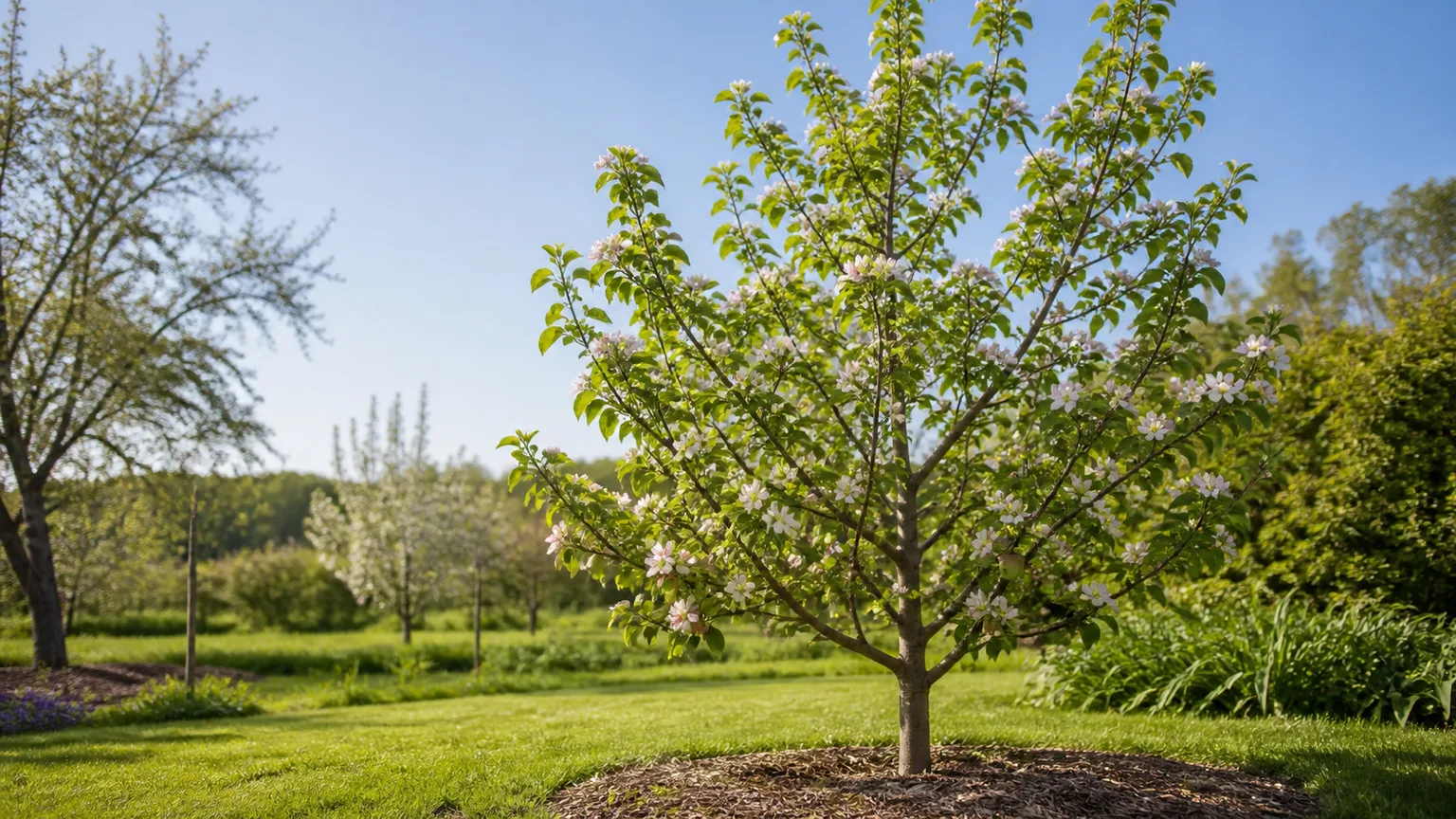
Dwarf cherry produces spring flowers and summer fruit, but “dwarf” can still mean a tree well over eight feet. Check whether the cultivar is self-fruitful, whether it needs a compatible pollinizer, and whether your winter chilling pattern matches the variety. Plant in full sun with airflow and a soil that drains after rain.
Dwarf apple is available on several rootstocks, from very dwarfing trees around four to six feet to more vigorous trees that can approach 15 feet. Ask the nursery for the rootstock name, expected mature height and width, chill-hour requirement, and pollination partner. A small tree is easier to prune and harvest, but it is not maintenance-free: thinning, disease scouting, and annual structural cuts are part of the bargain.
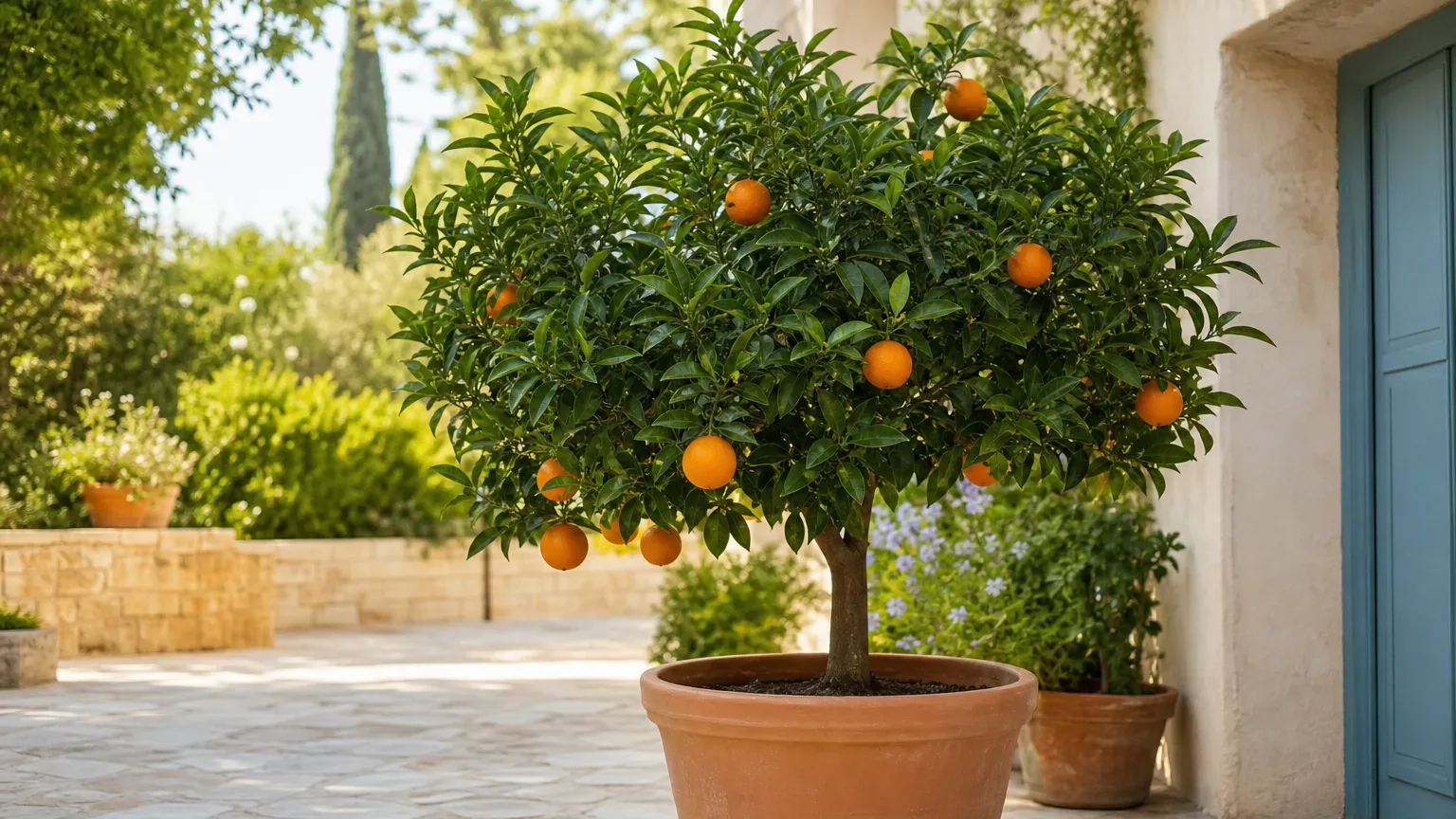
Dwarf mandarin and dwarf Meyer lemon are excellent patio or warm-climate trees when they receive strong light and fast drainage. In a cold climate, the container must be large enough for a stable root zone and mobile enough to move before frost; bringing a tree indoors does not compensate for a dark room, dry heat, or waterlogged potting mix.
Hardy orange is a different proposition from edible citrus. Its white flowers and yellow-orange fruits provide ornamental interest, but the branches carry serious thorns, so place it well away from children’s routes, dog runs, and narrow paths. It is more useful as a defensive hedge or specimen where the thorns are an asset than as a casual patio tree.
For any fruit tree, avoid assuming that a second tree is optional. Some cultivars set fruit alone, others need a compatible variety nearby, and even self-fruitful trees can crop better with a suitable pollination partner. The nursery label should tell you the rootstock and pollination details; if it does not, get the cultivar information before buying rather than guessing after three years of flowers and no fruit.
Plant, Water, and Prune Compact Trees Correctly
Small trees fail for the same reasons large trees do: planted too deeply, watered shallowly, forced into a site they dislike, or repeatedly cut back to solve a spacing mistake. A compact form reduces the scale of the problem; it does not remove the biology.
The first-year rules that prevent most failures
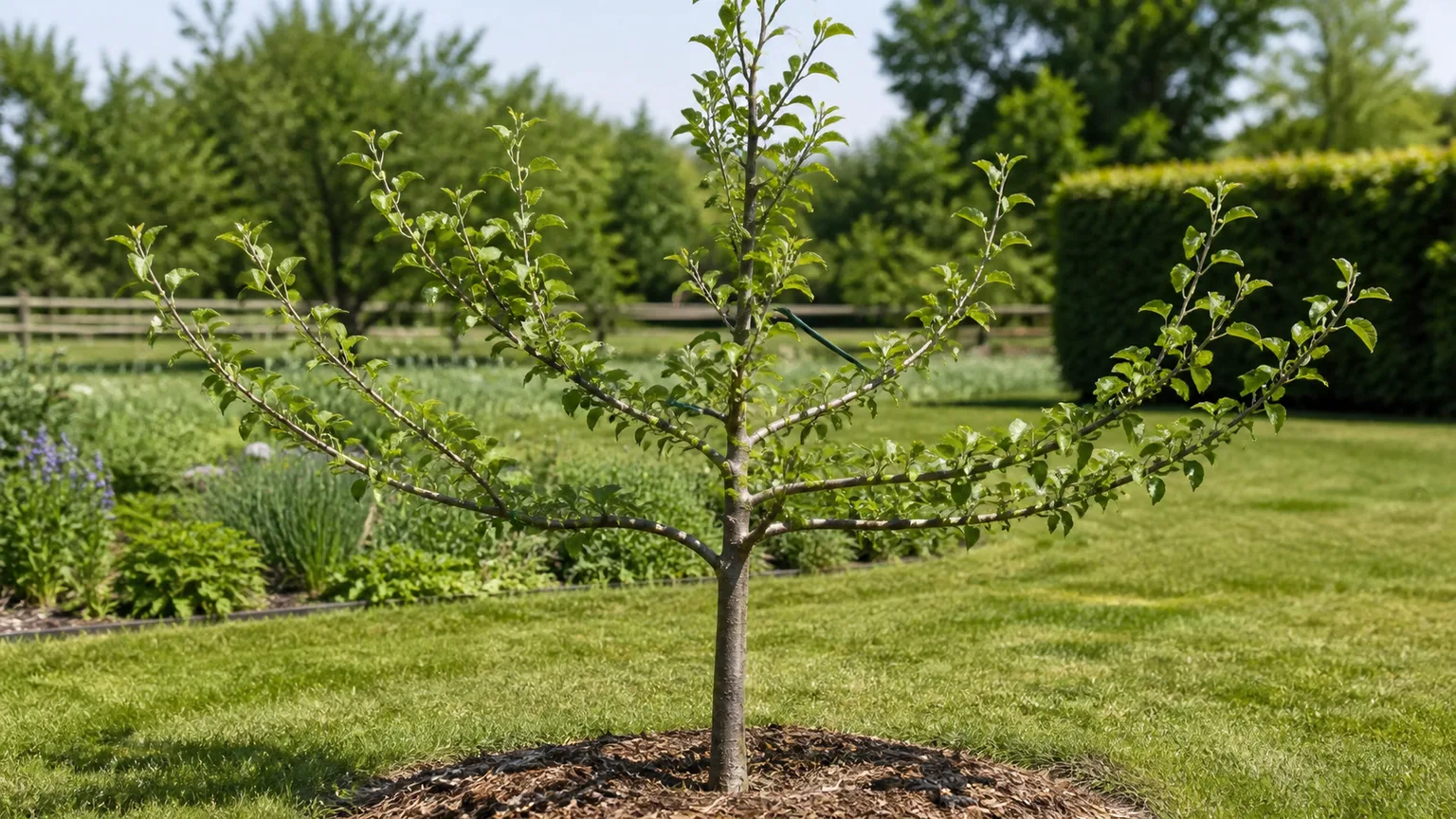
- Dig wide, not needlessly deep. Set the root flare at or slightly above finished soil level. Do not bury the trunk to make a small tree look anchored.
- Water the root ball deeply. During the first growing season, check the soil near the root ball and water slowly when it begins to dry. Frequency depends on soil, rainfall, heat, wind, and container size; a calendar cannot see the roots.
- Mulch like a doughnut. Use a moderate mulch layer over the root zone, but keep it off the trunk and graft union. A mulch volcano holds wet bark against the trunk and hides a too-deep planting.
- Do not fertilize by reflex. If the tree is growing normally, extra nitrogen can create soft, excessive shoots and does not fix poor light, drought, or bad drainage. Test soil or follow a cultivar-specific recommendation before adding amendments.
- Prune for structure and clearance. Remove crossing, damaged, or badly placed branches while they are small. Do not repeatedly shear a tree that is too large for the site; replace it with a better-sized cultivar instead.
- Inspect grafts and basal shoots. Fruit trees and trained forms can produce vigorous shoots from below the graft or trunk. Remove those shoots cleanly before they become competing leaders.
Container trees need a separate plan. Even a plant that tolerates a pot is exposed to faster drying, colder roots, salt buildup, and restricted root volume than the same cultivar in the ground. Choose a container with drainage, use a real container mix, lift or insulate it before hard freezes, and expect to repot or root-prune on a schedule.
Conclusion
The best dwarf trees for landscaping are the ones whose mature shape fits the site without heroic pruning. Japanese maple, compact conifers, redbud, crabapple, witch hazel, and selected fruit trees cover many small-yard jobs, while citrus, firs, Amur maple, and trained shrubs need more specific climate or maintenance conditions.
Before you buy, write down the planting space’s usable width, hours of sun, drainage, wind exposure, overhead conflicts, and winter low. Then compare the exact cultivar and rootstock—not just the common name—against that list. A tree that fits on paper, gets a deep first-year root system, and is pruned for structure will give a small landscape far more beauty than a “dwarf” label chosen on impulse.