Rubbing Alcohol for Bed Bugs: When It Works and When It Won't
Rubbing alcohol kills bed bugs on contact, but it won't clear eggs or hidden harborages. Learn safe 70% use, better DIY options, and when to call a pro.
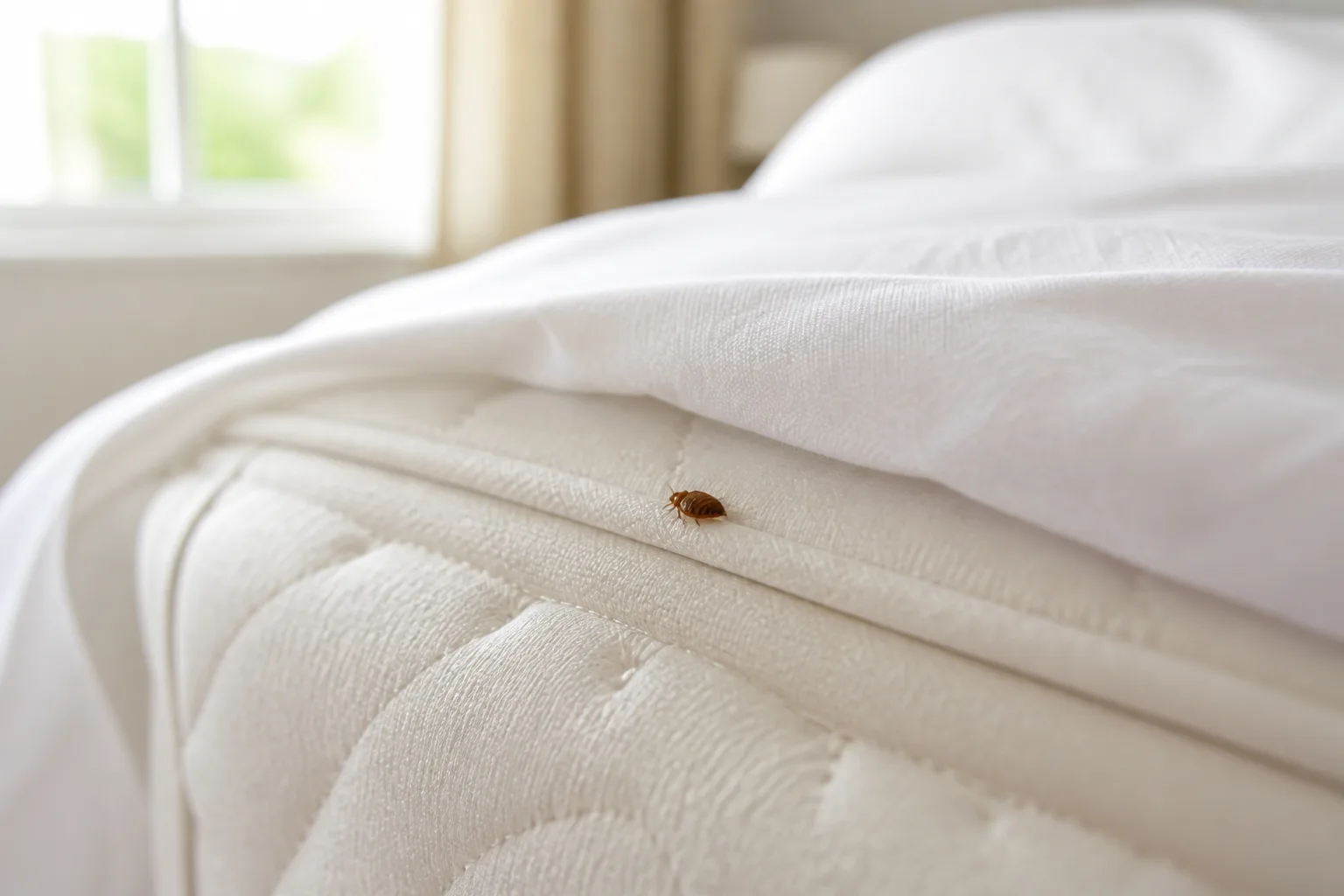
You spot a flat reddish-brown insect along a mattress seam and reach for the rubbing alcohol in the medicine cabinet—because if it disinfects a cut, surely it nukes bed bugs, right? Yes on direct contact, no as a full treatment plan. Isopropyl alcohol (rubbing alcohol) dissolves the waxy outer layer of bed bugs and pulls moisture from their bodies, killing adults and nymphs you soak within seconds. It does not reliably kill eggs, does not leave residual protection after it dries, and becomes dangerously flammable when you mist bedding, baseboards, and furniture the way panic suggests. Treat rubbing alcohol as a spot-kill tool for visible bugs, then stack methods that hit harborages, eggs, and reinfestation routes.
The Short Answer
Rubbing alcohol kills bed bugs on contact when 70% to 91% isopropyl alcohol reaches the insect’s body long enough to break down the exoskeleton and dehydrate tissues (Orkin). Pest professionals and university extension programs agree it is inefficient for established infestations because bed bugs hide in seams, screw heads, outlet plates, and clutter where liquid cannot follow—and because eggs glued to rough surfaces survive a light mist (UC IPM). Once alcohol evaporates (often within minutes on fabric), new bugs walking the same path are unaffected.
If you see one or two bugs after travel, alcohol plus hot laundry, vacuuming, and mattress inspection may be enough. If you have bites in lines, fecal spots, shed skins, or bugs in more than one room, alcohol alone will not catch up to a population that doubles every few weeks at room temperature (UC IPM). Before you soak the bedroom, confirm you are fighting bed bugs and not fleas, carpet beetles, or cockroach nymphs—our bed bug lookalike ID guide walks through fast field tests so you do not waste a weekend on the wrong pest.
How Rubbing Alcohol Kills Bed Bugs on Contact
Bed bugs do not have lungs like mammals; they breathe through openings along their abdomen and rely on a waxy cuticle to hold water inside. Isopropyl alcohol acts as a solvent that strips that wax and as a desiccant that draws moisture out once the shell fails. That one-two punch is why a direct hit kills quickly while a dried streak on cotton does almost nothing—the insect must be wet, not merely pass through a faint residue.
This is contact chemistry, not baiting or residual poisoning. There is no slow carry-back to a nest because bed bugs do not forage communally the way ants do. Every bug you miss keeps feeding, and every egg you miss hatches in about 10 to 15 days at room temperature (UC IPM). Alcohol shines when you flip a cushion, see runners, and need them dead now before they vanish into a crack. It fails when you assume a perimeter spray creates a protective barrier overnight.
Why 70% Concentration Beats Higher Percentages
Drugstore shelves stock 70%, 91%, and 99% isopropyl alcohol, and intuition says stronger must mean deadlier. For bed bugs, 70% is often the sweet spot because the water in the formula slows evaporation, giving alcohol more seconds to penetrate the cuticle before it flashes off. 90% and 99% products dry faster on mattresses and upholstery, which can mean less contact time even though the concentration is higher. Pest guidance commonly cites 70% to 91% for direct kills (Orkin); either end of that range works if you are hitting the bug, not fogging the air.
Do not dilute below label strength hoping for a gentler mattress treatment—you are not making safer chemistry, you are making weaker contact kills. Do not mix alcohol with other cleaners; bleach, ammonia, or hydrogen peroxide combinations can release toxic gases and do nothing extra for hidden bed bugs.
Does Rubbing Alcohol Kill Bed Bugs Instantly?
Adults and nymphs die within about 30 seconds when alcohol fully contacts the body at effective concentrations (Orkin). There is no meaningful “instant” on fabric—bugs walking treated sheets after the alcohol dried are unaffected because volatility is both the mechanism and the limitation. Extension entomologists note you can even brush visible bugs into a jar of soapy water or rubbing alcohol during inspections as a physical removal tactic (Purdue Extension); the speed is real, the coverage is not.
Compare that to heat, which continues killing while temperature holds in the material. Commercial whole-room heat targets at least 140°F for two hours or 130°F for three hours, with a minimum lethal temperature of 113°F for bed bugs (UC IPM). Virginia Cooperative Extension research stresses that eggs need about 122°F sustained in the hiding spot—not just warm ambient air—while adults and nymphs succumb near 118°F (Virginia Tech ENTO-583). Alcohol’s speed is useless if the bug is inside a screw hole or behind a baseboard when you spray.
Why Rubbing Alcohol Fails Against Real Infestations
A single traveler after a hotel stay is not the same problem as aggregations, multiple life stages, and fecal spotting along headboard rails. Rubbing alcohol fails infestations for predictable reasons none of which are “you bought the wrong brand.”
Eggs Stay Protected in Cracks and Fabric
Female bed bugs cement 200 to 500 eggs over a lifetime, usually two to five per day, on rough surfaces near sleeping areas (UC IPM). The glue-like coating keeps eggs in place through vacuuming and light sprays. Rubbing alcohol does not reliably penetrate egg shells the way sustained heat does; if you only alcohol-mist visible bugs, nymphs emerge a week later and the cycle restarts. That is why extension IPM programs insist on combining washing, heat, steam, encasements, and—when needed—labeled pesticides applied by professionals rather than any single DIY liquid (UC IPM).
Hidden Harborages and Fast Evaporation
Bed bugs are flat, nocturnal, and crevice-driven. They aggregate in mattress tufts, box spring corners, bed frame joints, nightstand screw wells, carpet edges, and even behind outlet covers when populations grow (CDC). You see a fraction of the population during daylight; alcohol only kills the fraction you soak. Purdue Extension notes that while vacuuming removes many adults, eggs remain stuck and require scraping or follow-up heat (Purdue Extension).
Repeated partial alcohol treatments can also scatter bugs deeper into walls or neighboring rooms—especially if strong odors push them away from treated zones without killing the colony. Alcohol is a scalpel, not a net.
Fire and Health Risks You Cannot Ignore
Isopropyl alcohol vapors are highly flammable. Real-world house fires have started when residents sprayed alcohol on bedding near candles, space heaters, smoking, or faulty electrical arcs. Orkin explicitly warns that improper alcohol use creates unsafe situations even when concentrations kill on contact (Orkin). This is not theoretical caution—it is the main reason pros favor heat, steam, and labeled products over saturating sleep surfaces with solvent.
Flammability on Bedding, Furniture, and Electrical Zones
Never soak mattresses, box springs, or pillows with alcohol. A thin mist on a hard surface you can wipe dry is different from fabric saturation that keeps off-gassing in an enclosed bedroom. Keep alcohol away from open flames, pilot lights, hot appliances, and running electronics. Ventilate with windows open and fans exhausting outward while you work, then let surfaces dry completely before using heat tools, irons, or hair dryers in the same room.
Inhalation risks matter too: alcohol fumes irritate eyes, throat, and lungs, especially in small bedrooms with closed doors. Skin contact dries and cracks skin with repeated use. Alcohol can damage finishes on wood headboards, stain fabrics, and dissolve adhesives on furniture—creating new harborages when laminates bubble. If you have children, pets, or respiratory conditions, minimize airborne alcohol and prefer laundry heat and HEPA vacuuming for the bulk of the work.
How to Use Rubbing Alcohol for Spot Treatment Only
Use alcohol when you have confirmed bed bugs (not carpet beetle larvae or fleas) and visible live insects in a small, defined zone—luggage seams after travel, a corner of a bed frame, or the back of a picture frame—not when you are guessing based on bites alone. Bites are not diagnostic; only bugs, eggs, fecal spots, or shed skins confirm infestation (UC IPM).
Step-by-Step Application When You See Live Bugs
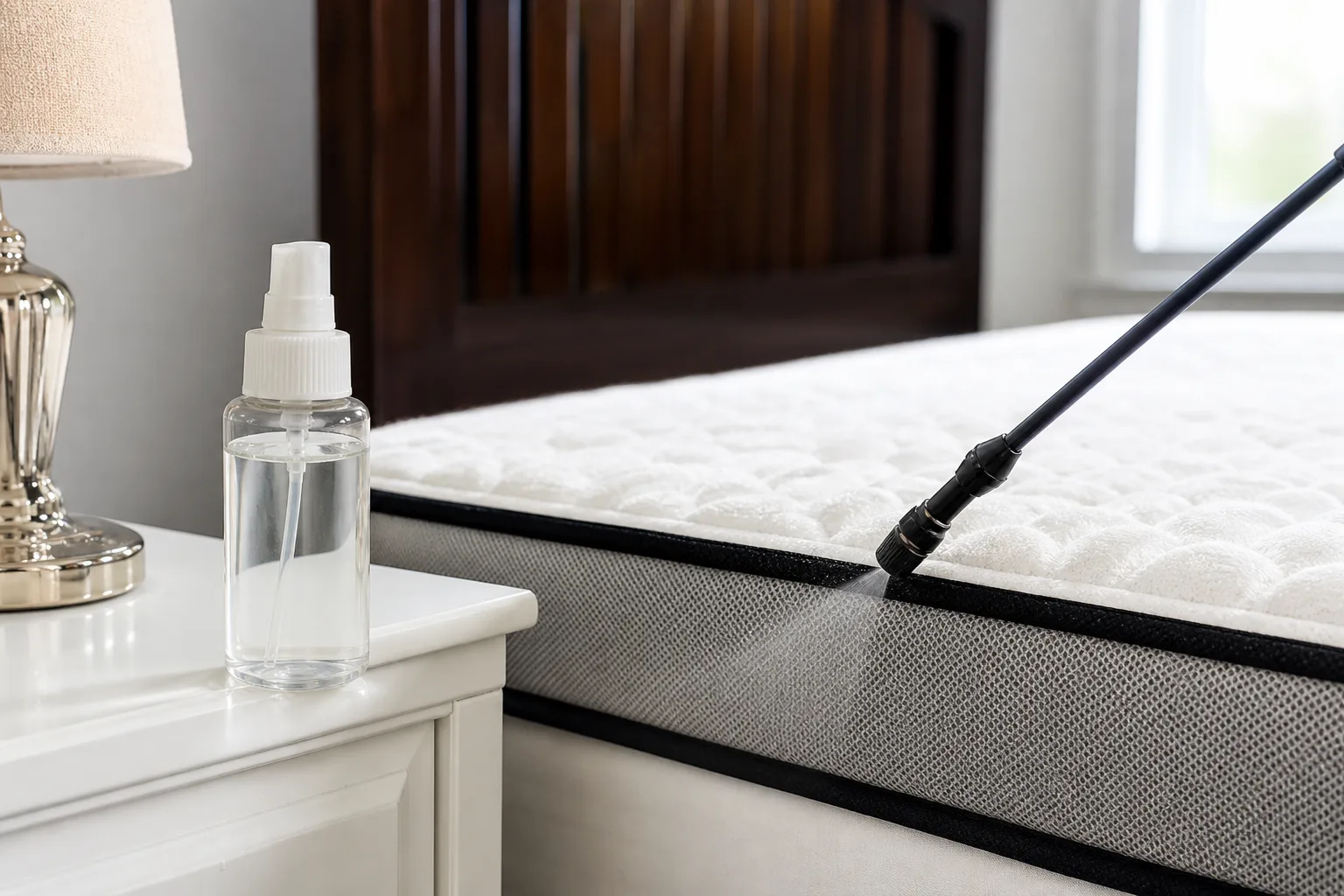
Ventilate first. Open windows and run a fan pointing outward. Move heat sources, candles, and smoking materials out of the room. Pour 70% isopropyl alcohol into a labeled spray bottle set to a direct stream, not a fine mist cloud that builds vapor.
Target the bug, not the room. Spray live insects directly until wet, plus the immediate crevice they were entering—mattress seam tuft, box spring staple line, or screw head cup. Use a cotton swab or cloth dampened (not dripping) on headboard joints and furniture hardware where a spray would run.
Skip broad fabric soaking. Lightly treat small fabric patches only if bugs are visible on them, then move those textiles straight to a sealed bag for hot wash and dry. Do not spray entire sheets, comforters, or carpets with alcohol.
Vacuum and wash after drying. Once alcohol is fully dry, HEPA-vacuum seams and edges to remove dead bugs, shells, and some eggs (Purdue Extension). Empty the vacuum outdoors into a sealed bag. Launder bedding and clothing at 120°F water and highest dryer heat for at least 10 to 15 minutes (UC IPM).
Re-inspect in three to five days. Eggs you missed will hatch; a second find means you are past spot-kill territory and need the integrated methods below or professional help.
Better DIY Methods Than Rubbing Alcohol Alone
Think in layers: kill what you see, remove what you can, heat what fits in the dryer, desiccate what crawls, and block mattresses so survivors starve. No single pantry product replaces that sequence for more than a trivial introduction.
Heat, Laundry, and Steam That Reach Eggs
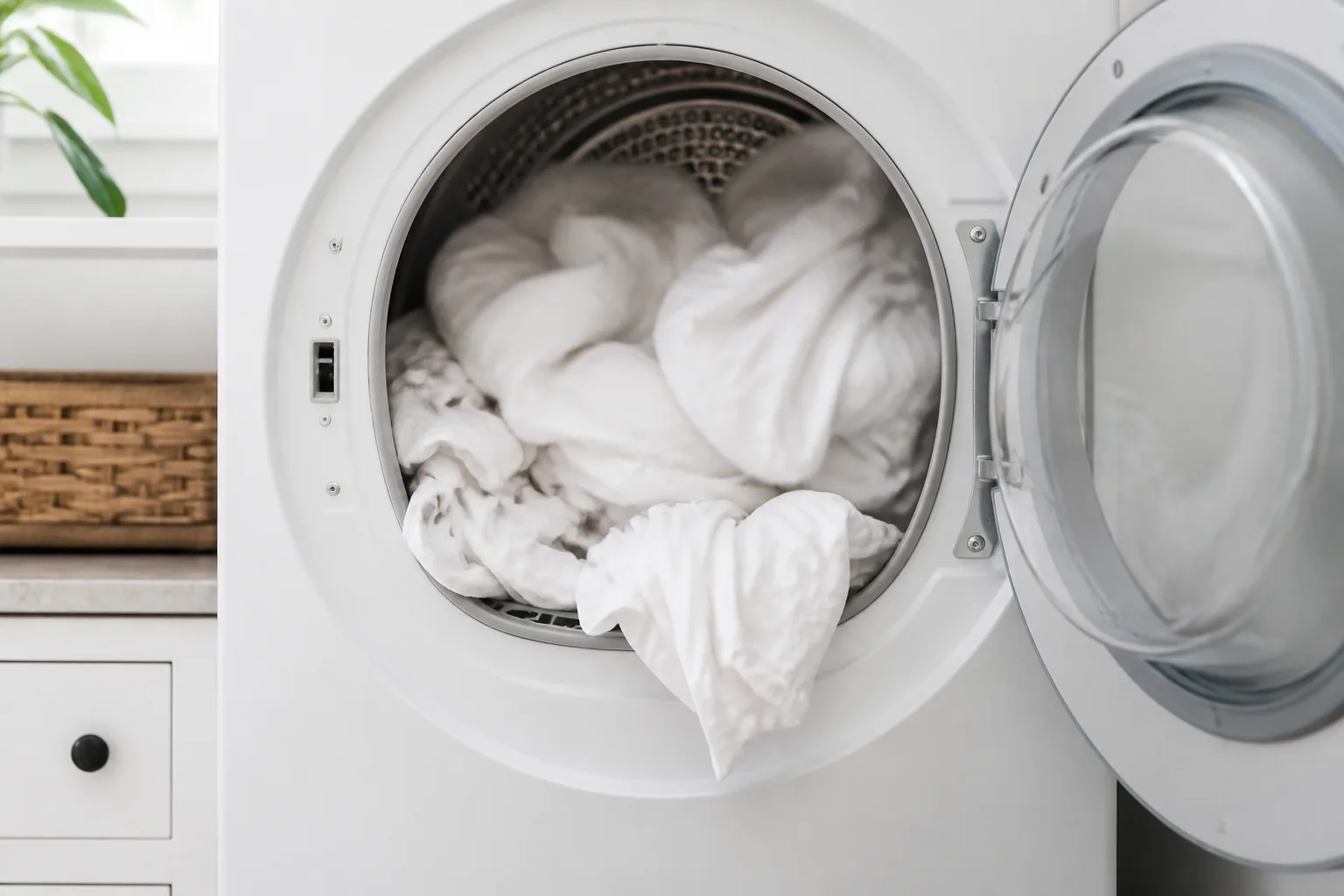
Laundry is the most accessible heat treatment homeowners control. Wash infested linens and clothing in hot water (120°F) and dry on the hottest setting for 10 to 15 minutes to kill all life stages that the heat reaches (UC IPM). Bag clean dried items in sealed plastic until the room is cleared so bugs do not re-colonize them.
Steam delivers lethal temperature into mattress seams and upholstery when the machine is hot enough. Purdue Extension notes most retail steam cleaners lack sufficient heat; commercial-grade vapor or dry steam units used carefully can kill bugs on contact in seams (Purdue Extension). Move slowly—about one foot every 10 to 15 seconds—and test fabric tolerance first. Steam complements alcohol; it does not replace encasements or follow-up monitoring.
Whole-home heat treatment belongs to licensed professionals who measure 122°F in hard-to-heat cracks, not to hair dryers or space heaters aimed at a mattress (fire risk, uneven kill). Virginia Tech’s ENTO-583 bulletin explains why ambient room temperature misleads: floor-wall junctions and dresser drawers lag far behind hot air at the ceiling (Virginia Tech ENTO-583).
Diatomaceous Earth and Encasements for Lasting Control
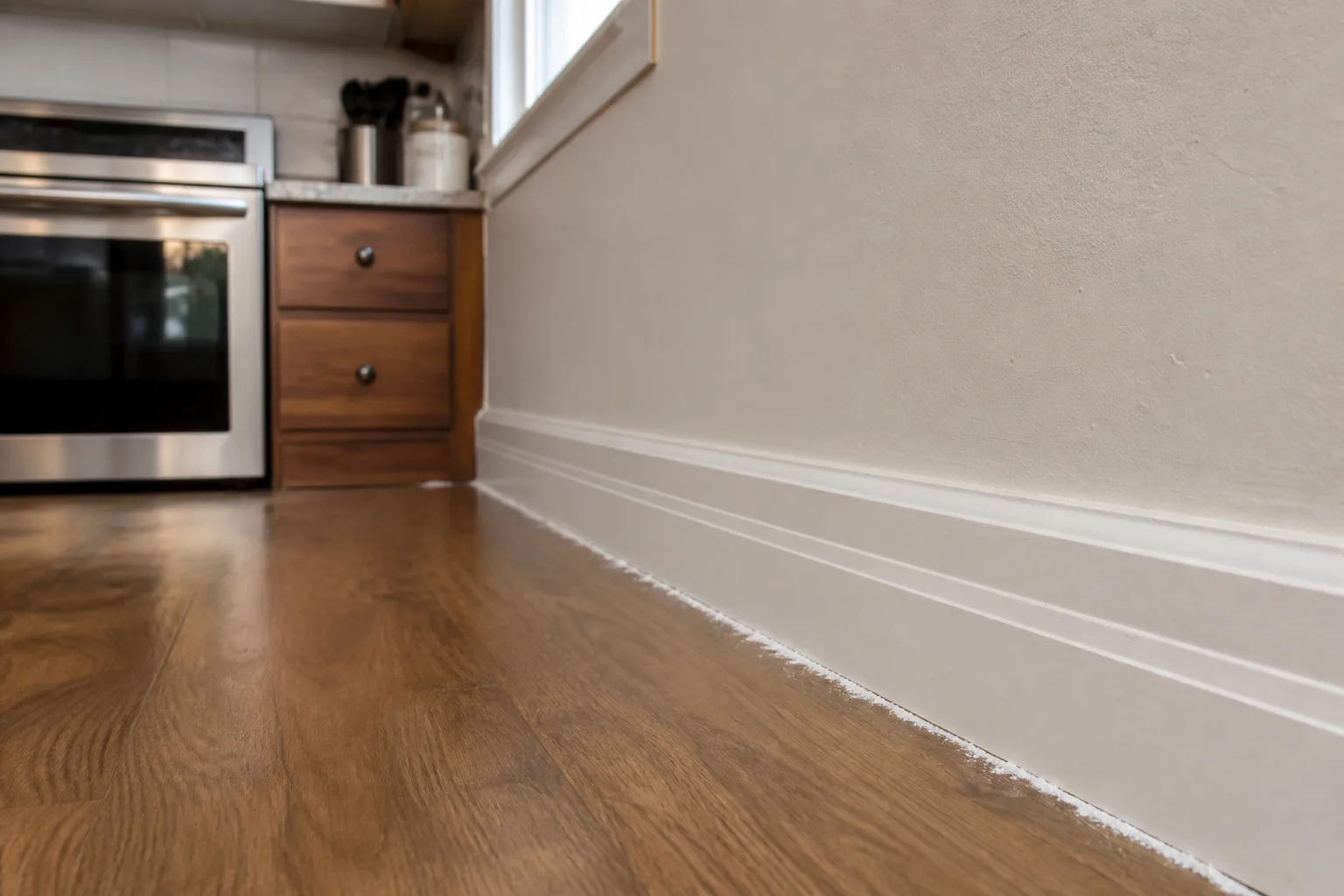
Food-grade diatomaceous earth (DE) kills crawling bed bugs by abrasion and dehydration when they walk through a thin, dry dust film—unlike alcohol, it can stay active in dry voids if undisturbed. Apply a light layer along baseboards, bed frame cracks, and carpet edges (not thick piles bugs walk around), leave several days, then HEPA-vacuum. DE fails when wet and is irritating to lungs when airborne; wear a mask during application. Our diatomaceous earth guide covers safe placement logic that applies to crawling indoor pests.
Mattress and box spring encasements designed for bed bugs trap insects inside and block new harborages on tufted surfaces. Encasements do not kill instantly but starve sealed bugs over months and make future inspections visible (UC IPM). Install them after vacuuming and steaming so you do not seal live bugs inside without monitoring.
Vacuuming with a crevice tool on seams, edges, and carpet perimeters removes adults and some nymphs immediately; repeat every few days during an active campaign (Purdue Extension). Interceptor cups under bed legs (where floor contact allows) monitor whether bugs are still traveling after treatment.
Essential oil sprays (lavender, tea tree, peppermint) may repel some insects temporarily but do not replace killing methods—and they can stain fabrics or trigger allergies. Use them, if at all, as travel deterrents on luggage exteriors, not as mattress medicine.
How to Prevent Bed Bugs From Hitchhiking Home
Bed bugs spread by hitchhiking on luggage, clothing, and used furniture—they do not fly in from the garden. Elevate luggage on racks away from beds and walls in hotels; inspect mattress seams and headboards with a phone flashlight before unpacking. Store worn travel clothes in a sealed bag until hot-laundered.
At home, encase mattresses before problems start if you travel frequently or live in multi-unit housing. Vacuum luggage seams after trips and avoid floor-piling bags in bedrooms. For secondhand furniture, inspect every seam and screw hole; consider heat-treating small items in a dryer or professional chamber before bringing them indoors. Do not pick up discarded upholstered items without a full inspection plan—what saves a couch can cost thousands in treatment.
Reduce clutter along bed perimeters so inspections stay fast and steam or vacuum paths stay clear. Bed bugs are not a hygiene moral failing—they are a contact pest—but tight harborages make small introductions become big infestations faster.
When to Call a Professional Exterminator
Call a licensed pest management professional when you confirm multiple life stages, bites continue after DIY, bugs appear in more than one room, or you cannot access wall voids, shared walls, or heavy clutter. UC IPM states that confirmed infestations should be managed by trained professionals combining nonchemical and chemical tools with follow-up monitoring (UC IPM). CDC notes bed bugs have not been shown to transmit disease, but allergic reactions, infection from scratching, and sleep loss are real quality-of-life costs (CDC).
Red flags that DIY alcohol will lose:
- Clusters of fecal spots (dark ink-like dots) on sheets, mattresses, or walls
- Shed skins and empty eggshells along seams
- Multiple residents bitten on a similar schedule
- Neighbors in apartments reporting bed bugs
- Repeated sightings after two diligent DIY cycles
A reputable company inspects before quoting, explains whether heat, steam, vacuuming, encasements, and labeled insecticides will be combined, and schedules follow-up visits because one pass rarely ends established infestations. Ask for preparation instructions in writing and whether mattress encasements are part of the plan. If someone promises one alcohol-style spray visit with no monitoring, keep looking.
Conclusion
Rubbing alcohol does kill bed bugs on contact when 70% to 91% isopropyl alcohol soaks the insect—but it does not kill eggs, does not protect after drying, and creates serious fire and fume risks when misapplied to bedding. Use it as a precision spot kill on bugs you can see, then follow with hot laundry, HEPA vacuuming, steam on seams, food-grade DE in dry voids, and mattress encasements that match the scale of the problem. Confirm your pest is actually a bed bug before you treat; misidentification wastes time while the real infestation grows. If signs point beyond a travel scare—multiple bugs, fecal spots, ongoing bites—skip the repeated alcohol misting and bring in professional integrated treatment early, when the population is still containable.



