Does Diatomaceous Earth Kill Ants? A Practical Guide
Does diatomaceous earth kill ants? Yes, after dry, direct contact. Learn which product to use, why it fails, and when bait works better for the colony.
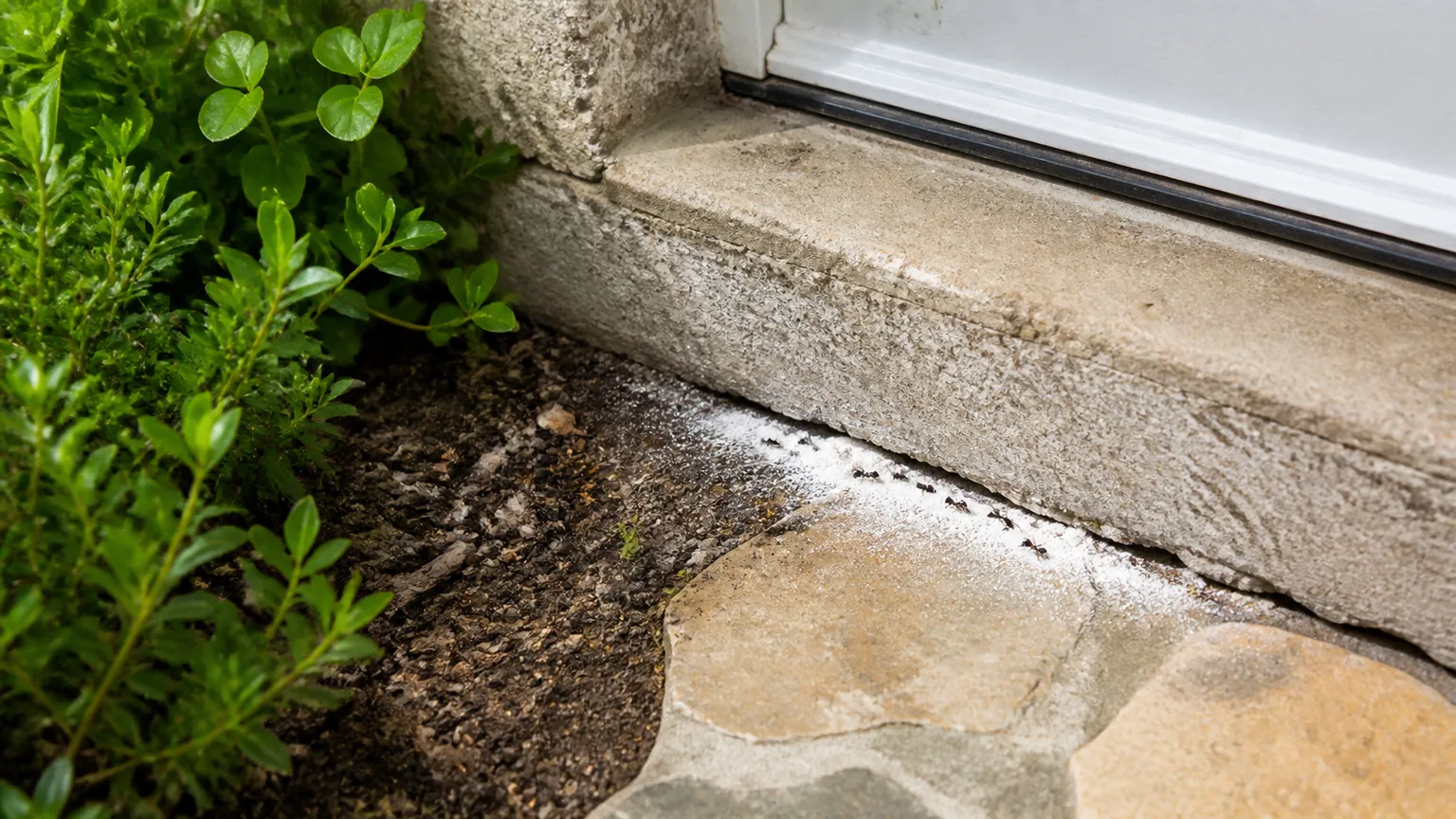
If ants are marching across a counter or up a foundation, diatomaceous earth can kill the ants that physically cross a dry layer of it. It is not a bait: ants do not carry it back to the nest in a way that reliably eliminates the queen and brood, and powder sitting beside a trail does nothing.
That distinction explains most “DE did not work” stories. The powder has to be the right product, placed where ants actually walk, kept dry, and used in a thin layer. Even then, it is usually a small-area contact treatment, not a complete answer to a recurring colony.
The short answer: yes, but DE is a contact tool
Diatomaceous earth works by desiccation. When an ant walks through dry DE, the fine particles abrade the waxy outer surface of its exoskeleton and absorb oils and moisture. The ant gradually loses water; it does not need to eat the powder for the treatment to work. The National Pesticide Information Center explains the dry, disturbed-surface requirement and also warns that the dust can irritate the nose, lungs, eyes, and skin.
The useful mental model is a dry, invisible speed bump. An ant that crosses it may die; an ant that walks around it, a colony hidden in a wall, or a queen protected in a nest is still a problem. For that reason, DE is most reasonable for a small, dry route through a crack or sheltered entry point. It is a poor first choice for a kitchen full of ants, a wet outdoor bed, or a problem that keeps returning from one hidden nest.
How diatomaceous earth kills ants
DE is powdered diatomite, a deposit formed from the silica-rich remains of microscopic aquatic organisms. Most DE is largely amorphous silicon dioxide, but products can differ in composition, processing, label status, and intended use. “Natural” describes the origin of the material; it does not tell you whether a particular bag has been evaluated for the way you plan to use it.
The physical mechanism is well established for insects, although the exact speed varies by species, dose, temperature, humidity, and how much of the body contacts the powder. A PubMed-indexed 2024 study on red flour beetles documented increased water loss and cuticle permeability after DE exposure. That supports the mechanism, but it is not an ant-specific promise that every trail will disappear in 48 or 72 hours.
The time-to-death question is harder than it sounds because “contact” is not a single dose. One ant may brush a few particles with its legs, while another crosses a visible dusting with its abdomen and legs fully coated. Species, body size, ambient humidity, temperature, and the condition of the powder all change how quickly water loss becomes fatal.
Use that variability to set a better expectation: DE may begin affecting an ant after contact, but you should not treat it as an instant knockdown product. If the goal is to stop a trail today, remove food and wipe the route first; if the goal is colony reduction, use a method designed for workers to carry material home.
Why dryness determines whether it works
Dryness is not a minor detail; it is the treatment. Rain, dew, irrigation, condensation, or a damp foundation can make DE clump and stop it from coating an ant’s body evenly. Once the surface dries, some products may become useful again, but a wet or caked line is not the same as a fresh, fine layer. The NPIC fact sheet notes that DE remains effective while dry and undisturbed.
That is why dumping more powder onto a damp trail is usually wasted effort. Remove the old material according to the product label, correct the leak or wait for the surface to dry, and then reassess whether DE still fits the job. Outdoors, a weather window matters more than a calendar date.
Choose the product by its label, not by “natural” marketing
For pest control, the most important words on the container are not “organic,” “pure,” or “food grade.” Look for a product whose pesticide label lists the pest and the place you intend to treat. In the United States, that normally includes an EPA registration number; the label is the source for allowed sites, application directions, protective equipment, and re-entry precautions.
This is not a technicality. NPIC’s food-grade guidance says food-grade and other products not labeled for pest control have untested or unknown risks and effectiveness for that use. A food-grade product may be suitable for an entirely different purpose, but that does not make it a tested ant insecticide or give you a legal application rate.
Food-grade, pesticide-labeled, and filter-grade DE are not interchangeable
Use this quick sorting rule:
- Pesticide-labeled DE: The appropriate category when the label covers ants and your intended indoor or outdoor site. Follow that label exactly, including any dust-control equipment and limits on where the product can go.
- Food-grade DE: Not automatically a better pest-control choice. It may be purified for food or feed uses, but NPIC says pest-control effectiveness and exposure risks are not established simply because a product is called food grade.
- Pool- or filter-grade DE: Do not improvise with it as an ant dust. It is sold for filtration, not for the pest-control application you are trying to make, and a filtration bag is not a substitute for a pesticide label.
Do not use a product labeled for a different site just because the ingredient name looks familiar. Also avoid applying any DE to a person, pet, food-preparation surface, vegetable crop, or flowering plant unless the specific label permits that use. If the bag’s directions are unclear, leave it unopened and choose a labeled alternative or ask a local pesticide professional.
When DE is a sensible ant-control tool
DE has a narrow but useful lane. Consider it when you can identify a small, sheltered, dry route—for example, a crack under an exterior threshold, a protected foundation joint, or an inaccessible void that the label allows you to treat. It can reduce the number of foragers crossing that route without coating an entire room or spraying a broad area.
It can also make sense as a short-term barrier while you fix the reason ants are arriving. Remove a sugary spill, repair a dripping outdoor tap, trim a branch touching the wall, or seal a gap first. A dust line that is asked to solve food, water, shelter, and an established nest at the same time is being asked to do a job it cannot do.
When DE is the wrong tool
Skip DE as the main strategy when you need fast relief from hundreds of ants, when the area is damp, or when children, pets, fans, air returns, and foot traffic will keep disturbing the dust. Do not scatter it across flower heads or broad garden beds: a contact dust does not know the difference between a target pest and a beneficial insect.
It is also the wrong tool when ants are emerging from wall voids, damaged wood, a recurring plant-pot nest, or a large outdoor colony. Carpenter ants accompanied by sawdust-like frass deserve an inspection for moisture-damaged wood. Fire ants and other stinging ants are not a good DIY identification gamble. For either situation, use a species-appropriate label or a qualified pest professional rather than chasing individual workers with powder.
A practical DE application plan
Treat DE as one small step in an integrated pest-management sequence. The goal is not to make a white line everywhere; it is to remove the attraction, find the route, and put the smallest labeled treatment where it has a realistic chance of contact.
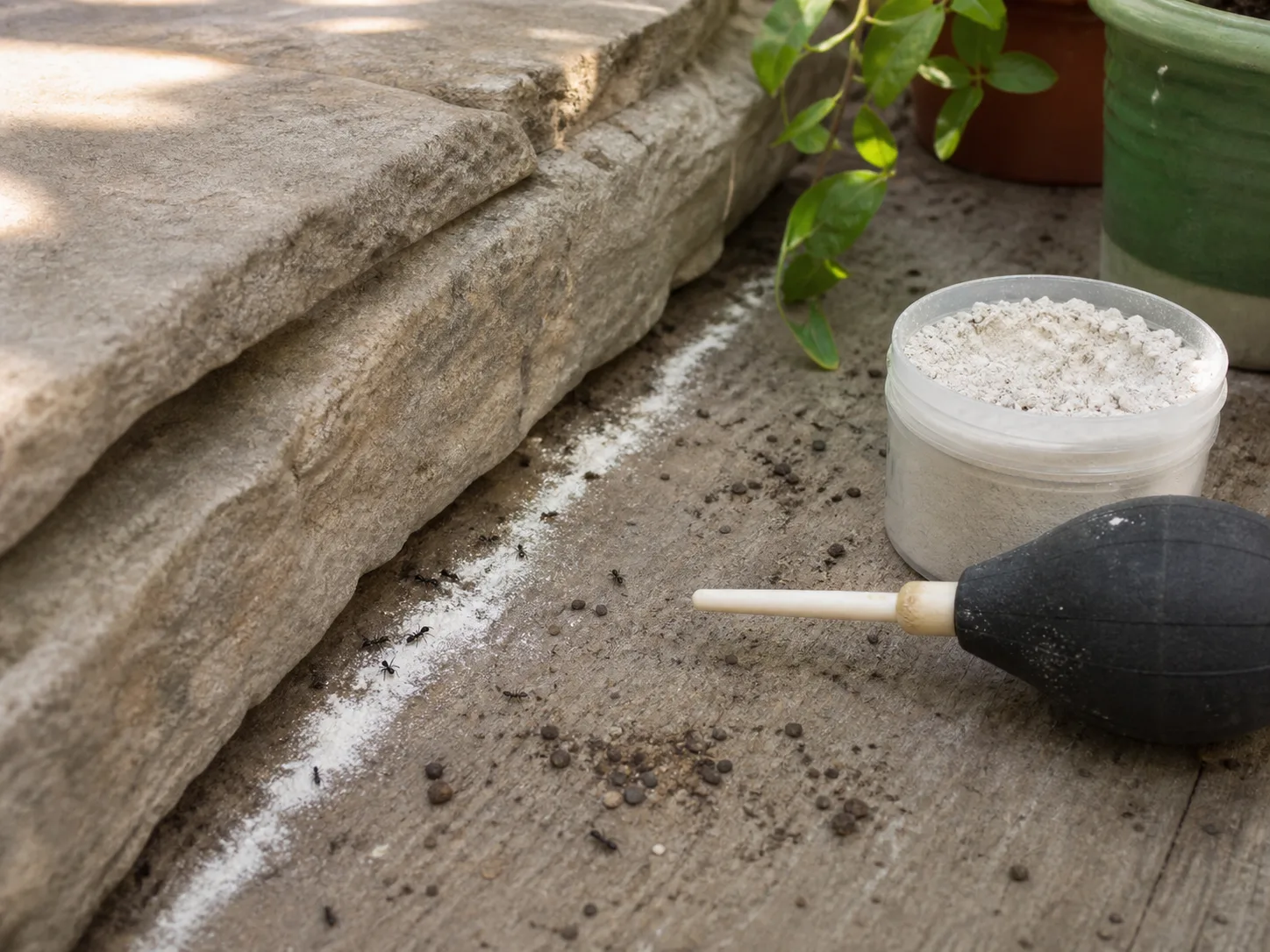
Step 1: inspect the trail and remove attractants
Follow the ants instead of dusting the first place you see them. Check under sinks, behind appliances, around windows and pipes, along the foundation, near pet food, and around plants with sticky honeydew. Indoors, wipe food residue and the visible trail with soapy water; UC IPM recommends sanitation and trail cleanup because ants leave scent cues that guide later foragers.
Look for water as carefully as you look for sugar. Leaky faucets, damp mulch against a foundation, overwatered saucers, and condensation can keep ants active while making DE ineffective. If a houseplant is involved, inspect the leaves and stems for aphids, scale, mealybugs, or whiteflies; ants may be harvesting honeydew rather than attacking the plant.
Step 2: isolate the travel route
Decide whether the ants are entering through a crack, using a sill or pipe as a highway, nesting in a pot, or simply passing through the garden. Seal obvious structural gaps with a suitable caulk after you understand the route. Keep mulch, dense vegetation, and branches from touching the foundation where practical, and repair outdoor leaks.
If you are using bait to reach the colony, do not dust across the bait station or the only trail leading to it. Bait works because workers feed and return to share a slow-acting ingredient with the nest. Killing or diverting those workers at a powder barrier can reduce the very behavior the bait needs. Use DE and bait for separate jobs and separate routes, following both product labels.
Step 3: apply a thin, dry layer
Read the label before opening the container. Wear the protective equipment it specifies; for dust applications, that commonly includes eye protection and a mask or other respiratory protection, along with clothing that limits skin contact. Keep children, pets, and non-essential people out of the area while you apply the product and while dust is airborne.
Apply only a light, even film to the dry crack, crevice, or route named on the label. A bulb duster can make a finer layer than pouring from a bag, but use it only if the product directions allow that method. Ants often avoid a conspicuous mound, while a thin coating is more likely to contact feet, legs, and the underside of the body.
Keep the dust away from food-preparation surfaces, open shelves, air vents, fans, heaters, door thresholds that kick up powder, and areas where a pet will nose through it. Never mix DE into food or water for this purpose, and do not use a homemade concentration as a substitute for the directions on a pesticide label.
Step 4: wait, inspect, and reapply only as directed
DE is not an instant knockdown spray. Check the route after the label’s stated interval and look for three things: fewer ants crossing, a layer that is still dry and fine, and evidence that ants are using another route. If the dust has clumped or washed away, do not simply build a thicker pile. Remove or clean it as directed, fix the moisture problem, and decide whether a bait or exclusion step makes more sense.
Do not judge the treatment by whether one ant dies in front of you. Judge it by whether the entry route and the underlying attraction are being managed. If a fresh stream of ants continues from the same nest after a reasonable label-directed attempt, DE is not controlling the source.
What to do after the visible ants slow down
Clean up loose dust and dead ants according to the label instead of leaving a powder reservoir in a living area. Avoid dry sweeping or vigorous vacuuming that throws dust back into the air; use the product’s cleanup directions and ventilate the space when appropriate. Wipe the original trail and remove the food or water cue that made the route worthwhile.
Then seal the entry point. UC IPM’s ant guidance pairs sanitation and caulking with baiting rather than relying on indoor contact sprays. If the ants return from a hidden nest, place a labeled bait station where children and pets cannot access it, or get help identifying the species and nest location. A short-term reduction in workers is not the same as solving the infestation.
DE versus bait versus sealing: choose the job first
| Tool | Best job | What it can do | Main limitation |
|---|---|---|---|
| DE | A small, dry, sheltered route | Kill individual ants after direct contact | Usually does not reach the colony; fails when wet or disturbed |
| Slow-acting bait | A recurring trail or known colony route | Let workers carry the active ingredient back to nestmates | Takes time; loses effectiveness if ants are repelled, sprayed, or given better food |
| Caulk and repairs | Entry gaps, leaks, branches, and nesting conditions | Prevent access and remove the reason ants stay | Cannot kill an established nest by itself |
| Plant-pest control | Ants tending aphids, scale, mealybugs, or whiteflies | Removes the honeydew source that draws ants into foliage | Must target the plant pest, not just the ants |
| Professional inspection | Carpenter ants, fire ants, wall voids, or persistent large infestations | Identifies species, nest, moisture, and structural risks | Costs more, but reduces guesswork and exposure |
UC IPM describes bait as a colony-oriented method: workers carry a slow-acting bait to other workers, larvae, and queens. That is why bait can be the better answer for repeated indoor trails, even when DE feels like the more “natural” choice. Follow the bait label, keep stations inaccessible to children and pets, and do not spray or dust ants away from a station you need them to visit.
Ants around houseplants and garden beds
Ants in a pot do not always mean the plant is being eaten. They may be nesting in very dry potting mix, following a honeydew-producing pest, or using the pot as a warm, protected shelter. Move an infested container away from the rest of the collection and inspect the soil, drainage holes, leaf undersides, stems, and saucer before deciding on DE.
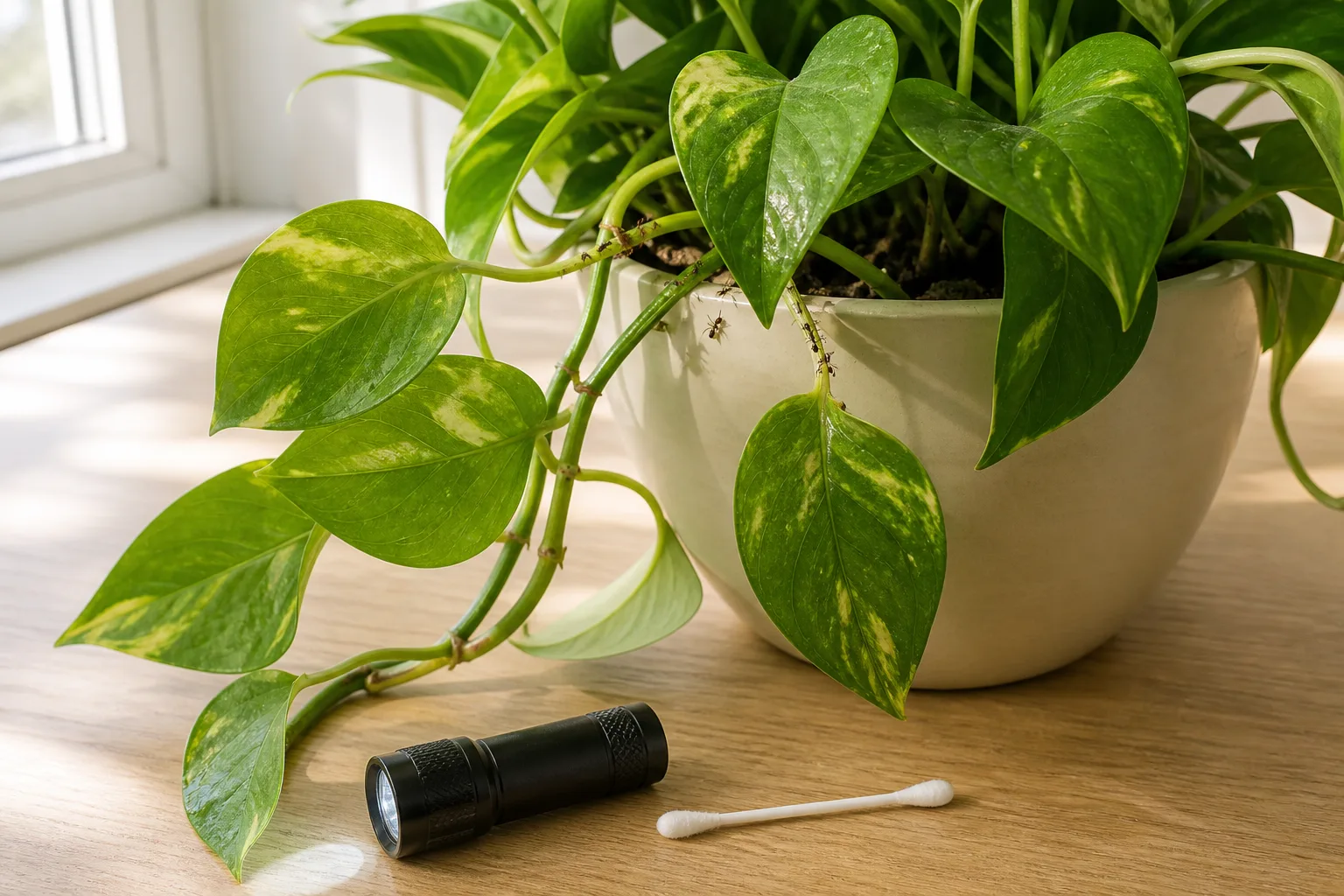
On foliage and flowers, a dust treatment can create more collateral damage than benefit. Epic Gardening’s practical DE guidance notes that moisture reduces performance and that DE can affect beneficial insects, so avoid flowers and apply only to a labeled site. For a plant with aphids, scale, mealybugs, or whiteflies, deal with that pest and its sticky residue; otherwise new ants may keep arriving after the visible workers are gone.
In outdoor beds, first ask whether the ants are actually harming the plant. Ants can aerate soil, recycle organic matter, and disperse seeds, and Epic Gardening’s ant guide recommends targeted solutions over broad-spectrum treatments when ants are simply part of the garden community. Control becomes more justified when they protect sap-sucking pests, enter the home, disturb a valuable planting, or pose a stinging risk.
Safety limits that “non-toxic” misses
“Non-toxic” is not the same as “safe to breathe” or “safe to leave on a floor.” DE is abrasive and drying. According to NPIC, inhaled dust can irritate the nose and respiratory tract, while particles in the eyes and on the skin can also cause irritation. The risk depends on the product, amount, route, and exposure, which is why the label matters even when the ingredient sounds familiar.
Use the minimum labeled amount and prevent airborne dust. Wear the label-required mask and eye protection, keep pets and children away during application, and do not treat near fans, air returns, heaters, high-traffic paths, or places where a vacuum will immediately re-suspend the powder. Never apply it to an animal or use it as an edible remedy unless that exact product label permits that exact use.
If dust gets in your eyes or is inhaled, stop the activity and follow the first-aid directions on the product label. For a suspected pesticide exposure in the United States, NPIC directs consumers to Poison Control at 800-222-1222 for treatment advice; elsewhere, use the poison-information service in your country. When in doubt about a child, pet, respiratory condition, or large indoor release, seek professional advice rather than improvising.
Troubleshooting a DE treatment that failed
The ants walk around the powder. The layer may be too thick, placed beside the actual route, or covering a surface ants can bypass. Remove excess and relocate a light, labeled application to the crack or edge ants truly use. If they keep choosing another route, switch from a dust experiment to inspection, sealing, or bait.
The powder turned into paste or clumps. Moisture is the likely reason. Stop adding product, remove the wet material as directed, repair the leak or wait for dry weather, and reapply only if the label and location still make sense.
The ants disappeared for a day and returned. You probably reduced foragers without reaching the nest, or you removed the visible trail but not the food, water, or plant pest attracting them. Find the entry point, clean the trail, and use a colony-level bait or professional inspection when the pattern repeats.
Ants are pouring from a planter. Isolate the pot and check for a dry root zone, drainage problem, or honeydew-producing insects. Treat the plant and pot situation as a separate problem; do not broadcast dust onto foliage or soil unless the product label specifically allows that use.
There is sawdust-like material, structural damage, or stinging. Stop treating individual ants and identify the species. Carpenter ants can point to damp wood, and stinging species deserve extra caution. A licensed pest professional can locate the nest and choose a treatment that does not turn a misidentification into a larger exposure.
Conclusion
Diatomaceous earth can kill ants, but only where the ants make direct contact with a dry, usable layer. It does not lure workers, it does not reliably kill a hidden queen, and it cannot compensate for moisture, food, water, a wall-void nest, or a product that was never labeled for pest control.
Choose the product by its label, apply the thinnest effective layer to a small sheltered route, protect people and pets from dust, and treat the reason ants are there. If the trail returns, move up the control ladder: clean and seal the entry, use a slow-acting labeled bait for colony control, treat honeydew-producing pests on plants, or call a professional for structural or stinging-ant problems.



