How to Grow and Care for Epimedium in a Shade Garden
Learn how to grow and care for Epimedium: choose a shade-tolerant cultivar, water it through establishment, prune old leaves, and divide it at the right time.
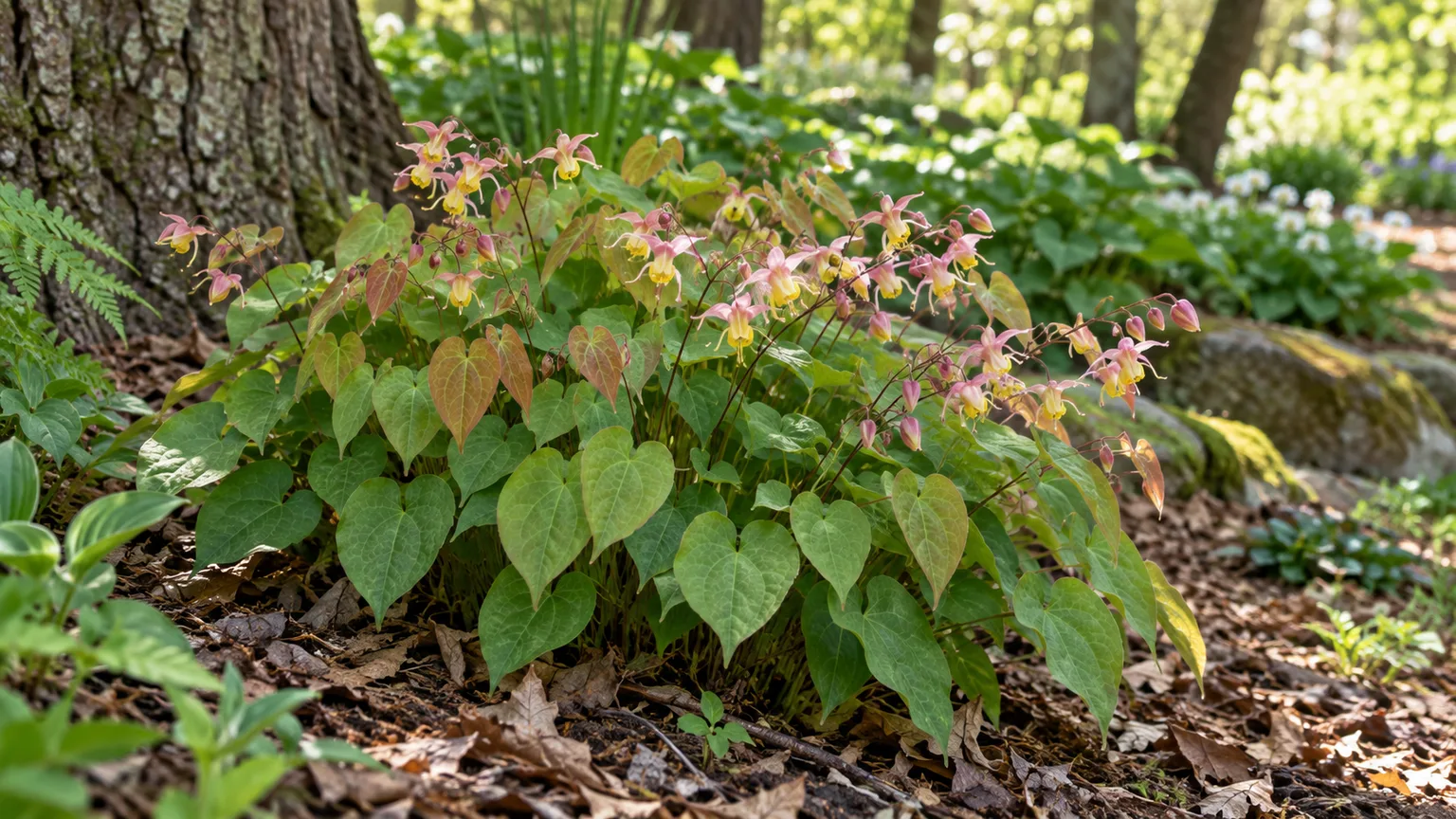
Epimedium is a low-growing woodland perennial for the shaded edge of a garden, especially where a tree or large shrub makes the soil dry and root-filled. It rewards patience: most selections spread by rhizomes rather than racing across a bed, and a new planting may take a season or two to settle before it makes a broad mat.
For reliable growth, start with a cultivar suited to your climate, give it shade that protects the leaves from hot afternoon sun, and keep its root zone evenly moist while it establishes. After that, an annual top-dressing of compost or leaf mold and one well-timed spring cleanup are usually more useful than frequent fertilizer or routine pruning.
Epimedium care at a glance
| Need | Practical starting point |
|---|---|
| Light | Dappled shade or part shade; protect from hot afternoon sun, especially in warm climates. |
| Soil | Moisture-retentive but well drained, with compost or leaf mold near the surface. |
| Water | Water new plants when the root ball begins to dry; established plants tolerate dry shade but grow more slowly if parched. |
| Feeding | Add a light layer of compost or leaf mold in spring; use fertilizer only if a soil test or poor growth gives you a reason. |
| Pruning | Cut back old leaves before spring flowers emerge; timing depends on whether the cultivar is deciduous or evergreen. |
| Spread | Low, rhizomatous groundcover; speed and mature width vary widely by species and cultivar. |
| Best use | Woodland borders, shaded paths, and the difficult ground beneath established trees or shrubs. |
Epimedium belongs to the barberry family, Berberidaceae, and is grown for both its foliage and small, distinctive spring flowers. The Royal Horticultural Society describes the genus as low-growing, with heart-shaped leaves that may carry bronze or red tints and flowers held on fine branching stems.
Use the table as a starting point, not a fixed recipe for every plant sold under the name Epimedium. The genus includes deciduous, semi-evergreen, and evergreen selections from different regions, so the plant label matters most when you choose a cultivar and plan its seasonal care.
Choose a cultivar for its leaves, spread, and hardiness
Flower color is easy to shop for, but leaf habit and vigor determine how the plant behaves for most of the year. Many Asian species and hybrids are deciduous, while Mediterranean types are often evergreen or semi-evergreen; this is a useful pattern, not a rule that overrides a cultivar’s own label. NC State Extension notes both foliage types and describes Epimedium as a mounding or spreading perennial.
A deciduous selection drops its leaves in winter, then often pushes flowers before or with new growth. Evergreen forms hold much of their foliage through winter, but the old leaves can look worn by spring and may hide the new flowers. If you want winter structure, choose a named evergreen or semi-evergreen cultivar; if you prefer an easy annual reset, a deciduous type may suit you better.
Read the tag for mature height and spread, leaf persistence, and the recommended hardiness range. Numbers given for the genus as a whole can be misleading because species and hybrids differ, and winter hardiness does not guarantee tolerance of hot summers. A named, locally proven cultivar is a safer purchase than a variety chosen from flower color alone. Specialist grower Garden Vision Epimediums notes that hardiness and heat tolerance vary among selections, and that some cultivars need winter chill to flower well.
A few familiar choices illustrate the range. ‘Amber Queen’ holds evergreen leaves and has a long bloom season, ‘Pink Champagne’ is known for deep strawberry-pink flowers, and Epimedium × perralchicum ‘Frohnleiten’ is a low evergreen with yellow flowers and stronger rhizome spread. NC State Extension lists the first two selections, while a Fine Gardening Epimedium specialist describes ‘Frohnleiten’ as a vigorous spreader.
Also look at how a cultivar spreads. Some form a slowly widening clump; others send longer rhizomes and make groundcover more steadily. Epimedium is not usually a fast, aggressive carpet, but it is still a living perennial: choose a clumping form beside delicate neighbors and allow more room for a spreading selection.
Light: aim for shade that stays cool
Dappled light or part shade is the reliable target. Epimedium can grow in deep shade, but a very dark site may produce fewer flowers and slower growth; several hours of gentle morning or filtered light can improve flowering where summers are cool. The Missouri Botanical Garden recommends part shade to full shade and warns that foliage can burn in full afternoon sun.
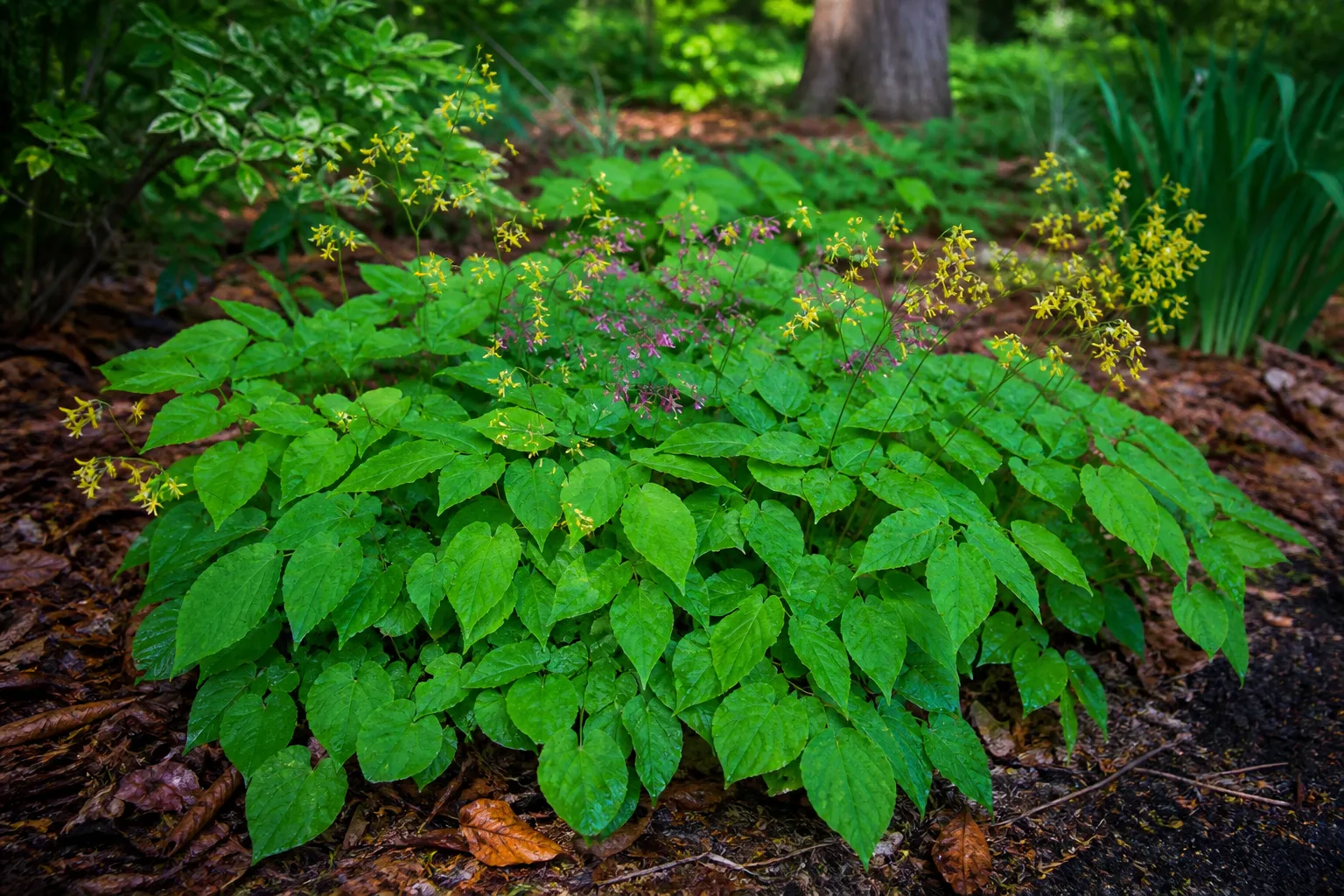
Climate changes the answer. In a cool northern garden, some cultivars tolerate more sun if the soil stays moist; in a hot-summer climate, afternoon shade is more important than a precise number of sun hours. Garden Vision Epimediums likewise advises more shade farther south and notes that too much sun can scorch the foliage.
Before planting, watch the site in late spring and summer, not only in early spring before a deciduous tree leafs out. A place that looks bright in March may become dry, full sun by June. If the bed receives only a brief window of direct light but remains bright through reflected or filtered light, it may still suit a shade-tolerant cultivar; avoid a hot west-facing strip with dry soil.
Soil: fertile, loose, and well drained
Epimedium grows from shallow, woody rhizomes, so the top layer of soil matters. Aim for soil that holds some moisture and organic matter without remaining waterlogged after rain; a loose loam enriched with compost or leaf mold is a good general starting point. The Missouri Botanical Garden plant profile describes its specimen as tolerant of dry shade once established but intolerant of poor drainage; the specialist nursery Garden Vision Epimediums also emphasizes that the genus needs free drainage.
Do not assume the entire genus needs one soil pH. Some species grow naturally in limestone regions, while garden profiles may describe a particular selection as preferring acidic soil. Unless a named cultivar or soil test points to a problem, improve structure with organic matter and focus on drainage rather than trying to force a particular pH.
Under trees, the challenge is often competition rather than soil chemistry. Tree roots can take up water quickly, so a young Epimedium may wilt or stall even in shade. Loosen only the small planting pocket needed between larger roots, mix in a modest amount of compost if the soil is depleted, and top-dress around the plant without piling soil against a tree trunk or burying the Epimedium crown.
If water sits in the bed for hours after ordinary rain, choose a better-drained position or raise the planting area slightly rather than burying the rhizomes in a wet pocket. If the soil is dry, rocky, or full of tree roots, do not expect compost to remove all competition; the most useful change is often supplemental watering through the first summer and a thin leaf-mold mulch that slows surface drying.
Planting: set the crown at the soil line
Plant nursery-grown Epimedium in a cool, mild spell when you can water it regularly—often spring or early fall, depending on your climate. The plant is easier to establish when it is not facing summer heat or frozen ground immediately after planting. In very warm regions, favor the cooler part of the planting season and provide shade while the root system settles.
Water the nursery pot before planting if its mix is dry, then slide the plant out and loosen any circling roots gently. Dig a hole wide enough for the roots to spread, set the crown at about the same depth as it sat in the pot, and backfill with the soil you removed. Do not bury the crown deeply to keep it moist; persistent wetness around the rhizome is more dangerous than a surface that dries between waterings.
Space plants by the mature width on the label rather than assuming every Epimedium will fill a set area at the same rate. For a small clumping type, closer spacing gives faster visual coverage but means more divisions or thinning later; a spreading type needs more room between its neighbors. Water thoroughly after planting, then check the soil at the root ball rather than watering automatically by the calendar.
When planting beneath a tree, avoid cutting large roots to make a tidy grid. A few well-placed plants in naturally open pockets can establish more reliably than many plants crowded into a bed that has been heavily dug and dried out. Keep a note or marker at the planting spot, because young and deciduous plants can be hard to see before their spring leaves emerge.
Watering: keep new plants evenly moist
During the first growing season, check new plants whenever the weather is dry and water when the root ball begins to dry. A deep watering that reaches the root zone is more useful than a quick sprinkle over the leaves, particularly under trees where the surface can look damp while roots below are competing for moisture. Many plants continue to establish during a second season, so keep watering during extended dry spells if growth is still sparse.
Once the rhizomes are established, many Epimediums tolerate dry shade and occasional drought. That does not mean drought produces the best growth: an established clump may survive while expanding slowly, flowering lightly, or developing scorched edges. The NC State Extension profile notes that more sun in northern areas can be managed with more summer water, and Fine Gardening similarly advises keeping new plants moist but not wet.
Use the soil as your gauge. If the top inch or two is dry and the plant is still young, water slowly at the base; if the soil is already cool and damp, wait and check drainage instead. In a tree-root zone, repeat this check more often during hot, windy weeks than you would in an open border.
A thin mulch of shredded leaves or leaf mold helps conserve moisture and suppress weeds, but leave a small gap around the crown. Thick, wet mulch pressed against the plant can hide slug activity and keep the rhizomes too damp. Containers dry more quickly than in-ground beds, so check them more often in warm weather.
Feeding: refresh the soil instead of forcing growth
A light annual layer of mature compost or leaf mold is usually enough for a healthy clump. Spread it over the root zone in spring, keeping the crown visible, so rain and soil organisms can gradually move the organic matter down. This approach replenishes woodland-style surface soil without making the plant dependent on frequent liquid feeding.
Skip a heavy fertilizer schedule when the plant has good color and steady growth. Excess feeding will not fix a poor site, shade that is too dark, or competition from tree roots; it may simply produce soft foliage that still fails to flower. If growth remains weak after you correct light, drainage, and establishment watering, check a soil test or ask a local extension service before applying a nutrient the bed may not need.
Pruning: clear old leaves before the flowers
The timing depends on whether the cultivar holds its leaves. For deciduous forms, leave the dead winter foliage in place if it protects the crown or you want winter habitat, then cut it back close to the ground in late winter or early spring before new shoots lengthen. For evergreen and semi-evergreen forms, remove the tired previous-year leaves just before the new flower stems emerge so the flowers are visible; work carefully because fresh buds can be low among the old foliage.
A specialist Fine Gardening contributor notes that old foliage can be cut back before new growth, while attractive evergreen leaves can remain in place. Where a cultivar is evergreen, do not shear it on a fixed calendar date: watch for swelling buds and cut only the old leaves, not the new stems.
Deadheading is optional. Remove spent flower stems if you want a tidier edge or do not want seedlings, but leave them if you hope to collect seed. Epimedium flowers are small, so cutting the entire plant immediately after flowering is unnecessary and removes foliage the rhizomes need to grow.
Divide established clumps to propagate
Division is the practical way to make more plants that match a named cultivar. It can also rejuvenate a crowded clump, but there is no need to divide on an exact three-year timer if the plant is healthy and still fits its space. NC State Extension suggests division every three to four years to maintain vigor; use that as a check-in interval, then let the plant’s condition guide the decision.
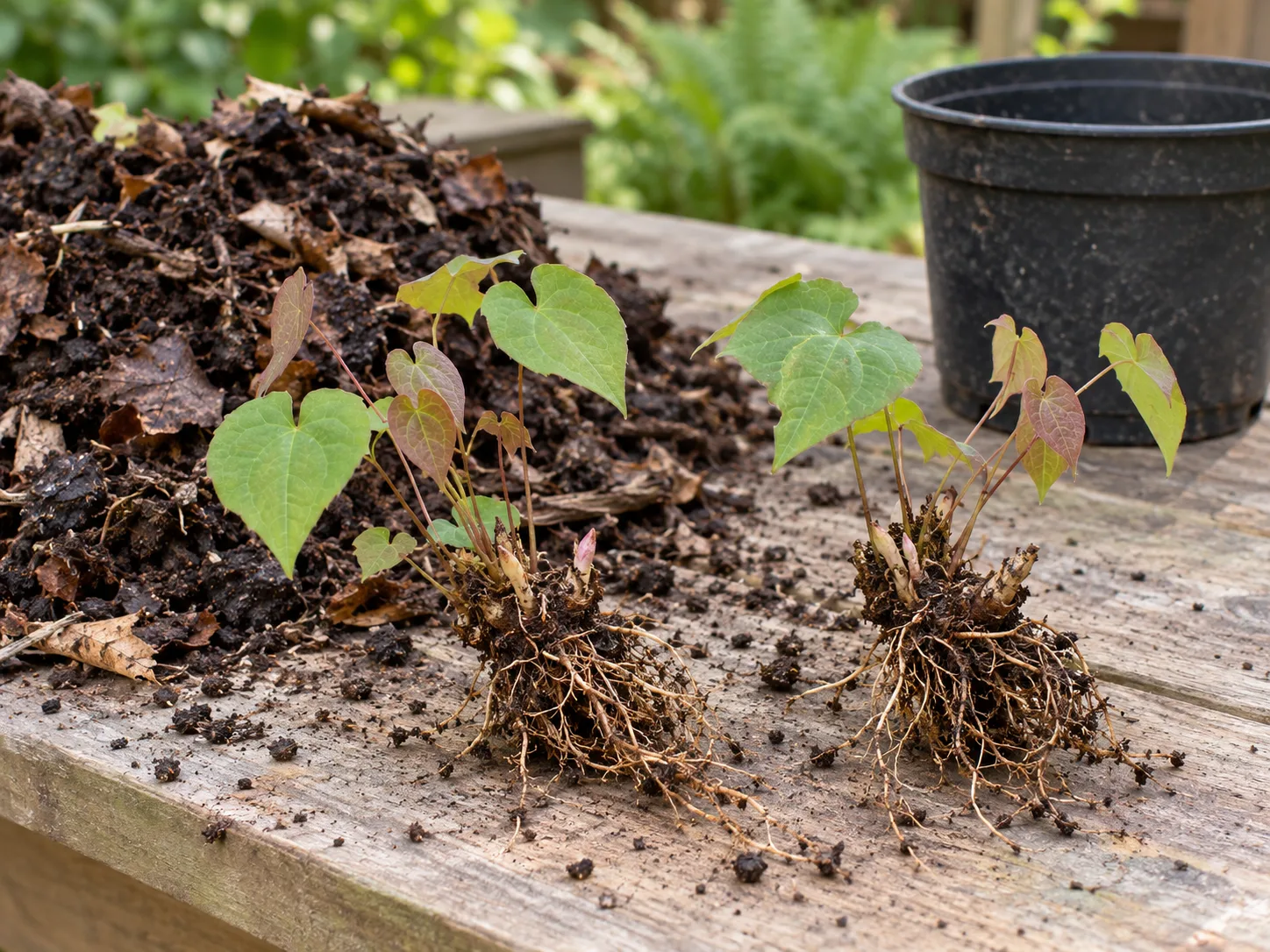
Choose timing by foliage type and local weather. Deciduous forms can be divided after flowering or in early fall, while evergreen types generally recover best in late summer into early fall. The Fine Gardening Epimedium specialist gives this distinction; avoid both peak summer heat and a late division just before the ground freezes.
Water the clump a day ahead if the soil is dry, then loosen the soil around its edge with a fork or spade and lift a manageable section rather than excavating the entire bed. Tease apart the rhizomes or cut through the woody crown with a clean, sharp tool. Each division should have healthy roots and at least one sound growth point; a leaf without a viable rhizome bud will not reliably make a new plant.
Replant divisions promptly at the same shallow depth, firm the soil around them, and water them in. Keep the soil lightly moist while roots recover, and provide temporary shade if the weather is hot. Clean soil from tools between different clumps; if a plant shows suspicious mosaic-like leaves, do not divide it or pass its rhizomes to another bed.
If a clump is small and newly planted, wait. Repeatedly lifting a young Epimedium slows the very spread you are trying to encourage. A healthy established plant can be divided into several pieces, but small divisions take longer to look full than one intact clump.
Growing Epimedium from seed takes patience
Seed is a worthwhile experiment when you want to raise new plants, not the quickest route to more of a named cultivar. Epimedium seed should be sown fresh rather than dried and stored; it may need a natural winter chill before germinating in spring. Cross-pollination can also produce seedlings that differ from the parent, so a seedling from ‘Amber Queen’ is not guaranteed to be another ‘Amber Queen’.
Watch flower stems after bloom and collect seed while the pods are still fresh, before they split and disperse. Sow it promptly in a pot or prepared nursery patch, cover it lightly, label it, and protect the surface from drying and disturbance. If you miss the fresh-seed window, division from a healthy plant is usually simpler than trying to revive old, dried seed.
Expect a slow process. Seedlings need time to establish and may take several years to flower, and their eventual color, vigor, and foliage habit can vary. GardenersPath describes fresh sowing and winter stratification as key steps, while Fine Gardening notes that Epimediums are self-sterile and that seed breeding is more complicated than routine division.
Containers and winter care
Epimedium can grow in a container, but it is easier to manage in the ground. Choose a wide pot with several drainage holes because rhizomes spread sideways, and use a moisture-retentive mix that still drains freely. Check water more often than for an in-ground planting, and divide the plant when the pot becomes crowded rather than moving it repeatedly into an oversized, wet container.
Cold is harder on a container-grown rhizome than on one insulated by garden soil. In regions with freeze-thaw swings, a pot can freeze through or remain soggy in winter; Garden Vision Epimediums cautions that holding these plants in pots over winter can be risky. If winter protection is needed, shelter the container in a cool protected spot and keep it from drying completely or sitting in standing water.
In-ground plants generally need no elaborate winter cover in a cultivar’s suitable hardiness range. Leave the foliage on deciduous plants until late winter if it protects the crown, and let evergreen foliage remain until the cleanup window before spring growth. In unusually exposed beds, a loose layer of leaf mulch can buffer temperature swings without smothering the plant.
Troubleshoot flowers, foliage, and roots
Epimedium is often trouble-free once it has the right site, so treat symptoms as clues to check conditions before applying a product or changing the whole bed. Start with three observations: whether the plant is established, whether the soil is wet or dry at root depth, and whether the symptom affects one exposed edge or the whole clump.
Leaves scorch or look ragged
Crispy edges on leaves facing the afternoon sun usually point to excess heat or moisture stress, especially in a young planting. Confirm that the soil is not dry around the root ball; water deeply if it is, add a thin leaf mulch, and consider moving the plant to a cooler exposure in fall if the same leaves burn each summer. Do not fertilize a scorched plant as a first response.
Ragged foliage may also result from winter weather or slug feeding. Old leaves on evergreen cultivars often look rough by spring even when the rhizomes are healthy; remove them during the spring cleanup and judge the new growth before deciding the plant is failing. Look for fresh slime trails or new holes if damage continues during the growing season.
Foliage yellows and stems wilt
Yellowing and wilt can follow either drought or waterlogged roots, so check soil moisture before adding water. If the root zone is dusty and the plant is newly established, give it a slow, thorough soak and monitor it through the next dry spell. If soil stays saturated and stems soften, improve drainage, reduce irrigation, and remove severely decayed material rather than keeping the bed wet.
Mature Epimedium tolerates dry shade, but a plant that is collapsing in a persistently wet pocket may be suffering root or rhizome damage. The Missouri Botanical Garden lists good drainage as important and identifies mosaic virus as a disease concern; a plant with soft, dark roots and a plant with patterned leaves need different responses. Do not amend heavy clay with a small amount of sand or keep watering a plant simply because it is wilted.
Leaves show mosaic marks or chew damage
Irregular yellow or pale-green patterns across several leaves can resemble nutrient stress, but mosaic-like markings warrant caution because mosaic virus is reported on Epimedium. Isolate the plant from propagation work, do not divide it, and remove it if the pattern persists on new growth; avoid sharing tools or rhizomes until the diagnosis is clear. Extension and botanical garden references list mosaic virus among the genus’ possible problems, although not every yellow leaf is viral.
Chewed leaf margins or holes are more often a nuisance than a reason to remove the plant. NC State Extension lists slugs and vine weevils among possible pests; check for active feeding and inspect a badly declining plant’s root zone for larval damage. Protect young plants from repeated nibbling and improve the growing conditions before reaching for a pesticide.
Make Epimedium part of a woodland planting
Epimedium makes a useful low layer along a shaded path, beneath deciduous shrubs, or at the front of a woodland border where you can see its small flowers. It pairs well with plants that enjoy similar shade, such as ferns and hellebores, while contrasting with larger leaves and upright foliage. Homes & Gardens quotes a Chicago Botanic Garden educator recommending wild ginger, hellebores, Japanese painted fern, and Japanese forest grass as companions for shade beds.
Use it for gradual cover, not instant weed-proofing. A new clump leaves open soil for a while, so weed around it gently and avoid smothering it with a thick mulch layer. As the rhizomes spread, the foliage can make the bed look more connected, but cultivars differ in pace and some clumping types remain compact.
Under a mature tree, group plants in the open pockets between large roots and let leaf litter enrich the surface. If you are planting a large area, begin with a few healthy, correctly labeled plants, note how quickly they expand for a year or two, and then divide or add more based on the actual growth you see. This keeps a shade bed adaptable instead of committing every gap to a cultivar before you know its habit.
Conclusion
For a healthy Epimedium, match the cultivar to your climate and decide whether you want deciduous or evergreen foliage before planting. Give it cool shade, moisture-retentive but well-drained soil, and regular attention through establishment; after that, spring leaf cleanup and occasional compost are usually enough. If growth is slow, check the site and water competition before dividing or feeding—the right conditions matter more than a quick fix.



