Epsom Salt for Driveway Ice: Does It Really Work?
Can Epsom salt melt driveway ice? Learn its practical temperature limit, the safest application sequence, and when rock salt, brine, or grit works better.
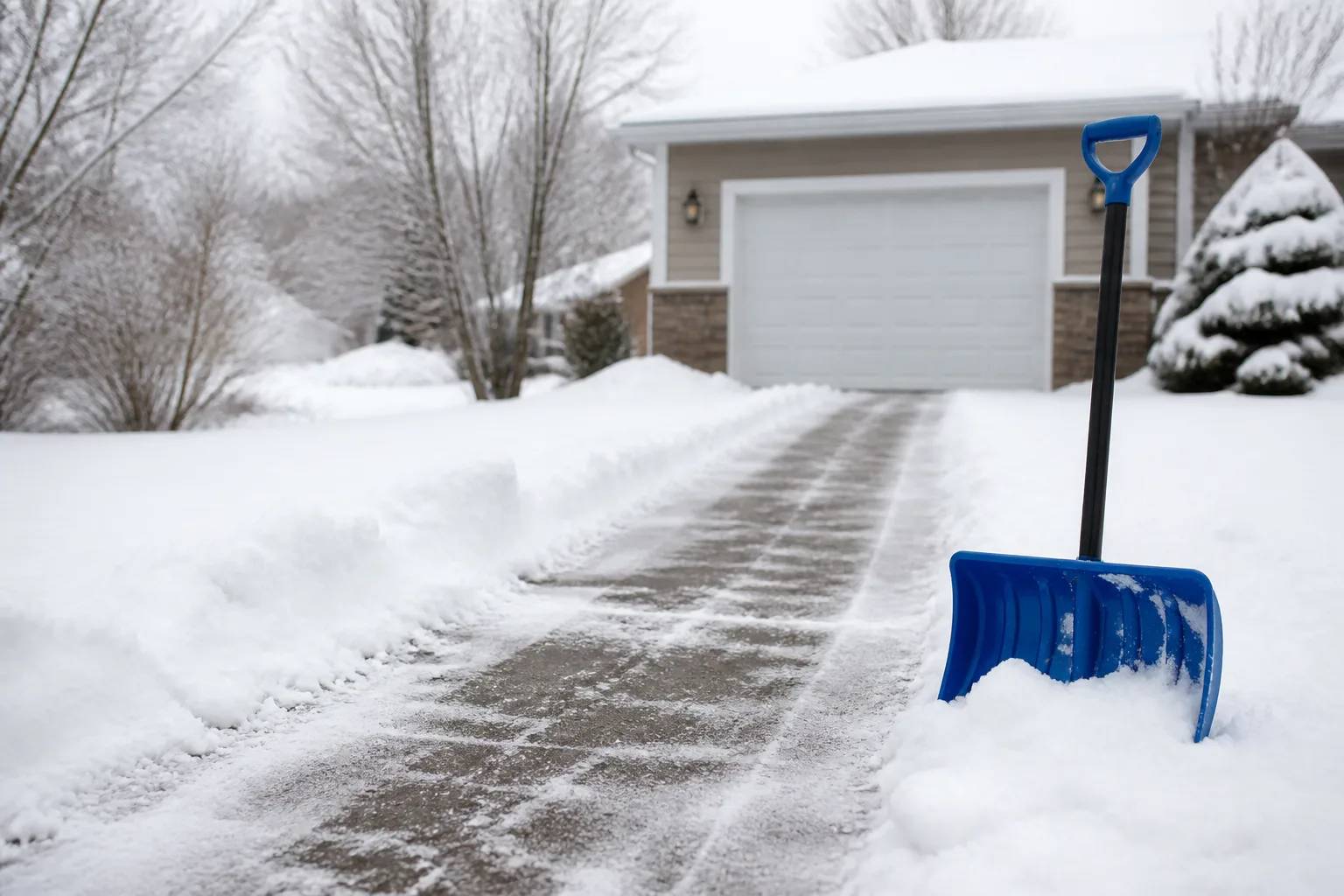
Yes, Epsom salt can help melt ice, because it dissolves into water and lowers that water’s freezing point. But that technical answer is easy to overread: Epsom salt is not a dependable substitute for a purpose-made driveway deicer, especially on thick ice, a large paved area, or a surface colder than about 20°F.
If you have a small, thin patch of ice and mild weather, Epsom salt may buy you enough softening to scrape the area clear. If the ice is thick, the pavement is very cold, people need to walk there soon, or meltwater drains toward plants, use a shovel and scraper first, then choose a labeled deicer or traction material that fits the conditions.
The short answer: Epsom salt can melt thin ice, but it is a poor driveway deicer
Epsom salt is magnesium sulfate, not rock salt. When its crystals dissolve in the thin film of water on ice, the resulting brine interferes with the water molecules’ ability to refreeze at the normal 32°F mark. That is enough to create some melt under the right conditions, but it does not make every salt equally powerful or equally practical.
For a homeowner, the useful distinction is between “can start a melt” and “can clear the driveway.” Epsom salt belongs in the first category. It can be a temporary fallback on a small patch during a mild freeze, but it is slow, relatively inefficient for a wide driveway, and a poor bet when the pavement is in the low 20s or colder.
Use it only when most of these conditions are true:
- The ice is thin, fresh, or already beginning to soften.
- The pavement temperature is comfortably above the practical 20°F limit.
- You are treating a small walking area, not coating an entire drive.
- You can scrape and remove the softened ice afterward.
- No concentrated runoff will flow into a prized bed, lawn edge, pond, or storm drain.
Skip it as your main solution when the ice is thick and bonded, the surface is shaded and colder than the air, the forecast is dropping quickly, or a fall would have serious consequences. In those situations, physical removal plus traction is often more reliable than scattering more crystals and hoping the temperature comes up.
How Epsom salt melts ice—and why temperature matters
Pure water freezes at 32°F. A dissolved salt lowers the freezing point by creating a solution that has to get colder before it can form ice again. The salt does not “heat” the driveway; it creates a liquid brine at the boundary between the crystal and the pavement. That brine can creep under and weaken the bond between ice and pavement.
The effect depends on the concentration of the solution, how much liquid water is available, the temperature of the ice, and how much ice is present. A few crystals on a dry, thick sheet of very cold ice have little opportunity to make a strong brine. A thin wet film on a mild-weather patch gives the same crystals a much better chance.
Epsom salt also dissolves readily, which can make it look promising at first. Quick dissolution is not the same as high melting capacity, though. If the solution reaches its practical limit quickly or the pavement remains too cold, the crystals can disappear without clearing enough ice to make the surface safe.
What “above 20°F” actually means
The commonly quoted working boundary for Epsom salt is around 20°F, and a current household-maintenance comparison from Martha Stewart treats that as a practical cutoff rather than an all-weather guarantee. Think of it as a decision point: above it, a small patch may soften; near or below it, expect the product to become unreliable and do not solve that problem by piling on more.
Air temperature is only a rough proxy. A north-facing driveway, a shaded step, or a pavement surface exposed to wind can be colder than the weather-station reading. A sunny dark asphalt drive may be warm enough to melt the ice naturally while a nearby pale concrete walk remains frozen. The thickness of the ice matters just as much: a glaze can respond where a compacted ridge will not.
That boundary also describes active melting, not guaranteed prevention. Pre-treatment can make snow and ice less likely to bond tightly, but a homemade Epsom-salt mixture has no universal, tested homeowner application rate for driveway deicing. If you use a liquid product before a storm, follow that product’s label; do not assume a stronger kitchen recipe will be safer or more effective.
Choose a method by surface and urgency
The right question is not “Which salt is best?” It is “What is the least risky way to make this particular surface usable?” A narrow front step beside a flower bed has different priorities from a broad asphalt driveway where a vehicle needs traction at dawn.
Asphalt and older concrete
On an established asphalt driveway, a shovel, snow pusher, and scraper should do most of the work. Rock salt is commonly chosen for its cost and availability when temperatures are within the product’s working range, while a faster low-temperature product can make sense for a small urgent area. Epsom salt is rarely economical for a whole drive because you may need more material and more waiting for less melt.
Older concrete is not automatically indestructible. Deicer exposure and repeated freeze-thaw cycles can contribute to scaling or surface damage, especially where the concrete already has poor finishing, cracks, or water absorption. Use the minimum labeled amount, remove slush before it refreezes, and avoid treating deicer as a replacement for repairing a drainage problem.
Do not use Epsom salt as a way to make asphalt or concrete “healthier.” Its magnesium and sulfur content may sound garden-friendly, but those nutrients do not improve a driveway, and the soluble material still becomes part of the runoff. The goal is a safe surface with the least material, not a nutrient application.
New concrete, pavers, and sensitive edges
New concrete deserves extra restraint. Follow the paving contractor’s or concrete manufacturer’s guidance before applying any deicer, because a surface that has not fully matured may be more vulnerable to scaling and other damage. When in doubt, clear snow mechanically and use traction material in the walking line until you know what the surface can tolerate.
Pavers have joints and edges where meltwater can collect and refreeze. Decorative stone, brick, and a steep walkway also amplify the consequences of a slippery surface, so a targeted labeled product may be justified even if it costs more. Apply only where people or tires actually need a clear path, and sweep unused granules away from planting edges once the ice has released.
For a path beside a garden, the least damaging plan is often shovel, scrape, then add traction. If melting is necessary, read the ingredients and working temperature on the package instead of choosing a product because it says “natural” or “pet friendly.” Horticulture notes that chloride-based products vary in their effects, and that even products marketed as safer can create plant or waterway problems when overapplied.
The safest order of operations
Deicing works best as one part of snow removal, not as a substitute for it. The sequence below reduces the amount of product you need and makes it easier to see whether the treatment is actually working.
Clear loose snow before spreading anything
Remove loose snow as early as you reasonably can, before footsteps, tires, and freeze-thaw cycles compress it into a hard layer. Push or shovel in a pattern that keeps treated snow away from garden beds and the low side of the drive. If the snow contains salt, do not use the nearest shrub border as your disposal pile.
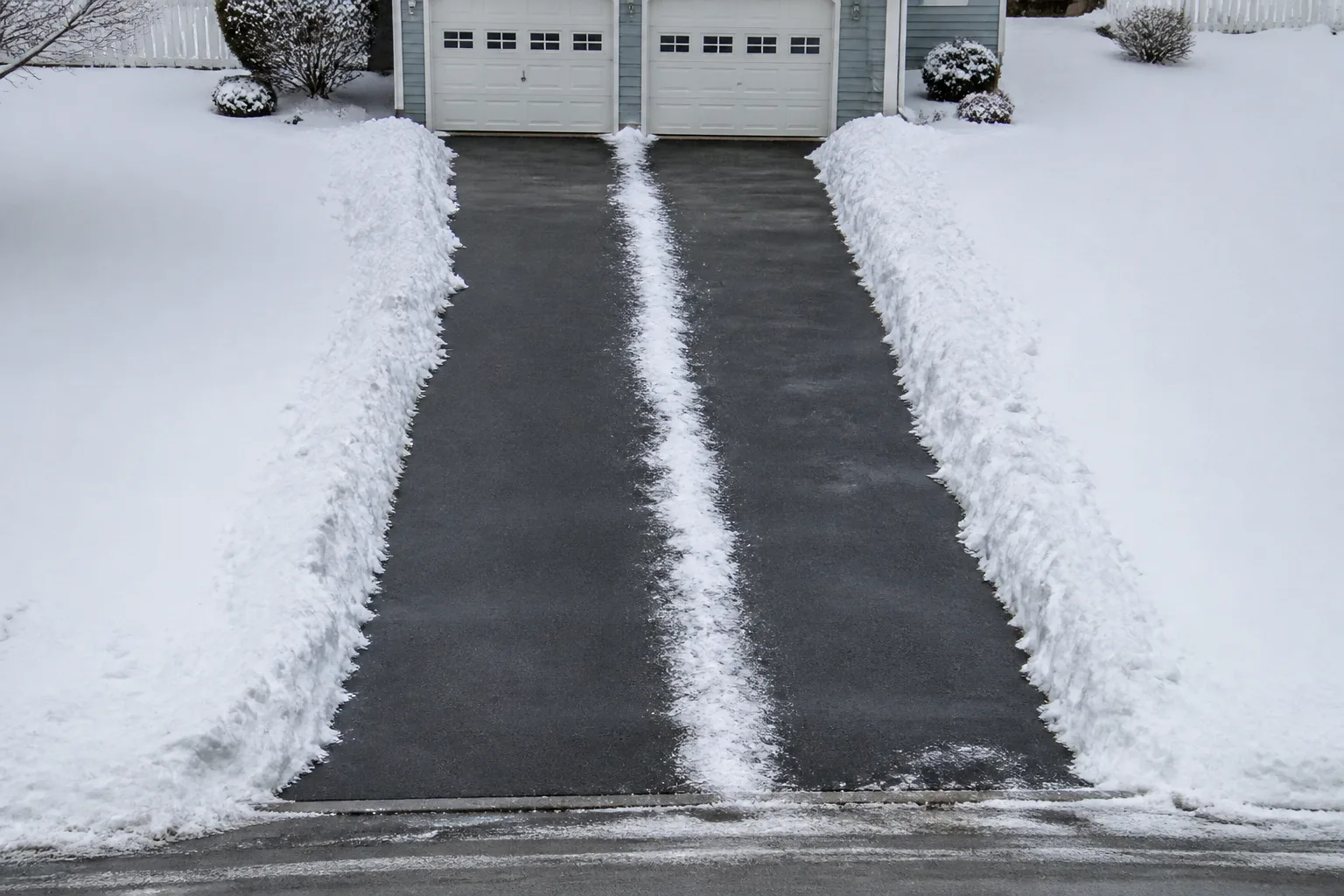
Clear leaves, gravel, and other debris from the area you plan to treat. A deicer spread over three inches of snow has to melt through a large volume of snow before it can reach the pavement. A thin layer on exposed ice can begin forming brine immediately, which is why Tom’s Guide’s driveway guidance emphasizes pre-treatment and clearing the surface before applying salt.
Do not pour boiling water over the ice as a shortcut. It may create a brief opening, but the water can spread, refreeze, and leave a larger transparent sheet once the heat is gone. Warm water can also damage some surfaces through sudden temperature changes, so use mechanical removal and a correctly chosen product instead.
Apply a thin layer, then give it time
Spread crystals in a thin, even layer rather than making piles. A pile gives you a high local concentration but leaves most of the pavement untreated, and it wastes material that can later travel into soil as runoff. You are trying to start a melt around the grains, not bury the ice under a white blanket.
For ordinary deicing salt, University of Wisconsin–Madison Division of Extension gives a useful sense of scale: a 12-ounce coffee mug can be enough for an entire 20-foot driveway or ten sidewalk squares. That is an example for a common salt application, not a universal Epsom-salt rate, but it illustrates the principle: begin with far less than your eye may suggest, then wait.
Epsom salt is not typically sold with a driveway-deicing label, so do not copy a commercial product’s rate by volume and assume the chemistry is interchangeable. If you are using it as a fallback, confine the trial to a small patch where you can observe the result. Mark the edge mentally or with a temporary object so you can tell whether the ice is actually receding rather than simply becoming wet from weather.
Give the treatment enough time to form a wet edge before judging it. Shade, wind, thick ice, and a falling temperature can stretch the wait. More granules rarely fix a temperature problem; they more often leave more salt to sweep up and more dissolved material to carry into the landscape.
Scrape slush and stop adding salt
As soon as the ice becomes slushy, scrape it away with a shovel or ice scraper. Removing the weakened layer exposes the pavement and prevents the meltwater from freezing into a new coat overnight. A deicer’s job is to release the bond; your job is to remove the released ice.
If a small ridge remains, target only that ridge rather than re-covering the whole drive. Sweep loose crystals from the surface after the path is clear, especially near doors where they can be tracked indoors and near lawn edges where the next thaw will carry them. Clean-up is part of deicing, not an optional cosmetic step.
When Epsom salt is reasonable—and when it is not
Epsom salt is reasonable as a small-area emergency fallback when you have no purpose-made product, the weather is mild, and you can do the physical work that makes the treatment effective. A thin glaze on two front steps is a plausible use; an entire two-car driveway covered in magnesium sulfate is not.
It is also reasonable when your main goal is to loosen a patch before scraping rather than to melt every bit of ice. Set that expectation before you apply it. If the first thin application produces no wet edge after a reasonable wait, stop adding product and switch to scraping and traction or to a labeled deicer suited to the pavement temperature.
Avoid homemade Epsom-salt brine recipes that promise a universal solution. The concentration, spray pattern, pavement temperature, and refreezing risk are all uncontrolled, and salt can corrode sprayer components. La Porte County Extension Master Gardeners describes liquid pre-application as efficient when done strategically, but also warns that salt is corrosive to sprayer parts; a dedicated inexpensive sprayer and careful rinsing are more sensible than sacrificing a favorite garden tool.
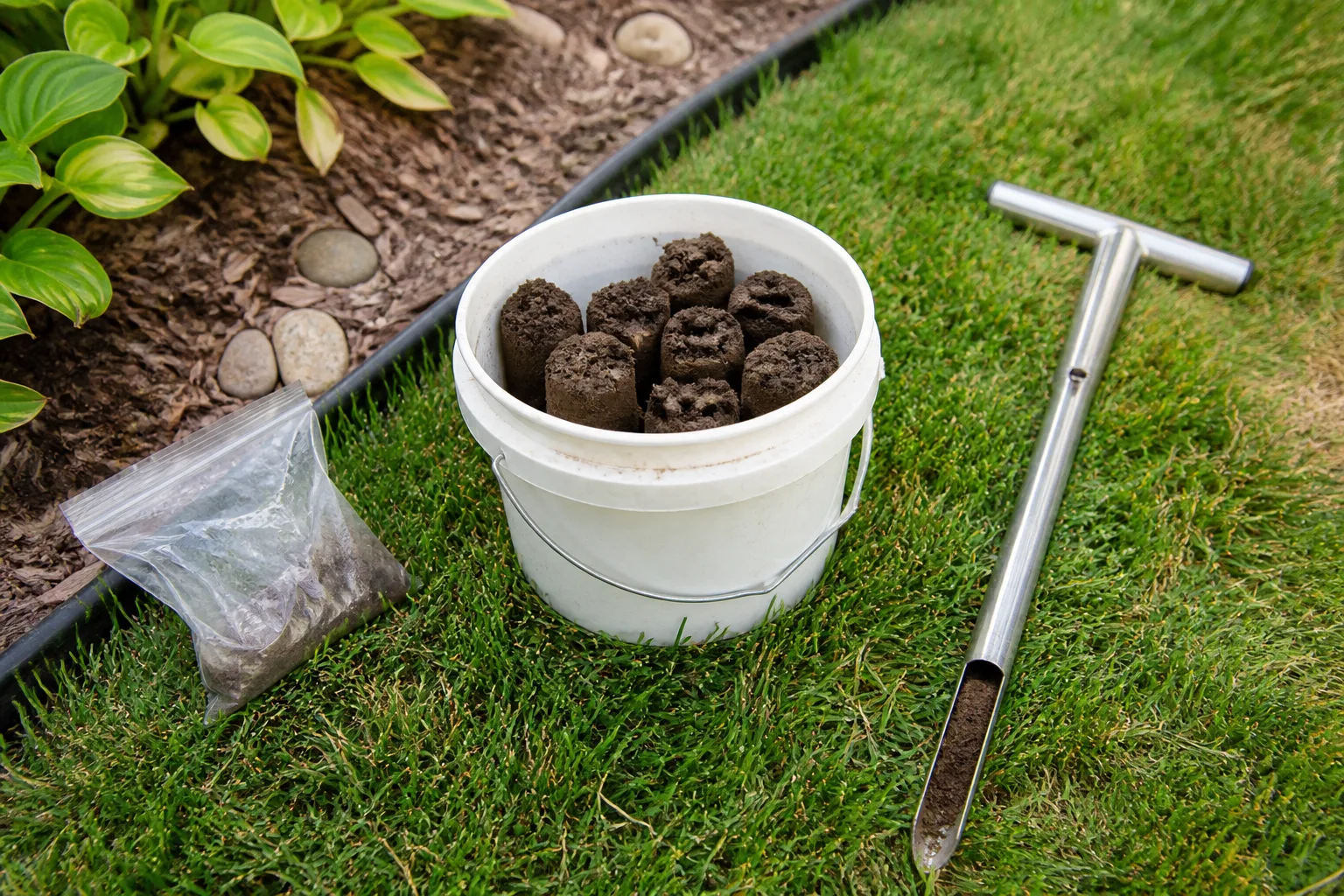
Do not apply Epsom salt directly to grass or garden beds because you believe the runoff will fertilize them. A soil test—not the fact that magnesium sulfate contains plant nutrients—should determine whether a lawn or bed needs magnesium. Our Epsom salt for grass guide explains why a nutrient-sounding product can still be the wrong fix when the real problem is pH, watering, compaction, or a different deficiency.
Epsom salt vs other deicers and traction materials
Every option is a compromise between melting power, temperature, cost, surface compatibility, and where the residue will go. The table below is a practical comparison, not a promise that one ingredient performs identically in every formulation.
| Material | Best use | Main limitation or risk |
|---|---|---|
| Epsom salt (magnesium sulfate) | A small, thin patch in mild weather when you can scrape afterward | Unreliable around or below 20°F, slow for thick ice, and inefficient for a full driveway |
| Rock salt (sodium chloride) | Economical treatment of larger asphalt areas in moderate cold | Can injure plants and soil, irritate paws, and contribute to surface and freeze-thaw damage when overused |
| Calcium chloride | A labeled product for faster melting or colder conditions | Still needs careful dosing; can irritate paws and vegetation, and its performance depends on the formulation and pavement |
| Magnesium chloride | A purpose-made deicer when you need a lower-temperature option than Epsom salt | It is still a soluble salt, not a free pass for lawns, beds, pets, or concrete |
| Calcium magnesium acetate | A lower-corrosion alternative when surface and landscape protection justify extra cost | Often costs more and may not match the speed or availability of chloride products |
| Sand, grit, or small gravel | Traction on thin slipperiness, cold surfaces, and paths beside plants | Does not melt ice; it must be swept up before it blocks drains or enters soil |
Rock salt is often described as effective down to about 15°F, but that number varies by product and condition. Horticulture’s deicing guidance makes the more useful point: some products stop working at very low temperatures, and adding more when a product has reached its limit is a mistake. Read the bag’s working range and treat it as a guide, not a guarantee.
Calcium chloride and magnesium chloride are not the same as Epsom salt simply because all three contain magnesium or calcium-related words. Purpose-made products are formulated and labeled for deicing; Epsom salt is generally sold for bathing, gardening, or other household uses. If the surface must be clear quickly, buy the product made for that job instead of trying to turn a garden amendment into industrial-strength ice melt.
“Pet safe” also needs translation. A label may mean a formula is less irritating or less toxic than a conventional product under normal use; it does not mean dogs or cats should lick it from their paws. If the priority is zero chemical residue near a pet route or planting bed, traction grit plus prompt snow removal may be the better answer even though it does not melt anything.
Protect plants, soil, pets, and water
Epsom salt is sometimes marketed as the gentle choice because magnesium and sulfur are plant nutrients. That description misses the important part: dose and destination determine whether a soluble salt is helpful or harmful. A small, test-based amendment in the right soil is a different action from repeated winter applications that wash off pavement into a root zone.
Salt reaches the landscape in two main ways. Meltwater carries dissolved material along a defined drainage route, while passing cars, wind, and plows can throw salty spray onto foliage. Utah State University Extension lists drought-like scorch, marginal yellowing, necrosis, and even plant death among symptoms of excessive deicing salt exposure and recommends limiting salt near plants and piling affected snow where it cannot damage them. Read its deicing salt damage guidance when a bed or shrub line borders a treated path.
Repeated exposure can show up as a narrow brown strip along a drive, damage concentrated on the road-facing side of an evergreen, or decline in the low point where meltwater collects. Those patterns do not prove salt is the only cause, but location and timing make it a strong suspect. Do not try to correct an unknown winter injury by adding more fertilizer or more Epsom salt.
Put salt-affected snow where it cannot drain into beds
Choose the snow-pile location before the storm. A pile on the uphill side of a vegetable bed, beside a young tree, or at the mouth of a downspout is a delayed application of whatever was on the pavement. Keep treated snow on a part of the property where meltwater can disperse without crossing a planting bed, pond, stream, or neighbor’s lawn.
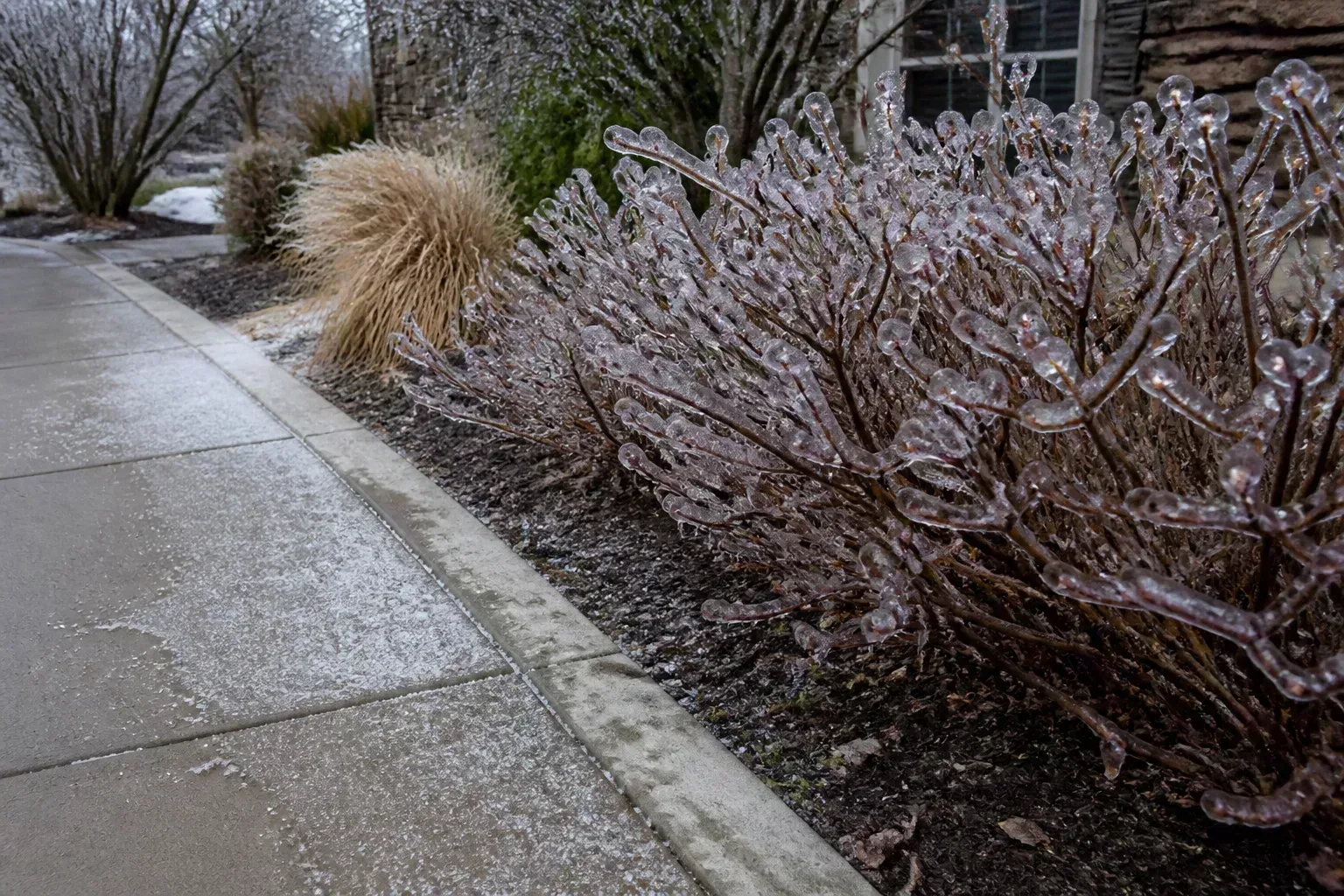
Do not shovel salty slush directly onto shrubs just because that is where the shovel throw is easiest. Wisconsin Extension specifically advises considering where snowmelt goes and which vegetation may be affected when deciding where to pile snow. That small planning decision can prevent more damage than switching from one salt to another.
After freezing weather ends, sweep up leftover granules and rinse pavement only when the water can drain safely away from sensitive plants and waterways. Do not wash concentrated salt straight into a bed or storm drain. If a lawn edge has good drainage and shows a likely salt pattern, a thorough clean-water rinse during the growing season may help move soluble salts below the root zone, but flushing a poorly drained site simply relocates the problem.
Treat paw exposure as a cleanup problem, not a “safe salt” problem
All ice-melt ingredients deserve storage and contact precautions. Pet Poison Helpline explains that common ice-melt ingredients can cause gastrointestinal upset or local irritation, and that larger exposures can become serious. Road salt is not food, and Epsom salt should not be treated as edible merely because it is familiar from bath products or garden shelves.
Keep bags sealed and elevated, block pets from licking slush, and wipe or rinse paws after a treated walk. Inspect between the pads if your dog is reluctant to walk, licking persistently, or showing redness. For a known ingestion, repeated vomiting, diarrhea, weakness, tremors, unusual thirst, or other concerning signs, contact a veterinarian or a veterinary poison service promptly rather than trying several home remedies.
The simplest pet-conscious routine is to create a narrow, consistently shoveled walking lane and use traction where possible. If melting is necessary, use the minimum labeled amount, allow the surface to drain and dry, and remove residue before pets return to the area. No product should be advertised or understood as harmless when eaten.
Troubleshooting an ice patch that will not melt
If Epsom salt appears to do nothing, diagnose the condition before applying more. The most likely explanations are a pavement temperature at or below its practical limit, a thick or compacted ice layer, insufficient liquid moisture, shade and wind, or crystals spread over snow instead of the pavement.
If the pavement is too cold, switch to mechanical removal and traction or to a deicer labeled for lower temperatures. If the layer is thick, score or chip it carefully after the surface has softened; do not swing a metal tool hard enough to gouge concrete or damage pavers. If the product sits as visible crystals, treat that as feedback that you used too much or that the conditions are wrong, not as an invitation to add a second handful.
If the ice melts and then returns, look at drainage and timing. Water running from a roof edge, downspout, parked car, or sloped lawn can refreeze on the same cold patch. Scrape away the slush, redirect the source if possible, and use traction during the freeze instead of repeatedly salting a place that receives a fresh film of water.
If a driveway edge turns brown in spring, map the damage against the snow pile and meltwater route. La Porte County Extension Master Gardeners describes runoff, spray, and concentrated soil exposure as different ways salt reaches plants; that distinction helps you decide whether the fix is less product, a new snow-pile location, a barrier, better drainage, or a more salt-tolerant planting.
Concrete flaking is another reason to stop experimenting with household salts. Deicer exposure may be part of the story, but water intrusion, poor finishing, existing cracks, and repeated freeze-thaw cycles also matter. Photograph the damage, remove standing water and loose debris, and get surface-specific advice before sealing or applying another chemical.
A low-salt winter routine for driveways
The most effective “alternative deicer” is a routine that prevents loose snow from becoming bonded ice. Before a storm, check the pavement and weather forecast, put the shovel and scraper where you can reach them, decide where snow will go, and keep a small amount of labeled product or clean traction grit ready. Do not wait until a deep layer has been driven over.
During the storm, clear in stages when practical. Keep the walking line open, avoid compacting snow with repeated foot traffic, and reserve deicer for the thin layer that remains after shoveling. If a product is rated for pre-treatment, apply it according to the label before precipitation begins; never assume that more product creates a stronger preventive barrier.
After clearing, use this three-zone plan:
- High-traffic zone: Remove snow, target any bonded ice with the smallest effective amount of labeled deicer, then scrape the slush away.
- Pet and garden edge: Prefer clean shoveling and traction; if a deicer is necessary, keep it away from the soil line and move treated snow elsewhere.
- Low-traffic or very cold zone: Use sand or grit for immediate footing and wait for a safer temperature window for any melting treatment.
At the end of the event, sweep unused granules from the pavement, rinse tools, wipe pet paws, and check where the next thaw will flow. Keep a note of which areas refroze and why. Over a season, that small record can lead you to fix a downspout, change a snow-pile location, add a handrail, or improve drainage—changes that reduce both falls and salt use.
Conclusion
Epsom salt can melt some ice, but “can melt” is not the same as “will clear your driveway.” Treat it as a limited fallback for a small, thin patch in mild weather, with a scraper ready and realistic expectations. Around 20°F and below, or whenever the ice is thick, urgent, shaded, or draining toward plants, choose physical removal, traction, or a purpose-made deicer rated for the conditions.
Start with the least material that can do the job: shovel first, spread evenly, wait for a wet edge, scrape the slush, and clean up the residue. Protecting a driveway also means protecting the soil, shrubs, pets, and water beyond its edge. The best winter method is the one that leaves the walking surface safe without turning every thaw into a new landscape problem.



