27 Fall Container Flowers to Plant Now
Choose 27 fall container flowers by light, frost tolerance, and growth habit, then plant, water, and protect them for longer porch color.
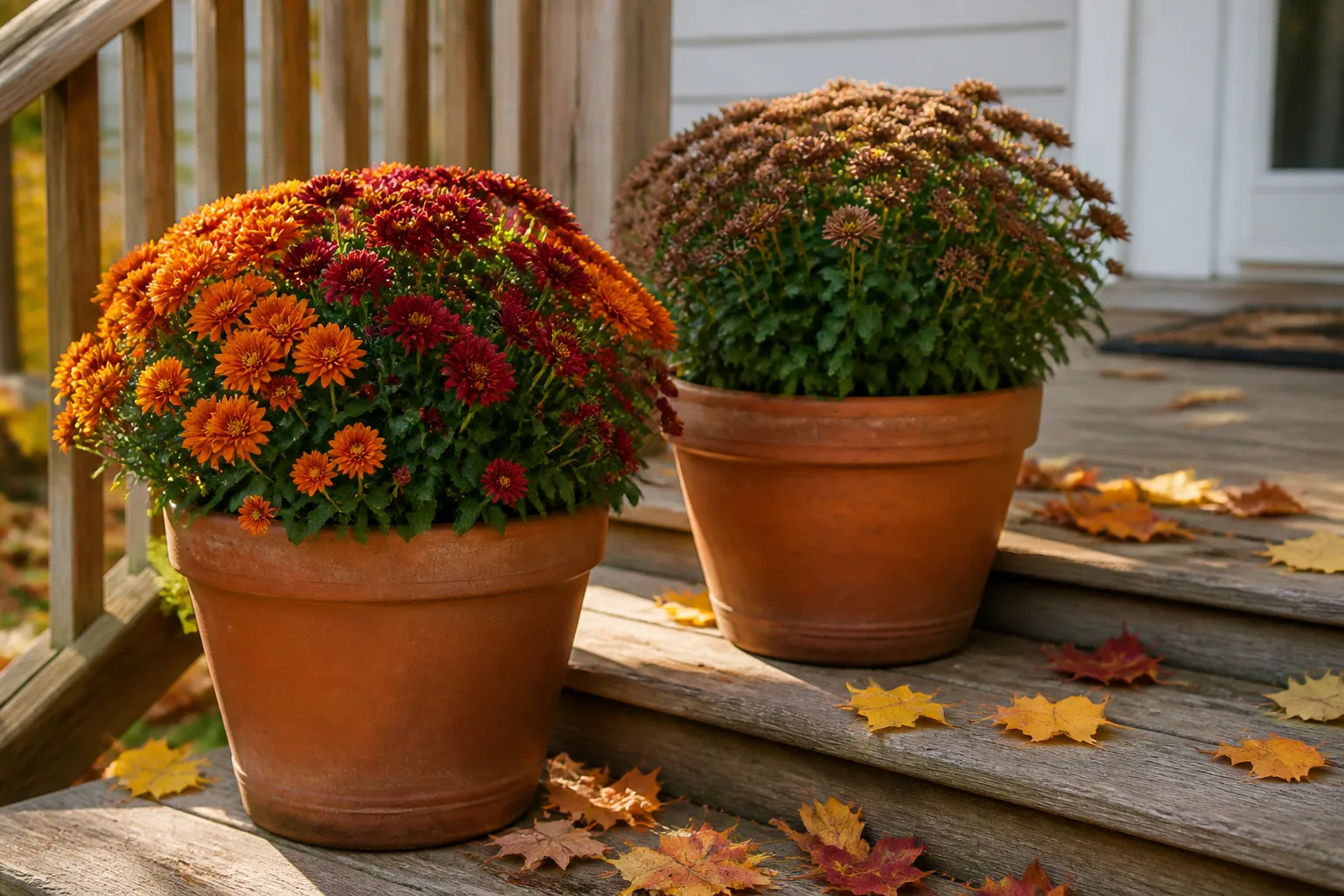
The best fall container is not the one with the most orange flowers. It is the pot where every plant agrees about light, moisture, temperature, and space. That is why a cool-loving pansy can look excellent beside a small ornamental kale, while a thirsty hydrangea and a drought-tolerant sedum usually make a frustrating pair.
“Plant now” also needs a local translation. A container planted in early September may have weeks to root before frost; the same shopping trip in late October may call for pansies, violas, kale, or a protected porch rather than tender zinnias. The guide below separates those choices so you can build a display for the weather you actually have, not an imaginary national fall.
The RHS guide to growing plants in containers emphasizes that pots need drainage, regular moisture checks, and more protection from cold because roots are above ground. Annie’s Annuals’ cool-season annual guide makes the same climate point: a plant may behave as a winter annual in a mild region but as a short-lived fall display in a cold-winter garden. Use your first-frost date as a planning tool, then inspect the actual forecast and the pot’s exposure.
Decide What “Plant Now” Means in Your Climate
Fall flowers for pots fall into three practical groups. Cool-season performers such as pansies, violas, snapdragons, and dianthus usually improve as summer heat fades. Hardy foliage and perennials add structure and may return, although a pot exposes their roots to colder temperatures than garden soil does. Warm-season holdovers—including zinnias, marigolds, celosia, and petunias—can keep flowering in a mild autumn but will decline quickly after a hard freeze.
The three checks before you buy
First, count the light at the pot’s final location, not at the garden center. Six or more hours of direct sun suits mums, asters, sedum, zinnias, and most marigolds; bright shade or morning sun is safer for coral bells, cyclamen, and some begonias. A porch roof can turn a “sunny” display into a low-light display, while a south-facing wall can add heat that makes a cool-season plant dry out faster.
Second, check the temperature risk. Light frost tolerance is not the same as winter hardiness, and a plant rated perennial in the ground may not survive a winter in a small ceramic pot. If a hard freeze is close, buy established plants with visible buds rather than starting slow-growing seed, and choose a location where you can move the container temporarily.
Third, test drainage before you spend money on flowers. A pot should have an open hole in the base, and water should not sit in its saucer after you finish watering. The RHS notes that large containers dry more slowly and are often easier to maintain than many small pots, while winter waterlogging is a particular risk. One large, well-drained planter usually gives a better fall display than five shallow pots that swing from dry to saturated.
When a container is safer than a bed
Use a pot when your garden soil is heavy, your doorway needs instant color, or a plant is only marginally hardy in your area. Containers let you shift a tender begonia under cover, shelter a cyclamen from a hard freeze, or move a tall pot away from a wind tunnel. They also let you isolate a plant that spreads aggressively in the ground or keep a pet away from a plant you have identified as toxic.
The trade-off is faster temperature change: roots have less insulating soil around them, and dark pots can heat up in afternoon sun. Cluster containers, raise them off cold concrete, and move fragile plants against a protected wall when a freeze is forecast. Keep the drainage hole clear.
Build a Fall Container That Looks Designed
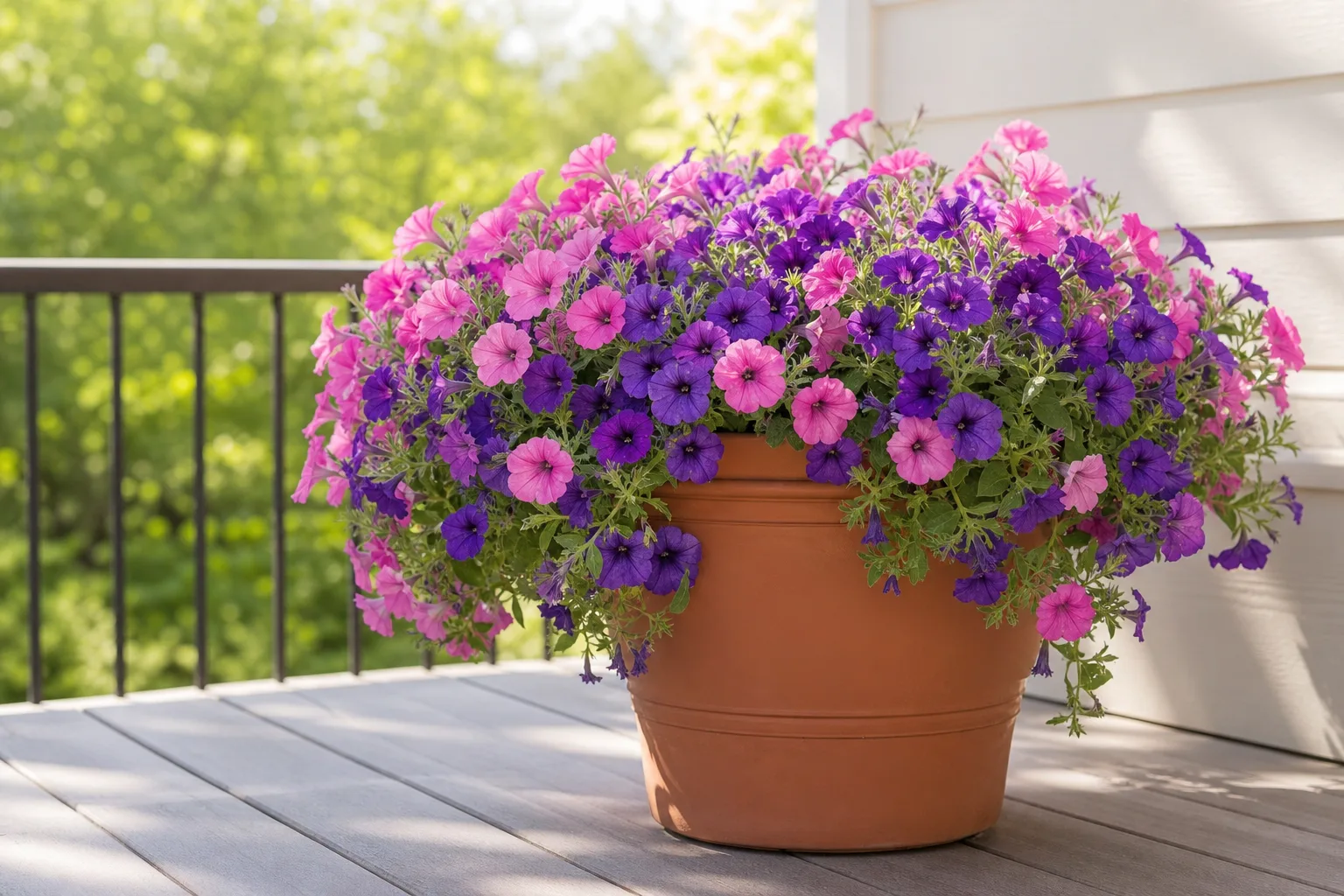
A good fall planter has a clear silhouette from across the sidewalk and interesting detail at arm’s length. Start with one anchor, add one or two mounding plants, and let a low or trailing plant soften the rim. Every plant should have a job.
Use thriller, filler, spiller with matching needs
For a sunny 16-inch pot, a compact mum or aster can be the focal plant, with pansies, dianthus, or calendula around the edge. In a shaded container, use coral bells or a compact begonia as the anchor, then add cyclamen or violas for color. A trailing sweet alyssum or calibrachoa can spill over the rim, but only when the pot receives enough light for that plant to flower.
Repeat color instead of collecting one of everything. Three pots using burgundy mum, purple pansy, and silver foliage will look more intentional than one pot containing every available color. In a window box, put tall plants at the back and short bloomers along the front; a free-standing pot can hold the tallest plant in the center.
Get pot size, drainage, and spacing right
Use fresh, lightweight potting mix rather than garden soil. Field soil compacts in a container, limits air around roots, and can drain poorly after autumn rain. Fill the pot so the finished soil line sits about an inch below the rim, leaving room for a thorough watering without washing mix over the edge.
Do not bury plants deeper than they were growing in their nursery pots. Set root balls close enough to look full, but leave air between mature crowns so foliage can dry after rain. Overcrowding creates weak growth, tangled roots, and wet foliage.
The 27 Best Fall Container Flowers
Here is the quick filter before the individual notes. “Frost window” describes the typical job, not a guarantee: local cultivars, exposure, and the severity of the freeze still matter.
| Plant | Best role | Light | Weather note |
|---|---|---|---|
| Chrysanthemum (mum) | Focal mound | Full sun | Fall to light frost |
| Pansy | Low flower | Sun to part shade | Frost tolerant |
| Viola | Edge filler | Sun to part shade | Frost tolerant |
| Snapdragon | Upright accent | Sun to part shade | Light frost |
| Sweet alyssum | Spiller | Sun to part shade | Light frost |
| Calendula | Warm filler | Sun to part sun | Light frost |
| Cyclamen | Shady accent | Bright shade | Check cultivar |
| Ornamental kale | Foliage anchor | Full sun | Cold tolerant |
| Dianthus | Fragrant edge | Sun to part shade | Light frost |
| Coral bells | Foliage anchor | Part shade | Protect the pot |
| Aster | Late focal | Full sun | Light frost |
| Stonecrop (sedum) | Dry-side filler | Full sun | Frost tolerant |
| Goldenrod | Airy vertical | Full sun | Light frost |
| Helenium | Warm focal | Full sun | Light frost |
| Coneflower | Pollinator focal | Sun to part shade | Light frost |
| Black-eyed Susan | Sunny flower mass | Full sun | Light frost |
| Japanese anemone | Shady accent | Part shade | Light frost |
| Toad lily | Shade flower | Part shade | Light frost |
| Zinnia | Summer holdover | Full sun | Until hard frost |
| Marigold | Sunny filler | Full sun | Until hard frost |
| Celosia | Bold texture | Full sun | Until hard frost |
| Coleus | Colorful foliage | Cultivar-specific | Protect from frost |
| Dahlia | Big-flower focal | Full sun | Until hard frost |
| Begonia | Shade flower | Part shade | Tender |
| Salvia | Vertical flower | Full sun | Cultivar-specific |
| Petunia | Trailing flower | Full sun | Mild autumn |
| Calibrachoa | Fine spiller | Full sun | Mild autumn |
1–9: Cool-season workhorses
1. Chrysanthemum (garden mum). Mums deliver the most immediate volume: one healthy, budded plant can fill a porch pot without waiting for new growth. Choose a plant with many unopened buds, a firm root ball, and foliage that is not collapsing at the center. Give it full sun, water when the mix is beginning to dry, and remember that a “perennial” mum is less likely to overwinter in an exposed container than in the ground.
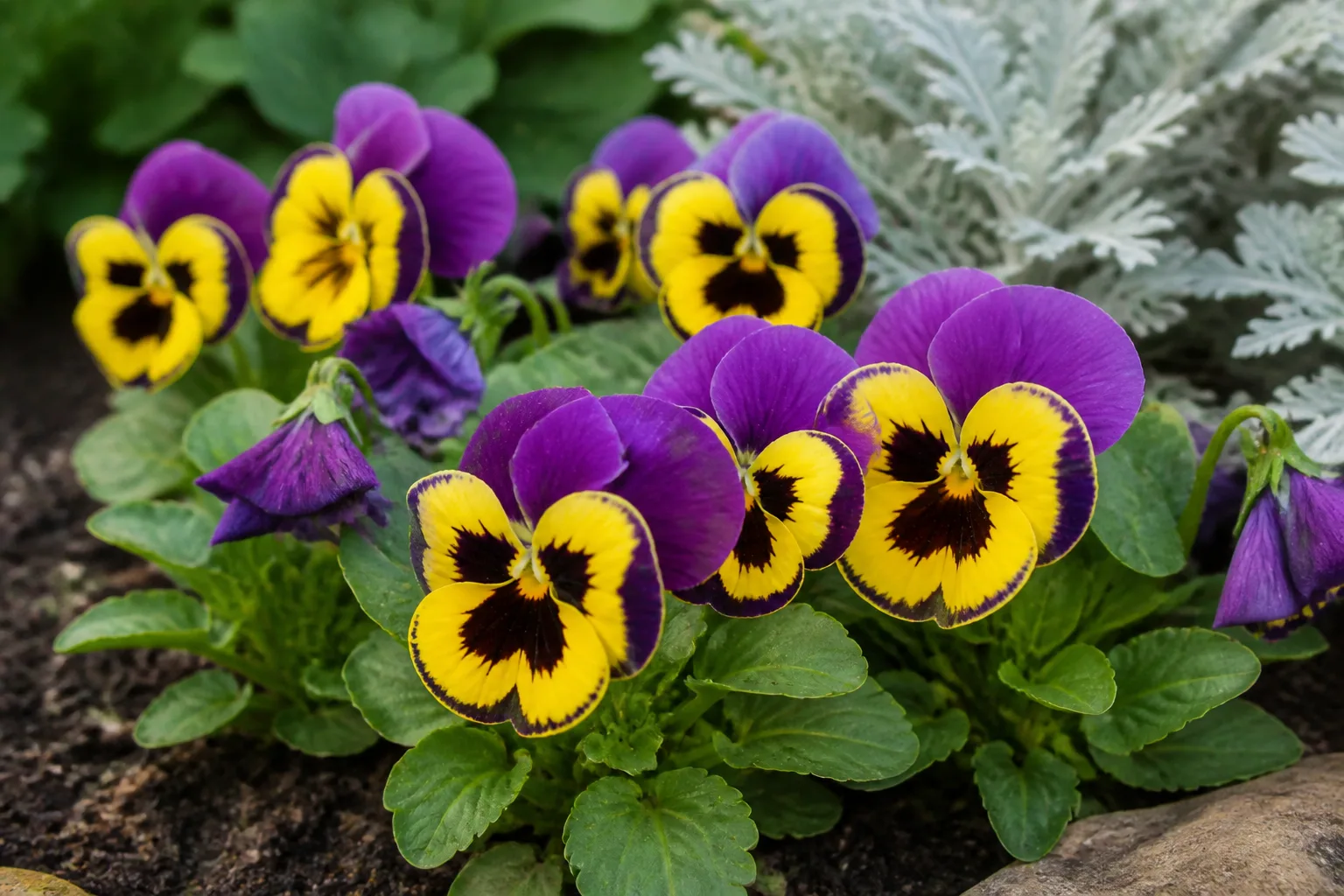
2. Pansy. Pansies are the dependable low layer for cool weather, with enough color range to support jewel-toned or soft pastel designs. They suit sun to part shade and can continue through several light frosts, especially when the pot is sheltered. Plant them near the rim where their faces can be seen, and remove spent blooms when you want a tidier, longer display.
3. Viola. Violas give you smaller flowers and a more delicate texture than pansies, which makes them better for narrow window boxes or the front of a mixed pot. They are often more weather-friendly than large-flowered selections, but their scale can vanish beside a huge mum. Use a group of three or five in one color rather than scattering one plant between tall neighbors.
4. Snapdragon. Snapdragons add the vertical line that a mound-heavy fall pot lacks. Look for compact or dwarf selections for containers, place them in sun or bright part shade, and keep the root zone evenly moist while they establish. They tolerate cool conditions, but a windy pot dries quickly around the tall stems, so group or shelter them.
5. Sweet alyssum. Sweet alyssum is the soft white, pink, or lavender filler that makes dark flowers look intentional. It mounds and trails over an edge, prefers sun to part shade, and often rebounds when summer heat eases. In a mild climate it can carry into winter; in a cold climate, treat it as a frost-tolerant accent rather than a permanent fixture.
6. Calendula. Calendula brings daisy-like gold and orange without the rigid formality of a mum. It can be started from large seed or bought as a young plant, and it often pauses in heat before flowering again as days cool. Give it sun and drainage, then deadhead selectively if you want more flowers instead of seed.
7. Cyclamen. Cyclamen is a strong choice for a sheltered, shady fall container, but check the label before buying. Hardy cyclamen can handle cool outdoor conditions; florist cyclamen is much more tender and may be damaged by a freeze. Set it in bright shade, avoid soaking the crown, and move the pot under cover when temperatures are forecast to drop sharply.
8. Ornamental kale or cabbage. These are foliage plants masquerading as flowers, and that is their advantage: their rosettes often become more vivid as nights cool and do not require deadheading. Use ornamental kale in full sun with pansies or dianthus, leaving enough room for the rosette to expand. Keep the pot draining; cold, saturated roots can fail even when the leaves look sturdy.
9. Dianthus or Sweet William. Dianthus contributes narrow foliage, compact flowers, and a clove-like fragrance near a doorway. Many types tolerate cool nights and light frost, but they dislike a pot that stays wet. Use them in sun or morning sun with a gritty, well-drained mix, and shear only lightly so you do not remove every developing bud.
10–18: Foliage and hardy perennials
10. Coral bells. Coral bells are useful when the flowers in your container need a leaf color anchor. Burgundy, caramel, lime, and silver foliage can hold the composition after other blooms fade, while the airy flower stems are a bonus. Choose part shade for most cultivars, avoid placing them beside drought-loving sedum unless the whole pot is watered for the thirstier plant, and insulate the container if you want to test overwintering.
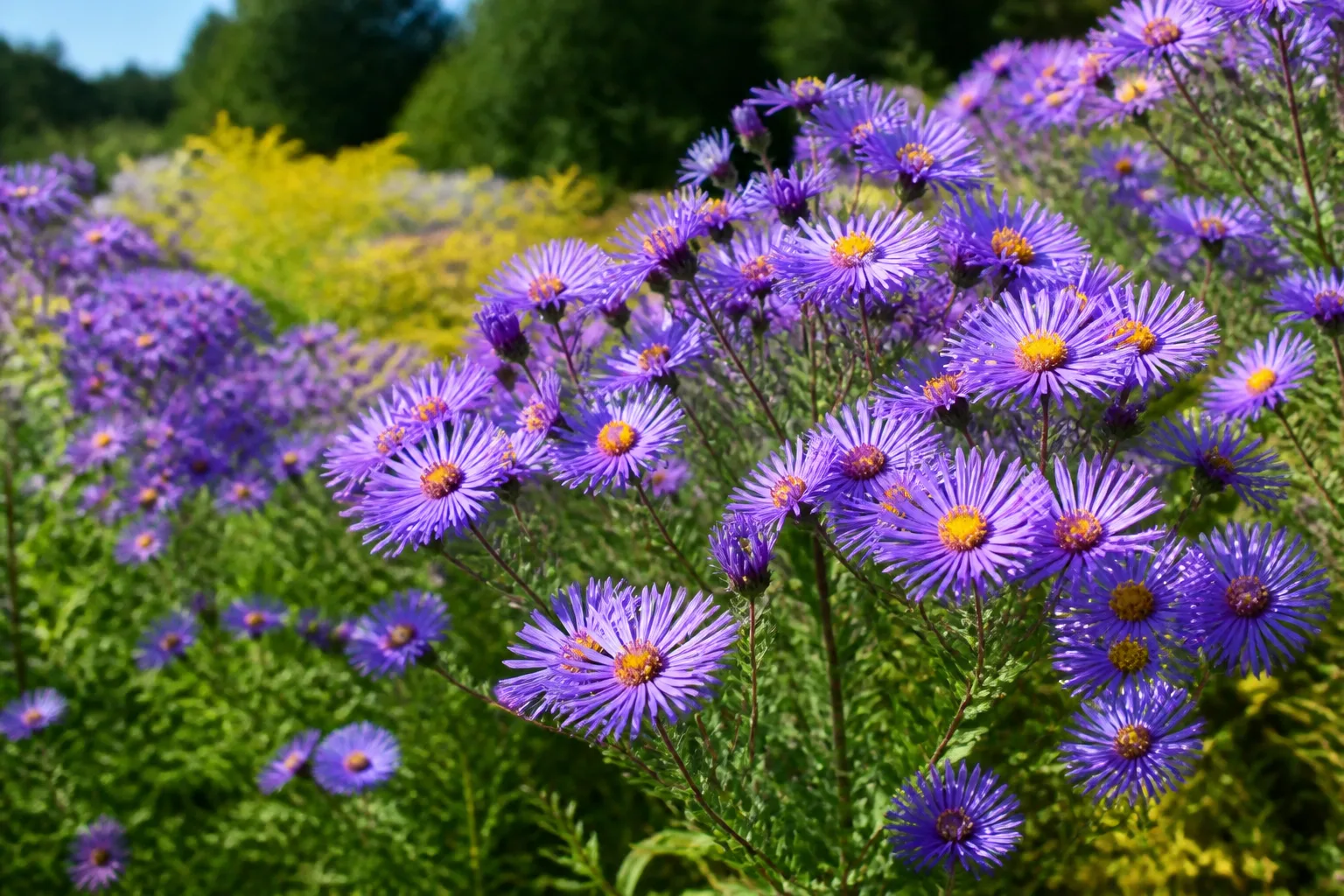
11. Aster. Asters keep pollinator-friendly color going late, often in purple, blue, pink, or white. Use a compact cultivar in a heavy pot, give it full sun, and pinch or trim only if the plant is too tall before flowering. Aster is a better long-term investment than a tender annual in a mild region, but its roots still need winter protection in a small exposed container.
12. Stonecrop or sedum. Sedum is the dry-side choice for a sunny pot that you do not want to water every day. Fleshy leaves and long-lasting flower clusters pair well with mums, ornamental kale, or dusty-looking foliage. Use a fast-draining mix, let the top layer dry between waterings, and do not put it in the same constantly moist pot as cyclamen or Japanese anemone.
13. Goldenrod. Goldenrod gives a fall container a fine-textured yellow veil and can be an excellent late-season resource for insects. Choose a compact cultivar rather than a tall field type, give it full sun, and place it toward the back or center of a heavy planter. Its yellow flowers are not the cause of seasonal allergies commonly blamed on them; wind-pollinated ragweed is a more common culprit.
14. Helenium or sneezeweed. Helenium supplies hot red, orange, and yellow flowers and a stronger upright presence than many bedding plants. It prefers full sun and more consistent moisture than sedum, so combine it with mums or pansies that accept the same watering rhythm. Pinch tall plants early in the season for a fuller shape, but do not expect a newly purchased late-season plant to reinvent its form before frost.
15. Coneflower. Coneflowers bring a sturdy daisy shape and a textured center that remains interesting after petals drop. Pick a compact cultivar and use a broad, stable pot; a tall plant in a narrow container can topple in wind. Full sun produces the best flowering, and leaving a few seedheads after the display can support birds even when the pot is no longer at peak color.
16. Black-eyed Susan. Black-eyed Susan gives the same warm palette in a more familiar golden form. It is happiest in full sun, tolerates a short dry spell once established, and looks best when dead blooms are removed before the plant becomes a seedhead tangle. In a container, expect a seasonal display unless you can protect the root system and the cultivar is hardy for your area.
17. Japanese anemone. Japanese anemone adds floating pink or white flowers to a part-shade pot and works especially well when a porch feels too dark for zinnias or marigolds. Give it a roomy container, evenly moist mix, and protection from strong wind. It can become a large perennial in the ground, so choose a compact plant or plan to transplant it rather than crowding it into a small bowl.
18. Toad lily. Toad lily is the unusual pick: small, orchid-like flowers marked with purple spots appear on arching stems in a cool, shaded setting. It is slower and less immediately full than a mum, but it rewards close viewing near a seating area. Use rich, well-drained mix kept evenly moist, and pair it with coral bells rather than vigorous sun-loving plants.
19–27: Warm-season holdovers
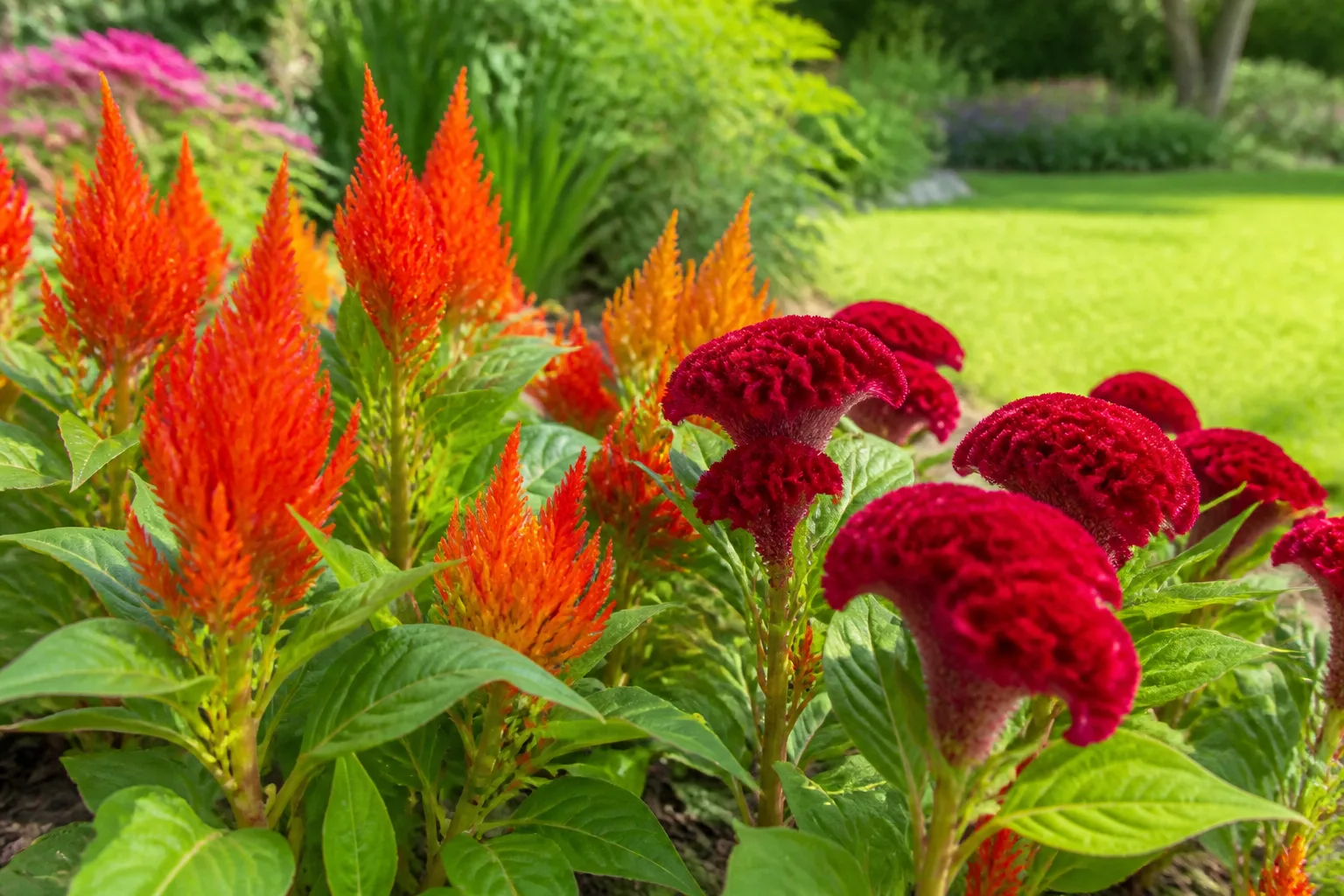
These plants are worth buying late in the season only when the forecast is mild or you have a protected place ready. They can give a generous final flush of color, but their labels should not be read as promises of frost resistance.
19. Zinnia. A healthy zinnia can continue blooming through a warm fall in full sun, especially if you keep cutting flowers and watering the root zone deeply. It does not need cool nights to thrive and will usually blacken after a hard frost. Choose a compact bedding type for a pot and enjoy it as a finale, not an overwintering project.
20. Marigold. Marigolds are cheerful, forgiving, and useful for filling a sunny gap when summer plants are still attractive. They handle a cool spell better than many tropical annuals but remain frost tender. Remove damaged stems after a freeze instead of trying to nurse blackened tissue, then compost the plant when new growth is no longer possible.
21. Celosia or cockscomb. Celosia creates a strong textural counterpoint to rounded mums and pansies, with plumes or folded flower heads in red, orange, pink, and yellow. It needs sun, warmth, and a mix that drains freely. Rainy cold is often harder on it than a brief cool night, so place it under a roof where the pot still receives enough light.
22. Coleus. Coleus earns its spot for foliage rather than flowers, particularly in a shaded fall arrangement. Match the cultivar to the available light—some bronze and chartreuse types tolerate more sun, while others scorch—and keep the mix evenly moist. Move the pot indoors or into a protected bright space before frost; waiting until the leaves collapse makes recovery less likely.
23. Dahlia. A blooming dahlia makes a dramatic focal point in a large sunny container, but its tuber needs a winter decision. In mild regions you may be able to protect the pot; in cold regions, lift and store the tuber or treat the plant as seasonal. Stake tall stems early, keep water consistent, and never let a large, flower-heavy pot become top-heavy.
24. Begonia. Bedding and tuberous begonias bring color to a bright-shade or morning-sun pot where marigolds would stretch. They are tender, dislike cold wet mix, and benefit from good air movement around the leaves. Remove the pot from rain before a cold snap, then decide whether the particular begonia is worth overwintering; “begonia” covers plants with very different habits.
25. Salvia. Salvias range from compact bedding plants to tall perennial sages, so choose by the mature height on the label rather than the flower color alone. Most want full sun and well-drained mix, with deadheading improving the look of repeat-flowering types. A perennial salvia may return in the ground but fail in a small, frozen pot, especially if the container is exposed to wind.
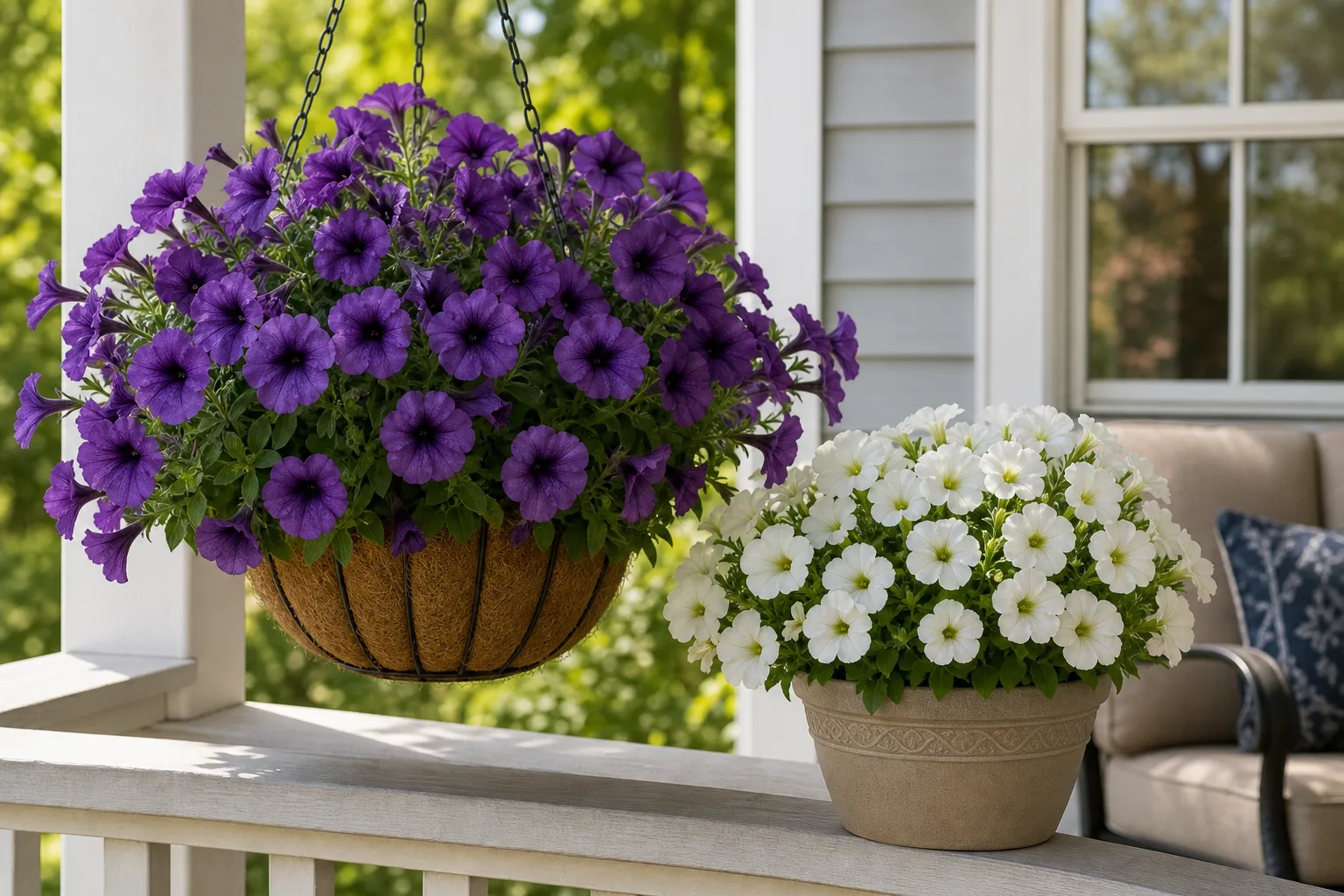
26. Petunia. Petunias can bridge summer into fall when nights remain moderate, and trailing types make an instant spiller. Give them full sun, water when the mix is dry below the surface, and trim back rain-battered stems to encourage a fresh flush. They are not the right partner for a shade pot or a region where hard frost is imminent.
27. Calibrachoa or Million Bells. Calibrachoa offers smaller flowers and a finer cascade than petunia, making it useful at the edge of a mixed pot or hanging basket. It prefers sun and an airy, well-drained mix, but small containers dry quickly in wind. Use it for a mild-autumn display and be prepared to move or replace it sooner than pansies or ornamental kale.
Planting Sequence for a Full Pot
Acclimate nursery plants and loosen roots
Before planting, water each nursery pot so the root ball is moist but not dripping. Check the underside for circling roots, slide the plant out gently, and loosen only the outer roots that have formed a tight mat. Do not tear apart a fragile root ball just to remove every bit of old mix; the goal is contact with the new mix, not root trauma.
Place the focal plant first, then turn the container so its best side faces the usual viewing angle. Add fillers at alternating points rather than making a perfect ring, and angle spillers toward the side that will be visible. The RHS six-step container-planting guide recommends a container with suitable drainage, a slight gap below the rim, gentle firming, and a slow, thorough first watering.
Water once, then switch to weather-led checks
Water the finished pot until a steady stream exits the drainage hole, then let it drain completely. Do not keep adding small amounts every day by habit. Check the mix with a finger or lift the pot when possible: sun, wind, pot material, plant size, and rainfall matter more than a fixed calendar schedule.
Cooler weather reduces evaporation, but a roofed porch can stay dry and a terracotta pot can lose moisture through its sides. Conversely, autumn rain can keep a dense pot wet for days. Empty saucers after storms, water at the soil line, and avoid soaking flowers late in the day when cool, still air will leave foliage wet overnight.
Protect Color Through the First Frost
Start with the plant’s actual tolerance, not the word “fall” on a display sign. Pansies, violas, ornamental kale, and some dianthus can often handle light frost. Mums, snapdragons, asters, and helenium may tolerate a chilly night but can still suffer if the root ball freezes repeatedly. Zinnias, marigolds, celosia, coleus, begonias, dahlias, petunias, and calibrachoa should be moved or covered before a hard freeze.
For one cold night, move pots beneath a roof or against a wall, group them together, and cover plants with breathable frost cloth if appropriate. Do not wrap a wet plant in plastic that touches its leaves, and do not leave a covered container in full morning sun without checking it. After the event, remove damaged leaves only when you can see what is truly dead; a limp flower does not always mean the crown is lost.
In cold-winter areas, protect hardy perennials by sinking the pot into the ground, moving it into an unheated garage, or insulating around the container. The plant’s in-ground hardiness zone is only a starting point because the roots in a pot experience colder air on every side. If you cannot provide that protection, choose the plant for its fall display and plan a spring replacement.
Troubleshoot a Pot That Is Fading
If flowers fade quickly, first check the roots and the light. A pot that is bone dry in the center may need a slow soaking, while a pot that smells sour or stays wet has a drainage problem, not a fertilizer problem. Pull back a little mix near the edge and inspect moisture below the surface before watering again.
If stems stretch and flowers thin out, the plant probably lacks usable light or is crowded by faster neighbors. Move a sun-loving container into direct light, trim weak growth, and skip high-nitrogen feed late in the season; soft leaves cannot replace the light and temperature that trigger flowers. If one plant collapses while neighbors look fine, remove it instead of watering the entire pot more heavily and replace it with a smaller plant suited to the exposure.
Plan the Winter Transition
Think of the container as a sequence, not a permanent arrangement. As tender flowers decline, remove them and let hardy foliage, sedum, coral bells, pansies, or violas carry the pot. In a deep, well-drained container, spring bulbs can sit beneath cool-season annuals if the pot can be protected from extreme cold.
Do not assume that every fall perennial belongs in a doorway pot forever. Hydrangea can be a beautiful temporary container plant, but the ASPCA lists hydrangea as toxic to dogs, cats, and horses, with vomiting, depression, and diarrhea among possible clinical signs after ingestion. Autumn crocus is an even more serious choice around pets: ASPCA identifies it as toxic to dogs, cats, and horses. Keep those pots inaccessible or choose a different plant; contact a veterinarian or animal poison-control service promptly if ingestion is suspected.
Finally, decide what you want the pot to do in January. If the answer is “still look colorful,” prioritize violas, pansies, ornamental kale, and evergreen or semi-evergreen foliage suited to your climate. If the answer is “protect a plant for next year,” use a container large enough to buffer moisture and temperature, label the plant, and move it before the first hard freeze rather than after damage appears.
Conclusion: Repeat the Palette, Not Every Plant
The most successful fall container gardens are edited. Choose one or two reliable cool-season flowers, add a leaf shape or late-season perennial for contrast, and reserve tender summer holdovers for spots where you can enjoy their final flush before frost. Then match the pot to the weather: good drainage, enough soil volume, a protected position, and watering based on the root zone.
Start with pansies, violas, mums, snapdragons, ornamental kale, or dianthus if you need dependable color now. Add sedum, coral bells, asters, or compact goldenrod when you want structure beyond a single month. Repeat the same two or three colors across several containers, and your porch will look designed long after the first summer annuals are gone.



