English Garden Designs and Ideas: A Practical Guide
English garden designs explained—hedges, herbaceous borders, roses, paths, and 30 ideas you can adapt to your climate, budget, and yard size.
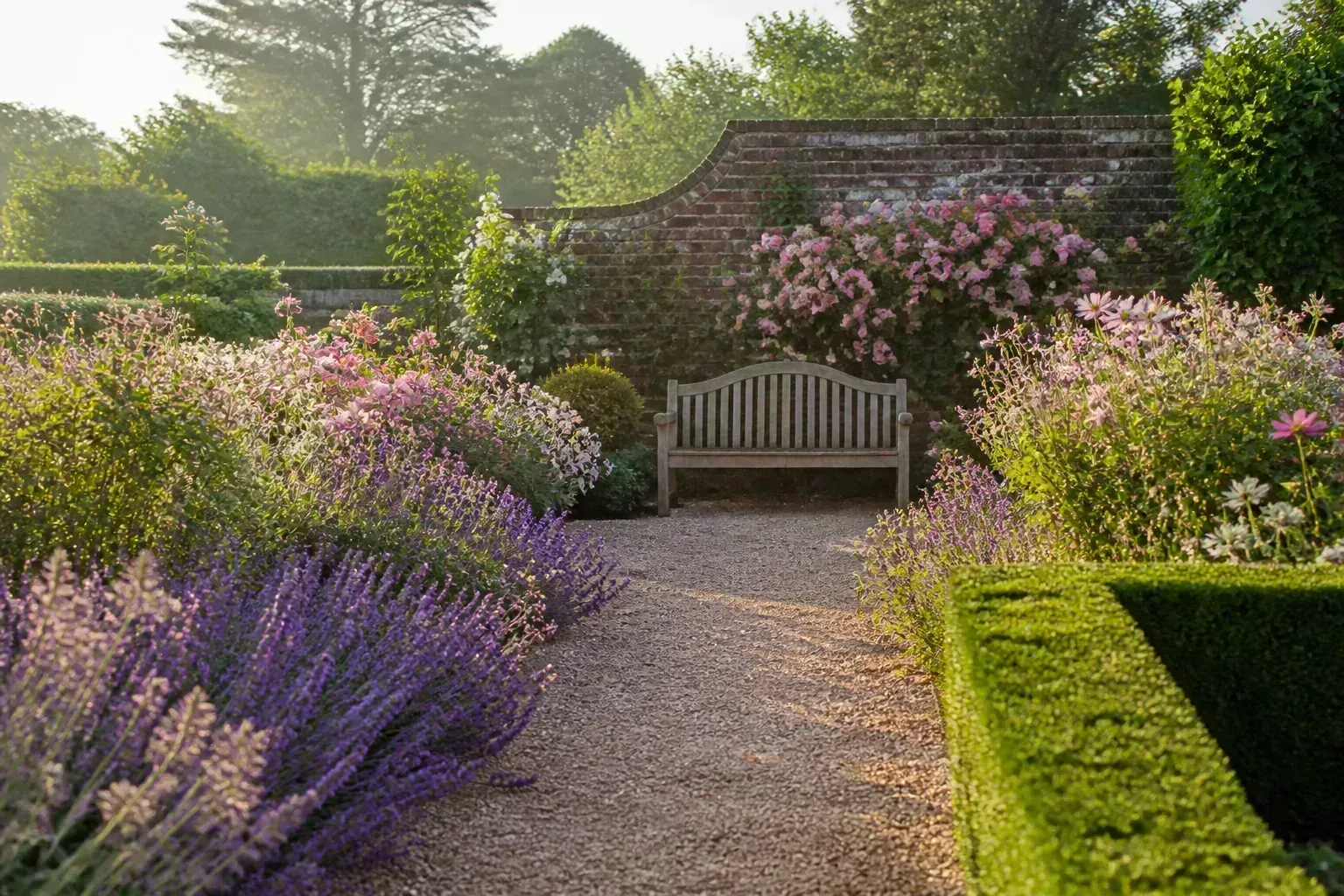
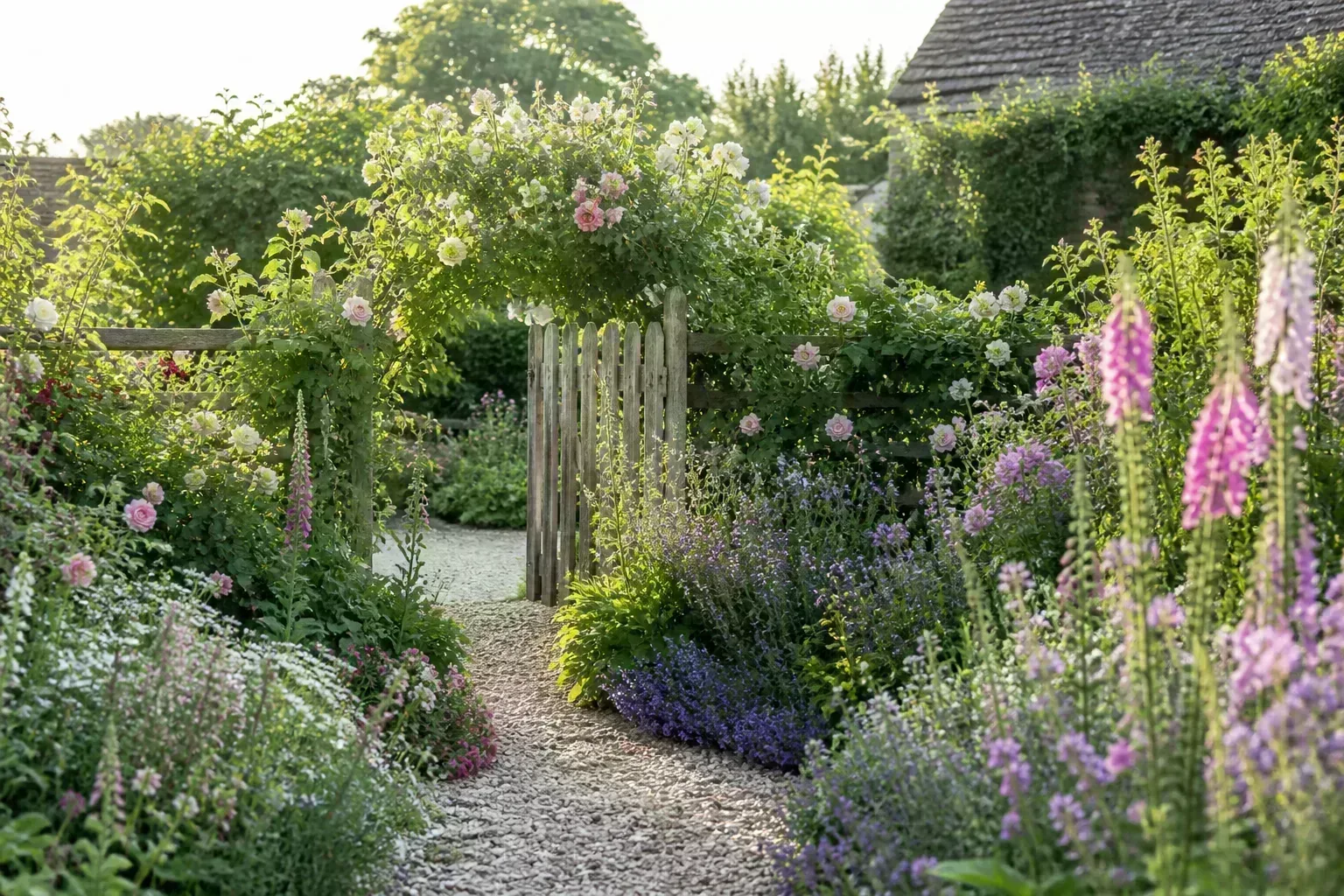
The English garden look is everywhere on Pinterest—billowing borders, clipped evergreens, gravel crunching underfoot, roses leaning over a bench—but most inspiration posts skip the part that matters: how to build the style so it survives your soil, your climate, and your available weekends. English garden designs are not a single template. They range from manor-house formality with sheared yew and symmetrical axes to softer cottage-influenced borders where foxgloves and herbs share the same bed. The through-line is structure plus abundance: evergreen bones that hold the garden together in winter, and layered planting that peaks across multiple seasons.
This guide translates that aesthetic into decisions you can make on a real lot—whether you have a quarter-acre suburban backyard or a narrow city side yard—and catalogs 30 design ideas you can mix, match, or skip based on your site.
What an English garden is (and what it is not)
An English garden, in the sense most American gardeners mean it, is a planting style rooted in nineteenth- and early twentieth-century British landscape design. Designers like Gertrude Jekyll popularized herbaceous borders with coordinated color and “drifts”—massed groups of the same plant repeated through a bed—while estate gardens added geometric structure through hedges, walls, and gravel paths. The result feels romantic but deliberate: nothing is random, even when it looks slightly wild.
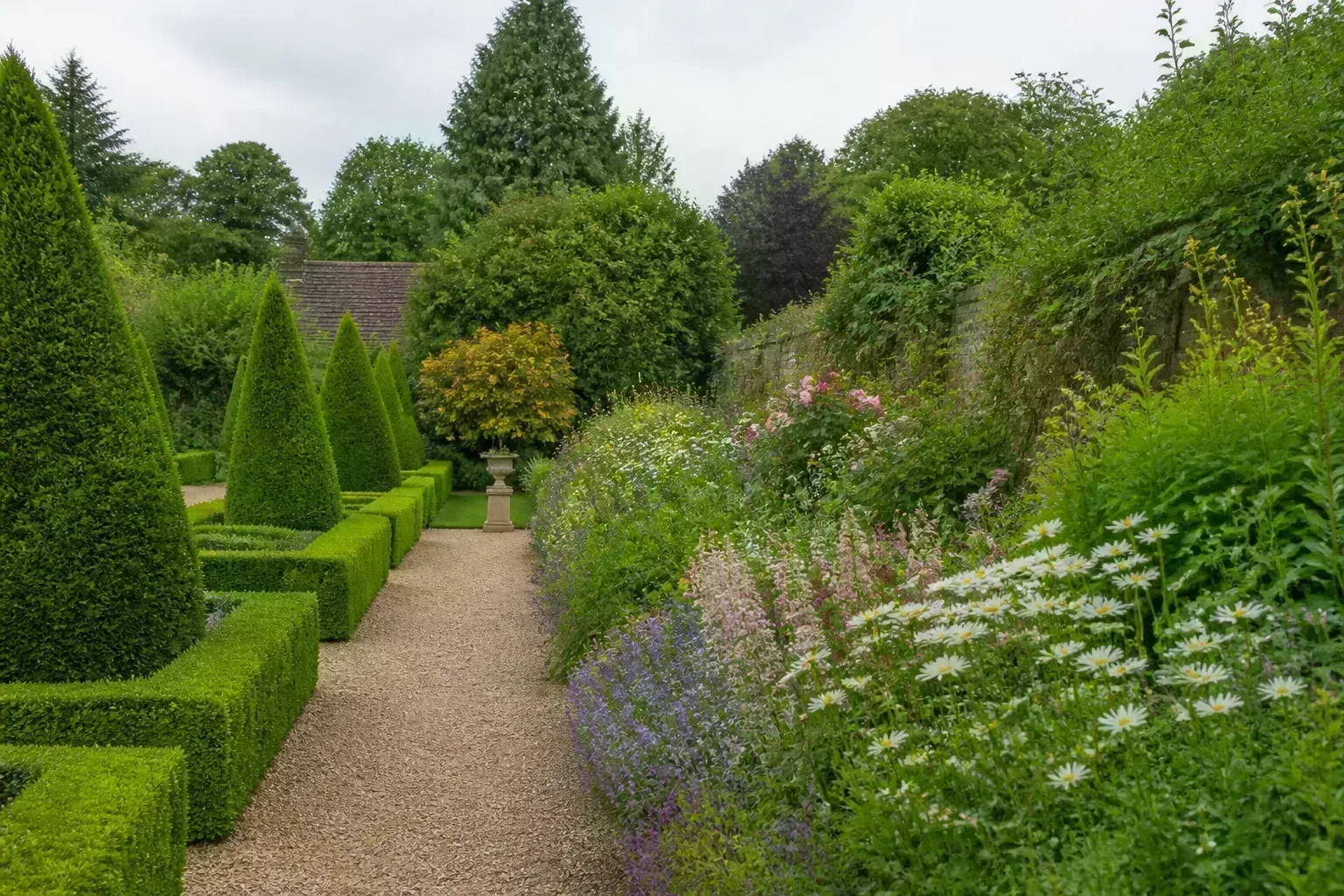
That is the key distinction from a generic “pretty flower bed.” English garden design uses repetition, enclosure, and seasonal sequencing so the yard reads as one composition from the street, the kitchen window, and the path you walk daily.
The history behind the look
You do not need a history lecture to plant a border, but two ideas explain why English gardens look the way they do. First, the shift away from rigid Victorian bedding schemes toward naturalistic drifts of perennials—Jekyll’s color theory treated the border like a painting, with hot and cool notes repeated at intervals. Second, the Arts and Crafts influence married craftsmanship in hardscape (stone, brick, gravel) with planting that feels generous rather than sparse. Understanding that pairing helps when you are tempted to buy one of everything at the nursery: English style rewards fewer species, repeated boldly.
English garden vs cottage garden vs formal estate garden
These labels overlap in photos but imply different maintenance and layout choices.
Formal English estate gardens prioritize geometry: mirrored beds, long vistas, clipped hedges, gravel parterres, and clear sight lines. Color is often restrained. Hedge shearing is non-negotiable.
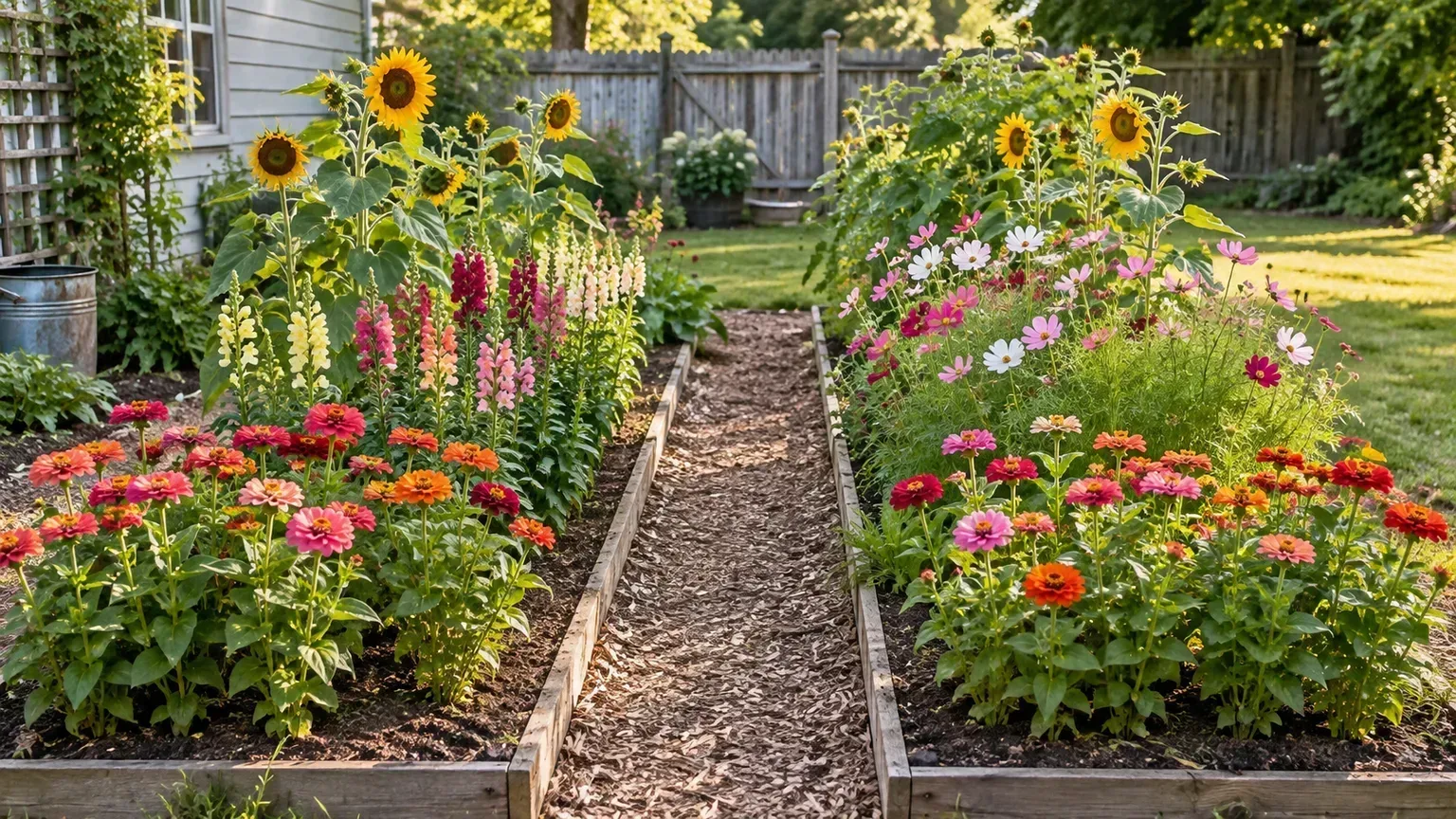
Cottage-influenced English gardens keep some formal bones—maybe a boxwood line or a straight gravel path—but fill beds with a denser, more personal mix of flowers, herbs, and sometimes vegetables. Edges soften; self-seeders are welcome. For a deeper dive on that looser branch, see our cottage garden ideas guide.
Modern “English garden” inspiration in magazines usually blends both: trimmed evergreens at the property edge, blowsy perennials inside, and a terrace or bench at the end of a path. That hybrid works if you accept two maintenance speeds—annual hedge work plus seasonal perennial editing.
| Trait | Formal English | Cottage-influenced English |
|---|---|---|
| Layout | Symmetry, axes, clear geometry | Curving paths, dense mixed beds |
| Hedges | Tight, frequent shearing | Optional; softer shrub lines |
| Planting | Coordinated color drifts | Flowers, herbs, edibles mixed |
| Best for | Large front yards, manor aesthetic | Family yards, pollinator goals |
| Maintenance | Higher (shearing + borders) | Medium-high (editing + staking) |
If you want crisp lines and winter structure from evergreens, borrow formal bones and keep planting loose inside them. If you dislike shearing, skip the parterre fantasy and lean cottage.
Core design principles that make the style read as “English”
Before choosing from the idea list below, anchor the layout in principles extension educators and professional designers use everywhere—not only in British gardens. Penn State Extension’s garden design guidance names scale, balance, unity, variety, rhythm, line, and focal points as the building blocks of any successful landscape. English gardens simply express those principles through specific materials: hedges for line, drifts for rhythm, terraces for focal points.
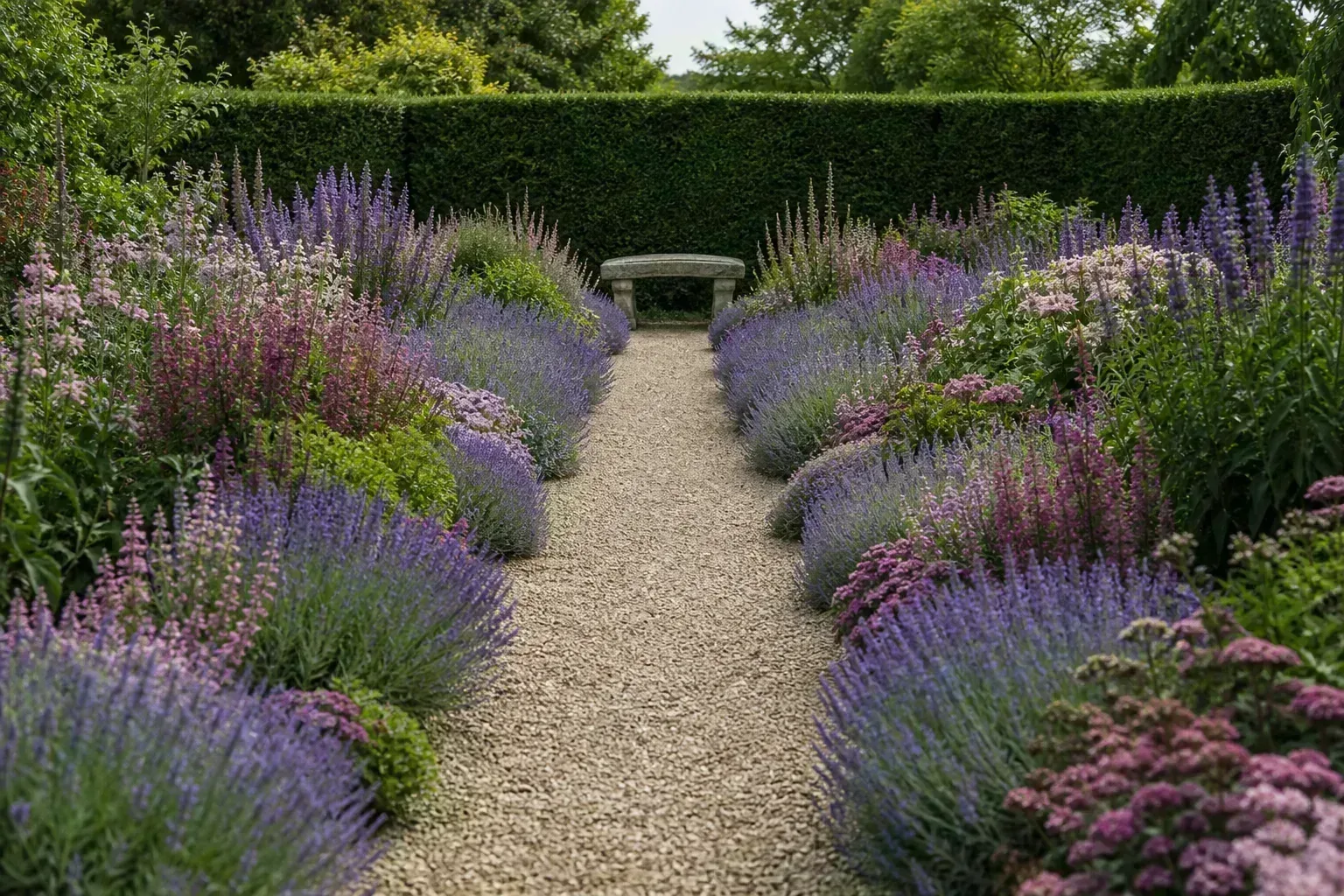
Scale, balance, and unity in the landscape
Scale means plant and hardscape size fits the house and lot. A narrow ribbon of perennials along a huge lawn looks skimpy; wide borders—or fewer, deeper beds—balance the view. Balance does not always mean mirror-image symmetry. Asymmetrical borders can still feel balanced when visual weight is distributed—tall shrubs on one side matched by a wide flowering mass on the other. Unity comes from repeating materials: the same gravel, the same hedge species, the same color family through the border. Too many unrelated paving types or unrelated flower colors and the English look dissolves into clutter.
Rhythm, repetition, and focal points
Rhythm is what makes your eye travel down a path instead of snagging on one random plant. Repeat shapes (spires, mounds, screens) and repeat colors at intervals. Gertrude Jekyll’s color drifts are rhythm in practice: three clumps of the same salvia, then three of catmint, then back to salvia—so the border feels intentional at walking speed.
Focal points reward the journey: a bench, a fountain, a specimen rose, a gate framed by yew. One strong focal point per garden “room” is enough; more than that and the yard feels busy.
Color drifts and seasonal layering
English borders rarely rely on one week of bloom. Plan for spring bulbs, early summer spikes, midsummer mounds, and late-season asters or grasses so something always carries the bed. The RHS border-planning advice recommends noting each plant’s peak months and aiming for coverage across the year—not identical peak bloom on every species.
Classic English color palettes lean pink, purple, blue, and green, with white as a crisp accent. Hot reds appear as punctuation, not the whole canvas. You can bend the palette for personal taste, but repeating a tight family of hues is what separates “English border” from “mixed annual grab bag.”
Plan your English garden before you buy a single plant
The fastest way to waste money is to treat English garden design as a shopping list of trendy plants. Walk the site first.
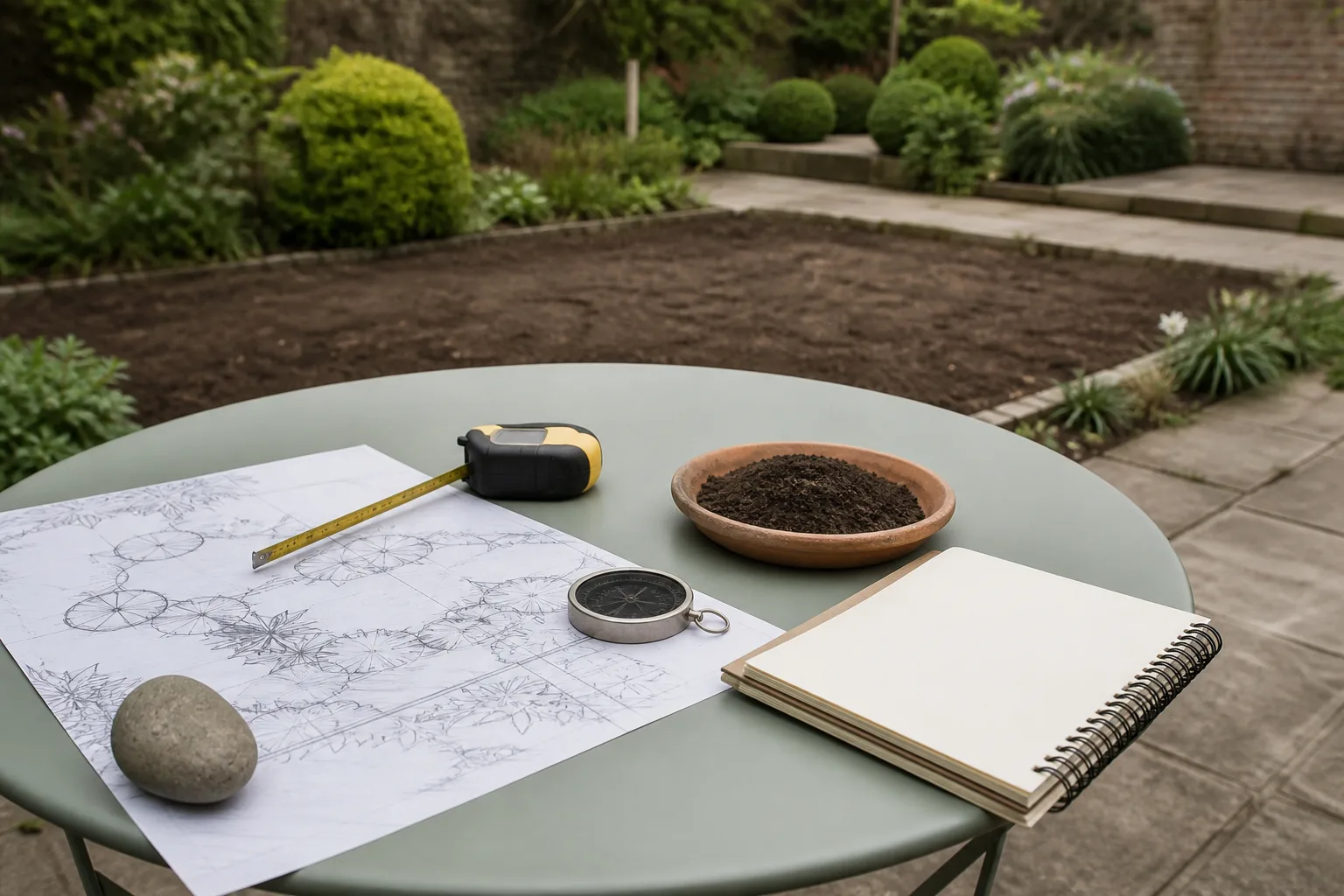
Site audit: light, soil, wind, and views
Label areas as full sun (six or more hours of direct light), part shade, or deep shade. Test drainage by digging after rain: water that sits for hours means clay or compaction—fix grading before installing gravel paths on top of soggy soil. Note wind corridors where delphiniums, hollyhocks, and tall roses will flop unless staked or shielded. Mark views from doors and windows; English design often frames a borrowed view or hides a utility zone with a hedge.
Choose your style tier: formal bones, soft middle, or full cottage blend
Pick one tier for year one:
- Bones only: one hedge line, one gravel path, one bench—plant lightly inside.
- Border focus: a single deep herbaceous border with drifts; skip parterre complexity.
- Full blend: hedges, potager, roses, and meadow edge—budget and maintain accordingly.
Starting with tier one or two still reads as English; tier three is a five-year project on most lots.
Budget and maintenance reality check
English style can be labor-intensive if you include large hedges and high-maintenance perennials. Estimate hedge shearing (twice a year for formal boxwood, more for show-quality topiary), spring staking, summer deadheading if you want tidy rebloom, and autumn cutback or intentional leave-standing for wildlife. If you have four hours a month, design smaller borders and favor shrubs over fussy annuals. If you love pruning, formal topiary and espalier are fair game.
Structure: hedges, walls, and evergreen bones
Structure is what makes English gardens photogenic in February, not only in June. Evergreens carry the geometry when perennials disappear.
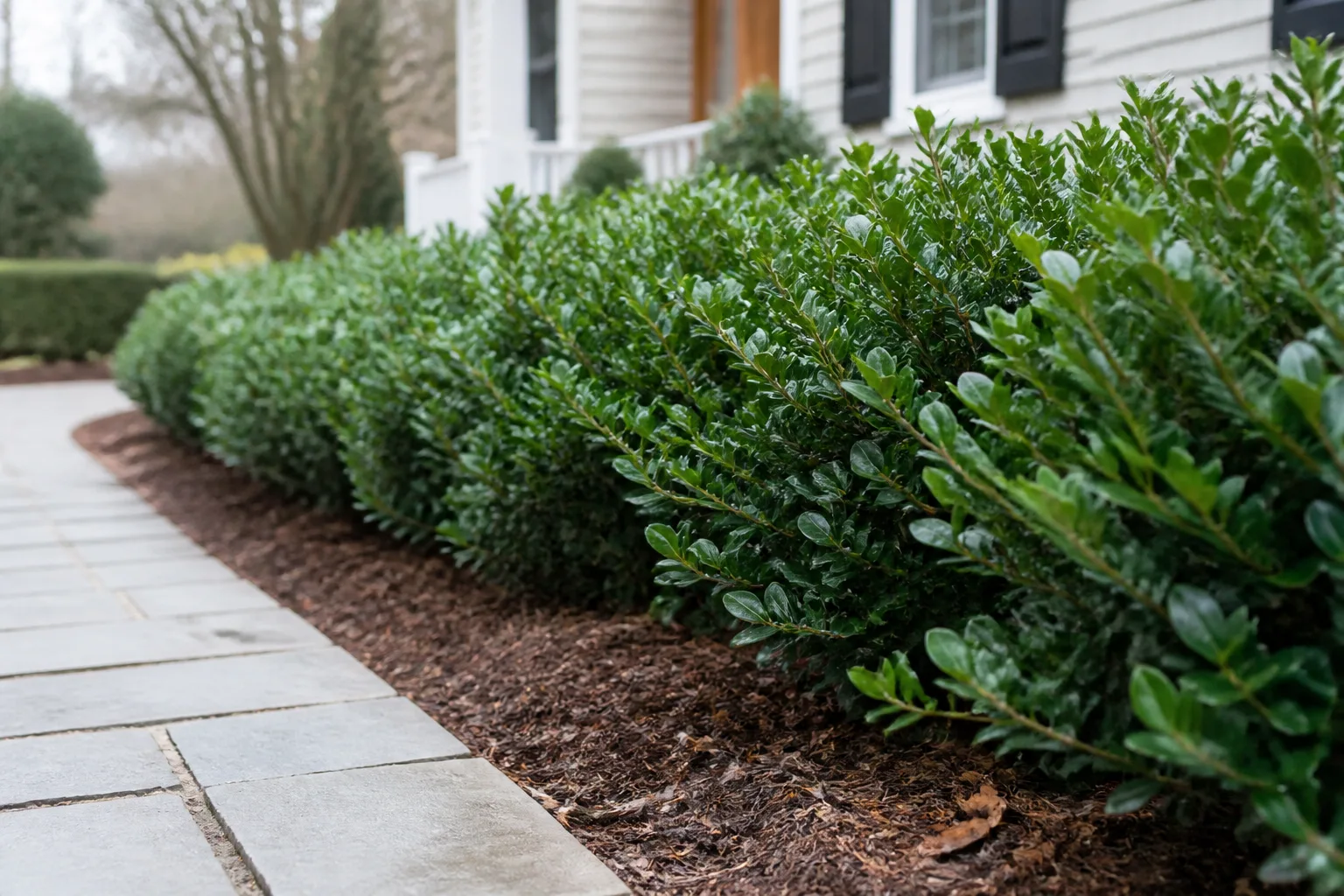
Clipped boxwood and yew for year-round form
Boxwood defines edges, parterres, and low hedges in countless English gardens. In mild climates it stays deep green year-round; in colder zones choose hardy cultivars and expect some winter bronzing. Be aware of boxwood blight in humid regions—local extension offices can confirm whether it is prevalent in your area; sometimes substitute inkberry holly or other fine-textured evergreens.
Yew (Taxus) builds taller walls of green on estate gardens. It tolerates hard pruning and shade better than many conifers, making it ideal for garden rooms and hidden service areas. Both boxwood and yew demand sharp tools and patience; electric or battery hedge trimmers help on long runs.
Mixed hedges and topiary accents
Not every hedge must be a flat wall. Mixed hedges—boxwood in front, taller hornbeam or beech behind—create depth. Topiary spheres, cones, or whimsical shapes at gate entrances signal English formality without requiring a manor. Keep topiary count low; one or two strong shapes beat a yard of green meatballs.
Garden walls for heat, privacy, and espalier space
Brick and stone garden walls do real work: they absorb heat for fruit and tender roses, block wind on terraces, and enclose “secret” garden spaces. Walls also host espaliered fruit trees—apples and pears trained flat against masonry save space and look unmistakably European. Wisconsin Extension’s espalier overview notes the technique suits apples, pears, and some stone fruit when started on young whips and pruned faithfully each year.
Paths, terraces, and garden rooms
Circulation separates English gardens from static foundation plantings. You are meant to walk the garden and discover views sequentially.
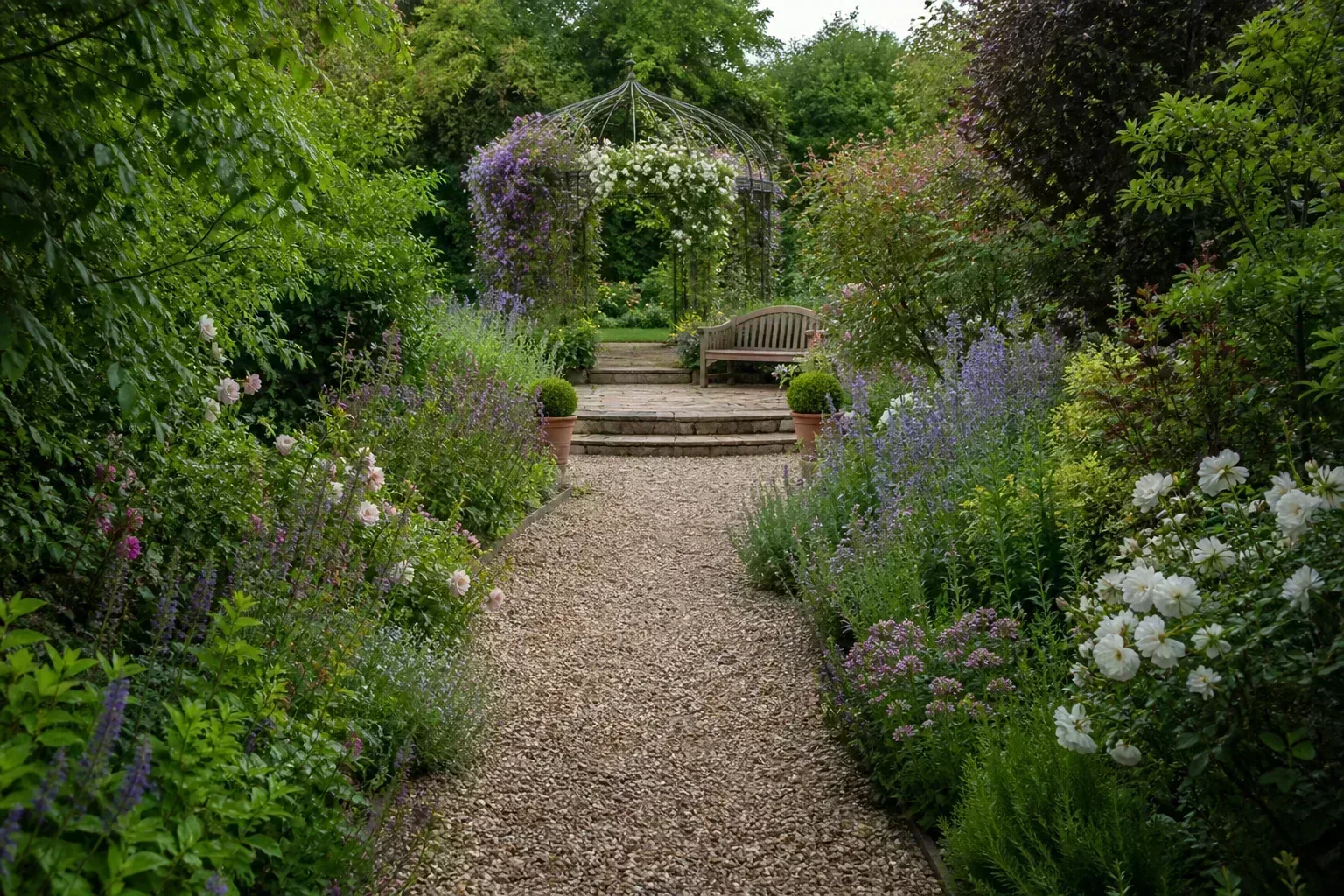
Gravel walks and narrow planted alleys
Gravel paths with firm edging are classic: they drain well, crunch satisfyingly, and pair with brick or stone step accents. Narrow alleys planted tightly on both sides—trellised vines, tall perennials, shrubs—create intimacy. Do not skimp on width for comfort; 36 inches minimum for single file, wider if two people stroll side by side.
Open terrace seating and gazebo destinations
English gardeners design for daily use: morning coffee, evening wine, reading in filtered shade. A terrace paved or graveled, backed by a tall hedge for privacy, extends living outdoors. A simple metal or timber gazebo covered in clematis or rose can anchor the far end of a path so the walk has a destination. Container groupings on terraces allow seasonal rearrangement without digging.
Almost-symmetrical layouts that still feel natural
Perfect mirror symmetry suits grand houses; near symmetry suits most homes. Match major elements—two similar borders flanking a path, paired allium drifts, twin climbers on a pergola—but allow differences in cultivar or height. The eye reads harmony without rigidity.
Herbaceous borders and color drifts
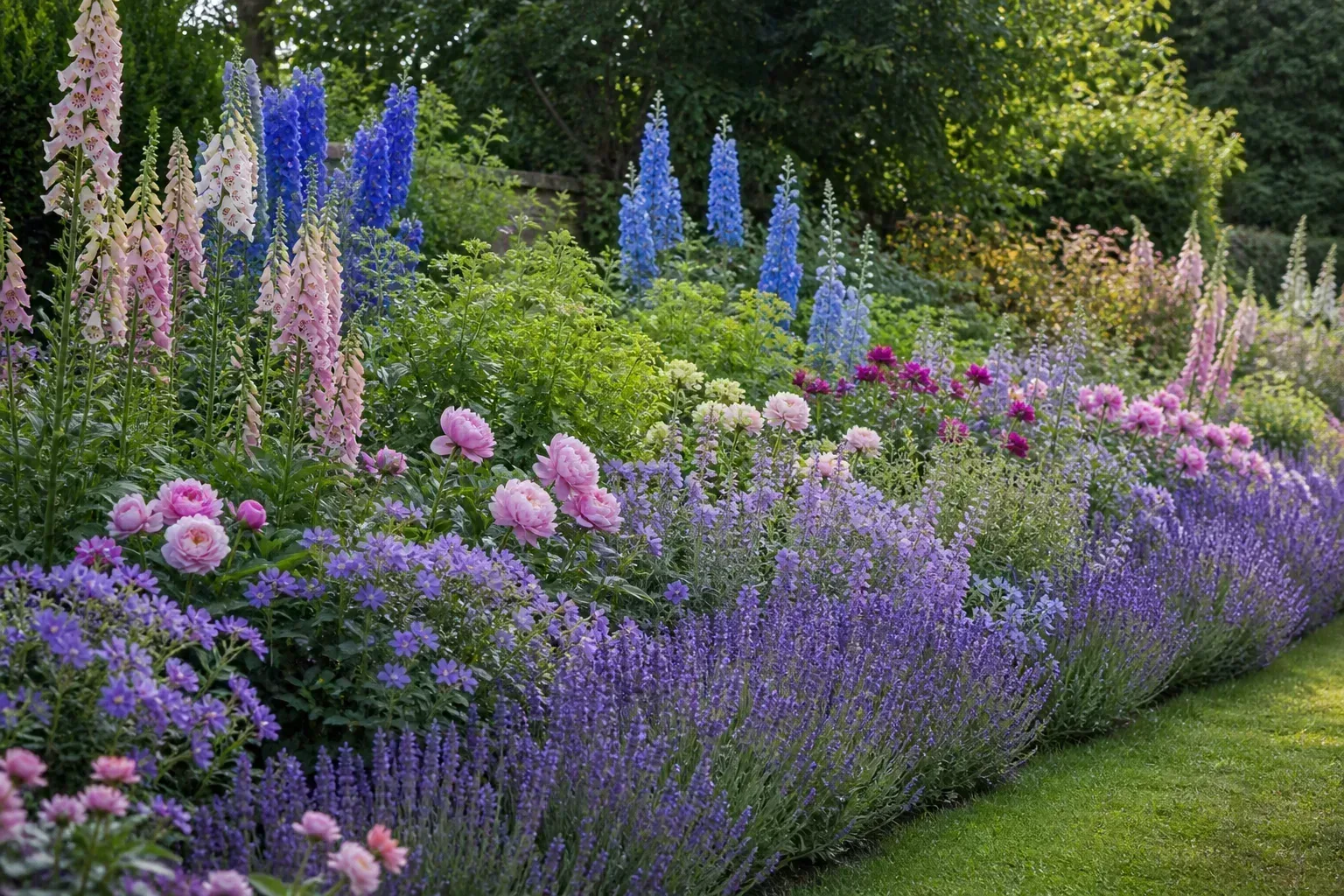
If you remember one planting technique, make it drifts. Repeat the same plant in odd-numbered groups (three, five, seven) spaced through the border so color reads in waves.
How to plant drifts instead of polka-dot singles
Buy more of fewer species. A border with five repeats of three plants looks richer than fifteen one-offs. Space drifts so peak bloom overlaps—catmint finishing as salvia ramps up, for example. Edge drifts with low evergreen hedges or crisp metal edging if you want formal contrast to soft flowers.
Layering tall, medium, and front-of-border plants
Follow the RHS layering guidance: tall shrubs and spires (delphinium, foxglove, hollyhock) toward the back or center of island beds; medium mounds (hardy geranium, catmint, peony) in the middle; low edgers (lavender where drainage is sharp, alchemilla, nepeta cultivars) at the front. See-through plants—tall but airy—can sit forward without blocking the view.
Late-season color and intentional seedheads
English borders often peak again in late summer and autumn with asters, anemones, sedums, and ornamental grasses. Decide deliberately whether to deadhead for rebloom or leave seedheads for birds and winter silhouette—both are valid English traditions. Grantchester-style gardens famously let plants go slightly “unkempt” into autumn for texture and wildlife value.
Roses, climbers, and vertical drama
Vertical elements lift the eye and frame doors, arches, and walls.
English climbing roses for walls and arches
Roses are non-negotiable in many English schemes. Climbing and rambling roses cover pergolas, brick walls, and fence lines. Cultivars like ‘Zephirine Drouhin’ (fragrant pink, nearly thornless), ‘New Dawn’ (pale blush repeat bloomer), and ‘Pearly Gates’ offer classic color range. Match rose choice to your USDA zone and disease pressure—humid summers favor resistant cultivars and open pruning for airflow. Our rose care guide covers ongoing feeding and pruning rhythm.
Wisteria, clematis, and trellised vines
Wisteria on sturdy pergolas delivers spring drama; commit to annual pruning or it becomes a structural risk. Clematis pairs beautifully with roses—roots shaded, stems in sun. Trellised annual sweet peas add inexpensive cottage perfume for one season.
Hanging baskets and pub-style container flushes
Hanging baskets of begonias, petunias, and trailing ivy echo English pub and village storefront plantings. They are excellent for renters or brick façades where in-ground beds are limited. Refresh baskets seasonally; they are high-water, high-feed displays by design.
Edible English design: potagers and espalier
English design does not segregate beauty from utility.
Geometric vegetable beds with ornamental borders
Potager-style beds arrange vegetables in geometric patterns—often rectangles or radiating segments—with herbs and flowers at edges for pollinators and cutting. Kale, chard, leeks, and runner beans are historically accurate and photogenic. Raised beds clarify geometry on sloped sites; keep paths wide enough for a wheelbarrow.
Espaliered fruit on brick and fence walls
Espalier turns fruit trees into living architecture. Start with a young tree, a flat support system, and patience; summer pruning controls lateral arms. South-facing brick in cool climates is ideal; in hot climates protect trunks from reflected heat.
Herbs woven through flower borders
Lavender, sage, thyme, and chives belong in flower borders—not only in a separate herb patch. Their foliage texture supports English green-on-green composition even when not in bloom. Confirm lavender suits your drainage; soggy clay kills it faster than any pest.
Wild edges, meadows, and the “perfectly unkempt” look
The most photogenic English gardens balance control with release.
Rough-grass transitions and unmowed margins
Rough grass or low-mow meadows between formal lawn and hedge line soften transitions and support pollinators. This is not “ignore the yard”—it is chosen reduction of mowing frequency on defined margins. Check HOA rules before converting front lawn; back margins are usually safer.
Formal hedge meets wildflower field
A sheared yew or beech wall backing a wildflower meadow—cornflowers, oxeye daisy, knapweed where appropriate—creates high contrast. The hedge supplies winter structure; the field supplies summer movement and insect value.
When to deadhead—and when to leave seedheads standing
Deadhead roses and repeat-blooming perennials if you want more flowers. Leave coneflower, sedum, and grass seedheads if winter interest and birds matter more than tidiness. English gardens legitimately do both in different beds on the same property.
30 English garden design ideas to steal (and adapt)
Use this catalog as a menu. Pick three to five ideas that solve your yard’s problems first—privacy, boring façade, flat border, no seating—then add romance.
Structure and enclosure (ideas 1–8)
- Color drifts along a long narrow bed — mass one hue in repeating chunks for walking-speed impact.
- Tall hedge wall with loose flowers in front — formal backdrop, soft foreground.
- Clipped boxwood spheres beside a cottage door — instant English curb appeal at small scale.
- Brick garden wall with espaliered apple — heat, fruit, and vertical interest together.
- Mixed evergreen hedge — boxwood front, taller beech or hornbeam behind.
- Topiary sentinel at the gate — one strong shape, not a forest of cones.
- Garden wall enclosing a secret seating court — hides trash cans and neighbor windows.
- Low boxwood edging defining a parterre or rose circle — geometry readable in winter.
Border, color, and texture (ideas 9–16)
- Pink-and-purple late-season border — asters, anemones, cosmos, nicotiana mingling.
- Blue-and-white cool border — catmint, iris, white foxglove (note toxicity), silver artemisia.
- Green texture garden — foliage-first composition with minimal flower color.
- Layers of purple echinacea and blue veronica — round versus spire contrast.
- Almost-symmetrical twin borders — similar plants, slightly different heights.
- Overflowing bed edges — salvia and geranium spilling onto gravel (choose plants that tolerate foot traffic).
- Stone steps planted with creeping sedum — controlled “overgrown” charm.
- Perennials mixed with bold-leaf tropicals in pots — London courtyard trick for US summers; overwinter tender pots indoors.
Vertical, container, and small-space (ideas 17–24)
- Climbing rose on a door or arbor — choose repeat bloomers in humid climates.
- Wisteria on a heavy pergola — commit to pruning.
- Trellised narrow path alley — vines plus tall perennials for depth in skinny lots.
- Hanging baskets on a porch or pub-style patio — seasonal color at eye level.
- Bold cottage containers at the entry — dahlias and geraniums in terracotta.
- Rustic stone trough planters — evergreen boxwood winter structure with spring bulb changeouts.
- Wall of layered color in a small border — tall back, shrub middle, low front.
- Metal gazebo with clematis and pale alliums — destination at path’s end.
Seasonal, wildlife, and winter-interest (ideas 25–30)
- Geometric potager with ornamental edging — edible beauty for front or back yard.
- Unmowed rough-grass margin with bench — meadow view from a mowed pocket.
- Pollinator patio with trumpet vine arbor and container gaura — small-space habitat.
- Open terrace backed by tall hedge — outdoor dining with wind protection.
- Late October border with mums, seedheads, and low boxwood — intentional autumn peak.
- Winter garden left standing — frost on grasses and sedum; spring cleanup delayed for structure.
Each idea scales: a city gardener might execute only 17, 20, and 23; a suburban lot might combine 2, 9, 14, and 28.
Plant palette: what to grow in an English-style garden
Names vary by zone; roles stay consistent.
Backbone shrubs and evergreens
Boxwood or substitute evergreen for edging; yew or beaver-friendly alternative for tall hedges; shrub roses for repeat color; hydrangea where summers are not brutally dry. Spirea, weigela, and philadelphus (mock orange) add spring structure and scent.
Perennials and self-seeders for borders
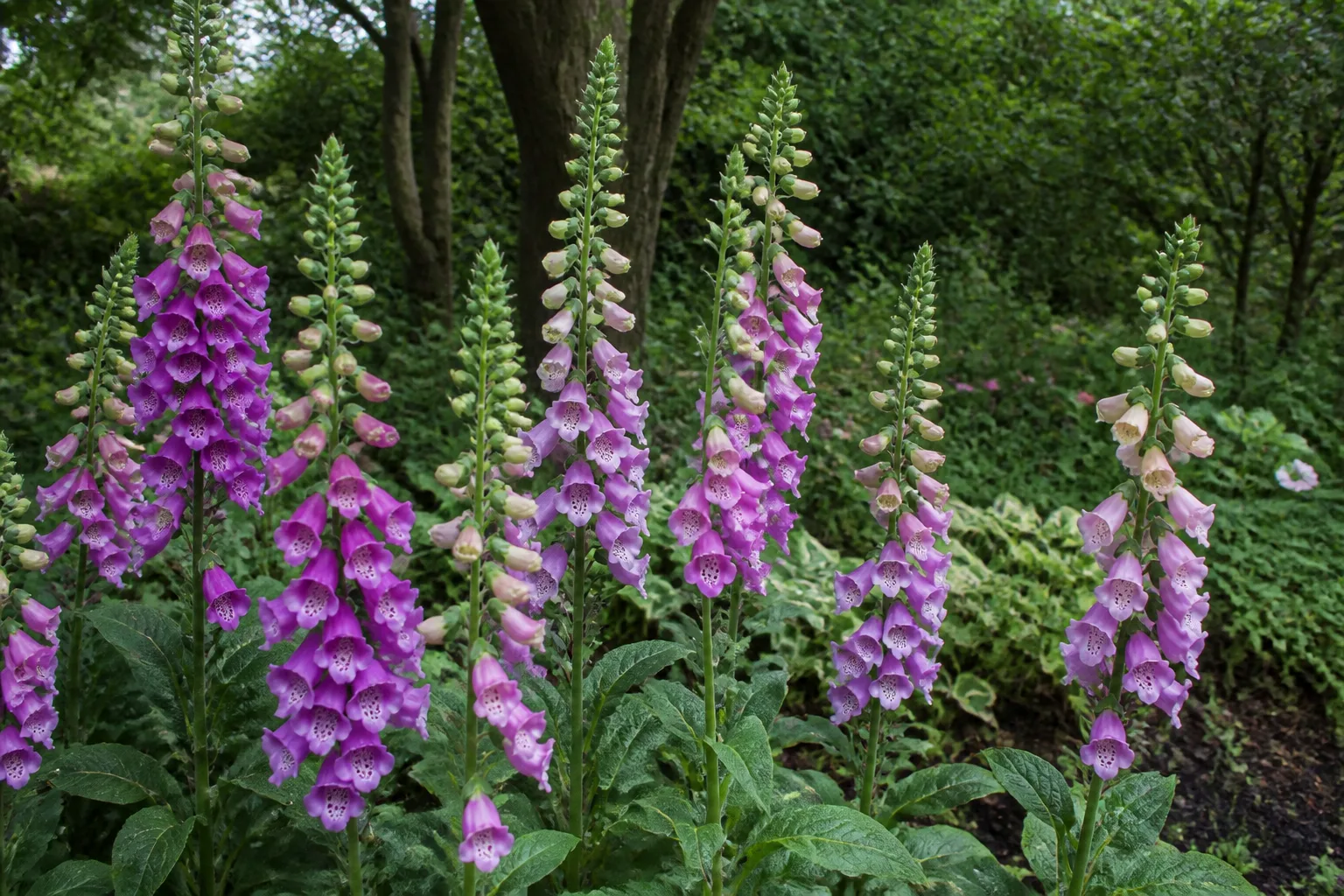
Foxglove for vertical drama (toxic if ingested—place carefully with kids and pets), delphinium and lupine in cool-summer climates, hardy geranium, catmint, salvia, peony, allium, aster, echinacea, sedum, and ornamental grasses for autumn. Self-seeders like poppies and aquilegia fill gaps affordably.
Climate swaps when classic English plants struggle
Hot, dry summers: favor Russian sage, agastache, yarrow, and ornamental grasses over delphinium; use patio roses instead of finicky tea roses. Humid summers: prioritize air circulation, disease-resistant rose cultivars, and fewer dense double flowers. Cold winters: choose hardy shrub roses, protect graft unions, and skip marginally hardy boxwood in exposed sites. Our lavender care guide helps where classic English lavender struggles without sharp drainage.
Maintenance calendar for English-style gardens
Spring and summer tasks
Edge beds, compost mulch, stake tall perennials before storms, shear formal hedges after spring flush, plant summer baskets, deadhead roses if rebloom is the goal, and irrigate new drifts through the first dry month. Divide overcrowded geraniums and catmint after bloom if centers are dying out.
Autumn editing and winter structure
Cut back diseased foliage; leave healthy seedheads if desired. Plant spring bulbs into drifts before ground freezes. Clean and sharpen hedge tools. Review bare winter bones: if the garden looks empty, add evergreen structure or a specimen conifer rather than more summer-only annuals.
Conclusion
English garden designs succeed when structure comes first and planting repeats with purpose. You do not need a manor, a wall of yew, or thirty simultaneous projects. Audit your site, pick a style tier that matches your maintenance budget, install paths and evergreens before splurging on one-off perennials, and choose three design ideas from the catalog that solve real problems—privacy, colorless façades, nowhere to sit. Drifts beat polka dots, almost-symmetry beats chaos, and a garden you actually walk through daily beats a border viewed only from the driveway. Build that framework, then let the roses lean where you want them.