Best Fall Flowers for Curb Appeal
The prettiest fall flowers are not always the best fit. Match bloom timing, light, height, and hardiness to create curb appeal that lasts beyond one weekend.
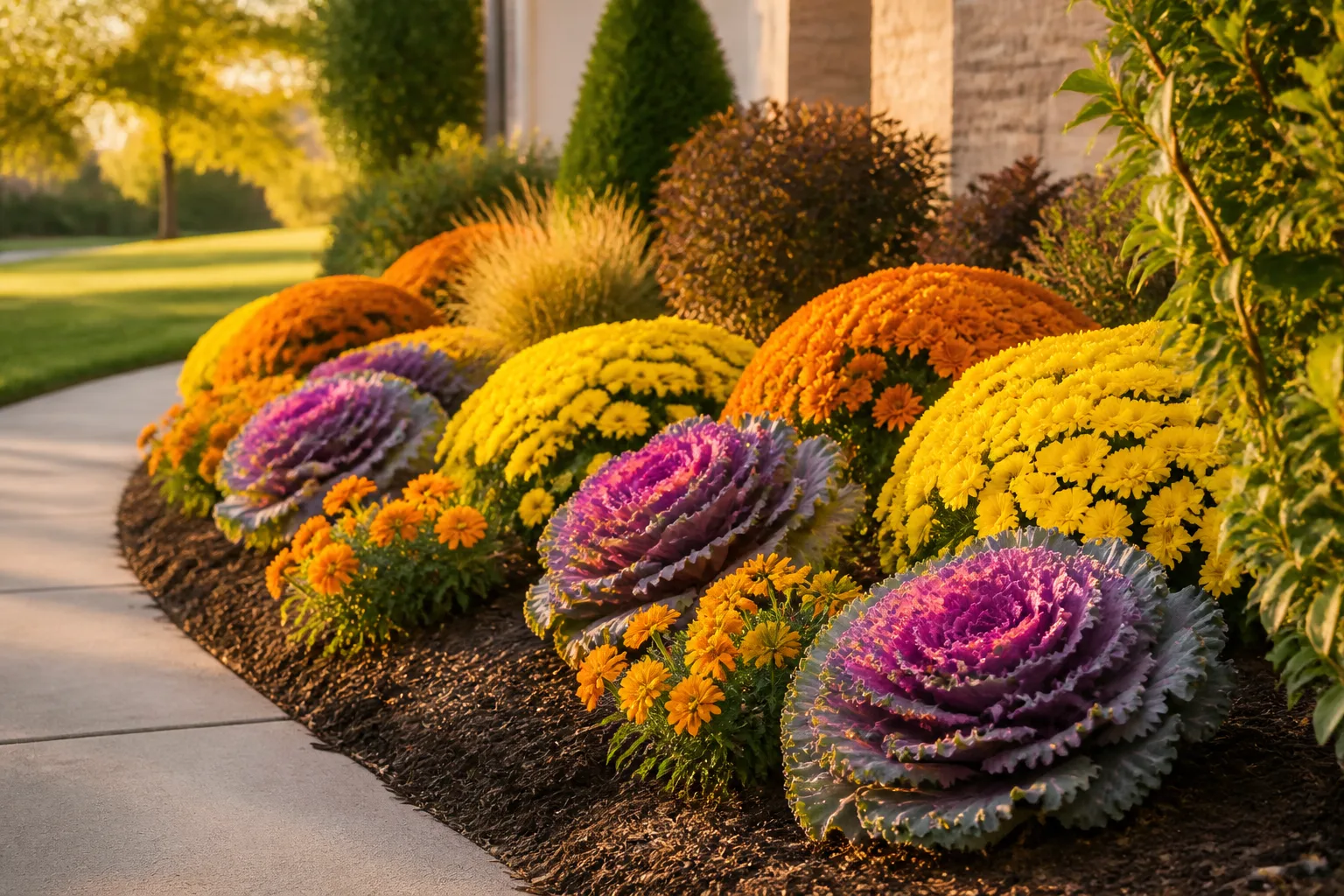
The best fall flowers for curb appeal do more than provide a bright color after summer fades. They hold their shape from the sidewalk, tolerate shorter days and cooler nights, and fit the amount of time left before your first hard freeze. A good autumn display might be a row of copper mums, a pot of burgundy foliage and pansies, or a loose perennial border where asters and sedum keep pollinators moving.
The key is to stop treating “fall flowers” as one category. Some are cool-season annuals that improve as temperatures drop. Some are warm-season plants making a final show before frost. Others are perennials you plant now for a better display next year. Match the plant to the job, then repeat a small palette so the front of the house looks intentional rather than like a clearance rack.
Start With the Front-Door View, Not a Random Plant List
Stand at the street, then at the end of the driveway, and finally on the front step. Note which planting areas are visible from each point, how many hours of direct sun they receive, and whether the view is blocked by a porch rail or foundation shrub. Curb appeal is judged at a distance, so a single small flower can disappear while a group of five or seven plants reads as a strong color block.
For a bed beside the walk, prioritize a tidy edge, a low front layer, and one repeatable color. Place taller plants behind the sightline rather than directly across the path. Near the door, use containers for closer detail: flowers with fragrance, interesting leaves, or a bloom color that echoes the door, brick, or mailbox.
Measure the site before buying. “Full sun” generally means about six or more hours of direct light, but a west-facing wall can add reflected heat that makes a plant behave differently than it would in an open bed. A covered porch may be bright enough for foliage but too dark for heavy flowering. When in doubt, choose plants for the light the site gets after 1 p.m., because that is often the limiting part of a fall display.
Pick Flowers That Still Have Time to Perform
Planting date is less important than the relationship between plant maturity, local weather, and the first frost. A nursery plant already carrying buds can create impact quickly; a packet of seed may be a better value but may not flower before cold weather arrives. The RHS recommends sowing hardy annuals when the soil is moist in September or October in its climate, and notes that autumn-sown plants can flower earlier the following year. That is useful guidance, but local winter temperatures and the seed packet’s instructions still decide whether the technique fits your garden. RHS
Use this simple rule: buy established plants for color within weeks, sow only fast or hardy choices with enough growing time, and plant perennials early enough for roots to settle. In a cold-winter region, a newly installed perennial may survive but show little top growth before dormancy. In a mild region, a late planting may keep flowering through winter. Neither outcome is a guarantee; soil drainage and a sudden freeze can matter as much as the calendar.
Use Your First Frost as the Deadline
Look up your average first frost date, then treat it as a planning estimate rather than a promise. Tender annuals such as zinnias, cosmos, petunias, and calibrachoa can look excellent well into fall if nights remain mild, but one frost may end the show. Pansies, violas, calendula, snapdragons, and many hardy perennials are better choices when you want color that can tolerate repeated cool nights.
Count backward from that date. Give a recently transplanted flower roughly two weeks to recover and fill out, then ask whether the plant normally needs additional weeks to make buds. If the answer pushes flowering past the likely freeze, choose a blooming nursery plant or switch to a cool-season selection. This prevents the familiar disappointment of planting a flat of tiny annuals in late October and expecting a mature border before Thanksgiving.
The Best Fall Flowers for Full-Sun Curb Appeal
Sunny front beds have the largest palette, but they also reveal poor watering and weak design quickly. Combine one bold focal plant with smaller mounding flowers and a foliage plant, and leave enough space for air movement. The selections below cover instant impact, height, late-season value, and lower-maintenance structure.
Mums for Instant Color
Garden mums are the classic fast answer because a single full plant can create a round, saturated mound in yellow, bronze, orange, white, red, or purple. Choose a plant with many unopened buds rather than one that is already completely open. It will still give color now, but it has more bloom runway after transplanting. Set three matching plants in a row beside the walk, or use two large containers to frame the door.
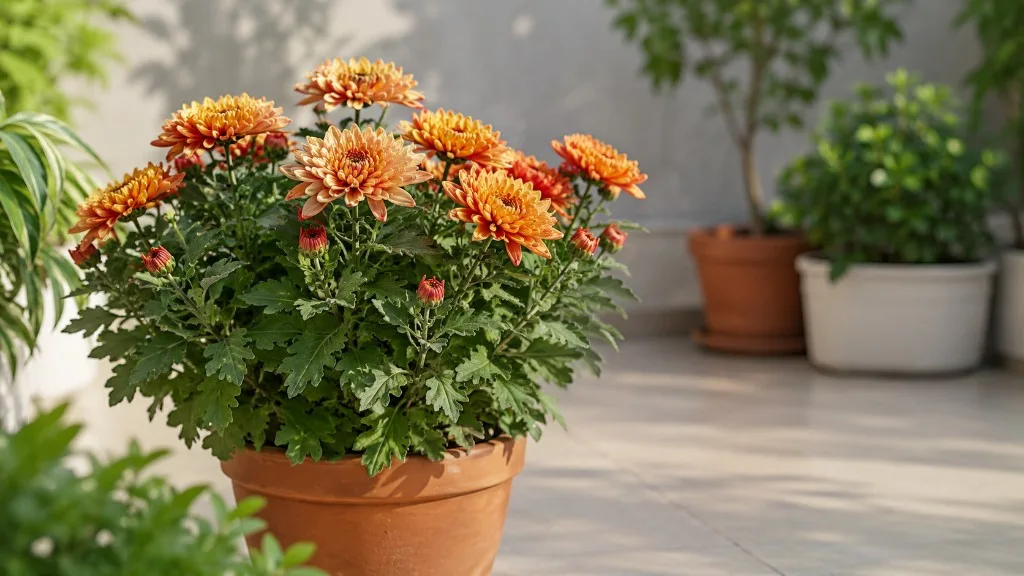
Mums need bright light and soil that stays evenly moist without becoming waterlogged. A pot that dries out every afternoon may need a larger container or a position with morning sun and protection from reflected heat. Keep the foliage clean, remove spent flower heads when the plant begins to look tired, and avoid late-season overfeeding. Late nitrogen can push soft growth that is more vulnerable to cold and wet; the RHS specifically cautions against feeding late in the season for this reason. RHS
One important distinction is often missed: not every mum sold in a decorative pot is equally hardy. A plant can be labeled “garden mum” and still fail to return if planted late, kept too wet, or exposed to a colder winter than its cultivar tolerates. Treat fall mums as instant annual color unless the label gives credible hardiness information and you have time to plant them in the ground before the soil freezes.
Dahlias for Drama
Dahlias are the choice when the display needs a focal point rather than a low carpet. Their large blooms and dark foliage can make a porch pot or sunny border look designed with very little repetition. Use medium-height varieties near the front walk and reserve tall types for the back of a bed where they will not obscure windows or lean into the path.
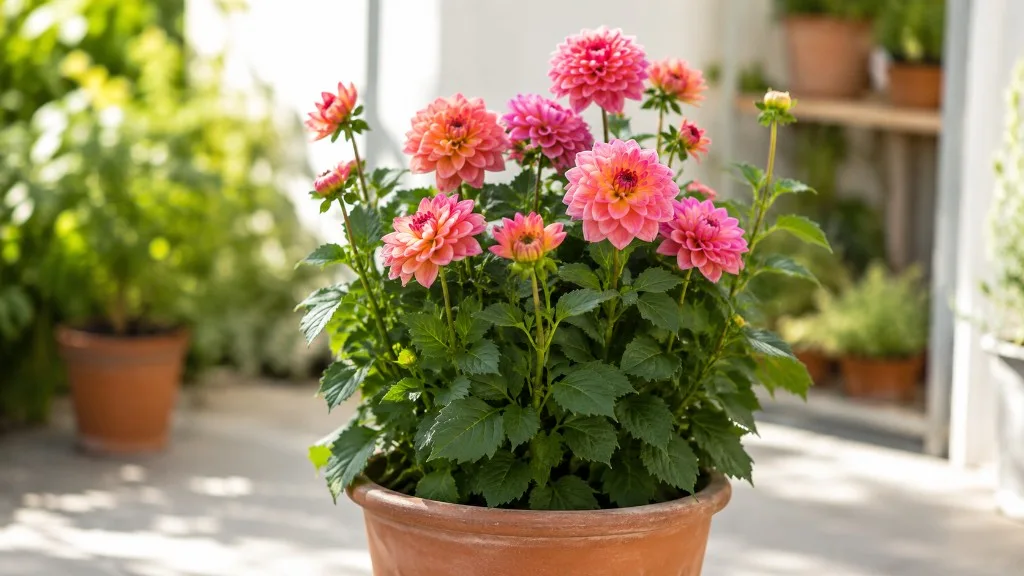
Give dahlias full sun, rich but well-drained soil, and consistent moisture. Remove flowers as they fade to redirect the plant toward more buds, but do not confuse a dahlia’s late-season beauty with winter hardiness. In cold climates, frost usually blackens the top growth and signals that tubers need lifting, drying, and storing if you want to save them. In mild climates, some tubers can remain in the ground with excellent drainage and a protective mulch, but wet winter soil is a greater threat than cold alone.
If pets chew garden plants, put dahlias lower on the list. ASPCA Animal Poison Control lists dahlias as toxic to dogs, cats, and horses, with mild gastrointestinal signs and mild dermatitis among the clinical signs. Keep tubers, leaves, and flowers away from animals and contact a veterinarian if ingestion is suspected. ASPCA Animal Poison Control
Zinnias and Sunflowers for Fast Height
Zinnias are excellent for a sunny bed that needs a final burst of color before frost. They bring clear pink, orange, red, yellow, white, and green tones, and a group of the same variety looks more polished than a scattered mix. Choose compact or medium cultivars near the curb, and keep tall forms toward the rear so the flowers can be seen without flopping into the walkway.
Zinnias prefer sun, airflow, and soil that drains after rain. Water at the soil line when possible, and remove diseased leaves instead of wetting the whole canopy at dusk. They are usually annuals, so think of them as a bridge between the fading summer border and the permanent perennials you want to establish over time.
Sunflowers give a different kind of height and are especially useful against a blank fence, porch column, or garage wall. Plant branching types when you want several smaller blooms rather than one giant head. Their seed heads can also extend the garden’s interest after petals fade, although you may need support in windy sites. For a front bed, place sunflowers where they will not shade shorter flowers or drop heavy heads across a narrow path.
Asters, Goldenrod, and Sedum for Late Pollinators
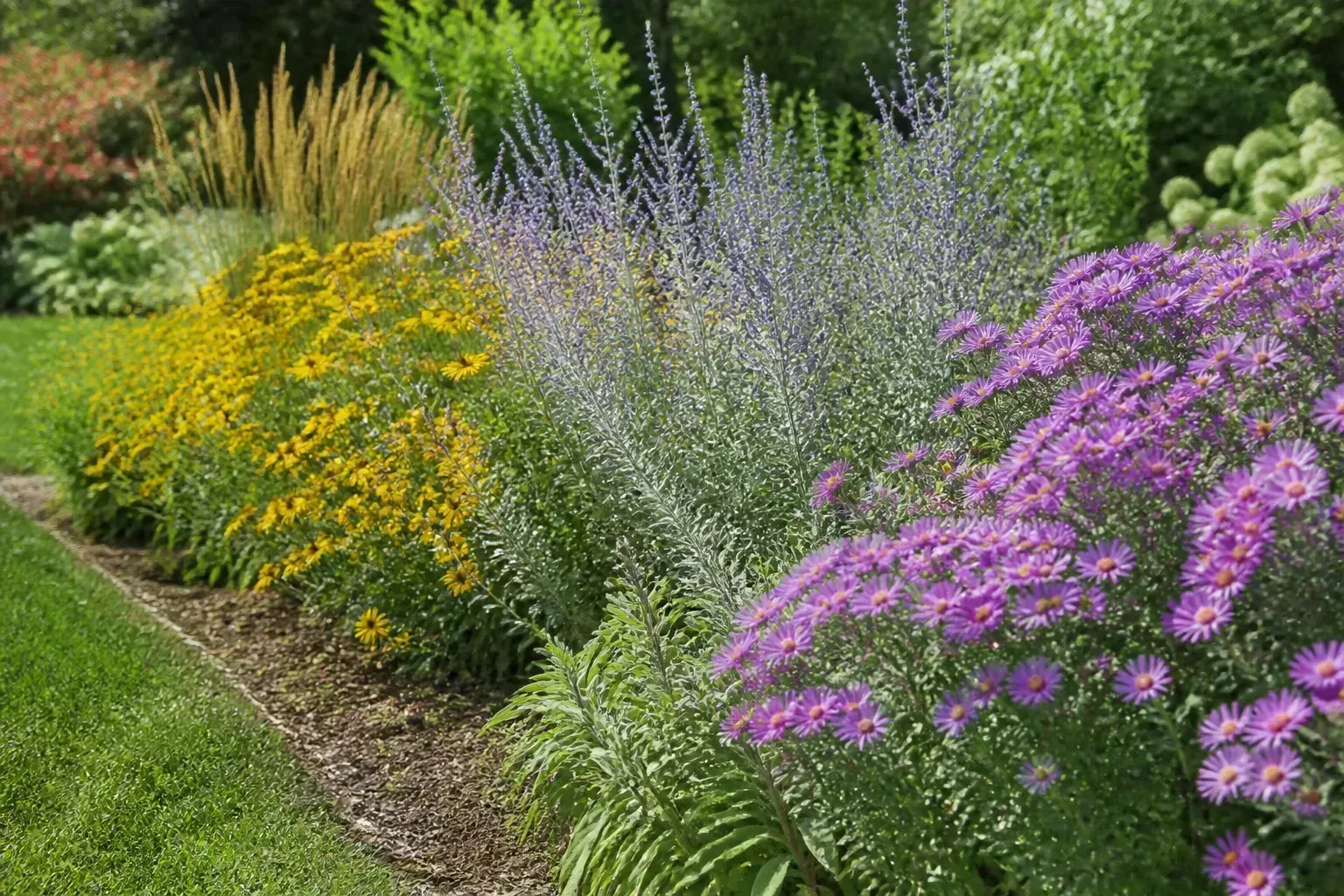
This trio makes a strong case for planting beyond decorative annuals. Asters provide daisy-like flowers in pink, lavender, blue, or purple; goldenrod adds upright yellow sprays; and ‘Autumn Joy’ sedum offers flat heads that shift from pink to coppery red. Together, they create a late-season color sequence with different heights and textures instead of a single week of identical blooms.
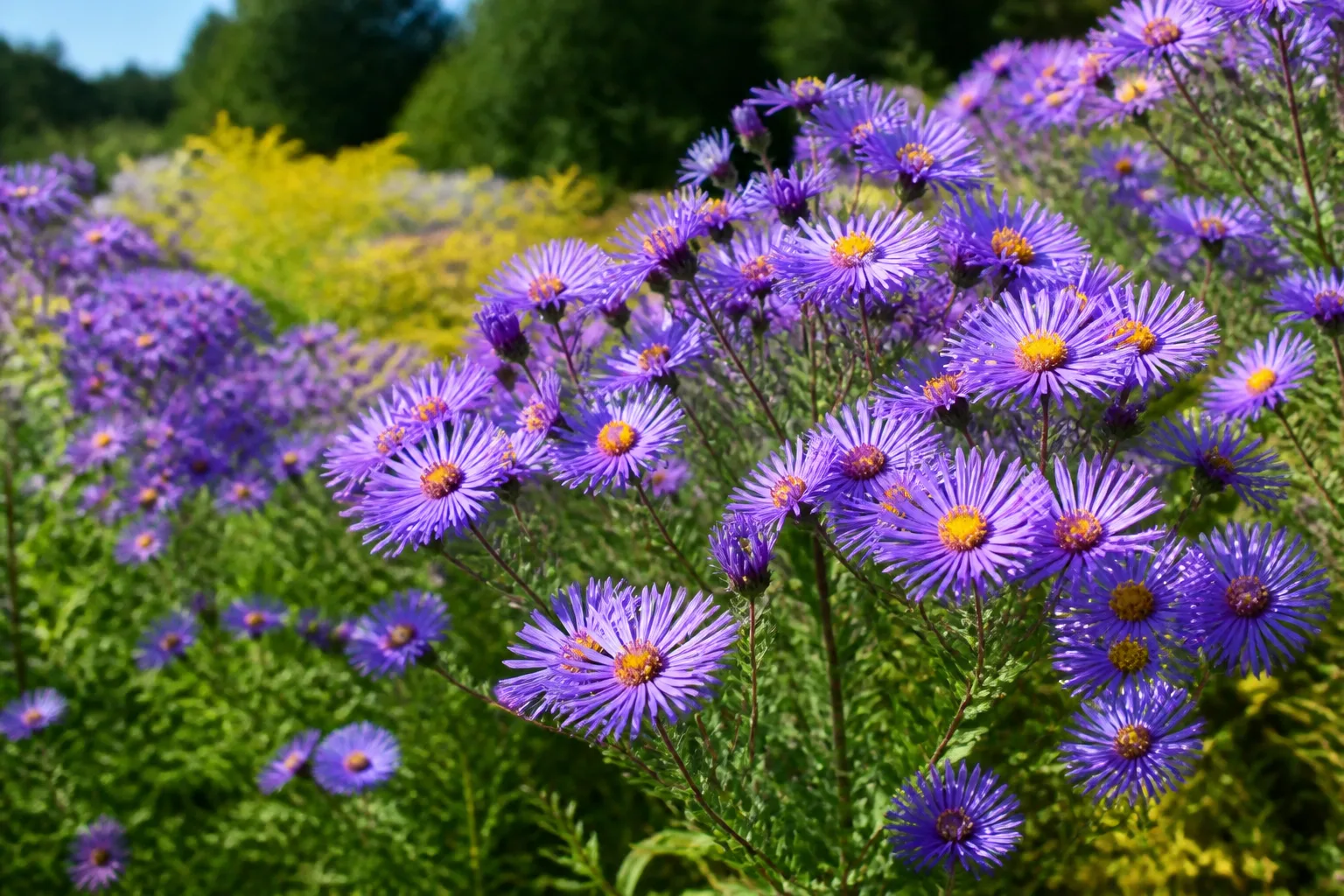
Plant asters where they get sun and good air circulation. Pinching earlier in the season can create a fuller plant, but heavy pruning too late can remove buds. Goldenrod is valuable for late insects and is often wrongly blamed for hay fever, which is more commonly triggered by wind-pollinated ragweed. Choose a well-behaved cultivar or a local native species, and give it room to spread without taking over the sidewalk.
Sedum earns its place in dry, sunny beds because succulent leaves tolerate short dry spells once established and the flower heads persist as they age. The RHS highlights ‘Autumn Joy’ and related selections as excellent autumn plants for bees and butterflies, including in pots and window boxes. RHS Do not put sedum in a bed that stays wet after storms; drought tolerance is not the same as tolerance of saturated roots.
Best Fall Flowers for Part Shade and Porches
Part shade is not a problem if you design for foliage and choose flowers that tolerate cooler, lower-light conditions. A north-facing porch, tree-filtered bed, or covered entry often looks better with a limited palette than with sun-loving annuals that stretch and stop blooming. Check whether the site gets two to six hours of direct light, bright indirect light, or almost none before selecting plants.
Pansies and Violas for Cool-Weather Color
Pansies and violas are the most dependable way to make a fall container feel finished. Their faces read clearly from the doorstep, they come in nearly every useful porch color, and cool temperatures often improve their performance. Use pansies where the viewer is close enough to appreciate the large flowers; use violas for a denser, smaller-flowered mass along the edge of a bed or window box.
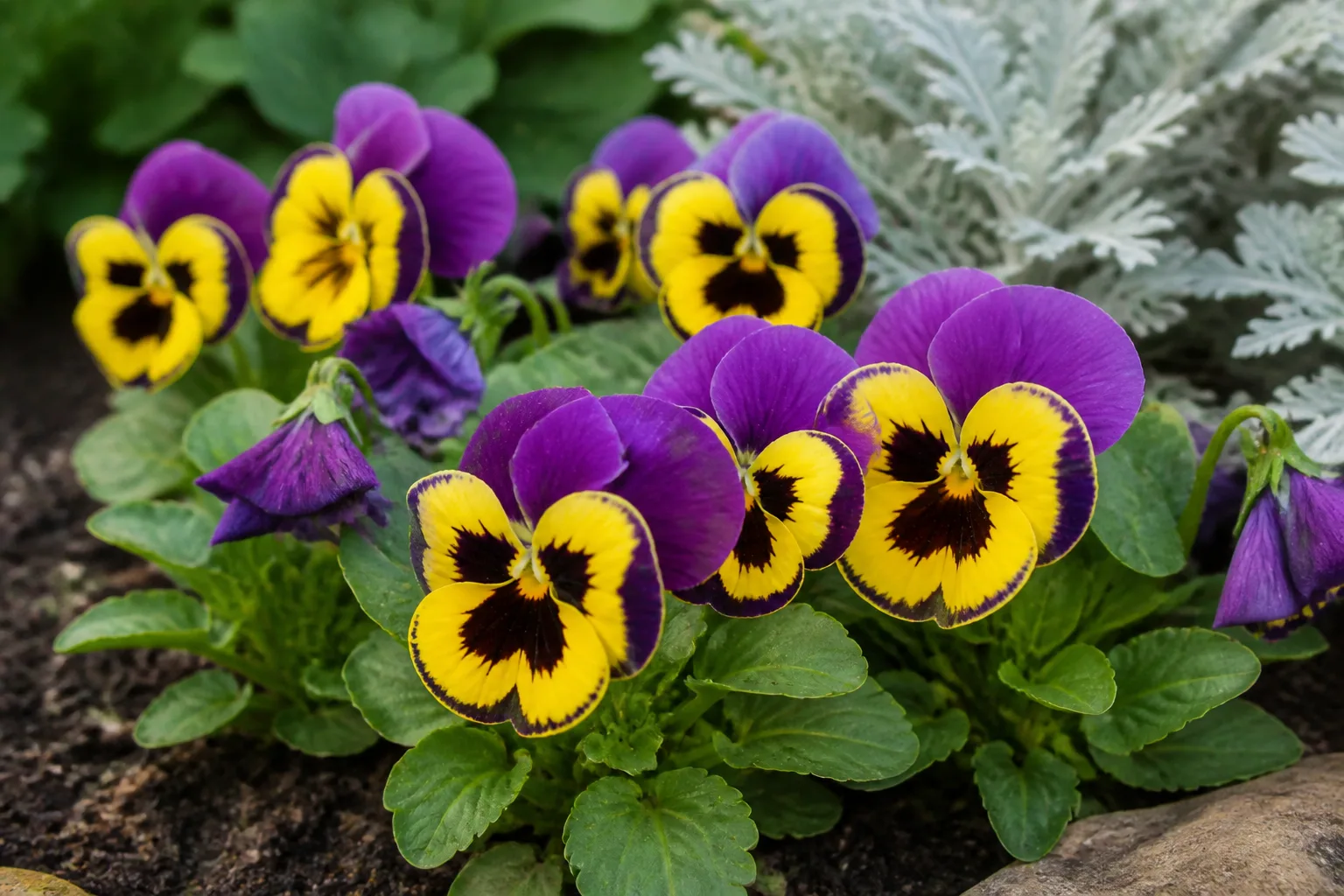
Plant them in a container with a drainage hole and a quality potting mix, not heavy garden soil. Keep the mix lightly and evenly moist, and remove old flowers with their stems when they begin to look ragged. In mild climates, pansies can carry through winter and return to stronger growth in spring. In hot climates, they may sulk until the season cools, so wait for a genuinely cooler planting window rather than installing them during the last stretch of summer heat.
Pansies and mums solve different problems. Mums deliver a rounded mass of instant autumn color; pansies tolerate colder weather and provide a more intimate, face-level detail. If you can use two containers, place mums or a dark-leaved focal plant at the back and pansies or violas at the front rather than filling both pots with the same height and texture.
Begonias and Fuchsias for Warm, Shady Displays
Begonias are useful where the porch is bright but does not receive much direct sun. Wax begonias contribute steady flowers and a neat mound, while rex begonias are usually grown more for patterned foliage than for a long fall flower show. Give them even moisture and drainage; shade does not mean the pot should stay wet.
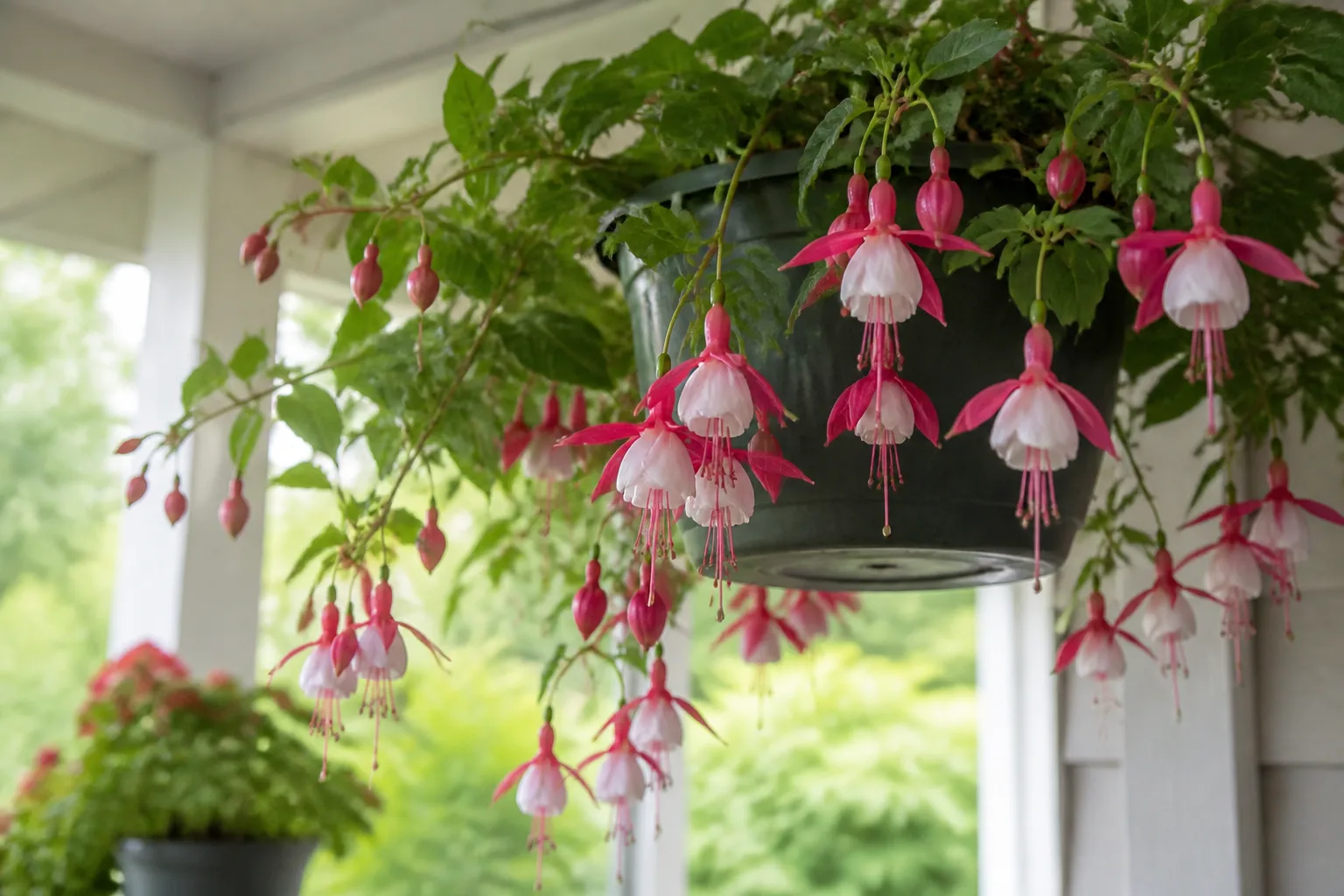
Fuchsias create a more theatrical look with pendant flowers that spill over a container edge. They prefer protection from harsh afternoon sun, drying wind, and sudden cold, so they are best for a sheltered porch rather than an exposed mailbox bed. In climates where they are tender, plan to treat them as seasonal plants or move containers under cover before frost.
Use foliage to keep a shady display attractive between flushes of flowers. Silver dusty miller, burgundy coleus, or a glossy green fern can carry the composition when blooms pause, but check safety and local growing conditions. NC State Extension describes dusty miller as drought-tolerant once established, yet also notes that all parts are toxic if ingested and that contact can irritate skin. Wear gloves when handling it and do not use it where children or pets routinely nibble plants. NC State Extension Gardener Plant Toolbox
How to Combine Flowers So the Yard Looks Designed
Plant choice creates potential; arrangement creates curb appeal. A front bed looks intentional when the same color, plant, or foliage note appears at least twice and when the plants are grouped by height rather than placed in a one-of-each row. Repetition is more valuable than adding another rare flower.
Use Thriller, Filler, and Spiller With a Fall Twist
For a porch container, start with the site’s light and choose one thriller: a dahlia, compact ornamental grass, tall snapdragon, or small sunflower in a large pot. Add fillers such as mums, pansies, calendula, celosia, or violas to cover the soil and build the middle. Finish with a spiller such as trailing nasturtium, ivy-leaf geranium, or a low trailing foliage plant if the pot can stay warm enough.
The formula is flexible, not a rule that every container needs three species. A pair of identical pots with one plant each can look more elegant than an overstuffed mixed container. If you do mix plants, match their water needs. A drought-tolerant sedum should not share a constantly irrigated pot with a moisture-loving begonia simply because the colors work together.
Epic Gardening’s reviewed container combinations emphasize varied flower forms, foliage, and bloom sessions because pollinators need access to nectar and pollen, while the gardener needs a planting that remains visually full. That same principle works for curb appeal: combine one large flower, one fine texture, and one trailing or broad-leaved form so the display has movement. Epic Gardening
Repeat Color and Group Plants in Drifts
Choose one dominant color family and one contrast. For example, use bronze, orange, and yellow as the warm palette, then add burgundy foliage for depth. Or repeat purple pansies, lavender asters, and silvery foliage, then use one yellow accent near the door. A limited palette is easier to maintain and photographs better than every available flower color at once.
In beds, plant in drifts of at least three where space allows. A drift of calendula or zinnias looks purposeful; three unrelated singletons look accidental unless the garden is deliberately informal. Repeat the same plant on both sides of a walk, but do not force symmetry if the light differs. The sunny side might use sedum and asters while the shaded side repeats the color with pansies and begonias.
Leave a little quiet space. Bare mulch or a low evergreen shape gives the eye somewhere to rest and makes bright blooms look brighter. Overcrowding may create instant fullness, but it also traps humidity, hides fading leaves, and forces you to water more often. Plant for the size the flowers will reach in four to six weeks, not the gap you see on shopping day.
Planting and Care From Shopping Day to First Frost
Prepare the site before the plants arrive. Pull weeds, loosen compacted topsoil without turning the bed into powder, and check where rain collects. Mix in compost only when the soil needs organic matter; do not bury roots in a rich, water-retaining pocket inside otherwise fast-draining soil. For pots, use fresh potting mix and confirm that water can escape freely from the bottom.
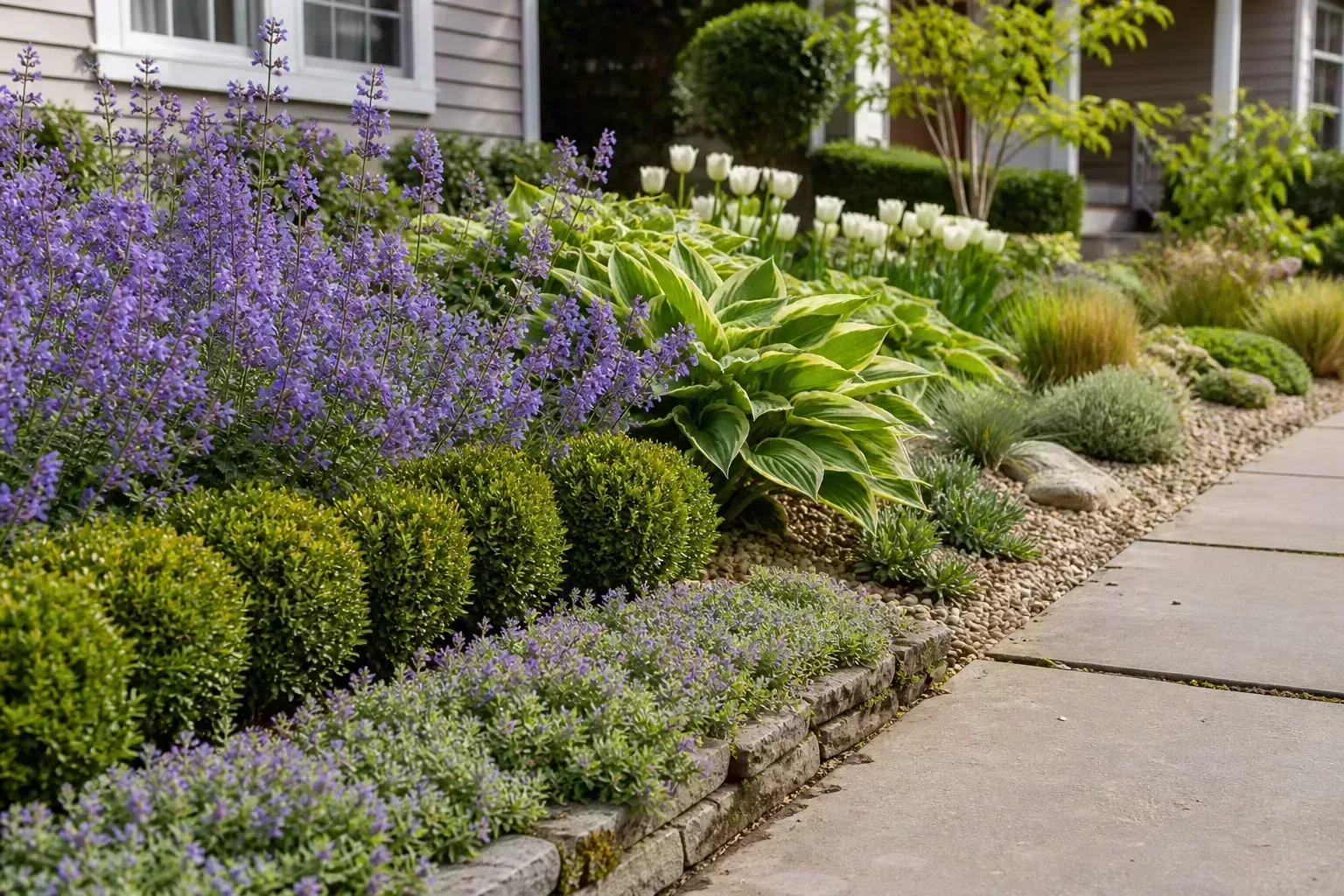
Set plants out while the root ball is still moist, and plant at the same depth as the nursery container. Water the entire root zone after planting, then check the soil with a finger or small trowel rather than following a fixed daily schedule. Mulch beds lightly, keeping mulch away from stems. Containers dry faster than beds, especially on concrete or near a south- or west-facing wall, so move them to a less exposed spot if the foliage wilts every afternoon.
Water, Deadhead, and Feed Carefully
The first two weeks are about root contact, not forcing flowers. Water deeply enough to wet the root ball and surrounding soil, then allow the surface to begin drying according to the plant’s needs. A shallow sprinkle can leave the original nursery root ball dry inside a wet-looking bed. A pot saucer that holds water can be just as damaging as missed irrigation, particularly for sedum, rosemary-like herbs, and other plants that need drainage.
Deadhead plants that respond to it, including dahlias, zinnias, roses, marigolds, pansies, and many daisies. Snap off the flower and its stem down to a healthy leaf joint when possible. Do not deadhead every seed head automatically: asters, sunflowers, sedum, and other plants can provide food or structure for wildlife after bloom. The right cut depends on whether you want another flush, a tidy container, or winter habitat.
Avoid a heavy high-nitrogen feeding late in the season. If a container plant is actively flowering and the label calls for fertilizer, use a restrained, balanced application rather than improvising a strong dose. The goal is to keep healthy existing growth functioning, not to encourage a rush of soft foliage that will be damaged by frost.
Avoid Common Fall Display Mistakes
The first mistake is planting by color alone. A beautiful annual in the wrong light will stretch, fade, or collapse faster than a less dramatic plant in the right site. The second is ignoring drainage because autumn feels wet; repeated rain in a sealed pot or compacted foundation bed can rot roots even while the leaves look thirsty.
The third is buying a plant that has no realistic time to establish. Late-season bargains are worthwhile when you want a short display or can protect the container, but they are not a substitute for a plant with weeks of growing weather ahead. The fourth is overcleaning. Removing every faded perennial stem can discard seed, shelter, and structure; cut diseased material and anything that blocks paths, but leave healthy stems when they add value.
Before a cold night, water dry beds during the day, move tender containers under cover, and protect only plants that benefit from a frost cloth. Do not wrap foliage in plastic or leave a cover resting on flowers for days. After the frost, remove blackened annuals when they are fully collapsed, but wait before cutting a perennial to the ground if its stems can protect the crown or feed birds.
Annuals, Perennials, and Tubers: Choose for Next Year
If you want instant curb appeal, choose annuals and blooming nursery plants: mums, calendula, pansies, violas, snapdragons, zinnias, celosia, petunias, and nasturtiums. They are especially useful when the garden is new, a house is on the market, or a front bed needs a seasonal reset. The trade-off is that many will not return after winter, and some will need steady watering to look good in containers.
If you want a display that gets more valuable over time, use perennials and shrubs as the bones. Asters, goldenrod, sedum, black-eyed Susan, sneezeweed, roses, and suitable hydrangeas can return for years when the site matches their needs. Planting in autumn can be a good establishment window in regions where the soil remains workable and moist; the RHS notes that new herbaceous perennials benefit from soil that is still warm but less dry than in summer. RHS
Tubers and tender perennials sit between the two groups. Dahlias and cannas can deliver a long, dramatic season but may require lifting or winter protection in colder zones. Autumn is also the season to think about spring bulbs, not just fall flowers: the RHS advises planting spring-flowering and hardy summer-flowering bulbs in autumn, while autumn-flowering bulbs should be planted by late summer. RHS A front bed built with fall flowers now and spring bulbs underneath can keep paying back after the first display is gone.
The strongest plan uses all three categories in proportion to your patience. Let permanent plants handle height and structure, use annuals to fill gaps and add immediate color, and reserve high-maintenance tubers for locations where you will actually lift, store, and replant them. Also check state or county guidance before planting vigorous self-seeders or unfamiliar wildflowers. “Easy to grow” is not the same as “appropriate for every region.”
Conclusion
For maximum curb appeal, plant the fall flowers that fit your light, first-frost window, viewing distance, and maintenance tolerance. Use mums or pansies for fast color, dahlias for a focal moment, zinnias and sunflowers for height, and asters, goldenrod, or sedum for a longer ecological and visual finish. In shade, let pansies, violas, begonias, fuchsias, and foliage carry the porch.
Before you buy, sketch the front-door view, repeat two or three colors, and assign every plant a job. Give new roots water and drainage, deadhead with intention, protect tender containers before frost, and leave healthy stems that add winter structure. A small, repeated palette planted at the right time will look more polished—and last longer—than a much larger collection of flowers chosen only because they are pretty in the nursery.



