11 Shade-Loving Trees That Grow Fast and Look Great in Any Yard
Compare 11 fast-growing shade trees by light, mature size, soil, speed, and trade-offs, then learn how to site, plant, water, and prune them.
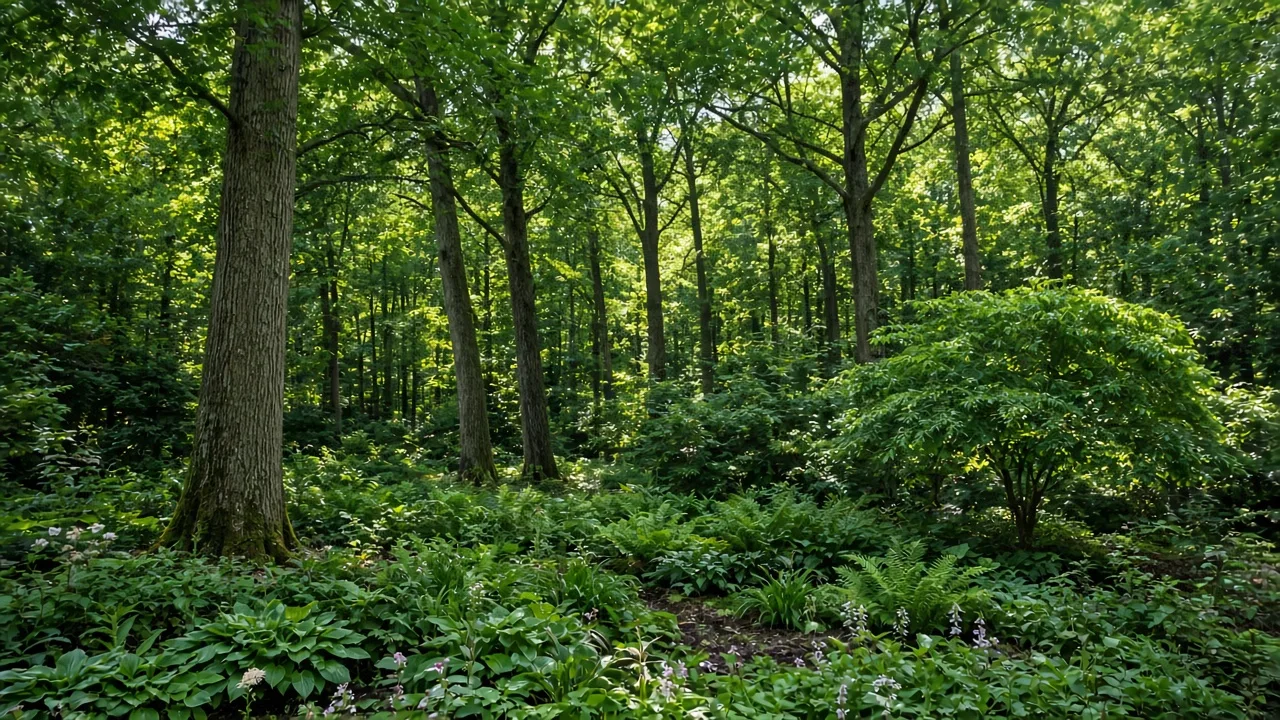
The best fast-growing shade tree is not the one with the biggest number on a nursery tag. It is the tree that matches your actual light, soil moisture, mature space, and climate well enough to keep growing after the first summer. A tree that adds 2 feet a year in a sunny, moist site may crawl in dense shade, dry soil, or compacted clay.
Use the list below as a shortlist, not a one-size-fits-all ranking. Tulip tree, catalpa, river birch, and Little Gem magnolia are the quickest ways to gain size when a site has useful filtered or morning light and enough room. For a smaller yard or deeper woodland setting, redbud, dogwood, pawpaw, serviceberry, Cornelian cherry, Carolina silverbell, and Japanese maple usually offer a better balance of scale and shade tolerance.
Quick answer: choose for light, soil, and mature size before growth rate
If your site gets roughly 4 to 6 hours of direct sun or bright dappled light, start with catalpa, eastern redbud, pink dogwood, pawpaw, serviceberry, river birch, or Little Gem magnolia. If it receives only a few hours of filtered light, prioritize true understory choices such as pawpaw, dogwood, serviceberry, Carolina silverbell, and Japanese maple. If it is dark all day beneath dense evergreen branches, a tree may not be the right answer; a shrub or woodland perennial can be more dependable.
That site-first approach is also consistent with Homes & Gardens’ practical shade-tree guide, which treats shade tolerance as a match between the tree and the exact conditions in the yard—not as a guarantee that every tree will thrive in darkness.
The other quick filter is soil. River birch can handle consistently moist ground, while pawpaw, dogwood, silverbell, and magnolia want moisture without stagnant water. Dry shade beneath a mature canopy is its own problem: the overhead tree may intercept rain, and its roots may already be using much of the available water. Utah State University Extension describes this shade-and-drought conflict clearly in its dry-shade landscape guidance.
Finally, measure the empty space as though the tree were mature. A 70-foot tulip tree is not a “fast shade tree for a small yard,” even if the young plant looks harmless in a 5-gallon pot. The USDA Plant Hardiness Zone Map is a useful first check, but local heat, winter exposure, soil, cultivar, and nursery stock also influence performance.
Understand your shade before you choose
“Shade” on a plant label covers several very different growing conditions. A north-facing wall may get bright reflected light but little direct sun; the ground beneath a high deciduous canopy may receive moving patches of sun; a spot under dense conifers may stay dark and dry. Take notes at breakfast, midday, and late afternoon during the growing season rather than judging the site from one visit.
Part shade, dappled shade, and deep shade
Part shade usually means some direct sun, commonly morning sun or 4 to 6 hours across the day. This is the easiest shade for a fast-growing tree because the leaves still receive enough light to build energy. Dappled shade changes throughout the day as sunlight moves through branches and is often excellent for woodland species.
Deep shade means little or no direct sun, but it does not always mean darkness. Many trees can survive in deep shade when young and then need more light as they mature. Pawpaw, serviceberry, flowering dogwood, silverbell, and some Japanese maple cultivars are more credible candidates for this situation than a tree marketed primarily for rapid growth.
Dry shade is different from moist shade
Feel the soil 4 to 6 inches down after a normal rain. If the surface is damp but the root zone is dry, the site may be dry shade; if water lingers and the soil smells sour, it may be poorly drained shade. Do not solve the first problem by watering every day or the second by adding more organic matter to the planting hole without fixing drainage.
Shade can reduce evaporation while still leaving little water for a new tree. Mature canopy roots, roof overhangs, dense groundcovers, and compacted soil all change where rain actually reaches. Your tree choice and first-year irrigation plan should respond to the condition you measure, not the word “shade” alone.
11 trees at a glance
The sizes below are practical ranges, not guarantees. Species, cultivar, climate, pruning, and soil can move a tree well outside a catalog description, so confirm the exact selection before buying.
| Tree | Approximate mature size | Light and soil fit | Growth and best use | Main trade-off |
|---|---|---|---|---|
| Little Gem magnolia | 20–30 ft tall, 10–15 ft wide | Part shade; rich, moist, well-drained soil | Moderate; evergreen focal point and flowers | Large leaves and seed cones drop; needs room from paving |
| Catalpa | 40–60 ft tall, 20–40 ft wide | Part shade; moist, well-drained soil | Fast; broad shade and distinctive flowers | Too large for many lots; pods and leaves are messy |
| Eastern redbud | 20–30 ft tall, 25–35 ft wide | Part shade; moist, well-drained soil | Moderate; spring flowers and native habitat | Shorter-lived in stressful sites; branch structure needs care |
| Pink dogwood | 15–30 ft tall and wide | Part shade; moist but well-drained soil | Moderate; flowering understory specimen | Drought and poorly drained soil increase stress |
| Pawpaw | 15–25 ft tall and wide | Part shade; moisture-retentive, well-drained soil | Moderate; edible fruit and bold leaves | Two unrelated trees improve fruit set; fruit can be messy |
| Serviceberry | 8–25 ft, depending on species | Part shade; evenly moist, well-drained soil | Moderate; small-yard, wildlife, and four-season interest | Birds often harvest fruit first; suckering varies |
| Cornelian cherry | 15–25 ft tall, 12–18 ft wide | Part shade; adaptable if drainage is good | Moderate; early flowers and tart fruit | More shrub-like than a classic canopy tree |
| Tulip tree | 70–120+ ft tall, 30–60 ft wide | Part shade when young; deep, moist soil | Fast; large-property shade tree | Oversized for most residential planting beds |
| Carolina silverbell | 10–40 ft tall, 15–30 ft wide | Part shade; moist, acidic to neutral soil | Moderate; woodland flowers | Slow to recover from drought and exposure |
| River birch | 40–70 ft tall, 40–60 ft wide | Part shade; moist or wet soil | Fast; rain garden edge and large lawn | Broad roots and canopy; not a dry-site tree |
| Japanese maple | 2–25 ft, depending on cultivar | Filtered shade; moist, well-drained soil | Slow to moderate; small specimen and color | Cultivar size and sun tolerance vary dramatically |
 Caption: Flowering dogwood looks most at home where the canopy is open enough for dappled light and the soil does not stay waterlogged.
Little Gem Magnolia
Little Gem magnolia (Magnolia grandiflora ‘Little Gem’) is one of the more useful evergreen choices for a yard that has part shade but still receives bright light. It brings glossy foliage, fragrant white flowers, and a narrower habit than a full-size southern magnolia. A healthy nursery plant can settle in quickly, but “fast” is relative here: it is a moderate grower, and a shaded site will usually add height more slowly than a sunny, well-watered one.
Give it rich, evenly moist soil that drains after rain. Afternoon shade can protect the foliage in hot climates, while a site that is dark all day may produce a thinner, less floriferous tree. Expect roughly 20 to 30 feet at maturity, not a permanently dwarf patio tree. Place it where fallen leaves, thick evergreen foliage, and large seed cones will not clog a narrow walkway or rest against the foundation.
Catalpa
Catalpa is a bold choice for a large yard or informal lawn. Its huge heart-shaped leaves, white summer flowers, and long bean-like pods make it unmistakable, and it can add substantial height in favorable conditions. It tolerates part shade, but it grows more vigorously with brighter light and adequate moisture.
The catch is scale. Depending on species and site, catalpa can become a 40- to 60-foot tree with a broad crown, so keep it away from small beds, rooflines, and overhead lines. Its flowers, leaves, and pods create seasonal litter, which is fine at the edge of a woodland or open lawn and frustrating beside a patio. Choose it when you want a big, relaxed canopy and have the space to accept its natural form rather than planning to force it into a small shape.
Eastern Redbud
Eastern redbud (Cercis canadensis) is a strong small-to-medium shade-tree candidate because it is comfortable as an understory tree but still flowers generously in spring. Clusters of pink, purple, or reddish blooms appear on bare branches before the heart-shaped leaves unfold. Young trees can add about 1 to 2 feet in a good season, although establishment, drought, and deep shade can slow that pace.
Give redbud moist, well-drained soil and protection from the harshest afternoon exposure. It can handle part shade, but a site with bright filtered light usually produces a fuller crown and better flowering. Its spreading branch structure is part of the appeal, so allow room for width and avoid planting it where future pruning would be needed to clear a low roof or narrow walk. Redbud is especially useful near a woodland edge, front-yard bed, or mixed native planting.
Pink Dogwood
Pink flowering dogwood (Cornus florida cultivars) earns its place when spring bloom and a manageable mature size matter more than maximum growth rate. It generally grows around a foot per year until established, with a layered crown that works beneath taller trees. Pink bracts are showy in spring, and the tree can add red fall color and fruit for birds later in the season.
Dogwood wants moisture that moves through the soil rather than a saturated root zone. Drought, reflected heat, compacted clay, and planting in an exposed full-sun parking-strip situation can all make it harder to maintain. Choose a healthy, locally appropriate cultivar and give it mulch over the root zone, not against the trunk. It is a better fit for dappled shade and a sheltered yard than for the darkest, driest corner beneath mature evergreens.
Pawpaw
Pawpaw (Asimina triloba) is the unusual choice on this list: a native understory fruit tree with large tropical-looking leaves and custard-like fruit. It can grow in partial shade, especially while young, and it often looks natural at the edge of a woodland or along a moist stream-side planting. More light generally means better flowering and fruit production, so deep shade may keep the tree alive without giving you a meaningful harvest.
For fruit, plant two genetically different pawpaws that bloom at the same time rather than assuming one tree will set a crop. Allow for a mature spread of roughly 15 feet or more, and remember that ripe fruit can drop and bruise. Pawpaw may also produce suckers, which is useful for a naturalized grove and less desirable in a tightly clipped foundation bed.
 Caption: Pawpaw can fruit at a bright woodland edge, but a pair of compatible trees and more light usually produce a better harvest than deep shade alone.
Serviceberry
Serviceberry (Amelanchier species) is one of the most versatile choices for a small or medium yard. Depending on the species, it may be a single-trunk small tree or a multi-stemmed shrub-like form, generally ranging from about 8 to 25 feet. White spring flowers, edible berry-like fruit, red or orange fall color, and attractive bark give it more than one season of interest.
Serviceberry handles part shade and can tolerate dappled woodland light, though flowering and fruiting are usually stronger with more sun. Keep the soil evenly moist while the plant establishes, and check whether the cultivar suckers before placing it beside a path. It is a practical choice when you want native wildlife value and a tree that will not overwhelm a compact yard. Birds may eat the fruit before you do, so treat that as habitat rather than a guaranteed harvest.
Cornelian Cherry
Cornelian cherry (Cornus mas) is technically a shrubby dogwood that can be trained into a small tree. It flowers very early, often before the leaves emerge, with small yellow blooms that brighten a gray late-winter or early-spring garden. Later, it can produce tart red fruits that work in preserves and syrups when fully ripe.
Its moderate growth and adaptable nature make it useful in a border, under taller canopy trees, or along a property edge where a broad forest tree would be excessive. Look for a named, grafted selection if early fruiting and a predictable habit are priorities. It prefers well-drained soil even when the surrounding bed is moist. The mature outline is usually wider and more multi-stemmed than people expect from the word “tree,” so use it as a small ornamental tree or large shrub rather than a future lawn canopy.
Tulip Tree
Tulip tree (Liriodendron tulipifera) is the speed-and-scale option. In deep, moist soil with enough light, it can add 2 to 3 feet in a year and eventually become a towering native canopy tree with tulip-shaped leaves and green-and-orange flowers. It tolerates some shade when young and naturally occurs in forest settings, but it needs room and energy to become the tree people imagine from the name.
Do not plant it beneath utility lines, close to a small house, or in a narrow side yard simply because the young tree looks sparse. Its mature height can exceed 70 feet, and its crown needs horizontal space as well. Choose tulip tree for a large lot, park-like lawn, or woodland restoration edge where fast vertical growth is worth the long-term footprint. For a typical suburban foundation bed, the mature size is a reason to choose something else.
Carolina Silverbell
Carolina silverbell (Halesia carolina or H. tetraptera) is a refined understory tree with dangling white or pale pink bell-shaped flowers in spring. It grows moderately and is often happiest in a sheltered woodland garden, rain-garden edge, or border with bright filtered light. Depending on the species and conditions, mature size may range from a small tree around 10 feet to a larger specimen near 30 or 40 feet.
Give it moisture without chronic saturation, and protect young plants from drying winds and reflected heat. Silverbell is not the answer when the site is hot, compacted, and irrigated only during emergencies. It is a better choice for the gardener who wants a graceful, less-common native tree and is willing to support it while roots expand. Its open habit also lets bulbs, ferns, and other woodland plants share the space beneath it.
River Birch
River birch (Betula nigra) can be a smart solution for a low spot that stays moist or for the edge of a rain garden. It grows rapidly in favorable conditions, has attractive peeling bark, and tolerates part shade better than many fast-growing lawn trees. It is particularly useful where the soil is damp but not permanently stagnant.
The mature tree is large, often 40 to 70 feet tall with a broad spread, and its roots and canopy need real room. It is not a drought-tolerant substitute for a dry, shaded site; a new river birch still needs regular deep watering during establishment. Keep turf and mower traffic away from the trunk, and do not plant it where a broad crown will collide with wires or a narrow driveway. It is a site-specific tree, not a universal answer for shade.
Japanese Maple
Japanese maple (Acer palmatum cultivars) is usually slower than the big shade trees on this list, but it often wins the small-yard decision. Cultivars range from compact, vase-shaped trees only a few feet tall to specimens around 20 or 25 feet. Fine leaves, sculptural branching, and strong fall color make it a natural focal point in filtered shade.
Light needs depend on the cultivar. Red-leaved selections may retain color with gentle morning sun and afternoon shade, while delicate green or laceleaf types can scorch in hot afternoon exposure. Deep, stagnant shade may produce a thin crown and muted color, so “shade tolerant” should not be read as “no light required.” Plant it in moist, well-drained soil, protect it from drying wind, and confirm the mature size before you buy.
Site and plant a shade tree for long-term success
Start by marking the tree’s mature height and spread on the ground with a hose or rope. Look up for power lines and rooflines, look down for water, gas, sewer, and irrigation routes, and look sideways at fences, driveways, septic areas, and views you want to keep. The International Society of Arboriculture’s planting guidance recommends locating underground utilities before digging; in the United States, call 811 before you break ground.
Next, test the site instead of guessing. Dig a small hole, fill it with water, and observe whether it drains within a reasonable period. A tree that prefers moist soil still needs oxygen around its roots. If water sits for a long time, choose a wet-site species such as river birch or improve drainage before planting; do not bury a dry-site tree in a permanently saturated hole.
When planting, find the root flare, where the trunk widens into structural roots, and keep it visible or just above the surrounding grade. Dig a broad, shallow hole 2 to 3 times the width of the root ball but no deeper than the root ball itself. Set the tree straight, backfill with the excavated soil, water to settle air pockets, and skip fertilizer at planting unless a local soil test or professional recommendation says otherwise.
 Caption: A new tree needs a wide, undisturbed root zone; keep the root flare visible and the mulch ring away from the trunk.
Apply about 2 to 3 inches of mulch over the root zone, leaving a bare gap around the trunk. Do not create a mulch volcano. Stake only if the root ball is unstable or the site is unusually windy, and remove supports after the first growing season so the trunk can develop strength.
First-three-year care and the mistakes that slow growth
The first season is when a “fast-growing” tree proves whether it can establish. Water deeply enough to moisten the root ball and surrounding soil, then check the soil before watering again. A new tree may need water at least weekly in the absence of rain, and more often during heat, wind, or unusually fast-draining soil; a cool, wet week may require none. Aim for consistent moisture, not daily saturation.
In the second and third years, expand the watered area outward as roots move beyond the original root ball. Keep competing turf and aggressive groundcovers away from the trunk and root zone, refresh mulch before it becomes thin, and watch for leaf scorch, premature fall color, dieback, or wilting that persists after watering. Those signs can indicate drought, root damage, poor drainage, transplant stress, or a species-site mismatch rather than a simple need for fertilizer.
Avoid the four shortcuts that most often erase the benefit of rapid growth: planting too deep, watering by calendar alone, feeding with high nitrogen before the roots are established, and pruning heavily to compensate for a bad location. Remove broken, crossing, or unsafe branches with clean cuts, but postpone major shaping until the tree has produced a full season of new growth. If a tree repeatedly struggles despite correct depth, mulch, and irrigation, reconsider the site before adding more products.
 Caption: A maintained mulch ring, clear trunk base, and adequate water make establishment easier than repeated pruning or heavy feeding.
The most reliable long-term care is quiet and consistent: protect the root zone from compaction, water during drought, prune for structure rather than size reduction, and reassess clearance as the canopy expands. A tree that grows moderately but remains healthy will give you more useful shade than a rapid grower repeatedly cut back to fit the wrong space.
Conclusion
For the fastest shade on a large, moist, open property, look first at tulip tree, catalpa, or river birch. For a smaller yard, eastern redbud, pink dogwood, serviceberry, Cornelian cherry, or a cultivar-specific Japanese maple is usually easier to site. Pawpaw and Carolina silverbell are especially appealing when the goal is a woodland or wildlife-friendly planting rather than a uniform lawn canopy, while Little Gem magnolia adds evergreen structure where winters allow it.
The winning choice comes from matching the tree to the site before you buy: count real light, test drainage, check mature dimensions, locate utilities, expose the root flare, and commit to steady first-three-year care. Growth rate matters, but fit is what turns a young tree into lasting shade.



