12 Fire-Resistant Plants That Can Help Safeguard Your Yard
Choose fire-resistant plants by site, moisture, and maintenance needs. Learn where to plant 12 perennials and how to reduce ember-catching fuel.
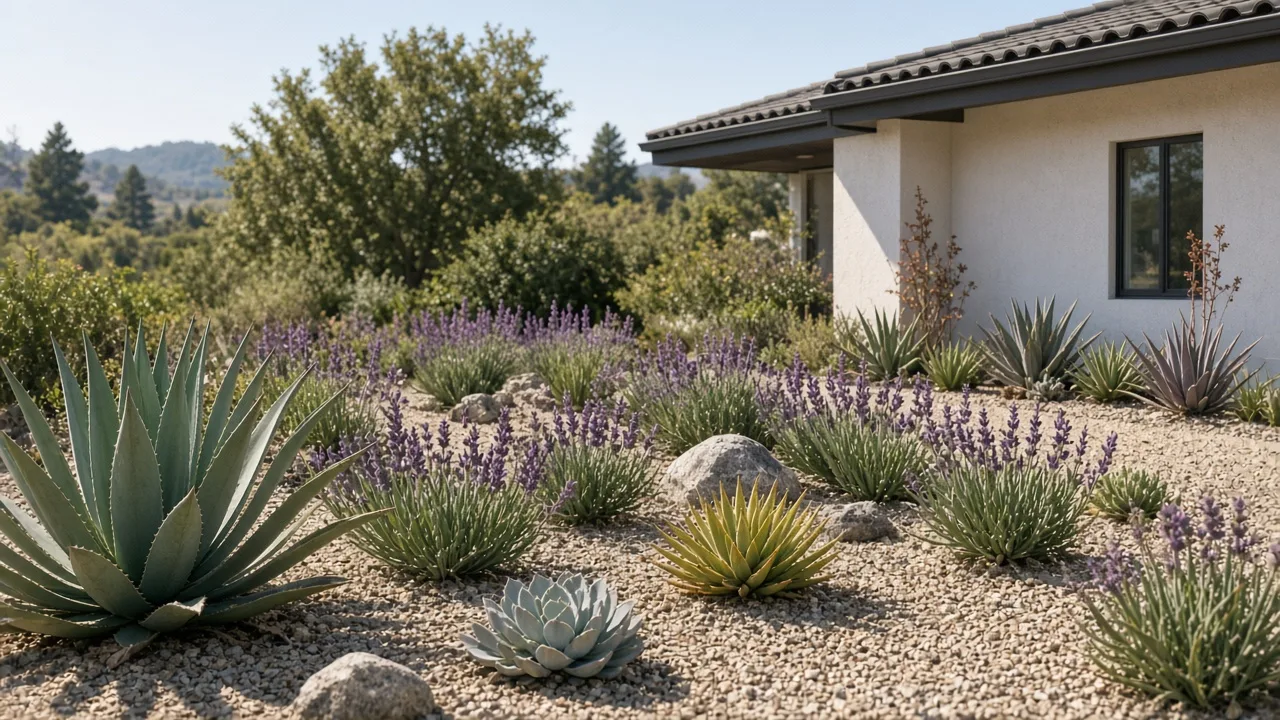
If your yard sits near dry grassland, brush, woodland, or a neighborhood where wildfire is a recurring risk, plant selection is worth thinking about—but it is only one part of the safety plan. A green perennial can still burn when it is drought-stressed, surrounded by dry mulch, connected to shrubs by fallen leaves, or planted beneath low tree branches.
The useful goal is not a “fireproof” garden. It is a yard with less continuous fuel, fewer places for embers to lodge, and enough separation that a fire has a harder time moving from the ground to a shrub, from a shrub to a tree, or from a planting bed to your home. The 12 plants below are candidates for that kind of lower-fuel landscape when they are matched to the site and maintained well.
The Oregon State and Washington State Extension publication on fire-resistant plants for home landscapes makes the same broader point: plant choice is a landscape-management decision, not a magic species list. Use these plants as a starting palette, then check your local fire agency and cooperative extension office for regional ratings, invasive-plant cautions, and rules that may be stricter than national advice.
The short answer: plants reduce fuel, not wildfire risk to zero
Fire-resistant plants generally have one or more useful characteristics: tissues that hold more water, less resin or volatile oil, a compact or open form that does not trap much dry debris, and a habit that stays relatively low or easy to prune. A practical firewise landscape overview from horticulturist Logan Hailey groups the same traits with nonflammable groundcover, separation, and regular cleanup. Herbaceous perennials and many well-managed groundcovers are often easier to keep in that condition than dense, resinous evergreens or tall ornamental grasses left standing through a dry season.
That description is comparative, not absolute. A sedum bed can burn after weeks of drought if its old stems and leaves are left in place. A daylily can become a dry thatch of brown foliage. A supposedly “safe” plant can also carry fire toward the house when it touches siding, bridges a fence, or grows directly under a tree canopy. Think in terms of lower flammability plus separation plus maintenance.
What to look for in a lower-flammability plant
When you compare plants at a nursery, ask four questions. Does the plant keep substantial moisture in its leaves or stems during the season when your area is most at risk? Does it shed a lot of dry litter, stringy foliage, resin, or aromatic material? Can you keep it compact without creating a pile of dead wood? And will it stay healthy in the actual light, soil, and irrigation conditions of the bed?
Fleshy sedum and a mineral surface show the low, moisture-holding groundcover form that can work in a sunny managed border; dead material still needs to be removed.
The last question prevents a common mistake: choosing a drought-tolerant plant for a yard where it will be chronically dry, then assuming drought tolerance means no fuel. Drought-tolerant means the plant can survive limited water once established; it does not mean the plant stays green without water during an extreme fire season. If irrigation is restricted, clearing dead material becomes even more important.
Why a “resistant” label still depends on site and upkeep
Plant ratings are not universal safety guarantees. A plant that performs well in a moist, irrigated Pacific Northwest border may behave differently on a hot slope in California or in a windy, drought-stressed interior site. Cultivar, maturity, soil depth, slope, wind exposure, and the timing of dormancy all change the amount of available fuel.
Local lists also matter because a species may be invasive, poorly adapted, or restricted in your region. The extension publication is broad enough to be useful across many home landscapes, but the correct final filter is your local fire district or extension office. If your property is on a steep slope, in a wildland–urban interface, or subject to a wildfire-vegetation ordinance, get the local standard before planting a bed against the house.
Start with defensible space before you shop
Before you make a plant list, walk outward from every structure and mark the distances. CAL FIRE describes defensible space as a buffer that helps slow fire and gives firefighters a safer area to work; its current defensible-space guidance organizes the work into an ember-focused first five feet, a managed area out to 30 feet, and a reduced-fuel area out to 100 feet or the property line.
These distances are a useful planning model, not a substitute for your jurisdiction’s rules. In other words, do not plant a “fire-resistant” perennial in Zone 0 simply because a nursery label calls it low-flammability. The closest zone is the place to remove ignition opportunities first.
Zone 0: keep the first five feet ember-resistant
The first five feet around walls, decks, stairs, and other attached structures deserve the most conservative treatment. CAL FIRE recommends hardscape such as gravel, pavers, or concrete in this zone, along with removal of dead plants, weeds, leaves, needles, and debris from roofs, gutters, decks, porches, and the area beneath structures. It also advises removing branches within 10 feet of a chimney or stovepipe and relocating firewood and other combustible storage.
For many homes, that means no planting bed directly against the foundation. A clean mineral strip is less romantic than a lush foundation border, but it is easier to inspect, sweep, and keep free of embers. Check your local rules before using any plant, planter, bark, or decorative wood feature in this five-foot band.
Zone 1: make 5–30 feet lean, clean, and green
Zone 1 is where many of the plants in this article can fit, provided they are healthy, separated, and accessible for maintenance. Use low or medium perennials in distinct islands rather than one continuous wall of vegetation. Keep shrubs away from siding, windows, decks, fences, propane tanks, and one another; remove dead leaves and stems before they accumulate.
This is also the zone where irrigation earns its keep. Drip lines or another efficient system can help plants retain moisture without creating a schedule that ignores soil and weather. Watering is not a fire guarantee, and local drought restrictions always come first, but a living, hydrated planting is generally a better fuel condition than the same bed after it has collapsed into dry thatch.
Zone 2: reduce fuel out to 100 feet
Zone 2 is not a barren ring. It is a reduced-fuel area where you thin vegetation, keep annual grass short, remove fallen debris, and prevent continuous runs of shrubs and trees. CAL FIRE’s guidance recommends mowing annual grass to a maximum height of four inches and creating both horizontal and vertical spacing; it also notes that some local agencies require more clearance.
On a slope, increase separation because fire can move uphill faster and with more heat. The exact spacing depends on plant height, slope, and local standards, so use your fire agency’s diagram or an on-site assessment rather than copying a single number from a plant list.
12 plants to consider for a lower-fuel yard
The 12 choices below are drawn from the supplied plant list and organized by site fit rather than ranked from “safest” to “least safe.” The best plant is the one that stays vigorous, appropriately spaced, and relatively free of dry debris in your own yard. Keep all large, dense, or seasonal plantings farther from structures when a local firewise list says to do so.
Full-sun choices for drier beds
1. Bearded iris (Iris × germanica) is a strong candidate for a sunny, well-drained border. Its thick rhizomes and substantial leaves are less tinder-like than fine, dry foliage, and it tolerates moderate to low water once established. Give it drainage rather than a constantly wet bed, and cut away collapsed or frost-killed leaves before the dry season if the clump is in Zone 1.
2. Sedum (Sedum and Hylotelephium spp.) covers two useful forms: low stonecrops that knit a rock garden together and upright varieties that provide late-season flowers. Its fleshy leaves retain water, but the plant is not fireproof; dried flower stalks, brown stems, and dead leaves still add fuel. Use low-growing types near a gravel path or other break, and keep upright sedums out of a tight foundation planting unless your local guidance supports them.
3. Coneflower (Echinacea spp.) brings a long bloom season and valuable pollinator habitat to a sunny bed. The plant’s coarse leaves and sturdy stems are less wispy than many ornamental grasses, but its standing stems and seedheads become dry in fall. In a fire-prone Zone 1, cut them down once they are dormant and the seasonal fire risk or local cleanup window makes that the safer choice; farther out, you can leave some seedheads for birds if they do not create a continuous fuel path.
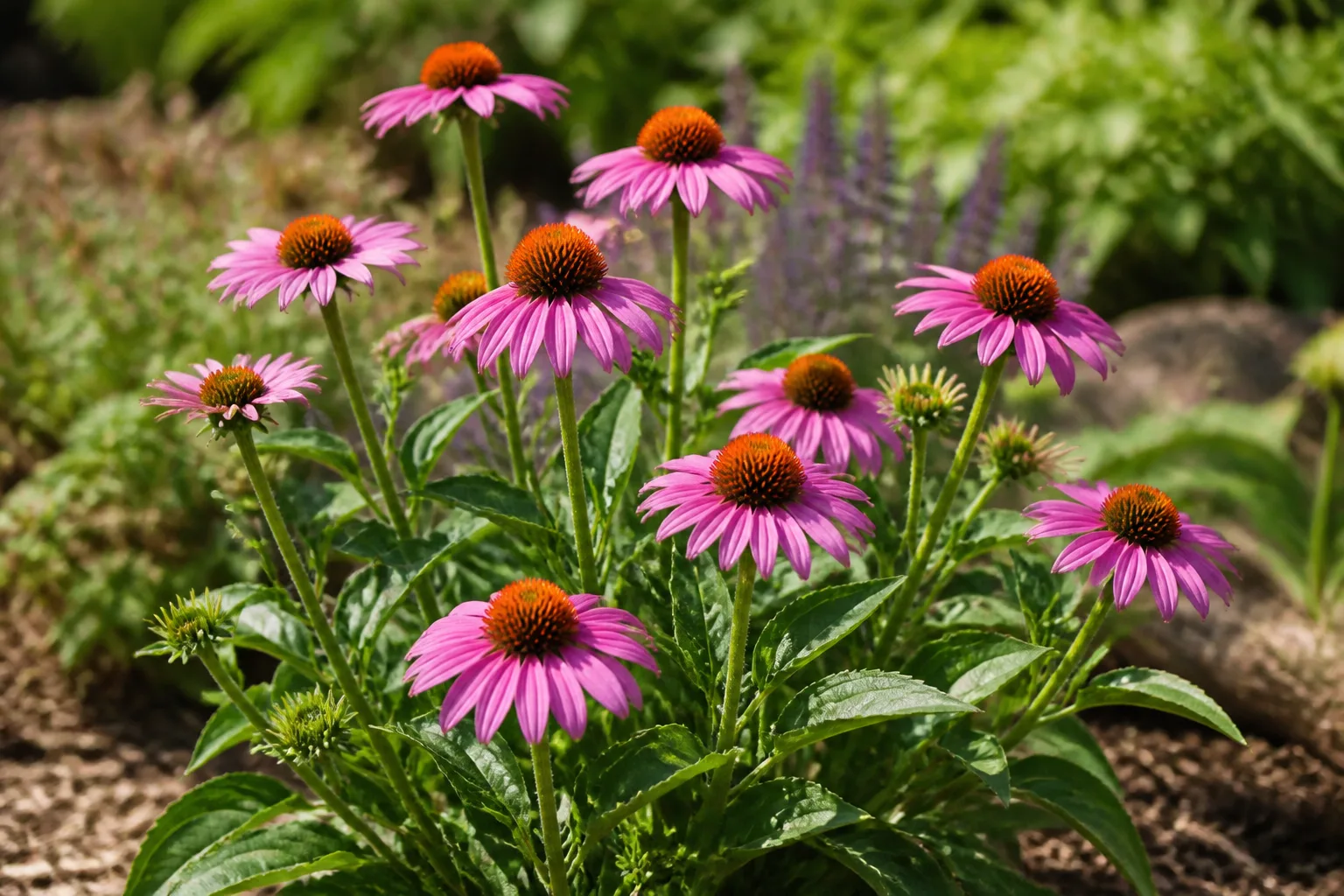 Purple coneflower provides strong color and pollinator value, but its dry fall stems should not be allowed to build up beside a structure.
4. Creeping thyme (Thymus spp.) forms a low, sun-loving mat that can fill gaps between stepping stones or create a living edge in a well-maintained bed. It prefers sharp drainage and does not need the same watering as a thirsty shade plant. Because it is aromatic and can become dry in prolonged heat, treat it as a low groundcover—not as permission to replace the noncombustible surface required next to your home.
Shade and moisture-tolerant choices
5. Columbine (Aquilegia spp.) is useful where a bright, dry border list overlooks the reality of shade. Eastern red columbine and related types can grow in part shade, bloom in spring, and hold leafy growth into the growing season. Plant it in well-drained soil, keep it from becoming a neglected thicket, and remove dry stems or excessive self-sown seedlings where they could connect other fuels.
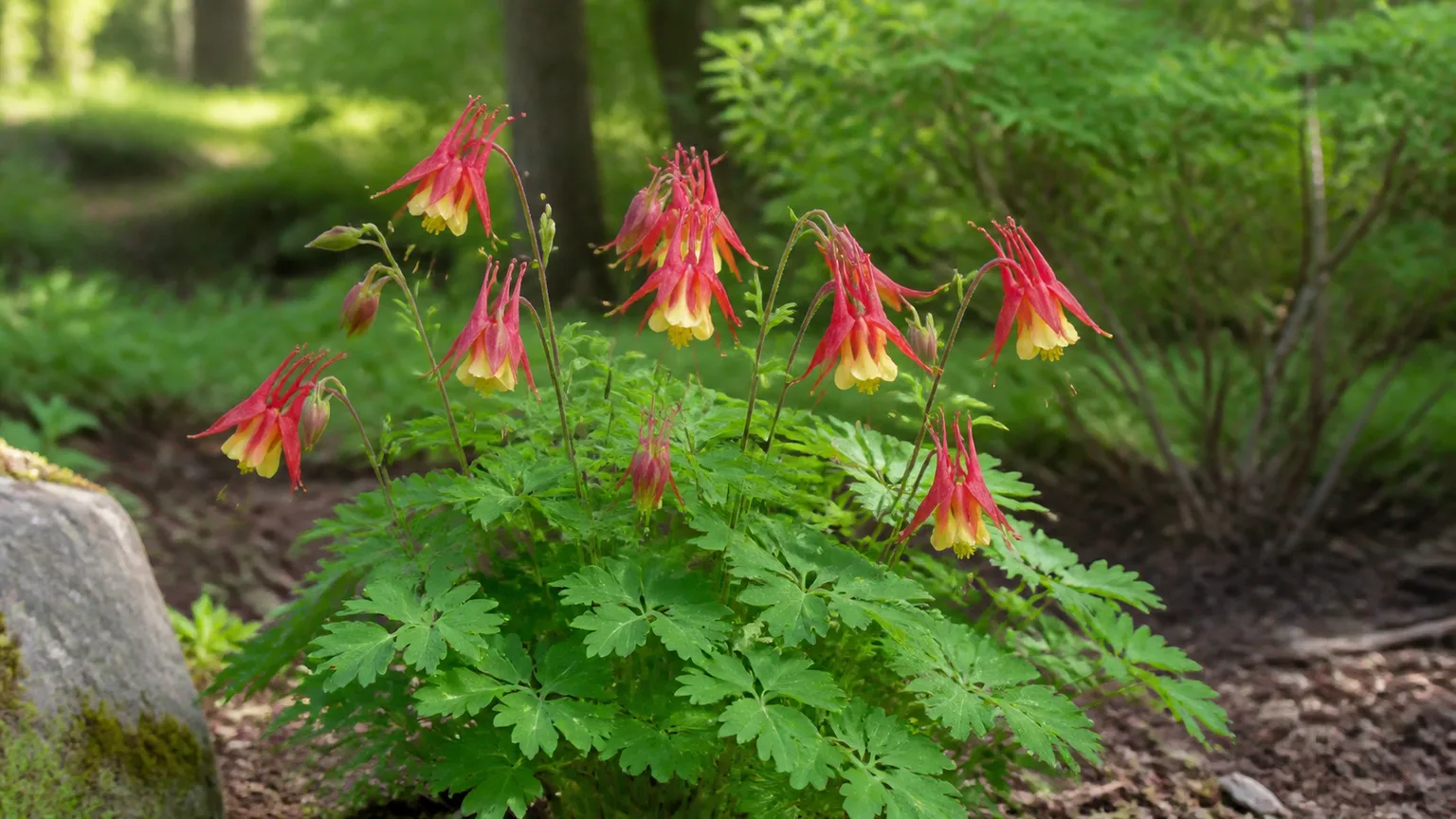 Columbine adds spring color to a part-shade bed; open spacing and removal of dry litter keep a woodland planting from becoming a continuous fuel layer.
6. Sweet woodruff (Galium odoratum) is a shade-loving groundcover with small white spring flowers and a mat-forming habit. It can reduce bare soil and suppress weeds in a moist, shaded bed, but it may spread more than you expect in favorable conditions. Keep it out of the five-foot ember zone, watch its boundaries, and remove accumulated dry leaves from the mat before peak fire weather.
7. Coral bells (Heuchera spp.) make compact mounds with colorful foliage for part shade and, in some climates, brighter light with reliable moisture. Their low form is easier to separate from trees and structures than a tall shrub, and their leaves do not create a curtain of dry grass-like fuel. Avoid placing them where the crown stays waterlogged, and clean away dead leaves and flower stalks rather than letting the mound become a debris trap.
These three shade choices illustrate why “fire-resistant” does not always mean “xeric.” A plant can be a sensible lower-fuel choice because it stays leafy and moist in a managed site, even if it needs more regular irrigation than sedum or thyme. Match the plant to a bed you can actually keep healthy.
Structure and pollinator choices for managed borders
8. Alliums (Allium spp.) bring globe-shaped flowers and vertical structure to a sunny bed. Their leaves are moisture-rich while actively growing, but many types yellow and collapse after flowering. Do not leave that fading foliage piled against a wall or under a shrub; remove it when it has finished its useful season and local fire guidance favors cleanup.
9. Butterfly weed (Asclepias tuberosa) offers vivid orange flowers and supports monarch caterpillars. It likes full sun, sharp drainage, and relatively dry soil once established, so it can fit a sunny Zone 1 or Zone 2 perennial bed. The trade-off is seasonal: dry stems and seed pods can become loose debris, so decide whether to leave them for wildlife based on their distance from the house, the slope, wind, and your local cleanup window.
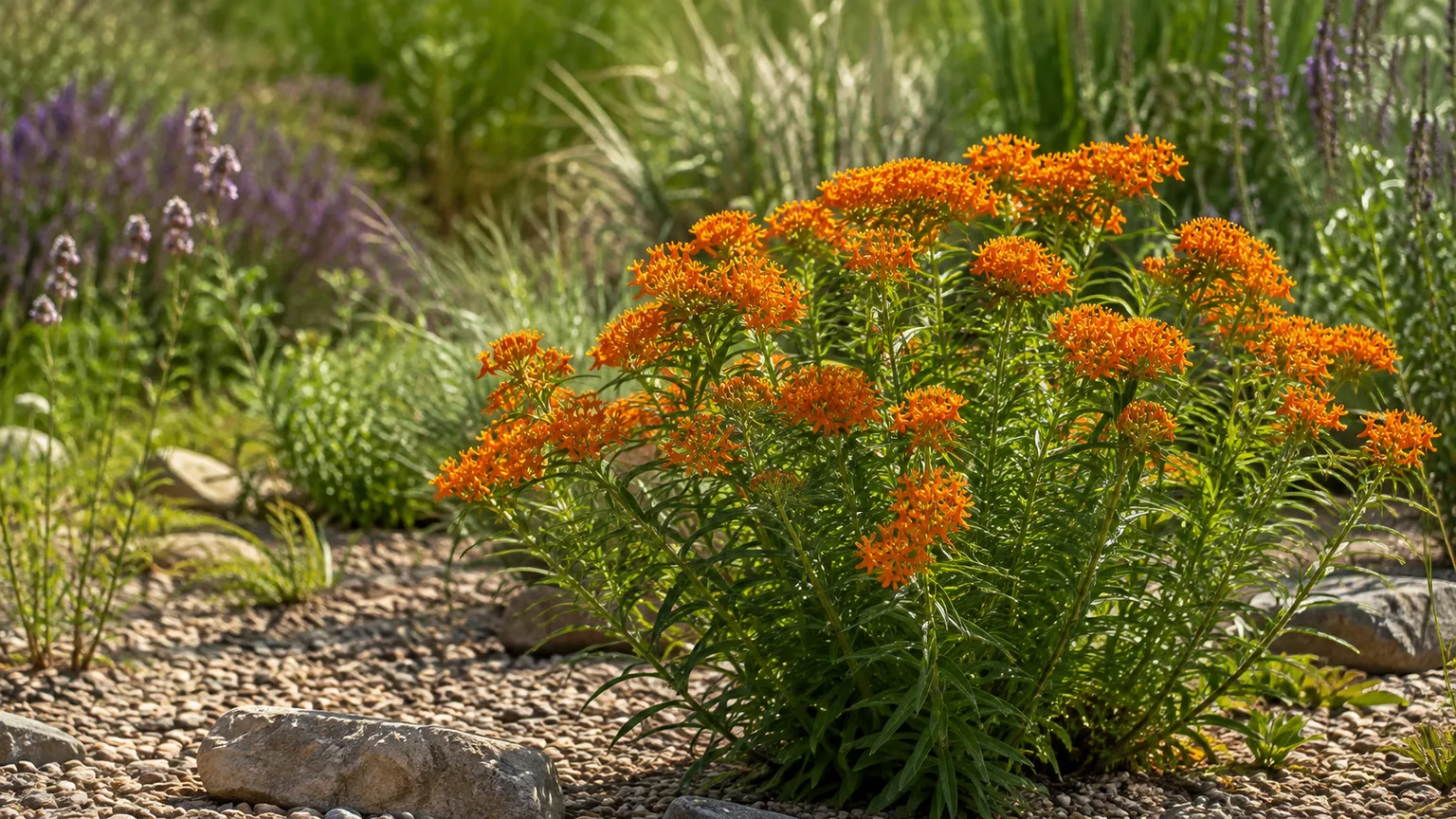 Butterfly weed suits a sunny pollinator border, but its dry stems and seed pods need a deliberate end-of-season cleanup decision.
10. Daylily (Hemerocallis spp.) forms a dense clump of strap-like leaves and tolerates sun, part shade, and a wide range of soils. The leaves contain more moisture during active growth than fine, dry grass, and the plant is easy to divide and rejuvenate. Brown winter foliage can become thatch, however, so remove it from beds near the home before a dry season rather than assuming the living crown makes the entire clump low-risk.
11. Yarrow (Achillea millefolium) is adaptable, drought-tolerant, and available in colors beyond the white flowers of many wild forms. Its ferny foliage and low water needs make it useful in a sunny, lean-soil planting, but its flower stems become dry after bloom. Cut spent stems in the part of the yard where ember exposure is highest, and monitor vigorous forms so the planting does not turn into an unbroken mass.
12. Salvia (Salvia spp.) covers a very large genus, so the name alone is not a safety rating. Choose a species and cultivar recommended for your climate and local firewise list, and remember that aromatic foliage can contain volatile oils. Salvias can be excellent pollinator plants in a maintained Zone 1 or Zone 2 border, but do not place an unidentified, woody, dry, or densely planted salvia against the house simply because another salvia performed well elsewhere.
Planting design rules that matter more than a list
The strongest improvement is often not replacing every plant. It is breaking up the fuel pattern around the plants you already have: move the most flammable material away from the house, open the canopy, add a hardscape break, and make it easier to see and remove dry debris.
Space plants horizontally and vertically
Think in two directions. Horizontal spacing prevents one shrub from handing flame to the next. Vertical spacing prevents a low plant or shrub from acting as a ladder into tree branches. A row of individually “fire-resistant” plants can still behave like a wick if their foliage touches or if a tree canopy hangs over the whole bed.
CAL FIRE’s spacing guidance adjusts separation for slope and plant height. It gives a practical vertical rule: keep space between a shrub and the lowest tree branches, with the clearance increasing as the shrub gets taller. On steeper ground, increase horizontal spacing as well. If you cannot estimate the risk confidently, ask your fire district, an arborist, or a qualified local landscape professional to assess the property.
Use mineral surfaces and break up fuel pathways
Gravel, pavers, concrete, stone paths, and patios can divide beds into separate fuel areas and make Zone 0 easier to keep clear. A three-inch layer of wood mulch is not equivalent to a noncombustible mineral surface right beside a structure; keep the immediate perimeter conservative and check local rules before choosing mulch farther away.
Avoid creating a “mulch bridge” from the foundation to a shrub, fence, deck, or woodpile. The same principle applies to fallen leaves, straw, pine needles, stacked firewood, outdoor furniture, and low branches. If an ember can land in one material and continue through the next without a clean break, the design has a fuel-continuity problem even if the planted species are on a firewise list.
An irrigated bed with gravel access and separate plant masses shows the layout goal; firewise upkeep still requires removing dry foliage and managing any tall grass.
A seasonal maintenance plan for firewise plantings
Maintenance is what keeps a lower-flammability plant in a lower-fuel condition. Put the work on the calendar instead of waiting until smoke is in the forecast, when pruning, hauling debris, or running equipment may be unsafe and local water restrictions may already be severe.
Spring through peak fire season
In spring, remove winter-killed leaves, dead stems, and fallen branches before new growth hides them. Check whether shrubs have expanded into walkways, fences, windows, or tree trunks. Thin crowded plants while the structure is visible, and repair irrigation before the hottest part of the season.
As fire season approaches, walk the property from the roofline outward. Clear gutters and the space beneath decks, remove leaves from gravel and planting beds, mow annual grass to the height required by your local agency, and prune branches that create a ladder into tree crowns. If water becomes scarce, prioritize the health of plants closest to the home while removing dead or dying material throughout the defensible space.
Do not mow or use a string trimmer on a hot, windy afternoon. CAL FIRE advises mowing before 10 a.m. and avoiding dry, windy conditions; follow your local fire department’s equipment restrictions as well. A yard cleanup that creates a spark can be more dangerous than the overgrown grass it was meant to address.
Fall cleanup and storm checks
Fall is the decision point for plants whose stems provide winter wildlife value. In Zone 1, deadhead or cut back coneflower, butterfly weed, yarrow, salvia, alliums, and daylilies when their dry material begins to accumulate or when local guidance calls for clearing. In Zone 2, you may be able to leave selected seedheads in isolated groups if they do not connect fuels or sit below trees, fences, or structures.
After wind, heavy rain, or a dry thunderstorm, inspect the yard again. Pick up broken branches, sweep leaves out of corners, check that gravel has not been displaced from the foundation edge, and look for new contact between trees, shrubs, fences, and roofs. Firewise landscaping is not a one-time installation; the risk pattern changes as plants grow.
Common mistakes that make a “fire-resistant” yard riskier
The most common error is treating the list as a guarantee. A lower-flammability plant grown as a dense hedge, allowed to touch the house, or left full of dry material can be a worse choice than a less glamorous plant that is widely spaced, irrigated, and easy to keep clean.
Another mistake is assuming every succulent, native plant, green lawn, or groundcover is automatically safe. Succulents can contain a lot of water, but dead rosettes and dry flower stalks burn. A lawn can be a relatively low-fuel surface while green and short, but brown unmowed grass can carry fire. Groundcovers can reduce bare soil yet also trap leaves or spread beneath shrubs. Evaluate the whole planting, not a single trait.
Finally, do not copy a spacing rule from another state without checking your slope and local requirements. CAL FIRE notes that county standards may be stricter than state minimums, and the same caution applies elsewhere. If your home is in a high-risk area, plant selection should be coordinated with structure hardening, access for firefighters, evacuation planning, and the official defensible-space standard for your address.
Conclusion
Bearded iris, columbine, sedum, coneflower, sweet woodruff, creeping thyme, coral bells, alliums, butterfly weed, daylilies, yarrow, and salvia can all contribute to a more varied, lower-fuel yard when they fit the site. None should be treated as a shield by itself.
Start with the first five feet around the structure: remove combustible material, use an appropriate hardscape, and clear ember-catching debris. Then work outward, choosing plants that stay healthy in your climate, separating shrubs and trees, breaking up mulch and vegetation with mineral surfaces, and clearing dry growth before peak fire weather. That sequence protects the yard more effectively than buying a “fire-resistant” plant and placing it in the wrong spot.



