How to Grow and Care for Millet
Learn how to grow ornamental pearl millet from seed, choose a cultivar, time planting, water containers, and keep colorful seedheads for birds.
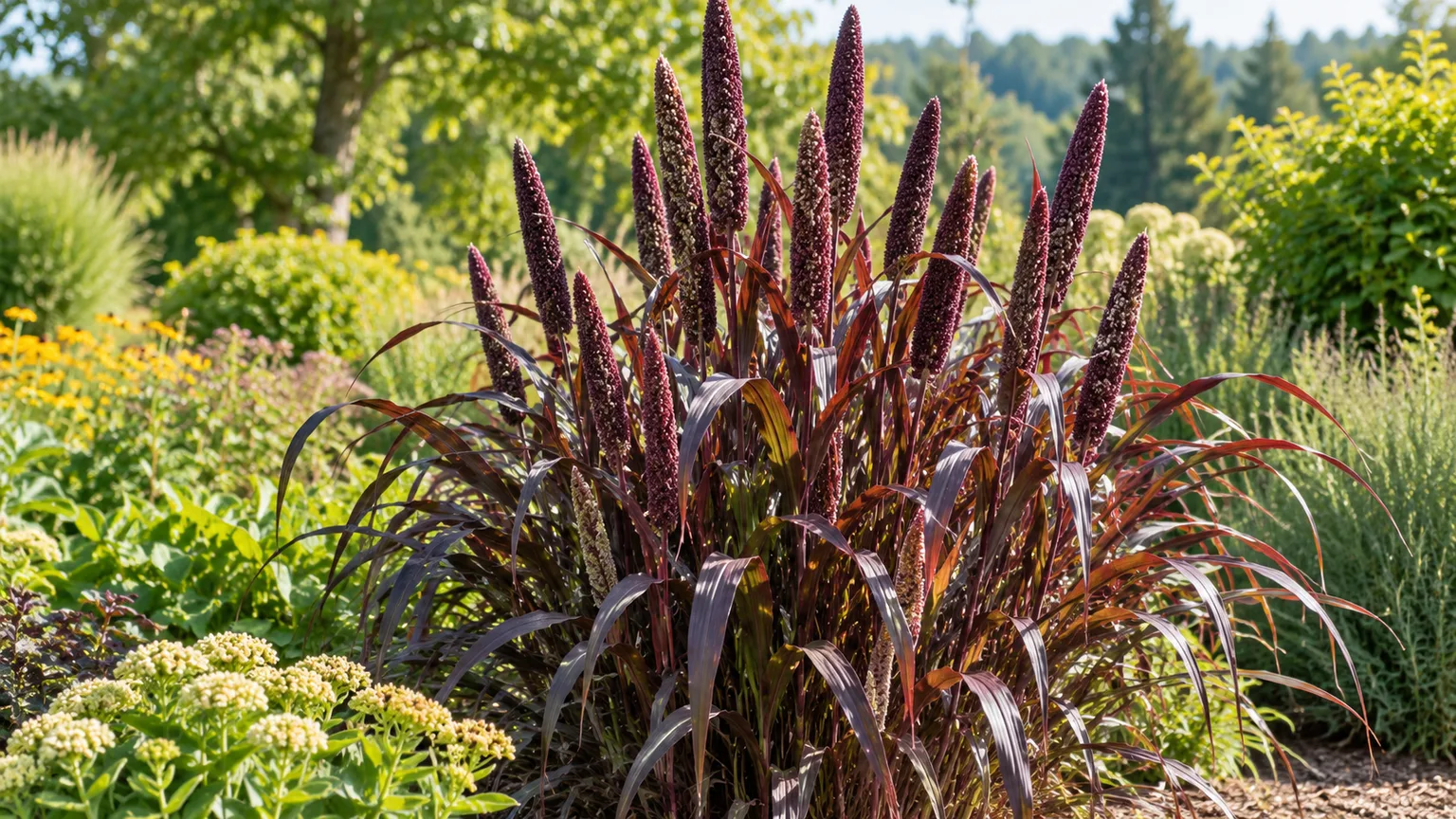
Ornamental millet is a bold, warm-season grass with upright leaves and dense, cattail-like flower spikes. It can bring height and dark color to a sunny bed or large patio pot, and mature seedheads attract birds. The main trick is timing: this tropical-origin annual grows slowly in chilly soil, then speeds up once the weather is warm.
The word “millet” also refers to several different grain grasses. This guide focuses on ornamental pearl millet, Cenchrus americanus, still widely sold under its former botanical name, Pennisetum glaucum. If your goal is to harvest food or forage, choose seed sold for that purpose and follow local crop guidance; ornamental cultivars are selected for appearance, not grain yield.
Start by identifying which millet you have
Look at the botanical name on the seed packet or nursery label before choosing a growing plan. Ornamental pearl millet is a tall, upright grass with broad leaves and a cylindrical, bottlebrush-like flower spike. The modern name Cenchrus americanus and the familiar horticultural name Pennisetum glaucum refer to the same species; not all catalogs have adopted the botanical change. University of Wisconsin–Madison Extension explains the naming shift and ornamental forms.
The common name alone is not enough to identify a seed packet. Foxtail millet, proso millet, Japanese millet, and pearl millet are separate grasses with different culinary, forage, and ornamental uses. Even within pearl millet, a field variety bred for grain should not be expected to look like a purple ornamental selection. If the label only says “millet,” ask the seller or check the Latin name before sowing.
Young purple cultivars can add to the confusion. Seedlings of ‘Purple Majesty’ begin green and develop darker foliage as they mature, so a green first leaf does not mean the seed is mislabeled. Wisconsin Extension reports that the purple coloration develops after the plant has produced several leaves; cultivar and growing conditions affect how strong the final color becomes.
Ornamental pearl millet is not a generic grain-growing guide
Pearl millet is an important food and forage crop in parts of Africa and Asia and is also the small round seed found in some birdseed mixes. That does not mean every ornamental seed packet is a food crop. Ornamental cultivars may produce seed, but they are selected for foliage and flower spikes rather than uniform grain harvest; their labels and production practices may not be intended for food use.
Treat purpose as a seed-selection decision. For a garden accent, buy a named ornamental cultivar from a seed company or nursery. For grain, buy a variety explicitly sold for edible production and use agricultural guidance for your region. A study published by Nigeria’s Federal University Dutsin-Ma describes pearl millet as a drought-resilient crop in arid and semiarid production, but that crop-trait context does not turn ornamental varieties into a reliable backyard grain harvest. The study evaluates crop accessions under its specific field conditions.
Do not assume the seed heads are safe to eat because the species is edible as a crop. The ornamental plant may have been grown or treated for display, and the cultivar may not have been selected for food use. Keep garden seedheads for birds or dried arrangements unless you have deliberately grown a food-grade variety under appropriate conditions.
Match millet to a warm, sunny growing season
Pearl millet is a warm-season annual in ordinary North American garden use. It is not a winter-hardy perennial that returns from its roots after frost. You can grow it in a short-season region, but the available warm months determine whether it reaches full height and produces mature plumes before autumn cold.
Use local frost dates as the first filter, not a universal calendar month. Sow outdoors after frost danger has passed and the soil has warmed; if spring is still cool, wait rather than asking seed to sit in cold, wet earth. University of Wisconsin–Madison Extension recommends starting seed at about 72 to 78°F for quick germination and notes that temperatures below 68°F can significantly slow germination and growth. Those measurements describe its propagation guidance, not a requirement to heat outdoor soil to an exact number in every garden.
The plant grows best in heat. Wisconsin Extension gives an optimum growth range of roughly 91 to 95°F, which explains why a cool summer may produce a shorter plant than the catalog photo. It can tolerate heat and dry spells after establishment, but it still needs an adequate growing window to develop the stems and flower spikes you bought it for. In a cool region, start a small number of seedlings indoors a few weeks before the last frost, then transplant carefully after the weather settles. In a long, hot season, direct sowing is usually simpler.
Choose a cultivar for your garden or container
Choose the plant’s mature size before choosing its color. Tall selections work as vertical accents in the middle or back of a sunny border, while compact forms suit the front of a bed or a large container. Plant a clump or a small group when you want a stronger mass of color; one tall plant can look sparse if it is expected to fill a wide bed by itself.
Compare height, color, and flowering habit
The following sizes are useful planning ranges, not guarantees. Seed source, warmth, light, and root space all influence final height.
| Cultivar | Approximate mature size | Best use |
|---|---|---|
| ‘Purple Majesty’ | 4–5 feet tall; may approach 3 feet wide | Tall focal point or back-of-border accent |
| ‘Purple Baron’ | About 3 feet tall | Smaller gardens, mixed containers, or a shorter purple accent |
| ‘Purple Jester’ | About 3 feet tall | Bushier planting with burgundy, green, and chartreuse foliage |
| ‘Jade Princess’ | About 2 feet tall | Compact container or low border position; chartreuse foliage |
| ‘Copper Prince’ | About 2–3 feet tall | Warm copper foliage and a medium-height accent |
These measurements come from Wisconsin Extension’s ornamental millet cultivar descriptions. Catalog spellings sometimes vary, so rely on the exact label and photo for the seed lot you are buying. The same extension guide notes that ‘Purple Majesty’ is an F1 hybrid and that its juvenile plants start green. If you collect seed from a named hybrid, expect offspring that may not match the parent’s color, height, or uniformity; saving it can be enjoyable, but it is not a dependable way to reproduce the cultivar.
If a nursery plant has a feathery, arching fountain-shaped plume rather than a dense upright spike, check whether it is a different ornamental grass. Red fountain grass (Cenchrus setaceus, formerly Pennisetum setaceum) is a common lookalike in garden centers, but it has a different form and care context. A horticulture blog’s identification response likewise distinguishes purple ornamental millet from red fountain grass as competing possibilities when shoppers rely on color alone. The Garden Lady’s millet identification example is a useful reminder to confirm the plant tag rather than relying on a quick visual guess.
Plant millet outside when frost is over and soil is warm
Prepare a sunny bed with loose, well-drained soil. Millet tolerates a range of soil types, including relatively poor soil, but persistent saturation can prevent roots from establishing. If your site is heavy clay, choose a raised bed or a better-drained spot rather than adding a small amount of sand to a large planting hole; the goal is a soil profile that drains, not a gravel pocket around the roots.
Avoid working wet soil into a compacted mass. Once it is workable, rake the surface level and remove weeds that could shade young seedlings. Sow a little thicker than the final stand if germination is uncertain, then thin the seedlings after they are easy to distinguish. For ornamental plantings, use the cultivar’s stated mature width as your spacing guide; tight spacing can turn a tall cultivar into a crowded, damp clump, while overly wide spacing makes a single plant look isolated.
Direct sowing or transplanting?
Direct sowing is best when you have a long enough warm season. It avoids transplant shock and root restriction, and it puts the plant straight into the space where it will grow. Sow shallowly according to the packet rather than burying seed several inches deep; millet seed needs contact with moist soil, but a heavy covering can delay small seedlings from emerging.
Indoor starts are useful when frost-free weather arrives late and the cultivar needs a head start. Transplant them when nights and soil are warm, and handle the root ball gently. Water the starts before moving them, plant them at the same depth they were growing, and keep the soil evenly moist while roots move into the surrounding bed.
A practical five-step outdoor sowing sequence:
- Wait until frost danger has passed and the seedbed feels warm rather than cold.
- Choose a location that receives full sun for most of the day.
- Loosen the top few inches of soil and clear competing weeds.
- Sow at the depth on the packet, cover lightly, and water gently.
- Thin crowded seedlings after emergence, using the cultivar’s mature width to guide final spacing.
The exact packet directions should take priority over generic seed-depth advice because seed size and coating can vary between suppliers. The important constraints are warm soil, shallow placement, and steady moisture during germination.
Start seeds indoors without creating root-bound plants
Start indoor seed only a few weeks before your area’s usual last frost. Use clean cells or small pots with drainage holes and fresh seed-starting mix. Keep the mix moist, not waterlogged, and give the seed warmth; Wisconsin Extension’s 72 to 78°F range is a useful target for fast, even germination. Once seedlings emerge, move them into strong light so their stems do not stretch toward a dim window.
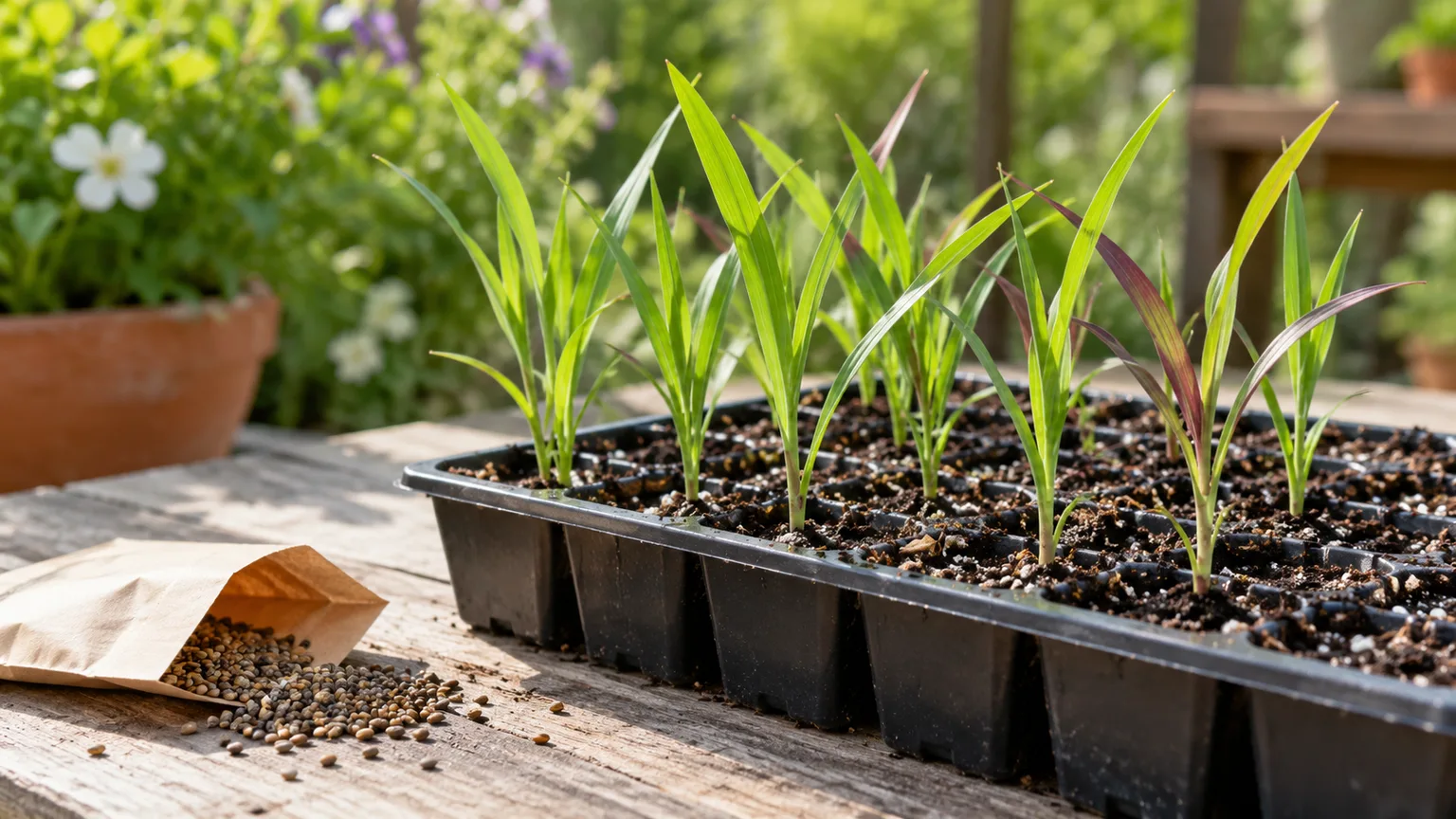
Do not sow millet months too early just because it is an annual. A young plant that becomes tightly root-bound may stall, flower while still small, or fail to build the sturdy growth you wanted. If roots are circling the bottom of the cell or the seedling has started producing a flower spike indoors, it has been held too long. Potting up once can buy time, but it also increases transplant work and can make a crowded indoor setup harder to manage.
Harden seedlings off over about a week by gradually exposing them to outdoor sun, wind, and temperature changes. Begin in a sheltered bright spot for a short period, extend the time outside each day, and avoid leaving a recently indoor-grown seedling in strong afternoon sun on its first outing. Plant it out once the forecast is mild and the soil is warm; if a cold snap is coming, hold the transplant in a protected location rather than rushing it into the bed.
Give millet full sun and soil that drains
Give ornamental millet full sun for the strongest stems and deepest color. Purple-leaved selections may survive some afternoon shade, but they can look greener, grow less robustly, or lean toward light. For a dark ‘Purple Majesty’ effect, choose an open site instead of tucking the grass beneath a tree or behind a fence.
The roots need oxygen as well as water. Light, well-drained soil is ideal, although Wisconsin Extension says most ornamental selections tolerate a broad range of soils. That tolerance does not mean a plant will thrive in a constantly wet depression. If water remains on the soil surface long after rain, grow in a raised bed or container with open drainage.
Do not chase a narrow soil pH number unless a soil test indicates a problem. Millet’s tolerance of varied garden soils makes a pH adjustment unnecessary in many ornamental beds. If plants repeatedly fail in the same area, check compaction, drainage, weeds, light, and planting temperature before adding fertilizer or changing the soil chemistry.
Water for establishment, then adjust to conditions
Keep newly sown beds evenly moist until seedlings are established. The top layer should not dry hard while seed is germinating, but waterlogged soil can rot seed or suffocate young roots. A gentle watering can or fine spray prevents seed from washing into low spots.
After roots spread, ornamental millet is more tolerant of dry conditions than many showy annuals. That does not mean it needs no water: consistent moisture encourages fuller growth, and containers lose water faster than garden beds. Check the soil a finger’s depth down rather than watering by a fixed weekday schedule. If it is still cool and damp, wait; if it is drying and the leaves are beginning to fold or lose firmness, water deeply enough to wet the root zone.
Rainfall, heat, soil texture, wind, and pot size change how often you need to water. A weekly inch of rain can be a rough starting point in a garden, not a universal prescription; a small container on a hot patio may need checking daily, while an established plant in deep soil may need water less often. Mulch can reduce evaporation in a bed, but keep it away from the crown so the base of the plant does not stay wet.
Feed lightly and support only when needed
Millet can grow in less fertile soil, so fertilizer is not automatically required. If growth is weak despite warmth, full sun, reasonable spacing, and good drainage, test the soil before feeding. In a bed that has not been fertilized, a modest early-season application of a balanced fertilizer may support vigorous growth; follow the product label for the site and area rather than copying a fixed nutrient ratio from another garden.
Too much nitrogen can create lush foliage without improving the plant’s shape or flower production, and it can encourage weak growth in a tall selection. Do not repeatedly fertilize a plant simply because it has not turned purple yet; young leaves can be green as part of normal development. For a container, use a fresh potting mix and follow the mix’s directions to decide whether supplemental fertilizer is needed.
Staking is rarely necessary for a healthy plant in full sun with adequate root space. Wisconsin Extension reports that sturdy stalks generally stand without support despite reaching several feet. If a plant leans, check whether it is shaded, crowded, in a small pot, or growing in soggy soil before tying it upright. A loose stake can protect a tall plant exposed to strong wind, but it should not disguise a preventable siting problem.
Grow millet in a container with room for roots
Use a large, stable pot with unobstructed drainage holes. Compact cultivars such as ‘Jade Princess’ or ‘Purple Baron’ are easier to fit than ‘Purple Majesty’; a tall cultivar needs a wide, heavy container that will not tip when foliage catches wind. Choose a pot with enough soil volume to hold moisture between checks, but do not compensate for poor drainage by putting stones at the bottom.
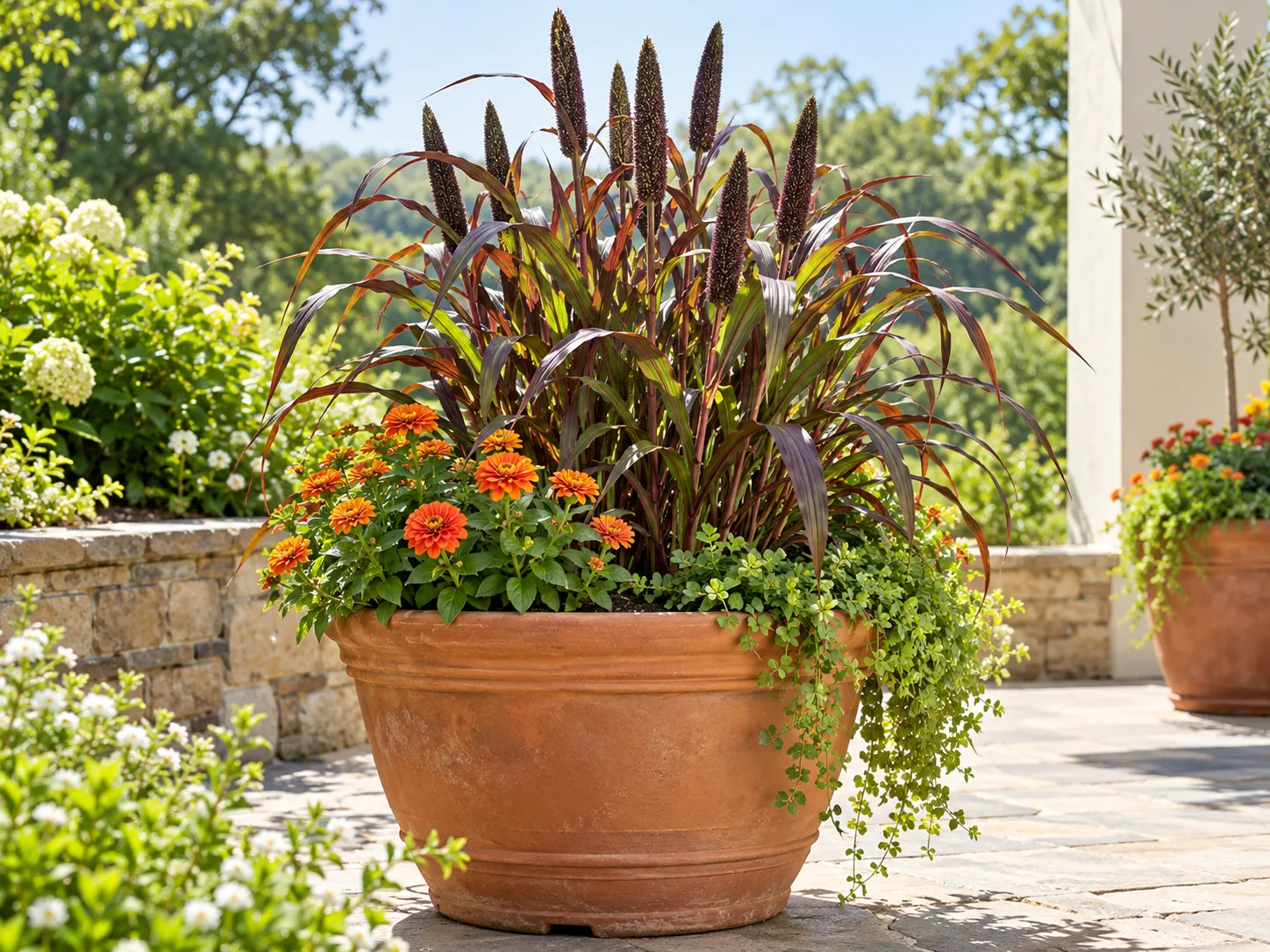
Fill the pot with a quality outdoor container mix, leaving enough room to water without washing soil over the rim. Plant one tall millet in a pot if you want a clean architectural accent, or combine one millet with lower plants that have similar sun and water needs. The ornamental grass will take up both light and root space, so do not crowd several large companions into a narrow planter.
Container plants dry faster than in-ground plants, especially in direct sun and wind. Lift the pot slightly or feel the soil before watering; water until excess drains from the bottom, then empty any saucer that holds standing water. If the container dries completely every afternoon, move it to a less exposed spot or use a larger pot rather than simply applying small sips that wet only the surface.
Use the plumes for color, cutting, or birds
The flower spikes are the plant’s main seasonal display. They are dense cylindrical or bottlebrush-like inflorescences, not the soft arching plumes of many fountain grasses. Their color and size vary by cultivar, and the heads become more visible as the plant grows through summer. A cold spring or short growing season may delay flowering, so use the plant’s progress rather than an exact bloom month as your cue.
Cut a few spikes while they are young if you want fresh arrangements. Leave mature spikes attached if you want seedheads for birds or dried arrangements. Wisconsin Extension notes that birds such as goldfinches and sparrows feed on millet seed and that the dry heads can be used in arrangements. If you want to reduce reseeding, remove the heads before seed falls; if you want wildlife value, keep them through the feeding period and cut the stalks back when the display is finished.
Deadheading is a choice, not a care requirement. Removing every flower spike keeps the plant focused on foliage and may encourage additional stems on some selections, but it also removes the feature most gardeners planted the grass to enjoy. If flowers are pollen-producing and you are placing the plant where pollen is a concern, choose a cultivar described as pollenless rather than assuming all pearl millet behaves alike.
Treat grain harvest as a different goal from ornamental display
A decorative plant can make seeds without being a practical grain crop. Food production depends on variety, season length, pollination, harvest timing, drying, and post-harvest handling. The ornamental selection may produce less uniform seed and can be too late-maturing for a short season; a pretty seedhead is not proof of a useful edible harvest.
If you want to grow millet for food, begin with seed sold for grain production and check the cultivar’s days to maturity against your frost-free season. Use a crop-specific guide from your state or regional agricultural extension for planting density, fertility, weed control, and harvest. Those recommendations vary with climate and whether the crop is intended for grain or forage. For context, a 2020 field study from Federal University Dutsin-Ma evaluated pearl millet varieties and disease response under its own research conditions; it is evidence that variety performance is specific to the production environment, not a recipe for a patio planter.
Do not eat seed sold for bird feeders or ornamental use. Birdseed may be a blend of species and is not packaged as food-grade grain, while ornamental nursery plants may have received products not labeled for edible crops. If your aim is a backyard grain harvest, start with food-grade seed, grow it as a crop from the outset, and follow the seed supplier’s harvest and drying advice.
Troubleshoot slow or disappointing growth
When millet looks poor, check the order that most often controls growth: temperature, light, drainage, weeds, and root space. A seedling that sits in cold soil can remain small even if it is watered and fed. A purple cultivar in shade may stay greener, while one planted in a pot that is too small may flower early and stop building height.
If seeds have not emerged, check whether the soil was warm and consistently moist, and whether seed was sown at the packet’s depth. Cold, wet soil slows germination and can damage seed; a dry surface can interrupt germination after the first hydration. Re-sow only after fixing the condition rather than repeatedly adding seed to the same unfavorable patch.
Weeds are a serious problem while millet is small because they can shade seedlings and compete for water. Remove them early and carefully so you do not disturb shallow young roots. Once ornamental millet is established, its height and leaf mass make it more competitive, but it is not a substitute for bed preparation.
Aphids occasionally feed on ornamental millet, although Wisconsin Extension describes it as having few pest problems overall. Inspect leaves and stems before treating; a small population may not justify action, while a heavy infestation can stunt a young plant. Use a product only if the label permits its use on the plant and pest, and follow its directions. Avoid spraying flowers when pollinators are visiting.
Green leaves, weak stems, and few plumes
Green leaves on a young ‘Purple Majesty’ are usually normal. Wait for more leaves and stronger light before deciding the plant is the wrong cultivar. If mature growth stays greener than expected, check the plant’s identity, sun exposure, and cultivar; some ornamental varieties are meant to be chartreuse or multicolored rather than purple.
Weak, leaning stems point first to too much shade, crowded growth, or a root zone that cannot support the plant. Move the next planting into full sun and use a larger container or more appropriate spacing. A temporary stake can prevent breakage, but it will not restore color or vigor if the plant is starved of light.
Few plumes usually reflect a short or cool season, late planting, or stress during establishment. In a cool climate, start seed indoors a few weeks before the final frost and transplant promptly once conditions are warm. In a warm climate, direct sowing after the soil heats up may produce a more robust plant than holding it in a small cell for too long.
If leaves have distinct spots, fuzzy growth, or damaged stems, do not assume every blemish is a disease listed for another millet crop. Identify the symptom and ask a local extension office if it is spreading. Remove badly affected material, avoid leaving the plant waterlogged, and do not apply a fungicide without a confirmed diagnosis and a label that covers the setting and disease.
Finish the season and decide whether to save seed
Millet is grown as an annual, so in a region with freezing winters the plant usually finishes when frost kills its foliage. You do not need to dig up and store the clump as if it were a perennial grass. If you want the seedheads for birds, leave them standing as long as they remain attractive and useful; if you prefer a clean bed or want to limit volunteer seedlings, remove the heads and stalks before seed scatters.
You can save seed from an open-pollinated variety if you want to try growing it again, but it may not match a named hybrid. Let seedheads dry on the plant, cut them before rain or heavy seed loss, and finish drying them in a protected, airy place. Label the seed with the cultivar and year, and keep it cool and dry. For an F1 hybrid such as ‘Purple Majesty,’ treat the next generation as variable rather than expecting identical purple plants.
In regions with mild winters, spilled seed may sprout when the soil warms, but seedlings should not be assumed to survive frost. Pull volunteers where they are unwanted. Do not label the plant invasive solely because birds eat the seed; simply manage seedheads according to your climate and local garden conditions.
Conclusion
To grow ornamental millet well, choose a named cultivar, wait for frost-free weather and warm soil, and give it full sun with good drainage. Direct sow in a long, warm season; start seed indoors only when a short season makes that head start useful, and avoid letting young plants become root-bound.
After establishment, water according to the soil and weather rather than a rigid schedule, keep fertilizer modest, and choose a compact selection for a pot. Let the spikes mature for birds and dried arrangements, or remove them before seed scatters. If you want edible grain, begin with a food-purpose variety and crop-specific guidance; ornamental millet is a garden accent, not a shortcut to grain production.



