How to Grow Common Cattail Without Letting It Take Over
Learn how to grow common cattail in ponds and water gardens, including container planting, water depth, division, spread control, and native-vs-hybrid ID.
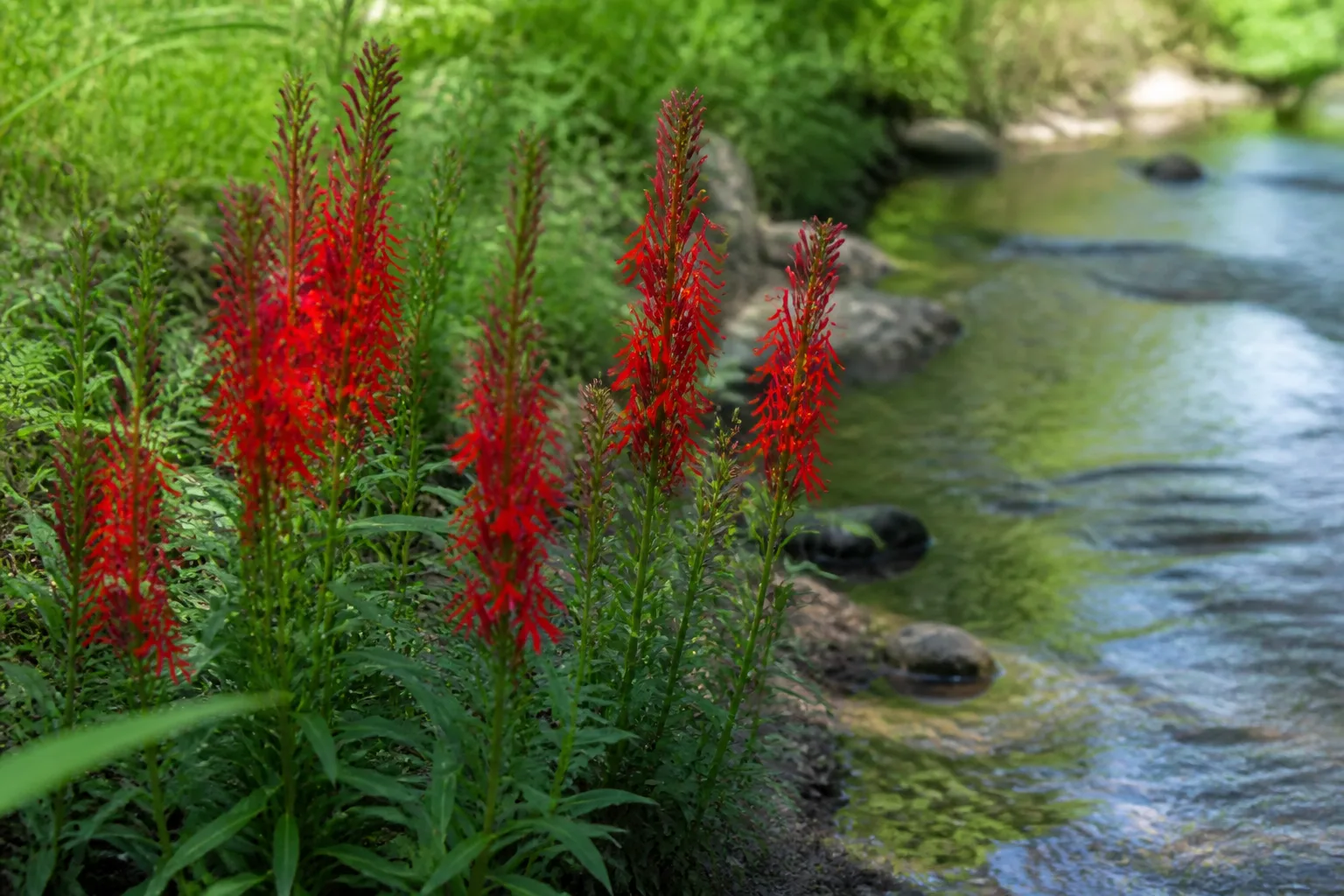
Common cattail, Typha latifolia, is one of the most recognizable wetland plants in North America. Its tall strap-like leaves and brown cylindrical seed heads can make a pond edge feel instantly natural, and a modest patch can provide cover, nesting material, shoreline protection, and habitat structure for wildlife.
The same traits that make cattail successful in a marsh also make it easy to regret in a small ornamental pond. It spreads by vigorous underground rhizomes as well as seed, and under nutrient-rich or disturbed conditions a few plants can become a dense stand. The key to growing cattail well is therefore not “maximum growth.” It is intentional placement plus active containment.
Cattails belong at a managed wet edge, not in every small garden pond.
Know Which Cattail You Have
Before planting or managing cattails, identify the species as accurately as you can. Broadleaf or common cattail, Typha latifolia, is native across much of North America. Narrowleaf cattail, Typha angustifolia, has a more complicated biogeographic history and is considered introduced in much of the continent, while the hybrid Typha × glauca can be especially competitive in some regions.
The U.S. Geological Survey’s review of cattail invasion emphasizes that hybridization, altered hydrology, and increased nutrient inputs can drive large expansions of Typha. USGS also notes that invasive and hybrid cattails can form dense monotypic stands that reduce plant diversity and alter wetland function.
Identification by a single feature is risky because traits overlap. In broadleaf cattail, the male and female flower portions are typically close together on the same spike, while narrowleaf often shows a visible gap, but hybrids can blur these differences. Leaf width and flower spacing can help, yet local extension or natural-resource staff may be the better choice if species identity affects management decisions.
This distinction matters because “cattail is invasive” is too broad a statement. A native T. latifolia patch can be a normal component of a healthy wetland, while an expanding hybrid stand in a disturbed wetland can be a serious ecological management problem. Make decisions based on the plant, the site, and local conservation guidance rather than the common name alone.
Is Common Cattail Right for Your Pond?
Common cattail is best for a pond edge, marsh garden, rain-fed wet area, or large water garden where you can give it room and still reach it for maintenance. It is a poor choice for a tiny lined pond if planted loose into the bottom substrate because rhizomes can rapidly occupy the available margin and become difficult to remove without disturbing the liner.
A few cattails can be useful. Limited cattail growth can provide wildlife and shoreline benefits, while thick stands may interfere with open water and require control. That distinction is a useful design principle: decide how much of the shoreline you are willing to let cattail occupy before planting it.
Also consider what lies beyond your property. Seeds can travel and rhizomes can spread through connected wet ground. If your water feature drains into a natural wetland, ditch, stream, or other sensitive habitat, ask local extension or natural-resource authorities what species are recommended and whether planting cattail is appropriate.
For a decorative backyard pond, the most conservative approach is to use one or two contained plants as vertical accents rather than trying to recreate a cattail marsh. You still get the architectural foliage and seed heads without surrendering the entire shallow shelf.
Light, Water, Soil, and Space Requirements
Common cattail is adaptable within its wetland niche. North Carolina Extension describes Typha latifolia as a plant of ponds, lakes, marshes, and other fresh to slightly brackish wet habitats, with a preference for full sun to partial shade. It tolerates saturated, low-oxygen soil conditions that would kill many ordinary garden perennials.
Give it the brightest site you reasonably can if you want strong upright growth. In too much shade, stems may lean toward light and the planting can look sparse. Partial shade can work, especially in hot climates, but deeply shaded pond corners are not ideal.
The root zone should stay wet. Cattail can grow in saturated mud and shallow standing water, and established plants tolerate fluctuating levels better than newly planted divisions. Exact water depth should be matched to the source plant, container height, and local conditions rather than treated as a universal number.
Soil can be rich, silty, or loamy, but rich is not automatically better. Cattails often respond aggressively to nutrient enrichment. In a decorative pond, use a heavy aquatic planting medium or mineral soil that stays in the pot rather than a lightweight peat-heavy mix that floats into the water.
Plan for the mature scale. Broadleaf cattail can grow taller than many people expect, often well above head height in favorable conditions. It should not block a sight line you need for children, pets, traffic, or pond supervision.
The Safest Default for Small Ponds: Grow It in a Container
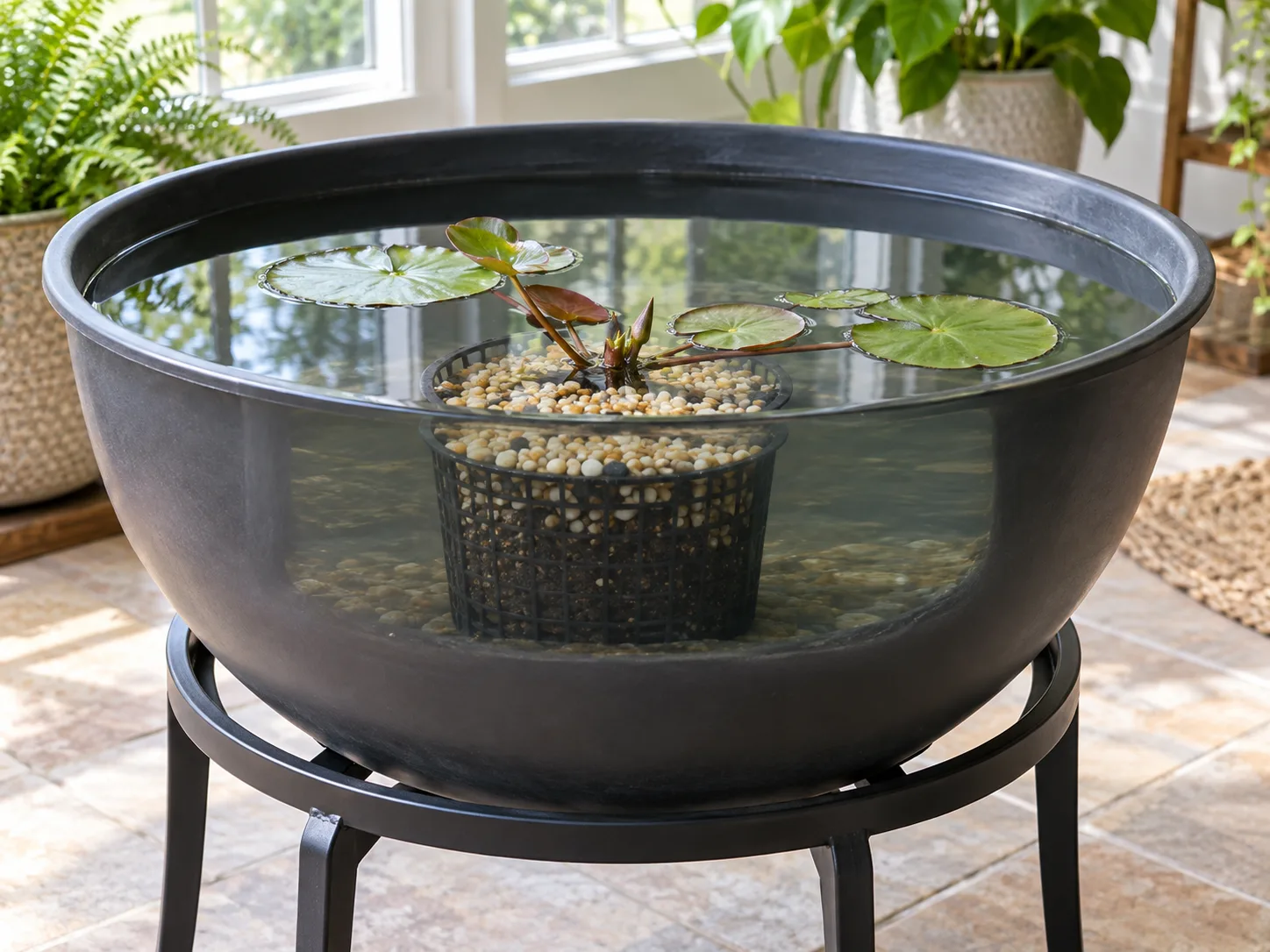
A container keeps vigorous wetland roots easier to inspect and divide.
For a small pond or water garden, container culture is usually the easiest way to enjoy cattail while retaining some control over its rhizomes. North Carolina Extension specifically recommends growing common cattail in containers to limit spread in smaller ponds and water gardens.
Choose a broad, sturdy aquatic container rather than a tiny nursery pot. Cattail rhizomes are forceful, and an undersized flexible pot can distort, split, or become root-bound quickly. A wide container also lowers the plant’s center of gravity and makes tall stems less likely to tip in wind.
Use heavy aquatic soil or dense loam, firm it around the rhizomes, and cap the surface with washed gravel if needed to keep soil from clouding the pond. Do not bury the growing point deeply. Position the container on a stable shelf so the crown is at an appropriate depth for the plant and so the pot cannot slide into deeper water.
A pot does not make cattail maintenance-free. Rhizomes can circle the container, climb over the rim, or escape through large drainage openings. Lift and inspect the plant at least annually in a small pond, and divide it before the root mass becomes impossible to manage.
How to Plant Common Cattail
The easiest starting material for a home water garden is a nursery-grown division or a piece from a known, legally collected source. Avoid moving plants from natural wetlands unless collection is explicitly permitted; many wetlands are protected, and removing material can spread invasive species or disturb habitat.
Plant in spring after hard freezes have passed and the pond is workable. Set the rhizome horizontally or at its natural orientation with live shoots upright, then firm soil around it so it does not float loose. If planting a container, lower the pot gradually into the pond to avoid washing the soil out.
For a naturalized bank, place divisions far enough apart that you can see individual clumps and access them for control. Do not fill the entire shoreline at planting time. Cattail’s growth habit will close gaps on its own, and generous spacing gives you time to remove unwanted shoots before they become a continuous rhizome network.
New plants can look unimpressive for a few weeks while roots reestablish. Maintain stable moisture, avoid fertilizing heavily to force growth, and watch for rhizomes that lift from the soil. Re-anchor exposed pieces gently rather than burying the crown under deep sediment.
Watering and Water-Level Management
In a pond, “watering” mainly means keeping the root zone from drying out. The soil should remain saturated, and newly divided plants are particularly vulnerable if a shallow shelf suddenly drains or the pond level drops during hot weather.
If cattail is planted in a bog garden or permanently damp bed rather than open water, check the soil during drought. The plant has some tolerance for short fluctuations, but repeated drying works against the wetland conditions it is adapted to. A leaking pond edge or broken irrigation source can quickly turn a suitable site into a stressful one.
Avoid abrupt deep submergence of newly planted crowns. While established cattails tolerate flooding, a small division set far below its previous depth may struggle to reach light and oxygen. Adjust container height with stable blocks or a pond shelf instead of assuming deeper water is always better.
Water-level changes can also be a management tool in large managed wetlands, but that is a site-specific ecological practice rather than a casual backyard recommendation. For a home pond, focus on a stable level that supports your chosen plants and protects the liner and pond structure.
Fertilizer: Usually Less Is Better
Cattails generally do not need routine fertilizer in a pond that already contains fish waste, decomposing organic matter, or nutrient-rich runoff. Extra fertility can encourage faster vegetative growth and worsen the exact spreading problem you are trying to control.
The USGS review links increased nutrient inputs with cattail expansion in North American wetlands. That does not mean every fertilized cattail becomes invasive, but it is a strong reason not to feed an already vigorous stand simply because aquatic-plant fertilizer is available.
If a container-grown plant is pale and weak, first check light, planting depth, water quality, root crowding, and species identity. Correct those issues before adding nutrients. If fertilization is genuinely needed, use a labeled aquatic-plant product according to its directions rather than broadcasting ordinary garden fertilizer into the water.
Never fertilize a natural pond or wetland casually. Nutrient additions can affect algae, oxygen levels, and the wider aquatic ecosystem far beyond the cattail clump.
Seasonal Care Through the Year
In spring, remove only obviously dead, loose material and inspect the root zone for new shoots. This is the easiest season to divide container plants because growth is active but stems are not yet at full height. Reset containers before they become top-heavy.
In summer, monitor spread rather than constantly pruning healthy leaves. Pull or cut unwanted shoots early, check for rhizomes crossing container rims, and keep access paths open. If stems lodge after storms, remove damaged material cleanly so it does not decompose in a small pond all at once.
In late summer and fall, the characteristic brown seed heads mature. You can leave some standing for winter structure and wildlife value where spread is acceptable. In a tiny water garden, removing seed heads before they disperse can reduce seed production, but it does not stop rhizome spread.
In winter, dead stems can remain standing for habitat and visual interest, or you can cut them back after they brown. Do not cut healthy green cattail below the waterline without understanding the purpose and timing; repeated flooding of cut stems is sometimes used in control programs, but results vary and it is not the same as routine ornamental pruning.
How to Divide and Propagate Cattail
Division is the most predictable propagation method for a home pond. In spring, lift a container or expose the edge of an established clump and identify firm rhizomes with healthy shoots or buds. Cut sections with a clean, sturdy tool and replant only the amount you actually want.
Wear gloves and use care around old stems, which can be sharp. Cattail roots and mud can also make pond edges slippery, so work from stable footing rather than leaning over deep water. If the planting is in a lined pond, protect the liner from shovels and spades.
When dividing a pot, discard soft, rotten, or badly damaged rhizome sections. Replant vigorous pieces into fresh heavy aquatic soil, leaving room for expansion. Do not immediately refill the original oversized mass into several pots unless you truly want more cattail; division is also an opportunity to reduce the plant’s footprint.
Seed propagation is possible but unnecessary for most backyard gardeners. Seed-grown plants take longer to establish, seedlings can vary, and wind-dispersed cattail seed is already extremely effective at finding suitable mud. Division gives you a known plant and a much faster, more controllable result.
Flowers, Seed Heads, and Seed Spread
The cattail “brown sausage” is the densely packed female portion of the flower spike. Above it is the male portion, which releases pollen and later breaks down. As the female head matures, it eventually opens into a mass of fluffy, wind-carried seed.
USGS notes that cattails produce enormous numbers of wind-dispersed seeds, allowing them to colonize distant wet habitats. In a home pond, that means a seed head is more than decoration if nearby wet soil offers germination sites.
If your goal is strict containment, remove mature seed heads before they release fluff and dispose of them with yard waste according to local rules. Again, this only addresses seed. The established plant can continue expanding underground through rhizomes even if every seed head is cut off.
If you enjoy seed heads for arrangements, harvest them before they start to burst. Once they begin releasing fluff indoors, the volume can be surprising. Dry arrangements away from open flames and heat sources because the fine plant material is combustible.
How Fast Common Cattail Spreads
Cattail can spread rapidly when it has shallow water, abundant nutrients, and disturbed open substrate. The exact rate depends on site conditions, but the biological mechanism is consistent: horizontal rhizomes produce new shoots, those shoots create more rhizomes, and the patch expands from its edges.
A stand that appears stable one season can accelerate after a change in water level or nutrient input. Runoff from fertilized turf, eroding soil, livestock access, or other disturbances can change pond conditions in ways that favor cattail expansion.
For a backyard pond, use area rather than shoot count as your trigger. Mark the portion of shoreline you want cattail to occupy, then remove expansion beyond that boundary early. It is easier to pull or dig a few new rhizomes than to dismantle a mature interwoven mat.
In natural wetlands, expansion may involve hybrid cattail and complex hydrology that cannot be managed like a garden bed. Large-scale control should be planned with natural-resource professionals, especially where protected water, wildlife habitat, or herbicide regulations are involved.
How to Keep Cattail From Taking Over
Containment starts before planting. Use a pot in small ponds, avoid nutrient-rich fertilizer, place the pot where you can lift it, and keep the desired cattail area small enough to inspect from shore. The less access you have to the planting, the harder control becomes.
Inspect twice during the main growing season. Look for shoots appearing outside the intended zone and for rhizomes crossing container edges. Remove escapees while they are young and connected to a small amount of root tissue.
Do not rely on seed-head removal alone. It may reduce local seed dispersal, but it does nothing to sever the underground rhizome network. Likewise, one annual haircut of leaves will not necessarily shrink a vigorous stand.
Avoid disturbing a broad area of wet soil around the patch unless management requires it. Bare, wet substrate creates recruitment opportunities for cattail seedlings and other opportunistic plants. Where appropriate, maintain a diverse shoreline planting so one aggressive species does not have unlimited open space.
Managing an Established Dense Stand
Once cattail forms a large, dense stand, control becomes a multi-season project. USGS reports that physical, chemical, and hydrologic control methods can produce inconsistent results and often require repeated treatments. That is a warning against expecting a one-day cleanup to solve a years-old rhizome network.
For a small ornamental pond, physical removal is usually the first practical option. Work in sections, remove rhizomes as completely as possible, and revisit the area when new shoots appear. Removing too much at once can disturb sediment and water quality, so stage the work if the pond supports fish or other sensitive life.
For a natural pond or wetland, get local guidance before applying aquatic herbicide. Products, applicator requirements, water-use restrictions, permits, and legal treatment areas vary by jurisdiction. An herbicide that is labeled for terrestrial weeds is not automatically legal or safe for use in water.
Also ask what goal you are managing toward. If the problem is loss of open water, the plan may differ from a biodiversity-restoration project targeting invasive hybrid cattail. Accurate identification and a clear objective make repeated control more effective.
Pests, Wildlife, and Physical Damage
Cattail usually has few serious garden pests because it is adapted to wet, exposed habitats. The more noticeable interactions often come from wildlife. Muskrats and other animals may eat rhizomes or use stems for cover and lodge material, which can thin or rearrange a patch.
That activity is not automatically harmful. A pond designed for wildlife can benefit from the structural diversity created by a limited cattail stand. Problems arise when animals undermine a constructed bank, chew through a lined water feature, or remove newly planted divisions faster than they establish.
Protect new container plants temporarily if wildlife pressure is intense, but avoid entangling netting near water. Rigid, visible barriers are safer than loose mesh that can trap birds, amphibians, or mammals.
Wind can flatten tall stems, especially in exposed water gardens. A broad, heavy planting container and adequate light produce sturdier growth. Repeated lodging can also signal that the plant is overcrowded and due for division.
Common Cattail Problems and Troubleshooting
Leaves are yellowing. Check whether the plant is newly divided, too deeply submerged, shaded, or root-bound before reaching for fertilizer. Old lower leaves also yellow naturally as the season progresses.
The plant is not flowering. Young divisions may need time to mature. Low light, repeated cutting, stress after division, or unstable water levels can also reduce flowering. Focus on healthy vegetative growth first rather than forcing blooms with extra fertilizer.
Cattail is escaping the pot. Lift the container, cut back rhizomes that have crossed the rim, divide the root mass, and repot a smaller section. If roots escaped through openings into pond sediment, remove the connected runners before returning the pot.
The stand is dense but weak in the center. Older crowns can become crowded while new rhizomes push outward. Thin and divide the stand from accessible edges, and remove accumulated dead material gradually rather than churning the entire pond margin at once.
Cattail appeared without being planted. Windblown seed can colonize exposed wet mud. Confirm the plant’s identity before deciding to keep it, especially in regions where narrowleaf or hybrid cattails are management concerns.
Better Alternatives for Very Small Water Gardens
A six-foot-tall rhizomatous cattail can overwhelm a tub pond or compact lined feature. If your goal is simply a vertical wetland look, choose a smaller marginal plant adapted to your region and pond depth. Local native-plant nurseries can suggest rushes, sedges, pickerelweed, arrowhead, or other species that fit your climate and wildlife goals.
For tiny containers, compact aquatic cultivars may be easier than a full-size species, but check whether a named “dwarf cattail” is recommended locally before buying it. A smaller plant is not automatically ecologically harmless outside its native range.
Diversity is often more useful than a monoculture. Combining several appropriately scaled marginal plants creates season-long texture, supports different insects, and lowers the chance that one species occupies every inch of shallow water.
Whatever you choose, match the plant to the water depth, winter hardiness, mature size, and the pond’s connection to natural waterways. The best water-garden plant is one you can enjoy without creating a maintenance or ecological problem downstream.
Conclusion
Common cattail can be a valuable pond plant when it is treated as a vigorous wetland species, not a passive ornamental. Give Typha latifolia sun, saturated soil, and stable shallow-water conditions, but resist the urge to fertilize heavily or plant it loose in a tiny pond.
For most small water gardens, a large container and annual division are the simplest control system. Learn which cattail you have, keep the desired footprint small, remove rhizome escapes early, and get local professional guidance before attempting large-scale wetland control. That balance lets you keep the wildlife value and strong architectural look without allowing one plant to become the whole pond.