How to Grow and Care for Lady’s Mantle in Your Garden
Learn how to grow lady’s mantle in sun or shade, keep its foliage healthy, divide clumps, and limit seedlings before they spread through your border or beds.
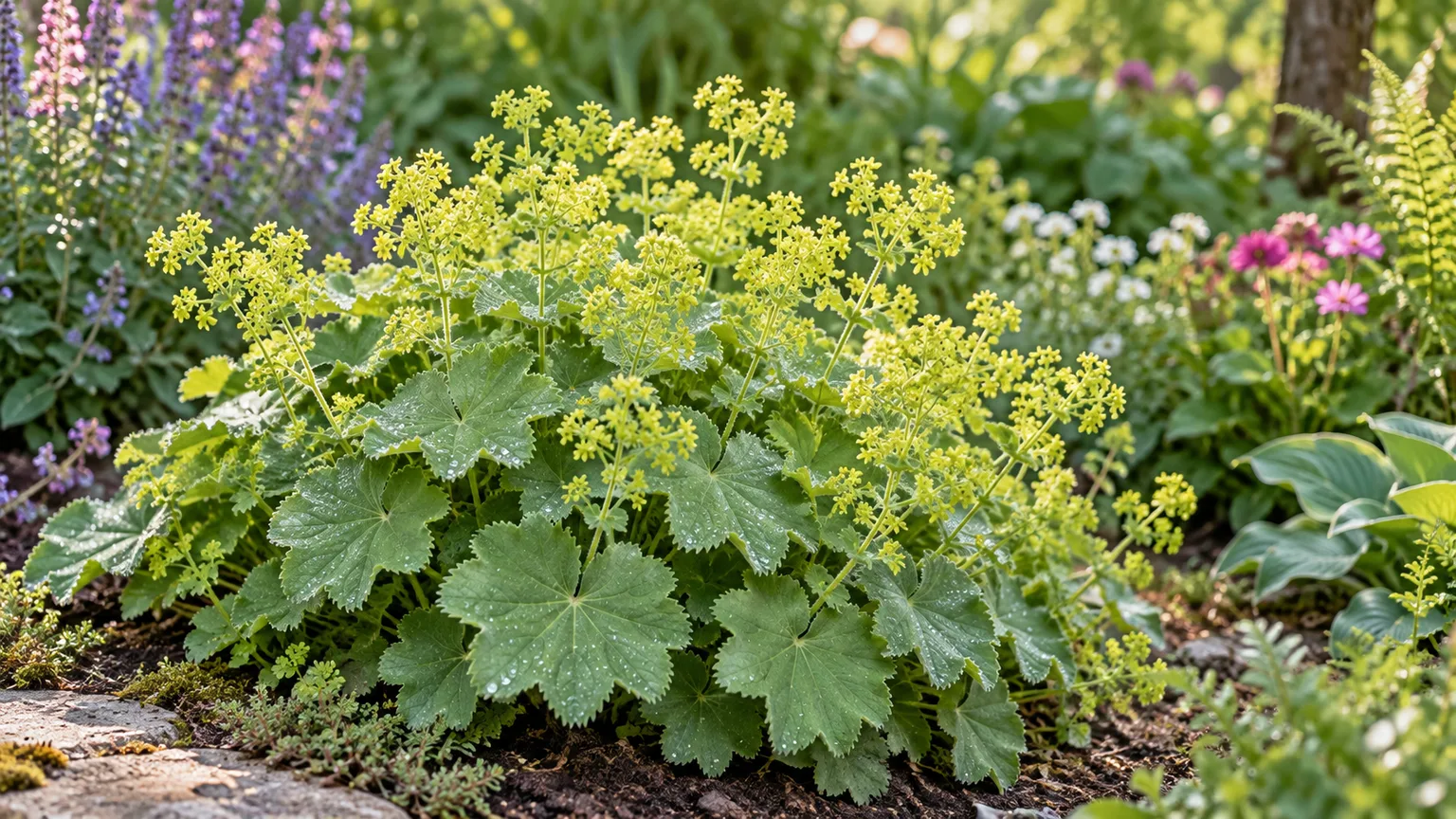
Lady’s mantle (Alchemilla mollis) is a hardy, low mound of soft green leaves topped by airy sprays of tiny yellow-green flowers in late spring or early summer. Its rounded, pleated foliage catches rain and dew, and the plant tolerates a wider range of light and soil than many perennials. The practical challenge is not keeping it alive; it is choosing a site where it stays attractive and deciding whether you want the seedlings it can produce. NC State Extension describes its shade tolerance and moisture preference, while Gardenia notes its common use along borders and paths.
The reliable starting point is partial shade in hot-summer regions, steady moisture without standing water, and deadheading before seed forms if you want to limit volunteers. In a cool climate with reliably moist soil, more sun can work. Treat those as adjustable settings: watch the leaves through the first hot spell and change exposure or watering if the edges crisp.
What Lady’s Mantle Looks Like and How It Grows
The botanical name most often sold in gardens is Alchemilla mollis, sometimes called soft lady’s mantle or garden lady’s mantle. It is a herbaceous perennial in the rose family, native to parts of the Eastern Carpathians and Caucasus. Its leaves form a rounded clump; each is broadly circular with shallow, scalloped lobes and a soft, downy surface. Flower stems rise above the foliage, carrying many small star-like blooms that read from a distance as a light chartreuse haze rather than large individual flowers. NC State Extension’s plant profile describes leaves up to about six inches across and flower stems taller than the foliage mound.
Expect the foliage clump to be roughly a foot or somewhat wider, with flowering stems reaching higher; cultivar and growing conditions change the finished size. Garden references commonly place A. mollis in USDA hardiness zones 3 through 8, but a winter-hardiness zone does not tell you whether a summer is cool enough for an exposed, sunny site. Gardeners’ Path also gives this range, and Gardenia’s profile gives a typical spread of about 18 to 24 inches, a useful planning range for a border. This is a ground-level foliage plant, not a tall screen. Its best roles are edging, softening a path, filling the front of a perennial bed, or making a repeated low drift beneath shrubs where there is enough light and moisture.
The leaf surface holds droplets after rain, which is part of its appeal, but the plant is not aquatic and does not want to sit in water. Its broad, low foliage can also retain debris in a dense clump. Those two details explain most of the care: give it a moist but draining root zone, and clear away dead leaves that mat against the crown.
Choose a Site That Matches Your Climate
Before planting, look at the bed at the hottest part of the day, not only when you first walk through it in the morning. Ask whether the soil stays damp after a normal watering, whether afternoon sun heats the leaves, and whether the location is accessible for removing flower stalks. Lady’s mantle adapts to sun and shade, but tolerance is not the same as ideal appearance. The foliage usually stays greener where roots do not dry repeatedly and the leaves are protected from intense heat.
Light: Sun in Cool Weather, Afternoon Shade in Heat
In a cool-summer or coastal garden, A. mollis can grow in substantial sun if the soil remains evenly moist. In a hot-summer inland garden, morning sun followed by afternoon shade is usually the lower-stress choice. NC State Extension lists full sun through shade as workable but specifically notes that leaves may scorch in drier places under full sun. The practical implication is that light and water interact: more sun can mean more frequent moisture checks, especially in a small planting or near tree roots.
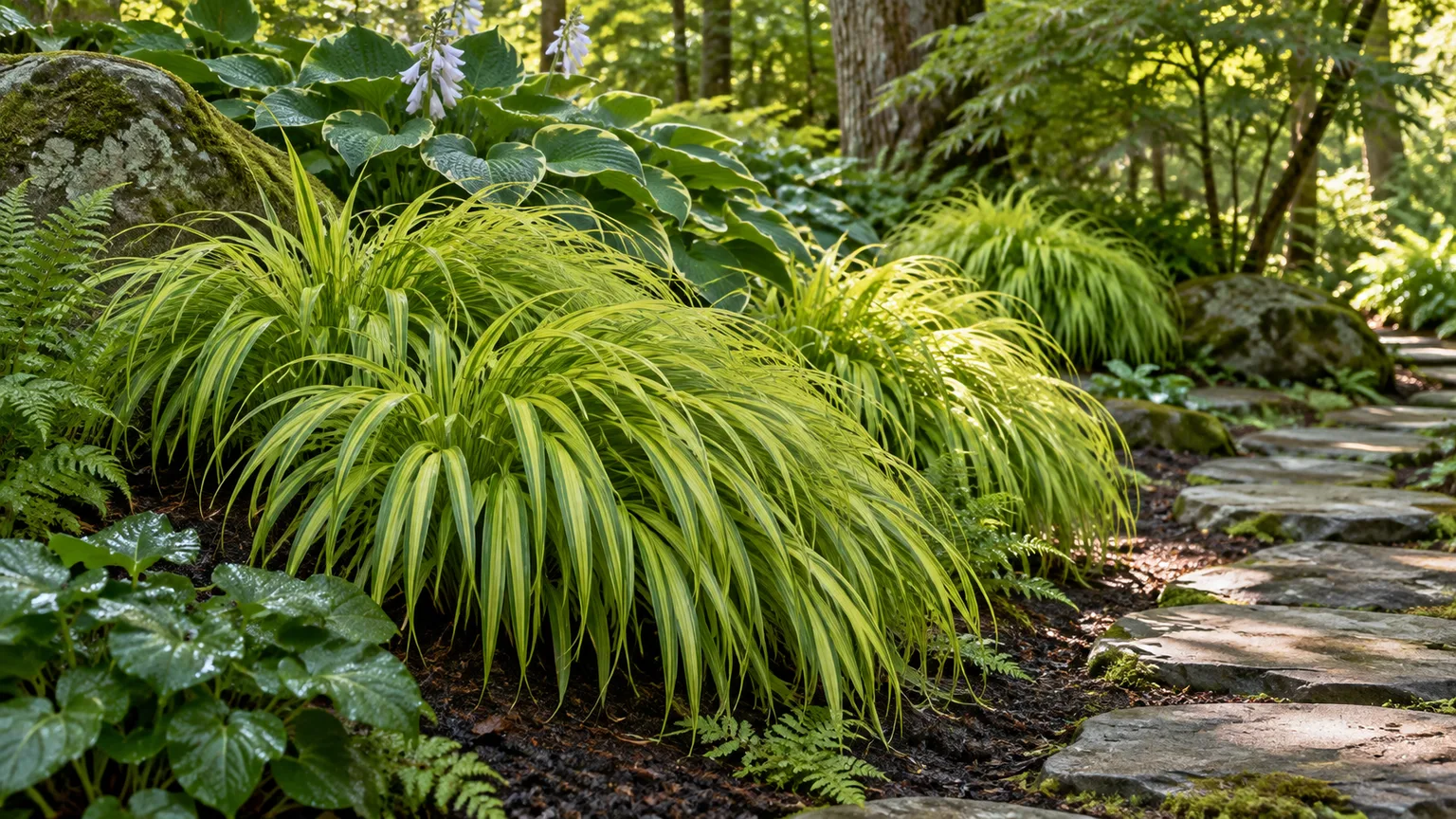
Deep shade is not necessarily a death sentence, but flowering may be lighter and a crowded clump can look open as it reaches toward brighter light. If the area receives only dappled light, use it for foliage texture rather than expecting a heavy flower display. Gardeners’ Path favors several hours of sun for strong growth while recommending afternoon shade in hotter southern conditions. These references differ in emphasis; use the plant’s response and your local summer heat to set the balance rather than following a single hour-count everywhere.
Soil: Moisture Matters More Than a Perfect pH
Aim for ordinary garden soil that holds some moisture but drains after rain. Lady’s mantle is adaptable to soil texture and pH; you do not need to acidify a bed simply because one reference gives a preferred pH range. What matters more is whether the roots receive dependable moisture without remaining waterlogged. If the bed is sandy and dries quickly, work in mature compost to improve water-holding capacity. If water stands there after a storm, choose a better-drained position or raise the bed before planting rather than trying to solve persistent saturation with more mulch.
A simple check beats guessing from the surface. After watering or rain, push a finger or narrow trowel a few inches into the soil near the plant. If it is dry at root depth, the site may need more organic matter or a deeper watering; if it is wet and cool for days, drainage is the issue. Keep mulch loose and a little away from the crown so it slows evaporation without burying the point where leaves emerge.
When to Plant and How Far Apart to Space It
Plant nursery-grown clumps in spring after the soil can be worked, or in early fall while there is still time for roots to settle before freezing. Cool weather reduces transplant stress and makes it easier to keep the root ball evenly moist. Set the plant at the same depth it grew in its pot, backfill around the roots, firm gently, and water thoroughly. Avoid planting into a heat wave if you can; a new transplant has not yet built the root system that helps an established clump ride out short dry spells.
For a border where you want distinct mounds and room for air movement, space plants about 18 to 24 inches apart, adjusting for the mature size listed on the cultivar label. That is close to the spread many garden references give for the species. For a faster ground-cover effect, you can plant closer, but accept that foliage will overlap sooner and that seedlings may make the patch denser. Close spacing is a design choice, not a requirement for healthy growth. Leave a narrow inspection gap beside a path or paving edge if you want to lift volunteers before they root.
A container is possible if it is broad enough for the clump and has drainage holes. Use a quality outdoor potting mix, not garden soil packed into a pot, and check moisture more often than you would in a bed because containers heat and dry faster. In a cold region, a pot exposes roots to colder swings than the ground; site it in a sheltered location for winter and follow the hardiness advice for your cultivar.
Water During Establishment and Dry Spells
Water new plants slowly and deeply after planting, then check the root ball and surrounding soil every few days during the first couple of weeks. The goal is evenly moist soil, not a permanently wet crown. As roots move into the surrounding bed, extend the interval between waterings and use rainfall and soil checks rather than a fixed weekly schedule. A light sprinkle that wets only the leaves can leave the root ball dry, especially if the original nursery mix sheds water differently from the garden soil around it.
Established lady’s mantle can tolerate brief dry periods better than a plant that has just been moved, but drought tolerance should not be read as a preference for dry soil. During hot weather, look for crisping edges, drooping foliage, or a visibly dry root zone. Water at soil level early in the day and reassess the next morning. If the leaves recover but the bed dries again quickly, improve the soil’s organic matter or add a thin mulch rather than repeatedly giving shallow surface drinks.
Brown leaf edges are often a site-and-moisture signal, not proof of a disease. Before pruning everything or applying a treatment, compare the damaged side with the shaded side, feel the soil a few inches down, and review recent heat and wind. If only the sun-facing edges have crisped and the soil is dry, give deeper water and provide afternoon shade. If the soil is already wet, adding more water is the wrong correction.
Fertilizer and Mulch: Keep Both Modest
A healthy clump in average garden soil generally does not need a special fertilizer program. Start with soil structure and moisture, not a high-nitrogen feed: fertilizer cannot fix a hot, dry site or poor drainage. If the bed is genuinely depleted, a thin layer of finished compost in spring is a restrained way to add organic matter. Follow any product label if you choose a fertilizer, and avoid feeding simply because growth looks smaller during a dry spell; water stress and light are more likely explanations.
Mulch can help the soil stay evenly moist and reduce the number of small weeds around young plants. Spread a shallow layer over the root zone, keeping it clear of the crown and not so deep that low leaves are covered. In a dense established clump, periodically pull aside lodged leaves so the center can dry after rain. This small cleanup matters more in humid weather than adding another thick layer of material.
What to Expect From the Leaves and Flowers
The foliage is the long-running feature: a low, soft-edged mound that provides a calm green backdrop before and after the flowers. In late spring or early summer, depending on region and weather, narrow stems carry frothy yellow-green flower clusters above the leaves. The flowers are intentionally subtle. They blend well with roses, blue or violet perennials, and plants with dark leaves because the chartreuse color lifts a composition without competing with stronger colors. NC State Extension also notes the flower stems can be cut or dried, so you can bring a few into an arrangement without changing the plant’s basic care.
The bloom period may end with small seed-bearing heads. If you want the display to continue as long as possible, remove individual stalks as they fade instead of waiting until every flower is brown. Some plants push a fresh flush of foliage after a more thorough cutback, and a second light flowering is possible in favorable conditions, but do not treat rebloom as guaranteed. Weather, cultivar, and how much time remains in the local growing season all matter.
The rounded leaves can catch drops beautifully after rain, but they also spread outward and shade low neighbors. Give smaller or slow-growing plants a little breathing room. Lady’s mantle works especially well where the edge of a clump can soften a hard path or where you can reach the stems easily; it is less convenient as a hidden groundcover behind a dense shrub where seedlings would be hard to notice.
Use Lady’s Mantle Without Crowding Its Neighbors
Think in repeated clumps rather than an uninterrupted carpet if the rest of the bed contains small perennials. A mature mound can cover the soil at the front of a border, but its foliage can overtake delicate plants at the same height. Place it in front of taller roses, shrubs, or upright flowers, then leave gaps for lower companions that need sun. Along a path, set the crown far enough back that mature leaves do not flop across the walking surface after rain.
Under trees, distinguish shade from root competition. A site may look cool and protected while tree roots take up water quickly; if nearby plants wilt first during a dry spell, lady’s mantle will also need closer monitoring. Use it beneath shrubs where soil is reasonably moist and where fallen leaves can be cleared. For a woodland-style bed, use it as a front-edge transition rather than assuming it will thrive in the darkest, driest corner.
If local guidance advises against planting it near natural areas, choose a non-seeding cultivar only if the source and label actually support that trait, or select a regionally appropriate alternative. A plant that behaves tidily in one small urban bed can still seed into adjacent ground when conditions are favorable. Distance from open land, streams, or conservation areas and the ability to deadhead are part of choosing the planting site.
Prune After Flowering for a Tidy, Fresh Mound
Pruning is optional for the plant’s survival, but it changes its appearance and seed output. If you want to limit seedlings, remove the flower stems before the seed heads mature and dry. Cut each stem down into the foliage mound, close to its point of emergence without cutting into the crown. You can do this selectively over several weeks, which preserves some flowers for display while keeping early-fading stalks from setting seed.
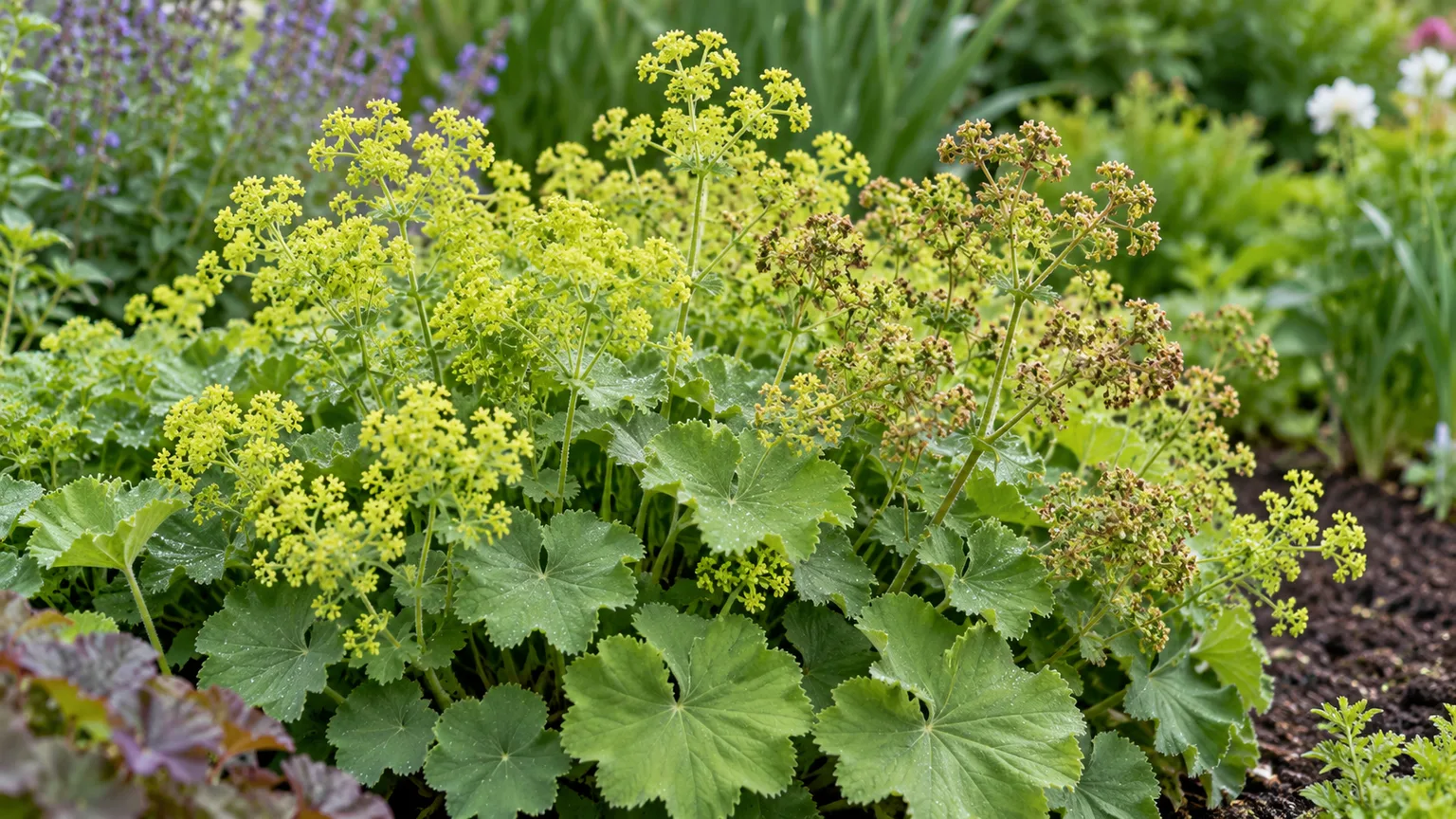
After the main bloom, inspect the leaves. Remove only damaged, scorched, or flattened growth if the mound still looks good. If the whole plant has become ragged and the weather has cooled, a moderate shear can tidy it and encourage fresh leaves, but avoid cutting into the central crown or stripping the plant during severe heat and drought. Water after a substantial cut only if the soil is dry; do not use a haircut as a substitute for correcting a root problem.
Clean away matted debris around the crown in spring or after a wet period. Use clean, sharp pruners for the flower stalks and dispose of mature seedheads carefully if the goal is containment. There is no need to shear on a rigid calendar. The useful trigger is what you see: fading flowers that you do not want to set seed, or foliage that has become damaged enough to justify a trim.
Propagate by Dividing an Established Clump
Division is the most predictable way to make another plant with the same traits as the parent. It also lets you reduce an oversized mound. Divide in early spring as new growth begins or in early fall while the soil is still warm enough for roots to settle. Choose a cool, cloudy day if possible, water the plant the day before if the soil is dry, and prepare the new planting holes before lifting the clump so the roots are not left exposed.
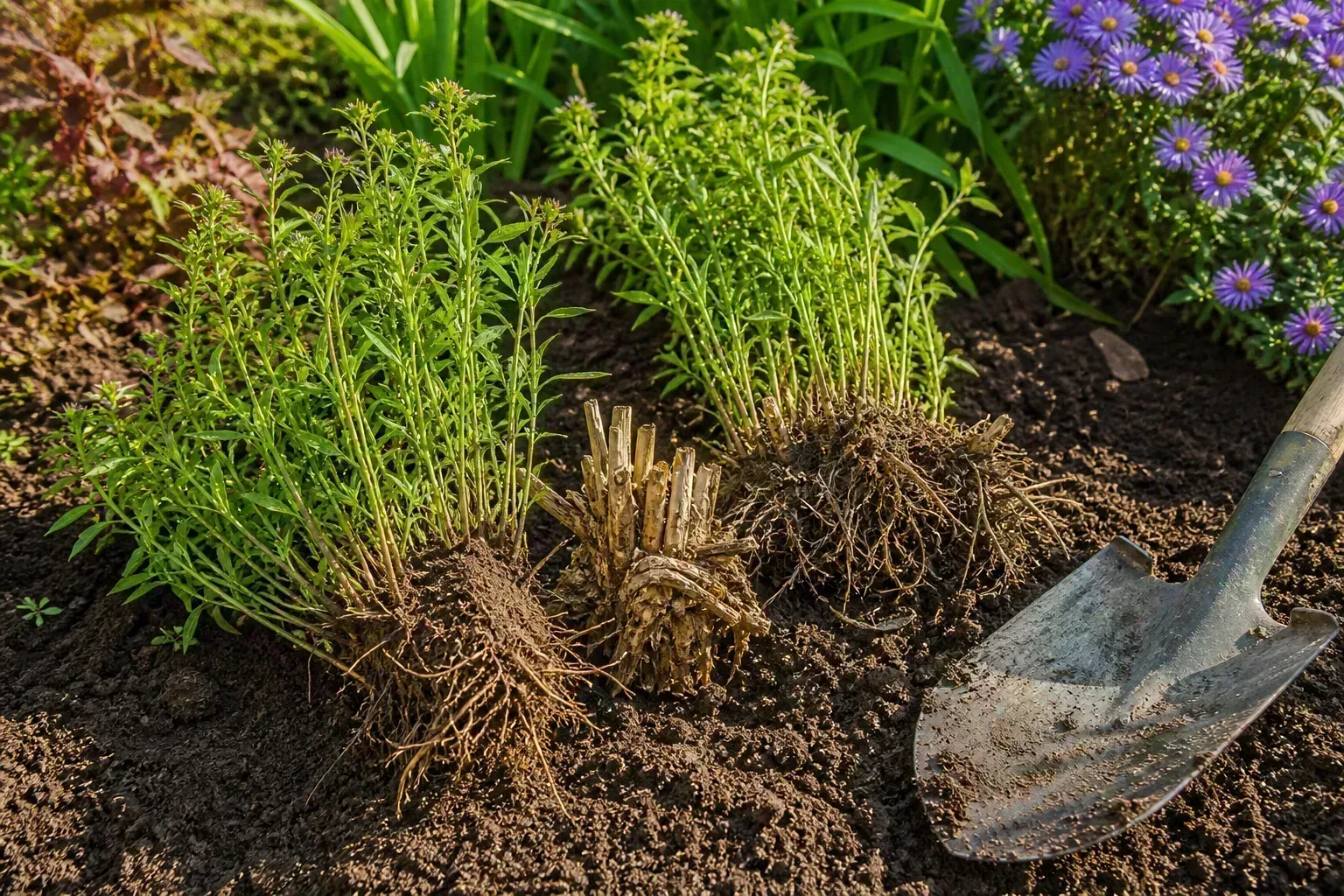
Use a spade to lift around the outer edge of the clump, then loosen enough soil to see where the crown separates. Pull apart smaller sections by hand or use a clean knife or spade on a dense crown. Each division needs healthy roots and at least one sound growing point; a handful of leaves without attached crown and roots is unlikely to establish well. Discard dead or mushy portions rather than planting them back into the bed.
Replant divisions promptly at the original depth, firm the soil around the roots, and water them in. Keep the soil lightly moist while new roots settle, then shift to normal watering. If you are dividing to control size rather than increase plant count, replant only the strongest pieces and compost the rest. Avoid dividing a wilted plant during a hot spell; first correct the water or drainage problem, then divide once the plant is growing steadily.
Grow New Plants From Seed
Seed is a useful option when you want several plants at once, but it is less predictable than division for preserving a named cultivar. Seed-grown plants may vary, and a young seedling may take longer to reach flowering size than a nursery-grown clump. If flower color and habit need to match exactly, buy the named cultivar or divide a plant whose traits you already like.
For a simple start, sow fresh seed in a prepared bed in fall, or follow the packet’s timing and stratification directions if sowing indoors. The cold, moist period experienced outdoors can help mimic the seasonal conditions seeds encounter naturally. For controlled indoor sowing, Gardeners’ Path describes cold stratifying seed before starting it in a light seed-starting medium. Seed instructions can vary by supplier, so do not assume every packet uses the same depth or chilling period.
Keep the surface evenly moist while seedlings are small, but do not leave trays waterlogged. When seedlings have several true leaves and can be handled safely, pot them on or transplant them during mild weather. Harden indoor-raised plants off over several days before moving them outdoors permanently. Label the seedlings and keep extras in pots until you see whether the chosen garden spot is a good fit; planting every germinated seed at once is a common way to create a crowded patch.
Keep Self-Seeding Manageable and Check Local Guidance
Lady’s mantle does not spread at the same speed in every garden. Seedlings are most noticeable where mature plants flower freely, soil stays favorable, and gardeners leave seedheads in place. Moist, open ground near an established clump can produce easy-to-pull volunteers; a dry, shaded, frequently disturbed site may produce far fewer. The number of seedlings you see is a better guide to your own management workload than a blanket claim that the plant is either harmless or invasive everywhere.
If you want to prevent volunteers, start deadheading as flowers fade and before dry seedheads form. Check the underside of nearby leaves and the bed edge for small seedlings after rain, then pull them while the roots are shallow. Do not move soil or mature seedheads to a wilder part of the yard. If you want to save seed, collect only a small amount and sow it in a contained nursery bed or pot, not beside a natural area.
Regional status deserves its own check. The Invasive Plant Atlas of the United States includes a regional listing source for lady’s mantle and says its distribution map is incomplete. That is a reason to check current state, county, extension, and local land-manager guidance—not evidence that the plant is legally invasive across the country. In regions where it is listed or where it escapes into natural areas, choose a different plant and avoid sharing seed or divisions beyond your property.
Troubleshoot Scorch, Sparse Growth, and Wet Crowns
Crisped leaf edges usually point first to heat, dry soil, or too much direct afternoon sun. Check moisture at root depth, then compare the plant’s exposure with its healthier side. Water thoroughly if the root zone is dry and provide afternoon shade if scorch returns despite adequate moisture. If leaves keep browning in a hot, exposed bed every summer, moving or replacing the plant may take less effort than trying to keep it cool with constant watering.
A thin, open mound can mean the site is too dark, the plant is crowded by neighbors, or the clump has aged and needs division. Check whether surrounding plants have grown over the foliage before adding fertilizer. If light is very limited, accept a foliage-only role or relocate a division to brighter filtered light. When dividing, use vigorous outer sections and reset spacing so air and light can reach the leaves.
Yellowing or soft growth at the center calls for a drainage check. If the soil stays saturated, reduce irrigation, clear mulch from the crown, and improve the site before applying any feed. Remove dead leaves and allow the surface to dry between waterings. Persistent softness or decay at the crown can kill a clump; take healthy outer divisions only if they have firm roots and no signs of rot. NC State Extension reports no major recurring insect or disease problems for the plant, so first inspect siting and watering rather than treating every blemish as a pest outbreak.
Cultivars and Related Lady’s Mantles
Named cultivars can differ in flower tone, leaf size, height, and habit, and labels do not always use those traits consistently. NC State Extension lists ‘Auslese,’ ‘Irish Silk,’ ‘Robusta,’ and ‘Thriller’; the Purdue Arboretum Explorer also records ‘Auslese’ and points to ‘Thriller’ and Alchemilla sericata ‘Gold Strike’ as related selections. Compare the nursery label and mature dimensions before buying rather than assuming every “lady’s mantle” is the same size.
If you want a compact edge, search specifically for a smaller Alchemilla species or selection and check its botanical name. A dwarf relative is not simply a miniature version of A. mollis, and hardiness, texture, and flowering can differ. For larger drifts, the ordinary species may be the easiest to find, but purchase fewer plants at first if you are unsure how readily it seeds in your local conditions.
A Simple Seasonal Care Calendar
Spring: Clear soggy leaves from the crown, check winter damage, and divide established clumps if needed. Plant new nursery stock once the bed can be worked. Start with a deep watering, then track soil moisture as roots establish.
Late spring and early summer: Enjoy the flower display and decide whether you want seed. Remove fading stalks as they finish if you want to limit seedlings; leave a few only where volunteers are welcome. Water during dry spells, especially for plants in full sun or beneath thirsty tree roots.
Summer: Watch for scorching during heat waves. A tired mound can be selectively trimmed after flowering, but postpone hard cutbacks during extreme heat or drought. Pull volunteers while they are small.
Fall and winter: Early fall is another useful time for planting or division in regions with a mild establishment window. In colder areas, let healthy foliage protect the crown until spring and remove collapsed growth when the weather turns. Do not pile wet mulch over the center.
Conclusion
Lady’s mantle is easiest when you match the site to your climate: give it more sun where summers are cool and moisture is dependable, and protect it from hot afternoon exposure where leaves tend to scorch. Plant into soil that holds moisture but drains, space clumps according to the border you want, and water by checking the root zone rather than following a calendar.
The main maintenance choice is whether you want seedlings. Deadhead fading flower stems before seed matures to keep the bed tidier; allow a limited number of volunteers only where they are welcome and local guidance supports planting it. Divide established clumps to renew a crowded planting, then watch the bed through the first summer. That combination of site choice, measured watering, and timely seed control keeps the plant’s soft foliage and airy blooms in the garden without letting its vigor decide the layout for you.



