How to Grow Pattypan Squash: Seed to Harvest Guide
Grow pattypan squash with warm-soil planting, practical watering, pollination checks, pest scouting, and harvest cues for tender fruit all summer.
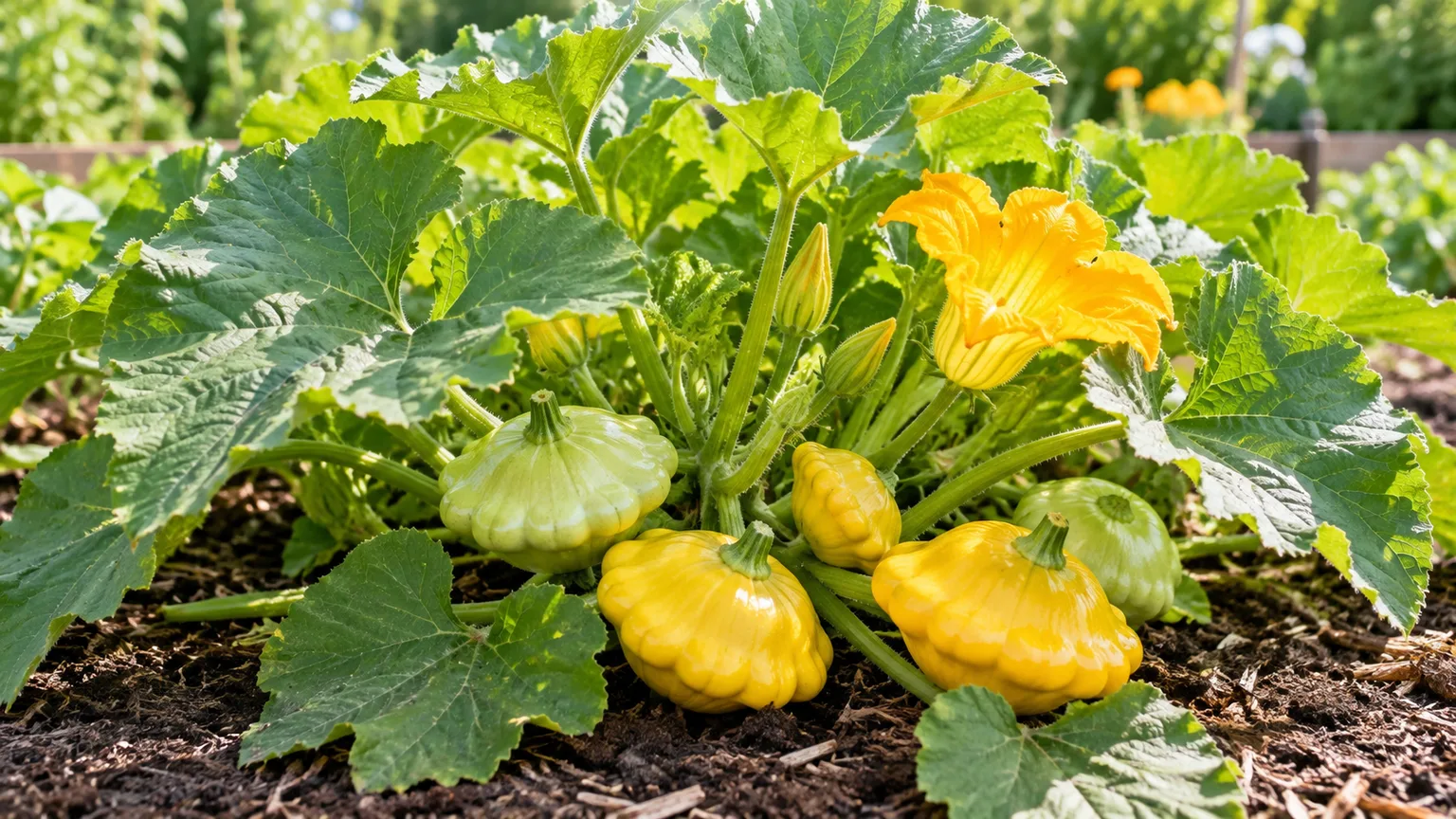
Pattypan squash—also called patty pan or scallop squash—is a warm-season summer squash that grows as a bush rather than a long-running vine. Its small, scalloped fruits come in green, cream, and yellow, but the growing plan is the same: wait for warm soil, give the plant space and steady moisture, let pollinators reach the flowers, and pick fruit while it is young.
A useful starting point is full sun, soil at least 60–65°F, and a frost-free planting window. Plan on roughly 2–3 feet between plants unless the seed packet gives a cultivar-specific spread, use one plant per large container, and treat 1–2 inches of water per week as a weather-dependent starting point rather than a weekly quota. The plant will often start producing around 45–60 days after sowing, but the packet’s days-to-maturity estimate and your local conditions are better guides than a universal date.
The quick answer: warm soil, room to spread, and frequent picking
| Need | Practical starting point | Adjust when… |
|---|---|---|
| Planting time | After frost danger passes and soil reaches about 60–65°F | Cold soil or a wet forecast can delay germination; use your local planting window |
| Light | At least 6–8 hours of direct sun | In very hot climates, afternoon shade may help plants ride out peak heat |
| Spacing | About 2–3 feet between plants in a row | Wide-spreading cultivars or mound plantings need more room; follow the seed packet |
| Container | One plant in a pot about 18 inches wide and deep or larger | A smaller pot dries quickly and crowds the roots and leaves |
| Water | About 1–2 inches weekly, including rain | Hot weather, sandy soil, and containers raise demand; rain and heavy soil lower it |
| Harvest | Pick fruits around 2–4 inches across | Smaller fruits are especially tender; larger ones remain usable but become seedier |
The easiest setup for most gardeners is a direct-sown plant in a sunny bed. Pattypan is compact compared with a vining winter squash, but “bush” does not mean tiny: mature leaves spread over the bed and can hide fruit, so leave enough room to walk up and check the plant.
Choose a variety for your season and the squash you want to eat
Pattypan varieties differ most visibly in color, shape, and the number of days they need before harvest. ‘Benning’s Green Tint’ is a pale-green heirloom often listed at about 52 days; ‘Sunburst’ is a bright yellow choice, while ‘Peter Pan’ is a light-green type. Seed catalogs may list different maturity estimates for the same name, so use the packet from the seed you buy as the local reference rather than treating a number from another grower as a guarantee. Gardener’s Path and Growing in the Garden describe several common pattypan cultivars and their harvest traits.
Choose a variety based on the growing window you actually have. In a short-summer climate, look for a lower days-to-maturity number and direct sow promptly once the soil is warm; in a long season, color and flavor can matter more, and you can sow a second small batch later. For fresh eating, any variety picked small has tender skin and fine seeds, so you do not need to grow a specific “baby squash” cultivar.
Plant after frost, when the soil is warm
Pattypan is frost-sensitive. Sow outdoors after your area’s last expected spring frost, when the soil at seed depth has warmed to at least about 60°F; closer to 65°F is a safer target for quick, even germination. Utah State University Extension gives 65°F as its squash planting threshold, while practical pattypan guides use a 60°F minimum after frost danger has passed. Utah State University Extension and Growing in the Garden provide those complementary benchmarks.
If you have a soil thermometer, check the bed in the morning at the depth where the seeds will sit. If it is still cool and soggy, wait a few days instead of trying to make up time with fertilizer; cold, wet soil slows germination and leaves seeds more vulnerable to decay. In a short season, black plastic or a low tunnel can warm the bed, but use any cover carefully, ventilate it on hot days, and remove insect-excluding covers when the first flowers open so bees can reach them.
In climates with a long frost-free season, a second sowing two to three weeks after the first can extend the harvest if the first plant becomes worn down by heat or pests. Count backward from the usual first fall frost and leave enough time for the variety’s stated maturity; a late planting that cannot mature before cold weather is wasted seed.
Give the bush full sun and enough elbow room
Choose a spot with at least six hours of direct sun; six to eight is a strong target for steady flowering and fruiting. Pattypan tolerates ordinary fertile garden soil as long as water drains through it. Work in finished compost before planting if the bed is poor or compacted, and use a soil test before trying to correct pH or adding a large amount of fertilizer. A slightly acidic to near-neutral soil is suitable, but a precise pH target matters less than drainage and steady growth.
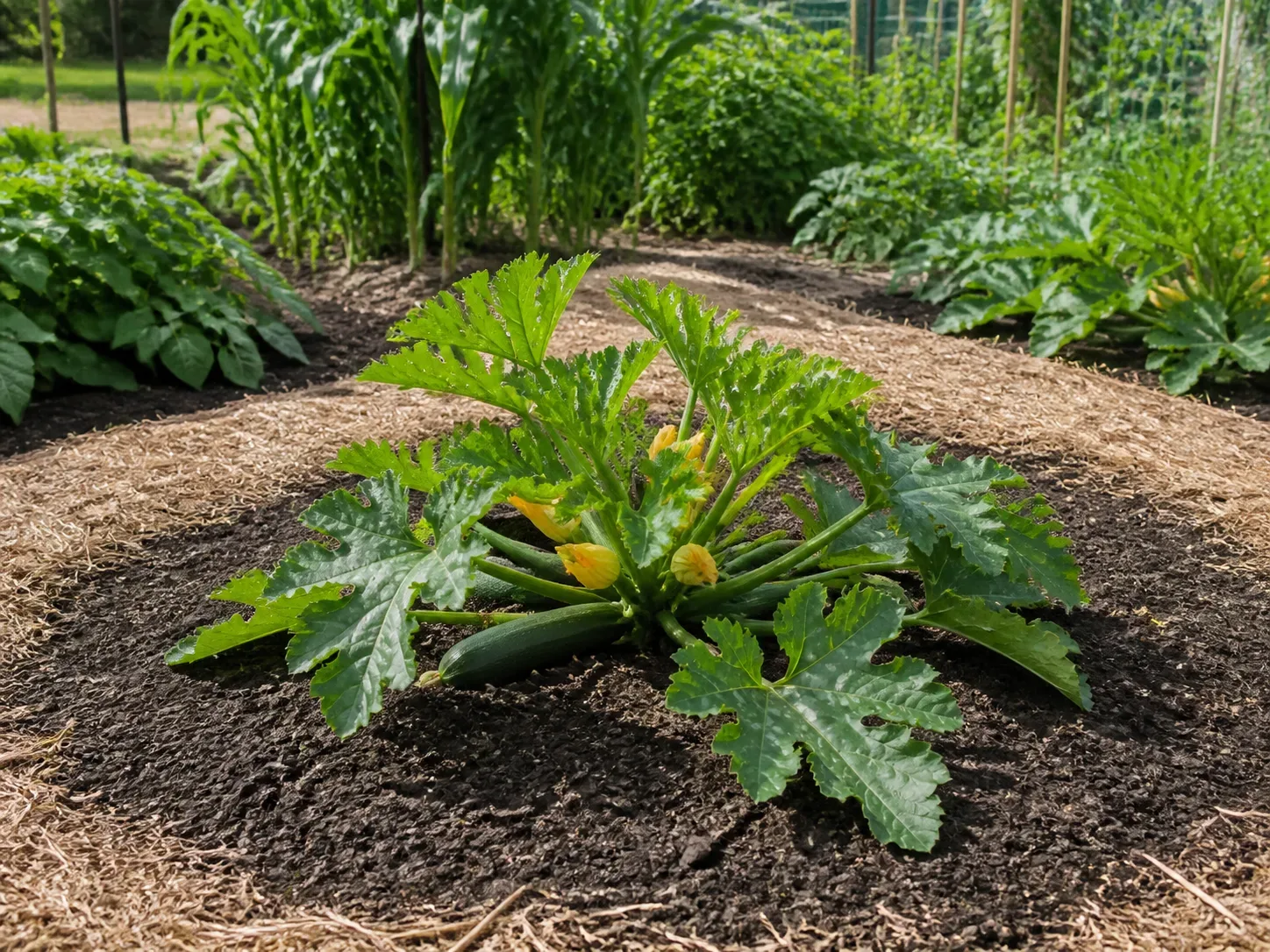
Zucchini is another bush summer squash; pattypan plants need similar room for leaves and fruit.
Plant spacing varies because guides describe different layouts. Utah State’s general squash directions use two feet between transplants in a row, with wider row spacing, while pattypan-specific guides allow more room for the spreading bush. For a home garden, start with 2–3 feet between plant centers and leave a clear path or aisle around the row; use the wider end for a vigorous cultivar or a bed where airflow and easy picking matter. If you are planting in hills, each hill takes the footprint of more than one plant, so space hills farther apart and thin seedlings to the number your packet recommends. Utah State University Extension and Gardener’s Path illustrate why row, mound, and per-plant spacing should not be treated as interchangeable measurements.
Does pattypan squash need a trellis?
Usually, no. Pattypan makes a sturdy bush, not a long vine, and is normally grown on the ground. A trellis or cage is optional rather than necessary; it can help manage a very tight space only if the plant is a suitable compact type and the structure can support its heavy leaves and fruit. Do not pull or tie stems upright by force, because a broken stem costs more than the ground space saved.
Prepare the bed and sow seed
Pattypan is quick to start from seed, and direct sowing avoids transplant shock to its roots. Remove weeds from the planting spot, loosen the top few inches of soil, and mix in mature compost if the bed needs organic matter. Do not put fresh manure or a large amount of high-nitrogen fertilizer in the seed hole; excessive leafy growth can crowd the bed without improving the harvest.
Direct sowing is usually simplest
Plant two or three seeds about 1 inch deep at the spot where the plant will grow, then water the soil gently so the seeds stay covered. When seedlings have their first true leaves, keep the strongest one or two and snip the others at soil level rather than pulling them up through the roots of the plants you are keeping. If you are using a row instead of hills, sow at the packet’s spacing and thin to the same final distance.
Keep the seedbed evenly moist until seedlings emerge, usually within about a week in warm soil, then water more deeply and less often as roots establish. Young leaves can look similar to other squash seedlings; label the row when you sow so volunteer seedlings do not get mistaken for the crop. Protect emerging plants from slugs, birds, and chewing insects if those are recurring problems in your garden.
Start indoors only when your season is short
For a short season, sow indoors two to four weeks before you expect to transplant. Use a small pot with drainage and sow one seed about 1 inch deep; squash seedlings grow fast and do not benefit from spending weeks crowded in a tray. Harden the young plant outdoors gradually, then transplant it only after frost danger has passed and the bed is warm.
Disturb the root ball as little as possible. A biodegradable pot can be useful if its sides and rim are fully buried and the bottom is opened, but it is not essential; a transplant grown in a removable pot can also succeed when handled gently. If your season is long enough, direct sowing is simpler and often catches up with starts quickly.
Grow one plant in a genuinely large container
A container is possible, but a small pot is not a shortcut. Give one plant a pot or grow bag at least about 18 inches across and deep, with generous drainage holes, and use a high-quality potting mix rather than garden soil. The larger soil volume buffers heat and moisture swings; a cramped, shallow container dries quickly, limits roots, and makes a broad-leaved squash plant harder to keep productive. Growing in the Garden recommends a container at least 18 inches wide and deep for this crop.
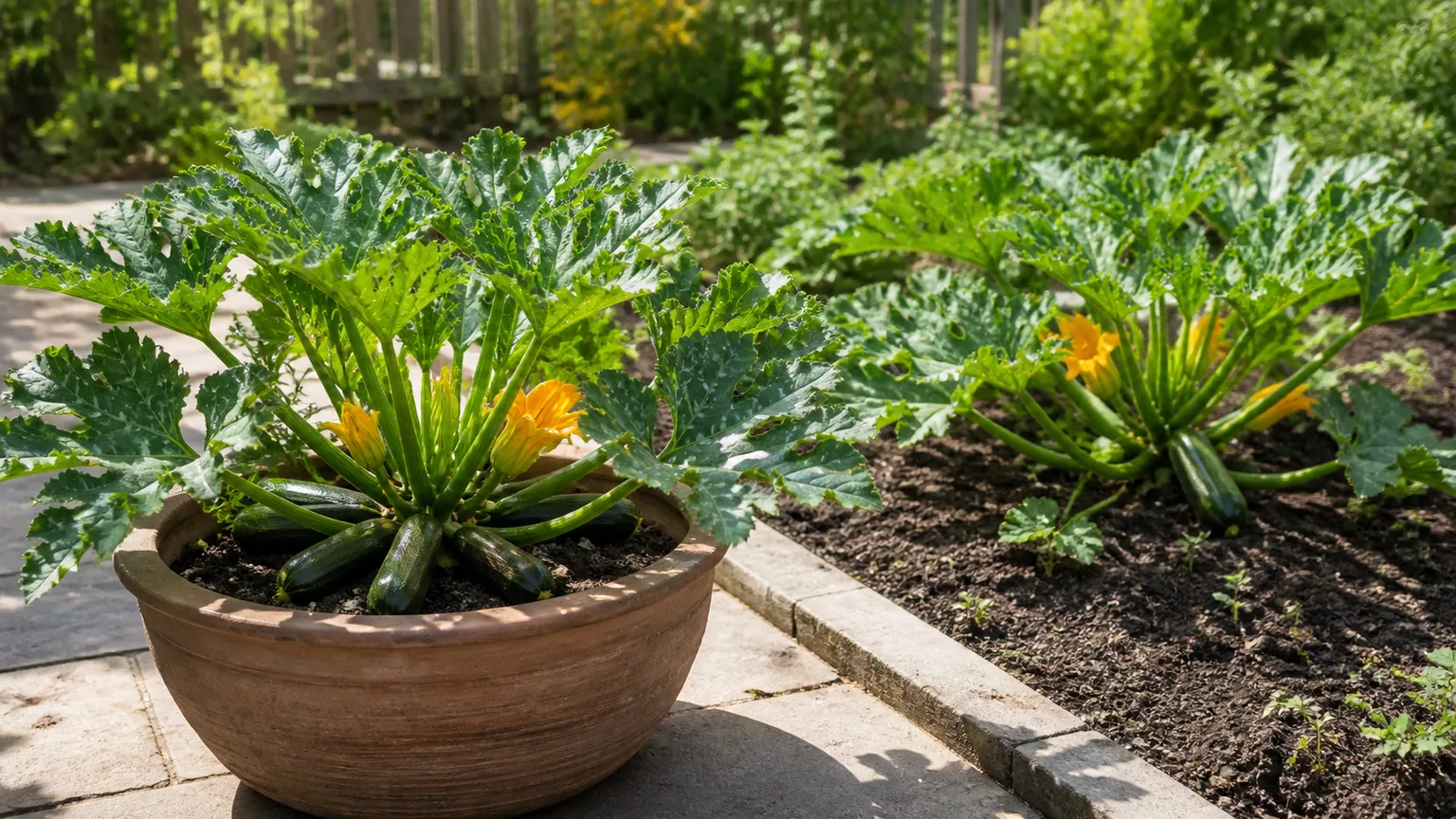
The plant shown is zucchini; pattypan has the same broad bush habit but scalloped fruit.
Set the pot where it receives full sun and where you can reach it to water and inspect flowers. Check moisture more often than you would in a garden bed: water when the top inch of mix begins to dry, then soak the root zone until excess drains out. Because nutrients wash through pots with frequent watering, use a balanced vegetable fertilizer at the rate on its label if the potting mix does not already include feed; do not increase the dose to compensate for a plant that is simply short on light or water.
A single container plant can still need space around its leaves and blossoms. Keep it accessible to bees, and hand-pollinate only if fruit set is poor and pollinator visits are scarce.
Water by root-zone moisture, not a fixed calendar
A useful starting range for summer squash is 1–2 inches of water a week from rain and irrigation combined. Utah State University Extension recommends deep, infrequent watering for squash, while pattypan growing guidance notes that heat and sun can raise the amount needed. The number is a planning aid, not a promise that every bed needs exactly the same amount. Utah State University Extension and Gardener’s Path both emphasize that watering needs change with weather and site conditions.
Check the soil a few inches below the surface. If it is dry there, water slowly at the base until moisture reaches the root zone; if it is still damp, wait. Sandy soil, a heat wave, and a container may call for more frequent watering, while clay soil and recent rain may call for less. A rain gauge is more useful than guessing from a sprinkler’s run time.
Watering at the base or with drip irrigation keeps leaves drier and makes it easier to judge how much water the plant actually received. If leaves wilt only in the hottest part of the afternoon but recover by evening, heat may be the cause; if the plant remains limp in the morning, check soil moisture, the stem base, and the leaves for pests before adding more water. Constantly soggy soil can suffocate roots and encourage fruit rot, so do not treat every wilted leaf as thirst.
Feed lightly and mulch once the soil is warm
Compost worked into the bed before planting may be enough for a home crop. If growth is weak despite adequate sun and moisture, check the soil and look for other problems before feeding; root damage, cold soil, poor pollination, and pests do not respond to fertilizer. A heavy dose of nitrogen can push leaf growth at the expense of flowers and fruit, so follow a soil test or the fertilizer label instead of automatically applying a strong feed every few weeks. Gardener’s Path notes that compost-enriched soil may not need additional fertilizer during the season.
Mulch after the soil has warmed to conserve moisture, reduce weeds, and keep developing squash off wet soil. Straw, shredded leaves, or another clean organic mulch can work; keep it a few inches away from the crown so the stem base stays open and dries after rain. In a cool spring, wait until the bed is warm before laying down thick organic mulch, because it can slow soil warming when the plant needs heat most.
Read the flowers before you worry about fruit
Pattypan squash bears separate male and female flowers on the same plant. The first blossoms are often male, so a plant covered in flowers but no small fruits may simply not have produced female flowers yet. A female flower has a small rounded ovary behind the petals that looks like a miniature squash; a male flower sits on a long, thin stem. Utah State University Extension explains why early male flowers are normal in cucurbits, and Growing in the Garden describes hand pollination for pattypan when fruit set is poor.
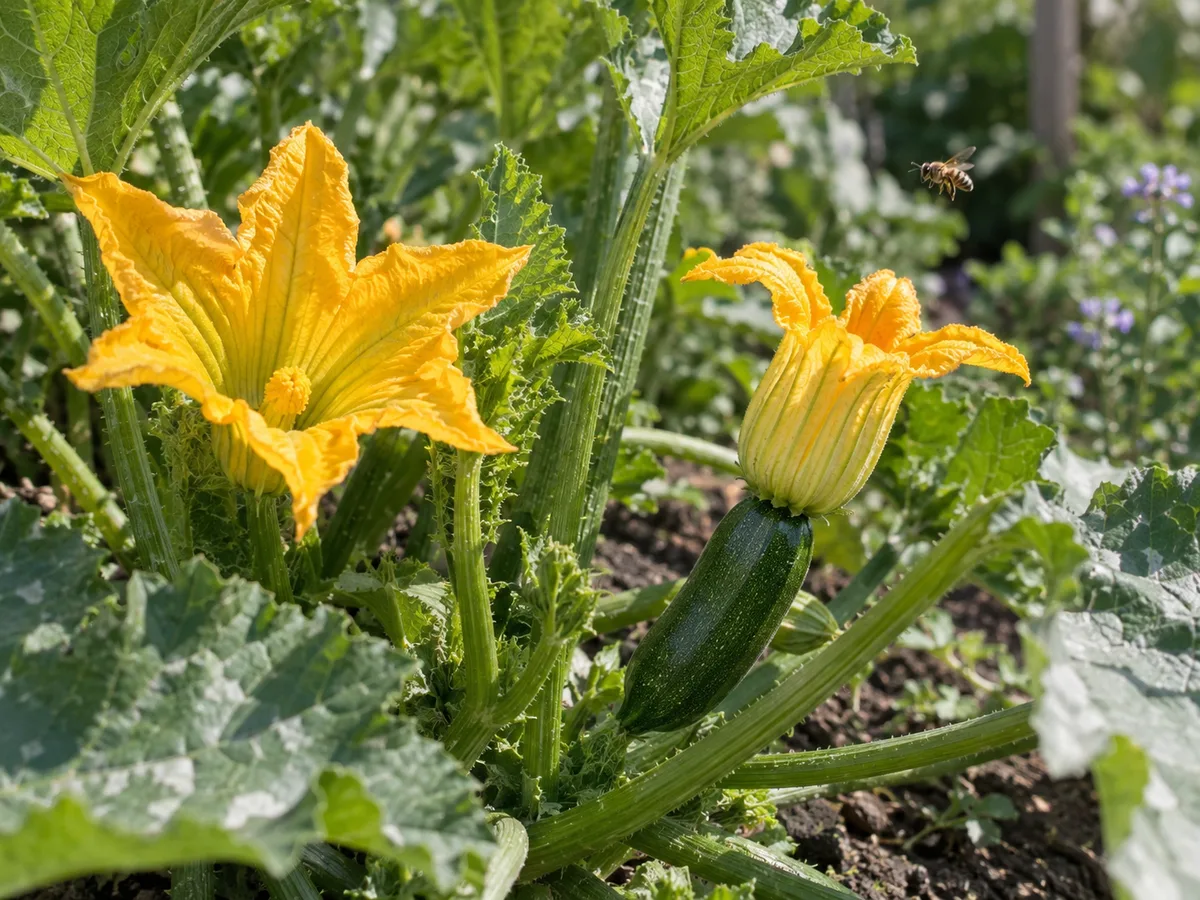
The photo shows zucchini; male and female flowers follow the same pattern in pattypan squash.
A female flower that was pollinated successfully will begin to enlarge after the blossom closes. If it turns yellow, shrivels, and drops, the cause may be incomplete pollination, but heat stress, inconsistent moisture, or a very young plant can also cause a small number of early fruits to abort. Look for a pattern before intervening: one dropped fruit is not a diagnosis; several failed ovaries while flowers are open and bees are absent make pollination a more likely issue.
Hand-pollinate only when poor fruit set points to a need
Squash flowers are open for a short time, often in the morning. If you see female flowers opening but few bees visit, pick a freshly opened male flower, remove its petals, and gently brush the pollen-bearing center over the center of the female flower. A small clean artist’s brush also works; use pollen from a male flower that is open and dry, not one that has closed or been wet by rain.
You do not need to hand-pollinate every blossom in a garden where bees are active. Avoid covering plants with an insect-excluding row cover once flowering begins unless you can remove it daily for pollinator access. If hand pollination does not improve fruit set, check that the plant is getting enough light and consistent water, and note whether extreme heat is coinciding with flowering.
Scout squash bugs and other pests early
Look at the undersides of leaves and around stems once or twice a week, especially while plants are young. Squash bug egg clusters are bronze to rusty and are often attached to leaf surfaces; young nymphs gather in groups before spreading out. Remove eggs and small nymphs by hand when practical, and clear dead vines at the end of the season so pests have fewer sheltered places to remain. A University of Georgia Extension educator describes frequent leaf checks and egg removal as useful first steps, and recommends protecting young plants with row covers until flowering. UGA Extension: Squash Bugs
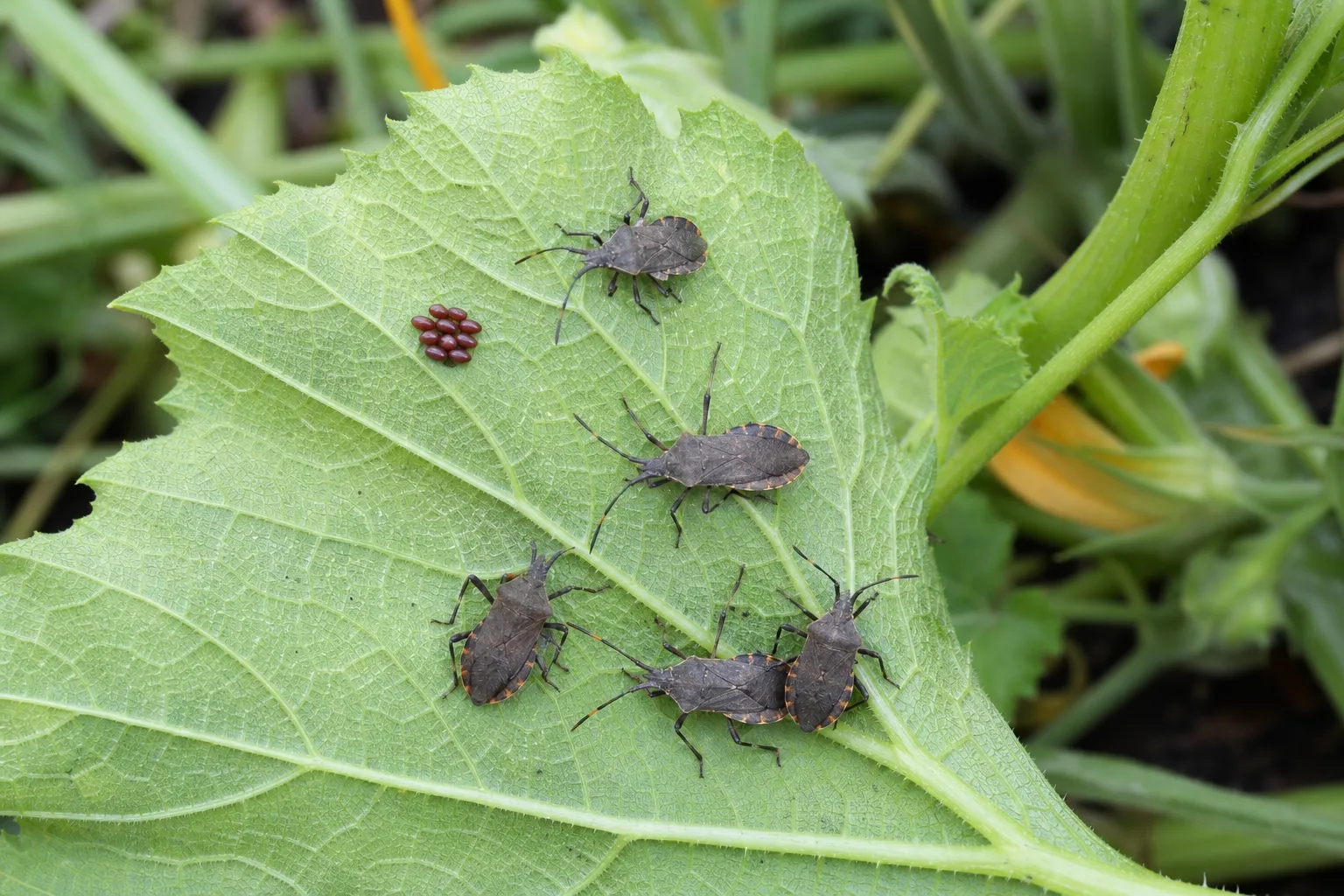
Squash bug eggs and adults can be easier to find by checking both sides of the leaves.
Striped or spotted cucumber beetles feed on leaves and flowers and can spread bacterial wilt in cucurbits. Squash vine borers are a different problem: a plant that wilts suddenly despite moist soil, with a small hole or sawdust-like frass near the stem base, may have a borer inside. Cut open an affected stem only if you are prepared to remove the larva and the plant is already declining; a severely damaged plant may not recover. Do not apply an insecticide just because a leaf looks chewed—identify the pest first, and ask your local Extension office about a current, crop-labeled option if damage is severe.
Row covers are most useful before flowers open, when they can keep pests off young plants without blocking pollination. Secure the edges and watch the plants underneath for heat stress; remove the cover at flowering or lift it during the day so bees can reach blossoms. In a garden with recurring squash bugs, start monitoring at seedling stage instead of waiting for the first wilted leaf. UGA Extension also recommends early egg scouting and row covers for young squash plants.
Separate mildew from watering and wilt problems
Powdery mildew appears as white, powder-like patches on leaf surfaces, often spreading across older leaves later in the season. It is not the same as ordinary leaf mottling, insect stippling, or a leaf that turns yellow from age. Give plants room for airflow, water the soil rather than soaking foliage, and remove only the worst affected leaves if the plant still has plenty of healthy canopy; stripping many leaves can expose fruit to sunscald and reduce the plant’s ability to feed the crop.
A leaf that wilts in the morning or a whole plant that collapses deserves a closer check than a quick spray. Check soil moisture first, then inspect the stem base for borer holes and look underneath leaves for squash bugs or beetles. Yellow patches with angular edges, gummy stems, or sudden decline can point to diseases other than powdery mildew, and several causes look alike in a photo; isolate a badly affected plant and ask a local Extension office for a diagnosis before treating it. Avoid unverified household sprays, which can injure leaves without correcting the cause.
Pick pattypan squash young and keep checking
Pattypan is a summer squash, so harvest it immature rather than waiting for a hard rind. Fruits around 2–4 inches across are generally tender; at roughly 2–3 inches, the skin is especially soft and the seeds are small. Utah State University Extension notes that summer squash is usually picked only a few days after flowering, while pattypan-specific guides give a 2–4-inch size range. Utah State University Extension and Growing in the Garden support these maturity cues.
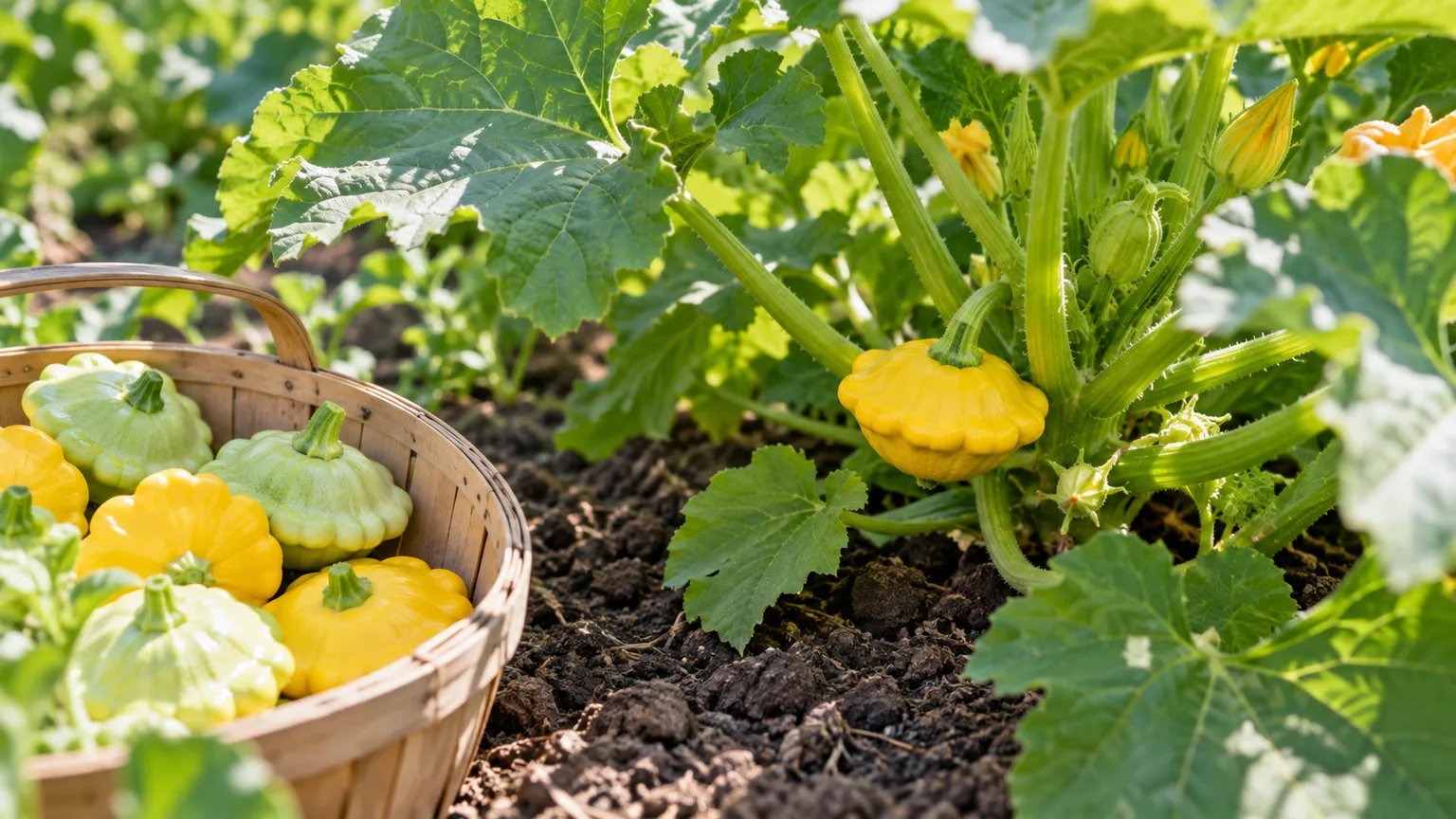
Check under the leaves every day or two once fruit begins to form. These squash can grow past the tender stage quickly, and the broad leaves hide them; frequent picking also prevents an oversized fruit from taking energy while smaller ones are developing. Use a clean knife or pruners to cut the stem rather than twisting the squash off, and leave a short stem attached. Wear gloves if the prickly leaf stems irritate your hands.
A larger pattypan is still edible, but the skin may be tougher and the seeds more noticeable. Peel it if needed, scoop out mature seeds, or halve and stuff it rather than expecting the same texture as a small fruit.
Store the fruit briefly and use it at its best
Pattypan squash is not cured or stored like a winter squash. Keep harvested fruit dry and unwashed in a loosely closed or perforated bag in the refrigerator crisper, and use it within several days for the best texture. Wash it just before cooking; bruised or cut fruit should be used sooner because it loses quality quickly.
Small pattypans can be cooked whole or halved, while larger ones are easy to hollow and stuff. Their mild flavor works with roasting, grilling, sautéing, or quick steaming; the scalloped shape is useful for serving but does not change the way the crop grows. If the plant is producing more than you can use, pick on schedule and share the extras while they are still firm rather than leaving them to toughen on the bush.
Conclusion
For a reliable pattypan harvest, sow after frost when the soil is warm, grow the bush in sun with room around it, and keep the root zone evenly moist without leaving it waterlogged. Check the flowers and leaf undersides before reaching for a remedy: early male blooms are normal, a few dropped baby fruits can happen, and eggs or nymphs are easier to manage when caught early.
Then make the harvest routine simple—look under the leaves every day or two and cut the squash while it is still small and tender. That combination of warm planting conditions, measured care, pollinator access, and frequent picking does more for a productive pattypan plant than a rigid watering calendar or a heavy fertilizer schedule.