How to Grow and Care for White Clover
Learn how to grow white clover from seed, choose the right site, manage mowing and flowers, reduce fertilizer mistakes, and contain its spreading runners.
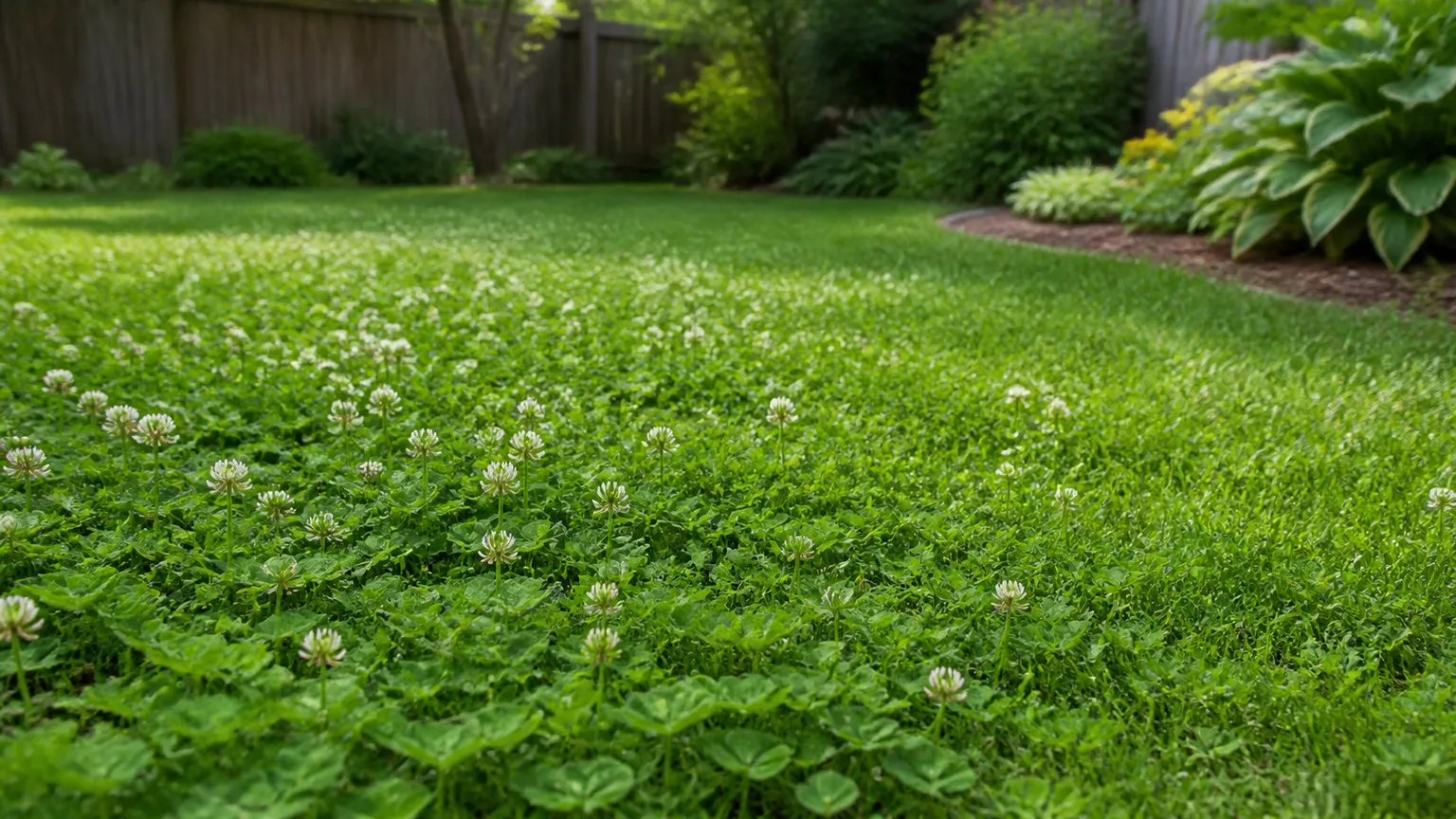
White clover (Trifolium repens) is easy to grow once you give it the right job. It can knit bare soil, fill gaps in a grass lawn, feed pollinators, or contribute nitrogen to a pasture mixture. It can also invade a flower border, thin under repeated foot traffic, or disappoint a gardener who sowed it in deep shade and expected a permanent green carpet.
The key is to choose the planting purpose before you choose the seed. A flower-friendly lawn, a grass-clover blend, a garden-edge ground cover, and a forage stand have different expectations. The same plant can be useful in one location and a nuisance two yards away.
Decide whether white clover fits your yard
White clover is a good match for a sunny or lightly shaded area where you can accept a relaxed texture, seasonal color changes, and small white flower heads. It is especially useful in a low-use lawn, a slope that needs living cover, or a thin turf area where you want less reliance on nitrogen fertilizer and are willing to manage the plant as a broadleaf ground cover.
It is a poor match for a lawn that must function as a nonstop play field, a formal all-grass surface, or a deeply shaded space. Repeated turns from pets, wheels, or children can wear a clover stand into muddy or bare tracks. Flowers also bring bees close to the soil, which is valuable for wildlife but deserves a different plan around a barefoot seating area or a household member with a serious sting allergy.
If you are unsure, trial a small patch first. A 100- to 200-square-foot test lets you observe the actual flower density, winter appearance, traffic tolerance, and rate of spread on your soil before you renovate the entire lawn.
Identify white clover and its growth habit
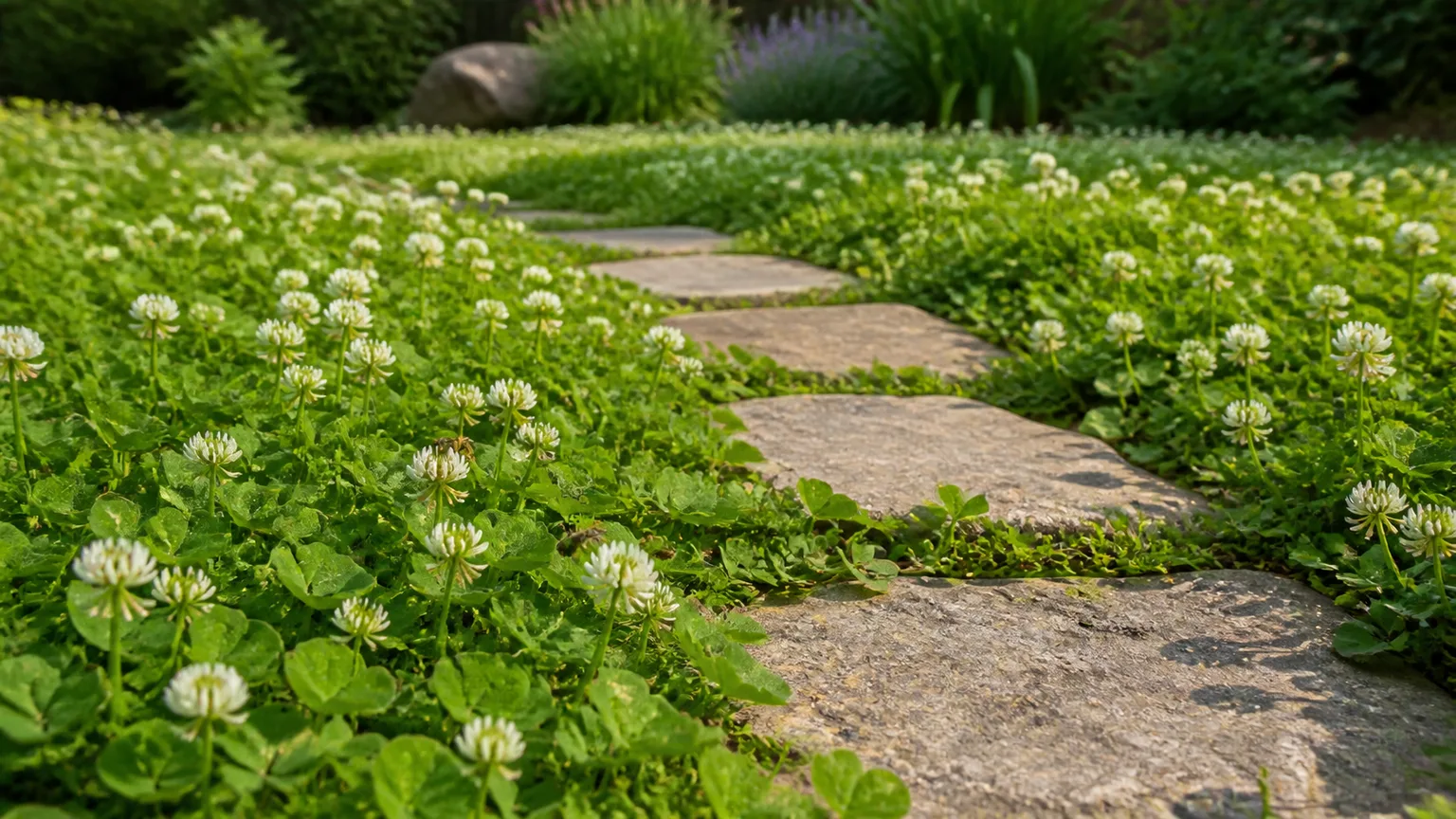
White clover is a low, herbaceous perennial in the pea family, Fabaceae. Its familiar leaves have three rounded leaflets, sometimes marked with a pale crescent, and its flower heads are rounded clusters of small white to pink-tinged florets. NC State Extension describes the plant as roughly four to six inches tall with a spread of a foot or more, although mowing, fertility, and variety change the look. (NC State Extension Plant Toolbox)
The feature that matters most for care is the stolon. A stolon is a creeping stem that runs across the soil surface and roots at nodes where it touches damp ground. Those new roots help white clover recover from close mowing or grazing, but the same system lets it cross a lawn edge and establish in a neighboring bed.
Do not assume every plant called clover is white clover. Red clover, crimson clover, strawberry clover, and black medic differ in height and life cycle. Read the botanical name and the cultivar description on the seed label, especially when you want a lawn rather than a forage crop.
Check the site before buying seed
White clover tolerates more conditions than a perfectly uniform turfgrass, but “tolerates” is not the same as “performs well.” Walk the area at different times of day and inspect several spots rather than judging the whole yard from one attractive patch.
Light and climate
Aim for full sun to partial shade with several hours of direct light. White clover can keep growing in light shade, but it becomes thinner when tree canopy, buildings, or tall grass block the sun for most of the day. Microclover is often less forgiving of deep shade, hot exposure, and prolonged drought than ordinary white clover.
The plant is a cool-season grower. It often makes its best growth during mild, moist periods and may slow or brown during cold winters or intense summer heat. A grass component can make a lawn look more consistent across those seasonal swings, but it cannot force clover to remain green during a hard freeze.
Soil and drainage
Use a soil test before adding lime or fertilizer. White clover generally performs best in fertile soil near pH 6 to 7, yet it can grow across a broader range when drainage and moisture are suitable. Penn State Extension notes that white clover favors well-drained, fertile soils and cool, moist conditions, while UGA Extension emphasizes pH and adequate phosphorus and potassium for establishment and persistence. (Penn State Extension) (University of Georgia Cooperative Extension)
Avoid two opposite mistakes: planting into stagnant, waterlogged soil and assuming a drought-prone, deep sand will take care of itself. Clover may survive a dry spell after it is rooted, but seedlings have tiny roots and need dependable surface moisture. If water stands after rain, correct drainage or choose another plant for that spot; if soil is compacted, loosen the root zone without pulverizing it into dust.
Traffic and boundaries
Mark the routes that receive repeated traffic. White clover can handle occasional walking and close grazing, but concentrated footfall removes leaf area, compacts soil, and breaks runners faster than the plant can replace them. Put stepping stones through a shortcut, use a grass-dominant mix in a play zone, or accept that a high-use route needs a durable surface.
Also mark the edges you do not want to maintain. The RHS describes white clover as a mat-forming plant that roots as it spreads and can grow in a wide range of soil types as long as the site is not too acidic or waterlogged. (Royal Horticultural Society) Leave a narrow buffer beside a perennial border or plan to edge the lawn several times during the growing season.
Choose the right seed type and planting purpose
For a relaxed lawn with visible flowers, ordinary white clover is the straightforward choice. It spreads vigorously, stays low, and supports a more active insect community than a flowerless grass monoculture. For a finer, tidier appearance, look for a clearly identified microclover cultivar rather than treating any small-seeded clover as microclover.
White clover, microclover, and named types
White clover types are often grouped by size. Small types stay close to the soil and suit closely mown areas; intermediate types balance leaf size, runners, and persistence; large or Ladino types grow more upright and can produce more forage but are not always the best fit for a closely cut residential lawn. A named grazing-persistent cultivar may be appropriate for pasture and not worth the extra cost in a small yard.
Microclover is selected for smaller leaves and a shorter, less conspicuous profile. It may flower less heavily under regular mowing, but it is not a maintenance-free version of white clover. Read the supplier’s recommended rate and climate notes because coated seed, purity, and cultivar all change how much you need.
Choose a grass-clover mix when the lawn needs winter color, repeated use, or recovery from wear. Grass adds upright density and traffic tolerance; clover fills gaps and can reduce the need for routine nitrogen. Choose mostly or entirely clover only when you are comfortable with flowers, runners, seasonal dieback, and a less uniform surface.
Choose the planting window
Sow during a cool-to-mild period when the surface can stay evenly moist. In many regions, that means spring after the danger of hard frost has passed or late summer to early fall early enough for roots to develop before a hard freeze. The correct date depends on your local climate, the clover type, the companion grass, and whether you are overseeding or starting a bare bed.
Spring gives seedlings a long season to establish, but a sudden heat wave can arrive while their roots are shallow. Early fall often offers gentler temperatures and more reliable moisture, but late sowing leaves young plants exposed to winter. Do not seed immediately before a forecast washout, a heat wave, or a period when you cannot irrigate.
For a cool-season grass mix, align clover seeding with the grass’s own establishment window. For a warm-season pasture, UGA Extension describes sowing into closely grazed or dormant sod after a killing frost as a way to reduce grass competition. That pasture timing is not a universal rule for every home lawn, so use local extension advice for your grass species.
Prepare the site and sow white clover
Start by removing leaves, thick thatch, and loose clippings. Mow existing grass shorter than usual if you are overseeding, but do not scalp soil on a hot, dry day. White clover seed is extremely small. Its success depends more on seed-to-soil contact and moisture than on being buried under a thick layer of compost.

Follow the rate printed for your seed and purpose. A lawn overseed, a pure stand, coated seed, and a pasture mixture do not use the same measurement. Penn State Extension lists 2 to 4 pounds per acre for overseeding forage pasture, while Gardening Know How gives about 6 to 8 ounces per 1,000 square feet for a home white-clover lawn; those figures illustrate why the label and planting goal matter. (Gardening Know How)
Mixing a small amount of seed with clean, dry sand can make distribution easier. Divide the mixture in half and broadcast one portion north to south and the other east to west. Press the seed lightly with a roller or the back of a rake, then water with a gentle spray that does not wash it into piles.
Overseed an existing lawn
Overseeding works when the existing lawn is thin enough to expose patches of soil. Mow, collect the clippings, remove only the thatch that is actually blocking contact, and scratch shallow grooves across the surface with a rake. Core aeration can relieve compaction, but it will not make dense sod stop competing with seedlings.
Broadcast in two directions, press the seed, and keep the surface evenly damp until emergence. Walk around the area as little as possible during this phase. If the grass is thick and vigorous, expect a gradual blend rather than an instant clover takeover; if you want a pure clover lawn, remove or smother the old vegetation first.
Build a new seedbed
For a dense, weedy, or uneven lawn, remove the sod or smother it long enough for the old vegetation to die. Avoid rototilling perennial weeds into fragments, which can multiply the problem. Correct obvious drainage and grading issues before you sow, and use compost as a structure amendment only when it fits the soil test and does not bury the seed zone.
Rake a firm, fine surface, spread the seed in crossing passes, and cover it with no more than a very thin dusting of soil. Extension guidance for white clover generally keeps seed at the surface to about one-quarter inch; deeper planting can prevent emergence because the seedling has little stored energy. Water immediately and protect the area from concentrated traffic.
Keep seedlings alive through establishment
Germination is not the finish line. Keep the top layer damp with short, gentle watering until most seedlings are up, then lengthen the interval gradually as roots explore deeper soil. The surface should be moist, not muddy; frequent flooding encourages runoff, crusting, and disease problems without improving root development.
In an existing grass lawn, competition is often the main reason clover fails. Remove excess grass and thatch before sowing, and avoid nitrogen fertilizer during the establishment phase unless a local recommendation and your management plan specifically require it. UGA Extension explains that nitrogen fixed by young clover is not immediately available to companion grass, so adding nitrogen can simply make the grass more competitive while seedlings are trying to root.
Do not mow the new stand just because a few seedlings look tall. Wait until runners have begun to root and the patch has enough density to recover. The first cut should be conservative, with a sharp blade and no more than about one-third of the leaf area removed.
Maintain the established stand
Mature white clover needs less fuss than it does during its first weeks, but it still responds to the way you use the space. Watch the balance of light, rainfall, traffic, and companion grass rather than following a rigid calendar.
Mowing, flowering, and clippings
Mow before peak flowering when you want a shorter, flower-light surface. Delay mowing when flowers and pollinator activity are part of the design, accepting that stalks will rise above the leaves and the lawn will look more meadow-like. A higher mowing setting preserves leaf area and reduces stress; scalping removes the photosynthetic surface that fuels new runners.
If flowers are welcome but the lawn is also a family sitting area, divide the uses instead of trying to make one patch do everything. Keep a mown path to the door, a flowered section away from the main play zone, and a durable surface under chairs or play equipment. Mowing reduces flower exposure for a time, but it is not a guarantee that bees will be absent, so household safety decisions should be based on the people using the space and any medical advice they have received.
Infrequent mowing can leave succulent clippings in wet clumps. If clippings mat on the surface, mow more regularly at a sensible height or spread the discharge so the layer does not smother the low-growing plants. Rake lightly before mowing when runners have lifted off the surface; Gardeners’ World notes that this can raise the running shoots into the mower and help restrict spread. (BBC Gardeners’ World Magazine)
Watering and fertilizing
After establishment, water when the soil is genuinely dry and the plants show stress rather than running a shallow daily cycle. Morning watering is practical when possible. New seedings are different: they need more frequent, lighter irrigation until roots are established.
Do not apply nitrogen by habit. Clover fixes atmospheric nitrogen through its relationship with Rhizobium bacteria, but the first benefit goes to the clover itself. Nitrogen reaches neighboring grass gradually through root and plant residue breakdown, grazing animals, and normal nutrient cycling; it is not a direct pipe from every clover root to every grass root.
Use the soil test to guide lime, phosphorus, potassium, or other corrections. If grass in a mixed lawn is pale and a test supports nitrogen, use a measured product and watch whether the grass begins to shade out clover. If the stand is already grass-dominant, more nitrogen may move the balance farther from your goal. Avoid manure or fertilizer applications that create lush grass competition over young clover.
Contain spread and manage weeds
Treat containment as routine edging, not an emergency. Lift runners from flower beds before they root, cut the lawn edge with a spade or string trimmer, and keep a narrow buffer beside delicate ground covers. A physical edge makes later maintenance much easier because stolons are visible and accessible.
White clover is a broadleaf plant, so many selective broadleaf lawn herbicides that remove dandelions or plantain can also injure the clover you planted. Read the current label before using any pesticide and follow local restrictions; never assume a product is compatible because it says “for lawns.” Hand-pull large weeds, mow to reduce seed production, and fix thin or compacted areas so weeds have fewer openings.
Do not plant white clover as the main species in a species-rich wildflower meadow without understanding the fertility trade-off. Its nitrogen fixation can enrich the soil, which may favor grasses and crowd out wildflowers adapted to lean conditions. For a meadow, follow a seed mix and site plan designed for the local plant community rather than adding clover automatically.
Troubleshoot patchy or declining growth
Patchy emergence usually points to one of five causes: seed was buried too deeply, the surface crusted or shed water, birds or rain moved it, the seed zone dried, or existing grass shaded it. Compare a successful patch with a failed patch. Scratch the bare area, add a light reseeding, press it into contact, and keep it damp; throwing more seed onto a crusted surface rarely fixes the cause.
Summer thinning can be heat, drought, or traffic rather than a seed-quality problem. Reduce use, water deeply when the root zone is dry, and wait for cooler weather before reseeding. If the same spot fails every year, change the use or the plant—perhaps a path, mulch strip, grass-dominant mix, or shade-tolerant ground cover is more realistic.
Look at the pattern of decline. A narrow strip along a gate suggests traffic; a dry crescent under a tree suggests root competition; a uniformly weak lawn after heavy feeding suggests grass shading; and small, circular bites on new fall seedlings can indicate insect feeding. Diagnose the pattern before reaching for a treatment, because adding seed to a site that is still compacted, shaded, or constantly trampled only repeats the failure.
Brown foliage in winter may be dormancy, especially in colder climates. Protecting the crowns from winter traffic and avoiding a late, stressful mowing gives the stand a better chance to return. If a uniform winter-green lawn is non-negotiable, include a compatible cool-season grass or choose a lawn system suited to that expectation.
If grass is taking over, review fertilizer, light, mowing height, and thatch before reseeding. If clover is taking over, edge it and remove runners at the boundary instead of spraying the entire lawn. When a mature stand declines despite suitable light and moisture, inspect roots and soil, rotate a forage cover crop when appropriate, and ask your local extension office about region-specific pests or disease.
Conclusion
White clover succeeds when you manage it as a living ground cover with a clear purpose, not as a seed you scatter and forget. Choose ordinary white clover for flowers and vigorous cover, microclover for a finer profile when the site suits it, or a grass-clover blend when traffic and winter appearance matter most.
Test the light and soil, plan for runners, and sow during cool weather with seed at the surface or only lightly covered. Keep seedlings evenly moist, protect them from competition and traffic, and delay the first mowing until they have rooted. Once established, let the soil test guide fertility, let your use determine mowing and flowering, and edge the boundaries a little at a time. That combination gives white clover the conditions it needs while keeping its most vigorous habits manageable.



