Wolf Spider Facts: Identification, Bite, and Habitat
Wolf spiders are ground hunters, not web builders. See how to recognize them, tell them from brown recluses, respond to a bite, and manage sightings safely.
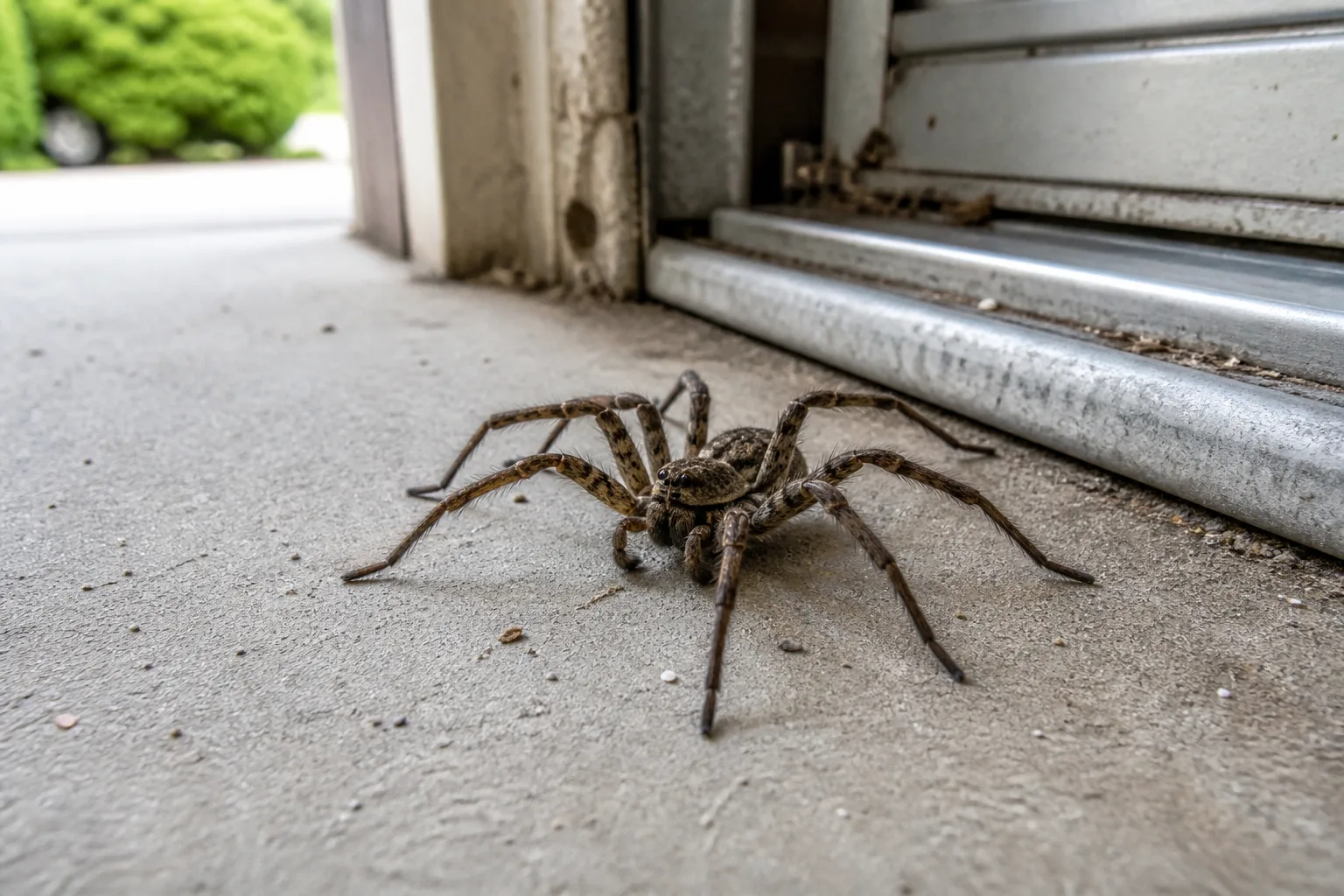
A large, fast spider running across a floor can look alarming, but speed and size alone do not tell you what it is. Wolf spiders are ground-hunting arachnids in the family Lycosidae. They usually avoid people, do not build the familiar prey-catching web, and are more likely to bite if trapped or handled than to pursue someone.
The useful first step is to identify the spider from several clues rather than one: its eye arrangement, body and leg proportions, where it is moving, and whether it is carrying an egg sac or young. If you cannot confirm the species, treat it as an unknown spider and keep your hands away. A calm, no-contact response is safer than trying to catch it bare-handed or spraying a room because of one sighting.
What Does a Wolf Spider Look Like?
“Wolf spider” refers to a large family rather than one uniform-looking species, so size and markings vary by region. Many are brown, gray, charcoal, or mottled, with bands or stripes that break up the outline against soil and leaf litter. Their bodies are often robust and hairy, and their legs are built for running over the ground rather than hanging in a web.
A useful close-range clue is the eye pattern. Wolf spiders have eight eyes; four are conspicuously larger and sit in a roughly trapezoid arrangement, while four smaller eyes form a row toward the front. The Illinois Department of Natural Resources describes that pattern in its thin-legged wolf spider profile. You do not need to approach a spider to inspect its eyes, and a phone photo taken from a safe distance is better than leaning over it.
Use the eye pattern as a clue, not a shortcut
No single feature is a reliable field test. Brown coloring occurs in many spider families, body size changes with species and sex, and some other spiders also run instead of building a conspicuous web. An eye pattern is difficult to see without a sharp, close view, so location, body shape, markings, and behavior should be considered together.
The same caution applies to photos and identification apps: they can narrow possibilities, but they may not be decisive, especially with a blurry image or a spider outside the app’s common regional species. If the spider is in a place where people or pets might touch it, keep distance while you decide what to do. For an uncertain spider near a child’s bed, clothing, or a work area, prioritize removal by a capable adult or pest professional over a close-up inspection.
How Wolf Spiders Hunt Without Prey-Catching Webs
A wolf spider searches, waits, and rushes at prey on the ground. It eats small insects and other invertebrates; the Illinois DNR notes that wolf spiders may seize prey directly and mainly eat insects and smaller spiders. That active hunting style is why people may spot one crossing a room or patio rather than sitting in a web.
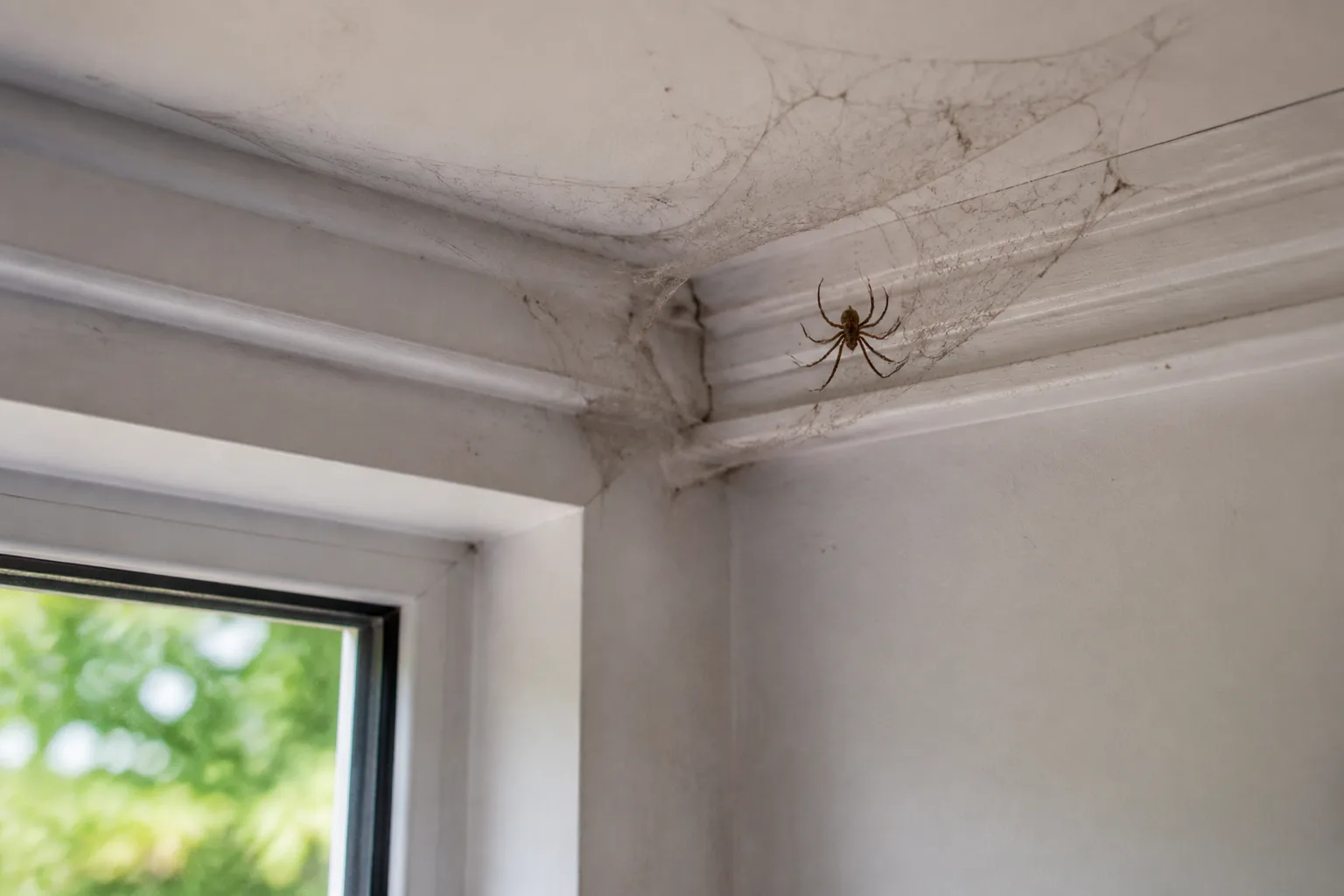
Wolf spiders still make silk. A female uses silk to wrap and carry her egg sac, and some species use silk as a retreat or dragline. The important distinction is that they generally do not build a sticky capture web to wait for flying insects. A large circular web suspended between plants is more likely to belong to a web-building spider such as an orb-weaver; the Farmers’ Almanac guide to orb-weavers describes that contrasting web habit. A web nearby does not, by itself, prove that a wolf spider is present.
Wolf Spider Life Cycle: Egg Sacs and Spiderlings
The female’s egg sac is one of the family’s most distinctive behaviors. She makes a rounded silk case for her eggs and carries it attached to her spinnerets at the back of her abdomen. After hatching, the young climb onto the female’s back and ride there while they complete an early stage of development. The Illinois DNR describes both behaviors in its species profile.
A female with a sac or a cluster of tiny spiders on her back is not a nest full of spiders that has suddenly appeared in a house. It is a normal maternal behavior, although it can look startling. Avoid brushing the spider with a hand or swatting it: sudden contact can injure the female and scatter the young. If she is indoors, use the no-contact removal approach below or ask a professional to handle her.
Where Wolf Spiders Live
Wolf spiders occur in many habitats, and the exact species depends on where you live. Ground cover is the common thread: grass, leaf litter, the edges of lawns, beneath stones or logs, and sheltered soil spaces can provide both hiding places and access to insect prey. Some species make burrows or short silk retreats; others roam across the surface.
In a garden, a wolf spider is part of the ground-level predator community. It is not a plant pest and does not feed on leaves. Its presence may reflect ordinary outdoor habitat and prey, not a problem with a houseplant or a sign that your garden is infested. Horticulture writer Logan Hailey’s Epic Gardening overview of spiders in gardens includes ground-hunting spiders in the wider group of predators that feed on insects, while the Royal Horticultural Society explains that garden features such as hedges and planted boundaries provide shelter for spiders and other wildlife in its wildlife gardening guidance.
Why a Wolf Spider May Appear Indoors
One spider indoors is usually a wanderer, not evidence that a colony is living in the walls. Wolf spiders hunt alone rather than gathering in a social nest, and a ground-running spider may enter through a gap under a door, an unscreened opening, or items moved in from outside. Indoor prey can also draw predators, but seeing one spider does not establish that you have a substantial insect problem.
Sightings can increase when outdoor conditions change or when spiders are moving between shelters. A garage, basement, mudroom, or ground-floor room with open doorways and stored boxes offers more routes and hiding spots than an upper room with intact screens and sealed gaps. If the same type keeps appearing, note the room, time, and likely entry point; that pattern helps you fix the route instead of treating every spider as a separate mystery.
Keep a simple record for a week: which room, whether a door or window was open, and whether the spider was near stored items or a threshold. A single spider near a garage door suggests a different next step from repeated sightings across several rooms. Neither pattern proves a nest or an infestation, but the notes can show where to focus an inspection and help a professional distinguish an entry problem from a more general pest issue.
Are Wolf Spiders Dangerous to People?
A wolf spider is not looking for a person to bite. Like other spiders, it may defend itself if squeezed against skin, trapped in bedding or clothing, or grabbed. A bite can cause pain, redness, or swelling, and an individual reaction can vary. It is inaccurate to say that wolf spiders are “not venomous”; the practical question is how likely a bite is and whether symptoms need medical attention.
The CDC’s NIOSH guidance says spiders generally are not aggressive and that many bites happen when a spider is trapped or touched. The CDC highlights black widows and brown recluses as the U.S. spiders of particular medical concern. That context should lower panic, not encourage handling: a person may misidentify a fast-moving spider, and other causes can produce a sore or red spot. Keep distance and do not assume a bite is harmless if symptoms are severe or worsening.
Wolf Spider vs. Brown Recluse: The Most Useful Differences
Wolf spiders and brown recluses can both appear brown, but they are not interchangeable. Compare several traits and consider location; do not rely on a single marking or an online image match.
| Clue | Wolf spider | Brown recluse |
|---|---|---|
| Eye pattern | Eight eyes, including four larger eyes and four smaller ones | Six equal-sized eyes; the CDC notes the six-eye pattern |
| Usual behavior | Ground-running hunter; generally no prey-catching web | Hides in sheltered, undisturbed spaces |
| Color and markings | Variable browns, grays, stripes, or mottling | Brown, often with a violin-shaped mark that can be hard to see |
| Geographic context | Many species occur across varied regions | The CDC places them mainly in the Midwestern and southern United States |
The table is a screening aid, not a guarantee. Brown recluse markings can be hard to see, and an unfamiliar spider may belong to a different group altogether. The CDC’s venomous spider guide is useful for the recluse clues and the regions where it is found; when the identification matters for safety, ask a local extension service, natural resources agency, or pest professional to assess a clear photograph.
Why a bite mark cannot identify the spider
A red bump or two small marks do not prove a spider caused the injury. Many skin conditions and insect bites can look similar, and a suspected spider bite is hard to confirm if nobody saw the spider. Do not use a wound’s shape as a substitute for a medical evaluation or treat a worsening lesion by guessing that it is a recluse bite.
If you can photograph the spider without approaching it, that image may help a clinician or local expert. Do not catch or crush an unknown spider with bare hands just to preserve a sample. For severe symptoms or a possible bite from a medically important species, get medical advice promptly.
What to Do After a Possible Wolf Spider Bite
If someone may have been bitten, first move away from the spider and stay calm. Wash the area with soap and water, then hold a cool damp cloth or wrapped ice against it to help reduce pain and swelling; raise the area if practical. Mayo Clinic’s spider-bite first-aid guidance recommends cleaning the wound, using a cool cloth, and elevating the bite area when possible. Do not cut the skin, try to suck out venom, or handle the spider.
Seek urgent medical care if the person has trouble breathing, severe pain or cramping, rapidly worsening symptoms, a growing wound, or another serious reaction. Mayo Clinic advises emergency care when someone is unsure whether a bite came from a dangerous spider; MedlinePlus also advises medical treatment for small children and adults with severe symptoms in its spider-bite guidance. If you are uncertain, call a clinician or local poison center for advice rather than diagnosing the species from the bite.
Are Wolf Spiders Helpful in a Garden?
They can be useful predators, but they are not a precision pest-control service. Wolf spiders feed on insects and smaller spiders, so leaving them undisturbed in an outdoor bed may be preferable to killing them. Their presence does not guarantee that pests will disappear, and a wolf spider should not be encouraged inside a home to manage insects.
The practical compromise is to keep habitat where you want wildlife and make the immediate building edge less inviting to wandering spiders. You can preserve a garden’s ground cover and leaf litter away from doors while keeping thresholds, storage areas, and regularly used paths clear enough to inspect. The Royal Horticultural Society’s garden habitat advice describes how planted boundaries and varied garden features support wildlife; those habitat choices can coexist with sensible exclusion around a house.
How to Remove a Wolf Spider Without Touching It
If you can positively identify it as a low-risk spider and feel comfortable doing so, use a clear container and a stiff piece of card, or a long-handled spider catcher designed for no-contact use. Keep your face and hands away from the spider, place the container over it, slide the card underneath, and carry the closed container outside. Release it away from the doorway and other busy areas. If the spider is very fast, you cannot reach it safely, or the identification is uncertain, do not force a capture.
A vacuum can remove a spider from an inaccessible corner, but it is a poor first choice if you want to relocate it or if a female may be carrying young. Avoid bare-handed crushing, sweeping a spider toward a child, or spraying a product into a whole room. If a spider may be a recluse or widow, it is better to keep people and pets away and arrange professional help than to attempt close handling.
How to Reduce Indoor Sightings
Start with entry points because exclusion has a more durable effect than killing the spider you happen to see. Check the sweep beneath exterior doors, damaged window screens, gaps around pipes and cables, and cracks where siding or foundation meets. Replace worn sweeps, repair mesh, and seal appropriate openings with materials suited to the surface. Close exterior doors promptly, especially when carrying groceries or garden supplies through a garage or mudroom.

Reduce convenient hiding places in areas where people store clothing, shoes, and equipment. Keep boxes raised off the floor where practical, remove unused piles from basements and garages, and inspect or shake out shoes and gloves that have sat in a shed or undisturbed storage area. These are simple precautions around any outdoor spider; the CDC also recommends inspecting clothing and equipment before use in areas where spiders may be present.
For a quick entry-point check, close the exterior door at dusk and look along the bottom edge from inside for daylight. Check that a screen closes flush with its frame and that a door sweep still touches the threshold along its full width. Around utilities, look for a visible gap rather than guessing that a wall cavity is the source; use a suitable sealant only where it will not block required ventilation or drainage.
Adjust the outside perimeter without stripping garden habitat
You do not need to sterilize a yard or remove every shrub to reduce indoor wandering. Keep leaf piles, firewood, compost bins, and dense ground cover from pressing directly against the house where feasible, and trim plants away from doorways and screens so the entry remains visible. A small clear strip near frequently used doors makes inspection and sealing easier while leaving most garden habitat intact.
Outdoor lighting can attract insects, which may in turn attract predators. If a porch light is on all night, use it only when needed or choose a shielded fixture that directs light down. Sweep webs from the door frame if they obstruct entry, but do not treat every web elsewhere in the garden as a problem: web-building spiders are different from wolf spiders and can be beneficial outdoors. For a broader porch cleanup and exclusion plan, see this spider prevention guide.
When to Call a Pest Professional
Get help when sightings are frequent, when you repeatedly find spiders in a child’s room or workplace, or when you cannot safely distinguish a wolf spider from a medically important species. A professional can identify likely entry routes, inspect the areas where spiders are appearing, and explain whether treatment is warranted. Ask what the plan targets and what nonchemical repairs or storage changes will prevent recurrence.
Routine pesticide spraying is not a substitute for identification and exclusion. A product may not reach a wandering spider, and broad applications can affect other organisms; Epic Gardening’s practical article on spiders and garden ecology discusses that trade-off. If any pesticide is considered indoors or outdoors, use only a product labeled for that site and pest, follow all label directions, and keep children and pets away for the stated interval. For a confirmed brown recluse concern, use a local professional with experience identifying and managing that species; the brown recluse guide covers the difference between confirmed identification and a general spider sighting.
Common Wolf Spider Identification Mistakes
- Calling every brown spider a wolf spider. Color is shared across many families. Look for several traits, especially the eye arrangement and ground-hunting behavior, and account for local species.
- Assuming a spider without a web must be a wolf spider. Many spiders wander or hide in a retreat. A missing web is not a species identification.
- Treating “venomous” and “dangerous” as synonyms. Venom describes a biological tool; it does not tell you how likely a spider is to bite or how serious an individual reaction will be.
- Assuming a bite mark proves the species. Skin symptoms alone are not a reliable spider identification. Seek medical help for severe or worsening symptoms.
- Mistaking spider mites for wolf spiders. Wolf spiders are visible, free-moving predators. Spider mites are tiny plant-feeding pests that cause stippling or webbing on leaves, so the right response is entirely different.
- Using insecticide before checking entry points. A single wandering spider is usually better handled with distance, safe removal, and a repaired screen or door gap than with a room-wide spray.
Conclusion
Wolf spiders are fast ground hunters with a distinctive eye arrangement, a silk-carrying maternal life cycle, and a habit of chasing prey rather than waiting in a web. They can bite if trapped or handled, but they generally avoid people; the safer response is to identify from a distance, avoid contact, and treat an uncertain spider as unknown.
For one indoor sighting, use a no-contact removal method if you are comfortable and confident, then close the route it used. Repeated appearances call for a focused inspection of screens, door sweeps, storage, and the building perimeter. In the garden, a wolf spider is usually part of the predator community, so you can leave it outdoors while making the immediate entrances to your home easier to inspect and secure.