How Long Do Flies Live? Fly Lifespans Explained
How long do flies live? Compare house, fruit, blow, drain, and phorid flies, then break their life cycle with sanitation, exclusion, and targeted traps.
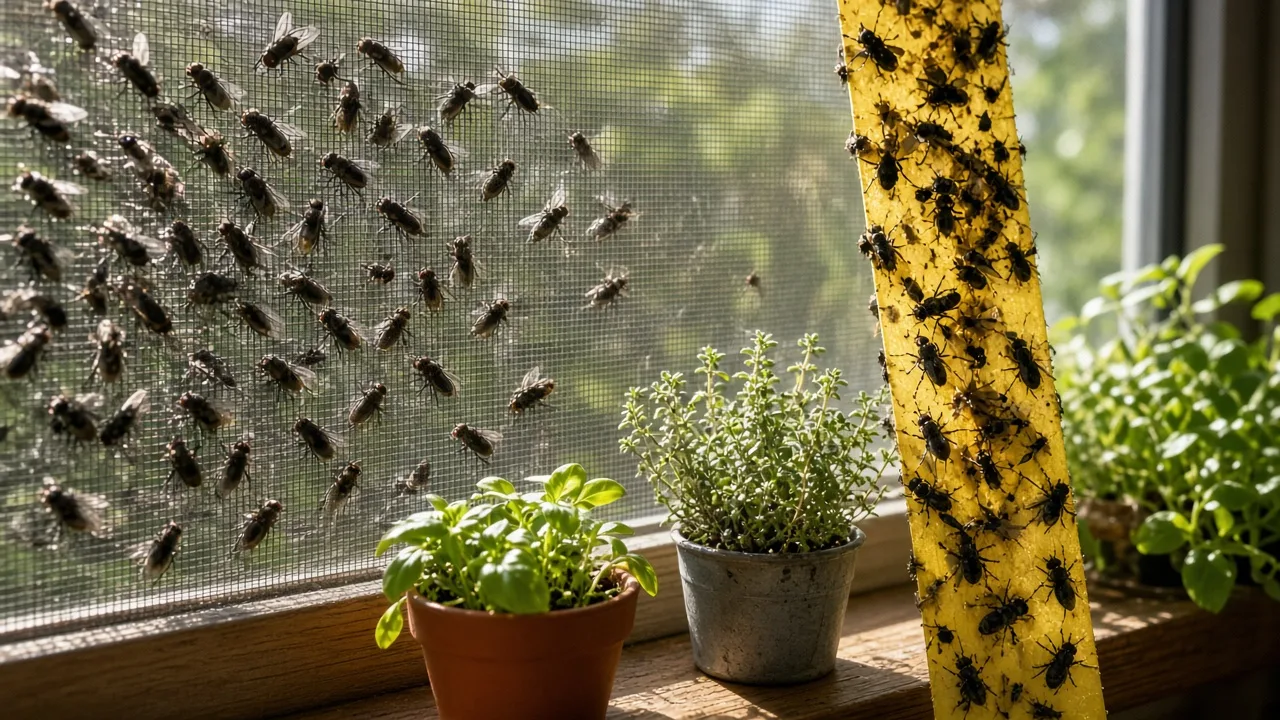
The answer to “how long do flies live?” depends on which fly you mean. A house fly may live roughly 15 to 30 days under favorable conditions, while an adult fruit fly may live several weeks. Some nuisance flies are shorter-lived as adults, but their populations can still seem endless because a new generation may develop in about a week when warmth and food line up.
That distinction matters more than the number on the calendar. If you kill the adults but leave moist garbage, fermenting fruit, pet waste, compost, or a drain film in place, the next adults are already in production. The practical goal is to remove the breeding site and block entry, then use traps for the adults that remain.
The short answer: most flies live days to weeks
Adult lifespan is not the same as the time a fly problem remains visible. A house fly’s adult stage can last around two to four weeks, but the complete cycle from egg to adult can be as short as seven days in optimal summer conditions. That makes a small number of adults capable of creating a much larger problem before the first adults die naturally.
Fruit flies can persist even longer in a kitchen because several overlapping generations may occupy different stages at once. Drain and phorid flies are often noticed in bathrooms or kitchens, but the “fly” near a drain may not be the same species as the one circling a fruit bowl. Temperature, moisture, food quality, crowding, and access to shelter all shift the observed range.
Lifespan depends on species and conditions
House flies
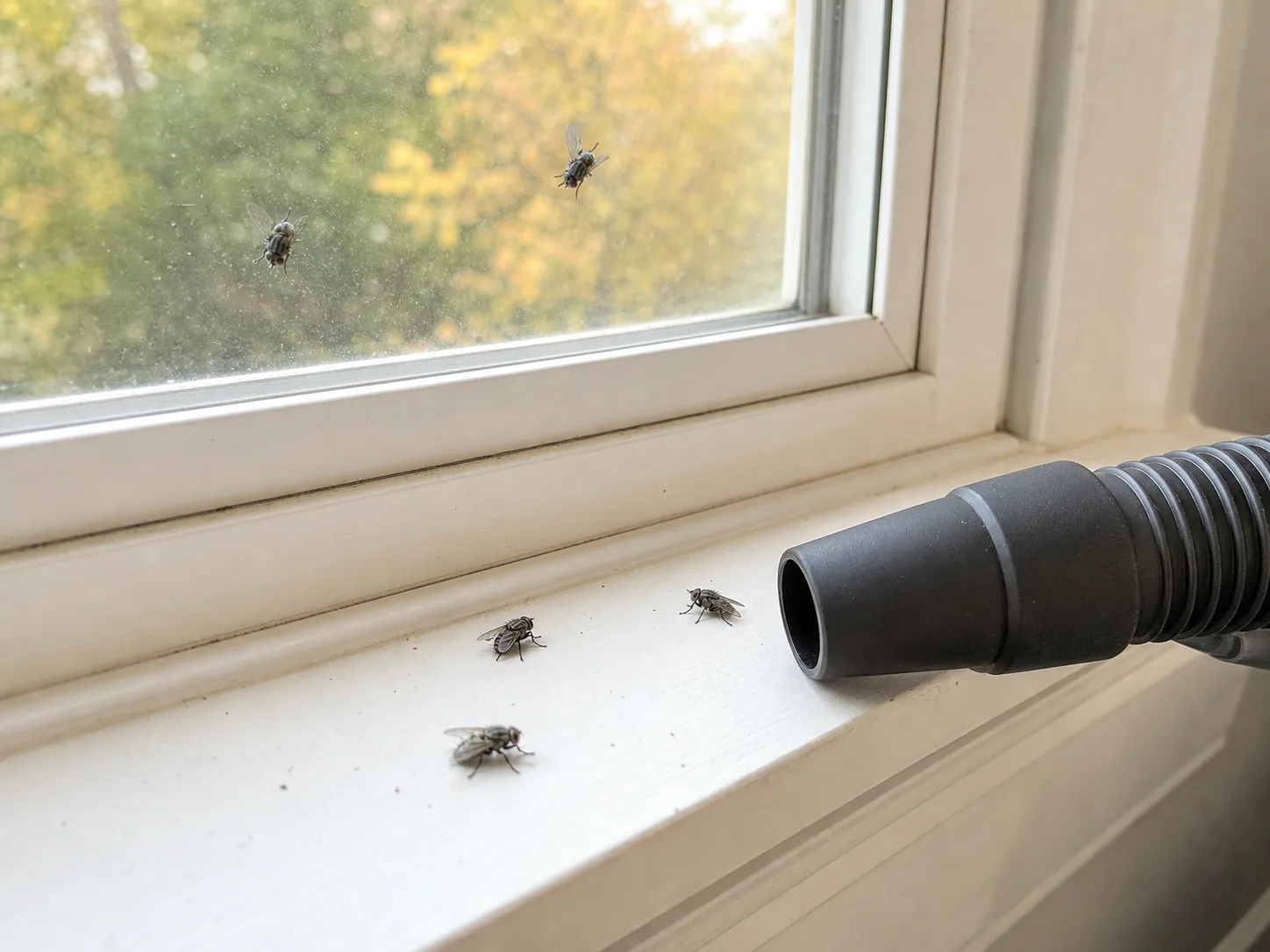
The common house fly (Musca domestica) is the large gray fly with four dark stripes on its thorax. Adults often live about 15 to 30 days, though conditions can shorten or extend that range. Females lay batches of eggs in warm, moist organic material such as garbage, manure, pet waste, rotting produce, wet grass clippings, or contaminated soil.
The important control fact is that house flies can complete egg-to-adult development in as little as seven days under favorable summer conditions. UC Integrated Pest Management explains that removing larval development sites is preferred because adults are only the visible end of the problem. Its guidance also recommends regular waste removal and keeping waste away from building entrances. UC IPM’s fly guidance provides the detailed species and control context.
Fruit flies
Fruit flies are tiny, tan-to-brown flies usually associated with ripe or fermenting fruit, recycling containers, wine, beer, juice, and residue under appliances. Their adult lifespan is commonly measured in weeks rather than hours, and their generation time can be surprisingly short in a warm kitchen.
The hidden source is often not the fruit bowl itself. Check the underside of a trash-can lid, a recycling bottle with a little liquid left inside, a damp mop head, a compost caddy, or a forgotten potato and onion. A bowl trap may catch adults, but it cannot remove eggs or larvae developing in one of those sources.
Blow, drain, and phorid flies
Blow flies are often metallic blue, green, or copper and are associated with carrion, food waste, and sometimes pet waste. They can develop from egg to adult in roughly a week under ideal temperatures. If several appear suddenly, inspect garbage, a dead rodent in a wall or attic, and outdoor waste before assuming a house-wide infestation.
Drain flies are tiny, fuzzy, moth-like flies that rest on walls near sinks, showers, and floor drains. They develop in the gelatinous organic film inside a drain or trap, not in clean, free-flowing water. Phorid flies are small, hump-backed runners that may come from drains, plumbing leaks, sewage problems, or decomposing material under floors. Identification is imperfect from a quick glance, so location and repeated source checks matter.
The 24-hour fly myth
Most flies do not die after one day. The confusion comes from mayflies, a different group of insects whose adult stage can be extremely brief. A house fly that disappears overnight may have sheltered, moved to another room, or been killed; its species does not have a universal 24-hour lifespan.
Avoid using a fly’s adult lifespan as a countdown. Even if every visible adult died tomorrow, eggs, larvae, and pupae could still be developing out of sight. That is why waiting for flies to “die off” rarely solves an active breeding site.
The apparent lifespan can also be shaped by stress and environment, not only age. A University of Michigan Medicine summary of research on Drosophila describes how exposure to dead flies can affect survival, a reminder that laboratory findings should not be turned into a precise countdown for a household pest. University of Michigan Medicine’s fly-lifespan research summary gives that nuance.
The four stages of a fly’s life cycle
Flies undergo complete metamorphosis:
- Egg: The female deposits eggs on a food source that will support larvae. Moist, decomposing organic matter is common for nuisance species.
- Larva: The legless maggot feeds and grows through several larval stages. This is often the best stage to target by removing the material around it.
- Pupa: The mature larva forms a hardened puparium or pupal case. It may move to a drier, protected place before transforming.
- Adult: The winged fly emerges, expands and dries its wings, feeds, mates, and starts the cycle again.
Temperature controls the speed of this process. Warm conditions accelerate development, while cold slows activity and growth. UC IPM describes egg-to-adult development in as little as seven days for several pest flies under optimal summertime conditions; that is a best-case biological rate, not a promise for every home.
How fast a fly infestation can grow
A single adult is annoying. A breeding site is the multiplier. House-fly females can lay several batches containing roughly 100 to 150 eggs, and those eggs do not need a large pile of garbage if a small, consistently moist pocket is available.
The most useful question is not “How many flies do I see?” but “What material could support larvae?” Look for wet organic residue, not only obvious piles. A leaking bin, compost that stays cold and soggy, a pet-waste area, or a dead animal can produce adults that travel indoors. In a kitchen, fermenting liquid under a liner can be enough for fruit flies.
Why flies keep returning after you kill them
Killing adults gives immediate relief but does not change the source. Spraying also misses pupae, eggs, and larvae, and some flies can enter from outdoors through a gap around a door, window, vent, or screen.
Repeated sightings usually point to one of four explanations: a breeding site remains, a second site was missed, adults are entering from outside, or the trap is positioned where it competes with a stronger food odor. A fly swatter is reasonable for one or two flies, but it is not a population-control plan. UC IPM warns that traps and insecticides work poorly when nearby garbage or animal waste continues to attract and feed flies.
Identify the fly before choosing control
Kitchen and pantry clues
Tiny flies hovering over fruit, bottles, or compost are more likely fruit flies than house flies. Empty and rinse recycling, refrigerate ripe produce, wash the bin, and inspect residue beneath appliances. Keep a vinegar-style trap away from food-preparation surfaces and treat it as a monitoring tool, not proof that the breeding source is gone.
Large gray flies suggest house flies. Shiny metallic flies suggest blow flies and call for a more serious search of waste, pet feces, carrion, and outdoor bins. A sudden flush from one room can be a clue to a hidden source rather than a general attraction to the whole house.
Drain, bathroom, and plant-room clues
Moth-like flies resting on tile point toward drain flies. Clean the drain opening and, more importantly, scrub or mechanically remove the film inside the drain and trap. A quick treatment down the opening may leave the food layer intact.
Phorid flies run more readily than they fly and may appear around plumbing, cracks, or floor edges. If they continue after surface cleaning, check for leaks, failed drain traps, sewage seepage, or decaying material beneath flooring. Houseplants can host fungus gnats, which are not the same as fruit flies; letting the soil surface dry between appropriate waterings is a different response from treating a drain.
The first 24 hours of fly control
Start with a source audit before reaching for a spray. Seal food, empty indoor garbage, rinse recycling, clean spills, remove pet waste, and inspect drains. Then check how adults are entering: repair screens, close doors promptly, and seal small gaps around windows and service penetrations.
Next, isolate the room where sightings are strongest and observe where flies land. A few minutes of watching can reveal a window, light, bin, sink, or pet-food area that a general cleaning pass misses. Photographing the fly beside a coin can also help a pest professional identify it if the problem persists.
Remove breeding material, not just adults
For outdoor bins, use a tight-fitting lid, bag wet waste, wash residue from the container, and place the bin as far from entrances as practical. Remove pet waste frequently. Keep compost aerated and balanced rather than saturated; wet, compacted organic material is more likely to smell and support nuisance flies.
For fruit flies, discard overripe produce, scrub sticky containers, clean under appliances, and rinse bottles before recycling. For drains, use a brush or appropriate mechanical cleaning to remove the organic film. Do not mix household cleaners, and follow product labels if a drain treatment is used.
Practical gardening and household advice also emphasizes source removal over simply swatting adults. Gardening Know How’s fly-lifespan overview is useful for the everyday question, while extension guidance should take priority for control decisions and pesticide use.
Use traps and screens strategically
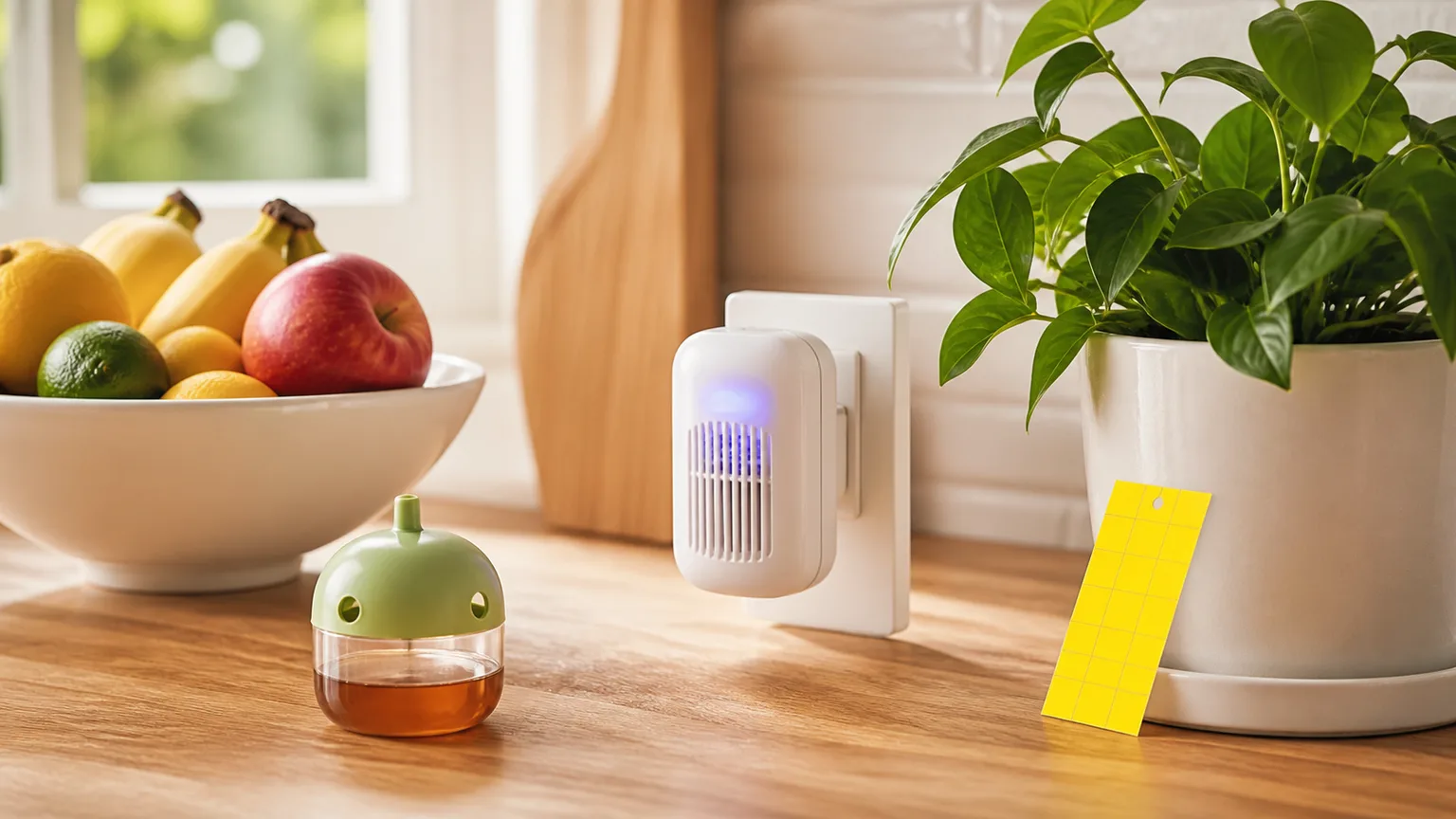
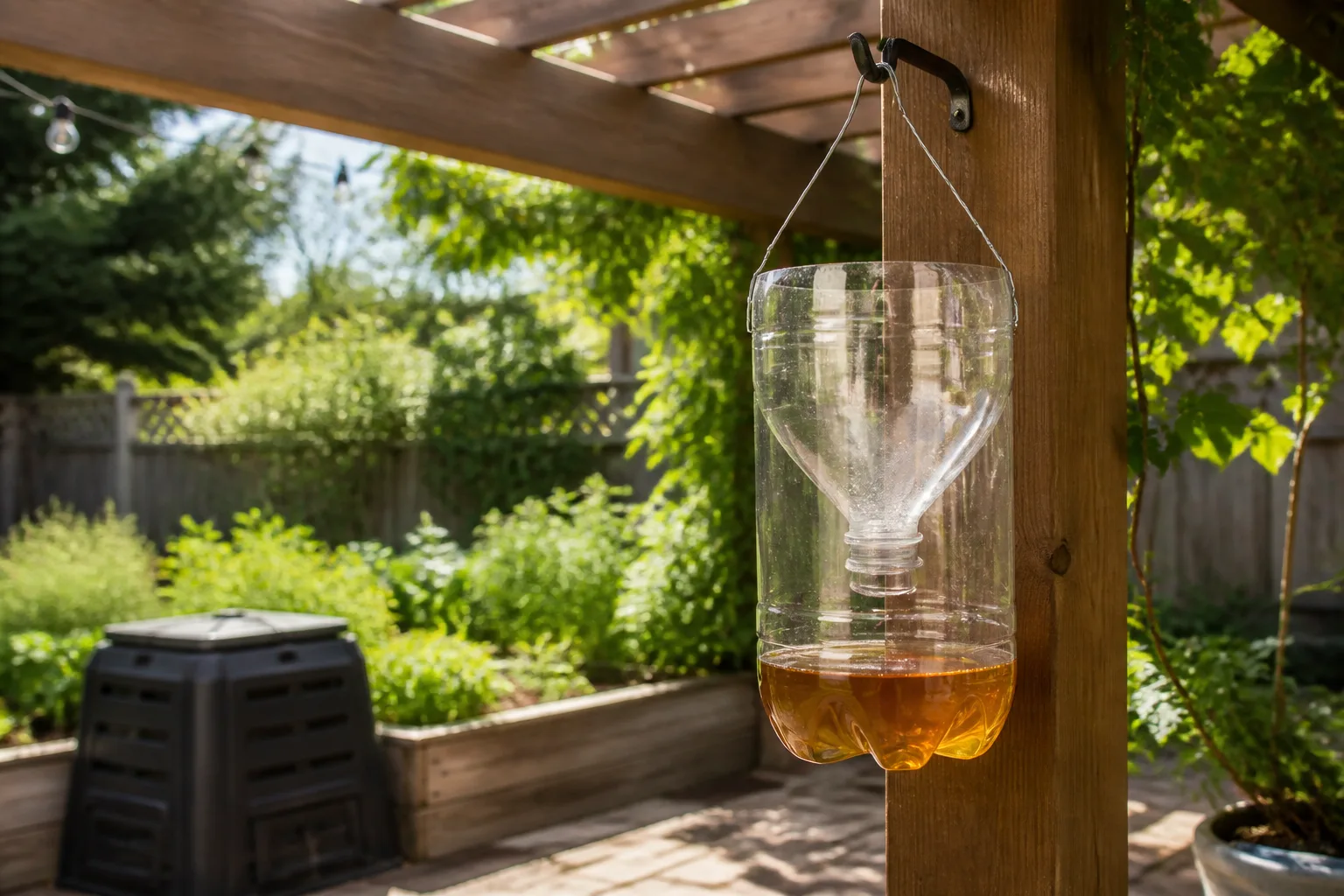
Screens and sealed doors are the first line of defense when flies are entering from outdoors. Sticky ribbons can reduce a few adult house flies in a confined area, but they are not enough for a heavy infestation. Odor-baited cone traps can work outdoors when placed away from occupied doors and windows; placing one beside a patio can attract flies toward the very area you want to protect.
UV traps may help indoors when they are not competing with strong daylight, but do not place bug-zapping devices near food preparation. UC IPM notes that exploding insect bodies can propel fragments over several feet. Traps should support sanitation and exclusion, not replace them.
When insecticides or professional help make sense
In most homes, sanitation and exclusion should come first. If a pesticide is needed, use only a product labeled for the specific indoor or outdoor site, follow the label, keep people and pets away as directed, and never spray food, dishes, countertops, or air indiscriminately.
Call a licensed pest professional when flies continue despite a documented source search, when many emerge from walls or ceilings, when you suspect sewage or a hidden carcass, or when the site is a food business, care facility, or other setting with strict hygiene requirements. A professional can inspect inaccessible voids and identify whether the problem is structural, plumbing-related, or outdoor.
Do flies die in winter?
Cold weather usually reduces activity and slows development, but it does not guarantee that flies vanish. Heated buildings can support adult survival and indoor breeding. Some species shelter in wall voids, attics, or protected outdoor areas and become active again when temperatures rise.
Winter is therefore a good time to repair screens, seal cracks, clean bins, and correct plumbing leaks. Waiting for cold to solve the problem can allow a small indoor source to continue unnoticed.
How long an infestation lasts
An infestation can end in a few days when the only source is removed and no new adults enter. It can last weeks when eggs, larvae, and pupae are already present, or when the source is hidden and continually replenished. Fruit flies often decline after one or two complete cleaning cycles, but that depends on whether every fermenting source was found.
Use a simple test: after cleaning, keep food sealed, remove waste, and monitor the same locations for seven to ten days. A steady decline suggests the source was addressed. New flies appearing at the same spot each day suggest a missed breeding site, an entry gap, or a plumbing problem.
Conclusion
Most flies live longer than 24 hours, and the flies you see are only one stage of a larger cycle. Species, temperature, food, moisture, and shelter determine whether the adult lasts days or weeks, while a hidden breeding site determines how quickly the problem returns.
The reliable sequence is straightforward: identify the fly, remove the material supporting eggs and larvae, seal entry points, and use traps only for the remaining adults. If flies continue after a careful source audit, treat that persistence as evidence of a hidden or structural source—not as proof that you need a stronger spray.



