How to Identify and Get Rid of Camel Crickets
Silent camel crickets favor damp spaces. Learn their signs, trap strays, reduce basement moisture, and seal the common entry points to keep them from returning.
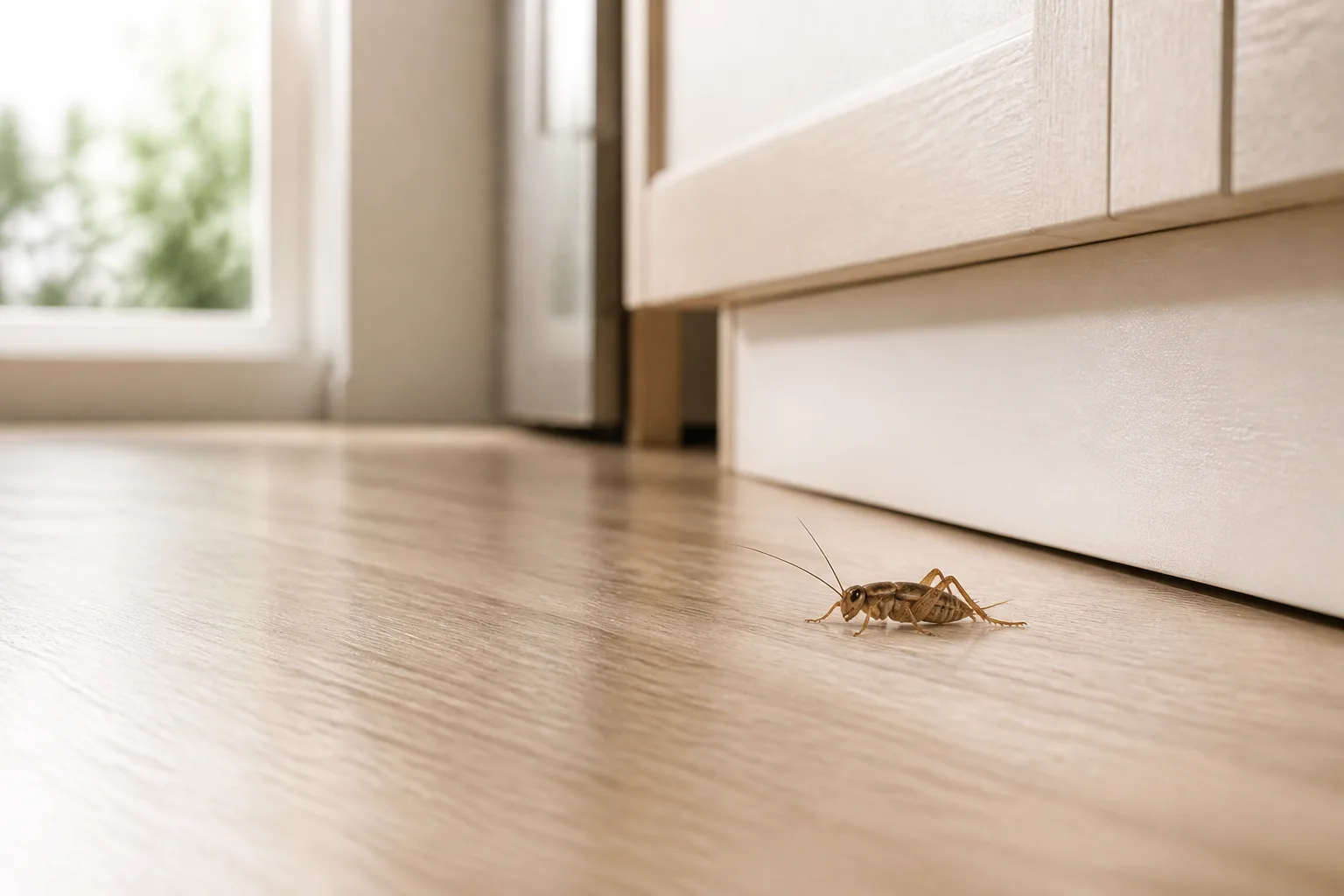
A camel cricket can look like a spider that learned to jump, and it often appears in the darkest part of the house just as you turn on the light. These silent, long-legged insects are most often a nuisance, but repeated sightings in a basement or crawl space are useful information: the area may offer the damp shelter they need, and a gap may be letting them in. The most effective response is to confirm the insect, remove the ones indoors, correct persistent moisture, and close the entry routes—then use traps to see whether the plan is working.
Identify a camel cricket by its shape, legs, and silence
Camel crickets belong to the family Rhaphidophoridae. Their most useful field marks are a distinctly arched or hump-backed body, very long antennae, enlarged hind legs, and no wings as adults. Their mottled tan, gray, or brown coloring blends into leaf litter and basement corners, while the long back legs let them spring away when disturbed. The insect’s sudden leap—not an aggressive charge—is often what startles a homeowner.
They do not make the familiar chirp associated with male field or house crickets. If the insect is silent, wingless, and humped, camel cricket is a better fit than a chirping cricket; silence alone is not enough to identify an insect, so look at the body and legs too. University of Georgia Extension describes camel crickets as mottled gray or brown and up to about 1.5 inches, while a University of Minnesota Extension identification page lists a camel cricket at about three-quarters of an inch. That difference reflects how size varies among species and life stages, so use the body shape and winglessness as stronger clues than a ruler (UGA Extension; University of Minnesota Extension).
A female may have a narrow, needle-like ovipositor extending from the end of her abdomen. It is an egg-laying structure, not a stinger. Do not try to identify a cricket by color alone: light, dust, age, and the species in your region can change how brown or gray it appears. If you are unsure, photograph it from the side and above, include an object for scale, and ask a local Extension office or pest professional to confirm it before choosing a species-specific intervention.
Tell camel crickets from other basement visitors
Camel crickets are not true spiders, though their leggy outline earns them the name “spider cricket.” They have six legs and long antennae; spiders have eight legs and no antennae. A field cricket is typically more compact and may have wings; a house cricket is often lighter and banded and can chirp. Cockroaches are usually flatter-bodied, with a more obvious shield-like thorax and, in many common species, wings. A photograph can be more helpful than a quick glance because the cricket may leap before you can inspect it.
| What you notice | More likely explanation | What to check next |
|---|---|---|
| Humped body, long antennae, large rear legs, no wings, no chirp | Camel cricket | Damp basement, crawl space, garage, or nearby outdoor shelter |
| Chirping after dark; more conventional cricket shape | Field or house cricket | Sound source and gaps near exterior doors; identify before using a trap strategy |
| Flat, oval body with a shield-like area behind the head | Cockroach or another insect | Capture a clear photo; consult Extension or a licensed professional if uncertain |
| Eight legs, no antennae, two body sections | Spider | Do not treat it as a cricket; identify the spider separately |
The useful distinction is not just the name. Camel crickets point you toward moisture and hidden harborage; a chirping house cricket may require locating a single insect near an appliance or food source. For the broader problem of chirping crickets indoors, see the site’s indoor cricket guide. NC State Extension notes that several species are called camel crickets and that some species differ in where they commonly occur (NC State Extension).
Understand why camel crickets show up indoors
Outdoors, camel crickets use cool, protected places such as spaces beneath stones, logs, boards, ground cover, or piles of firewood. Indoors, they are commonly found in basements, crawl spaces, garages, sheds, wall voids, and utility areas that stay humid or have little airflow. The structure does not need to be filthy: a clean room can still offer the dark, damp shelter a cricket prefers.
The explanation is often a combination rather than one “attractant.” An outdoor harborage holds crickets near the foundation; a gap under a door, around a vent, or where a pipe passes through the wall gives them a route; and a wet corner, leaky fitting, condensation, or damp crawl space makes the interior worth staying in. University of Georgia Extension’s proactive pest-management framework looks for the food, water, and shelter that let pests persist. NC State Extension likewise prioritizes reducing moisture and harborage and excluding camel crickets before relying on pesticide treatment (UGA Extension; NC State Extension).
Weather can change the pattern. NC State notes that heavy rain or extended hot, dry spells can push camel crickets toward homes. In some regions, outdoor numbers are more noticeable in late summer or fall; in damp crawl spaces, sightings may recur at other times. That is why simply waiting for a cold snap or spraying the one cricket you saw may not solve a problem tied to a wet foundation edge or unsealed access panel.
Decide whether they are harmful or just unsettling
For most households, camel crickets are a nuisance rather than a medically important pest. They are not known for stinging, and their dramatic jump is a defensive escape. A single cricket in a basement is not, by itself, evidence of a dangerous infestation or an emergency. If the insect cannot be identified confidently, however, do not handle it barehanded; capture it in a container or use a photo for identification.
Extension sources describe property damage differently. Minnesota Extension says its identified camel cricket does not harm people or property, including fabrics. NC State says a heavy infestation can damage stored garments and linens when the insects cannot find suitable food. The practical reading is to protect valuable textiles and watch for repeated activity, while avoiding alarm over one visitor. Keep wool, cotton, and seasonal linens in sealed bins or on shelves rather than in open boxes on a damp floor, and inspect them if crickets have been present for a while (University of Minnesota Extension; NC State Extension).
Their presence may also flag another issue worth fixing: persistent water intrusion, a leaking pipe, poor drainage, or a chronically damp crawl space. The cricket is not a moisture meter, but repeated sightings near one room are a reason to inspect that space rather than treat the insect as an isolated problem.
Inspect the room before choosing a treatment
Begin where sightings happen, then follow the environment outward. Use a flashlight in the evening or early morning, when hidden insects may be active, and look along the floor-wall junction, behind stored items, under stairs, near drains and sump areas, around water heaters, and beside crawl-space doors. Check the exterior side of that wall too: leaf litter, stacked wood, landscape timbers, dense ground cover, and wet soil can shelter insects close to an opening.
Record three things for a week: where and when you see a cricket, whether it is alive or caught, and what the nearby conditions are. Note wet spots, condensation, leaks, a musty odor, standing water, or a door that does not sit flush. Place a few sticky boards along walls near suspected routes—not in the middle of an open room—and label their locations and dates. A cluster on one side of a basement suggests a more useful inspection target than a handful of traps scattered randomly.
Do not tear open a wall or crawl under an unsafe structure to chase a cricket. Photograph droppings or shed skins if you see them, but do not assume that pepper-like debris proves camel crickets: many insects leave dark specks. Clear identification and location patterns are more dependable than a guessed sign.
Remove the crickets you can see
Removing visible insects gives immediate relief, but it is only the first layer. For one or two jumpers, capture them with a container and stiff card, or use a vacuum with a hose attachment. If you vacuum them, empty the canister outdoors or seal and discard the bag according to the vacuum’s instructions; do not leave captured insects in the machine where they can escape. Vacuuming is quick and avoids spraying a room to reach one insect.
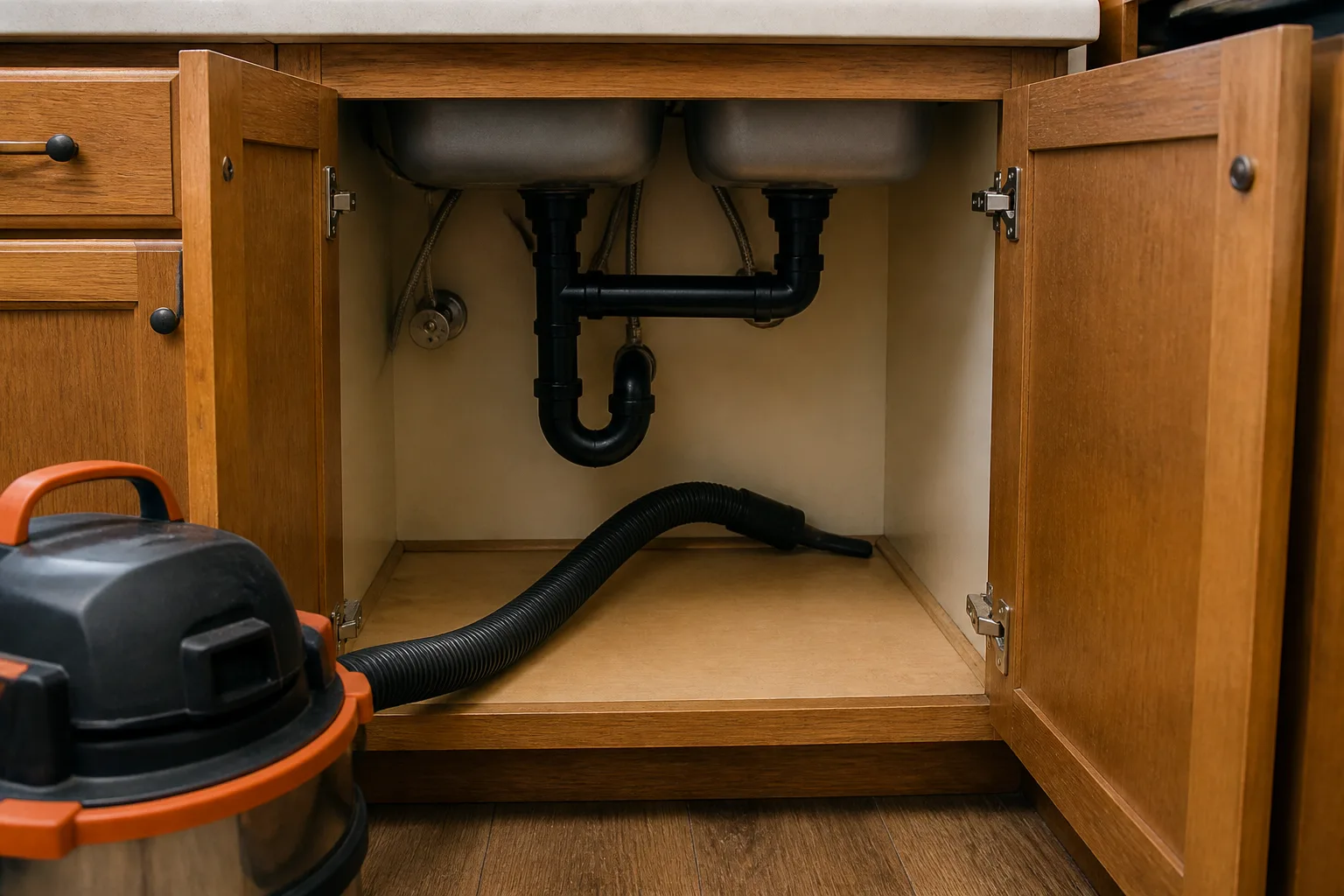
Vacuum or capture individual jumpers
Move slowly and aim the hose ahead of the cricket rather than making a sudden sweep that sends it behind a cabinet. A clear cup and card work well on a wall or smooth floor, but are harder to use in a cluttered basement. Avoid chasing it toward open stairs or a doorway where it can disappear into a wall gap. If you cannot safely reach it, place a sticky board along its likely route and return to the source inspection.
For repeated sightings, immediate capture prevents the room from feeling out of control, but do not let the hunt distract from leaks, entry gaps, or outdoor shelter. The most efficient sequence is to remove or trap what is present while correcting the conditions that let new insects follow the same path.
Use sticky traps to catch and monitor activity
Glue boards are useful as both a catch tool and a low-tech activity monitor. Put them flat against walls, behind appliances, or near crawl-space access points where people and pets will not step on them. Camel crickets travel through sheltered edges more often than across an exposed floor, so a trap beside a baseboard is usually a better test than one in the room’s center. Check boards regularly and replace them when dusty, wet, full, or no longer sticky.
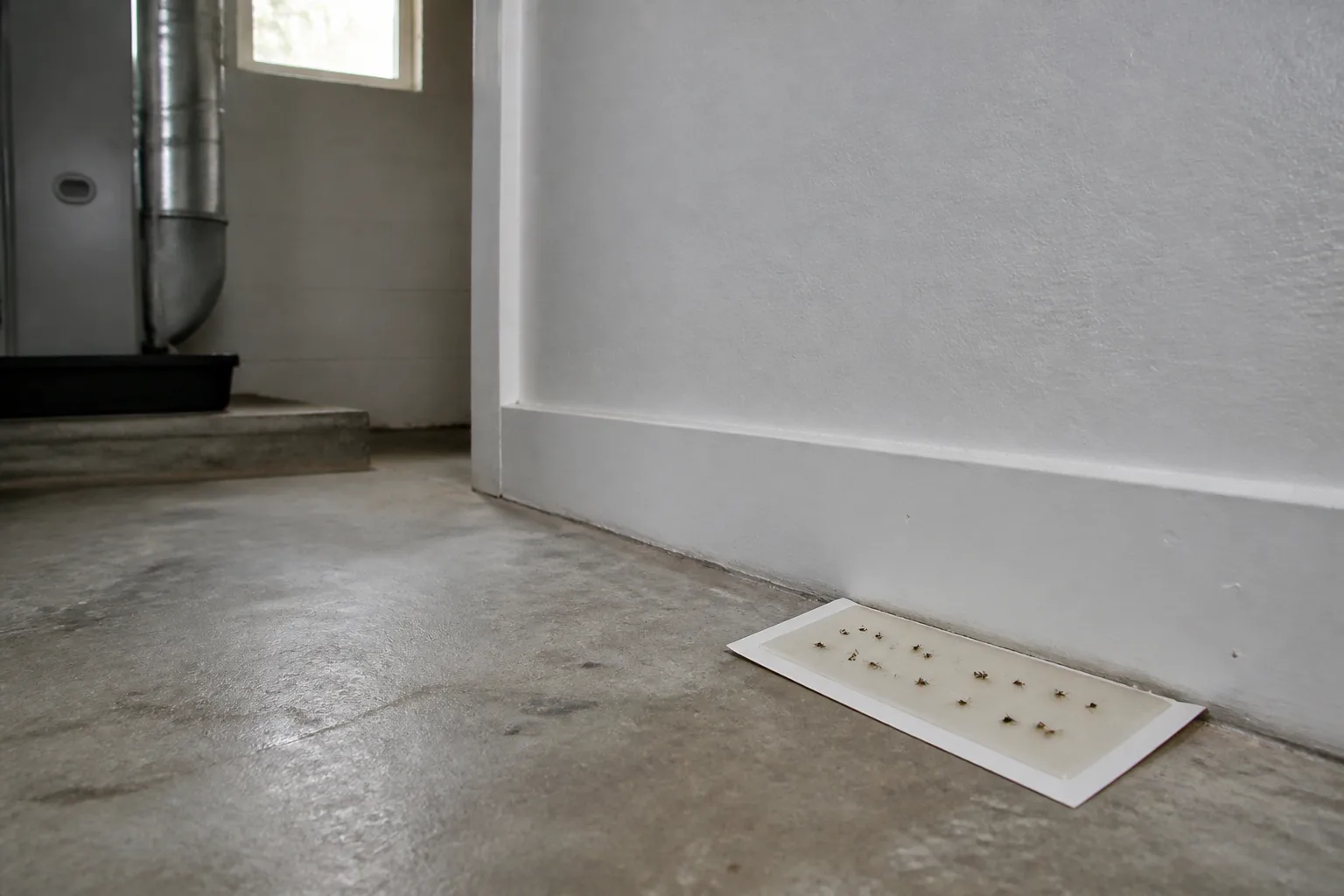
A trap that catches one or two crickets confirms activity; it does not tell you that every cricket is gone. A dry trap for several weeks is encouraging only if it is in the right location and you have also corrected moisture and openings. Keep traps inaccessible to children and pets, and follow product directions for placement and disposal. Do not add cat food or other bait unless the trap maker allows it; bait can draw other pests and complicate what the board is measuring.
Fix the moisture that keeps a basement hospitable
A dehumidifier can help with damp air, but it cannot repair a leak, correct exterior drainage, or dry a crawl space with standing water by itself. Start by finding the source: inspect plumbing joints, hose connections, condensate lines, sump discharge, gutters, downspouts, window wells, and the grade beside the foundation. Condensation on cold pipes may call for insulation or ventilation changes; water after rain may point to a gutter, drainage, or grading problem. If you see active water intrusion or suspect a building-envelope problem, address it as a home-repair issue, not as a cricket treatment.
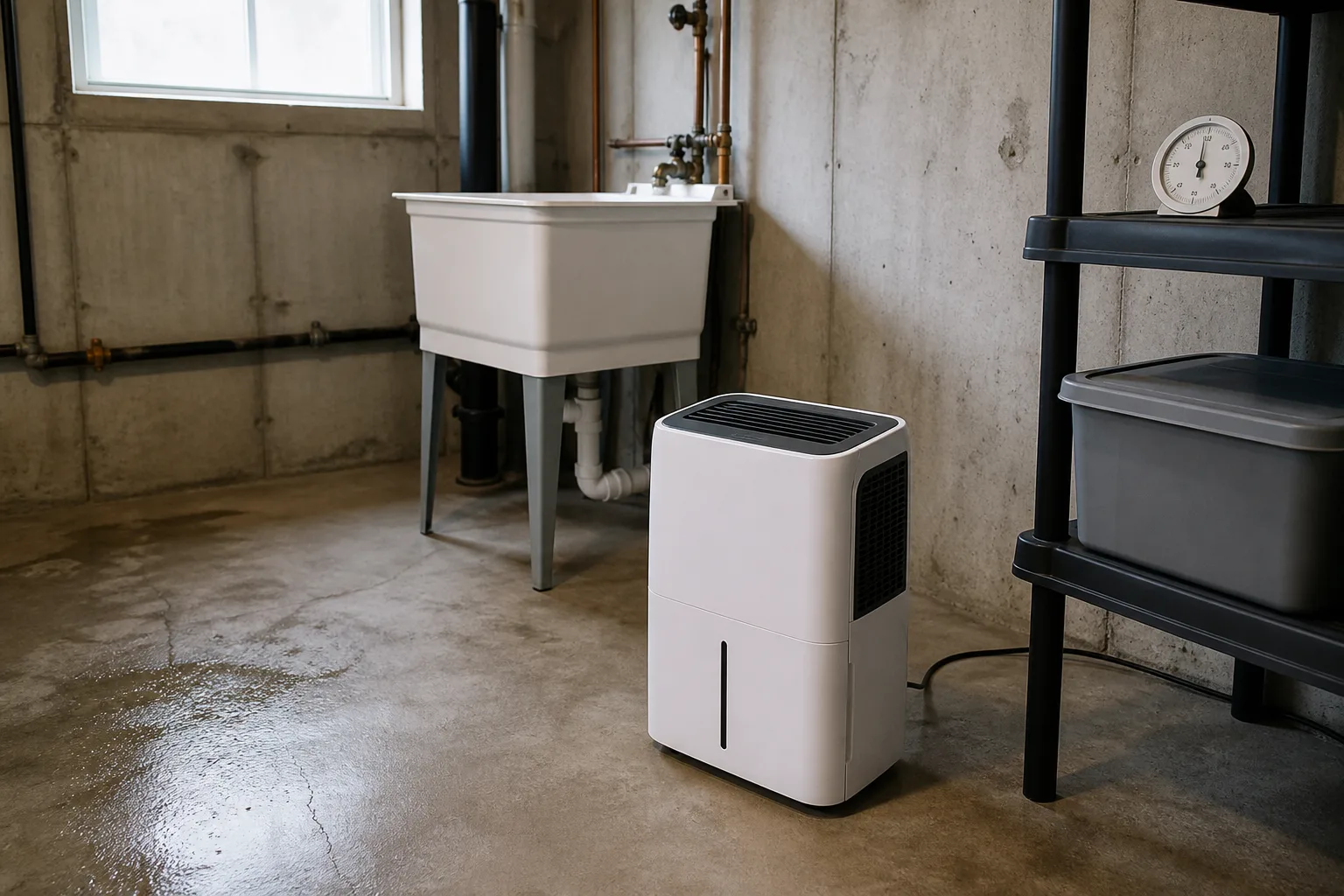
Once the cause is corrected, improve air movement and use a dehumidifier where appropriate. Empty or drain the unit as directed, clean its filter, and use a hygrometer to see whether relative humidity is actually trending down. A single universal target does not fit every basement, climate, or building material; follow local building guidance and address condensation or visible dampness instead of chasing an arbitrary number. NC State recommends reducing indoor moisture, and UGA Extension emphasizes correcting the underlying source of persistent moisture rather than treating the visible insect alone (NC State Extension; UGA Extension).
Close the routes crickets use to enter
Inspect doors, basement windows, foundation joints, utility penetrations, dryer vents, crawl-space access doors, and gaps where siding meets the foundation. Install or replace a door sweep if daylight shows under the door, repair torn screens, and use an appropriate sealant for small stationary cracks. For larger gaps, moving joints, damaged masonry, or openings that must remain for ventilation, use the correct repair material or ask a qualified contractor; blocking a required vent can create a moisture or combustion problem.
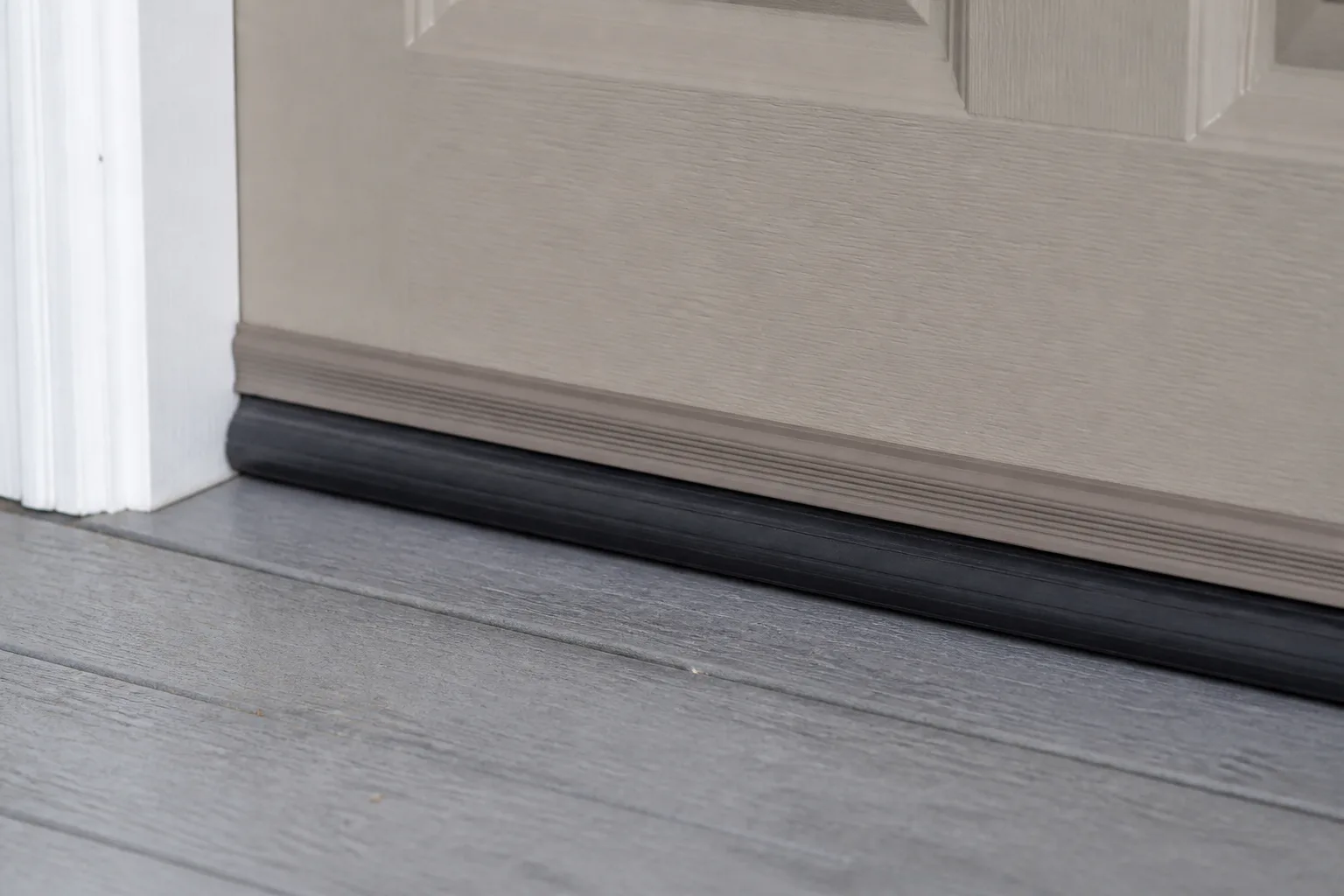
A good exclusion check is functional: the door closes without a visible gap, the screen is intact, and openings around cables or pipes are sealed without obstructing their purpose. Recheck after seasonal expansion, storms, or contractor work. Sealing one crack helps only if it is a real route; use your trap map and repeated sightings to prioritize the most likely entry points rather than caulking every seam indiscriminately. NC State Extension specifically calls out weather-stripping and gaps around windows, doors, foundation openings, vents, and utility lines as useful exclusion targets (NC State Extension).
Reduce outdoor shelter near the foundation
Move firewood, stacked boards, and other stored materials away from the foundation and keep them raised where practical. Trim ground cover and shrubs so they do not press against siding, remove unnecessary debris under decks, and avoid leaving flat boards or containers directly on damp soil beside doors. Keep mulch and irrigation from creating persistently wet conditions at the foundation edge; the goal is not a bare yard, but less sheltered, damp habitat immediately next to entry points.
Check that downspouts discharge away from the house and that sprinkler heads do not soak basement walls or window wells. Fixing drainage and reducing harborage outdoors can lower the number of crickets that reach the structure; it will not guarantee that no insect ever enters. UGA Extension recommends limiting pest-friendly shelter and persistent moisture close to the building, while NC State recommends keeping ground cover and clutter away from the foundation (UGA Extension; NC State Extension).
Treat crawl spaces and storage areas carefully
A crawl space may be the true source even when the crickets are seen in a finished basement. Do not enter if the access is unstable, the space has exposed wiring, standing water, poor clearance, animal activity, or signs of structural damage. Look from a safe access point for wet soil, condensation, leaks, blocked vents, torn screening, and stored debris. For accessible storage rooms, raise boxes off the floor, leave a small inspection gap from walls, and choose sealed plastic bins for fabrics rather than cardboard that absorbs moisture and hides insects.
Do not seal a crawl space or change ventilation based on a quick internet rule. Crawl-space moisture control depends on climate, construction, and local building requirements; an incorrect change can trap moisture or interfere with a designed ventilation system. If the space is persistently damp, has a plumbing leak, or needs a vapor barrier or drainage work, involve a building professional who can diagnose that assembly. Pest control and moisture repair are related, but they are not interchangeable jobs.
Know when pesticide treatment is justified
Start with nonchemical steps when sightings are occasional: confirm the insect, capture it, monitor the route, dry the area, and seal openings. If traps continue to catch camel crickets after moisture and entry issues are addressed—or a large number is concentrated in a location you cannot reach—a targeted pesticide may be one part of an integrated plan. NC State says pesticides can help reduce nuisance problems but are not a long-term solution without exclusion and moisture management; UGA Extension lists localized bait or residual treatments as possible interventions for camel crickets (NC State Extension; UGA Extension).
Use only a product whose current label explicitly allows the intended pest and site—such as the relevant indoor or outdoor area—and follow every direction, restriction, and disposal instruction. Do not assume a lawn product is appropriate indoors, do not mix products, and do not apply more than the label permits. Keep treatments away from food, children, pets, drains, and non-target wildlife as the label directs. A label is not a general suggestion; pesticide products are regulated for specified uses, and misuse can create risk without fixing the source.
Avoid broadcast sprays in a crawl space or wall void unless a product label specifically allows that site and you can meet its precautions. Confined spaces can have poor ventilation and difficult access. When a treatment would require entering an unsafe area, reaching an inaccessible void, or choosing among unfamiliar products, ask a licensed pest-management professional to inspect and explain the target, product, placement, and follow-up plan before work begins.
Skip remedies that promise more than they deliver
Peppermint, lemon, and other strong smells are often presented as reliable cricket repellents. A pleasant or sharp odor is not a substitute for sealing a gap or drying a basement. The extension guidance cited here emphasizes reducing shelter and persistent moisture, monitoring, and exclusion; it does not establish a dependable camel-cricket repellent recipe. Do not assume an essential-oil mixture is a proven control just because it is marketed as natural.
A shallow dish of soapy water may catch an insect that falls into it, but it is not a dependable way to reduce a hidden population. It can spill, create a slip hazard, or be reached by a pet or child. Diatomaceous earth is not an instant contact spray, and powder should not be treated as harmless: the National Pesticide Information Center notes that inhaled dust can irritate the nose and nasal passages and may irritate eyes or skin. If you consider any pesticide product containing a dust, check the specific label and use it only in permitted locations with the listed precautions (NPIC). For a manageable indoor sighting, a cup, vacuum, or well-placed glue board is easier to control and monitor.
No sound or scent device can repair dampness or close an entry point. Put the effort into the physical conditions you can inspect: water, shelter, and openings.
Call a pest professional when the source is hidden
Get a professional inspection if you keep finding crickets in several rooms, traps continue catching them after you have corrected obvious moisture and gaps, or activity seems to come from a wall void, crawl space, or inaccessible utility chase. The same applies when you see possible fabric damage, cannot distinguish camel crickets from another pest, or a moisture problem involves a leaking foundation or plumbing you cannot repair safely.
Ask the technician to show where activity is concentrated, distinguish the identified insect from lookalikes, and explain what part of the plan will remove crickets versus prevent new entry. Request the product name and label, where it will be applied, why that site is necessary, what precautions occupants should follow, and what will be checked afterward. A recurring spray schedule without an inspection or source correction may reduce visible insects temporarily while leaving the basement conditions unchanged.
Track results and prevent a repeat invasion
Keep a short log for three to four weeks after making the changes. Record sightings, trap counts, rainfall or new leaks, and the areas where crickets appear. Compare like with like: a board moved to a new corner cannot tell you whether the original route has quieted down. If captures fall and sightings stop while the area remains dry and the entry points stay sealed, continue checking the same locations periodically, especially after heavy rain or when seasonal outdoor activity rises.
If activity does not decline, revisit the diagnosis. A different insect may be entering, a damp source may be hidden behind storage, or a door sweep may not actually contact the threshold. Repeated captures concentrated around a crawl-space hatch point to a place to inspect; scattered single sightings after a storm may instead reflect a new entry event. Use the pattern to choose the next repair, not just to justify a stronger product.
Conclusion
Camel crickets are recognizable by their humped, wingless bodies, long antennae, enlarged hind legs, and silence. They are usually a nuisance, although a large, persistent population can put stored textiles at risk and often signals a damp or sheltered space that deserves attention. Remove the insects you see, use glue boards to map activity, correct the moisture source, and close the routes they use to enter. Reserve pesticide treatment for a confirmed, persistent problem and follow the exact product label; when the source is hidden or unsafe to reach, bring in a qualified professional.



