How to Get Rid of June Bugs: 6 Proven Methods
Get rid of June bugs with six methods that target adults and grubs—plus when a healthy lawn can tolerate grubs and you should skip chemicals.
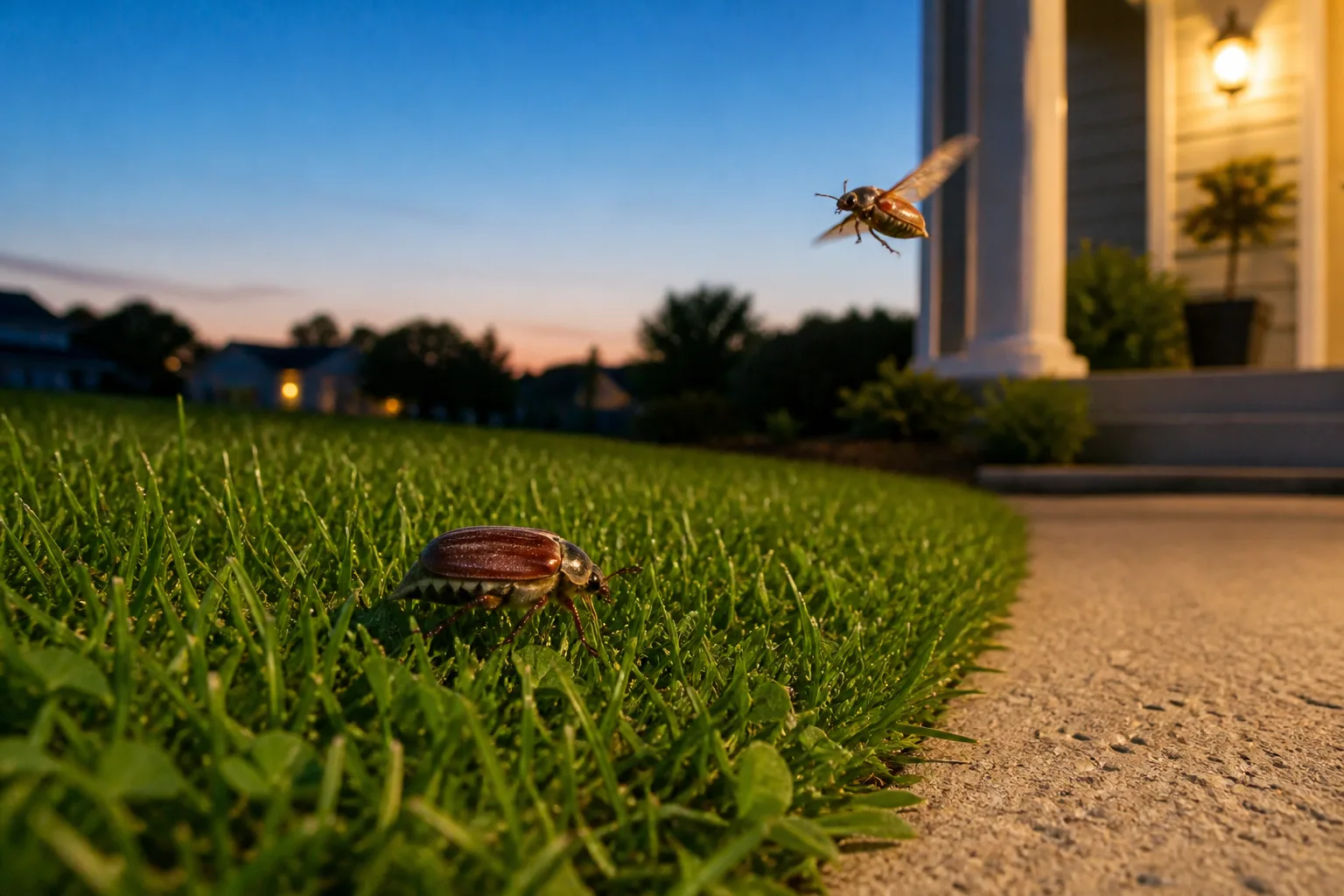
That brown, thumb-sized beetle banging against your screen door is annoying—but it is rarely the reason your lawn dies. June bugs (May/June beetles in the genus Phyllophaga) and their close relatives are scarab beetles whose white grub larvae chew turf roots underground. The adults you see in May and June are the tip of a cycle that may have been running in your soil for one to three years.
This guide walks through six practical control methods, but it starts where most pest articles skip: confirming you actually have a problem worth treating, identifying which beetle you are dealing with, and choosing whether to target flying adults, soil grubs, or neither.
Why June Bugs Are a Lawn Problem (Not Just a Nuisance)
Adult June beetles are clumsy fliers that bump porch lights and land on leaves. They can chew ragged holes in tree and shrub foliage, and they will nibble rose petals—but that above-ground feeding is usually cosmetic. The expensive damage happens below the surface when C-shaped white grubs sever grass roots. Turf turns straw-colored in irregular patches, peels up like carpet, and becomes a buffet for skunks, raccoons, moles, and armadillos that dig cone-shaped holes overnight.
Several beetles share the nickname “June bug.” NC State Extension lists Japanese beetle, green June beetle, masked chafers, Asiatic garden beetle, and May-June beetles (Phyllophaga) among the white grubs of economic importance in turf (NC State TurfFiles). Fortunately, many control tactics overlap—but species still matters for product choice and timing.
Adults vs. Grubs—Which Stage to Target First
Target grubs when you have confirmed root damage, high grub counts, or a history of recurring brown patches. Grub control protects next year’s lawn and stops the animal digging that follows fat larvae.
Target adults when swarms are unbearable on summer evenings and you want to reduce egg-laying—understanding that trapping alone rarely fixes a heavy grub infestation.
Target neither when a soil check shows a healthy lawn tolerating normal grub levels. Many extension programs cite roughly 5 to 10 grubs per square foot as acceptable in otherwise vigorous turf; above that, intervention makes sense. Treating “just in case” wastes money, kills non-target insects, and can make future outbreaks worse by removing predators.
How to Identify June Bugs and Common Look-Alikes
Misidentification leads to wrong products and wrong timing. Spend five minutes on ID before you buy insecticide.
Brown May/June Beetles (Phyllophaga)
Classic June bugs are reddish-brown scarabs about ½ to 1 inch long, with hard wing covers and a rounded, tank-like profile. They fly at dusk and after dark from late spring through early summer, often crashing into lighted windows. Females lay 75 to 100 eggs in soil during early to midsummer; larvae hatch in roughly two to three weeks and begin feeding on roots.
Green June Beetles, Japanese Beetles, and Fig-Eaters
Green June beetles (Cotinus nitida) are metallic green, nearly an inch long, and famously crawl on their backs when grubs move across pavement (NC State Extension). Their grubs feed heavily on thatch and organic matter; adults skeletonize leaves and can ruin figs and soft fruit.
Japanese beetles are smaller, with coppery wing covers and metallic green heads. They are often the most damaging grub species in eastern states and are the only target for milky spore bacteria.
Fig-eater beetles in the Southwest are bright green like green June beetles but generally cause less landscape damage. If you are west of the Rockies, confirm species before copying eastern treatment calendars.
When June Bugs Are Active in Your Yard
Timing drives every method on this list. Adult Phyllophaga beetles emerge in late spring, fly at night, and lay eggs in early to midsummer. Grubs feed near the root zone through summer, burrow deeper to overwinter, then resume feeding in spring before pupating.
NC State notes that curative grub insecticides work when grubs feed near the soil surface—typically August through October and again in April through early May, with late-summer and fall applications usually outperforming spring rescue treatments because larvae are smaller (NC State TurfFiles). Calendar dates shift by latitude; mountain regions run later than coastal plains.
Night-flying beetles are drawn to artificial lights, especially wavelengths rich in ultraviolet light. The University of Florida Museum explains that many nocturnal insects navigate by keeping moonlight at a constant angle; porch bulbs confuse that compass and pull beetles toward your house (UF Florida Museum). Switching to warm LED bulbs that emit little UV can reduce porch collisions without leaving lights on all night—which also cuts light pollution that harms pollinators.
Signs You Have June Bugs or Grubs Underground
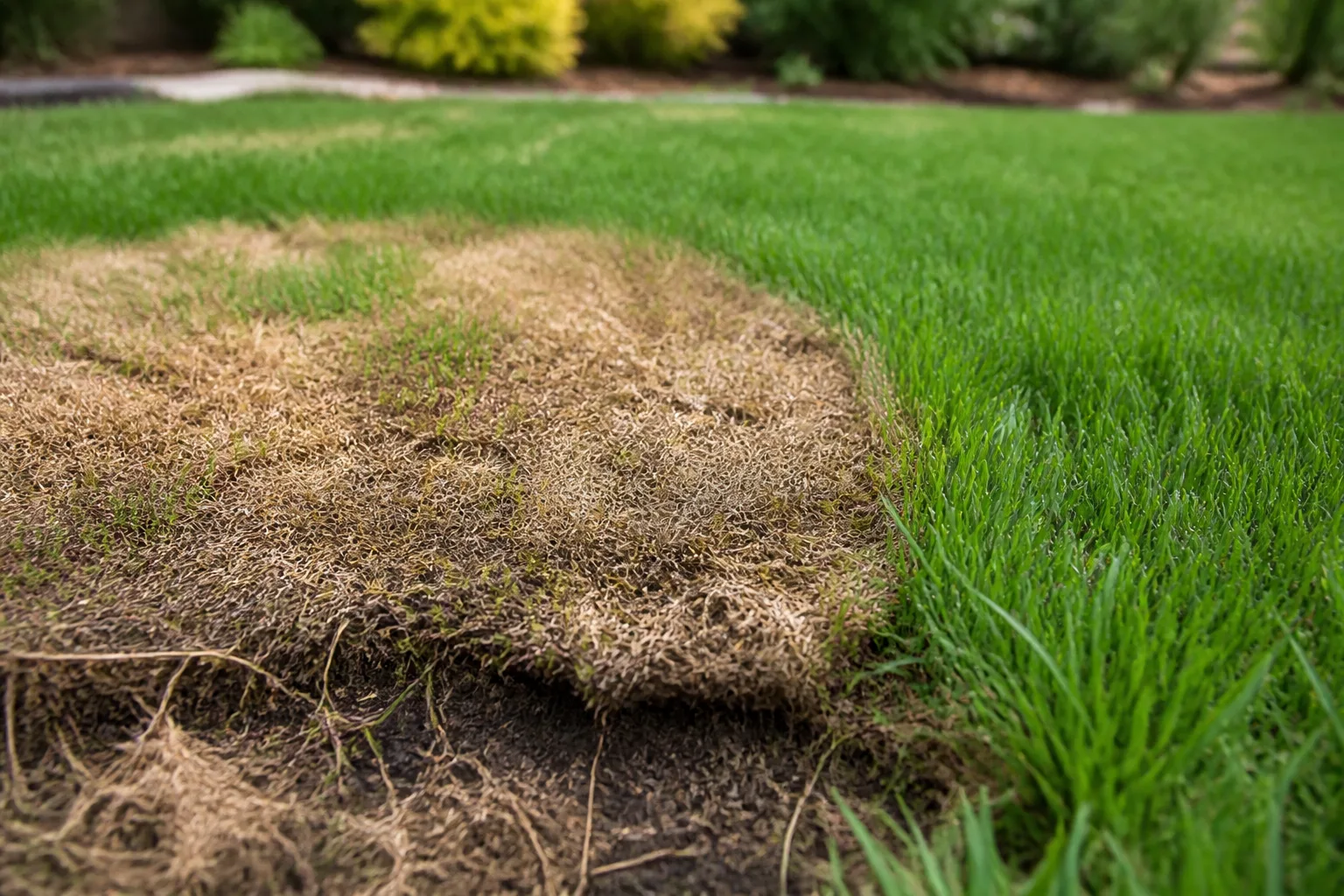
You do not need to see a beetle to have a grub problem—and you can see beetles without needing chemical warfare.
Watch for these red flags:
- Spongy brown patches that do not respond to watering and expand through late summer.
- Turf that lifts easily like a loose rug because roots are gone.
- Fresh animal digging in arcs or small holes, especially after rain softens soil.
- Increased mole activity, since moles hunt grubs (fixing grubs may not remove moles that also eat earthworms).
- Ragged leaf holes on roses, grapes, or fruit trees from adult feeding.
- Beetles at lights after sunset from May through July in most regions.
How to Confirm Grubs Before You Treat
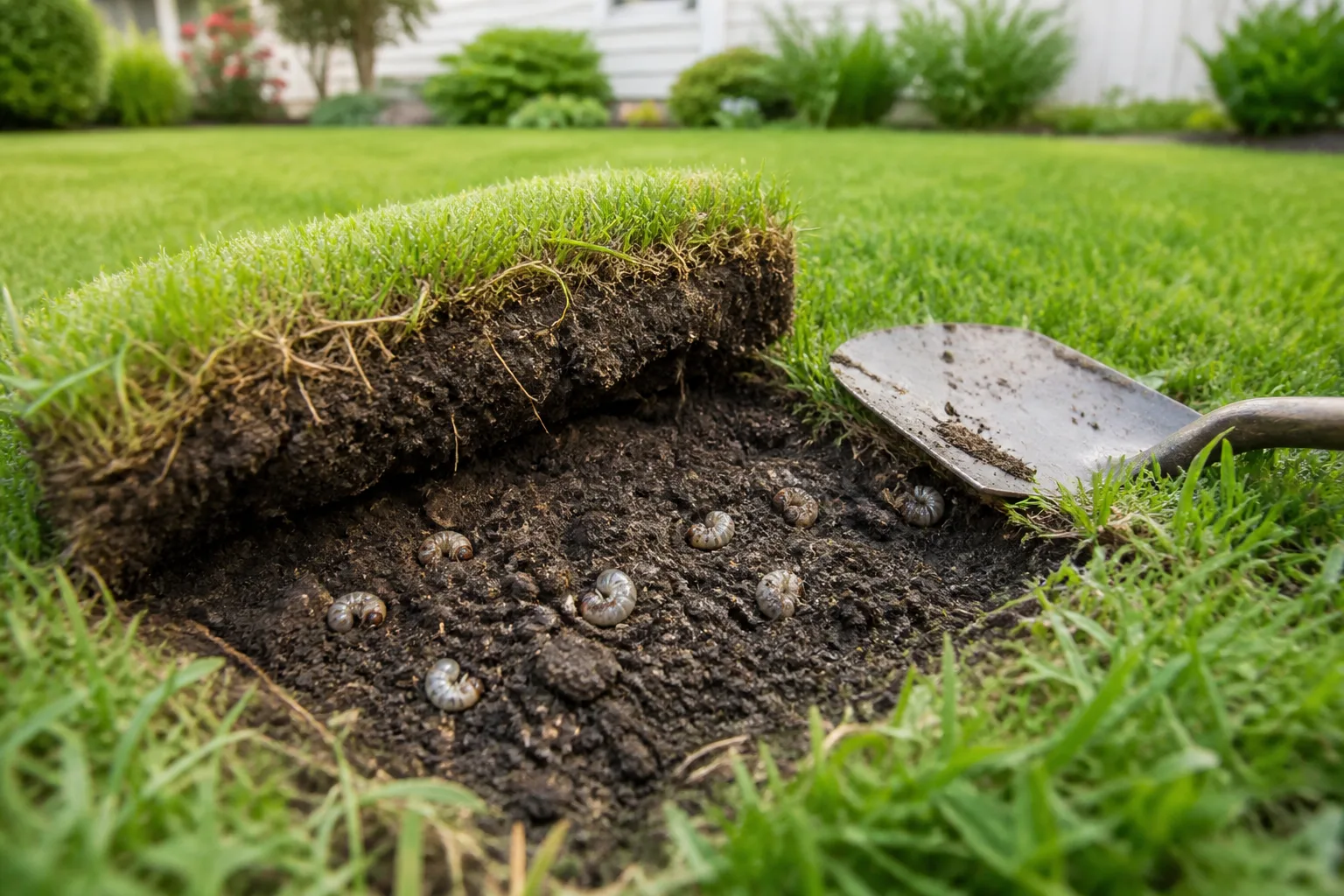
Confirmation beats guessing. On a dry day, cut three sides of a 1-foot square of sod with a flat shovel, peel it back, and count C-shaped larvae in the top 3 inches of soil. Repeat in three random spots: one near damaged turf, one in green turf, one at the lawn edge.
Record species if you can—green June beetle grubs are large and may crawl on their backs; Japanese beetle grubs have a distinctive V-shaped raster pattern on the tail. Photograph anything unclear and compare to your state extension grub ID page. If counts stay at or below the tolerance range and grass looks healthy, log the number and recheck in fall rather than spraying.
When to Treat—and When to Leave Them Alone
Use this quick decision path:
- Healthy turf + ≤10 grubs/sq ft: Skip insecticides. Reduce porch light attraction, monitor annually.
- Moderate damage or 10–15 grubs/sq ft: Start with beneficial nematodes or targeted cultural fixes (dethatching, irrigation tuning). Add milky spore only if Japanese beetles are confirmed.
- Severe patches, animal digging, or >15 grubs/sq ft: Use curative insecticide in late summer/early fall when grubs are small and near the surface—or hire a licensed applicator for large lawns.
- History of annual damage: Plan preventive treatment the following early summer before new eggs hatch, not as a substitute for fixing thatch and drainage.
Green June beetle grubs in high-organic lawns sometimes need no treatment at all if tunnel mounds are cosmetic. NC State notes that without turf injury, no action is necessary for green June beetles in many residential settings (NC State Extension).
6 Methods to Get Rid of June Bugs
These six methods mirror what homeowners ask for most—but each includes the timing and limits extension entomologists emphasize.
Method 1: DIY Adult Beetle Traps
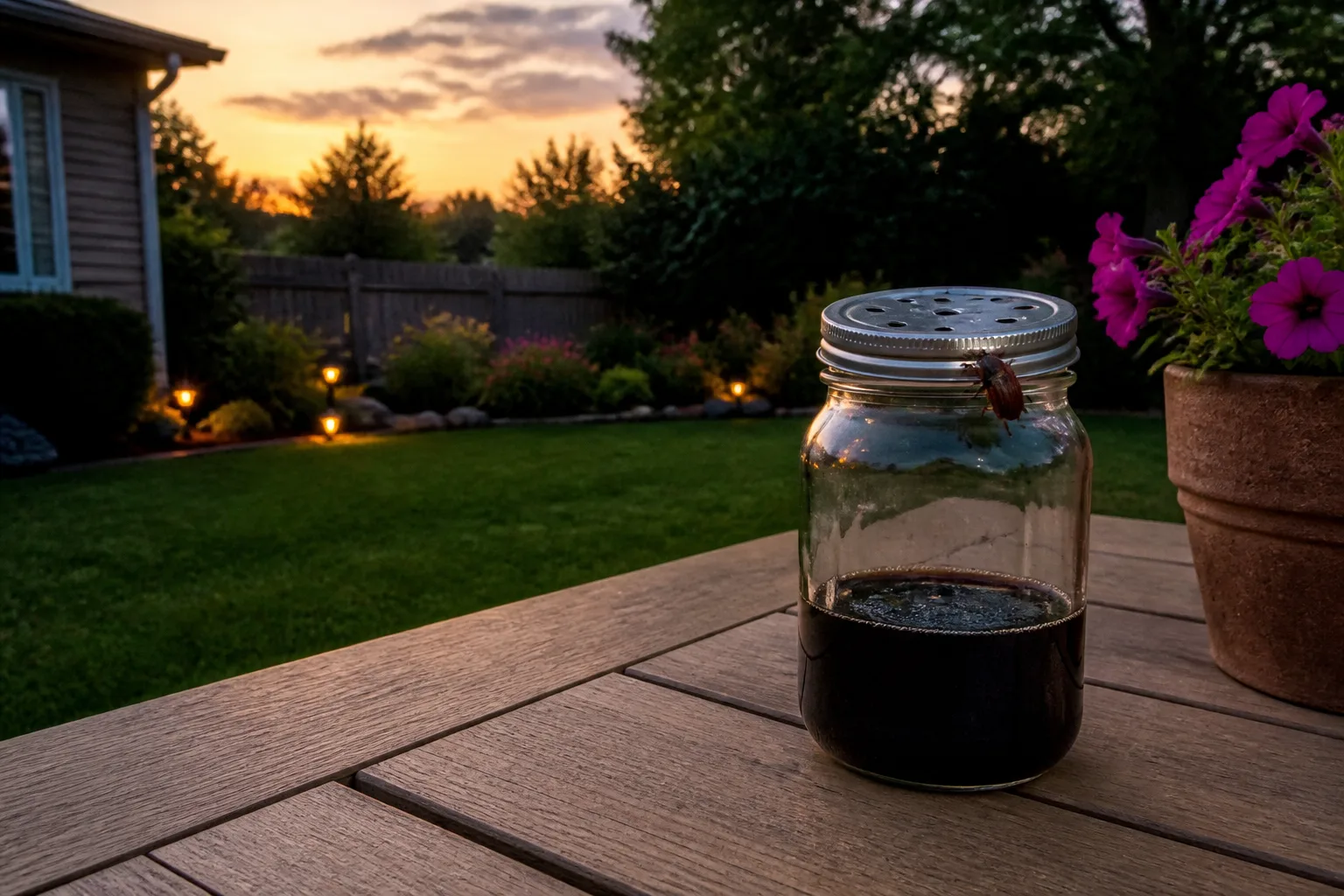
A simple molasses trap lures night-flying beetles into a narrow-neck jar: mix ½ cup molasses with ½ cup water, punch or drill beetle-sized holes in a lidded container, and bury or hang it near where beetles congregate at dusk. Commercial pheromone or floral traps work similarly.
Traps can shrink the number of egg-laying females on your property, which helps when counts are low. They are not a grub rescue plan for a lawn already under attack. NC State research on Japanese beetle traps found they do not meaningfully reduce subsequent grub populations and can even draw more foliage-feeding adults into the area (NC State TurfFiles). Place traps away from prized roses and fruit trees, empty them daily, and combine with grub-focused tactics if sod is failing.
Method 2: Beneficial Nematodes for Grubs
Beneficial nematodes are microscopic roundworms that enter grub bodies and release symbiotic bacteria. For lawn grubs, look for products containing Heterorhabditis bacteriophora, which also attacks Japanese beetle larvae.
Apply when grubs are active and shallow—midsummer through late summer in most regions. Water the lawn thoroughly a day ahead, apply with a hose-end or pump sprayer at dusk, and irrigate again immediately so nematodes wash into the root zone. UV light and dry soil kill nematodes quickly, so overcast evenings beat sunny afternoons.
Expect multiple applications over two or three seasons for heavy infestations. Nematodes are safe for people, pets, and pollinators when used as labeled, and they pair well with reduced chemical use.
Method 3: Milky Spore for Japanese Beetle Grubs
Milky spore (Paenibacillus popilliae) is a bacterial disease specific to Japanese beetle grubs. Ingested spores multiply inside larvae and can persist in soil for years once established (NC State TurfFiles).
Apply late September or early October to moist soil with pH roughly 6 to 7. Results are slower than synthetic insecticides but long-lasting; disease spreads naturally into neighboring soil. Milky spore will not control May/June beetle (Phyllophaga) or green June beetle grubs—do not rely on it if those are your only species.
Method 4: Curative Insecticides in Late Summer or Fall
When grubs are actively feeding near the surface, curative products containing carbaryl (Sevin) or trichlorfon (Dylox, Proxol) can kill a large percentage of larvae before they overwinter. September applications are a common sweet spot in many northern and midwestern lawns; southern zones may shift earlier to August.
Irrigate before application during dry spells so grubs move up; water in most products after application per label. Exception: carbaryl for green June beetle grubs should be applied to the surface and not watered in—larvae contact the residue as they emerge (NC State TurfFiles). Dead green June beetle grubs may surface and smell unpleasant; that is normal.
Read labels carefully. Carbaryl is toxic to fish—avoid runoff toward storm drains, ponds, and streams (NPIC). Trichlorfon is a potent organophosphate; keep children and pets off treated turf until dry, and never exceed labeled rates.
Method 5: Preventive Grub Insecticides in Early Summer
Preventive neonicotinoids and anthranilic diamides—imidacloprid, thiamethoxam, clothianidin, and chlorantraniliprole—work on newly hatched grubs, not mature larvae or adults. Apply in early to midsummer before peak egg hatch in your region, and only where you have documented prior infestations.
Preventives are insurance, not a substitute for healthy turf culture. Mis-timed preventive sprays waste product and can harm soil invertebrates without touching the grubs already eating your roots. Chlorantraniliprole offers lower bee-risk profiles than some older neonicotinoids when applied to turf per label, but always follow local pollinator protection guidance.
Method 6: Encourage Birds, Bats, and Other Predators
A predator-friendly yard provides free, ongoing suppression. Robins, starlings, crows, and grackles probe lawns for grubs; large bats hunt night-flying beetles. Install a bat house on a sunny post 12–15 feet high, leave a brush-free but insect-rich habitat margin, and avoid broad-spectrum lawn sprays that wipe out soil food webs.
Toads, garter snakes, and ground beetles also eat grubs and adults. A shallow water source and undisturbed mulch edges help. Predators rarely solve a severe infestation alone—but they keep numbers in check after you bring counts down with nematodes or a single well-timed curative.
How to Prevent June Bugs Next Season
Prevention is mostly grub prevention:
- Dethatch when thatch exceeds about ½ inch; thick thatch holds moisture and grub-friendly organic matter.
- Fertilize moderately; excessive nitrogen produces lush roots that grubs prefer.
- Reduce unnecessary broad-spectrum pesticides that kill ground beetles, parasitic wasps, and predatory mites.
- Fix irrigation so lawns are deep-rooted and drought-tolerant; stressed turf shows grub damage faster.
- Swap outdoor bulbs for warm-spectrum LEDs and use motion sensors so lights are not on all night.
- Repair dead patches in fall with overseeding and compost top-dressing once grub counts are under control.
Tomato-leaf folklore pops up in older garden blogs; evidence is anecdotal. Focus on confirmed cultural practices above before experimenting with companion planting alone.
What Not to Do When Fighting June Bugs
- Do not treat without a soil sample. Blind applications are the top reason homeowners complain insecticides “do not work.”
- Do not rely on porch traps for a dying lawn. Pull grubs first; traps are supplemental.
- Do not apply milky spore for non-Japanese species and expect miracles.
- Do not spray preventive products in September on large mature grubs—you need curatives or nematodes instead.
- Do not water in carbaryl when targeting green June beetle grubs on the surface.
- Do not leave security lights blazing all night if you hate beetle swarms—and pollinators will thank you for dimmer evenings.
Conclusion
Getting rid of June bugs is really two jobs: stopping night-flying adults from laying eggs near your porch, and stopping white grubs from eating the roots that hold your lawn together. Identify the beetle, dig a square foot of sod to count larvae, and treat only when damage or thresholds justify it.
For light swarms, molasses traps and better lighting may be enough. For confirmed grubs, nematodes and species-appropriate biological or chemical controls—timed to when larvae feed near the surface—do the heavy lifting. Build prevention into next year with thatch management, smarter irrigation, and predators on your side, and June bugs become a summer annoyance instead of a lawn renovation project.



