How to Grow & Care for Torch Ginger (Etlingera Elatior)
Grow torch ginger with the right light, humidity, soil, and potassium. Honest indoor vs outdoor guidance, bloom timing, division, and troubleshooting.
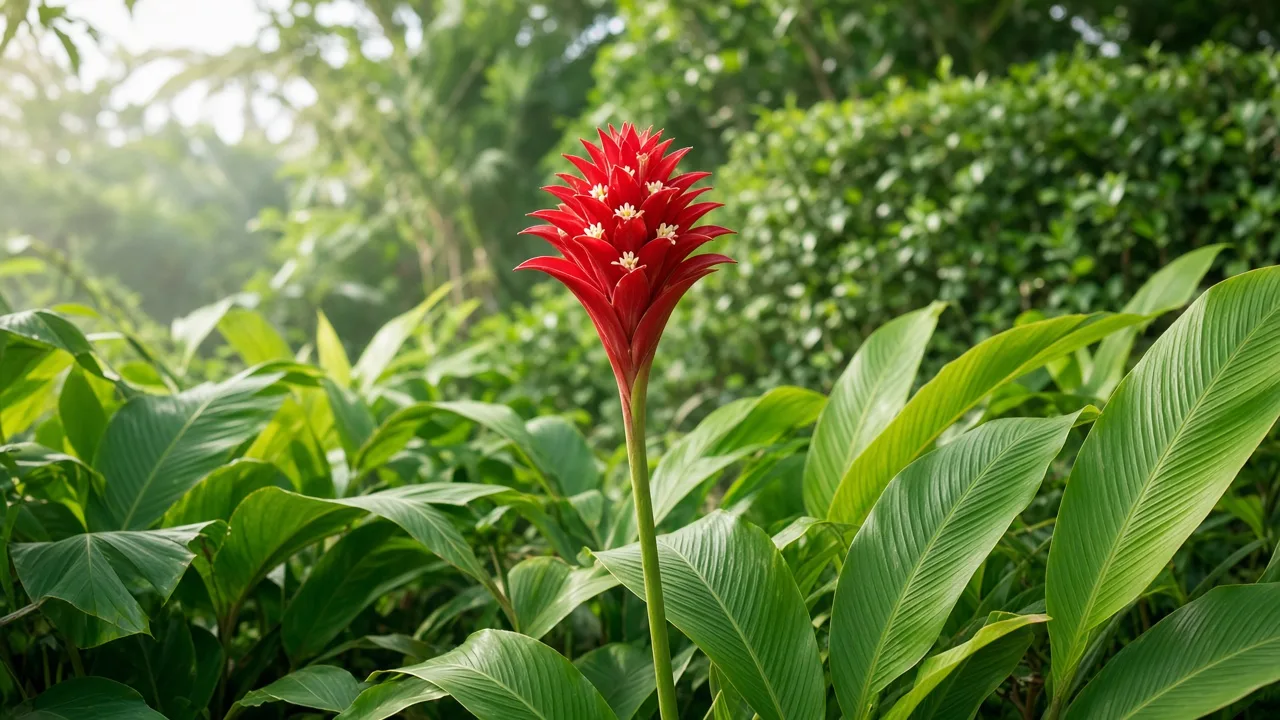
Torch ginger (Etlingera elatior) is the plant that stops people mid-scroll: a bare stalk rising from the ground and opening into a cone of waxy red, pink, or white bracts that look more like sculpture than foliage. It is also one of the least forgiving “indoor tropicals” sold under a friendly common name. Before you buy, decide whether you can offer warmth, steady moisture, high humidity, room for six-to-fifteen-foot pseudostems, and—if you want flowers—enough bright light for a plant that often takes two years or more to bloom.
What torch ginger is—and what it is not
Torch ginger is a rhizomatous perennial in the ginger family (Zingiberaceae). It is native to Thailand, Malesia, New Guinea, and surrounding Southeast Asian regions, where it grows in humid forests and is widely cultivated as an ornamental and culinary plant. The Missouri Botanical Garden profile of Etlingera elatior describes arching leafstalks up to about 15 feet tall clad with leathery, banana-like leaves, and naked flower stalks that rise directly from the rhizome—not from the leafy stems.
What you notice first is the inflorescence: large, petal-like bracts surrounding a cone of tiny yellow flowers and smaller fertile bracts. The whole structure resembles a torch, which is how the plant earned its common names: torch ginger, ginger flower, red ginger lily, torch lily, and Philippine wax flower. Blooms can appear throughout the year in true tropical climates and often last several weeks on the stalk.
Torch ginger is not the same as culinary ginger (Zingiber officinale). Store ginger has a sharp, spicy rhizome; torch ginger is grown mainly for spectacular flowers and, in Southeast Asia, for sour-sweet, citrus-floral buds and stems used in salads, curries, and soups. The Epic Gardening overview of flowering ginger varieties notes that torch ginger flowers combine sweet and sour notes with a fragrance reminiscent of lemongrass and mint—quite different from grocery ginger.
It is also not a small desk plant. Even when grown in cooler conditions that suppress height, torch ginger wants horizontal spread through rhizomes and vertical pseudostems that can dominate a corner. Treat it as a ** conservatory, greenhouse, or frost-free landscape plant** first, and only second as a houseplant in the brightest room you have.
Is torch ginger realistic for your climate and space?
Honest answer: torch ginger fits gardeners who can keep nights above about 50°F (10°C), maintain high humidity, and supply bright filtered or morning sun. The Missouri Botanical Garden states that plants are totally intolerant of frost and often perform poorly in frost-free climates when night temperatures dip below 50°F—shorter growth, less vitality, and little or no flowering. It further notes that torch ginger probably should not be grown indoors in cooler climates because it will stay short, look tired, and likely never bloom.
That does not mean indoor growing is impossible. It means indoor growing is a specialized project, not a default. If your goal is a reliable flowering tropical in an average living room, consider a smaller flowering ginger from the broader group covered in our flowering ginger care guide—or grow torch ginger as a seasonal outdoor specimen in a frost-free patio season and overwinter the rhizome in a warm greenhouse.
Indoor, greenhouse, or outdoor: choose honestly
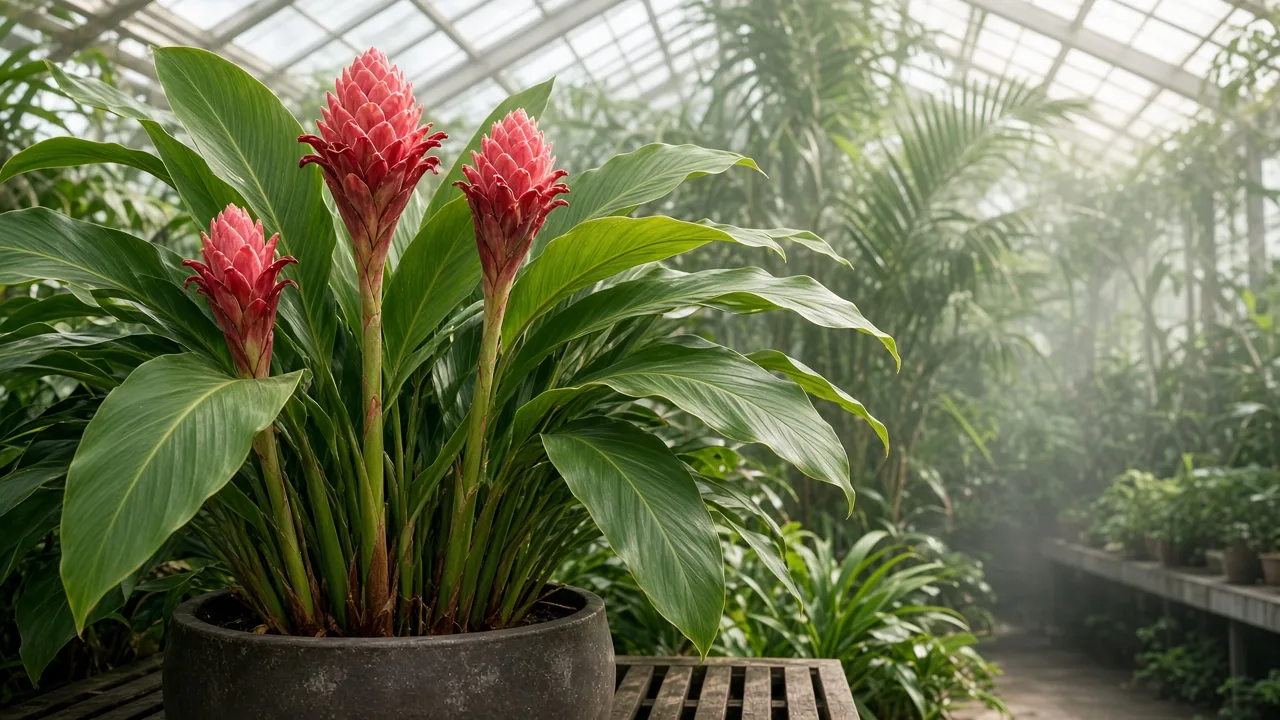
Use this quick decision path before you invest in a rhizome or nursery pot.
Choose in-ground or large landscape planting if you live in USDA zones 10–12, have sheltered space away from strong wind, and can water consistently through dry spells. Torch ginger can reach roughly 6–15 feet tall and 4–10 feet wide in ideal outdoor conditions according to Missouri Botanical Garden data.
Choose a greenhouse or conservatory if you are in zone 9 or a warm zone 8 microclimate and can keep minimum temperatures in the 55–65°F range at night with daytime warmth and humidity. This is the best path to blooms outside the tropics.
Choose a bright indoor room only if you have a large floor area, a south or west window with sheer filtering, supplemental humidity (humidifier or enclosed sunroom), and acceptance that the plant may grow foliage for years before flowering—or never flower at all.
Do not choose torch ginger if your space is small, air is dry, windows are dim, or you cannot move an increasingly heavy container. Plant Care Today’s torch ginger profile is blunt on this point: the species becomes too large for typical container culture and does not make a good conventional houseplant.
Torch ginger varieties worth knowing
Most torch ginger sold in the trade differs mainly by flower color and mature height, not care requirements. Useful names to recognize on labels include:
- ‘Yamamoto’ — notably tall, with large light pink blooms.
- ‘Giant Red Torch Ginger’ — vigorous, potentially reaching around 20 feet in ideal tropical settings, with bright red flowers.
- ‘White Torch Ginger’ — large white bracts, sometimes with yellow tones inside.
- ‘Borneo Pink Torch Ginger’ — pink blooms with red to maroon leaf undersides.
- ‘Sunset Red Torch Ginger’ — red blooms and foliage that is dark green above, reddish-purple below.
Verify the tag reads Etlingera elatior or a named cultivar of that species. Other “torch” or “red ginger” labels in nurseries may refer to Alpinia purpurata (red ginger) or ginger lilies (Hedychium), which have different hardiness and size expectations.
Light requirements for foliage and blooms
Torch ginger grows in full sun to partial shade outdoors. In practice, the best results usually come from morning sun and afternoon protection, especially where midday rays are intense. Epic Gardening recommends shielding torch ginger from harsh afternoon sun that can scorch large leaves, while still giving enough brightness for sturdy pseudostems and future blooms.
Indoors, place the plant where it receives several hours of bright indirect light daily—often directly beside a large filtered window. A dark corner may keep leaves green for a while, but bloom formation typically stalls. If foliage on the window side looks pale or scorched, add sheer curtains; if new leaves are small and stems weak, increase light gradually rather than jumping straight into full midday sun.
For bloom troubleshooting on a mature plant, insufficient light is the most common cause after simple immaturity. A plant under two years old may not be ready regardless of care.
Soil, drainage, and potassium needs
Torch ginger thrives in humus-rich, well-drained soil with a slightly acidic to neutral pH. Plant Care Today suggests a workable pH window of about 5.6–7.5, with regular soil testing if you garden in ground or in a long-term container mix. Heavy clay should be amended with compost and coarse organic matter; sandy soil needs compost to retain moisture.
Two drainage mistakes ruin torch ginger: chronic drought and soggy anaerobic roots. The soil should stay evenly moist yet airy. A thick organic mulch layer in garden beds helps buffer moisture and cool roots; in pots, use a chunky tropical mix with bark, compost, and perlite rather than straight peat that collapses over time.
Potassium deserves special attention. Multiple tropical ginger sources, including Plant Care Today, link good potassium levels to water uptake and overall vigor in Etlingera elatior. If leaves look dull and growth is weak despite adequate watering, test the soil and consider amendments such as greensand, kelp meal, or granite meal rather than adding more nitrogen alone. Excess nitrogen can push foliage at the expense of flowers.
Watering without root rot
Torch ginger prefers consistently moist soil, not a wet swamp. Water when the top 1–2 inches of soil begin to dry, then soak until excess drains freely. In rainy tropical gardens you may rarely irrigate; in pots and heated indoor air you may water several times weekly during active growth.
Short periods of saturation after a storm are tolerable, but standing water for days invites root rot. If your site is flat and heavy, improve drainage with raised mounds or channels before planting. In containers, never leave the pot sitting in a full saucer for more than an hour after watering.
Reduce watering frequency when growth slows in cooler months, but do not let rhizomes desiccate completely in a heated greenhouse. A rhizome that dries to crisp brown scales is far harder to recover than one kept lightly dormant in cool, barely moist mix.
Temperature, humidity, and wind protection
Warmth and humidity define torch ginger’s comfort zone. Ideal active-growth temperatures sit roughly between 65°F and 85°F (18°C–29°C) with high ambient humidity. Nights below 50°F (10°C) stress the plant even when no frost occurs; growth stalls, leaf margins brown, and buds abort.
Frost is fatal to aboveground tissue and can damage rhizomes if cold persists. Outdoor plants in marginal zones need cover, mulch, and placement against south walls—not open exposure.
Wind is an underrated killer. Missouri Botanical Garden notes that strong winds can snap tall leafstalks. Site torch ginger beside a fence, building, or hedge break, especially if you grow the tall forms. Indoors, keep plants away from HVAC blasts that strip humidity and chill leaves at night.
If you grow indoors in dry winter air, run a humidifier or group the plant with other tropicals over a pebble tray. Misting alone rarely fixes chronic low humidity, but consistent air moisture prevents the brown leaf edges that mimic underwatering.
Fertilizing during the growing season
Feed torch ginger during active growth from spring through fall. A high-potassium fertilizer applied according to label directions supports the water relations and flowering metabolism this species demands. Plant Care Today recommends monthly feeding through the growing season in nutrient-poor soils; in rich garden beds with annual compost top-dressing, you may feed less often.
Start with compost or well-rotted manure worked into the planting area rather than relying on soluble feed alone. If blooms are absent on a mature, well-lit plant, verify potassium and magnesium levels before doubling nitrogen. Slow, pale new leaves with dark old foliage often mean hunger; deep green floppy leaves with no flowers may mean overfeeding.
Stop or sharply reduce fertilizer when growth slows in late fall unless you maintain a warm greenhouse with year-round activity.
Planting and repotting torch ginger
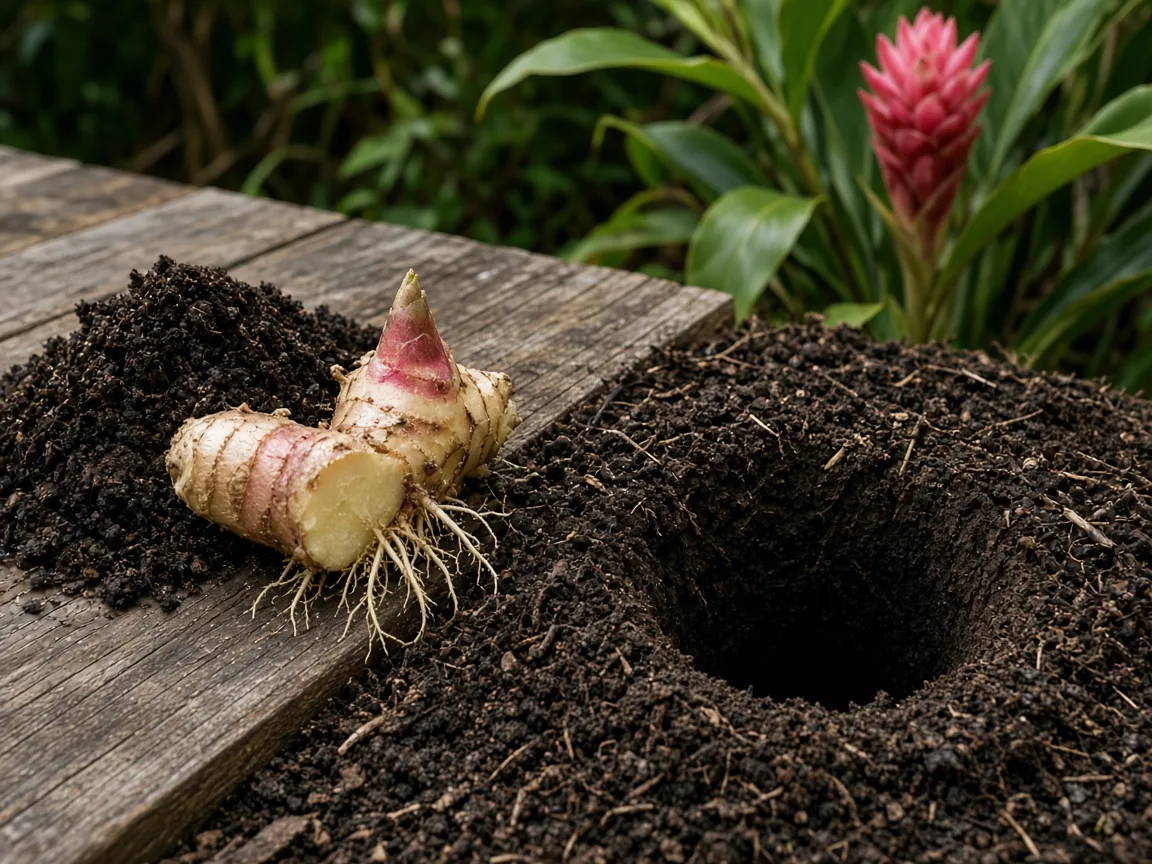
Plant torch ginger in spring after danger of frost has passed in your region—or anytime in frost-free climates. Set rhizome divisions so the growing bud sits just at or slightly above the soil surface, with roots spread horizontally in a wide planting hole. Burying buds too deep slows emergence; exposing rhizomes on the surface dries them out.
Space divisions at least 4–6 feet apart if you expect full-size clumps. Torch ginger spreads by rhizomes and will fill the allotted space within a few seasons in warm, moist ground.
For containers, start in a pot only as a nursery stage. Use a container with ample drainage holes and a diameter that allows at least two inches of fresh mix around the rhizome. Unglazed clay can help excess moisture evaporate if you tend to overwater.
When a container stops being practical
Torch ginger’s rapid vertical and horizontal growth outpaces most houseplant pots within one to two growing seasons in warm conditions. Once pseudostems approach ceiling height or roots circle heavily, the realistic choices are: plant out in frost-free ground, move to a greenhouse bed, or divide and restart with a smaller section.
Trying to keep a full-size torch ginger in a 12-inch pot long term leads to chronic drought stress, top-heavy tipping, and poor flowering. If you must stay in containers, plan on annual division and accept a smaller display plant rather than a landscape-scale specimen.
How torch ginger blooms—and why stems die after flowering
Understanding bloom biology prevents panic when a flower stalk collapses. Torch ginger is monocarpic on each flower stem: the individual flowering stalk dies after bloom, while new shoots arise from the rhizome at the base. Missouri Botanical Garden describes this pattern clearly—flower stems die after flowering with new stems developing from the base.
Flower stalks emerge directly from the rhizome, typically up to about 3 feet tall, topped by the torch-like bracts. Tiny yellow flowers appear among the bracts; the show is mostly bract color. In tropical climates, cycles can repeat through much of the year.
Time to first bloom is often about two years from a healthy division, sometimes longer from seed. If your young plant has excellent leaves but no torches, patience may be the answer. If the plant is mature, well fed, and still silent, revisit light, night temperatures, and potassium before assuming disease.
Deadheading spent inflorescences can tidy the clump and redirect energy to new shoots, though the stalk would die regardless. Cut the finished flower stem near the rhizome once bracts brown.
Pruning, deadheading, and division
Routine pruning is minimal. In early spring, remove damaged or broken pseudostems, old brown leaf bases, and any weak offshoots if you want a tighter clump. Avoid cutting healthy green pseudostems preemptively—they are the photosynthetic engine for next season’s rhizome growth.
Division serves two jobs: propagation and crowd control. Divide in spring or early summer when new growth begins. Lift the clump carefully, tease or cut rhizomes apart with a sharp spade or knife, and replant sections that each include at least one active bud and healthy roots. Water in lightly and shade divisions for a week if sun is intense.
In warm, wet climates, check spread annually. Torch ginger is not aggressive in every garden, but Plant Care Today warns it has become invasive in some tropical introductions such as Hawaii and parts of Southeast Asia, spreading by rhizomes and seed in consistently moist habitats. Contain clumps with root barriers or plan regular division if you live in a frost-free region where escape is a concern.
Propagate by rhizome division or seed
Division is the practical home method—fast, reliable, and true to the parent flower color. Follow the division steps above every few years to keep vigor high; old, congested centers bloom less freely.
Seed is slower but possible. Soak seeds overnight in warm water, sow about ½ inch deep in sterile, moist seed-starting mix, and cover lightly with plastic to retain humidity. Maintain bright indirect light and temperatures around 77–86°F (25–30°C). Keep mix evenly moist, not waterlogged. Germination often takes three to four weeks when seed is fresh; older seed may take longer.
Seed-grown plants add genetic variation—fine for experimentation, but divisions are better if you need a known pink, red, or white form.
Overwintering and frost protection
Outside zones 10–12, treat torch ginger as frost-tender. At the first cold forecast, move container plants to a heated greenhouse or bright indoor room. In-ground plants in marginal areas may survive brief dips with thick mulch over rhizomes, frost cloth, and south-wall microclimate—but this is rescue gardening, not a long-term plan.
Do not expect dormant leaf retention in cool rooms. Pseudostems may yellow and die back when nights drop; reduce watering and keep rhizomes barely moist and above 50°F. Resume normal watering and feeding when new shoots appear in spring.
Indoor overwintering succeeds when you prioritize warmth over fertilizer. A cool but frost-free garage that stays at 45°F will stall the plant; a bright room at 65–70°F with humidity keeps it alive until outdoor warmth returns.
Troubleshoot brown leaves, weak growth, and no flowers
Use this order when something looks wrong:
Brown leaf margins or tips usually mean low humidity, underwatering, or both. Confirm the root zone is lightly moist, increase humidity, and check that fast-draining mix is not drying in hours under a heat vent. Less often, salt buildup from hard tap water shows similar edges—flush the pot or leach garden soil.
Brown patches on the sun-facing side suggest scorch. Filter afternoon sun or move the pot back from glass that magnifies heat.
Tall but floppy stems with dark green leaves and no flowers on a mature plant point to too much shade or excess nitrogen. Improve light and review fertilizer ratio.
Stunted indoor growth with small leaves often tracks to cool nights below 50°F, dry air, or an undersized pot. Match the environment to greenhouse norms as closely as your home allows.
No blooms on a plant under two years is often normal maturation time. Wait, and keep care consistent.
No blooms on an older plant with good light—recheck potassium, division timing, and whether last year’s flowering stems were removed cleanly to allow new rhizome shoots.
Pests, diseases, and invasive spread
Torch ginger is relatively trouble-free in ideal conditions. Occasional aphids or grasshoppers may appear outdoors; wash them off or use insecticidal soap or horticultural oil on labeled surfaces. Indoors, watch for spider mites in dry air—fine webbing and stippled leaves mean raise humidity and rinse foliage.
Root rot follows overwatering or poor drainage. Soft, smelly rhizomes require trimming back to firm tissue, repotting into fresh mix, and reduced watering.
Serious fungal leaf spots are rare but worsened by overhead watering and stagnant air. Improve circulation and avoid wetting foliage late in the day.
Again, in frost-free tropical and subtropical regions, monitor spread. What is a well-behaved clump in a temperate greenhouse can become a dense thicket where moisture and heat are constant year-round. Divide before rhizomes cross bed edges, and do not discard live rhizomes where they can root in wild margins.
Edible torch ginger in the kitchen
Beyond ornament, torch ginger is valued in Malaysian, Indonesian, and Thai cooking. Harvest tight flower buds before bracts fully open for the best texture and sour-floral bite. Young stem sections are also sliced into curries and soups; Missouri Botanical Garden notes stems added to curries in traditional use.
Flavor is citrusy, sour, and slightly sweet—more floral than spicy ginger root. Use only plants you have positively identified as Etlingera elatior, washed and prepared as you would any garden produce. If you are new to the ingredient, start with small amounts; sensitivity varies by person.
The species is not widely reported as toxic to humans or pets, but ornamental plants may carry pesticides from nursery treatment. Do not harvest from chemically treated landscape beds.
Conclusion
Torch ginger rewards gardeners who can offer tropical warmth, steady moisture, high humidity, wind shelter, and space—whether that means a frost-free garden bed, a greenhouse bench, or a very bright indoor room with honest expectations. Match light to bloom goals, keep soil rich and well drained, feed for potassium during active growth, and remember that each flowering stalk dies after its show while new shoots rise from the rhizome below.
If your climate or living room cannot meet those needs, a smaller flowering ginger from the same family may deliver more bloom per square foot. If you can meet them, few plants offer a more dramatic payoff when that first torch opens above the leaves.



