How to Grow and Care for Spiderwort in Your Garden
Learn how to grow spiderwort outdoors: choose a site, water for steady growth, divide clumps, encourage repeat bloom, and keep the right Tradescantia in bounds.
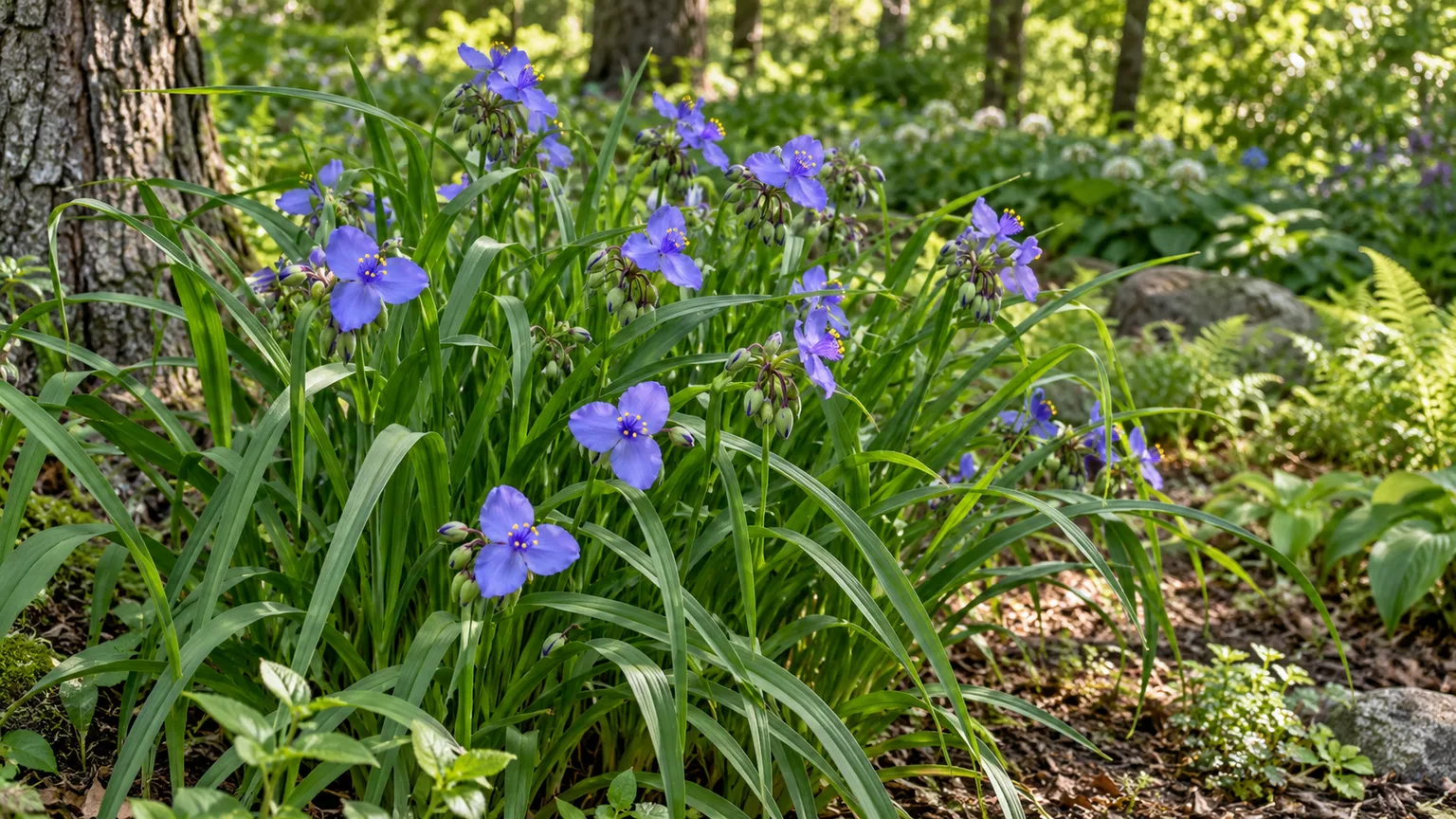
Hardy garden spiderwort is a low-fuss perennial when its roots stay cool and moist and it has room to form a clump. The plant also has a predictable weak spot: after its early-summer flowers, foliage can slump or fade, especially in hot weather. Plan for that seasonal dip instead of treating it as a mystery disease.
“Spiderwort” can mean several species of Tradescantia, including tender striped houseplants. This guide focuses on Virginia spiderwort (Tradescantia virginiana) and the hardy garden forms commonly sold as spiderwort. They grow outdoors as perennials and need a different care plan from tropical indoor Tradescantia.
| Care need | Practical target |
|---|---|
| Light | Sun to part shade; choose more afternoon shade in hot climates |
| Soil | Average to fertile soil that holds some moisture; avoid a persistently waterlogged pot |
| Water | Keep new plants evenly moist; water established clumps during prolonged dry spells |
| Bloom | Spring to early summer in many regions; individual flowers open briefly |
| After bloom | Deadhead, shear tired growth, or leave some seed heads if you want seedlings |
| Propagation | Divide rooted clumps in spring or fall |
Identify the Spiderwort You Have
Virginia spiderwort is an upright, clump-forming perennial with long, narrow, iris-like leaves and clusters of three-petaled blue-violet, purple, or sometimes pink flowers. It is native across much of eastern and east-central North America, with habitat ranging from moist meadows and stream edges to open woodland. The North Carolina Extension profile describes its preference for moist sites while noting that it adapts to average garden soil and sun or shade.
Nursery labels can be confusing because many cultivated spiderworts are hybrids. Plants sold as T. virginiana may belong to the hardy Andersoniana Group, with flower colors and mature sizes that vary by cultivar; NC State Extension notes that even professionals may have difficulty separating some hybrids from their parent species. Check the botanical name and hardiness on the plant tag before using advice meant for a different Tradescantia.
Published hardiness ranges are not identical: NC State lists Virginia spiderwort for USDA zones 4–9, while the University of Illinois gives zones 3–9 for its regional profile. Treat those as a starting point, not a guarantee for every hybrid; use the cultivar’s label and ask a local nursery or extension office if your winter temperatures sit near the edge of its range.
A striped, trailing Tradescantia such as T. zebrina is usually grown as a tender foliage houseplant. Its light, watering, and winter needs differ from those of a hardy outdoor spiderwort. Likewise, small-leaf spiderwort (T. fluminensis) is a creeping nonnative with a distinct invasive record in some regions; do not assume every plant with “spiderwort” on its label behaves the same way.
Choose a Site That Matches the Plant
Spiderwort is adaptable, but “adaptable” does not mean every garden spot produces the same result. Match exposure to local summer heat, then check how quickly the soil dries after rain. A bed that receives morning light, some afternoon shade, and consistent moisture is a reliable starting point in a hot-summer region; cooler areas can usually offer more sun.
Before you plant, watch the spot at midday and again during the hottest part of the afternoon. Then check it after a soaking rain: if water still pools where the crown would sit, choose a nearby raised edge or loosen the planting area rather than relying on frequent watering to solve a drainage problem. Existing ferns or woodland-edge perennials can be useful clues, but the actual light and soil conditions matter more than a plant list.
Light: Balance Flowering With Summer Heat
Hardy spiderwort grows in full sun, partial shade, and in many cases fairly deep shade. More light can support a fuller flower display, but a hot, exposed site dries faster and can make the foliage decline sooner after bloom. In a warm climate or beside pavement, give it morning sun or bright filtered light rather than baking afternoon exposure. In a cooler region with moisture-retentive soil, it can take more sun.
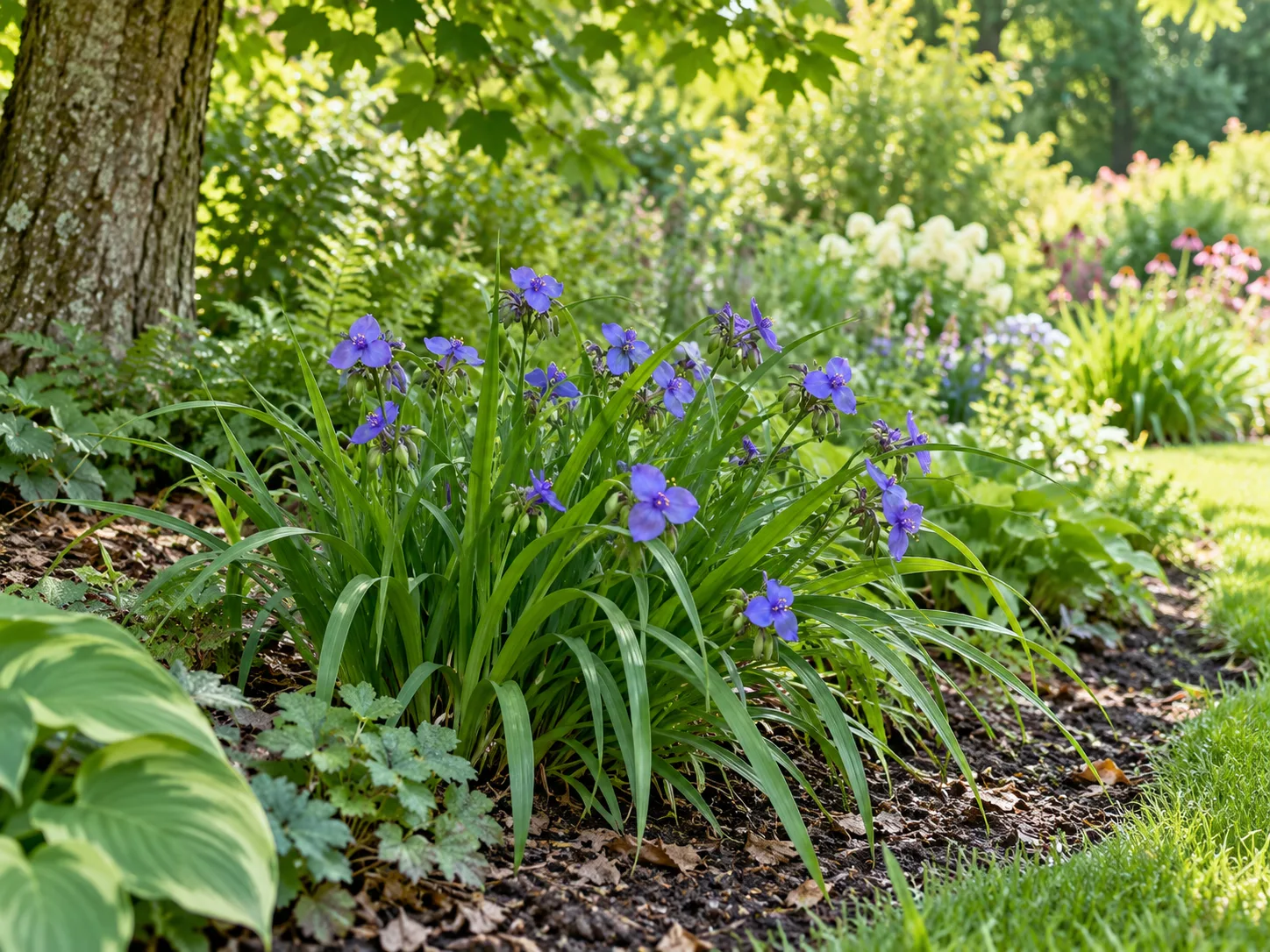
Flowers typically open in the morning and close later in the day, particularly under strong afternoon sun. That closure is normal, not a sign that the plant needs water. If you want to enjoy the blooms, look for them before the afternoon heat.
Soil: Hold Moisture Without Compaction
Aim for soil that stays lightly moist but does not form a stagnant puddle around the crown. Virginia spiderwort naturally occurs in moist habitats and can adapt to average garden soils; some sources also list it for bog gardens. In a typical border, improve compacted ground with organic matter and choose a spot that drains after heavy rain rather than trying to keep the roots submerged.
Do not chase a precise pH number or load the planting hole with fertilizer. A soil test is more useful if the bed has a history of poor growth, but drainage and summer moisture are the first things to assess. In a container, drainage holes matter because potting mix can stay saturated longer than garden soil after rain.
Plant Spiderwort for a Stable Clump
Plant nursery-grown spiderwort in spring or early fall, when the soil is workable and the weather is mild. Set the crown at the same level it grew in the nursery pot, backfill, and water to settle soil around the roots. Space plants according to the cultivar label; if the mature width is unknown, leave about 18 inches between clumps so leaves can spread and air can move through the planting.
Choose the final location with the plant’s summer form in mind. It often looks its best in spring and early summer, then may sprawl; placing it behind a low border edge or among other perennials gives the bed a fuller look even when the spiderwort rests. Buy nursery-propagated plants rather than digging from the wild, especially in regions where native populations are less common.
Water by Rooting Stage, Not a Calendar
Water a new plant or fresh division thoroughly after planting, then keep the root zone from drying completely while it establishes. Check beneath the surface rather than watering by a fixed weekly schedule: if the soil is still cool and damp a couple of inches down, wait; if it is dry there and rain is not expected, water slowly at the base. Mulch can buffer the soil, but keep it a little away from the crown.
Established spiderwort tolerates ordinary dry spells better than a newly planted division, but prolonged summer drought can shorten flowering and accelerate foliage decline. Give it a deep drink during extended hot, dry weather. If foliage looks limp in a container, check the mix before adding water: a pot that is already wet needs better drainage, while a dry pot needs a thorough soak.
Feed Lightly and Fix the Site First
A garden clump in reasonably fertile soil rarely needs frequent feeding. If growth is weak and the soil is poor, top-dress with compost in spring; if the bed’s fertility is uncertain, test the soil before adding fertilizer. Excess nitrogen is a poor fix for a plant that is flopping because of shade, crowding, or summer heat, and it may encourage leafy growth without solving the underlying condition.
Keep fertilizer away from the crown and follow the product label if you use one. For a long-established patch that blooms and returns each year, adding more feed is usually less useful than maintaining moisture, dividing an overcrowded clump, or adjusting its exposure.
Extend Flowering and Tidy Foliage
The show comes from repeated buds, not from a single flower lasting all season. Each blossom is short-lived—often open for only a day—but new buds open in succession, so a clump can provide flowers for several weeks. Bloom timing varies with species, cultivar, and climate: Virginia spiderwort may flower in spring into early summer, while some garden hybrids continue longer. University of Illinois Extension’s regional profile lists an April-to-July bloom season, while Virginia Native Plant Society guidance reports April-to-July flowering in Virginia.
You have three reasonable choices after the first flush. Snip spent flower clusters if you want to discourage seed; shear back tired stems if the clump looks ragged; or leave some seed heads if you want seedlings. Cutting the plant back after flowering can encourage fresh growth and sometimes a later flush, as the gardener at Blooms to Bees reports, but rebloom depends on the plant and the season. Do not cut healthy spring foliage before it has finished flowering just to force a tidy shape.
Summer decline is common, particularly where summers are hot. If much of the foliage has yellowed or slumped after flowering, a hard cutback can make the bed look cleaner and allow new growth to emerge; NC State Extension describes this response in hardy garden hybrids. If the leaves remain attractive, remove only spent stems and wait until the end of the season to cut foliage down.
Divide a Mature Clump
Division is the fastest way to make more plants that match the parent and to open up an overcrowded clump. Divide in early spring as new growth appears or in fall after flowering, when heat stress is less likely. The USDA plant guide recommends pieces with several shoots and attached roots, replanted and watered promptly.
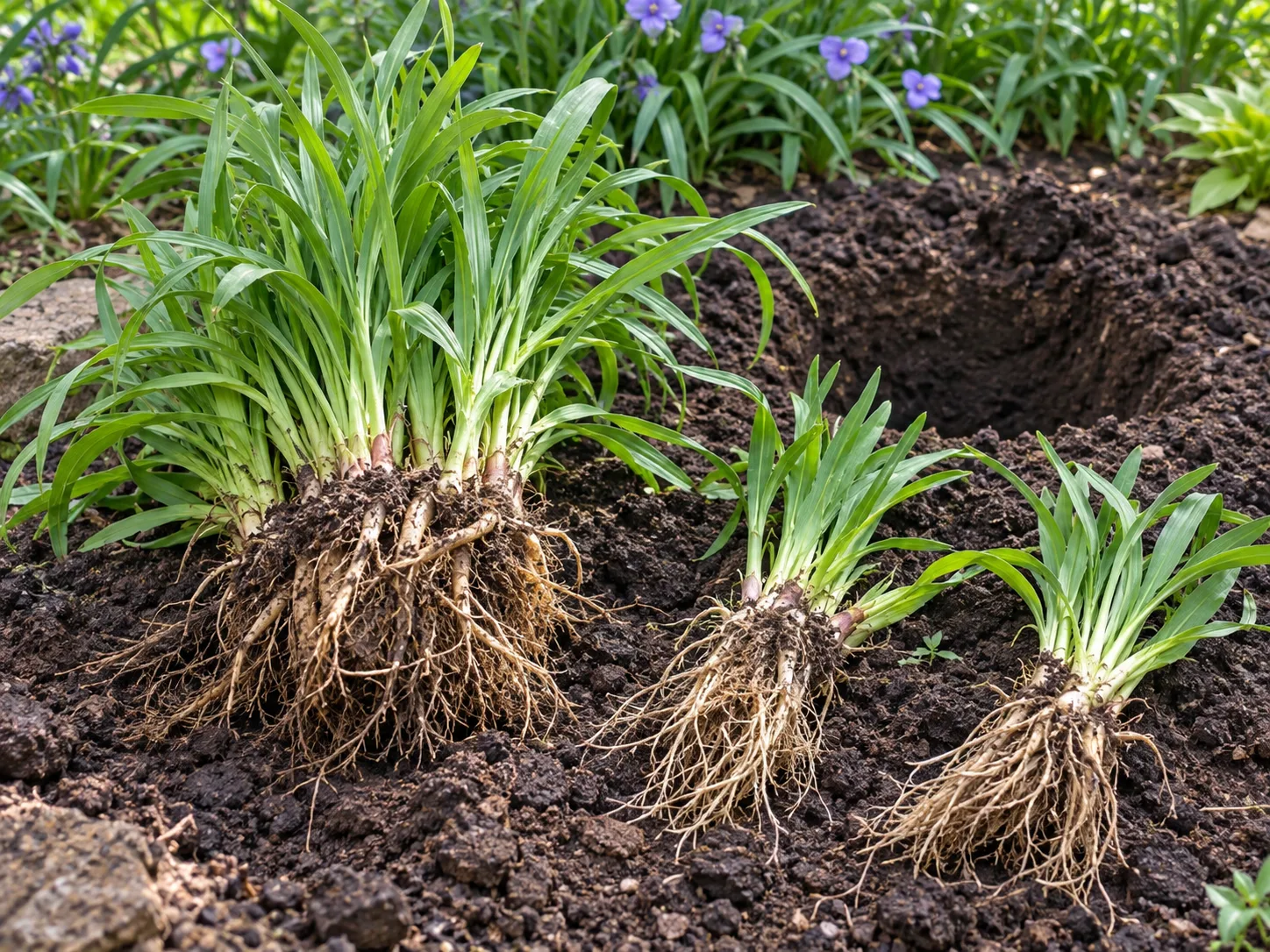
- Water the clump the day before if the soil is dry, then loosen a ring around it with a spade.
- Lift the root mass and shake or brush off enough soil to see where shoots and roots connect.
- Pull or cut it into sections that each retain several healthy shoots and a good share of roots. Discard only dead or mushy pieces.
- Replant divisions at the original depth, firm soil around them, and water thoroughly.
- Keep the soil evenly moist while new roots settle in; do not let the divisions dry out in their first weeks.
If the clump is too large to lift, divide it in place by cutting out an outer section with a spade. Replant it immediately or give it away, and remove any loose pieces that could root elsewhere. Established Virginia spiderwort can also self-sow, and low stems that rest against soil may root at nodes, so a clump can expand by more than one route.
Do not worry if a fresh division spends its first season building roots and leaves instead of producing a full flower show. Keep the label with the plant when you move a named cultivar, and water divisions during dry weather until they are clearly growing on their own. A division with healthy shoots and roots is more useful than a large piece of foliage with little root attached.
Seed is another option, but seedlings may vary if the parent is a hybrid. Fresh seed can germinate readily, while dry seed may benefit from a short period of cold stratification; the Virginia Native Plant Society explains that garden spiderworts often have mixed ancestry. Choose division when you want a predictable copy, and sow seed when variation and volunteer plants are acceptable.
Select a Variety for Your Garden
Choose a plant by mature height, flower color, and foliage—not flower color alone. The hardy forms sold in nurseries include compact and taller cultivars, with blooms in blue, violet, pink, or white. The NC State Extension cultivar list includes compact ‘Purple Dome’, purple-flowered ‘Concord Grape’, and ‘Sweet Kate’, a golden-leaved selection with blue-violet flowers. For a hot-summer garden, Arkansas Extension’s note on the Andersoniana Group explains why golden-leaved forms often look better in light shade than in relentless sun.
The labels may reflect complex breeding rather than a pure species. The Virginia Native Plant Society notes that many garden selections sold as T. virginiana combine traits from related native species. That does not make them poor garden plants, but it does mean you should check the specific cultivar’s hardiness and mature size instead of relying on a single generic spiderwort description.
Grow Spiderwort in a Container
Spiderwort can grow in a pot, but an in-ground bed is easier to keep evenly moist and gives a clump room to spread. Use a broad container with drainage holes and a quality outdoor potting mix, and place it where the plant gets the light level suited to your climate. Check moisture more often than you would for a garden bed because containers can dry rapidly in summer wind and heat.
Choose a pot wide enough to accommodate the clump rather than a narrow, top-heavy hanging basket; upright garden spiderwort does not have the cascading habit of many tender houseplant Tradescantias. If water drains very quickly through the mix, a little compost blended into the potting medium can help it hold moisture, but do not block the drainage holes or let the pot sit in a full saucer.
Treat a potted hardy spiderwort as an outdoor perennial with a winter rest, not as a tropical houseplant. In cold climates, a container root ball is more exposed to freezing than one in the ground; sink the pot into the soil, group it in a sheltered spot, or insulate it through winter. Divide or refresh the plant when the pot fills with roots or the center becomes congested. If the label says T. zebrina, T. pallida, or another tender foliage species, follow care guidance for that species instead.
Plant Around Its Summer Dip
Spiderwort works well in a mixed border where neighboring plants can carry the display after its first flush. Pair it with plants that prefer similar moisture and light, such as woodland ferns or sedges in shade, or sturdy, later-flowering perennials in a sunnier bed. Keep aggressive spreaders at a distance so you can still reach the spiderwort to divide it or remove seedlings.
Think of the clump as a seasonal layer rather than a perfectly upright specimen. It can supply spring and early-summer flowers, then act as a green filler, be cut back for fresh foliage, or disappear partly during hot weather. A companion plant with attractive leaves or late flowers can make each of those outcomes look intentional.
Troubleshoot Spiderwort Problems
Most garden spiderwort has few serious pest or disease problems. Snails or caterpillars may chew young shoots, and a crowded planting can look untidy after bloom. Before treating anything, check the whole plant and the soil: spiderwort’s normal summer slump is easy to mistake for a crisis if you expect spring foliage to stay pristine through August.
| What you see | What to check first | Useful response |
|---|---|---|
| Flowers close in afternoon | Whether they reopen the next morning | Normal daily flower cycle; no treatment needed |
| Stems flop after the main bloom | Whether flowering has ended and foliage is otherwise healthy | Stake before bloom if needed; shear after bloom if you prefer |
| Whole clump fades during hot weather | Soil moisture and recent heat | Water if the root zone is dry; cut back tired foliage if flowering is over |
| Limp leaves in a wet pot | Drainage holes and standing water | Empty the saucer and improve drainage before watering again |
| Chewed new shoots | Slugs, snails, or caterpillars nearby | Inspect at dusk and remove pests by hand where practical |
| Few flowers on otherwise healthy growth | Spring light, crowding, or the plant’s first season after division | Give it more usable light next year if the site allows, and thin a crowded clump |
Tell Seasonal Dieback From a Growing Problem
Heat-related decline usually follows flowering and affects a large part of the clump at once. If the soil is not persistently soggy and the plant has completed its spring display, trim it back and watch for new growth later in the season. Some plants rest in summer; others send up fresh leaves, so the response depends on the cultivar and climate.
If flowers are sparse but the foliage is healthy, first look at spring conditions rather than reaching for fertilizer. A very shaded spot may keep the plant alive without giving it a strong bloom display, while a crowded clump can hide flower stems and restrict airflow. A gradual move toward brighter morning light or dividing an old clump in spring or fall is a better trial than changing several variables at once.
A problem that begins in one wet section, spreads while the ground stays saturated, or returns before flowering deserves a closer look at drainage and crowding. Spiderwort stems can also look limp during the heat of the day and recover in cooler hours. Inspect at dawn before deciding that a plant is dying or adding water.
Keep Self-Sowing in Bounds and Check for Lookalikes
Native Virginia spiderwort can spread by seed and sometimes by rooting stems. That can be useful in a naturalized planting, but volunteers may appear beyond a formal border. Deadhead before seed capsules mature if you want fewer seedlings, pull young plants while their roots are small, and divide large clumps every few years to keep them where you want them. The USDA guide also advises removing stems that slump to the ground before they root.
Do not call every spiderwort invasive. The concern is species- and region-specific: for example, the UF/IFAS invasive-plant directory lists South American T. fluminensis as a Category 1 invader in Florida, where its creeping stems can root at nodes and form dense groundcover. It is not the same plant as the upright, hardy T. virginiana used in a perennial border. Check your state or local invasive-plant list before buying an unfamiliar Tradescantia, and never discard live fragments into a natural area.
Spiderwort sap can irritate skin, and North Carolina Extension cautions that the plant has low-severity poison characteristics if eaten. Wear gloves when cutting or dividing it, wash exposed skin, and keep pets and small children from chewing the plant. If someone ingests it and develops symptoms, contact a medical or veterinary professional rather than relying on a general plant-care page.
Follow a Seasonal Care Calendar
| Season | What to do |
|---|---|
| Early spring | Remove dead stalks, divide or plant clumps, and water new growth if rainfall is sparse. |
| Spring to early summer | Enjoy the flower sequence, keep new plants moist, and note whether sun or heat shortens the display. |
| After the first flush | Deadhead, shear tired foliage, or leave selected seed heads; water if the root zone is dry. |
| Late summer | Watch for fresh growth after a cutback, pull unwanted seedlings, and avoid feeding a dormant-looking clump heavily. |
| Fall | Divide crowded plants after bloom, label volunteer seedlings you want to keep, and let foliage die back naturally. |
| Winter | Leave roots outdoors in a suitable climate; protect container roots from hard freeze without moving hardy plants into a heated room. |
Exact dates shift with region, cultivar, and weather. The University of Illinois lists spring-to-mid-summer flowering for its local species profile, while the Royal Horticultural Society’s guide recommends division in autumn or spring and cutting foliage down at the end of the season. Use those seasonal cues rather than a fixed month if your climate differs.
Conclusion
Give hardy spiderwort a site with the light and moisture your climate can support, and let the plant’s own cycle guide care. Water new plants while they establish, divide clumps when they crowd, and decide after flowering whether you want tidy foliage, a possible second flush, or volunteer seedlings. Most importantly, check the botanical name: the upright garden perennial and the creeping or tropical Tradescantia sold under similar common names do not share identical needs or spread risks.



