How to Grow Chamomile: Planting, Care, and Harvest
Learn how to grow chamomile in beds or pots, surface-sow tiny seeds, keep plants flowering, and dry the flower heads while they keep their fragrance.
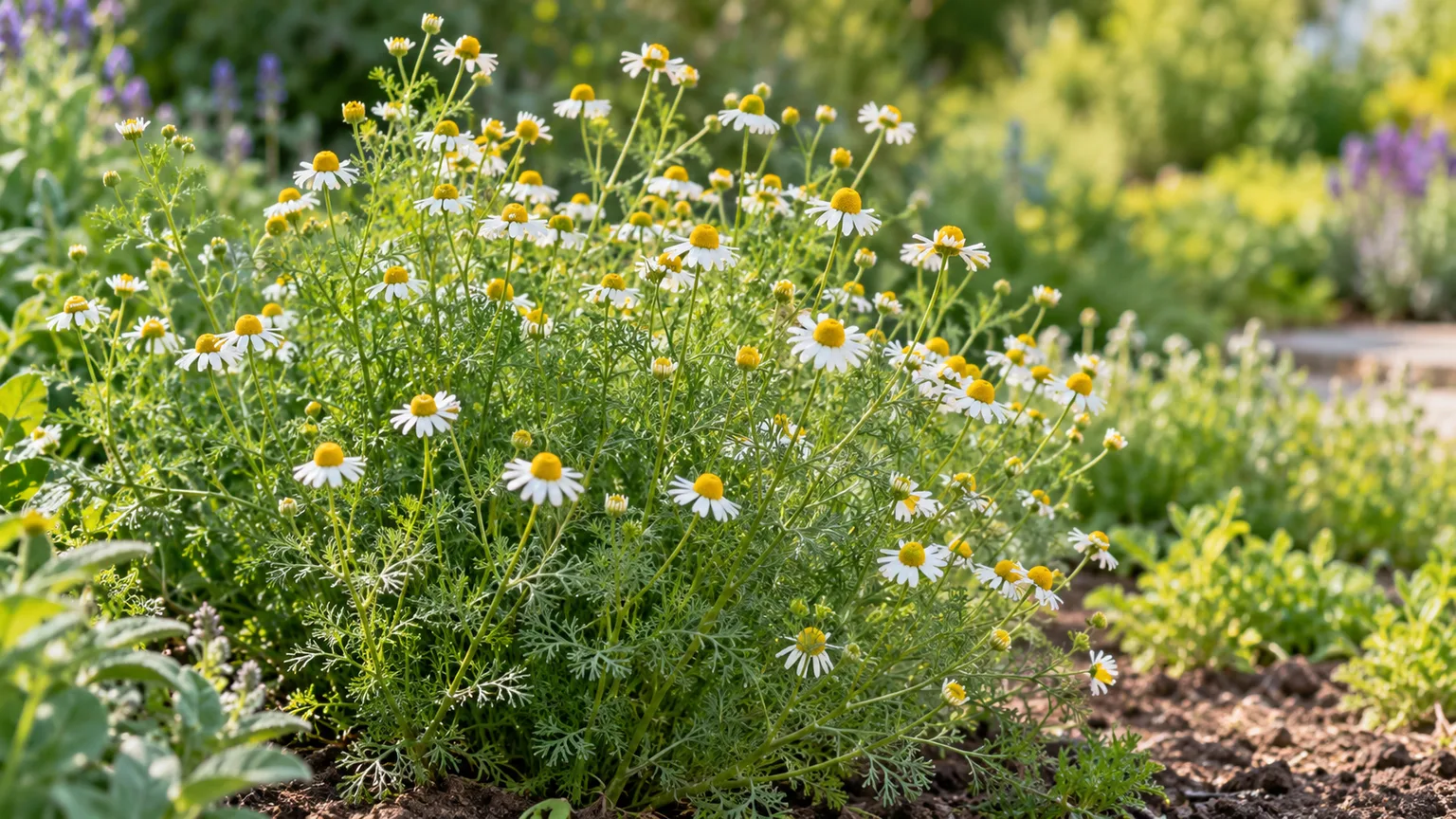
Chamomile is easiest to grow when you choose the right species first. German chamomile is an upright annual that produces a useful crop of flower heads; Roman chamomile is a low, spreading perennial grown more often as a fragrant edging plant or ground cover. Both germinate from tiny seeds that need light, and both prefer sun and soil that drains freely.
For most gardeners growing chamomile for tea, German chamomile (Matricaria chamomilla, often sold under the synonym M. recutita) is the practical choice. If you want a perennial mat for a path edge, look for Roman chamomile (Chamaemelum nobile) by its botanical name. Once you know which plant you have, sow the seed at the surface, keep seedlings evenly moist, and harvest just-opened flowers through the season.
Quick start: choose the chamomile that fits your goal
For a tea harvest, buy seed labeled German chamomile or Matricaria chamomilla. Sow in spring around your local last-frost window, either indoors about six weeks ahead or directly outdoors once the soil is workable. Press the seed onto damp mix without burying it, thin seedlings to roughly 6–8 inches apart, and give the plants a sunny, well-drained bed or container.
For a low aromatic ground cover, buy Roman chamomile or Chamaemelum nobile. It creeps and roots along the ground, so it needs room to spread and can be divided as it fills in. It is also perennial in suitable climates, whereas German chamomile completes its life cycle in one season and returns mainly when it has dropped seed. University of Wisconsin–Madison Extension explains the different habits and life cycles.
A single packet often contains enough seed for more plants than a small household needs. Start with a short row, one or two pots, or a small patch; you can let a few heads reseed later if you want more. This keeps early care manageable and prevents a generous crop from becoming a bed full of volunteers.
German or Roman chamomile?
The common name “chamomile” is used for more than one plant, and seed packets do not always make the distinction obvious. Check the botanical name before buying, especially if you want a particular growth habit or plan to harvest flowers.
| Type | Botanical name | Habit and life cycle | Best fit |
|---|---|---|---|
| German chamomile | Matricaria chamomilla (also M. recutita) | Upright, branching annual; commonly 1–2 feet tall | A flower harvest, tea, and easy seed saving |
| Roman chamomile | Chamaemelum nobile | Low, creeping perennial; roots as stems spread | Edging, ground cover, and a fragrant mat |
German chamomile’s taller stems carry many small, daisy-like flower heads over a long season. It is the usual choice when the goal is to gather enough flowers to dry, and it reseeds readily if some heads are left to mature. The new seedlings are not the old plant surviving winter; they are next year’s generation.
Roman chamomile stays closer to the ground and spreads through creeping stems. It can work between stepping stones or along a border, but it is not a turf substitute for a heavily used lawn. Give it a contained edge if you do not want the mat to wander, and choose another plant if the area receives constant foot traffic.
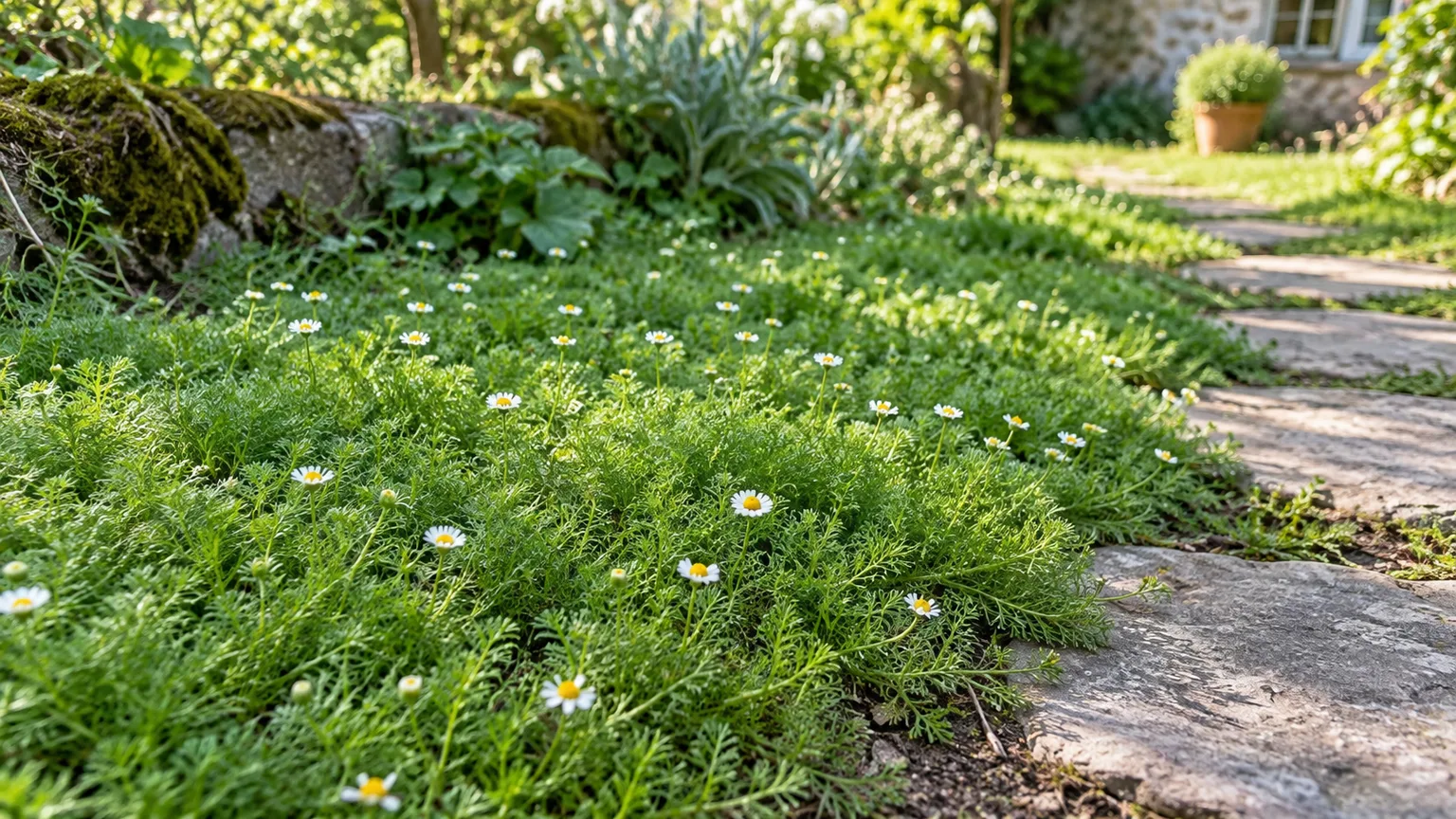
Roman chamomile is also a less predictable choice for a large tea harvest. Its flowers can be used, but German chamomile is typically more productive for flower picking. The Royal Horticultural Society describes the two forms as a hardy perennial and a hardy annual, respectively, and recommends the non-flowering ‘Treneague’ when the goal is a fragrant lawn rather than flowers for harvest. See the RHS growing guide.
Identify the plant before you use it
Both plants have finely divided, fragrant foliage and small white-and-yellow flower heads, so foliage alone may not be enough to identify a volunteer confidently. German chamomile grows upright; Roman chamomile forms a mat. Read seed labels and plant tags for the botanical name rather than relying on a common name such as “sweet chamomile” or “lawn chamomile.”
Do not brew tea from a daisy-like wild plant unless you can identify it with confidence. University of Wisconsin Extension notes that some lookalikes are easy to confuse and that some plants in the related genus Anthemis are poisonous. If a volunteer appeared unexpectedly or its identity is uncertain, enjoy it as an ornamental or remove it instead of consuming it.
Chamomile tea is a food use, not proof that the plant treats a health condition. The National Center for Complementary and Integrative Health says evidence for many promoted uses is limited; chamomile can also trigger allergic reactions in people sensitive to related plants such as ragweed or daisies and may interact with some medicines. If you have those allergies or take medication, ask a health professional before using chamomile as an herbal product. NCCIH’s chamomile safety summary covers the limits in more detail.
Pick a sunny site with fast drainage
Choose an open place that gets several hours of direct sun and is not shaded by a wall or taller herbs. More light usually means sturdier stems and better flowering; in very hot regions, morning sun with light afternoon shade can help plants avoid the harshest heat. A spot with good air movement also dries dew and rain from the foliage.
Chamomile is adaptable about soil fertility, but persistent wetness is a poor trade for extra richness. It grows in ordinary garden soil if the water drains away; heavy, compacted ground is more likely to stay soggy around the shallow roots. If your bed puddles after rain, loosen and amend the planting area or use a raised bed or container rather than trying to correct the problem with frequent surface watering.
Think about access before sowing. Flowers open over time and need repeated picking if you want to dry a supply, so a patch near a path or kitchen door is easier to harvest than one hidden behind tall plants. Leave enough space to reach between plants without brushing or crushing the flower heads.
Sow chamomile seeds without burying them
Chamomile seed is extremely small, and light helps it germinate. Burying it under a normal layer of soil is the most common avoidable reason a sowing fails. Prepare a fine, damp surface, scatter the seed thinly, and press it gently into contact with the mix; do not cover it with a layer of compost.
Inside or outside, keep the surface from drying while you wait for seedlings. A gentle mist or watering from below is less likely to wash the seeds into a clump than a strong stream from a watering can. In warm conditions, sprouts may appear within a week; allow about one to two weeks before deciding the seed did not take. Wisconsin Extension confirms that German chamomile seed needs light and should be surface-sown, while RHS advice gives the same uncovered sowing method.
Start seeds indoors
Starting indoors gives seedlings a head start in places with a short spring or hot summer. Sow in small cells or pots roughly six weeks before the local last frost date; published schedules range from about four to eight weeks, so the goal is a small, sturdy transplant rather than a large indoor plant. Fill the cells with a fine seed-starting mix, moisten it, sprinkle a few seeds on the surface, and press lightly.
Set the container in bright light and keep the top of the mix evenly moist, not waterlogged. A clear cover can slow surface drying, but remove it as soon as seedlings emerge so the young plants get airflow. If several seedlings appear in one cell, thin or separate them while they are small; chamomile’s fine roots make established seedlings less forgiving of transplanting.
Keep seedlings close to a bright window or under a grow light so they do not stretch toward dim light. When they have a few true leaves and are easy to handle, move them into individual cells if needed. Before planting outdoors, harden them off over about a week by gradually increasing their time outside; moving tender seedlings straight from a sheltered room into strong sun and wind can scorch or flatten them.
Direct-sow outdoors
Direct sowing avoids transplant shock and suits a mild spring or fall growing window. In spring, prepare the bed when the soil is workable and local frost risk is easing; in mild-winter climates, a fall sowing can establish plants before the next warm season. Avoid choosing a date by a fixed calendar month because frost timing and summer heat vary widely by region.
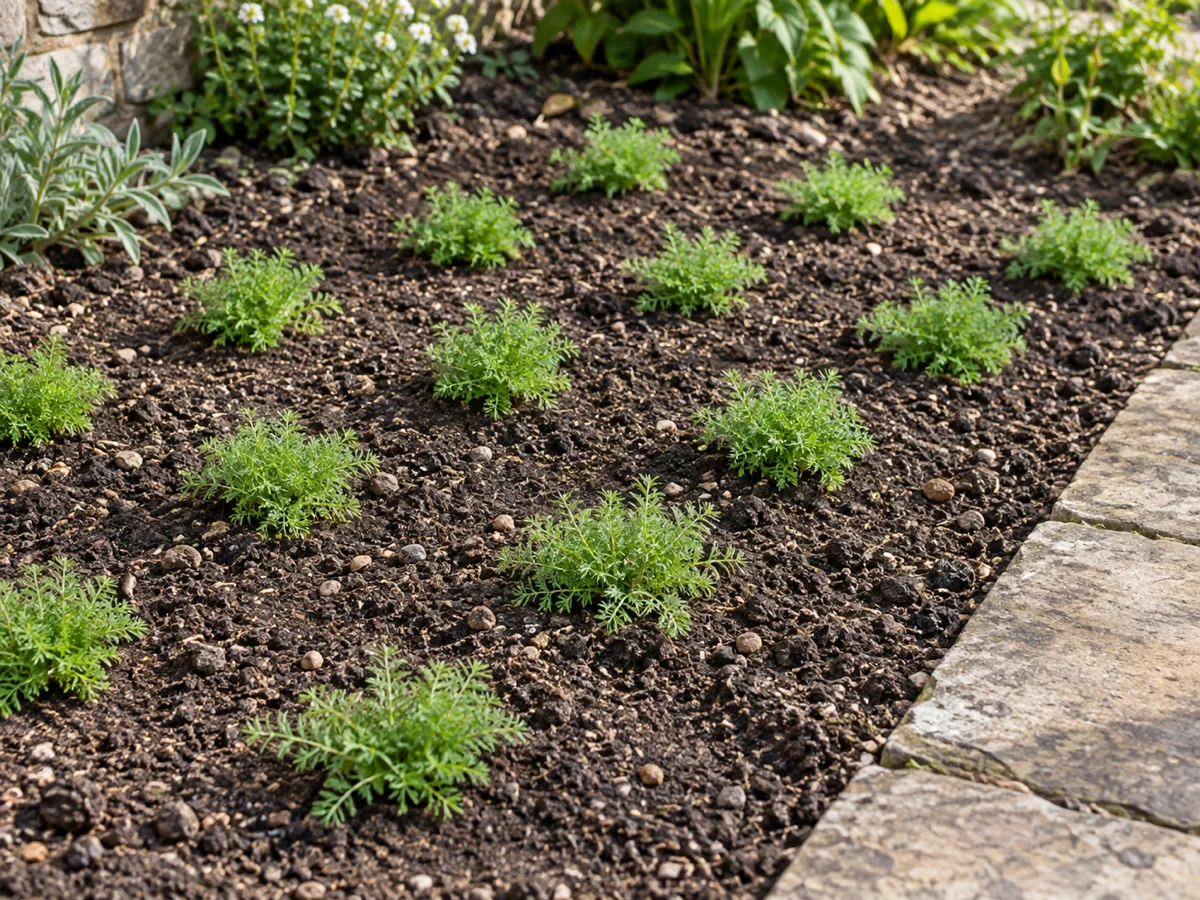
Rake the surface until it is fine and level, water it, then scatter the seed in a narrow band or small patch. You can mix the dust-fine seed with a small pinch of dry sand to help spread it evenly, but leave the mixture visible at the soil surface. Mist gently when the top begins to dry, then thin the seedlings once they can be handled, leaving about 6–8 inches between German chamomile plants. If you are sowing Roman chamomile as an edging mat, spacing can be a little closer, with room for the stems to knit together.
When seedlings emerge, mark the row; young chamomile is easy to mistake for weeds. Weed by hand until plants are established, taking care not to pull out the fine-rooted seedlings. A light mulch can conserve moisture around established plants, but do not pile it over the seed row while it is germinating.
Transplant seedlings and grow chamomile in pots
Transplant chamomile while it is still small. Water the cell first, lift the seedling with its root ball intact, and set it at the same depth it was growing before. Water it in, then keep the surrounding soil lightly moist while new roots settle; avoid disturbing a large plant that is already flowering.
A pot is useful when garden space is limited or when you want to keep self-seeding contained. Use a container with several open drainage holes and a free-draining potting mix. German chamomile needs room to branch and can become top-heavy, so a sturdy pot around 12 inches wide and 8 inches deep is a practical minimum for one plant; Roman chamomile needs more width as its stems spread. Gardener’s Path gives similar container guidance, including wider pots for Roman chamomile.
Pots dry faster than beds, particularly in sun and wind, so check the mix more often instead of watering on a fixed weekly schedule. A saucer can catch runoff, but empty it after watering so the roots are not left in standing water. If you bring a pot indoors, put it in the brightest window available and expect fewer flowers unless you can provide strong supplemental light.
Chamomile can be started indoors, but it is not a low-light houseplant. UC Master Gardeners of Santa Clara County notes that indoor plants need about five to six hours of bright window light or 12–16 hours of supplemental light. That makes outdoor pots or a bright patio a more dependable choice for a substantial harvest. The UC Master Gardeners’ guidance is specific about this indoor-light trade-off.
Balance sunlight, heat, and airflow
Give chamomile a sunny site, but do not treat full sun as a mandate during extreme heat. In a cool or moderate summer, all-day sun supports compact stems and flowers; in a hot climate, a little afternoon shade can reduce heat stress while preserving morning light. Containers heat and dry faster than in-ground soil, so move a pot away from a sun-baked wall or paved corner during a heat wave.
Long, thin stems with few blooms usually point to insufficient light, crowding, or a plant growing too lushly in rich soil. Move a container to a brighter place if possible, thin congested plants, and avoid feeding to “fix” a stem that is stretching for sun. If heat has paused flowering, keep the root zone evenly moist and wait for cooler weather rather than repeatedly cutting the plant back.
Airflow matters most where summer weather is humid or rainy. Give plants enough space for air to pass through the foliage, water at the soil line, and remove fallen debris around the crown. Those habits reduce the damp conditions that can contribute to leaf spotting and mildew.
Water and feed for steady growth
Keep young plants evenly moist until they are established. Chamomile has shallow roots, so a newly sown row can dry at the surface quickly; check it during warm or windy spells and water gently when the top layer begins to dry. Once plants have rooted into the bed, water during prolonged dry weather rather than keeping the soil constantly wet.
Use the soil as your guide instead of a rigid “one inch each week” rule. If rain has soaked the bed, skip watering; if the top few inches are dry and plants begin to droop, water deeply enough to moisten the root zone. In containers, check the mix with a finger and water when it is starting to dry, then let excess drain freely. Wilting in dry soil calls for water, but wilting in wet soil is a warning to check drainage and roots before adding more.
Routine fertilizer is rarely necessary in a garden bed. Chamomile can flower in relatively poor soil, and heavy feeding may favor leafy, floppy growth over a manageable harvest. If a container plant becomes pale and slow after months of growth, a light application of a balanced fertilizer at the label rate may help, but avoid repeated high-nitrogen feeding as a default. RHS recommends watering established plants in dry spells and says chamomile usually grows and flowers without feeding.
Keep plants compact and encourage flowers
The most useful “pruning” for German chamomile is regular harvest. Taking newly opened heads before they age helps keep the plant producing fresh buds; deadhead faded blooms if you do not want seed scattered in that spot. Leave a few of the strongest heads to mature if you want volunteers or seed for next year.
If stems sprawl or become leggy, trim only the unruly portions back to a leafy branch rather than shearing the entire plant down during its main flowering period. That preserves active buds and gives the plant room to branch. Roman chamomile can be clipped lightly to keep an edging neat, and an established mat can be divided in spring if it has spread farther than intended.
Not every head needs to be picked. Flowers left to mature provide food for visiting insects and let German chamomile set seed, while flowers picked frequently give you more material for drying. Decide which role matters most in each part of the patch: harvest, pollinator bloom, or self-sowing.
Harvest flowers at the right stage
Pick flowers when the white petals have opened and are still fresh, with the yellow center bright and full. The best window is near full bloom, before the petals curl backward and the center becomes dull or seed-filled. Harvest on a dry day after dew has evaporated; wet flowers clump during drying and are more likely to spoil. University of Wisconsin Extension recommends harvesting near full bloom, and The Old Farmer’s Almanac also advises waiting until flowers are fully open.
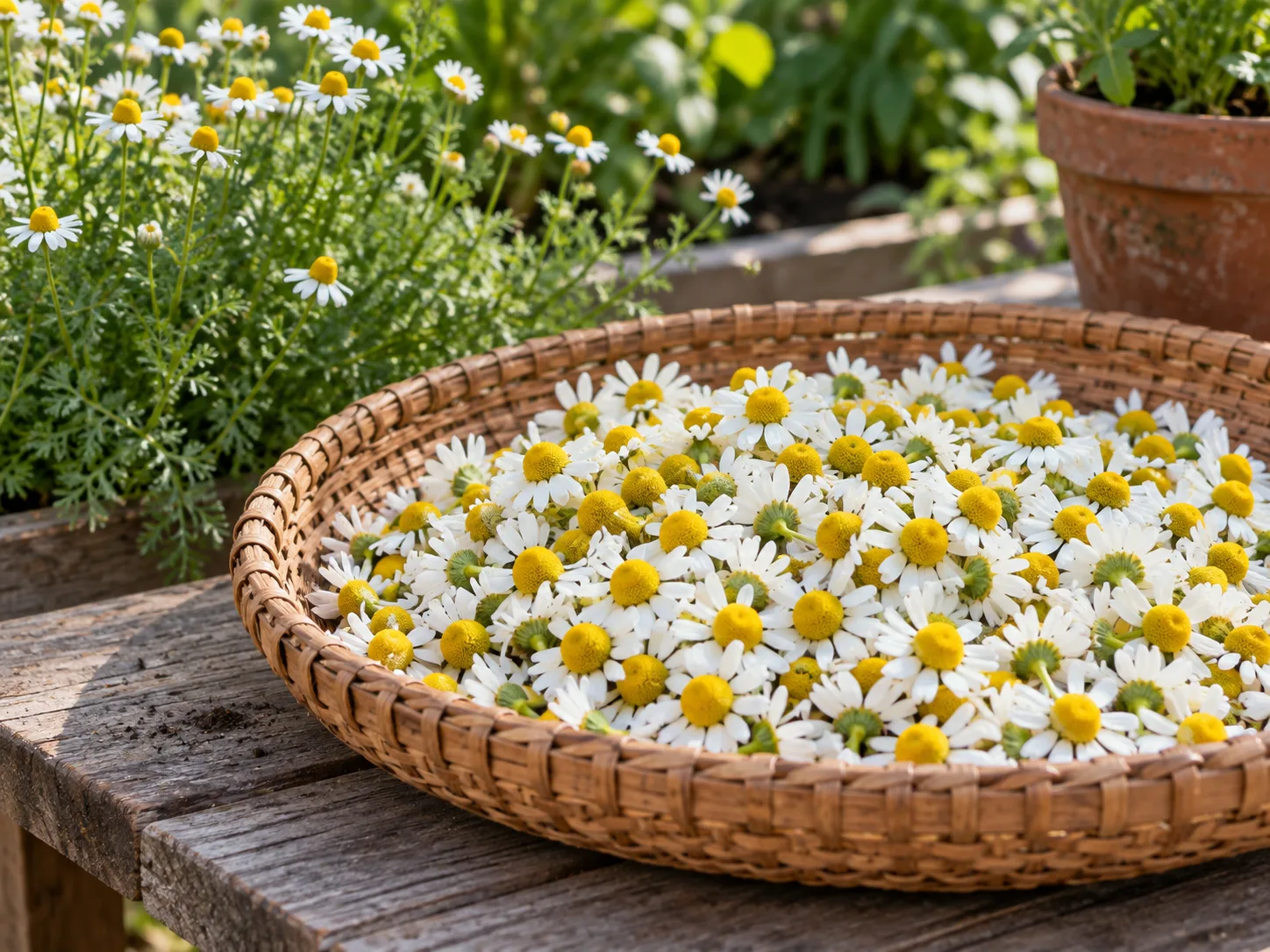
Pinch or snip the flower head just below its base, leaving the branching stem and nearby foliage in place. Check plants every few days during peak bloom because heads mature at different times. A small bowl or shallow basket is better than a deep bag that presses the delicate flowers together.
For a light fresh tea, use clean, correctly identified flowers straight from the plant. If you plan to dry them, harvest only from plants that have not been exposed to pesticides or other treatments unsuitable for edible flowers, and follow the product label if any treatment has been used. Do not use volunteer plants from roadsides, sprayed lawns, or places where animals may contaminate the crop.
Dry and store chamomile flowers
Spread clean flower heads in a single layer on a screen, tray, or paper-lined basket. Keep them in a warm, dry, shaded place with good airflow; direct sun can fade the flowers, and a closed container traps moisture. Turn the flowers occasionally so the underside dries as well.
Drying time depends on humidity and airflow, so use texture rather than the calendar. The heads are ready when they feel crisp and crumble easily instead of bending or feeling cool and soft. If any stored flowers smell musty, show visible mold, or have reabsorbed moisture, discard them rather than trying to rescue the batch. RHS recommends a warm, dry location out of direct sunlight and airtight storage once fully dry.
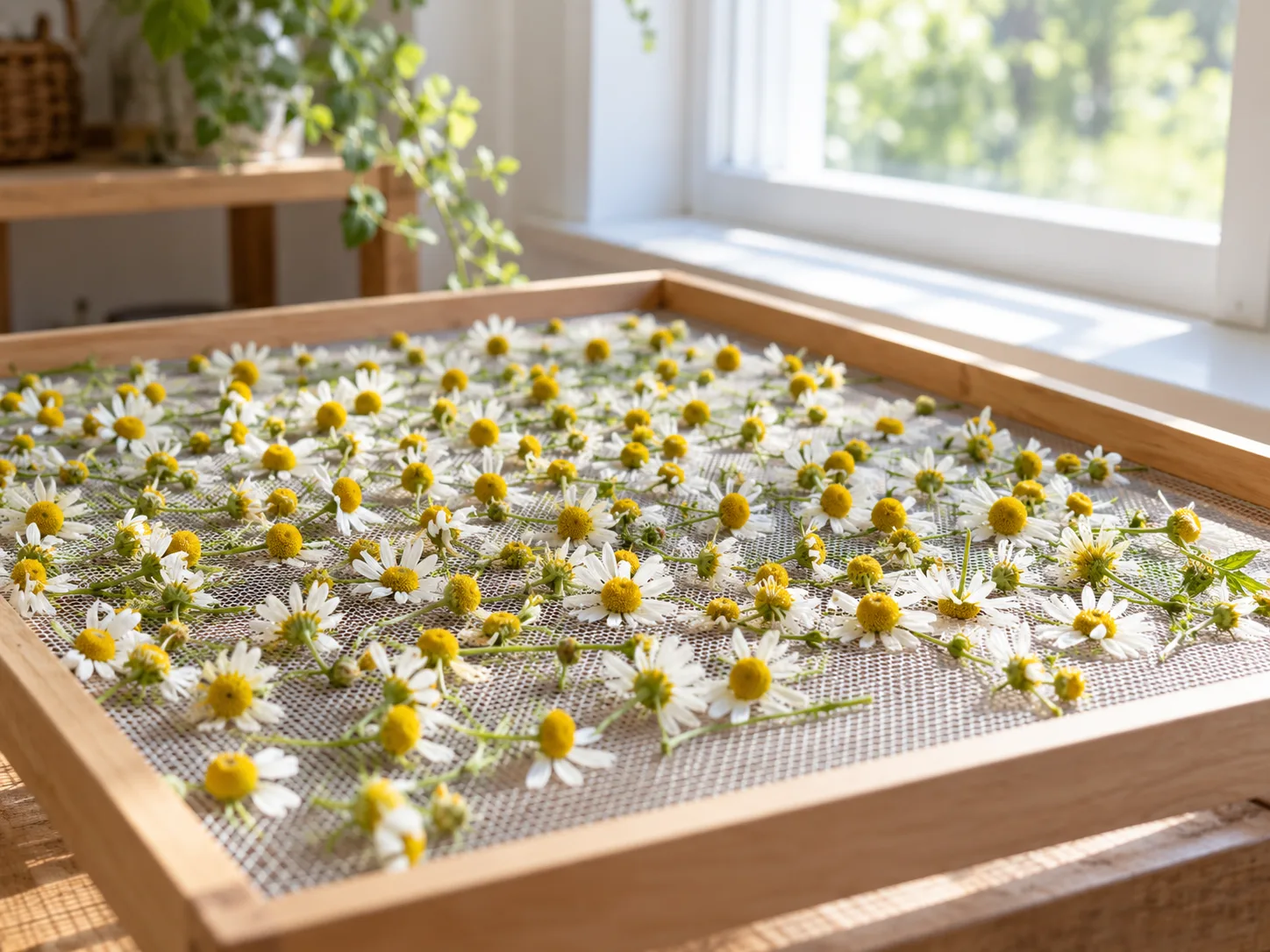
Store fully dry flowers in a clean airtight jar away from heat and light, and label it with the harvest date. Use the dried crop within about a year for best aroma, then refresh the jar with the next season’s flowers. Drying reduces bulk dramatically, so keep small batches in separate jars if you open them often.
The flower heads are the usual part used for an infusion; leaves and stems are more bitter. Avoid treating a homegrown herb as a substitute for medical care, and check with a clinician if you have an allergy to ragweed or related plants or take medicines that may interact with herbal products. NCCIH summarizes chamomile’s safety and evidence limits.
Diagnose common chamomile problems
Chamomile is generally resilient once established, but it can struggle if its shallow roots stay wet, the plant is crowded, or young shoots are attacked. Look at the growing conditions before reaching for a spray. A symptom by itself rarely identifies a single cause, so check the soil, the age of the affected leaves, and whether the problem is spreading.
Aphids may cluster on tender tips or flower stems, while slugs and snails can damage small seedlings. Knock aphids off with a firm rinse of water, then check again over the next few days; protect new seedlings from slugs using barriers or hand removal. If flowers are intended for tea, avoid applying a pesticide unless its label explicitly permits the use and harvest timing you need.
Brown spots, yellow lower leaves, or poor flowering can have different causes. The Old Farmer’s Almanac identifies poor airflow and overhead watering as common contributors to powdery mildew and brown leaf spots; the RHS also warns that waterlogging can cause rot. See the Almanac’s problem notes and RHS care advice before assuming a fungal disease.
Read the whole plant before treating a symptom
If the soil stays wet and the lower leaves yellow or stems soften at the base, improve drainage and reduce watering; a plant with damaged roots may not recover simply because you prune it. If leaves become limp while the soil is dry, water thoroughly and shade a container from harsh afternoon heat. If the stems are long and weak with few flowers, increase light and reduce crowding rather than adding fertilizer.
For scattered brown marks after prolonged rain, improve spacing, water at the soil line, and remove badly affected leaves. A spreading lesion, fuzzy growth, or repeated decline despite corrected care may need a local plant clinic or extension service to identify the cause. Do not apply fungicide or horticultural oil as a catch-all; use any product only after diagnosis and according to its label, especially on a plant grown for food.
Overwinter, save seed, and manage self-sowing
German chamomile is an annual, so the original plant naturally finishes after flowering and setting seed. If it disappears in winter and new plants appear in spring, those are seedlings from dropped seed. To control where it returns, deadhead most flowers before seed ripens and leave only a few heads in a chosen patch. To collect seed, wait until the heads dry on the plant, shake the mature seed into a labeled paper envelope, and store it cool and dry.
Roman chamomile is a perennial and can return from its established mat where the cultivar and local winter conditions allow. It is hardy in a wider range than German chamomile, but winter-wet soil can still damage it; give it drainage and avoid leaving a container sitting in water. In a colder region, a potted Roman plant is more exposed than one rooted in the ground, so place it in a sheltered spot and protect the pot from repeated freeze-thaw cycles.
Self-sowing is useful when you want a low-effort patch, but it is not the same as a plant becoming invasive everywhere. The practical question is whether you want seedlings in the next bed. Keep seed heads in a contained area, pull unwanted volunteers while they are small, or grow German chamomile in a pot to make cleanup simple. For Roman chamomile, edge or divide the mat before creeping stems occupy nearby space.
Conclusion
For flowers to dry or brew, choose German chamomile; for a perennial, low-growing mat, choose Roman chamomile. Give either type sun, free-draining soil, and room to breathe, then surface-sow the tiny seeds and keep the top layer damp until seedlings appear.
As the plants establish, water according to soil moisture, skip routine feeding, and harvest newly opened flowers on a dry day. Dry the heads in a single layer away from sun, store them airtight, and leave a few blooms to set seed only where you want the next patch to grow.



