How to Grow Strawberries From Seed: Complete Guide
Learn how to grow strawberries from seed, from choosing alpine or garden types to timing transplanting, watering shallow roots, and harvesting ripe berries.
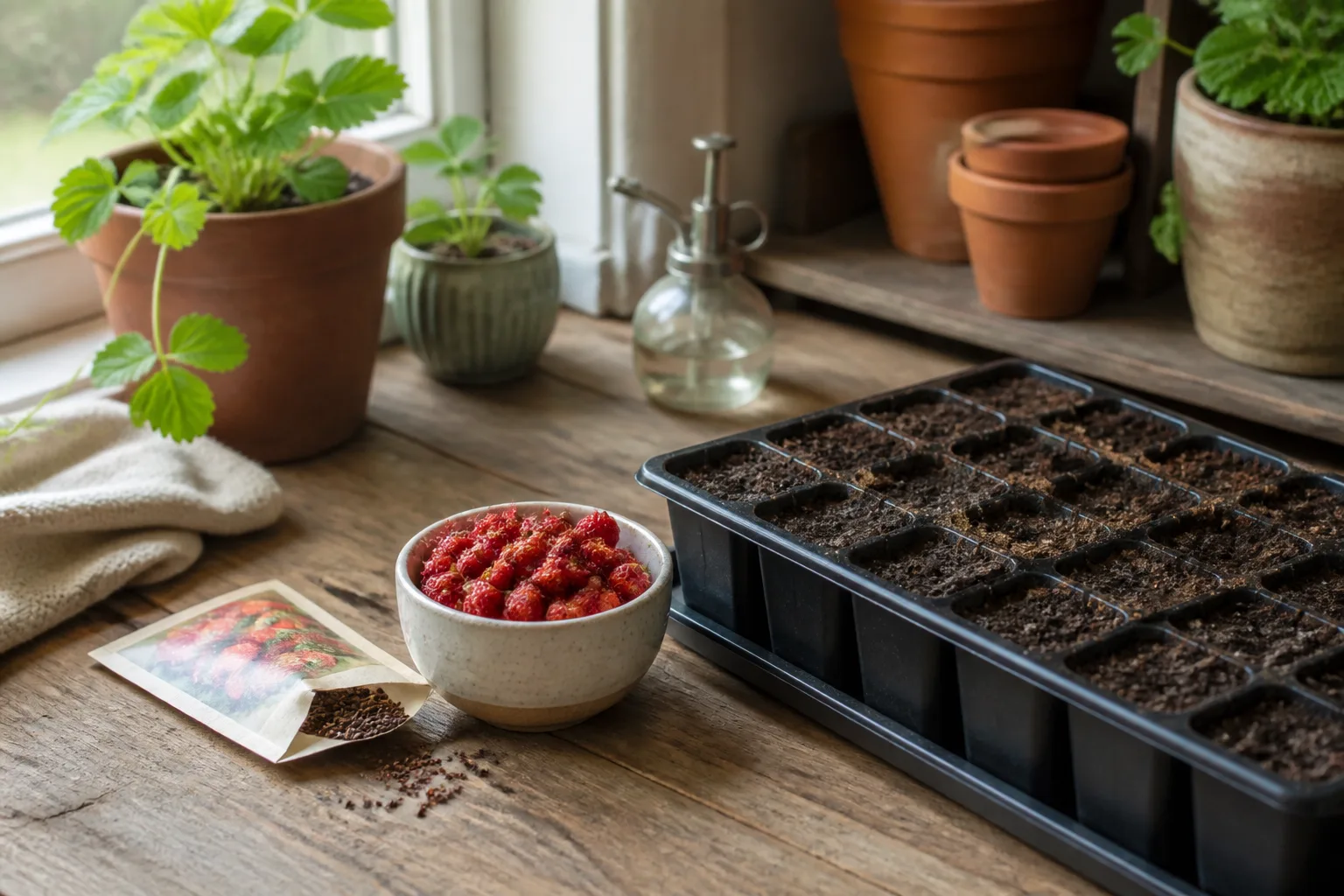
You can grow strawberries from seed, but the best starting point depends on what you want to harvest. Alpine strawberries are a natural fit for seed trays: they grow into compact plants with small, aromatic berries, and seed is commonly sold for them. If you want a specific large-fruited garden cultivar, buying a crown or rooted runner is usually more predictable because seedlings from hybrid fruit can vary from the parent.
The practical sequence is simple once you separate the stages: choose seed for your goal, follow the packet’s germination instructions, raise sturdy seedlings under bright light, transplant after frost risk eases, and keep the shallow root zone evenly moist. The details that make the biggest difference are not fancy equipment; they are seed preparation, correct planting depth, a crown kept above the soil, and not asking a tiny new plant to carry a full crop too soon.
What Growing Strawberries From Seed Can—and Can’t—Do
Starting from seed gives you access to alpine and other seed-raised types that may be hard to find as plants. It also lets you raise many plants in a small indoor space. The trade-off is time: strawberry seeds are tiny, germination can be slow or uneven, and seedlings need a long enough season to grow into strong crowns before their first serious crop.
A seedling is not necessarily a copy of the strawberry it came from. Many familiar garden strawberries are cultivated hybrids, and their offspring can differ in fruit size, flavor, vigor, or timing; this is why growers maintain named cultivars from runners instead. If you need a dependable named variety for a large harvest, choose a healthy crown or rooted runner. If you are happy to experiment with variation or want alpine strawberries, seed makes sense.
A strawberry seed is one of the small dry-looking structures on the fruit’s surface. Botanically, each is an achene; the red flesh is the swollen flower base rather than the seed itself. For sowing, you do not need to scrape seeds from fruit: a packet from a reputable seed supplier is cleaner, easier to label, and more likely to give you the variety described.
Choose the Right Strawberry for Your Harvest Goals
“Strawberry” covers plants with different habits. Before buying seed, decide whether you want one concentrated crop, a longer series of smaller harvests, or compact plants for a patio pot or border. Penn State Extension notes that variety performance can change considerably by region, so use locally recommended cultivars when your goal is predictable fruit rather than an experiment.
June-Bearing, Day-Neutral, and Everbearing Garden Types
June-bearing strawberries produce one main crop over a relatively short window, with early, midseason, and late cultivars extending the overall picking season when planted together. They tend to send out more runners and suit a garden bed where you want a substantial harvest for freezing, jam, or fresh eating. The name does not mean every plant fruits in June everywhere; climate and cultivar shift the calendar.
Day-neutral plants flower and fruit in flushes over a longer stretch, but hot weather can slow or pause production. Everbearing types commonly produce more than one crop, though labels and nursery descriptions are not perfectly consistent across regions. For home gardeners, compare the actual cultivar description and local extension guidance rather than relying on the category name alone. Penn State Extension’s strawberry guide explains how fruiting habits and heat response affect the way varieties perform.
Alpine Strawberries: The Practical Seed Choice
Alpine strawberry (Fragaria vesca) is a compact, perennial type often grown from seed. Its fruit is smaller than that of a typical garden strawberry, but it can be aromatic and sweet, and the tidy plants fit containers, edging, or a partly shaded garden spot. Some alpine cultivars make runners while others stay more compact, so check the packet if you want a neat container plant or a spreading groundcover.
The Royal Horticultural Society identifies alpine strawberries as a type that can be grown from seed and notes that germination may be slow and patchy; BBC Gardeners’ World also describes alpine strawberries as a seed-suitable crop for spring sowing and notes that they tolerate sun to partial shade. That is a helpful contrast with standard fruiting cultivars: choose alpine seed when the plant itself, unusual flavor, or compact habit appeals to you, and choose a named crown when large, uniform berries are the priority. (RHS growing guide; BBC Gardeners’ World alpine strawberry guide)
Build a Seed Calendar From Your Last Frost Date
Use your average last spring frost as a planning anchor, not as a promise that the weather will cooperate. Count backward from that date, then adjust for the seed packet, the growth rate of the cultivar, and whether your indoor setup provides enough light. Starting too early can leave seedlings crowded and leggy indoors; starting too late can push small plants into summer heat before they have established.
| Stage | Approximate timing | What to look for |
|---|---|---|
| Read packet and prepare seed | 14–16 weeks before last frost, if chilling is specified | Confirm whether the seed lot needs a cold period |
| Sow indoors | About 10–12 weeks before last frost, adjusted to packet directions | Warm, bright spot; surface-sown seed |
| Pot up | When seedlings have several true leaves and can be handled | A developing root ball, not just cotyledons |
| Harden and transplant | After frost risk has passed and plants are sturdy | Gradual outdoor exposure, then mild planting weather |
The calendar is a range because germination and seedling growth vary. A gardener in a short-season northern climate may need an earlier indoor start than someone with a long, mild spring, but the latter should avoid keeping seedlings in tiny cells until they are rootbound. If your typical last frost is May 10, for example, use the packet’s instructions to decide whether a late-winter chill is needed, sow roughly in late February or early March, and plan to harden plants in May only when local forecasts permit.
Do not put the same dates on every seed packet just because the seeds look alike. Some suppliers sell seed already prepared for sowing, and an alpine packet may give different instructions from another strawberry type. The label and a local frost calendar are better guides than a fixed “December is strawberry month” rule.
Cold-Stratify Only When the Seed Packet Calls for It
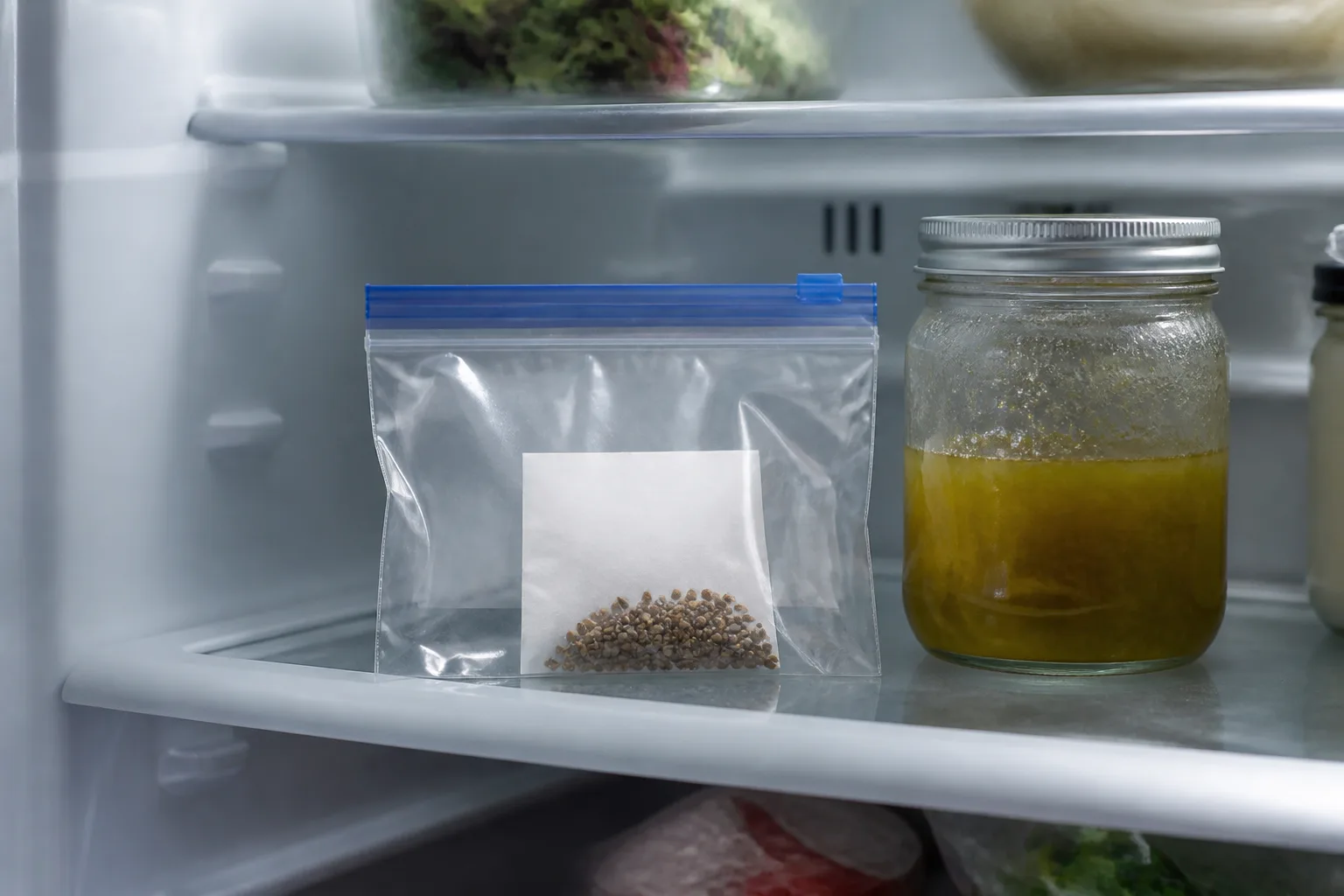
Cold stratification is a controlled period of cool, moist conditions that can help break dormancy in some seeds. Strawberry seed directions are not universal: some packets or suppliers recommend a refrigerator chill, while others direct you to sow without one. Follow the instructions for your seed lot. If they specify a cold period, use the refrigerator rather than a freezer, and keep seed sealed and clearly labeled so it does not get wet or mixed with food debris.
For a packet that calls for chilling, a common home method is to mix the seed with barely damp—not dripping—sterile seed-starting mix or another clean medium in a small labeled bag or container and refrigerate it for the stated number of weeks. Check it periodically. If the medium becomes wet, moldy, or smells sour, discard the contaminated medium and start again with a clean container and fresh seed if you have enough. Do not leave the packet forgotten for months; the point is to follow the specified treatment, then sow promptly.
The RHS recommends sowing alpine strawberry seed in spring or autumn and warns that germination can be slow and patchy, without presenting chilling as a requirement. That is a reason not to treat stratification as a guaranteed fix or a universal rule. If your packet gives no instruction and the seed is fresh alpine strawberry, you can start with a small test sowing and compare it with a chilled portion rather than risking the whole packet on one treatment. (RHS growing guide)
Surface-Sow and Germinate the Tiny Seeds
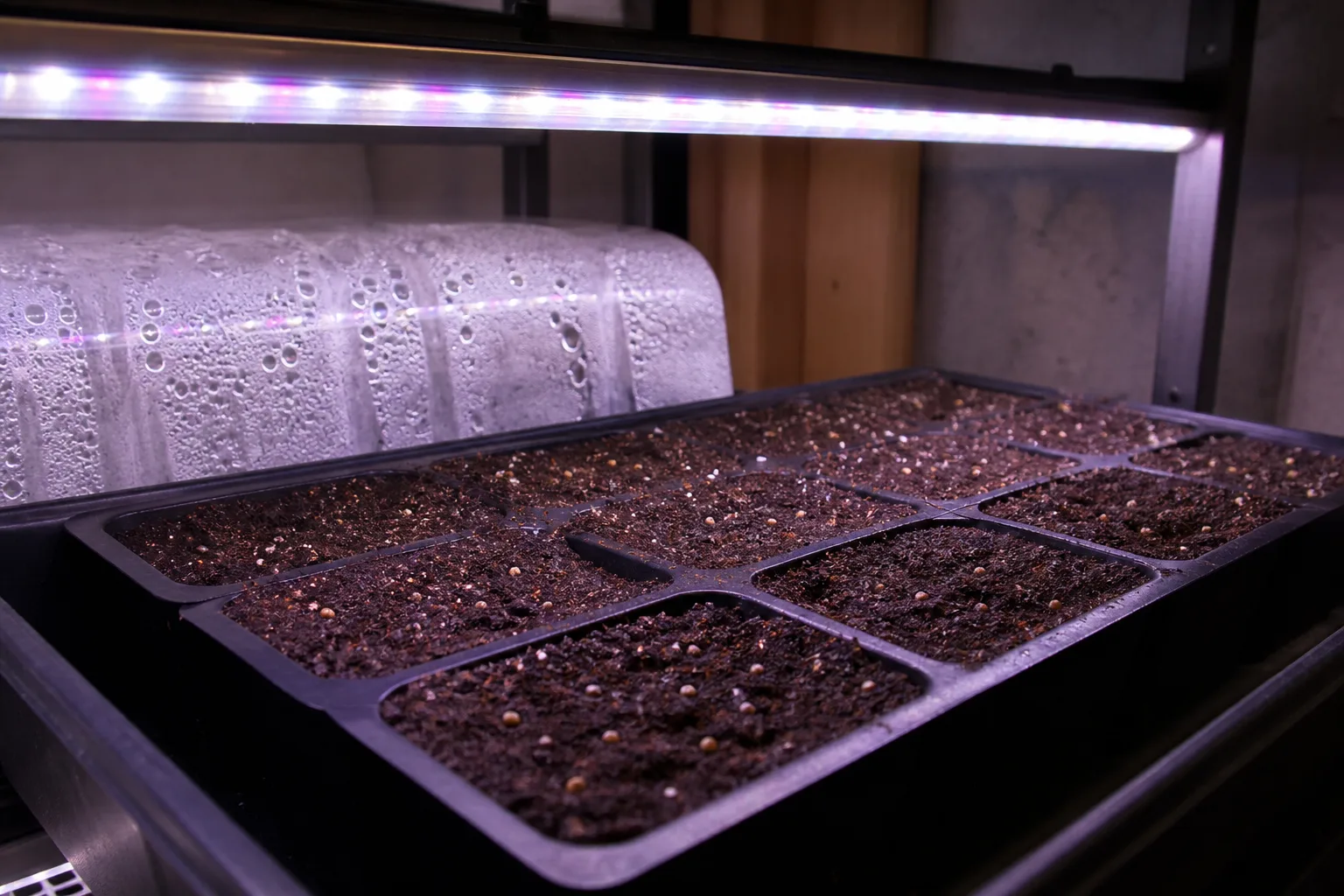
Fill a clean tray or small pots with fine, pre-moistened seed-starting mix. Level the surface, sprinkle seeds thinly, and press them gently against the mix so they make contact. Do not bury them under a layer of soil: light helps strawberry seed germinate, and the tiny seedlings have little stored energy for pushing through a deep covering.
Water with a fine mist or from the bottom so the seeds do not wash into corners. The mix should remain evenly damp, like a wrung-out sponge, not shiny or saturated. A clear dome or loose cover slows drying before seedlings emerge, but vent it if heavy condensation builds and remove it once sprouts appear; stale, wet air encourages algae and damping-off problems.
Keep the tray in bright light and a moderate, steady room temperature. A sunny window can work if it stays bright through the day and does not overheat the tray; a grow light above the seedlings gives more consistent light on cloudy winter days. Germination can take several weeks and arrive in waves, so do not discard a tray just because the first seedling appears before its neighbors. The RHS specifically cautions that alpine seed germination can be slow and patchy.
Pot Up Seedlings Without Burying the Crown
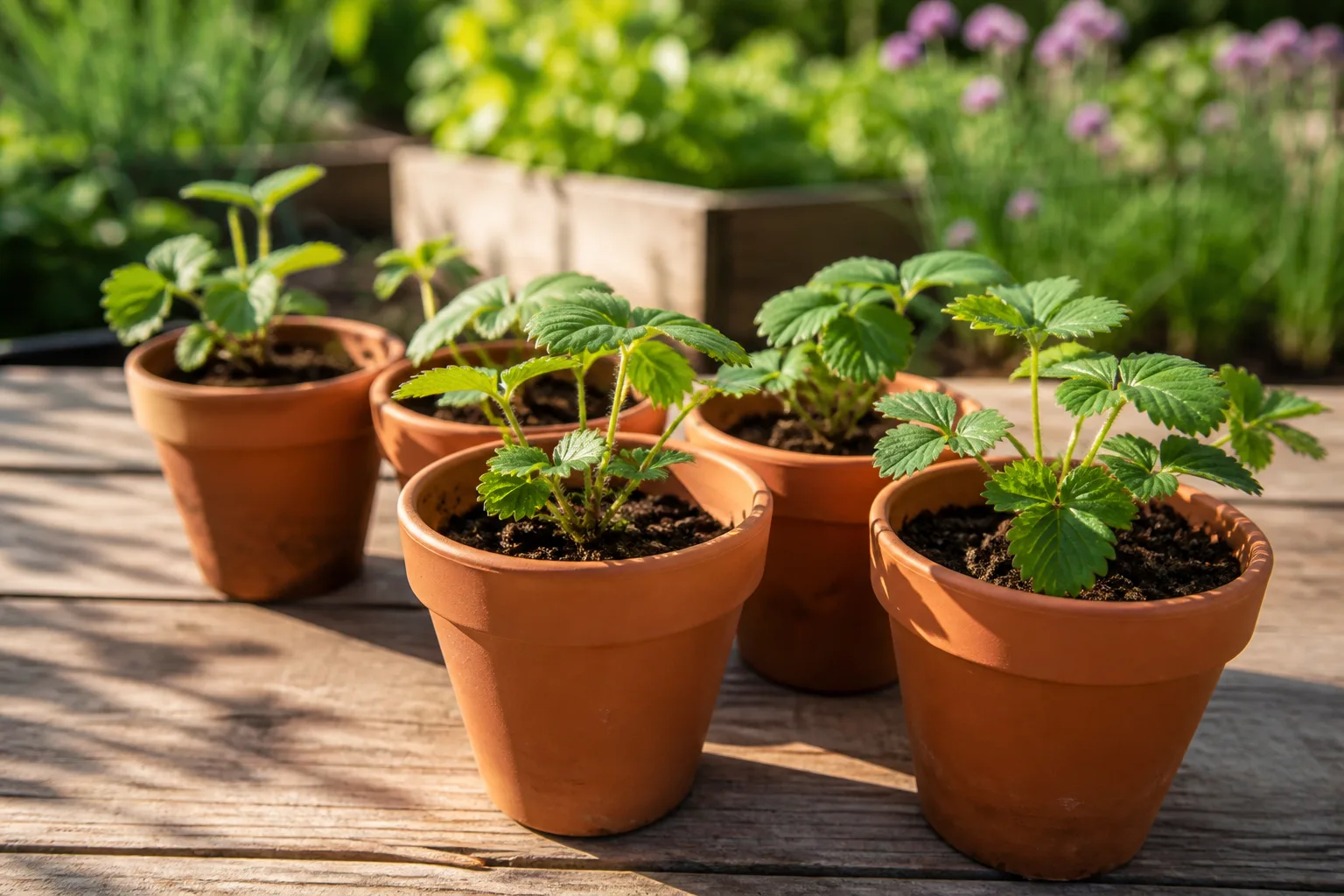
Strawberry seedlings start as two seed leaves, called cotyledons, and then grow their first true leaves with the familiar toothed shape. Wait until seedlings have several true leaves and enough root development to hold a small plug together before moving them. Potting them up too early makes tiny roots easy to damage; leaving them crowded until their leaves overlap slows airflow and growth.
Use a small pot with drainage and a fresh, lightly moist potting mix. Lift each seedling by a leaf rather than pinching the delicate stem, set the roots down without bending them into a tight J shape, and firm the mix lightly. Keep the crown—the short growing point where leaves meet roots—at the surface. Burying it can keep the center wet and invite rot, while leaving roots exposed lets them dry out.
After potting, give seedlings good light and water when the surface begins to dry. If the potting mix contains fertilizer, wait before adding more; young seedlings do not need a strong feed. If it is an unfertilized mix and growth is pale or stalled after establishment, use a diluted, balanced fertilizer according to its label rather than guessing with a heavy dose. A healthy young plant should add leaves steadily, not stretch into a thin stem toward a distant light.
Harden Off and Plant Outside After Frost Risk
Indoor seedlings have not yet experienced wind, direct sun, cool nights, or fast changes in moisture. Harden them off gradually over about a week or longer: begin with a sheltered, shaded outdoor period, then extend the time and introduce gentle morning sun. Bring them back in if wind, cold, or a late frost threatens. A sudden move from a bright indoor lamp to a full-sun bed can scorch leaves even when the plant is otherwise healthy.
Transplant when plants are sturdy, the soil is workable, and local frost risk has passed. Choose a mild, cloudy day if possible, water the tray beforehand, and plant at the same depth the seedling grew in its pot. Keep the crown at soil level, spread roots downward, and press soil around them without compacting the bed into a hard crust. Space plants according to the cultivar and the growing system; garden rows need room for air and harvest access, while compact alpines can be closer if the packet recommends it.
Water the bed after transplanting and shade small starts temporarily if a hot spell arrives. For containers, use a pot with generous drainage holes and enough soil volume to buffer drying; a pot that looks decorative but holds water around the roots is a poor strawberry home. BBC Gardeners’ World recommends well-drained growing conditions and notes that strawberries can be grown in pots, hanging baskets, and small spaces, but containers need closer attention to water and feeding than an open bed. (BBC Gardeners’ World strawberry guide)
Give Strawberries Sun and a Well-Drained Root Zone
Most garden strawberries crop best in a sunny, sheltered place, with roughly six or more hours of direct light. In a very hot climate, afternoon shade can reduce heat stress, especially for plants in pots. Alpine strawberries are more tolerant of partial shade, although deeper shade usually means fewer flowers and berries. If fruit is the main goal, pick the brightest site that does not bake the plants during the hottest part of the day.
Strawberry roots are shallow, which makes drainage and steady moisture especially important. Penn State Extension notes that a large share of the roots may sit in the upper few inches of soil; the same shallow rooting explains why a plant can wilt in a dry spell even when deeper soil remains damp. Choose loose, fertile soil that drains after rain, add mature compost if the bed needs organic matter, and use a raised bed or container if the native ground stays waterlogged.
Before planting a long-term bed, remove perennial weeds and consider a soil test. Strawberries dislike competing with weeds, and correcting pH or nutrient problems before planting is easier than chasing poor growth later. Do not place new plants where a strawberry bed has recently declined or where related crops had serious soil-borne disease; rotate to a clean area when possible. Penn State’s region-specific recommendations are useful for understanding these risks, but variety lists and fertilizer amounts should be matched to your own region. (Penn State Extension)
Keep Water Even and Feed Only What Plants Need
Water newly planted seedlings enough to keep the root zone evenly moist while they establish. Afterward, check the soil rather than watering by the calendar: if the top inch is drying and there has been no useful rain, water deeply at the base. A little moisture stress during flowering and berry swelling can reduce fruit size, but constantly saturated soil deprives roots of oxygen and encourages crown and root problems.
Containers need more frequent checks because a small volume of mix dries quickly in sun and wind. Water until excess drains from the bottom, then empty any saucer that holds water. Drip irrigation or a watering wand aimed at the soil keeps the crown and fruit drier than overhead watering, which matters when rain or dense foliage already leaves the planting damp. Avoid watering late in the day when leaves will stay wet overnight.
Start with soil preparation and a modest feeding plan, not repeated doses of high-nitrogen fertilizer. Too much nitrogen can push soft leaves and runners at the expense of flowers and fruit, while established plants in compost-rich soil may need little extra fertilizer. Follow a soil test or local extension schedule and the fertilizer label; container plants may need a light, regular feed because watering leaches nutrients more quickly. BBC Gardeners’ World discusses spring feeding and regular watering for container-grown plants, while the RHS advises that well-mulched beds may not need additional feeding unless growth or harvest indicates a need. (BBC Gardeners’ World; RHS)
Manage First Flowers, Runners, Mulch, and Pollination
A new seedling needs to establish a crown and root system before it carries a heavy crop. If a small plant flowers soon after transplanting, pinch those first flowers until the plant is visibly growing well; this trades a few early berries for more establishment. The right rule depends on the variety and planting date: Penn State recommends removing first-year flowers from June-bearing plants, while day-neutral guidance can allow fruit later in the first season; the RHS makes flower removal conditional on plant vigor and type. Follow advice for your cultivar and region rather than removing every flower indefinitely.
Runners are long stems that root into daughter plants. Let a few healthy runners root if you want to expand a bed or replace older plants, but remove extras when the bed is full, especially in containers where they compete with the parent for water and space. Alpine plants vary: some spread with runners, while compact selections may stay in clumps. Seed is useful for trying new plants; a runner is the better way to copy a known plant’s fruit and habit.
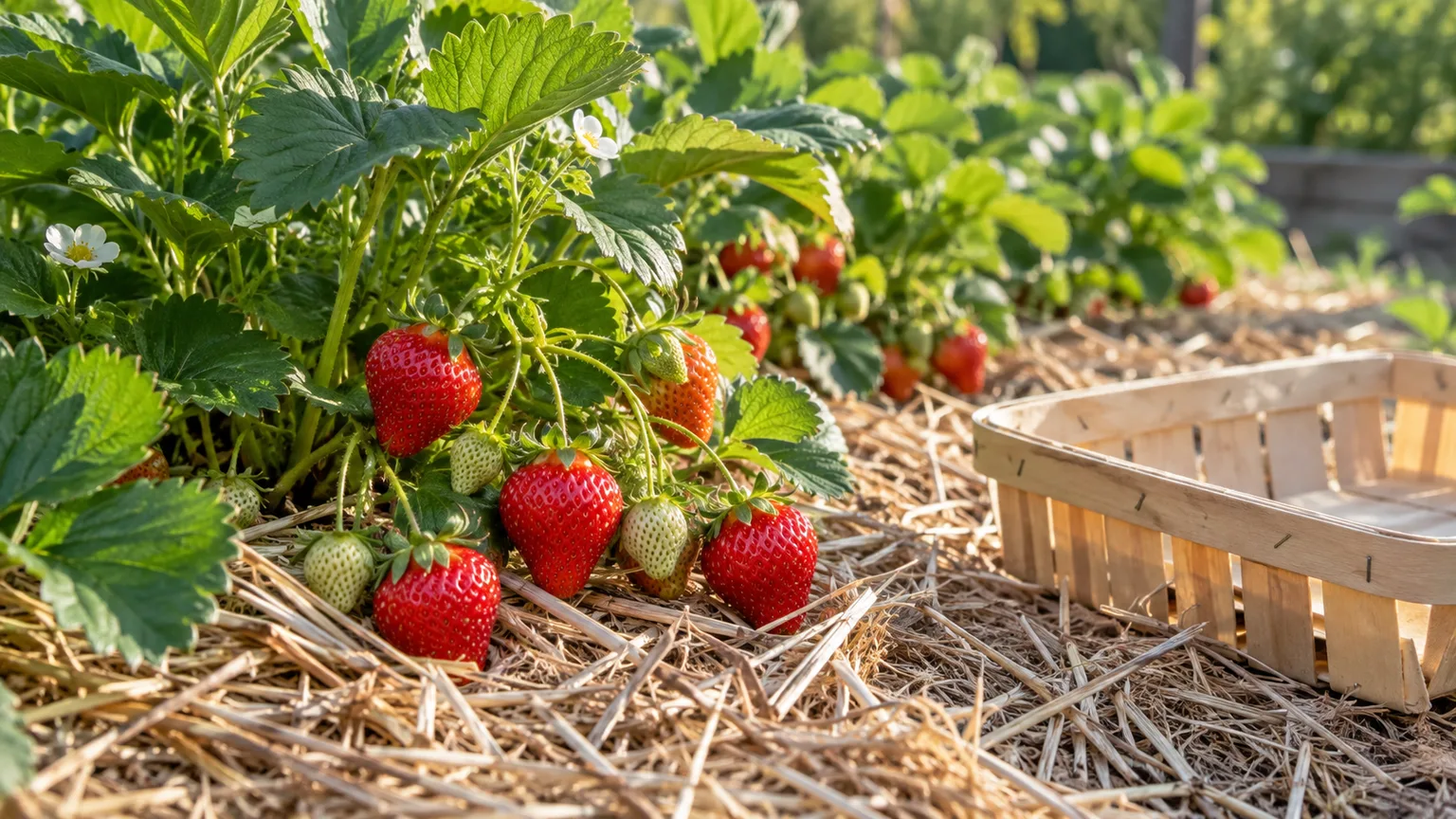
Add clean straw or another breathable mulch as flowers turn to fruit so berries stay off damp soil and are easier to pick. Keep the material away from the crown; a wet pile pressed against the center can encourage rot. Strawberry flowers need pollination to develop well-shaped fruit, so do not keep insect-excluding covers closed during bloom unless the cover allows pollinators through. If you protect ripe berries from birds, use secure netting that is taut and checked regularly; loose mesh can trap wildlife. The RHS offers practical guidance on runner propagation, fruit mulch, and safer bird protection. (RHS strawberry guide)
Prevent the Problems That Spoil a Crop
The most preventable strawberry failures begin at the soil line: a buried crown stays wet, an exposed crown dries, and waterlogged roots struggle even when leaves look thirsty. Check depth and drainage before assuming the plant needs more fertilizer. Since strawberries have shallow roots, also check moisture near the surface; a dry top layer may matter more than the condition of the soil several inches down.
Gray mold and other fruit rots are more likely when foliage is crowded, spent berries remain in the bed, or fruit and leaves stay wet. Give plants airflow, pick ripe fruit promptly, remove soft or moldy berries, and water at soil level. Slugs may hide under damp mulch, while birds and small mammals often take fruit just before it is ready; inspect plants often enough to catch ripening berries and use a well-secured barrier when needed. Avoid applying a pesticide without identifying the pest and checking that the product is labeled for edible strawberries and the timing you need.
If plants wilt despite damp soil, inspect the crown and roots. A firm crown and pale roots suggest a different problem from a soft brown crown, which may indicate rot; discard severely rotted plants rather than trying to save them with more water. If leaves look healthy but flowers fail to set, consider cold injury, heat, poor pollination, or overly vigorous leafy growth. For persistent symptoms, use your local extension service’s diagnostic resources because disease prevalence and management differ by region.
Harvest Fully Ripe Berries and Renew the Patch
Pick berries when they are fully colored for their variety; strawberries do not become sweeter after they are removed from the plant. Snip or pinch the stem above the cap instead of pulling the fruit hard, which can bruise the berry or damage a small plant. Check the bed frequently during the ripening window, harvest in cool weather when practical, and refrigerate fruit promptly if you will not eat it right away. Wash just before eating so stored berries do not stay wet.
A seed-grown plant may give a few berries in its first season, but treat that as a bonus rather than the expected payoff. The result depends on type, sowing date, light, growing season, and whether early flowers were removed. A stronger plant with a well-developed crown is more likely to fruit reliably in a later season; if it is still small or stressed, keep focusing on roots and leaves instead of chasing the first flower.
Strawberry beds often lose vigor after several seasons, and plants can become crowded with runners or accumulate disease. After harvest, remove damaged foliage and unwanted runners, then keep healthy daughter plants to renew the patch if they are true to the type you want. For a June-bearing row, follow regional renovation directions after the crop; day-neutral and alpine plants may need a different approach. GrowVeg’s home-garden guidance emphasizes planning varieties around the harvest window, while the RHS recommends replacing aging plants and propagating healthy runners. (GrowVeg strawberry growing guide; RHS)
What to Do When Seed-Grown Strawberries Stall
| What you see | Likely causes | First action |
|---|---|---|
| No sprouts after a few weeks | Slow or uneven seed; seed buried; mix dried out; temperature or packet prep was wrong | Keep the tray lightly moist and warm, check the packet, and give viable seed more time before resowing. |
| Seedlings are thin and leaning | Too little light or a lamp too far away | Move the light closer according to its instructions and give seedlings bright, even exposure. |
| Crown or center turns soft | Planting too deep, poor drainage, or constantly wet mix | Keep the crown at soil level, improve drainage, and remove plants with advanced rot. |
| Leaves grow but flowers are scarce | Immaturity, shade, excess nitrogen, or heat stress | Check plant age and light, reduce unnecessary feeding, and let a stressed young plant establish. |
| Flowers but misshapen berries | Incomplete pollination, frost injury, or insect damage | Keep pollinators able to reach bloom, protect flowers from late frost, and inspect for pests. |
| Small fruit or wilt during warm weather | Shallow roots dried out, crowding, or extreme heat | Check moisture near the surface, thin excess runners, and add afternoon shade in hot climates. |
Work from the simplest explanation outward. A strawberry that looks tired is not automatically hungry; check moisture, crown depth, and light before adding fertilizer. If the problem appears on several plants at once, look for a bed-wide cause such as drainage, frost, or heat, then ask a local extension service to identify persistent disease symptoms.
Conclusion
Growing strawberries from seed is worthwhile when you want alpine varieties, a small collection of plants, or the pleasure of raising a crop from its earliest stage. It is less useful when you need a named garden cultivar to produce uniform fruit quickly; for that, a healthy crown or rooted runner is the more dependable starting point.
Choose the type first, follow the seed packet for any chilling step, surface-sow in bright conditions, and transplant only after seedlings are sturdy and frost risk has passed. Once outdoors, keep the crown exposed, the shallow root zone evenly moist, and the planting open enough to dry after rain. Let a new plant build strength before asking it for a large harvest, and you will have a better chance of keeping a healthy strawberry patch for seasons to come.