When and How to Harvest Rosemary for Better Regrowth
Learn when to harvest rosemary, which stems to cut, how much to remove, and the best ways to keep fresh sprigs, dried leaves, or frozen rosemary.
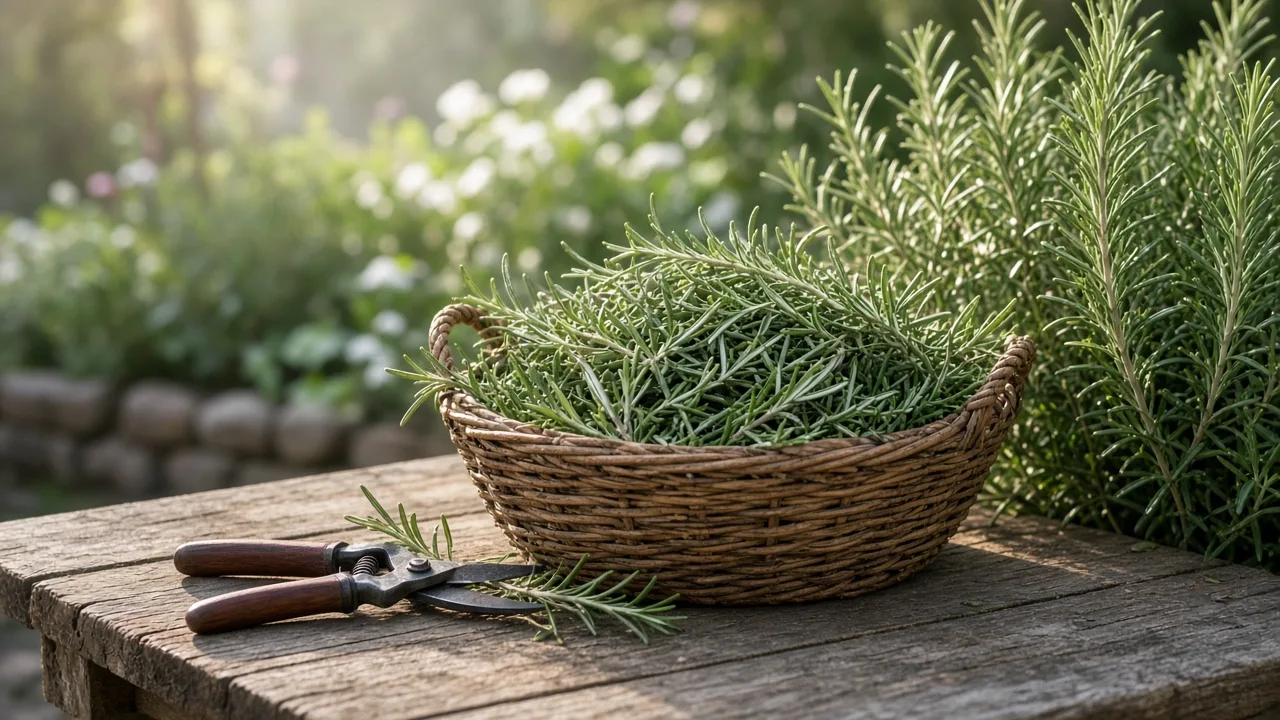
The best rosemary harvest is a light, intentional haircut—not a handful ripped from the nearest branch. Take flexible green tips, cut just above a leaf node, and leave enough leafy growth behind for the plant to keep feeding itself. For most home plants, removing about 20 percent of the foliage in one session is a sensible ceiling, especially when the plant is young, newly transplanted, drought-stressed, or growing in a small pot.
The timing depends on what you want. A few sprigs for dinner can come from any healthy, established plant. A larger harvest for drying is best taken during active growth, around the time flower buds form but before flowers open. In a cold climate, finish substantial cutting well before the first frost; in a mild climate, you can take small harvests through winter while the plant is still growing.
The short answer: harvest green tips, not bare wood
Look for stems with green, supple tissue at the ends and a firmer, browner base. The newest two to six inches are usually the easiest to use and the safest place to cut because they contain leaves and dormant nodes that can push new side shoots. Older wood gives the plant its framework, but a deep cut into a leafless section may leave a gap that fills slowly or not at all.
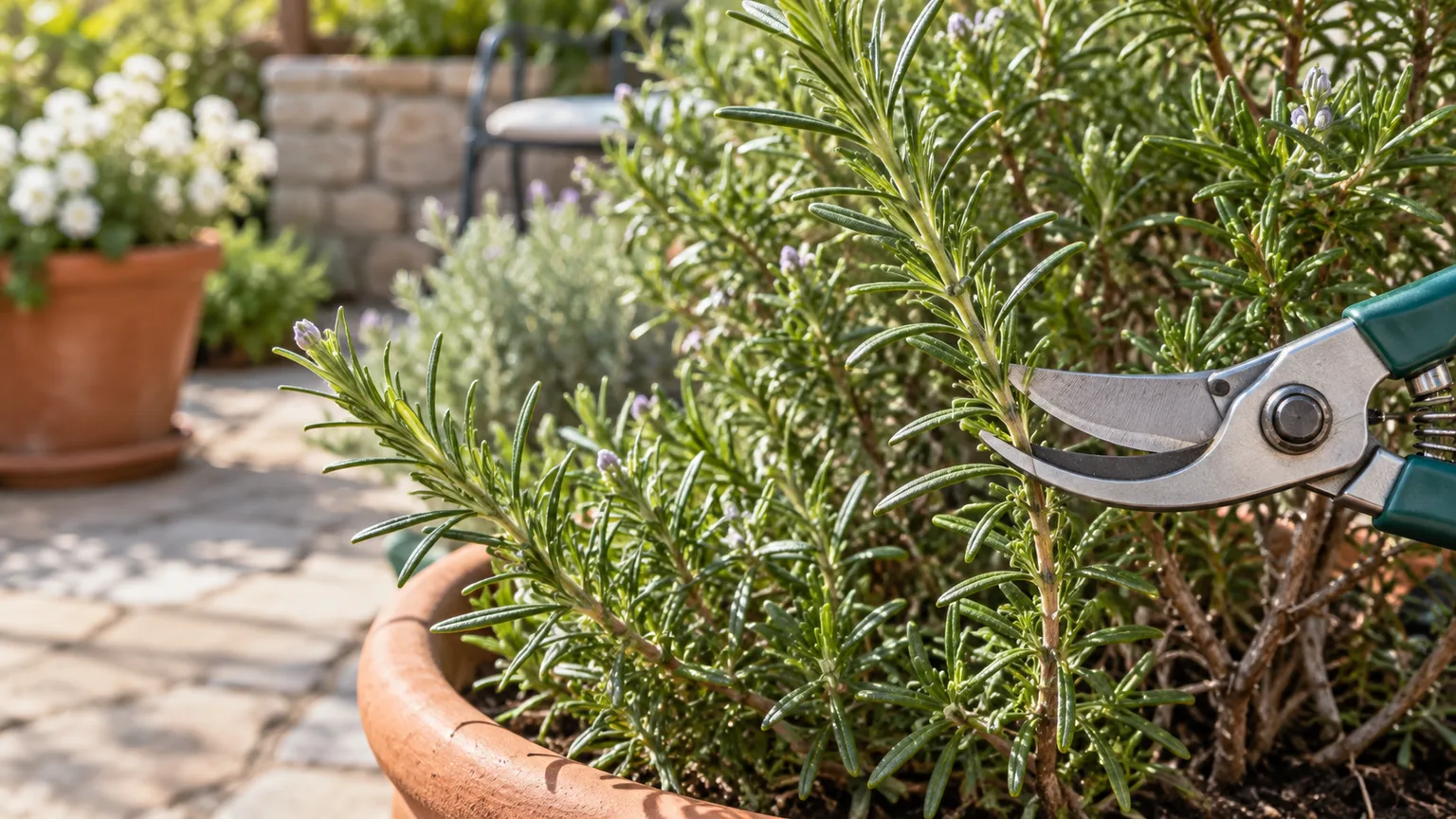
Use sharp scissors or bypass pruners to make one clean cut rather than crushing the stem. Place the cut just above a pair of leaves or a visible node, then step back and check the plant’s outline. One well-placed cut can supply a meal and encourage branching; ten random snips can leave an uneven shrub with exposed interior wood.
Choose the cut by how you will use the rosemary
For a roast, sauce, or tea, take a few short tips and strip the leaves after bringing them inside. For a bundle to dry, choose longer, healthy softwood stems so the sprigs are easy to tie and hang. For freezing, harvest enough green shoots to portion into recipe-size bags or ice cubes, but do not turn a single small plant into a full preservation crop.
The stem does not need to be perfectly green from tip to base. A useful batch stem can have a firm lower inch or two and several inches of flexible, leafy growth above it. What matters is that you cut back into a leafy section, not beyond it. If the stem bends easily and springs back, it is a good candidate; if it snaps like a twig and the cut would land in bare brown wood, choose another branch.
Is your rosemary ready for a real harvest?
Rosemary is perennial and evergreen in suitable climates, but that does not make every newly purchased plant ready for repeated cutting. A small nursery plant may be alive and fragrant while still having too little root and leaf mass to spare. Wisconsin Horticulture advises waiting until the plant is established and limiting harvest to small amounts, while practical growing guidance commonly recommends waiting until the plant has settled into active growth. Use the plant’s condition—not a rigid age promise—as the deciding test.
Check establishment, fullness, and active growth
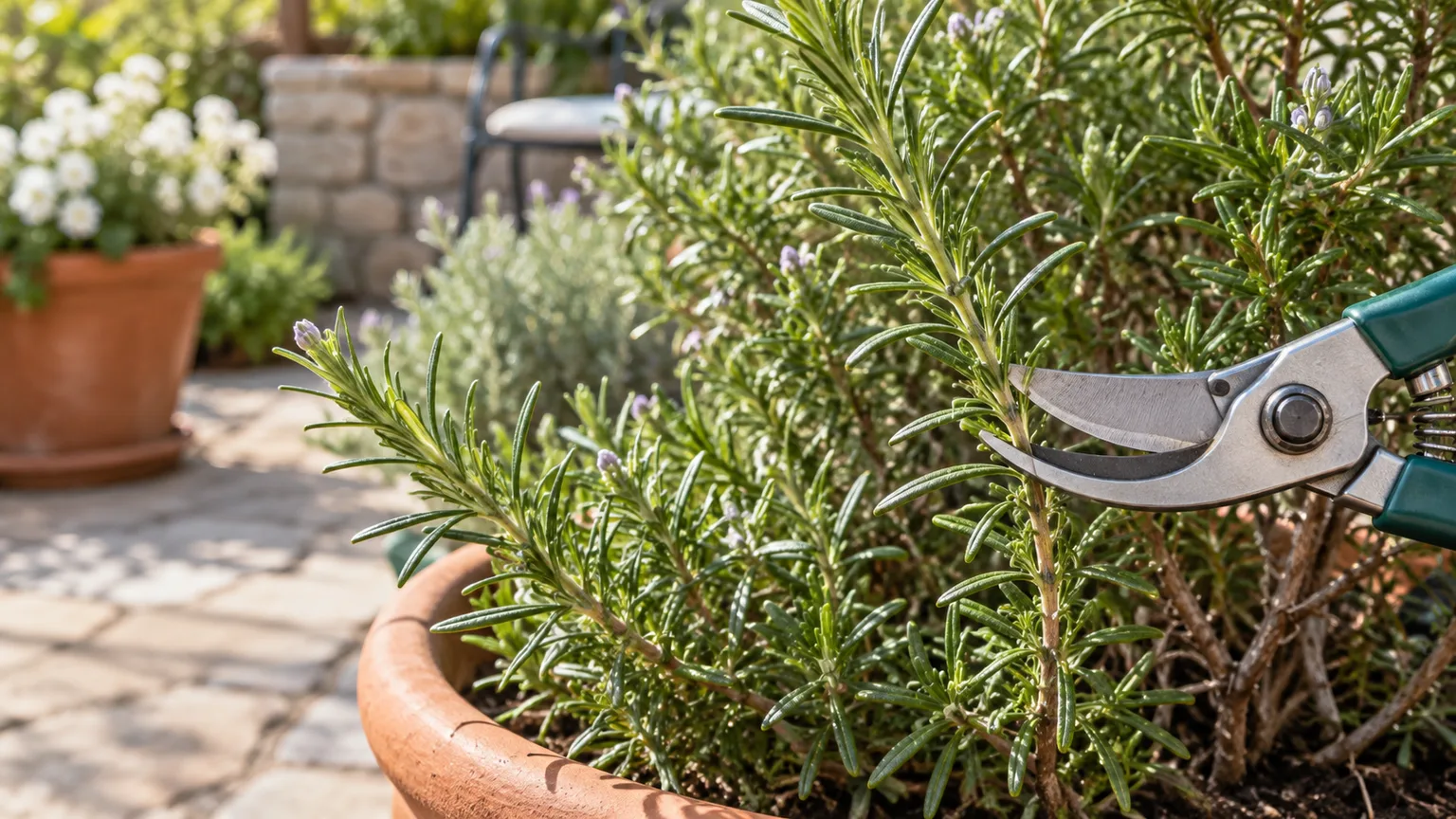
An established plant has several healthy stems, a firm root system, and enough foliage that a few removed tips do not expose the soil or hollow out the center. In a container, roots should be holding the potting mix together without the plant collapsing when you lift or handle the pot. In the ground, look for fresh green extension growth and a plant that has recovered from transplanting, a heat spell, or a dry period.
If the rosemary is still a single thin stem, has recently been repotted, or is producing only short pale shoots, harvest only one or two tips—or wait. Give it good light, drainage, and steady moisture while roots establish. A delayed first harvest is cheaper than forcing a weak plant to rebuild its canopy.
Active growth is easy to spot: the branch ends are extending, new leaves are a brighter green, and the plant is making multiple leafy tips. That is the window for a larger cut. A plant that is merely surviving through winter or sitting still in a cold, dim room should be treated as a maintenance plant, not a harvest source.
Tell flexible softwood from old woody stems
Softwood is the pliable, current-season growth at the end of a branch. It may be lighter green and smoother than the older stem, and the leaves are usually dense enough to cover the cut area. This is your default choice for fresh cooking, drying, and freezing.
Woody growth is darker, harder, and often nearly leafless near the base. It is not automatically useless: a firm rosemary stem can flavor a stock, sit under roasting vegetables, or act as a fragrant skewer if it is clean and untreated. But it is a poor place for a routine regrowth cut. Use woody sections as an accessory to a harvest, not as the part you cut into to make the plant smaller.
| Stem you see | Best use | Where to cut |
|---|---|---|
| Green, flexible tip with dense leaves | Fresh cooking or freezing | Just above a leaf node in leafy tissue |
| Longer green shoot with a firm base | Air-drying bundle | Cut below the leafy section, still above bare wood |
| Flowering tip | Garnish, infused flavor, or immediate use | Above a node; take lightly if the plant is small |
| Hard, brown, leafless branch | Skewer or aromatic scrap | Do not cut deeply into it for routine harvesting |
| Wilted, diseased, or pest-damaged stem | Disposal, not food | Remove only the damaged section and reassess the plant |
The table is a practical selection guide, not a claim that every cultivar has the same color or texture. Trailing varieties can have stems that look less upright, and indoor plants may produce softer growth. Flexibility, foliage, and the location of living nodes are more reliable than color alone.
Choose the best harvest timing
For the strongest fragrance, cut rosemary after overnight moisture has dried but before the day becomes hot. NC State Extension’s herb-preservation guidance places foliage harvest before flowering and recommends the cool morning after dew dries; Wisconsin Horticulture likewise recommends small harvests as needed and cautions against removing too much growth at once. These principles work together: harvest when the plant is dry on the surface, hydrated at the roots, and actively growing.
Use the cool morning and the flower-bud window
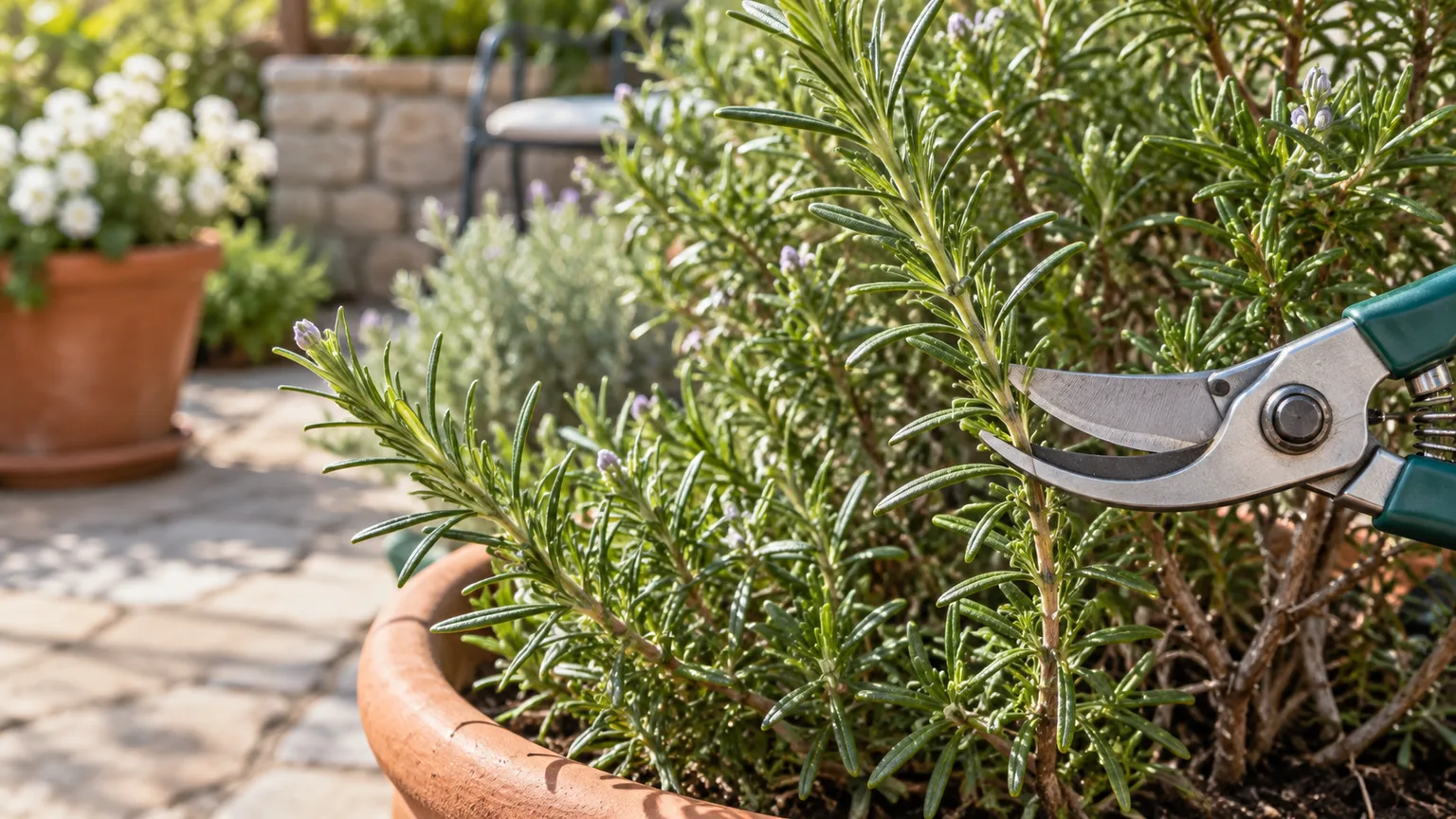
Morning is useful for two reasons. The plant has not spent hours in sun and wind, and the leaves have not been warmed enough to lose as much aroma into the air. Do not cut wet rosemary straight into a closed bag, however. If dew is still clinging to it, wait until the foliage is dry; trapped surface moisture can make a stored bundle deteriorate.
If you plan to dry rosemary, watch for flower buds. The foliage is still a good culinary harvest before the flowers open, and a budded stem gives you a clear signal that the plant is at a mature, aromatic stage. Once flowers are open, you can still use the leaves and flowers—rosemary flowers are edible—but you may prefer the flavor and texture of the pre-bloom foliage for a large drying batch. This is a quality preference, not a safety cutoff.
The season changes the size of the harvest. Spring and summer are usually best for a substantial cut because warmth and light support regrowth. In a mild area where rosemary grows all year, small kitchen harvests can continue through winter. In a colder area, stop heavy cutting several weeks before the expected first frost so the plant has time to replace tender growth and settle before cold weather. A potted plant that will move indoors still benefits from a light, balanced trim rather than a last-minute severe haircut.
Prepare tools and the plant before cutting
You need surprisingly little: clean scissors or sharp bypass pruners, a shallow basket or bowl, and a clean surface indoors. The cutting tool should slice rather than bend the stem. Wipe soil and plant debris from the blades, then disinfect them if you have been cutting a plant with visible disease or moving between plants. Cleaning is especially important when the harvest is going directly into food.
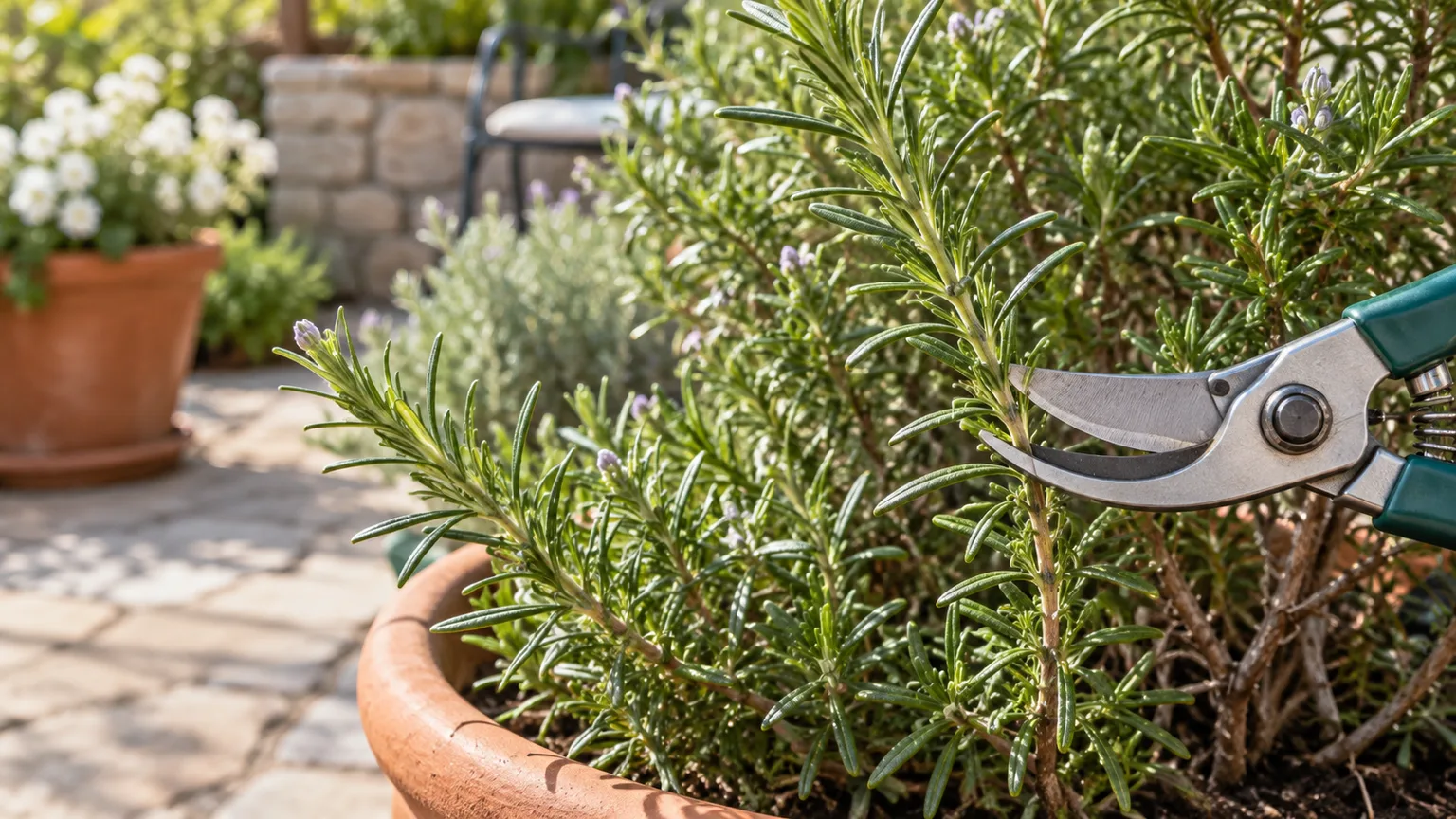
Do not water the foliage immediately before you cut. Water the root zone earlier if the soil is dry, then let the surface dry before harvesting. A well-hydrated plant is better prepared for a light cut, but wet leaves are harder to store and more likely to clump in a drying bundle.
Inspect before you snip. Skip stems with webbing, visible insects, soft brown tissue, or suspicious leaf spots. Set questionable material aside rather than mixing it into the kitchen harvest. If the whole plant is wilted, first check the soil and roots; harvesting a plant that is already under water or root stress adds another demand when it has fewer resources to respond.
Cut rosemary without weakening the plant
Start at the outside of the shrub and take the longest useful tips first. Hold the stem steady with one hand only if needed, then make the cut with the other; avoid tugging, twisting, or snapping branches. A clean cut just above a leaf pair leaves a node that can produce side growth and keeps the remaining branch from becoming a long bare stub. This node-and-tip approach is also reflected in the practical harvesting instructions from Epic Gardening.
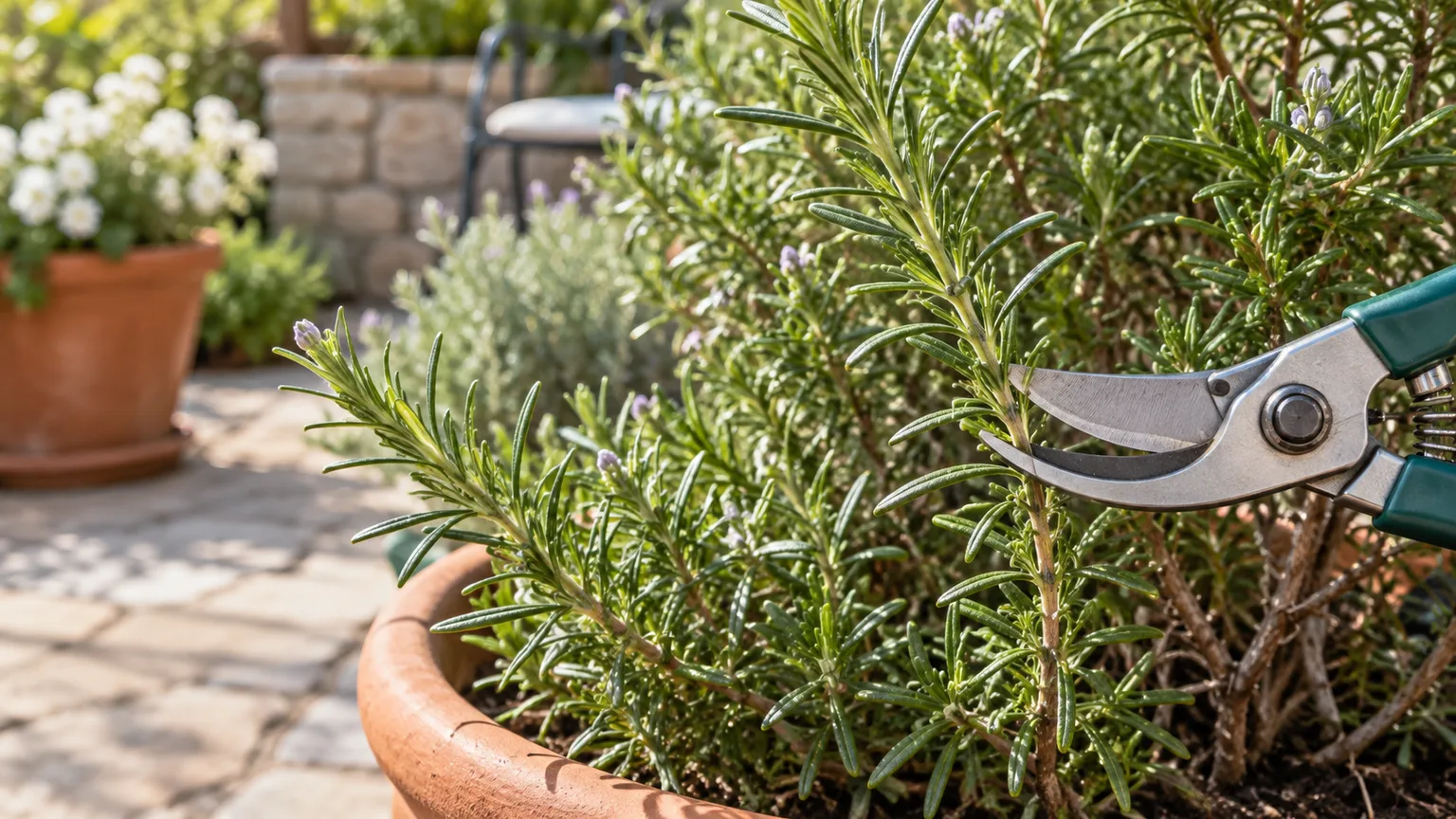
As a conservative home-garden rule, remove no more than one-fifth of the plant in a single harvest. The Wisconsin Horticulture recommendation to keep harvests at or below 20 percent is a useful rosemary-specific guardrail. Some general herb guidance allows much heavier removal of current-season growth, but rosemary’s woody framework and slower recovery make a smaller quota easier to apply safely, especially in containers.
Take a few sprigs for immediate cooking
Choose two or three leafy tips from different sides of the plant. Cut each one two to six inches below its tip, just above a leaf node. Leave several healthy leaf pairs below every cut. If you need only a tablespoon of leaves, there is no reason to remove a whole eight-inch branch; small, repeated harvests are easier on the plant and keep the kitchen supply fresh.
Do not strip the leaves from the branch while it is still attached. Removing foliage in place creates a collection of little bare sticks and defeats the shaping benefit of tip harvests. Bring the sprigs inside, rinse only if necessary, pat them dry, and strip or chop what the recipe needs.
Take a larger batch for drying or freezing
Walk around the plant and select a few long softwood stems rather than emptying one side. An eight-inch stem is a workable size for a hanging bundle, but the plant does not need to meet that length before you take a small cooking harvest. Cut below the leafy portion and above the branch’s bare, oldest section.
Set the stems loosely in a basket so they do not heat up or bruise. Do not compress a large harvest into a plastic bag while it is still warm. Move it to shade first, then decide whether to dry it immediately or prepare it for the freezer. If the harvest is more than you can process that day, refrigerate it using the fresh-storage method below rather than leaving it in a sunny basket.
Work around the plant to keep its shape.
Imagine the rosemary as a rounded shrub with a living green shell over a woody skeleton. Take one branch from the left, one from the back, and one from the right, checking the silhouette as you go. This spreads the light and future regrowth across the plant and prevents the lopsided look that follows from harvesting only the easiest stems.
Leave inner leaves that shade the woody center, and do not remove healthy foliage simply to make the shrub look tidy. Harvesting and shaping overlap, but they are not identical jobs. If the plant needs a major size correction, schedule structural pruning after flowering during active growth; do not combine a large haircut with a kitchen harvest just before cold weather.
Adjust the method for containers and cold climates
Container rosemary can be harvested well, but its margin for error is smaller. A pot contains less soil, dries faster, and may have a smaller root system than a mature garden shrub. Use the 10-to-20-percent range for a pot, favor short tip harvests, and wait for visible new growth before taking another batch. A bright, airy location and a pot with drainage are as important to regrowth as the cut itself. Southern Living’s rosemary harvest guidance also separates light year-round harvests in mild climates from larger spring and summer cuts.
In regions with cold winters, rosemary may be grown as an annual or moved indoors. Wisconsin Horticulture notes that rosemary is only reliably winter hardy in warmer zones and recommends bringing potted plants inside before frost in colder regions. Before moving a plant, remove only damaged or awkward growth and any material you genuinely plan to use; a severe pre-move pruning can leave less foliage for the plant to adapt to lower indoor light.
In a mild climate, the winter rule is different. You can pick a few sprigs whenever the plant is dry and growing, but stop taking large batches if nights are cold, growth has paused, or the soil stays wet. In a hot, dry climate, harvest in the morning and check the root zone first. Rosemary tolerates dry conditions once established, but drought-stressed foliage is not a signal to cut more—it is a signal to restore plant health.
Store fresh rosemary so it stays usable
Use fresh rosemary when you want bright aroma and a firm sprig. For a short supply, wrap the dry stems loosely in a barely damp paper towel and place them in a breathable or loosely closed bag in the refrigerator. Keep the leaves from sitting in standing water. This approach is simple when you will use the herb in a few days.
For a larger handful, trim the stem ends and place the sprigs in an inch or two of water like a small bouquet. Remove any leaves below the water line, cover the top loosely to slow moisture loss, and change the water daily. This can keep healthy sprigs usable for roughly one to two weeks, although the actual life depends on freshness, refrigerator temperature, and whether the leaves were bruised.
Do not wash rosemary and seal it wet. If you rinsed off soil, shake away excess water and dry the surface thoroughly before refrigerating or preserving. Label a bag or container with the harvest date when you have more than one batch; rosemary rarely looks “old” until the aroma has already faded.
Air-dry rosemary for concentrated pantry flavor
Rosemary is well suited to air-drying because its narrow leaves are sturdy and its stems hold together in a bundle. NC State Extension recommends removing damaged growth, making small loose bundles, and drying herbs in a warm, dry, airy place away from direct sun. The small-bundle detail matters: a dense bunch traps moisture in the center and can turn a promising harvest musty before the outside looks dry. Martha Stewart’s rosemary preservation instructions likewise use airflow, shade, and a brittle-leaf test rather than a fixed drying time.
Tie five to eight stems loosely and hang them upside down in a dark or shaded place with real air movement. A pantry, spare room, or ventilated shed can work if humidity is low. Avoid a steamy kitchen, a closed cupboard with no airflow, or a sunny window. Drying may take about one to two weeks, but humidity and stem thickness matter more than the calendar.
Test the leaves rather than guessing. They should feel brittle and separate cleanly from the stem; flexible leaves still contain moisture. Strip the dried leaves by running your fingers down the stem in the opposite direction of growth, then leave them whole until you need them. Whole leaves protect aroma better than crushing an entire jar at once.
Store dried rosemary in an airtight glass or hard container away from sunlight, heat, and steam. Write the month and year on the lid. NC State Extension notes that properly stored dried herbs can keep for about a year, but flavor declines gradually; if a crushed leaf has little smell, it is time to replace it rather than simply adding more to a recipe.
Freeze rosemary for cooked dishes
Freezing is the better choice when you want a flavor close to fresh but do not need a crisp garnish. The leaves soften after thawing, so frozen rosemary works best in soups, sauces, braises, roasted vegetables, marinades, and compound butter. It is less satisfying as a decorative sprig.
For whole sprigs, rinse only when needed, dry them completely, and spread them in a single layer on a tray until firm. Transfer the frozen sprigs to a labeled freezer bag, press out excess air, and remove what you need while still frozen. You can also strip the leaves first, chop them, and freeze small portions in an ice cube tray with water or oil, depending on how you plan to cook.
Portion before freezing. A large frozen block is difficult to measure and invites repeated thawing. Use one cube or one small bag for a typical dish, and note whether the cubes contain oil. Never refreeze rosemary after it has thawed. Extension preservation guidance also recommends accepting the texture change: thawed herbs are for cooking, not for pretending they are freshly picked garnish.
Avoid the mistakes that stop regrowth
The most damaging mistake is not taking a sprig too early; it is cutting past the plant’s living green framework. A cut into bare wood may not produce a new shoot, and several such cuts can leave a patchy shrub. If you want to reduce height, lower the cut only as far as you can still see healthy leaves and nodes below it.
The next common error is treating the one-fifth or one-third rule as permission to remove a whole section. Percentages describe total foliage, not a single side. A plant can lose a reasonable amount overall and still be badly unbalanced if every cut comes from its sunniest branch. Distribute harvests around the shrub.
Avoid harvesting a plant that is visibly wilted in the morning, sitting in saturated soil, or recovering from a major move. Rosemary’s preference for dry soil does not mean a dehydrated plant has unlimited tolerance. Check the root zone several inches down, correct the cause, and wait for new growth before you ask for a large harvest.
Do not make a large cut right before frost, during a dark indoor winter, or immediately after a heat wave. Tender regrowth is vulnerable when the plant cannot replace it quickly. Do not leave cut herbs in a hot car, a sealed wet bag, or direct sun while you finish other garden chores. The quality loss happens after the cut as much as at it.
Finally, do not confuse flowering with failure. Flowering can change the flavor you prefer, but open flowers do not make rosemary unusable. Harvest a few flowers for garnish if you like, or wait for flowering to finish before doing a planned shape correction. The plant can remain productive either way.
Diagnose slow recovery after a harvest
Healthy rosemary should not look dramatically smaller after a light tip harvest. If the cut ends stay green and the remaining leaves remain firm, give the plant time and keep the care steady. New side shoots may appear at nodes below the cut rather than at the cut surface itself, so recovery is often a matter of branching, not simply lengthening.
If the plant browns rapidly, start with the pattern. Browning only on freshly cut tips can indicate the cut was made into weak or stressed tissue, while widespread browning points more toward drought, root rot, cold injury, transplant shock, or indoor light stress. Check whether the pot drains freely, whether the soil is wet for too long, and whether the plant was moved from bright outdoor light into a hot or dim room.
If only one side fails to regrow, inspect that side for bare wood, broken branches, or repeated harvesting. Do not keep cutting it to “encourage” growth. Leave healthy foliage, improve light and airflow, and take future harvests from stronger branches. If the plant has been stripped below all visible nodes, recovery may be slow; the best next action is patience, not fertilizer.
Fertilizer is not a shortcut for a bad harvest. Rosemary generally needs light feeding, and excess fertilizer can produce soft, less aromatic growth. Correct drainage, light, watering, and temperature first. Once the plant is visibly making healthy new tips, return to normal care and resume small cuts.
Build a repeatable rosemary harvest rhythm
Treat rosemary as a crop you lightly manage every week or two during active growth, not as a shrub you empty once in summer. On each pass, take the longest useful tips from different sides, keep the total modest, and bring the harvest to shade immediately. For a large, vigorous plant, a weekly kitchen harvest may be reasonable; for a young container plant, the interval may be much longer.
Keep two mental lines on the plant. The first is the harvest line: the point above which green tips can be removed while leafy nodes remain below. The second is the structural line: the older wood that holds the plant together and should be cut only for a deliberate pruning reason. Staying above the first line and leaving the second intact gives the plant both usable foliage and a framework for regrowth.
Plan preservation around the plant’s capacity. If you want a full jar of dried rosemary, harvest from several mature plants or take several small batches over the season. If you have one young plant, use it fresh and freeze only the surplus. The most professional-looking harvest is the one that leaves the plant fuller next month than it was today.
Conclusion
Harvest rosemary when the plant is established, dry on the surface, and making healthy green growth. Cut flexible tips just above leaf nodes, take only a modest share of the foliage, and work around the plant so the remaining canopy stays balanced. Use flower buds as a flavor-timing cue for a drying harvest, not as a reason to panic when blossoms open.
Bring cut sprigs into shade, keep fresh stems cool and dry, air-dry small bundles with good ventilation, or freeze portioned leaves for cooked dishes. If the plant is young, wilted, newly moved, or heading into frost, choose a smaller harvest—or wait. Rosemary rewards restraint: a clean cut today should give you another fragrant set of tips to use soon.



