How to Harvest Romaine Lettuce the Right Way
Harvest romaine lettuce at the right size with clean cuts, smart regrowth tactics, heat-season decisions, and storage steps for crisp leaves.
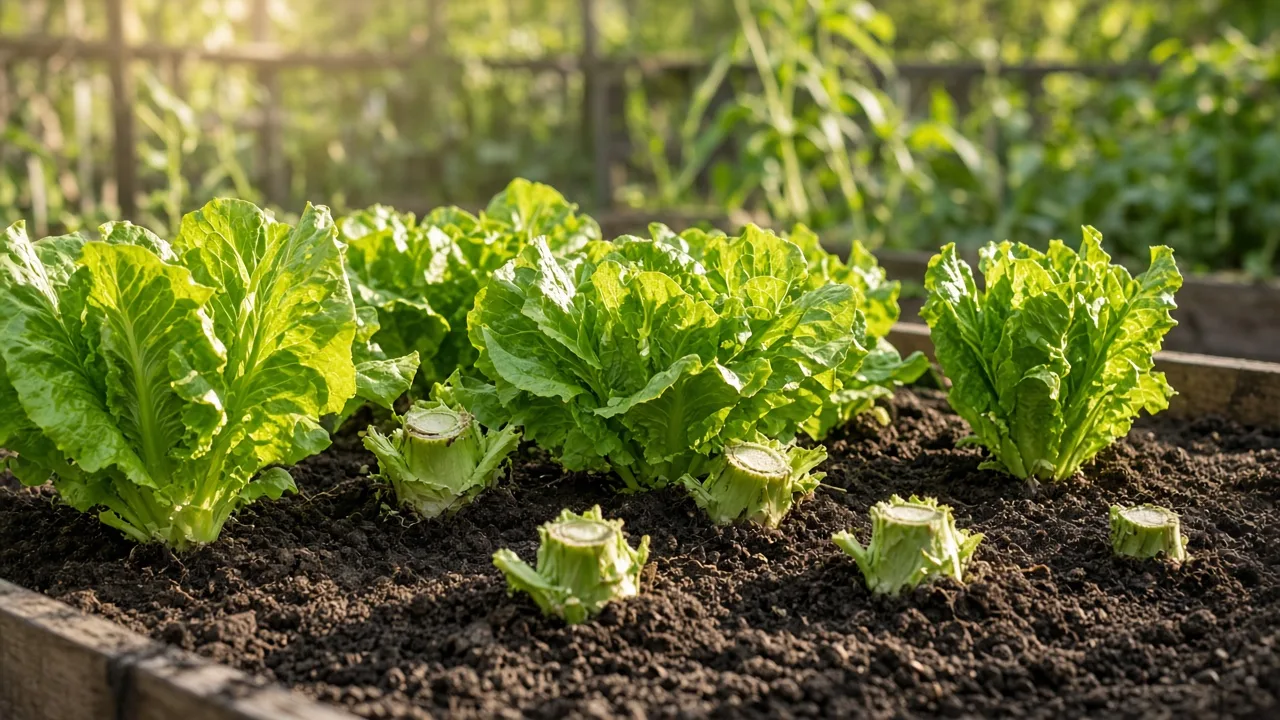
Romaine gives you a choice that many garden crops do not: you can take a few leaves for tonight’s sandwich, or you can cut the entire plant for a full head. The best method depends on what the plant looks like, how much you need, and how close the weather is to turning hot—not simply on the number printed on the seed packet.
The short version is simple. Harvest in the cool part of the day, take the oldest outside leaves first when you want the plant to continue growing, and cut a whole head about 1–2 inches above the soil when you want a large harvest. Keep the center growing point intact for the best chance of a smaller second flush, but do not expect every cut plant to regrow equally well.
Choose Your Harvest Goal Before You Cut
Romaine, also called cos lettuce, grows as an upright rosette around a central crown. That crown is the plant’s working growing point. The leaves around it are the part you eat, but the way you remove them determines whether the plant can keep producing.
Baby leaves for steady picking
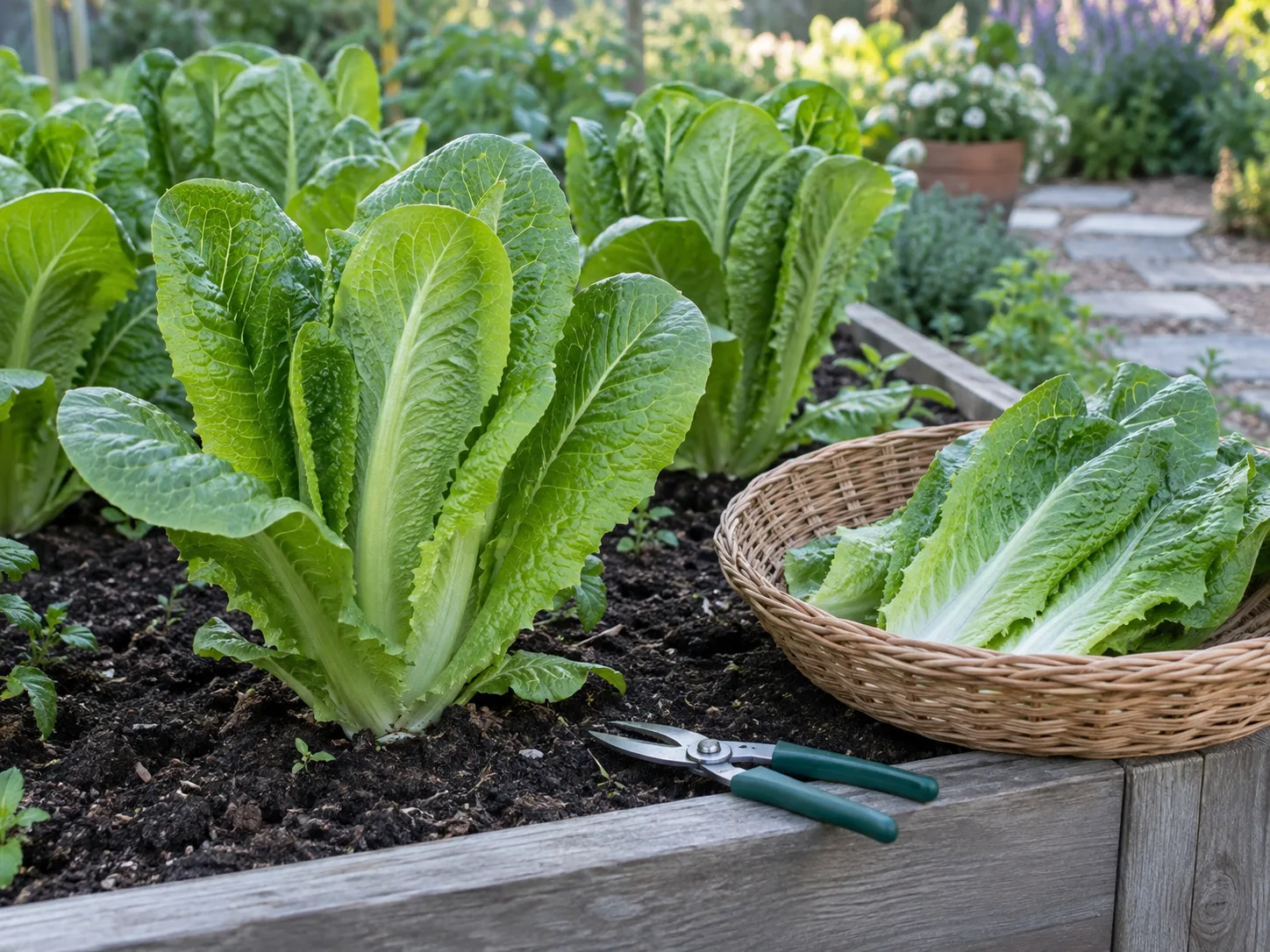
Choose a leaf-by-leaf harvest when you want salad greens over several weeks or when the plants are still too small to justify a whole-head cut. Baby romaine is tender, quick to use, and especially useful when you have only a few plants in a pot or narrow bed. Clip the largest outside leaves, leaving the center and several younger leaves to keep building size.
Some gardeners also grow a compact romaine such as Little Gem specifically for small heads, while others sow a full-size cos variety and harvest it young. Variety matters: Savvy Gardening’s romaine guide notes that romaine types can vary from about 55 to 70 days from seeding and range widely in final height. That means a baby-leaf harvest is often a better indicator of readiness than trying to force every variety into one calendar date.
Whole heads for a single, generous harvest
Cut the whole head when you need enough lettuce for several people, when the plant has reached its intended size, or when a heat wave is about to shorten the crop’s quality window. A whole-head harvest is also sensible if the plant is already beginning to stretch upward and the center leaves are losing their compact, edible shape.
The trade-off is control. You get more lettuce immediately, but the plant has to rebuild from its remaining crown. A second flush can be worthwhile, especially in cool weather with steady moisture, but it is usually smaller and less uniform than the first head. If your bed is crowded or another crop is ready to take the space, harvesting the whole plant and replanting may give you a more reliable succession than waiting for regrowth.
Know What Ready Romaine Looks Like
Treat days to maturity as a range
Use the seed packet’s days to maturity to estimate when to start checking, not as an instruction to harvest on one exact morning. The count may begin at seeding or transplanting depending on the supplier, and cool weather, cloudy light, spacing, moisture, and variety all change the pace. University of Delaware Cooperative Extension lists examples from 45 days for Little Gem to 70 days for Giant Caesar Romaine, which is a useful reminder that “romaine” is not one uniform crop.
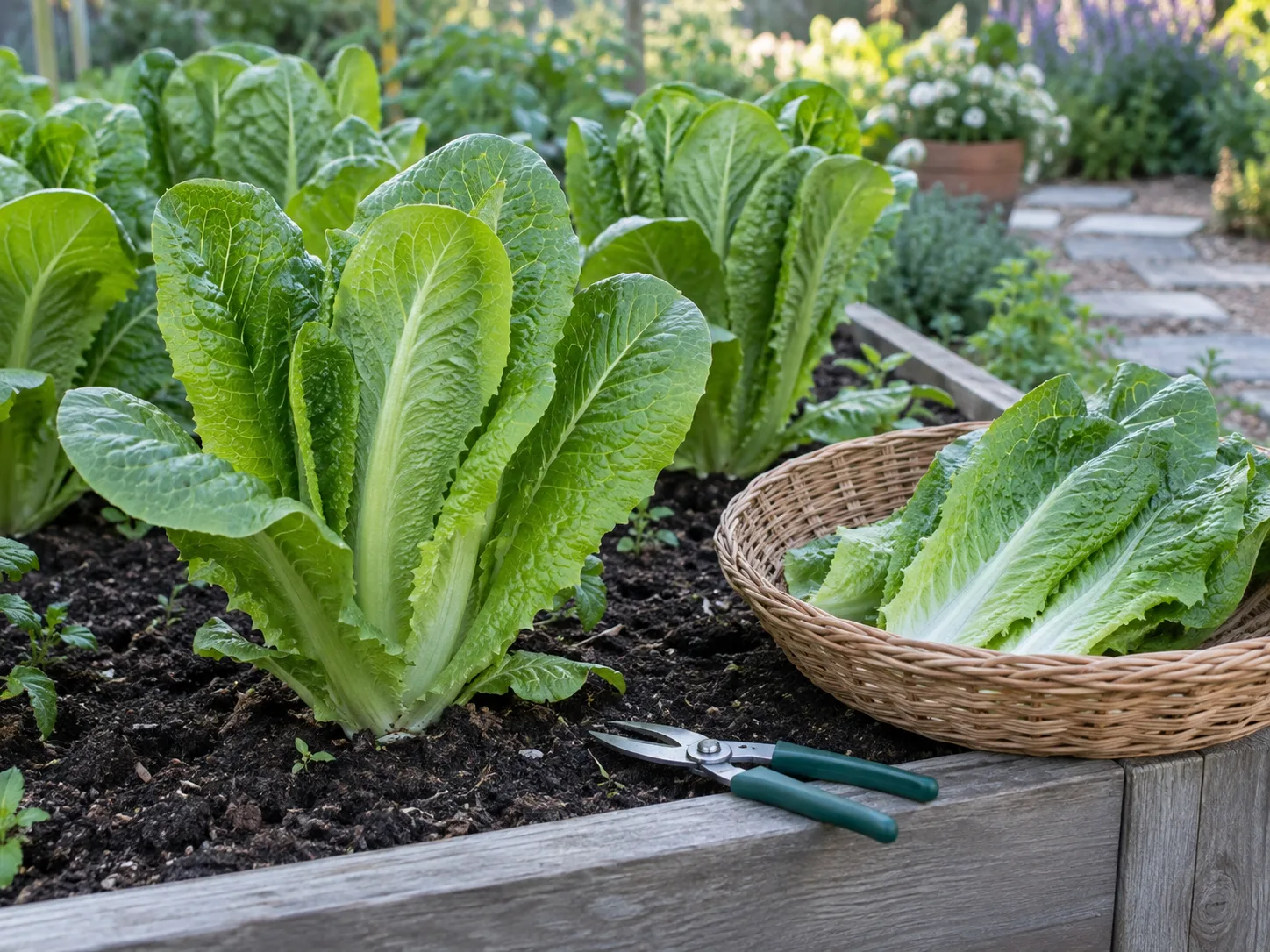
For baby leaves, begin checking once the outside leaves are large enough to be useful and cleanly removable. For a full head, look for a substantial upright rosette with firm, crisp leaves and a filled-in center. The University of Utah Extension lettuce guide describes cos lettuce as ready in the early heading stage, while leaf lettuce can be picked after leaves form and before a seed stalk appears.
Read the leaves, center, and texture
Ready romaine should look hydrated and upright rather than limp from afternoon heat. The leaves should have strong color for the cultivar, firm ribs, and enough size to make the harvest worth taking. A mature head does not need to become a tight, round ball; romaine naturally stays more open than crisphead lettuce.
Press the outside of the head gently rather than squeezing hard enough to bruise it. A very loose plant may simply need more time, while a plant that feels increasingly hard, has a rapidly elongating center, or is sending up a central stalk is moving toward bolting. If the leaves are already coarse or bitter and the stalk is rising, waiting for a perfect “finished head” usually costs quality.
When the plant is small, harvest by leaf size. When it is mature, use the combination of size, firmness, flavor, and weather. That four-part check is more reliable than a height rule by itself, because a tall, water-stressed plant can be less pleasant than a shorter, fast-growing one.
Pick at the Coolest Time With the Right Tools
Early morning is usually the easiest harvest window. Overnight, the plant has had time to replace some of the water lost through its leaves, so the leaves are less likely to wilt while you work. BBC Gardeners’ World recommends harvesting early, before the sun dehydrates the foliage, and the same principle is useful in hot climates even when the crop is grown in a container.
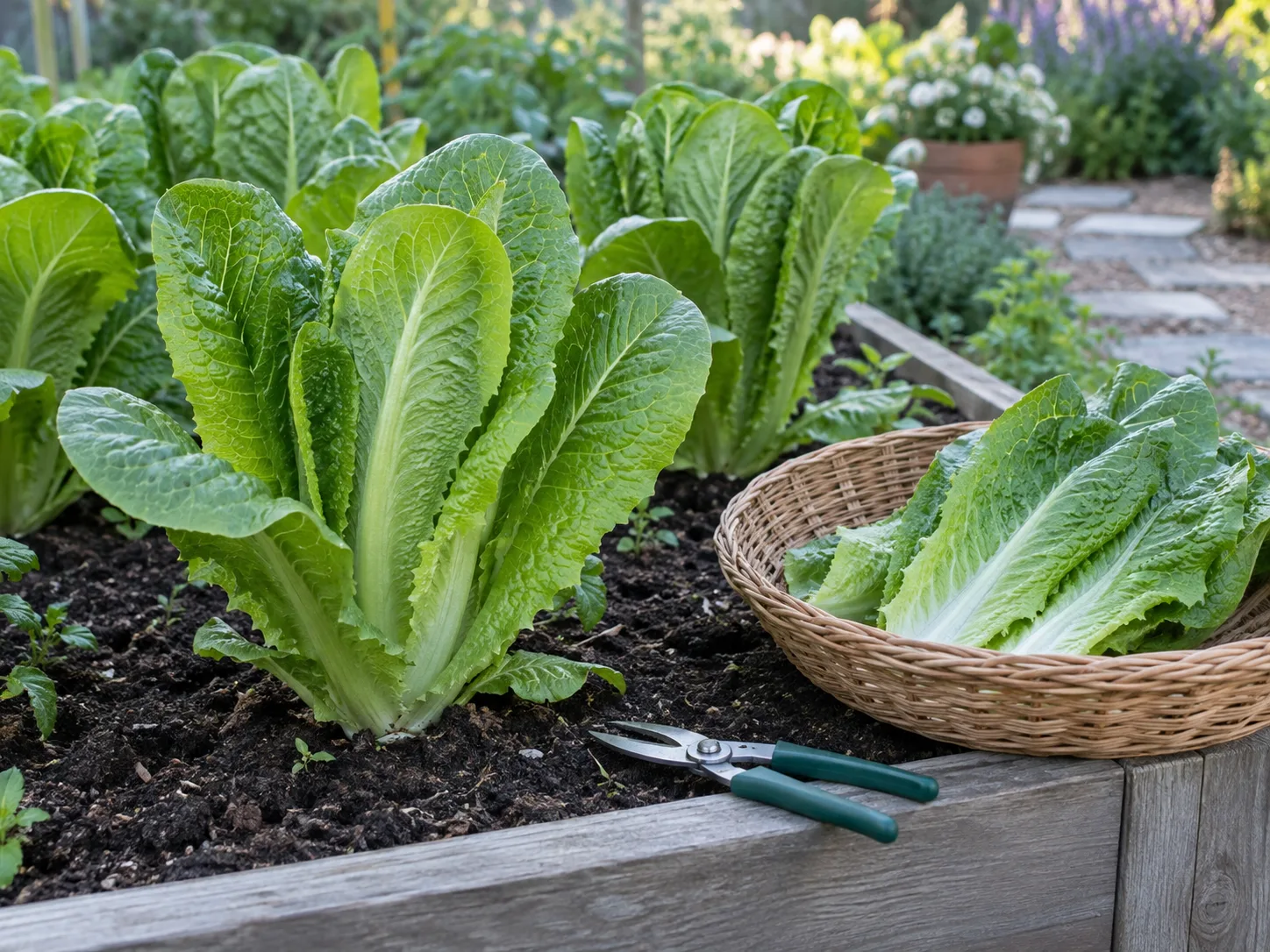
Bring a clean pair of scissors or garden snips for individual leaves and a sharp knife or sturdy shears for a whole head. A serrated knife can move through the dense base with less crushing, but a clean straight blade also works if it is sharp. Use a basket or shallow bowl rather than compressing the leaves into a deep bag, and keep a clean towel nearby if the foliage is wet with dew.
Do not harvest immediately after overhead irrigation or rain unless you need to remove damaged plants. Wet leaves bruise more easily, carry soil into the kitchen, and are harder to dry before refrigeration. If the crop is wet, let the foliage surface dry while the weather remains cool, then cut. Always wipe soil from the outside of your tool before the next plant, and wash the harvest tool after the session.
Harvest Outer Leaves Without Stalling the Plant
This is the most useful method when your priority is a longer picking window. Start at the outside of the rosette, where the oldest leaves are located. Hold the leaf near its base and pull it down and slightly sideways, or snip it close to the crown without nicking the center leaves.
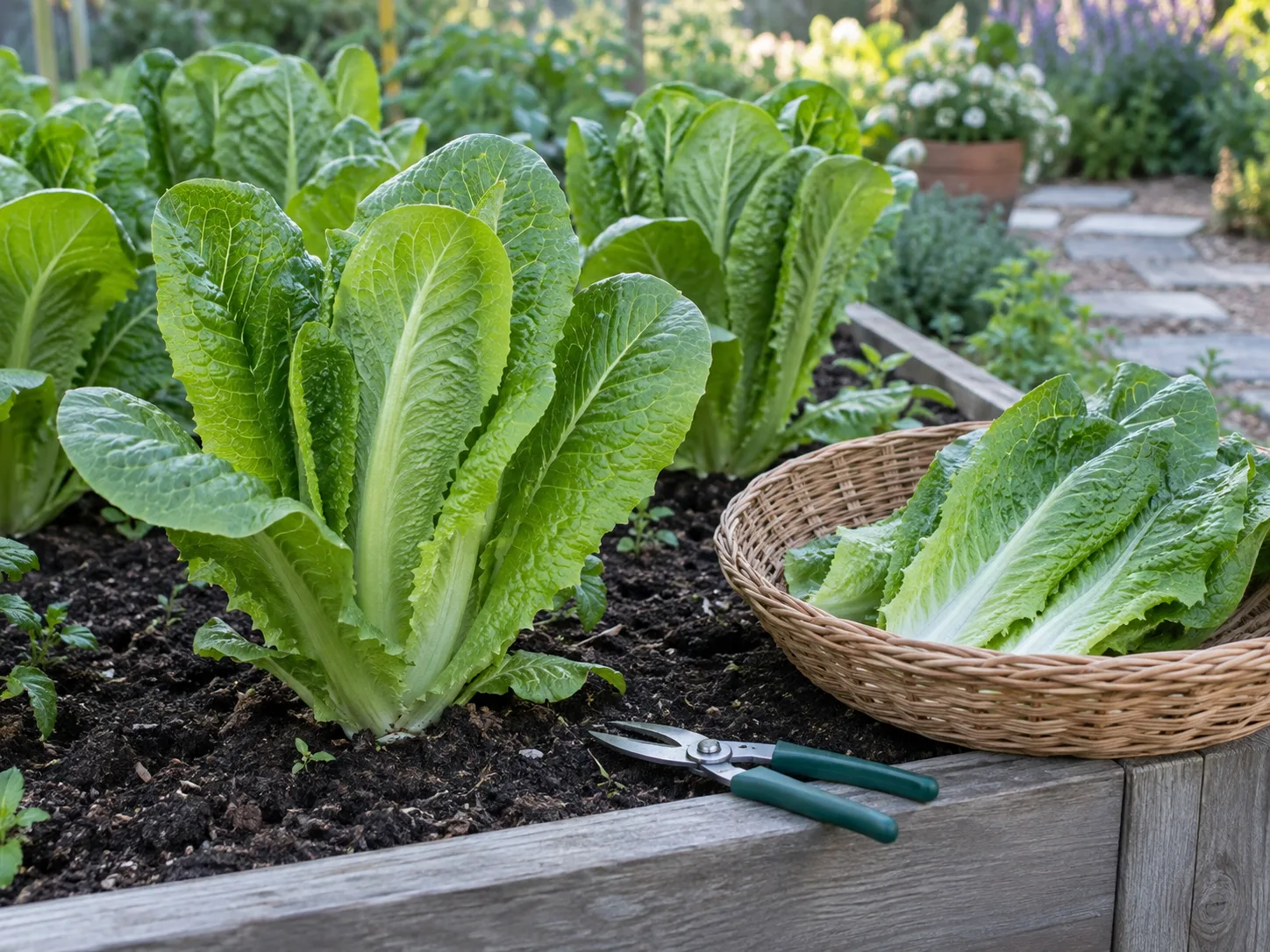
Leave the small upright leaves in the middle alone. They are the plant’s next harvest and its main photosynthetic engine. Removing the center can deform the crown, expose tender tissue to drying, and turn a gentle harvest into an accidental whole-plant reset.
Take only what you can use, plus a little extra if the outer leaves are crowded, scarred, or shading the center. A conservative rule is to remove no more than roughly one-quarter to one-third of the plant at one time. The plant can replace leaves more easily when it still has a broad, healthy canopy. If every outer leaf is large enough to eat but the plant is still small, harvest from several plants instead of stripping one bare.
For the cleanest cut, place the snips just above the soil line and avoid dragging the leaf through dirt. If the lower portion is tough or damaged, trim that part in the kitchen rather than tearing deeply into the crown in the garden. After picking, give the plant several days of steady moisture and check it again when new outside leaves have expanded.
Cut a Whole Head for the Best Chance of Regrowth
When the head is full-sized, use one decisive cut instead of sawing back and forth. Gather the leaves loosely with one hand if needed, then cut straight across the stem about 1–2 inches above the soil line. The precise height is less important than leaving a solid stump with the crown and growing points intact. Delaware Extension’s leaf-lettuce notes specifically recommend a cut about two inches above the soil and repeated recutting.
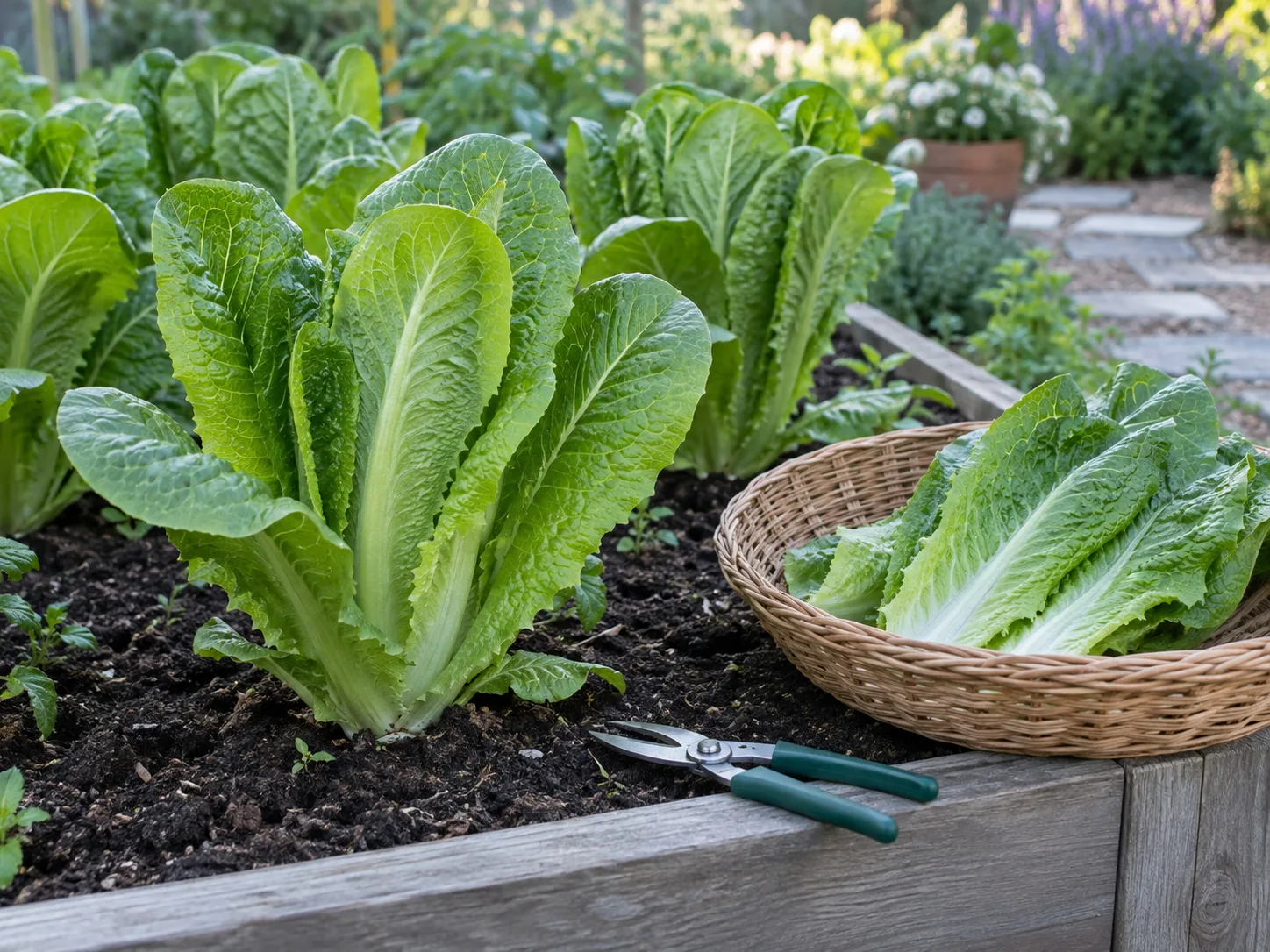
Cutting above the soil keeps the blade out of dirt and avoids grinding soil into the cut surface. It also leaves enough stem to support new leaves. Do not yank the head sideways after cutting; that can split the crown below the cut and pull roots loose, especially in a shallow container.
Once the head is off, inspect the stump. If it is clean and firm, leave it in place. If it is slimy, hollow, badly insect-damaged, or surrounded by rotting leaves, remove the plant instead. A regrowth experiment is not worth preserving diseased tissue in a crowded bed.
Care for the Crown After a Head Cut
The stump is not a guaranteed second head; it is a chance for new leaves to emerge. Regrowth is most likely when the plant is healthy, the weather is still cool, the soil stays evenly moist, and the cut did not damage the center. It may produce several loose leaves, a small partial head, or nothing useful before the plant bolts.
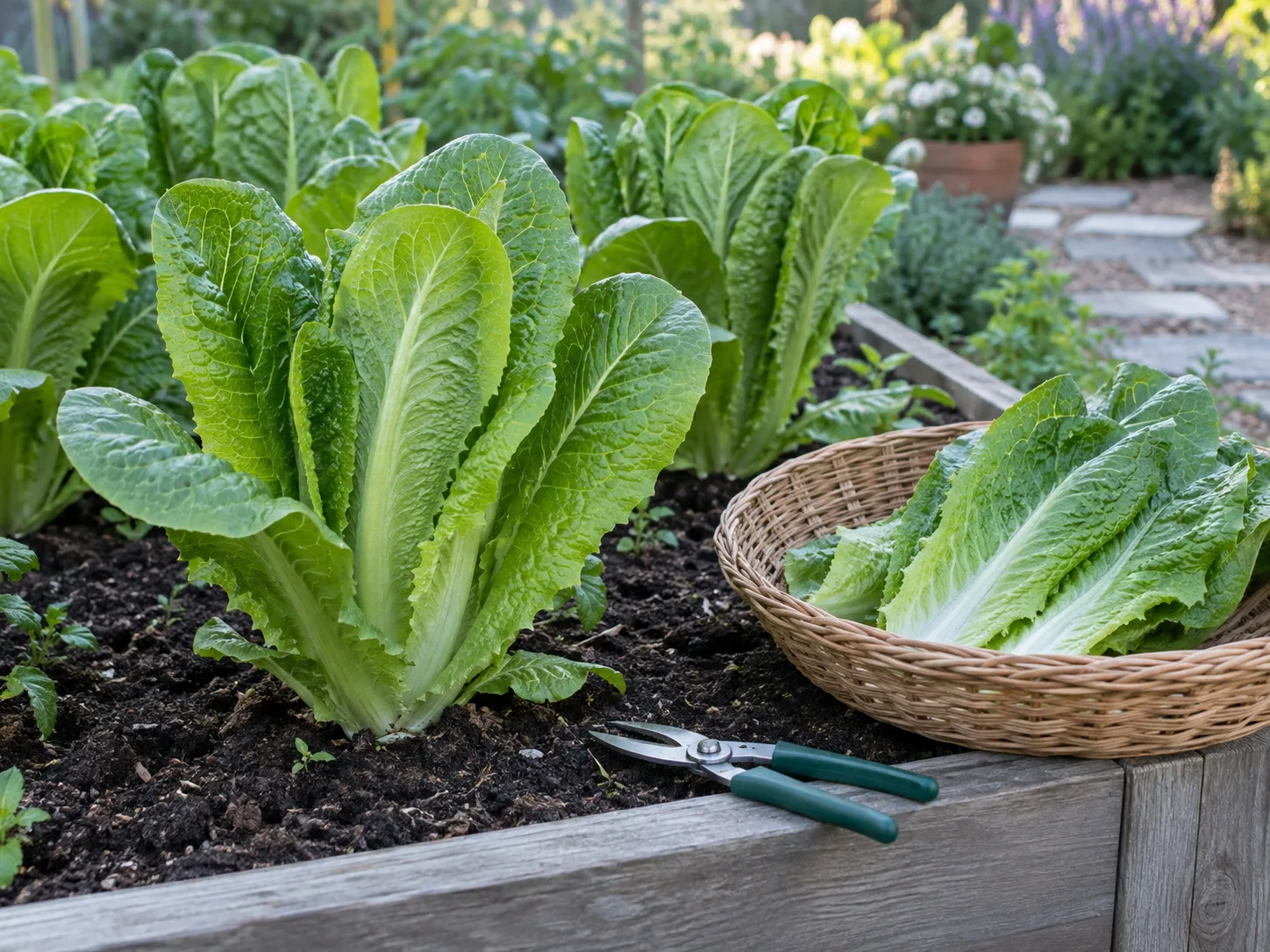
Clear away loose cut leaves that touch the soil, but do not mound mulch against the fresh cut. Water the root zone deeply enough to moisten the soil without leaving the bed saturated. If you use liquid fertilizer, do not treat the cut surface; feed only according to the crop’s normal needs and label directions. Excess nitrogen will not turn a heat-stressed stump into a new head overnight.
Check the crown after about a week. New growth should appear from the center as small, clean leaves. If the stump stays wet, smells sour, or turns dark and soft, pull it and compost it only if your compost system reaches a reliable, plant-killing temperature; otherwise dispose of diseased material according to local guidance. A healthy stump that is growing slowly may simply need more light, time, and stable moisture.
Adjust the Harvest When Heat, Frost, or Rain Arrives
Romaine is a cool-season crop, and heat changes the harvest equation quickly. Utah State University Extension reports that lettuce grows best when temperatures stay below about 75°F and that high summer temperatures can reduce growth and create bitter or off flavors. The exact threshold varies with variety, night temperatures, water supply, and local conditions, so treat those numbers as a warning zone rather than a switch.
If a hot spell is forecast, harvest usable outer leaves or take whole heads before the plants become tall and bitter. Shade cloth, a floating row cover used for the right purpose, and consistent irrigation can buy time, but they cannot make a bolting plant stay in its spring condition. When the center stretches and a seed stalk becomes obvious, take the final edible leaves promptly. Bolted leaves are often coarse and bitter; they are better removed than repeatedly picked in hope that flavor will return.
Light frost is less urgent than heat for established lettuce. A fabric cover can protect a spring or autumn planting, while a cold, wet harvest morning argues for waiting until the leaves dry. Savvy Gardening’s lettuce guidance also emphasizes succession planting and season extenders as ways to maintain supply instead of depending on one plant to produce indefinitely.
Keep the Crop Productive Between Pickings
Romaine responds best to steady growth. Keep the root zone consistently moist, especially in a pot where soil warms and dries quickly. Avoid alternating bone-dry soil with a heavy drench; USU Extension connects moisture swings with tough leaves, slow head development, off flavors, and tipburn on inner leaves.
Mulch around—but not against—the crown to reduce evaporation and keep soil from splashing onto the foliage. Water at the base in the morning when possible. Remove weeds that compete for shallow moisture, and check the undersides of leaves before each picking for aphids, thrips, and slug damage.
Succession sowing is the insurance policy that makes repeated harvesting work. Sow or transplant a small batch every couple of weeks during your cool growing window, adjusting the interval for your climate and the variety’s days to maturity. Then one plant can be recovering while another is reaching baby-leaf size and a third is ready for a full head. This staggered approach is more reliable than cutting every plant at once and waiting for all of them to regrow together.
Harvest Romaine From Containers and Raised Beds
The technique is the same in a pot, but the warning signs arrive faster. Container romaine can become stressed by heat reflected from a wall or patio, and the limited soil volume may dry between morning and evening. Check the moisture below the surface with a finger and water when the mix is beginning to dry, not only when the leaves are already limp.
In a raised bed, spacing affects both airflow and the usable harvest. Crowded plants may produce plenty of narrow leaves but are harder to cut cleanly without damaging neighbors. Give each head enough room for the mature variety, or plan to harvest crowded plants young as baby greens. A sharp tool matters more in a dense bed because a ragged cut can catch the next plant as you work down the row.
If the pot is portable, move it to morning sun with afternoon protection when heat is approaching. Do not move a deeply wilted plant into intense sun and expect it to recover instantly; water the root zone first and let the foliage regain firmness. A small container is also a good place for leaf-by-leaf picking because you can use the plant’s limited root volume to your advantage instead of trying to force a large head.
Wash, Cool, and Store Romaine for Better Texture
Post-harvest handling begins before the lettuce reaches the kitchen. Brush off loose soil outdoors, remove damaged or yellowing leaves, and place the good leaves in shade while you finish picking. The faster the harvest stops heating up, the longer it will stay crisp.
For immediate use, separate the leaves and rinse them under cool running water, paying attention to the bases where soil and small insects hide. Dry thoroughly in a salad spinner or between clean towels. Dressing should wait until serving; Maine Extension’s lettuce guidance recommends washing well, drying, and adding dressing just before eating to reduce wilting.
If you will store the lettuce, avoid sealing visibly wet leaves in an airtight container. Excess water encourages sliminess, while no protection at all lets the leaves dehydrate. Wrap dry leaves loosely in a clean towel or paper towel and place them in a ventilated bag or container in the crisper drawer. Keep them away from apples, pears, and other strong ethylene-producing fruit when possible; USU Extension notes that ethylene exposure can contribute to spotting during storage.
The best texture is usually in the first several days. Storage life depends on how fresh and dry the harvest was, the temperature of the refrigerator, the variety, and whether the leaves were cut or left whole. Maine Extension suggests using lettuce within 3–5 days for best quality, while USU gives a broader refrigerated range of 1–2 weeks. Read those as quality windows, not promises: discard anything slimy, foul-smelling, moldy, or otherwise spoiled.
Use More of the Plant Without Taking Unnecessary Risks
Outer romaine leaves are often darker and more strongly flavored than the pale inner heart, but “outer” does not mean “waste.” USDA Agricultural Research Service research found substantial differences in compounds between full-size outer leaves and heart leaves, and frames outer leaves as an opportunity to reduce food waste when they are clean and suitable for use.
At home, use the same decision rule you would use for any leafy green: keep leaves that are fresh, intact, and grown under conditions you trust; remove leaves with heavy pest contamination, rot, unexplained residue, or extensive soil damage. Rinse does not make a visibly spoiled leaf good again, and no harvest trick replaces following the label for any pesticide used on the crop.
Young thinnings can be eaten if they are clean and healthy. Tough ribs can be sliced thinly for sandwiches, chopped into a cooked dish, or blended into a green sauce where the texture matters less. If the plant has bolted and the leaves are too bitter for your taste, pull it before the stalk shades nearby crops and use the space for a fresh succession planting.
Fix Common Harvest Problems Before They Spread
The leaves taste bitter. First check heat and water stress. A hot, dry week is more likely to be responsible than a bad harvest cut. Pick the best leaves in the morning, cool them promptly, and harvest the rest before the plant sends up a stalk. Refrigeration may soften mild bitterness, but it will not restore tender texture to a fully bolted plant.
The cut is ragged or the crown is split. Stop using a dull blade. Make one clean cut, leave a little stem above the soil, and avoid twisting the head after cutting. If the crown is badly torn, harvest the remaining usable leaves and remove the damaged stump rather than keeping wet, broken tissue in the bed.
The leaves are slimy after storage. They were probably stored wet, warm, bruised, or too tightly packed. Sort immediately, discard spoiled leaves, dry the sound leaves, and use a container that allows a little air movement. Never mix a fresh harvest with one already showing decay.
There are silvery scars, tiny insects, or ragged holes. Inspect the undersides and the center. Thrips can leave silvery-brown scarring, while slugs and caterpillars create holes or ragged edges. Remove heavily damaged leaves, identify the pest before choosing a control, and follow local Extension or product-label guidance. Do not spray a harvestable crop with an unapproved product or ignore the required preharvest interval.
The stump is not regrowing. Give it one honest check: was the weather cool, was the crown intact, and was the soil consistently moist? If not, the failure is not surprising. If the plant is healthy but the weather is turning hot, take the remaining edible leaves and replant rather than spending a week trying to force a second crop from an exhausted stump.
Conclusion
Harvesting romaine well is a matter of choosing the right level of commitment. Pick a few outside leaves when you want a living salad plant, cut the whole head above the soil when you need a large harvest, and leave the crown only when cool weather and plant health make regrowth plausible.
Use the calendar to start checking, then let leaf size, firmness, flavor, moisture, and the forecast make the final call. Harvest early, keep the cut clean, protect the remaining crown, cool the lettuce quickly, and plant in succession so your next salad does not depend on one stump producing a miracle.



