How to Plant Grass Seed on Hard Dirt and Get It to Grow
Hard dirt can mean compaction, clay, drought, or poor drainage. Find the right fix, sow grass seed at the correct rate, and care for new seedlings as they root.
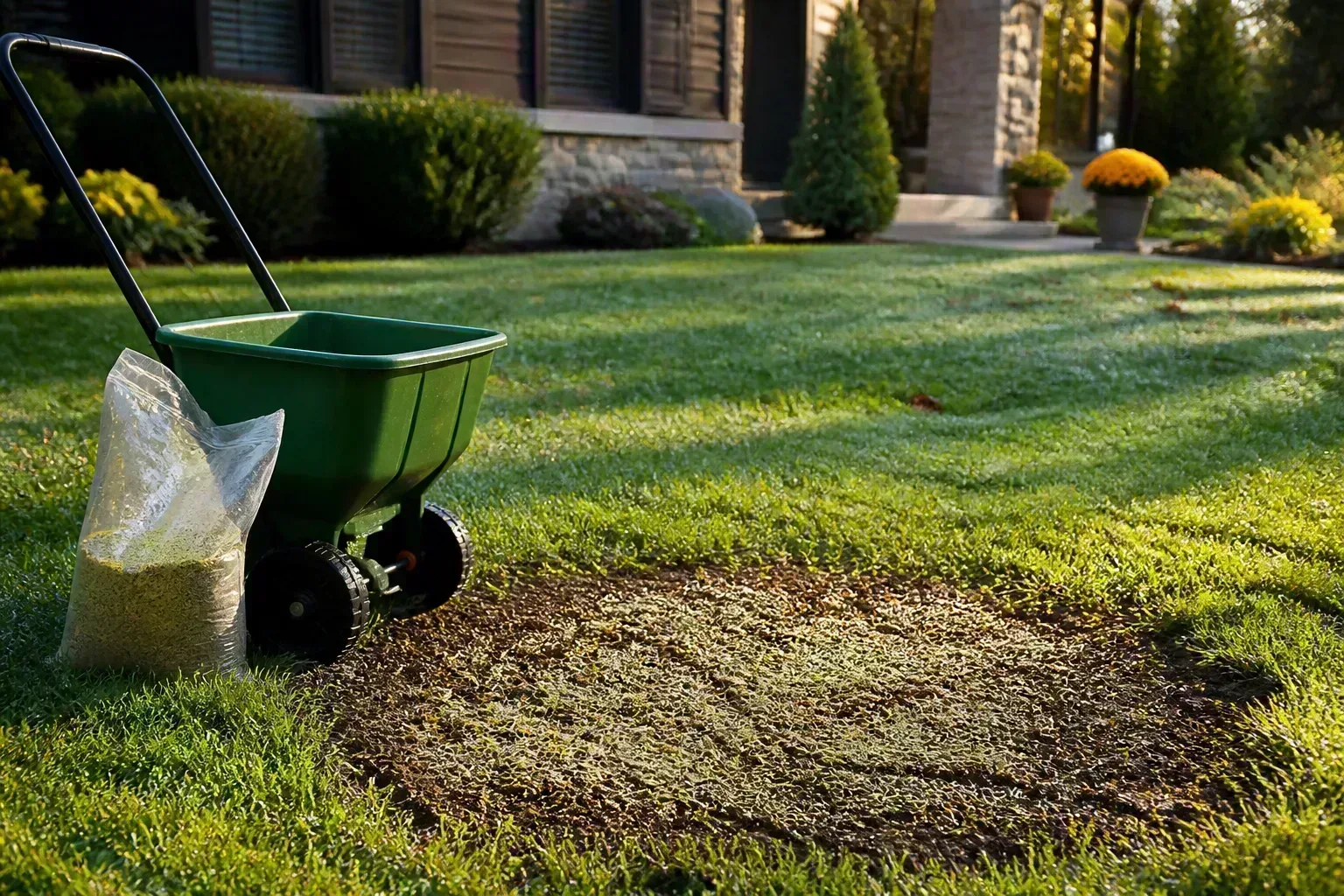
Grass seed can sprout on hard ground, but sprinkling seed over a compacted surface rarely produces an even, durable lawn. Seed needs contact with moist soil to germinate, and young roots need room for air, water, and growth. The useful first step is to identify why the dirt is hard, because a dry crust, compacted lawn, clay soil, and construction fill call for different fixes.
For an existing lawn, core aeration or slit-seeding usually opens enough space for seed without tearing out healthy turf. For bare ground, loosen the seedbed only as deeply as needed, correct grading or drainage problems, and use a soil test to guide amendments. Then spread the seed at the rate on its label, press it into shallow contact, and keep the surface evenly moist until seedlings establish.
Begin by diagnosing why the dirt is hard
“Hard dirt” describes a symptom, not a soil diagnosis. The surface may have dried into a thin crust after hot weather or heavy rain, the soil may be compacted by foot or vehicle traffic, or the site may have dense clay, shallow topsoil, poor drainage, or construction fill beneath it. A thatch layer can also prevent seed from reaching soil even when the ground below feels soft.
The distinction matters. A crust may need light raking and moisture; compacted turf may need hollow-tine aeration; a new seedbed may need shallow cultivation; and a low, soggy area may need grading or drainage work before seed can survive. Penn State Extension recommends assessing compaction, topsoil depth, drainage, grade, and site conditions as separate parts of lawn planning rather than assuming one surface symptom has one cause (Penn State Extension).
Quick field checks before you dig
Check the area after ordinary rain or irrigation. If water sits in low spots for a long time, the problem may include poor drainage or a compacted layer; simply scattering seed will not change where water collects. If the surface is dry and cracked but soil a little below it is workable, break the crust lightly and water the seedbed before sowing rather than rototilling the whole area.
Use a hand trowel or soil probe in several spots. Notice whether you can push it into the ground, whether a shallow layer is loose over a harder layer, and whether roots are confined to the surface. Also check whether the area was driven over during construction, used as a path, or covered with gravel or fill. If you cannot dig because the soil is extremely dry, wait for moderate moisture; if it smears, sticks heavily to tools, or forms a slick ribbon, it is too wet to work without making clods and compaction worse.
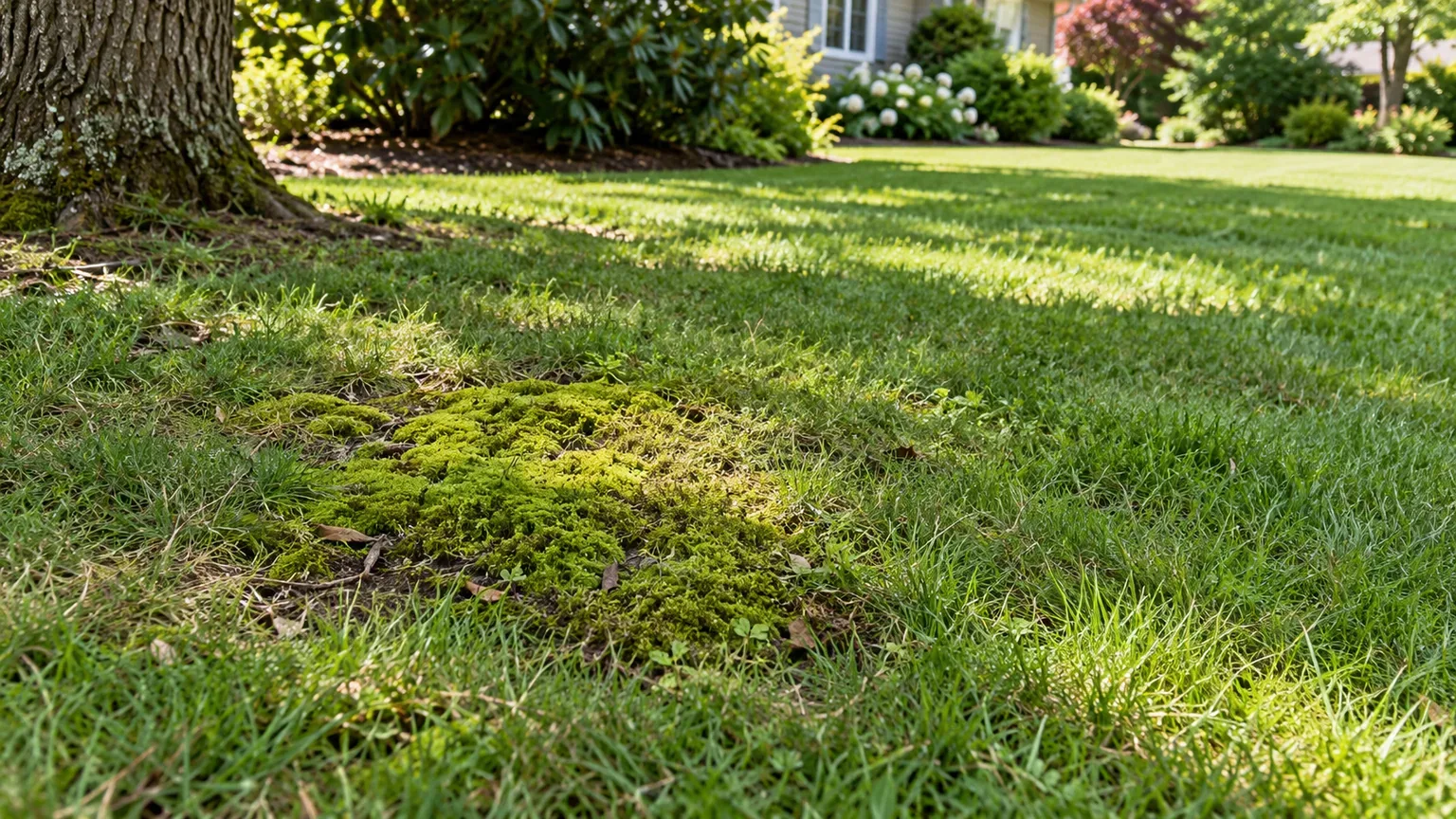
Look at the existing grass, too. A lawn that is thin along a regular path or where vehicles park points toward traffic-related compaction. Bare, puddled soil with little topsoil may need a broader renovation. A thick, spongy mat above the soil suggests thatch: seed caught in that layer can germinate poorly even if the soil itself is not unusually hard. Resolve that barrier before buying more seed; our guide to measuring and removing lawn thatch explains when that layer needs treatment.
Decide whether to repair, overseed, or start a lawn from scratch
If a lawn is mostly healthy and has scattered thin spots, preserve it. Mow as appropriate for the existing grass, remove loose debris, correct the cause of thinning, and use core aeration or a slit-seeder to create seed openings. This keeps established roots in place and limits the amount of bare soil that can erode or fill with weeds.
If the lawn is sparse across most of the area but the grade and drainage are acceptable, a renovation may be more efficient than patching dozens of spots. Depending on thatch and compaction, renovation can include mowing short, raking out debris, core-aerating, and overseeding. A slit-seeder can place seed into shallow grooves; use equipment suited to the site and follow local extension guidance for the grass type.
Start over only when the existing turf is mostly gone, the lawn is badly uneven, invasive weeds dominate, or the soil needs substantial correction. Bare-ground preparation offers the best access to the soil, but it also exposes it to erosion and weed germination. If the surface is very large, hard from construction equipment, steep, or holding water against a building, get a site assessment before renting a tiller or adding soil. Penn State notes that construction compaction, drainage, grade, and topsoil conditions can require different preparation steps (Penn State Extension).
Choose grass seed that fits your yard and region
Select a mix for your climate, sun, drainage, intended use, and maintenance habits—not only for the word “tough” on a bag. Cool-season grasses such as tall fescue, Kentucky bluegrass, perennial ryegrass, and fine fescues are common in cooler regions, while warm-season grasses such as Bermuda grass are used in hotter areas. Within either group, cultivars differ in shade tolerance, drought response, wear tolerance, disease resistance, and germination speed.
Start with a local cooperative extension recommendation or a seed label that identifies the species and cultivars. A sunny play area, a shaded strip beneath trees, and a dry roadside edge may need different mixes. Avoid an all-purpose blend if its listed species are poorly matched to your area; a fast-germinating component cannot compensate for a grass that later struggles in the site’s heat, shade, or water conditions.
Check the label for the seed crop, weed seed, inert matter, germination information, and recommended application rate. A blend that contains annual ryegrass may green up quickly but will not necessarily provide the long-lived lawn you expect. BBC Gardeners’ World notes that seed mixes are chosen for specific uses such as hard-wearing, ornamental, shady, or dry lawns; use its examples as a reminder to match the mixture to the job, while choosing species recommended for your own region (BBC Gardeners’ World).
Time seeding around the grass type and local weather
The best seeding window depends on whether you are planting cool-season or warm-season turf and on your local climate. In many cool-season regions, late summer into early fall gives seedlings warm soil and less punishing heat, while spring can work when there is enough time to establish before summer stress. In warm-season regions, the suitable window is generally when the soil is warm and the grass can grow actively; confirm the timing for the species and locality with an extension source.
Avoid sowing just before a stretch of hot, dry weather if you cannot irrigate, or immediately before heavy rain that could wash seed downhill. Purdue Extension cautions against summer seeding cool-season lawns in its region because heat, drought, and annual weeds can outcompete young turf; that is a regional example, not a universal calendar for every grass type (Purdue Extension). Gardeners’ World similarly advises avoiding prolonged dry spells and heavy rain for new lawn seeding, although its seasonal calendar reflects a UK climate (BBC Gardeners’ World).
If the ideal window has passed, weigh the cost of waiting against the chance that seedlings will face heat, frost, or water restrictions before they root. A small patch may be worth reseeding later; a large new lawn may be better scheduled for the next favorable window. Grass seed packets and local extension offices can help narrow the timing because soil temperature and rainfall patterns vary widely from one region to another.
Test the soil before adding amendments
Do not assume hard dirt is alkaline. Compaction, clay content, construction fill, surface crusting, low organic matter, and drainage problems can all make a lawn difficult to establish, and none proves that pH is high. A soil test can report pH and nutrient levels and provide regionally appropriate recommendations for lime, fertilizer, or other amendments. Penn State advises testing before deciding how much organic matter, fertilizer, or lime a new lawn needs (Penn State Extension).
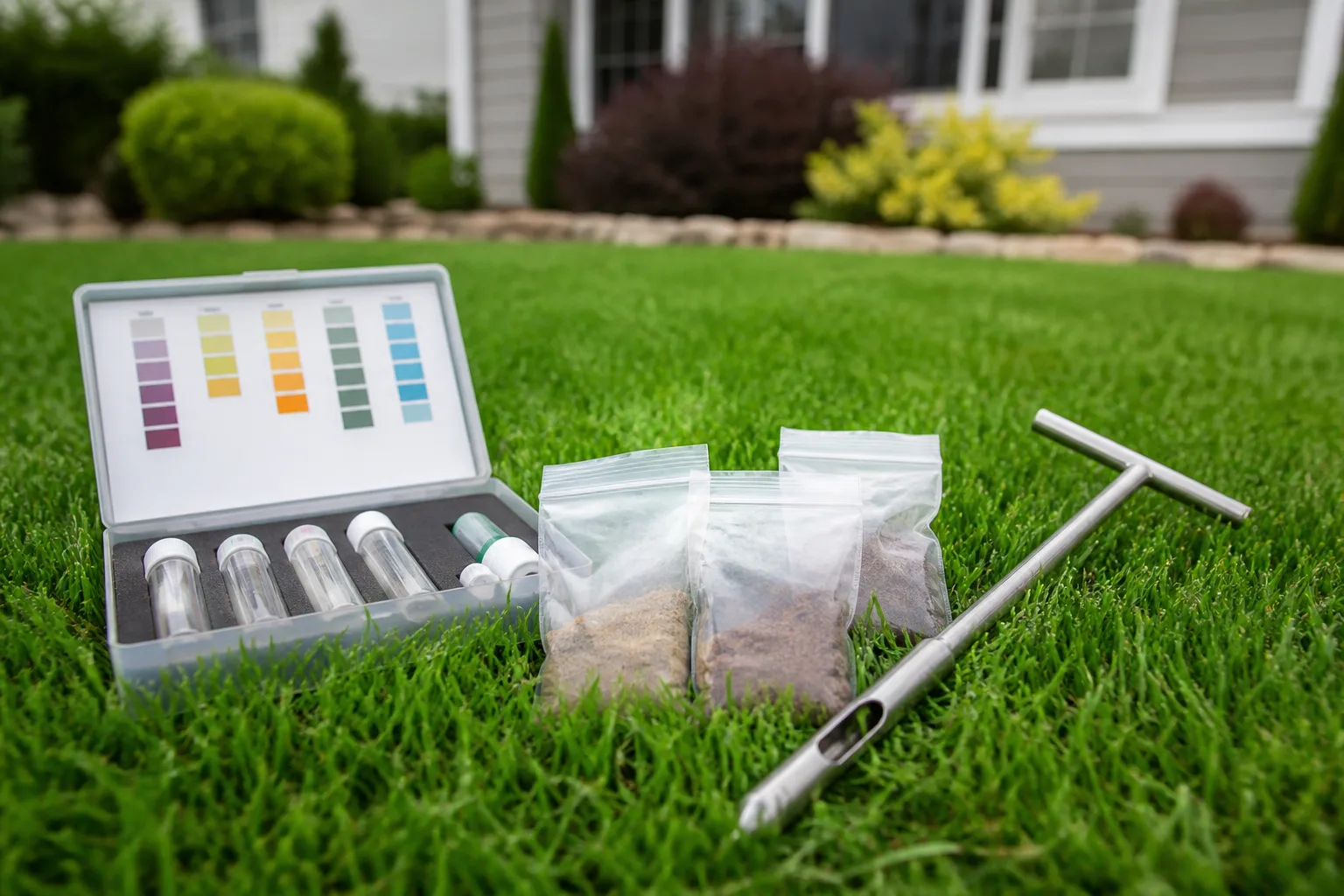
Collect samples from the area you intend to seed, following the laboratory’s directions for sample depth and number of subsamples. If parts of the lawn differ—for example, one section is fill near a new foundation and another is old garden soil—test them separately or ask the lab how to handle them. Allow enough time for the report to arrive before planting if you plan to incorporate an amendment into a bare seedbed.
Use sulfur only when a test and local recommendation call for lowering pH. Sulfur does not loosen every compacted soil, and an unnecessary application can move pH farther from the range that suits the chosen turf. Likewise, starter fertilizer is not a universal cure for hard dirt. Apply only the product and amount recommended for the soil and grass, and follow the label; a fertilizer cannot create seed-to-soil contact or repair drainage.
Loosen compaction with a method that fits the lawn
Match the tool to the kind of lawn you have. Core aerators remove small plugs of soil, leaving openings that let air and water enter the root zone. Slit-seeders cut narrow grooves and deposit seed into them. A garden fork can help with a small compacted patch, while a rototiller is usually more appropriate for bare ground that is being regraded or renovated from scratch.
Work soil when it is moist enough to crumble but not wet enough to smear. Running heavy equipment over wet clay can make compaction worse, and repeated tilling can pulverize aggregates into a crust-prone surface. Purdue Extension advises against working wet soil and cautions that overtilling can damage soil structure and lead to surface crusting (Purdue Extension).
Existing turf: core aerate or slit-seed
For compacted existing grass, use a hollow-tine core aerator rather than simply poking a few holes with a solid spike. A core aerator removes plugs and opens channels; a spike pushes soil sideways and may compact the sides of each hole. Make enough passes to expose soil where seed will fall, especially along heavily used routes, but do not damage irrigation lines, shallow roots, or buried utilities. Penn State includes core aeration as part of lawn renovation and describes preparing the surface before overseeding (Penn State Extension).
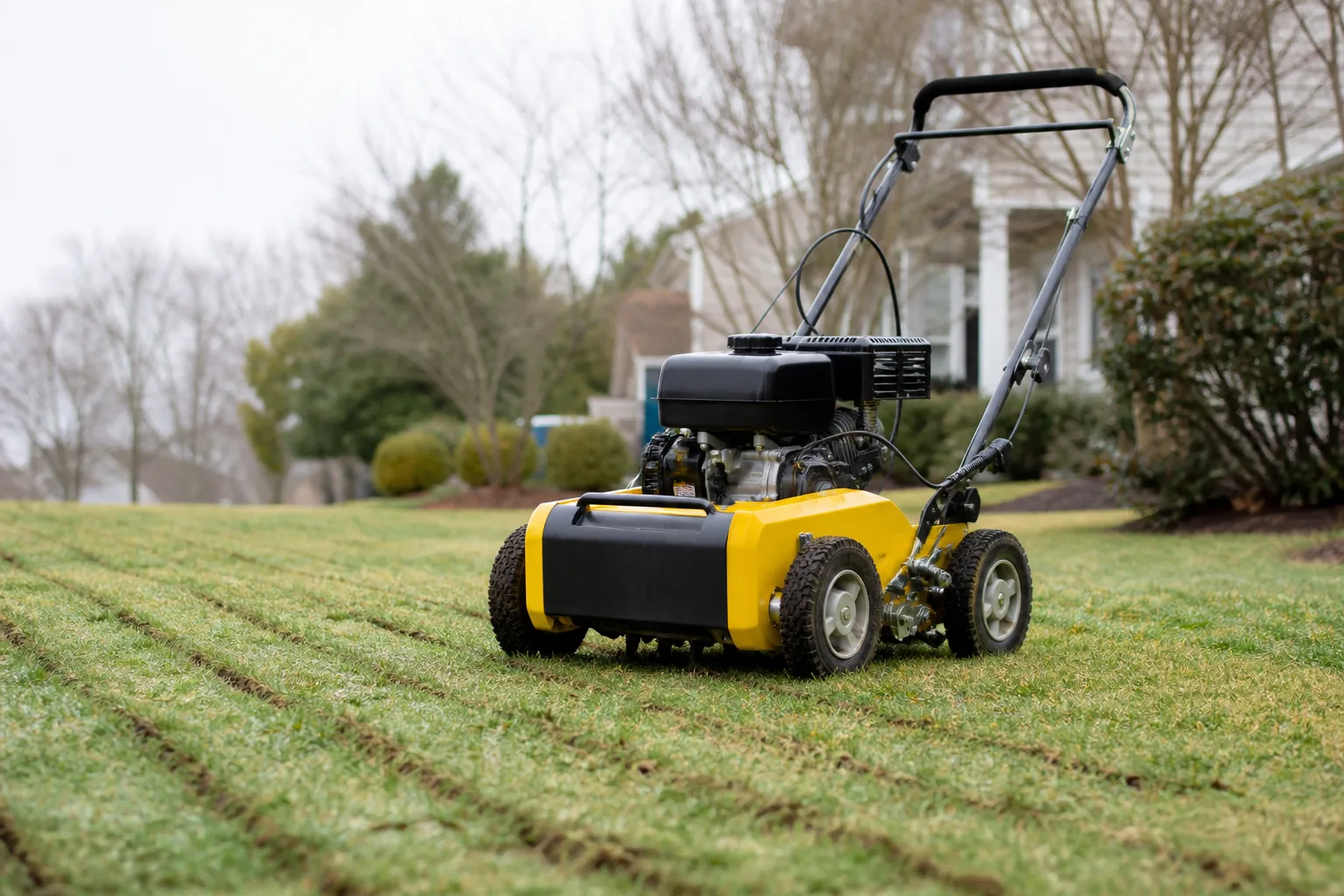
After aeration, leave the plugs on the lawn to break down unless they are so large or numerous that they obstruct mowing. Topdressing with a thin, screened layer of compost may help fill holes and add organic matter, but do not bury the existing grass under a thick blanket. If the surface is too hard or bare spots need precise seed placement, rent a slit-seeder or hire a contractor to operate one. Slit-seeding is useful when seed must be placed into the surface; it does not correct a deep hardpan or a drainage problem below the slots.
Bare ground: relieve compaction and rebuild the seedbed
On a new lawn site, first remove rocks, lumber, roots, and unwanted vegetation. Check for buried utilities before digging or operating machinery. If compaction is limited to the upper few inches, loosen the seedbed with a shovel, garden fork, or tiller and break large clods into a crumbly texture. Penn State describes tilling at least four inches for many turf establishments, while Purdue recommends working a new seedbed several inches deep; actual depth should fit the site and local guidance, not become a reason to till unnecessarily (Penn State Extension; Purdue Extension).
If soil remains hard a few inches below the surface, or if the site was compacted by construction traffic, shallow tilling may only create a loose layer over a dense one. A contractor may need to loosen the subsoil or correct grade and drainage before topsoil is replaced. Stop and seek help when water flows toward a foundation, a large area has standing water, the hard layer is too deep for hand tools, or there is buried rubble or fill of unknown depth.
Add organic matter or topsoil strategically
Organic matter can improve soil structure and help clay soil move air and water, but the amount and method matter. On bare ground, incorporate the soil-test-recommended amendment into the loosened topsoil rather than leaving a pile of compost on the surface. Use mature, screened compost of known quality and avoid material that is woody, salty, or contaminated with persistent herbicide residues. Extension guidance notes that soil tests can inform organic-matter needs and that amendment quality varies (Penn State Extension).
For an existing lawn, use a thin topdressing that can pass between blades and into aeration holes. Several light applications are safer than one thick layer that smothers grass or changes the grade around hardscape. A topdressing will not fix a deep compacted layer, and aerating every spring and fall is not automatically required; repeat only when the lawn remains compacted and the grass type, season, and soil conditions make the work appropriate.
Do not dump a small amount of sand onto heavy clay and expect it to turn into a well-drained lawn soil. A modest surface application may create a mixed layer without changing the texture enough to improve drainage. Imported topsoil can be an option where the original material is poor or shallow, but check its source and texture, calculate the depth and volume needed, and make sure new soil will not redirect water toward buildings or cover tree roots. Home for the Harvest describes core aeration, compost, and topsoil as options for hard lawn soil, while also noting that tilling can expose weed seeds and create extra leveling work (Home for the Harvest).
Grade and firm the seedbed
Rake out stones and remaining debris, then smooth ridges and fill shallow depressions so water spreads evenly. Preserve a gentle slope away from structures and avoid creating a bowl that collects runoff. Correct major drainage or grade problems before sowing; grass roots cannot compensate for a site that remains flooded or erodes with each storm.
Firm the surface enough that a footprint leaves a shallow impression rather than sinking deeply, but do not compact the bed hard again. On a small area, settle loose soil with light watering and allow it to drain before final raking. On larger areas, use a light roller or other suitable equipment only when the surface is not wet. Penn State recommends a smooth, firm seedbed and warns against excessive compaction during finishing (Penn State Extension).
Measure the area and set the seeding rate
Measure the length and width of each section, then add the square footage. For irregular shapes, divide the lawn into rectangles or triangles and total their areas. Buy enough seed for the actual area and use the rate printed for the selected grass and the job—new lawn or overseeding. Those rates are not interchangeable: a new seedbed generally needs a different amount than thin existing turf, and seed blends vary in seed size and composition.
Do not apply extra seed as insurance. Crowded seedlings compete for water and light, and a too-heavy layer can make it harder for individual seeds to reach soil. If the label allows a range, choose within it based on the site and follow your extension service’s advice for the species. Set the spreader over a clean hard surface or tarp first so you can practice the gate setting without wasting seed.
Spread seed evenly and make contact
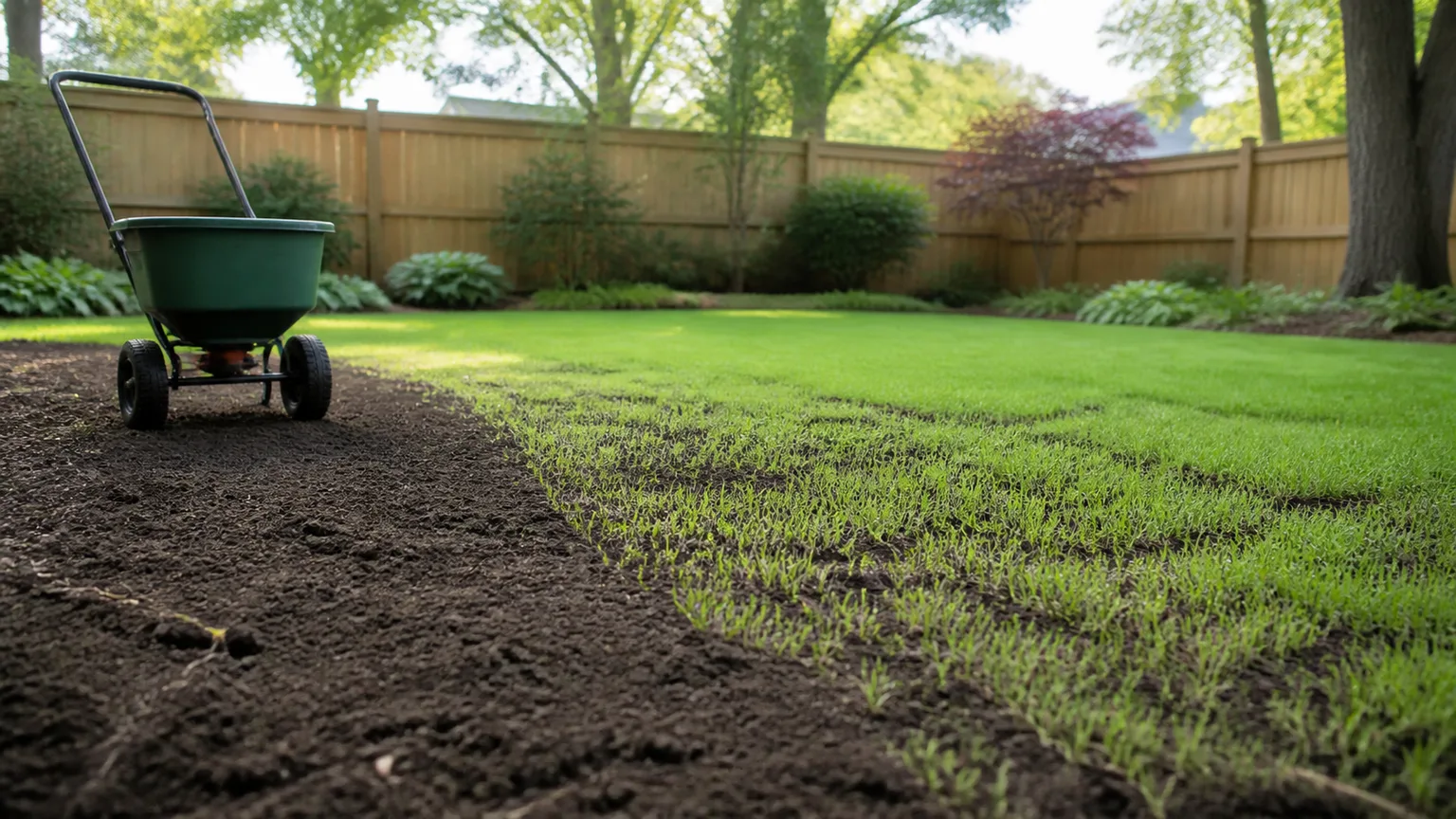
For a broad area, split the measured seed into two equal portions. Spread the first portion in parallel passes in one direction, then spread the second portion at right angles. A drop spreader gives precise placement near beds or paths; a rotary spreader covers larger open areas quickly, but overlapping passes are important to prevent stripes. Purdue recommends crossing directions with split seed portions to improve even coverage (Purdue Extension).
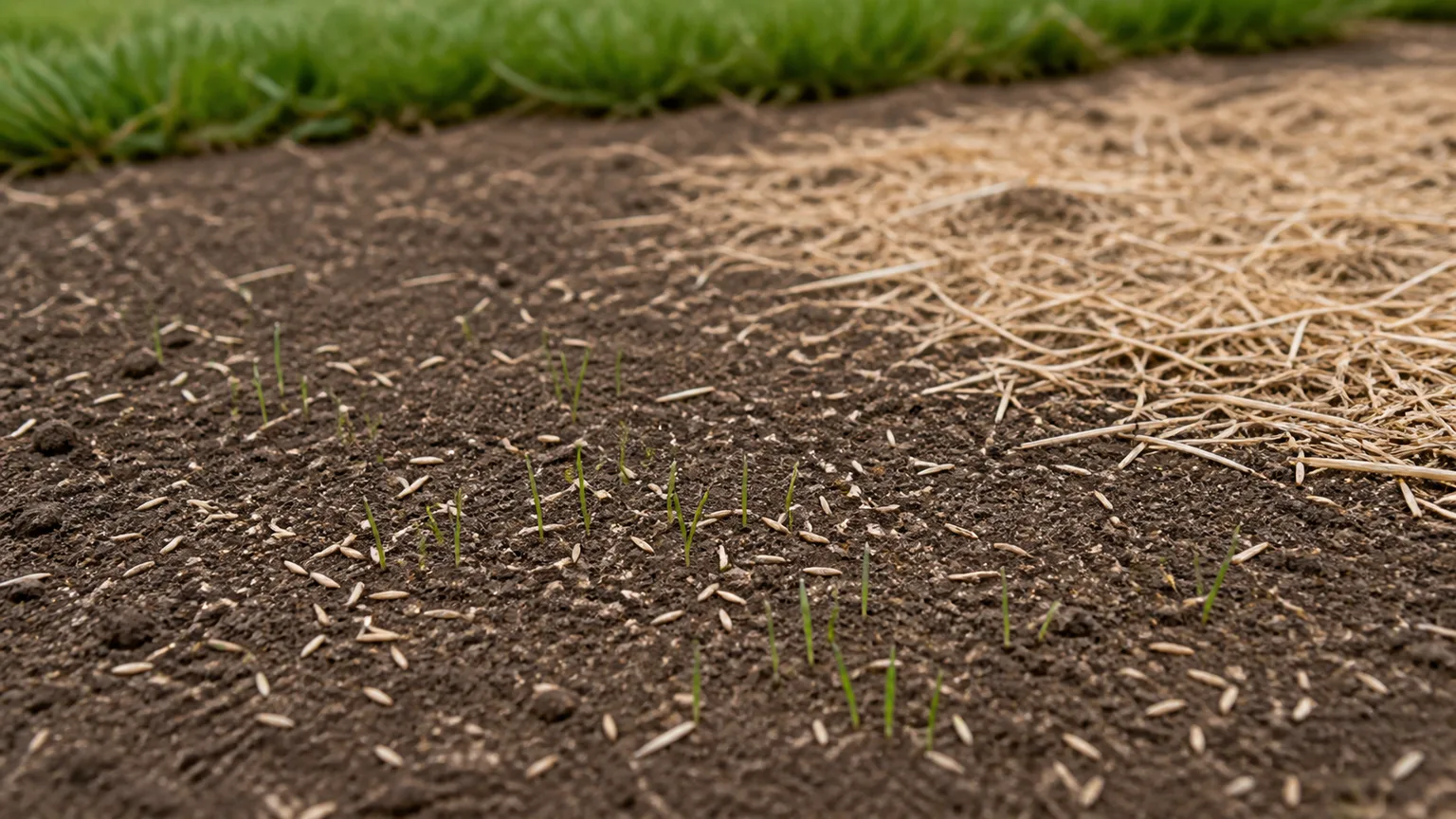
Seed should sit at or just under the soil surface, not disappear under a deep layer of dirt. Lightly rake the area so some seed is covered by a thin dusting of soil and much remains near the surface, or use a slit-seeder to place seed in shallow grooves. Then press the seedbed gently with a light roller or the back of a rake to improve contact without burying or washing seed. The goal is not to plant every seed at an identical depth; it is to keep seed from blowing away while ensuring each one touches moist soil.
If you are overseeding existing grass, rake or mow away clippings and loose thatch before spreading. Seed perched on leaves, thick thatch, or stones may germinate poorly because it dries before roots reach soil. Gardeners’ World recommends raking seed in after sowing; the same practical principle applies to a lawn repair, with the amount of raking adjusted so that the seed remains shallow (BBC Gardeners’ World).
Water in short cycles, then reduce frequency
Moisture is essential from sowing through germination, but a hard, poorly graded area can shed water quickly. Pre-moisten a dry seedbed before sowing, then apply a gentle spray that settles the soil without moving seed downhill. Use a sprinkler that reaches the whole area, and check several spots by hand after watering instead of assuming that a single run time wets every part evenly.
For germination, keep the top half-inch to inch of soil consistently damp, not saturated. Depending on wind, sun, temperature, soil texture, and rainfall, that may mean several short watering cycles in a day or far less on cool, cloudy days. Penn State and Purdue both emphasize frequent, light irrigation early while warning against saturation; Purdue describes keeping the upper seed zone moist and then changing the pattern as seedlings grow (Penn State Extension; Purdue Extension).
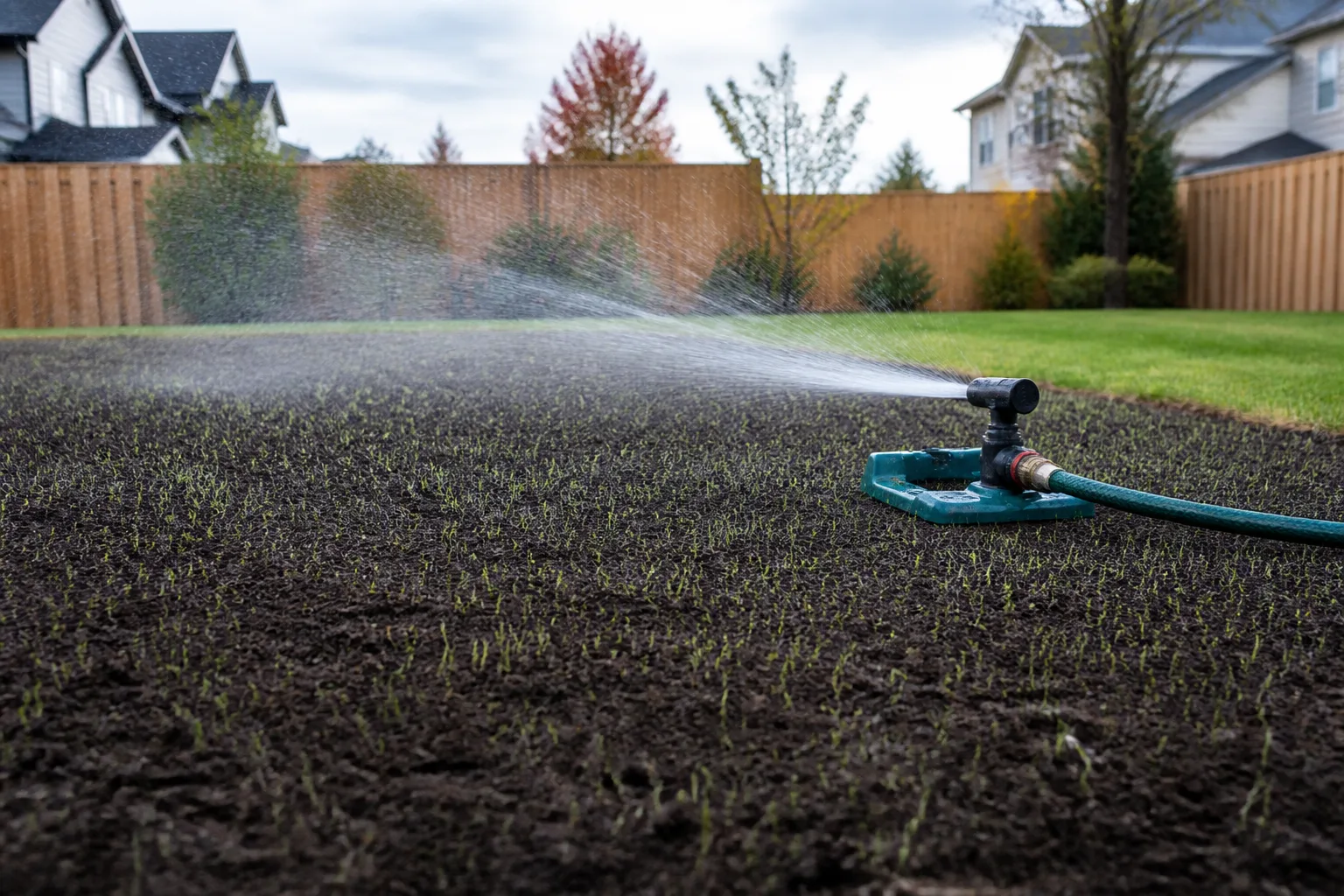
As sprouts appear, check whether the soil surface is drying between cycles. Do not let new seedlings wilt, but reduce watering if puddles form, seed washes into clumps, or the ground stays soggy. Once seedlings are established and can be mowed, gradually shift toward deeper, less frequent watering that encourages roots to grow downward. The change should be gradual; abruptly switching from frequent moisture to infrequent deep irrigation can stress young turf with shallow roots. For a closer watering schedule by establishment stage, see our guide to how often to water new grass seed.
Mulch only enough to protect the seed
A thin layer of clean, weed-free straw can reduce erosion and slow surface drying on exposed ground, especially on a slope or where irrigation is difficult. Apply it loosely enough that soil remains visible through much of the cover. A thick mat blocks light and air, traps too much water, and can prevent seedlings from reaching the surface. Purdue Extension advises a light application of clean straw and warns that homeowners often apply too much (Purdue Extension).
On a small flat patch that you can water reliably, mulch may not be needed. Avoid hay or unverified straw that may introduce weed seeds, and never cover a freshly seeded bed with plastic. If rain is forecast, pause and assess runoff risk rather than adding a heavy cover that could shift with the first downpour.
Manage traffic, mowing, and weeds during establishment
Keep people, pets, and equipment off the new area while seedlings are rooting. Foot traffic can press damp soil back into a compacted surface and pull shallow seedlings loose. Where the lawn must remain accessible, mark the seeded section or install a temporary route around it.
Begin mowing when the seedlings are tall enough for the selected grass’s recommended mowing height and the soil is firm enough to support the mower. Use a sharp blade, avoid turning sharply on wet soil, and remove no more than one-third of the leaf height at a time. Penn State recommends mowing newly established turf before it grows excessively tall because cutting large amounts at once stresses young grass (Penn State Extension).
Weeds may appear alongside grass, particularly where tilling has brought buried seed to the surface. Do not rush to spray a newly seeded lawn: many herbicides can injure young turf or require a waiting period. Identify the weed and check the product label and local extension advice for the grass species and seedling age before using a treatment. Hand-pull isolated weeds when doing so will not disturb the new grass, and keep mowing and watering practices suited to the turf rather than trying to force a fast green-up with extra fertilizer.
Troubleshoot bare or slow patches before reseeding
If germination is uneven, look for a pattern instead of immediately scattering another layer of seed. Bare stripes often point to spreader overlap or a blocked spreader gate. Seed gathered at the bottom of a slope suggests washout; seed that disappears into deep ruts may have been buried; and patches beside a path may remain hard because foot traffic is still compacting them. Adjust the cause before reseeding those areas.
If the whole lawn is slow, check soil temperature and the expected germination range for the seed species, then verify that the surface has stayed moist. Different grasses germinate at different speeds, and cool soil or dry spells can delay emergence. Gardening Know How also emphasizes preparing the soil, following seed-label rates, and keeping the seedbed damp without washing seed away (Gardening Know How).
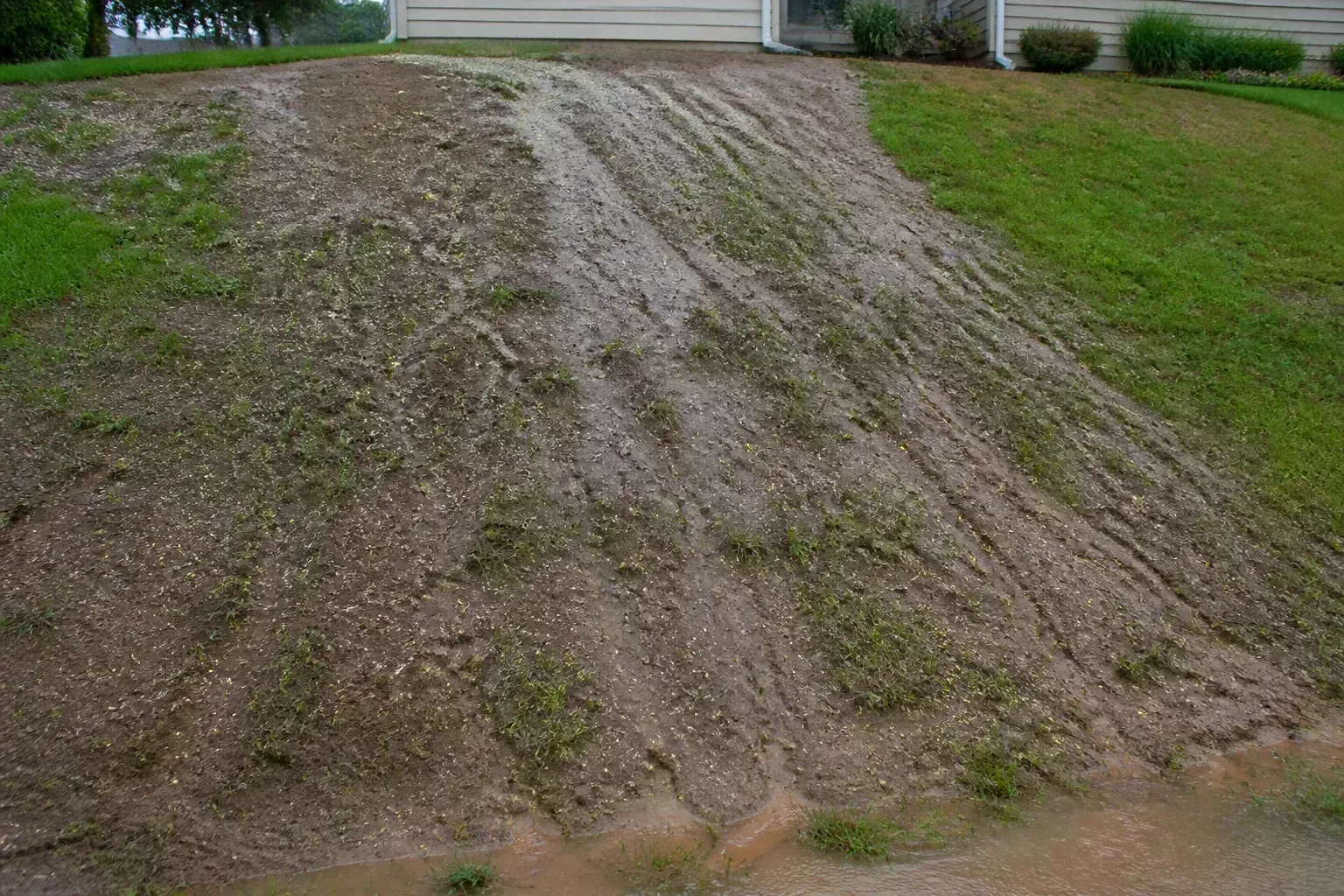
Where seedlings emerge and then disappear, investigate heat and drought stress, heavy rain, birds, foot traffic, deep shade, or a drainage problem. If the area repeatedly puddles or dries in a few hours while nearby soil stays moist, water movement through the site may need correction. If the surface hardens into a crust after each watering, use gentler irrigation, improve the seedbed structure before another attempt, and keep soil moisture steady. Reseed only after changing the condition that caused the first failure.
For persistent compaction, a deep hard layer, construction fill, or repeated standing water, bring in a lawn or soil professional to assess the site. A small patch can often be improved with hand tools; a whole yard with buried debris, failed grade, or a compacted subsoil layer may require equipment and a plan. A realistic diagnosis can save more seed and labor than another round of surface seeding.
Conclusion
To plant grass seed on hard dirt successfully, treat the soil problem before treating the seed. Decide whether you are repairing existing turf or building a lawn from bare ground, check moisture and drainage, and use a soil test before applying lime, sulfur, or fertilizer. Choose seed for your region and site, loosen only the soil that needs it, and preserve a smooth, firm surface with good seed-to-soil contact.
After sowing, water gently enough to keep the seed zone damp without washing it away, then reduce irrigation gradually as roots develop. Keep traffic off the area, mow at the right height, and diagnose bare spots before reseeding. If the ground stays hard below the surface or repeatedly holds water, correct that underlying condition first; seed cannot repair a failed soil profile on its own.