How to Store Dried Flowers for Long-Lasting Color
Store dried flowers by type, pack a wedding bouquet without crushing it, choose a safe spot, and know when silica gel or a floral spray helps.
Dried flowers are sturdy enough to keep their shape without water, but they are still fragile plant material. Light slowly dulls color, humidity can make flowers soften or encourage mold, and a loose box lets stems roll into one another until petals break. Good storage starts with two decisions: what you want to do with the flowers next and whether they are completely dry.
For most finished bouquets, the reliable routine is simple: check for dampness, support the heads so they cannot bear weight, cover the arrangement from dust and light, and place it somewhere cool and dry with a stable temperature. An airtight container can protect a fully dry bouquet from humidity and insects, but it can also trap moisture if the flowers were sealed too soon. Use the steps below to match the container to the flowers rather than forcing every arrangement into the same box.
Start with the flowers’ next job
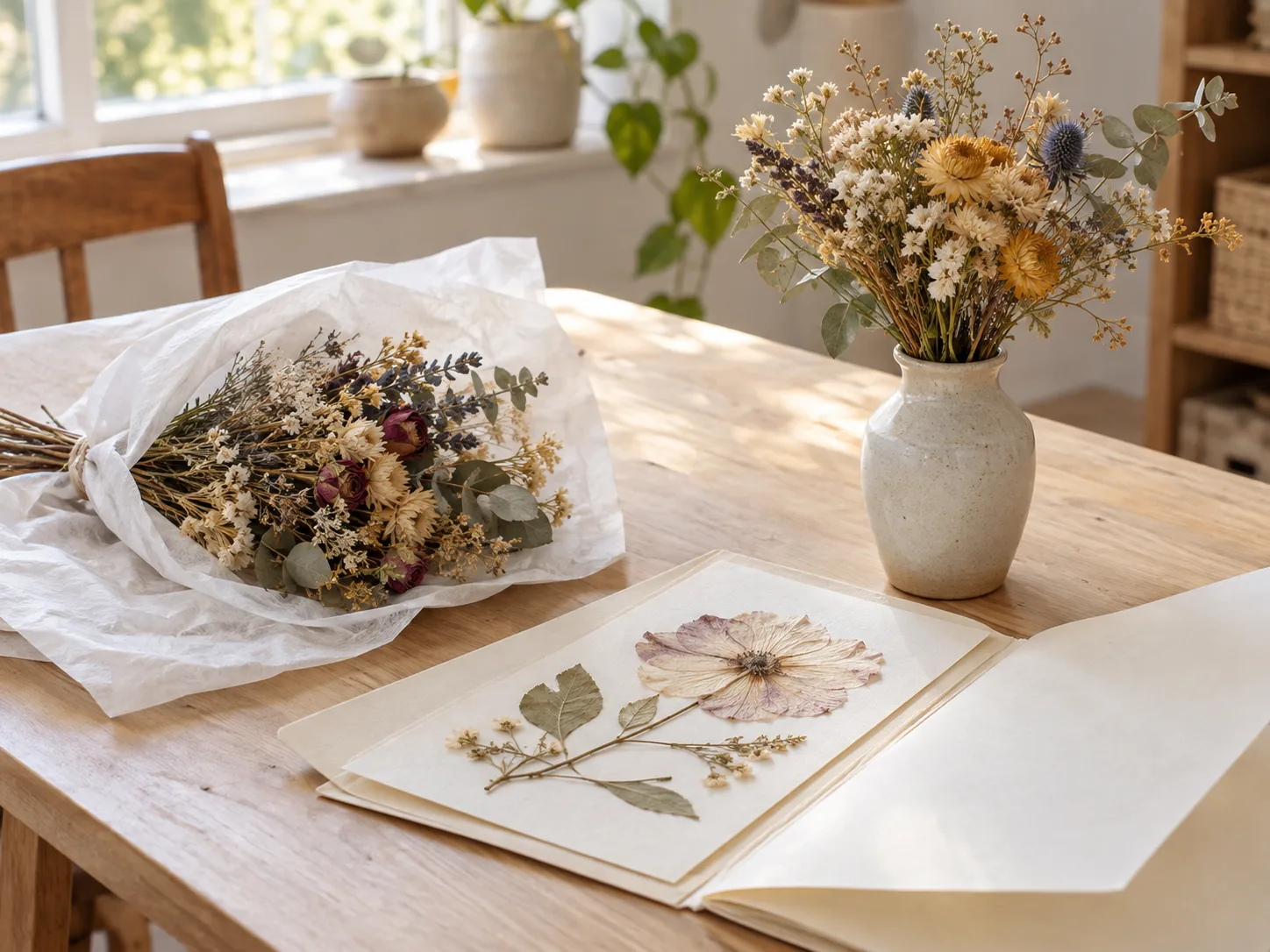
Storage is a holding pattern, not a single method. A loose bundle you plan to arrange next month needs protection from crushing and dust; a wedding bouquet you want to keep intact needs a box tall and wide enough to support its flower heads; pressed blooms need to lie flat between clean sheets. If you plan to display the flowers now, a vase or frame keeps them accessible but exposes them to more light and handling than a closed box.
Make that choice before buying a container. Measure the bouquet at its widest point, including the flower heads, and from the base of the stems to the tallest bloom.
Allow space around the outside for a soft support layer, but avoid a container so large that the flowers can slide around. For pressed material, measure the largest flower and choose flat, rigid protection instead of a deep box.
Whole stems, arrangements, and pressed flowers need different protection
A tied bunch is easiest to store with its stems aligned and heads nested in a loose protective sleeve. A mixed arrangement may have different head sizes and brittle branches, so it often needs individual support inside a box.
Petals and small florets belong in shallow, labeled containers where they cannot be shaken into powder. Pressed flowers need flat, dry sheets and protection from adhesive surfaces.
Do not use one storage rule for all four. A tall bouquet should not be flattened just to fit a shallow tote, while pressed flowers will lose their shape if stored upright in a bunch. A quick inventory—whole bouquet, loose stems, petals, or pressed specimens—prevents most packing mistakes.
Check that the flowers are truly dry
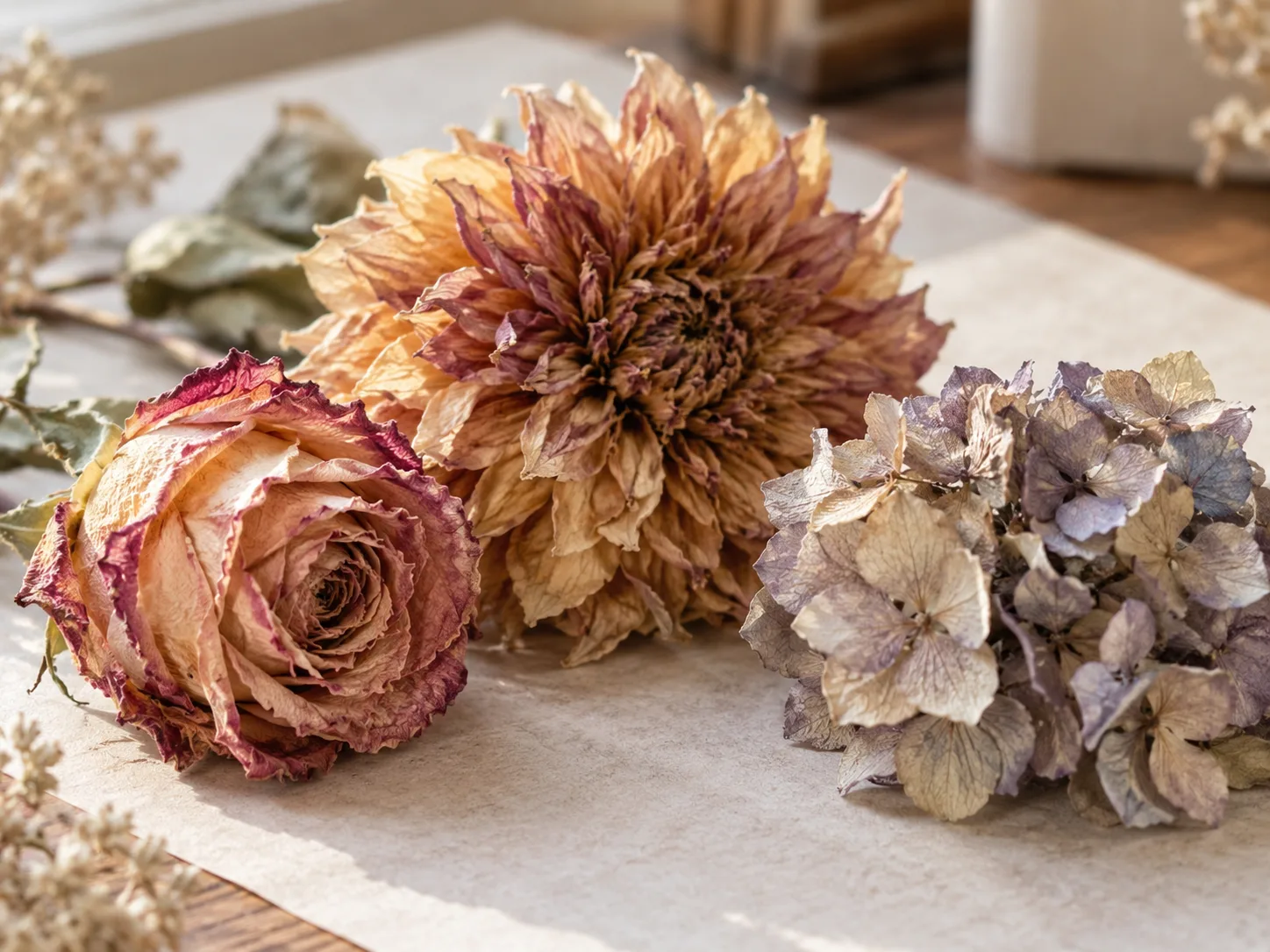
Flowers that feel dry on the outside can still hold moisture in thick flower heads, dense centers, or overlapping petals. Before storage, examine the least airy parts: the center of a rose, a tightly layered dahlia, the base of a hydrangea cluster, and the inside of a tied bunch. They should not feel cool or damp, and there should be no soft spots that bend like fresh plant tissue.
Most air-dried stems feel papery or brittle rather than flexible. The editorial guidance from Gardening Know How on drying flowers and foliage describes flowers as ready when they feel papery, while Gardens Illustrated’s drying advice from floral artist Bex Partridge emphasizes airflow and avoiding humid rooms during drying.
These are useful checks, but flower species and drying methods vary. Thick or water-dried blooms may need extra time even when their outer petals seem finished.
If you are unsure, leave the flowers in their drying area with gentle air circulation for several more days and recheck the thickest section. Do not seal a questionable bouquet with silica gel and assume the packet will finish drying it; packets are small buffers, not a dependable rescue for damp plant material. If the flowers have a sour or musty smell, treat that as a warning and inspect them before putting them near other dried arrangements.
Prepare a bouquet without stressing its stems
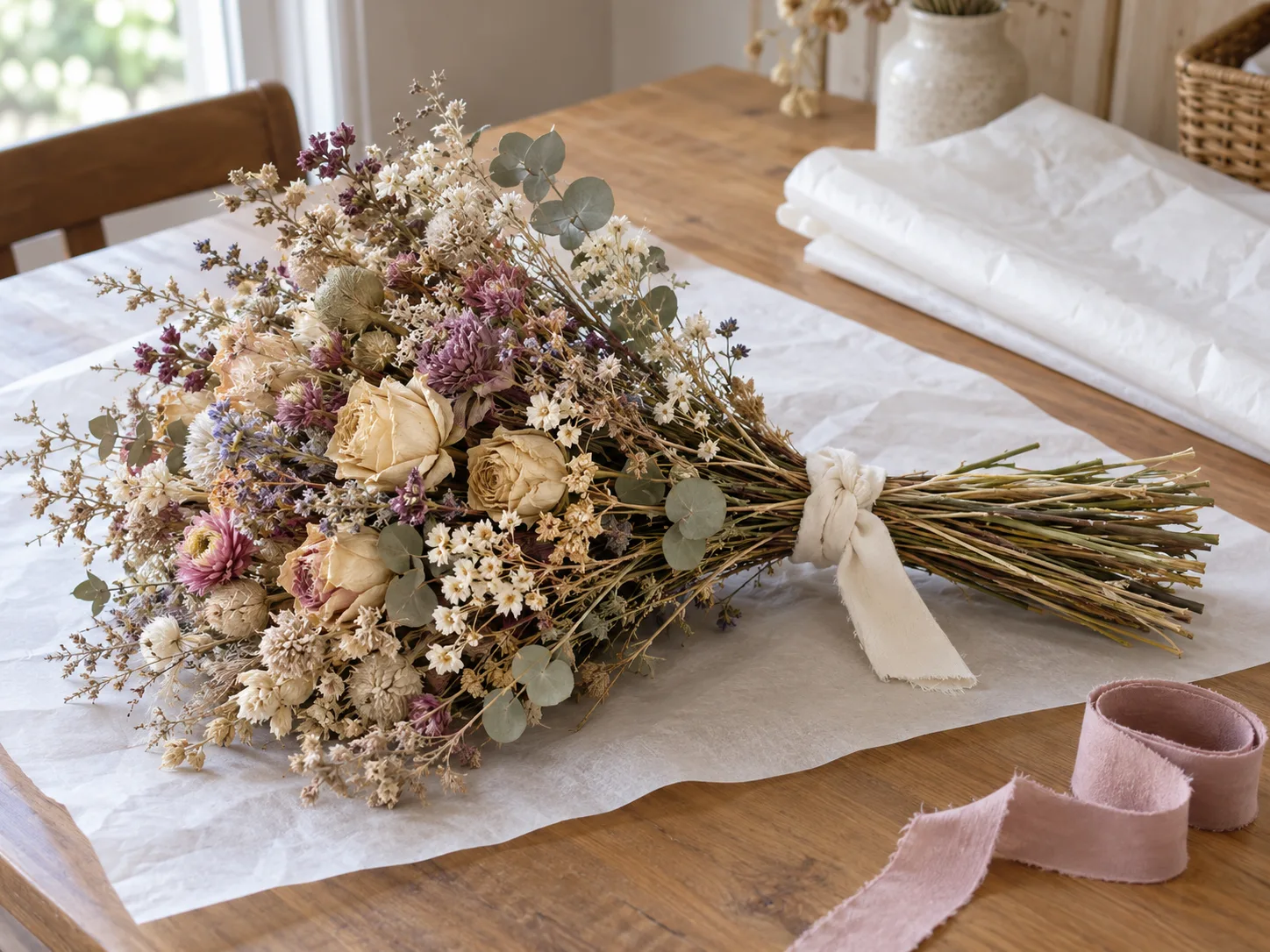
Work on a broad table so a tall arrangement does not have to be held in the air while you pack it. Take a quick photo before moving a keepsake bouquet, especially if the stems have been arranged into a particular shape. If there is a ribbon or card you want to keep, remove it first and store it separately; decorations can rub the petals or retain moisture where they touch.
With clean, dry hands, remove only loose leaves, seed heads, or petals that have already detached. Do not tug at firmly attached petals to make the bouquet look tidy.
A gentle shake outdoors can release loose dust and debris; avoid vigorous shaking or brushing, which can turn dry petals into fragments. If stems have separated, group them loosely with an uncoated paper tie or soft cotton ribbon rather than a tight rubber band that may cut into brittle stems.
For a multi-stem bunch, stagger the flower heads instead of pressing them into one tight cluster. This spreads pressure across the arrangement. If a flower head already has a cracked stem, support it with a small sleeve or separate compartment so the crack does not carry the bouquet’s weight.
Pack small bunches for storage
For a few dried stems, loosely wrap the flowers in clean, unprinted tissue or light kraft paper. Keep the paper from crushing the petals: it should form a protective sleeve, not a tight parcel. Put the bundle in a rigid box, then fill empty spaces with soft crumpled tissue so it cannot slide when the box is moved.
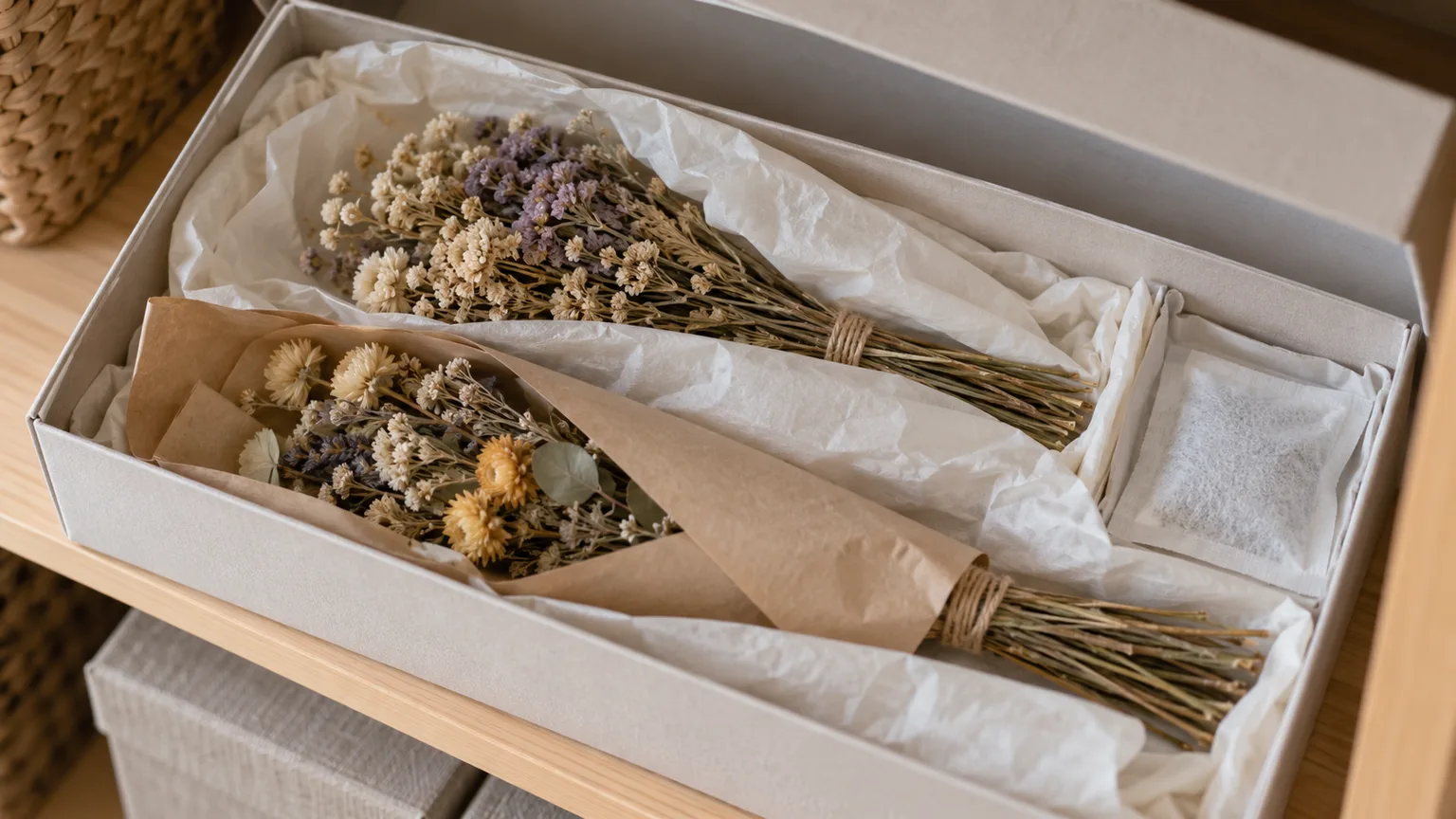
Store the bundle horizontally if the flower heads are well supported and the stems will not bow. If a species has a brittle, heavy head that is likely to snap under its own weight, use a box tall enough to keep the bundle upright. Either position works when the flowers are secure; the failure to avoid is letting the heads bounce against the lid or sides.
Choose a container that fits the bouquet
A clean lidded plastic bin or sturdy archival-quality box can shield dry flowers from dust and insects. A plastic container is useful in a consistently dry home or where seasonal humidity changes are a concern, but only after the contents are dry.
Cardboard is easy to adapt and does not trap moisture as readily, yet it can soften in a damp basement and may be more vulnerable to insect entry. Use a rigid outer box either way so the flowers cannot be crushed by other belongings.
An airtight seal is not automatically better. It slows exchange with humid room air and limits pest access, but any dampness sealed inside stays with the bouquet.
If the flowers are fully dry and the storage room is stable, a well-fitting lidded container is a sensible choice. If you cannot verify dryness, choose a dry, protected location and allow the bundle to finish drying before sealing it.
Store a wedding or keepsake bouquet
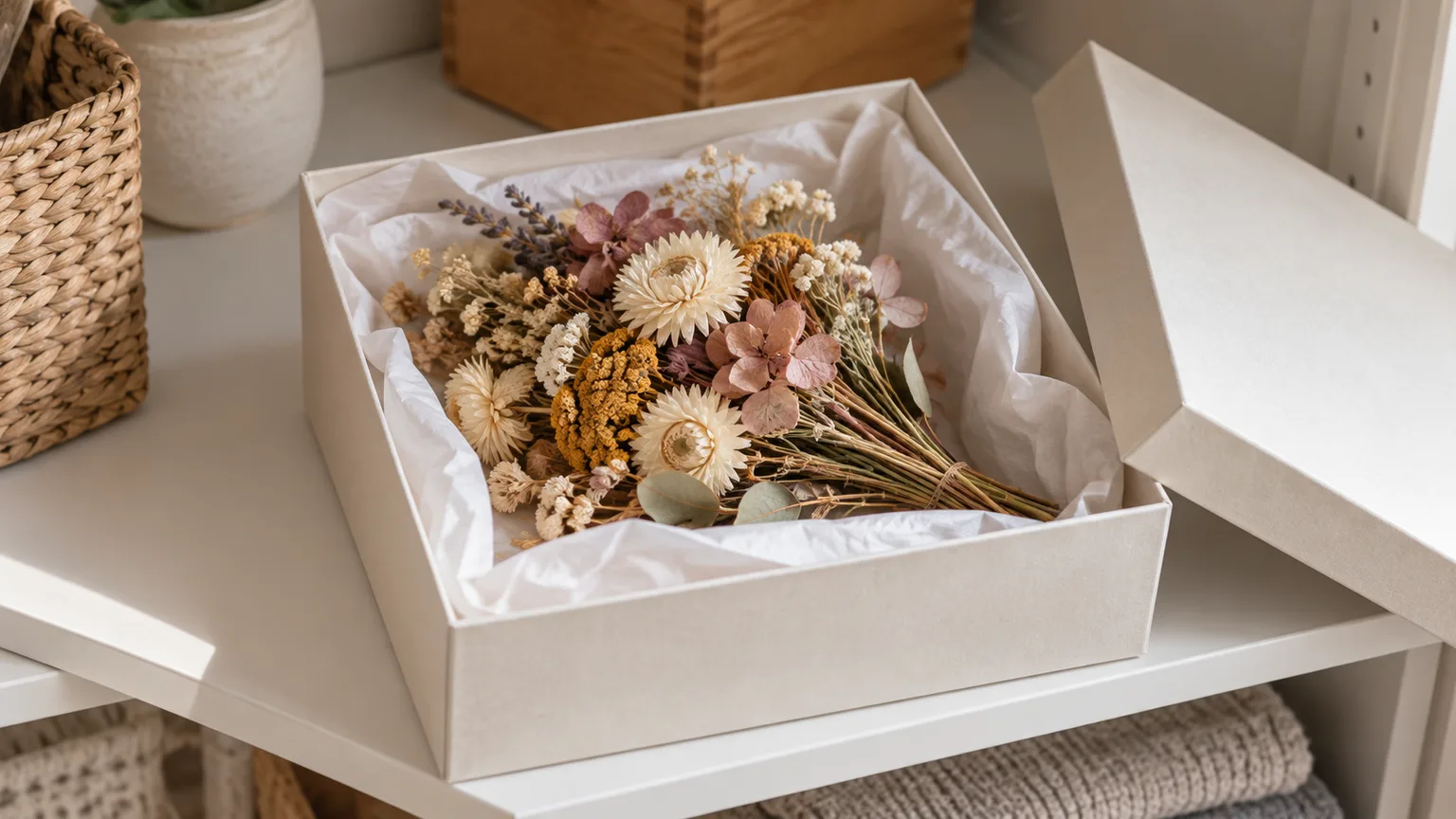
A large bouquet needs a box that supports its shape without bearing down on the flower heads. Place a layer of crumpled, unprinted tissue in the bottom and around the stems, then rest the bouquet on that cradle.
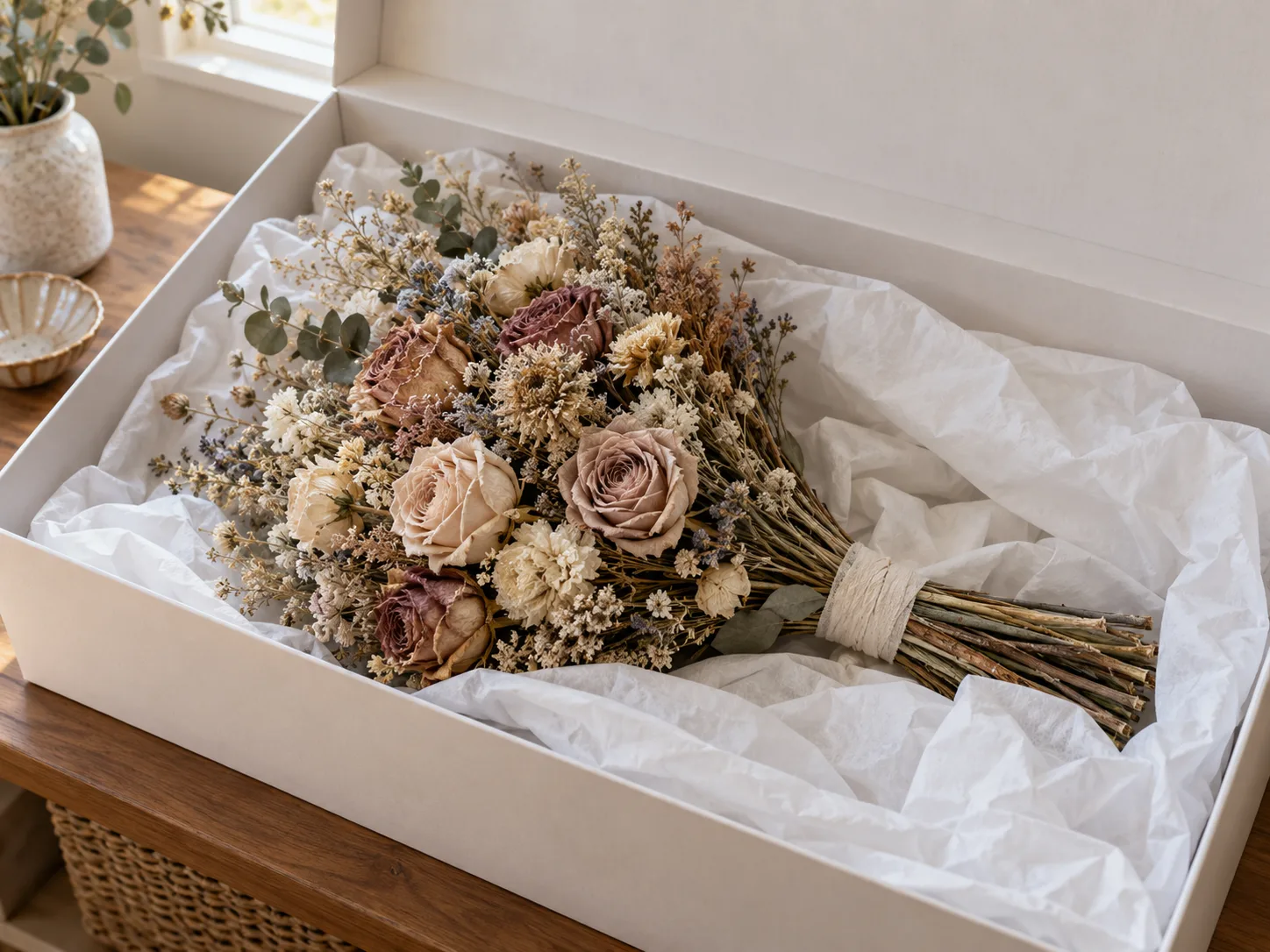
Add loose tissue around the sides to stop sideways movement. Leave clearance above the blooms; the lid should close without touching them.
If the bouquet is too tall for an ordinary box, separate it into small groups of stems and store them in a labeled, long rigid container. Photograph the original arrangement and note which stems belong together.
This makes reassembly possible and is safer than forcing the whole bouquet into a box that bends its stems. For irreplaceable wedding flowers, ask a floral preservationist or conservator about a custom box or shadowbox rather than adding improvised coatings.
Put a small card inside the outer box with the event or harvest date, flower names if known, and any storage or treatment notes. Keep this card beside the container wall, not in contact with the petals. A brief record helps you distinguish normal color change from a new stain, insect residue, or moisture problem later.
Protect pressed flowers and loose petals
Pressed flowers should stay flat between smooth, clean sheets. Store them in a rigid folder or shallow box with stiff boards on the top and bottom so other items cannot bend the arrangement. Use unprinted, acid-free paper for long-term keepsakes when available; avoid newspaper, dyed tissue, adhesive tape, and plastic sleeves that press directly onto delicate surfaces.
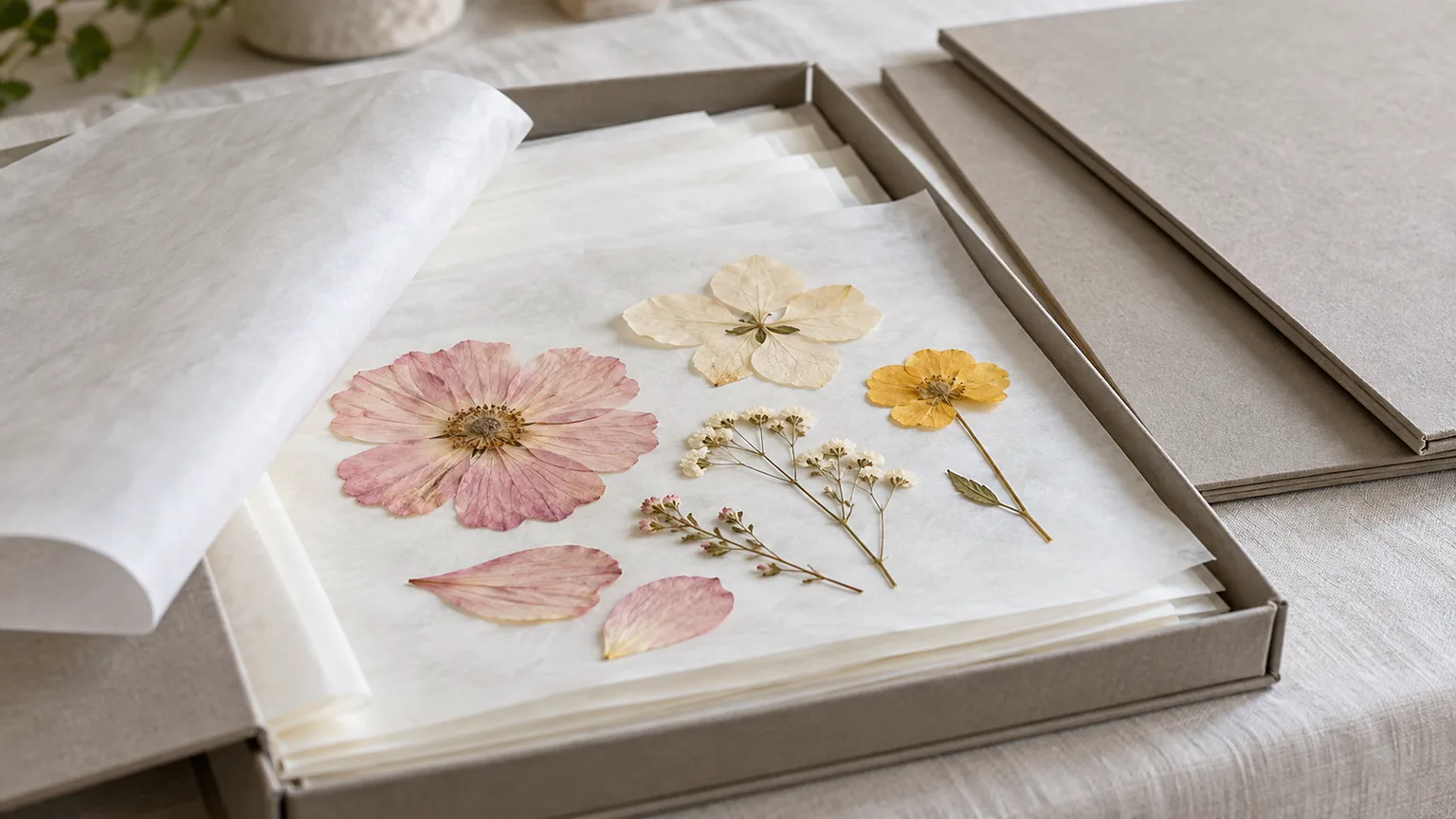
Keep each specimen separate with a sheet of paper so fragile petals do not snag or stick to one another. Do not stack a heavy object directly on top of loose flowers; the pressure can flatten fine texture into the support sheet. For petals intended for a craft, use small shallow containers, label the variety or occasion, and avoid shaking them together with other petals.
Choose a cool, stable, low-light location
Choose a dry closet or interior cupboard in a room where people already live comfortably. Keep the box away from direct sun, radiators, fireplaces, hot attic corners, damp basements, bathrooms, kitchens, and exterior walls that regularly feel cold or wet.
The goal is not a laboratory climate. It is to avoid persistent dampness, heat, direct light, and abrupt changes.
Light damage accumulates, even when it is not dramatic on the first sunny day. Collections-care guidance from the Society for Historical Archaeology identifies light, humidity, temperature, handling, and pests as agents of deterioration, and cautions that high humidity can promote mold while very dry conditions can embrittle organic materials. That guidance is written for collections and artifacts, not as a flower-specific household standard; the practical takeaway is to reduce exposure and keep the environment steady rather than chase a precise humidity number.
If your home is seasonally humid, a small hygrometer can help you see whether a closet changes sharply through the year. You do not need a special target reading to make a useful decision: if the location smells musty, shows condensation, or swings from very dry to damp, move the flowers to a more stable room. Do not store them in a garage, shed, or car where temperature and moisture can change quickly.
Use desiccants carefully
Silica gel packets can help buffer moisture in a closed container, especially when the room’s humidity fluctuates. Use an intact packet in its own sachet or place it beside the protective wrap; do not pour loose granules over petals or leave powder where it can lodge in flower centers. A packet will not dry wet stems, prevent fading from sunlight, or protect a bouquet from being crushed.
Follow the packet’s label for handling, reuse, or disposal. Keep packets out of reach of children and pets, and replace or regenerate them only as the manufacturer directs.
If a packet tears, remove the flowers, clear away loose granules without rubbing the blooms, and repack them in a clean container. Silica gel works best as a modest support to good drying and storage, not as a substitute for either.
Display dried flowers without speeding up fading
Choose display over storage when you want to enjoy the flowers every day, then accept that visible arrangements age faster than boxed ones. Place a vase or shadowbox away from direct sunlight, sunny windows, strong lamps, heaters, and vents. Even indirect light will gradually change delicate colors, so rotating a valued arrangement between display and dark storage can reduce exposure.
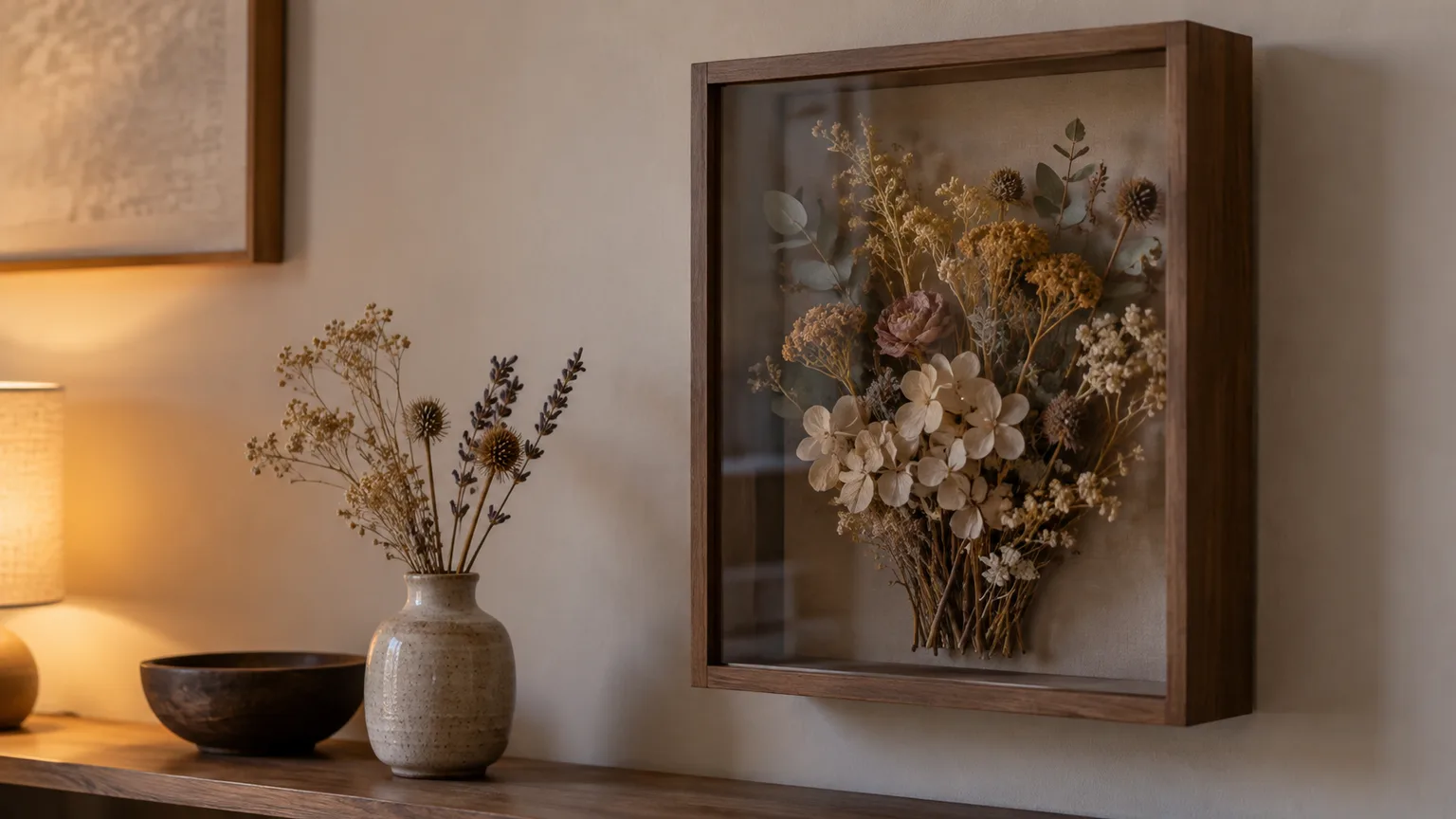
A frame protects pressed flowers from dust and accidental handling. For a sentimental framed bouquet, glazing that filters ultraviolet light can reduce one source of fading, but it does not stop all visible-light damage or compensate for a bright wall. Do not seal flowers into a frame while any part is damp, and leave enough clearance that petals do not touch the glass.
Clean dust with a gentle air puff from a distance or leave it alone if the flower is very brittle. Avoid wet cloths, household cleaners, and direct vacuuming. Moving an arrangement by the vase or support is safer than lifting individual stems, and a stable shelf reduces the small bumps that gradually break petals.
Keep dust, pests, and mold in check
Open the storage box carefully on a clean, dry surface and inspect it periodically, especially during the first few months or after moving it to a new room. Look for new holes, fine dust beneath the stems, shed skins, webbing, larvae, or a musty smell.
The National Park Service’s collections pest guidance emphasizes routine visual inspection as part of prevention and treats traps as monitoring tools, not as a way to control an infestation. For home storage, that means first look at the flowers and the box rather than spraying pesticides or relying on a trap to solve the problem.
Keep dried flowers away from stored food, pet bedding, and dusty clutter. A clean container, closed lid, and periodic check are more useful than mothballs or scented sachets placed against the bouquet. If you find damage, isolate the box from other dried material before deciding what to do.
What to do if you find insect damage
Pause before moving the damaged flowers through the house. Set the box aside from other dried plants, inspect all stems and packing material, and look for live insects or repeated fresh debris.
Photograph the signs if the bouquet is valuable. Do not use a household pesticide directly on flowers you plan to display, and do not put pheromone lures beside a bouquet as routine prevention; the National Park Service warns that targeted lures can attract pests into a space when misused.
For an inexpensive arrangement with active infestation, discarding the affected contents may be the safest way to protect nearby materials. If the flowers are a wedding or family keepsake, consult a floral preservationist or conservator before trying heat, freezing, or chemicals. Treatment can damage already brittle blooms, and the right response depends on the insect and the object.
What to do if you find mold
Fuzzy growth, wet spots, or a persistent musty odor means the flowers should not return to the same closed box. Do not brush visible mold indoors or blow on it; that can spread debris and spores. If the arrangement is ordinary and mold is established, discard it carefully and clean and dry the empty container before reuse.
For a significant keepsake, stop handling it and ask a qualified conservator about assessment. Do not add more silica gel and assume that mold has been neutralized. Museum collections guidance notes the relationship between damp conditions and mold growth, but no single humidity reading can tell you whether a particular bouquet is safe; visible condition and moisture history matter.
Should you spray dried flowers?
You can use a product made for dried florals when you want to reduce loose shedding or help an arrangement hold its shape, but first decide whether a coating is worth the change in texture. A spray can leave a surface film or alter the finish, and it does not restore color or stop light damage. Hairspray is not a UV shield, so it should not be treated as a substitute for shade or a protective display case.
If you choose a finishing spray, follow the product label, test a small hidden area, and let it dry fully in a ventilated place before storage. Do not spray a bouquet that may be used for food, tea, or skin products, and avoid applying any coating to flowers with moisture or suspected mold. A natural, uncoated arrangement kept dark and handled gently may be preferable when you care most about its original feel.
How long do dried flowers last?
There is no fixed expiration date. Some blooms retain their shape and color for years in a dark, dry box; others fade, shed, or become brittle much sooner because of their species, drying method, age when harvested, light exposure, or handling. A fragile flower kept on a sunny mantel will change faster than a sturdy stem stored in a supportive box.
Think in terms of preserving what matters rather than making the bouquet permanent. If color is your priority, minimize light.
If shape matters most, prevent movement and pressure. If you want to use the flowers in a craft later, store them by stem or petal type so you can select them without handling the entire collection.
Quick storage plan by flower format
| Flower format | Best everyday storage | Main risk to prevent |
|---|---|---|
| Small tied bunch | Loose paper sleeve inside a rigid lidded box | Crushed heads and sliding stems |
| Large keepsake bouquet | Tall, fitted box with tissue support and lid clearance | Weight on petals and broken stems |
| Loose individual stems | Divided long box or separate paper sleeves | Snagging and contact between heads |
| Pressed flowers | Flat sheets in a rigid folder or shallow box | Bending, sticking, and light |
| Loose petals | Shallow labeled container with a lid | Shaking, dust, and loss of color |
| Display arrangement | Stable vase or frame in a dim, dry location | Sunlight, dust, and repeated handling |
The table is a starting point, not a rule that every flower must be sealed. When you are unsure, give the flowers more support, less light, and room to finish drying before closing the container.
Conclusion
Store dried flowers only after checking the thickest parts for residual moisture. Support their shape with a container that fits, keep them away from light and damp or hot rooms, and use silica gel only as a small buffer around fully dry material.
Choose flat storage for pressed flowers, generous head clearance for a keepsake bouquet, and a dim spot for anything on display. A short inspection from time to time catches moisture or pest problems before they spread, while gentle handling protects the parts you wanted to save.



