How to Transplant Peonies: Timing, Depth, and Care
Moving a peony? Choose the right season, prepare its new site, decide whether to divide, and avoid the depth mistake that can delay blooms.
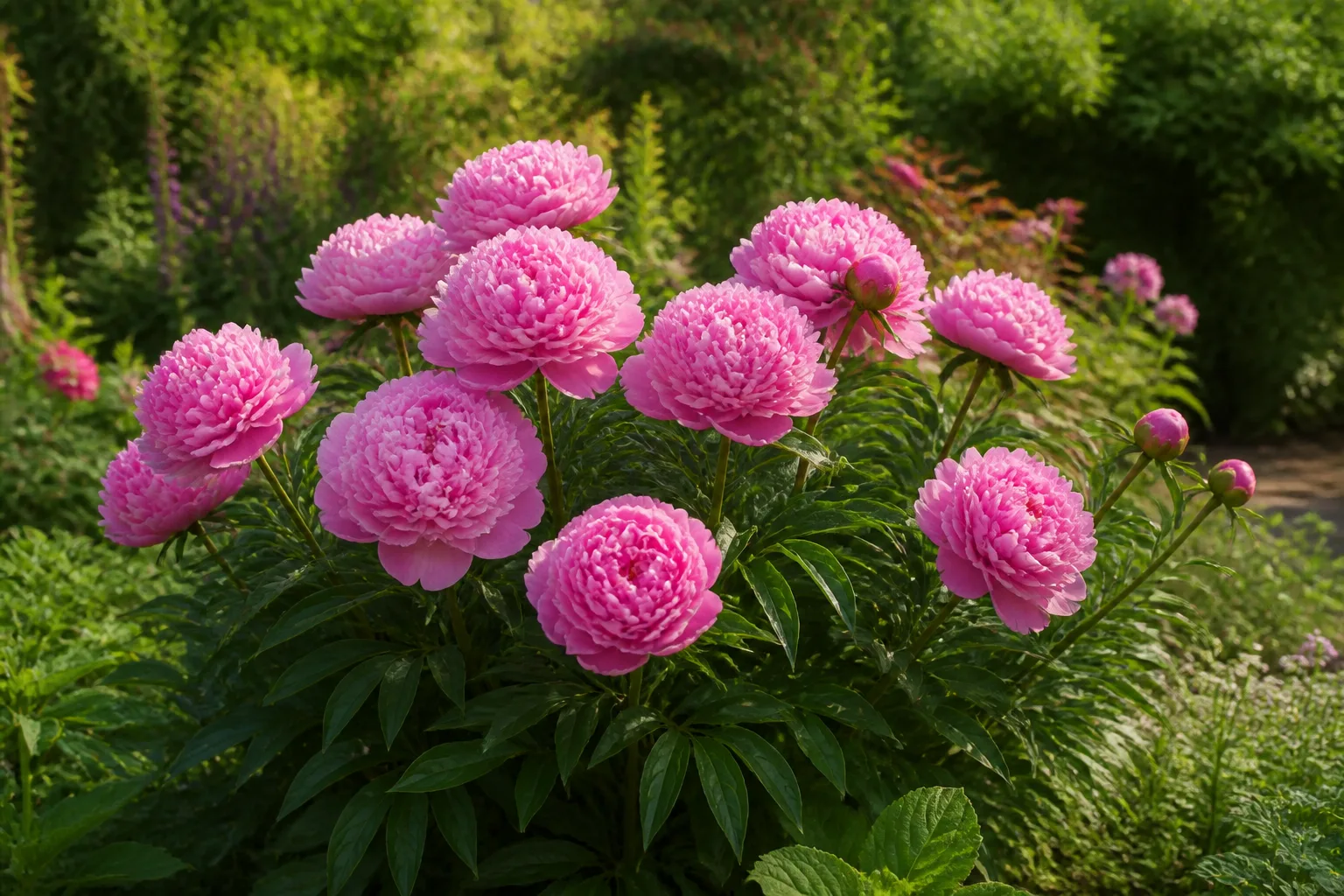
Peonies can stay in one spot for decades, so moving one is usually a response to a real change: a tree has taken over its sunlight, drainage is poor, construction is coming, or the garden needs a redesign. The safest plan is to move it after growth has slowed in fall, keep as much of the root system as practical, and prepare the new site before lifting. For the familiar herbaceous peony, the small pink or cream “eyes” on the crown also need to sit close to the soil surface.
There is no single date that works in every climate, and “transplant” can mean two different jobs. You can relocate the whole clump with minimal disturbance, or you can divide it into new plants. The second is optional; it adds cuts and recovery time, so do it only when you want more plants or the clump is too large to move intact.
Decide whether moving is necessary
A mature peony is not like a perennial that must be divided every few years to keep flowering. A healthy clump can remain undisturbed for decades. Maine Cooperative Extension notes that peonies often do not need transplanting or division for decades, and that dividing or moving every 10 years or so is already a comparatively frequent interval for this long-lived plant.University of Maine Cooperative Extension Treat relocation as a response to a site problem, not routine maintenance.
Move it when the present site no longer supports the plant or cannot remain available: increasing shade from a maturing tree, repeated standing water, crowding that cannot be solved by pruning nearby plants, or a planned building project are reasonable triggers. A peony that simply failed to bloom last spring may have another cause—too much shade, excess nitrogen, recent planting, a late freeze, or eyes buried too deeply. Check those conditions before deciding that digging is the fix; disturbing a plant that could recover in place adds stress without addressing the cause.
If a move is unavoidable, choose the better permanent location first. Peonies are slow to settle after root disturbance, so a second move a year later is worse than taking time now to check sun, drainage, mature spacing, and nearby tree roots.
Identify the peony type before digging
“Peony” includes herbaceous plants that die back to the ground, Itoh or intersectional hybrids with a partly woody base and herbaceous growth, and tree peonies with woody stems that remain above ground. These types do not all have the same crown structure or planting-depth rule. Penn State Extension describes herbaceous peonies as having thick, fleshy storage roots, a crown, and shoot buds or eyes at the crown; it gives a separate, deeper planting instruction for bare-root tree peonies, especially grafted plants.Penn State Extension
Herbaceous and Itoh peonies
The common garden peony is usually herbaceous: its stems die back in winter, and new shoots emerge from underground eyes. Many Itoh hybrids also die back substantially and are handled like herbaceous types for fall cleanup and division, although their base can be tougher and more woody. If you do not know the cultivar, observe it through a growing season or ask the nursery that sold it rather than cutting every stem to the soil on assumption.
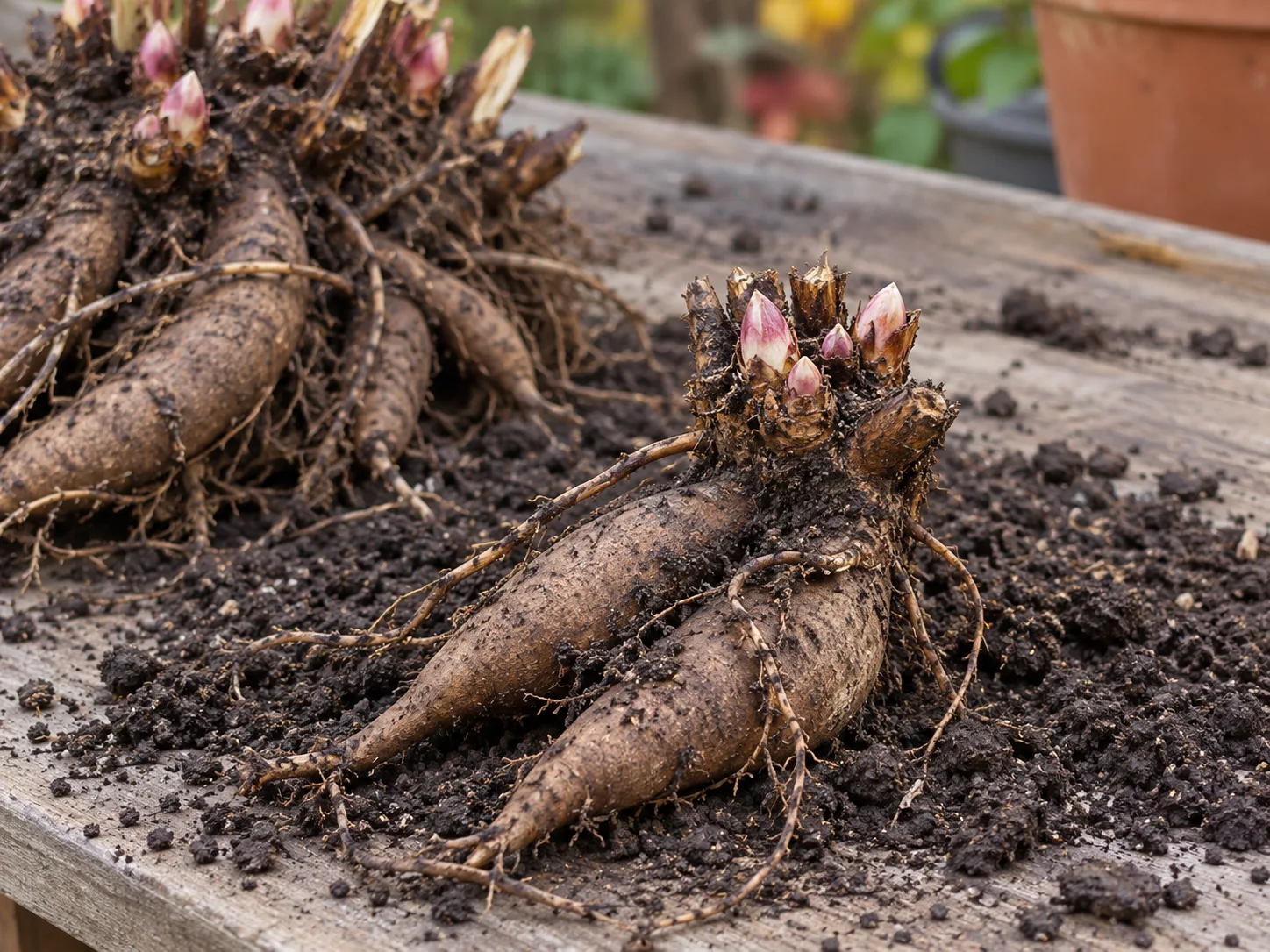
For a herbaceous clump, identify the crown where the stems meet the thick roots. The eyes are small buds on or near its upper surface; they can be pink, red, cream, or pale, and may be easier to see after gently rinsing soil from the crown. Do not confuse the eye-bearing crown with long storage roots: the eyes determine the planting depth, while intact storage roots help support regrowth.
Tree peonies need separate handling
A tree peony keeps woody branches and may be grafted onto an herbaceous rootstock. Do not cut its stems to ground level as you would a herbaceous plant, and do not apply the one-to-two-inch eye rule to its woody framework. For a mature tree peony, prioritize a broad, deep rootball, preserve the original soil line, and keep branches intact; moving it can be a more demanding job than moving a herbaceous clump.
If its label says it is grafted, identify the graft union before planting. Penn State Extension’s bare-root guidance places a grafted tree peony’s union several inches below the soil surface, while an own-root tree peony is planted more shallowly.Penn State Extension Those instructions are for newly planted bare-root stock, not a universal measurement for every established specimen. If the graft or cultivar is unknown, preserve the plant’s existing depth rather than guessing or burying the trunk.
Choose the right time, not just the right month
For most herbaceous peonies in temperate gardens, the preferred window is early fall, after the foliage begins to yellow and the plant is entering dormancy, but while the soil is still workable. Fall timing gives the roots an opportunity to settle before winter without asking the plant to support a full canopy and flowers at the same time. Iowa State and Maine Extension both point gardeners toward September or late summer to early fall. Better Homes & Gardens and Epic Gardening use the local first-frost date as a planning aid, with Epic suggesting a several-week establishment window; treat that as a practical benchmark, not a universal cutoff.Iowa State University Extension and Outreach University of Maine Cooperative Extension Better Homes & Gardens Epic Gardening
A practical rule is to schedule the work several weeks before the ground freezes, adjusting earlier in a short northern growing season and later where autumn stays warm. The exact number of weeks is not a guarantee: soil temperature, rainfall, and the first hard freeze vary by site. In a mild-winter area, wait for summer heat to ease and the plant to slow down; do not copy a northern gardener’s August date if your peony is still actively growing in hot weather. The goal is a dormant or declining top, cool soil, and enough mild weather for root contact before the ground becomes difficult to work.
Avoid moving a peony in active spring growth if you have a choice. A spring move can be necessary before a property sale, excavation, or other urgent change, but the plant is using stored reserves to push stems and leaves just when its roots have been disturbed. Move it before shoots elongate if possible, take the largest rootball you can manage, do not divide it, water it carefully, and expect fewer or no flowers that season. It may take longer to regain its former display.
Pick a site the peony can keep
Choose the destination before you pick up a spade. Most herbaceous and Itoh peonies flower best in a site receiving at least six hours of direct sun, with well-drained soil and room for mature foliage to dry after rain. Penn State notes that herbaceous and intersectional peonies prefer full sun, while some tree and woodland peonies tolerate or prefer partial shade; match the site to the type instead of forcing one rule onto every peony.Penn State Extension
Drainage matters more than making the planting hole unusually rich. Peonies dislike persistently wet soil, and a basin-like hole in heavy clay can collect water around the crown and roots. If the area stays soggy after rain, choose a raised bed or another site with better drainage rather than trying to “fix” a wet pocket by filling it with loose compost. In poorly drained soil, even a careful transplant can decline.
Check shade at the time of day the peony will receive it over the coming years. A sunny patch under a small ornamental tree may become shaded as its canopy grows; tree roots also compete for water. Leave enough space for the peony’s mature spread and airflow—often several feet for a full-size herbaceous variety—so nearby shrubs do not swallow its light or make access difficult.
Prepare the bed and tools before lifting
Have the new hole ready before you expose the roots. Make it broad enough for the root system to sit naturally without being folded, and loosen the surrounding soil so new roots can extend beyond the planting pocket. If the soil needs organic matter, work a modest amount of finished compost into a broad area of the bed. Avoid making a tiny hole filled with a different, fluffy mix; sharp texture changes can hold water or discourage roots from moving outward.
Set out a sharp spade, hand pruners, a tarp or wheelbarrow, a hose or watering can, and a clean, sharp knife only if you plan to divide a herbaceous clump. Water the old site the day before if the soil is dry and hard; slightly moist soil holds together better than dust but should not be muddy. Mark the original soil line if the stems are already cut back, and photograph the plant in bloom if you may need to remember its cultivar or orientation.
Do not add fertilizer directly beneath the crown or roots. A soil test is more useful than guessing at nutrients, and fertilizer touching freshly cut roots can create unnecessary stress. If a test shows a deficiency, follow the lab’s recommendation after establishment rather than improvising a strong dose at transplant time.
Move the clump whole or divide it?
For a simple relocation, moving the plant intact is usually the lower-disturbance option. It preserves the crown’s arrangement and avoids making additional cuts. Divide only if the clump is too large to lift or fit the site, you want multiple plants, or you need to remove damaged sections; a peony does not need to be divided just because it is old.
A full clump can be heavy and awkward, especially after years in place. If preserving it means lifting a rootball you cannot safely handle, ask for help or divide a suitable herbaceous plant rather than dragging it by its stems. If the only reason to divide is a hope that it will bloom more, first check light, waterlogging, planting depth, and competition; a split plant still needs to reestablish and may flower less for a while.
Tree peonies are not routine candidates for division. Woody growth, grafts, and a large root system complicate the operation. Unless a knowledgeable grower can identify the plant and its structure, move a tree peony as a single specimen and keep the woody stems intact.
Lift the peony with its roots intact
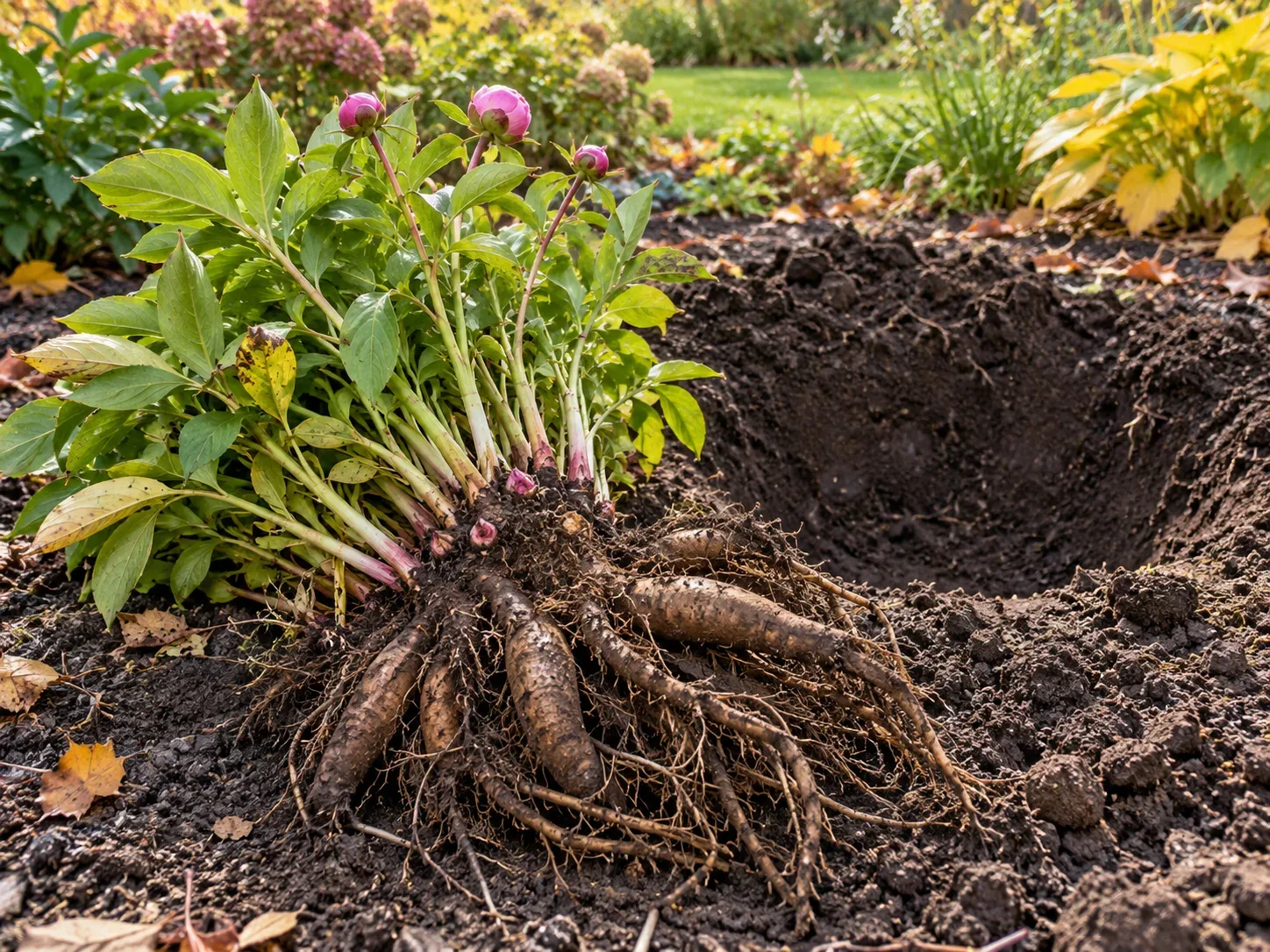
For an herbaceous plant, wait until the foliage has yellowed or the stems have naturally begun to die back. Cut dead stems close to the ground and remove diseased foliage from the garden rather than burying it in the new hole. If leaves are still green, leave them until the plant is entering dormancy; green foliage is still making and storing energy for the crown.
Start digging well outside the stem cluster. A broad circle—often roughly 12 to 18 inches from the crown on a mature plant—is a useful starting point, not a guaranteed boundary, because roots can extend farther. Homes & Gardens likewise recommends digging well outside the stems to keep more soil and roots with the clump.Homes & Gardens Drive the spade vertically, work around the clump, and then angle beneath it in stages. If the root mass resists, widen the circle and dig lower; forcing the blade through the crown or levering hard against one point can sever the storage roots.
Lift from beneath the root mass, supporting the plant rather than pulling its stems. If the clump is large, slide a tarp under it or use a second person to carry the weight. Keep the crown and roots shaded and damp while you work, and replant promptly. Do not leave the roots baking in sun or sitting in a bucket of water for hours; the goal is to avoid drying, not to soak them.
If the crown breaks or a few roots are cut, the plant may still recover. Remove only broken, mushy, or clearly rotted material with a clean tool, and avoid trimming healthy roots to make the clump fit a too-small hole. The best response to an oversized rootball is to enlarge the hole or, if the plant is herbaceous and division is appropriate, make deliberate clean cuts through the crown.
Divide only healthy herbaceous crowns
If you decide to divide, first remove loose soil so you can see the crown and the buds. Rinse gently if needed, then locate the eyes and trace how they connect to the thick roots. Use a clean, sharp knife to make a deliberate cut through the crown; sawing repeatedly with a dull spade crushes tissue and makes it harder to see whether each piece has viable growth points.
Aim for divisions with three to five healthy eyes and at least one or two substantial storage roots. Penn State Extension and Better Homes & Gardens both describe three to five eyes as a useful target for a robust division.Penn State Extension Better Homes & Gardens A smaller piece with one or two eyes may live, but it starts with fewer reserves and can take longer to become a flowering-size plant. Keep as much healthy root attached as practical, and discard any portion that is soft, hollow, or badly damaged.
Do not divide just to achieve a high plant count. A larger division generally has more stored energy and a stronger chance of establishing quickly. If the clump has only a few healthy eyes, moving it intact or making two generous divisions is better than cutting it into many tiny pieces that need years to build size.
Set the plant at the correct depth
For herbaceous peonies, arrange the roots so they fan downward and outward, then position the crown with the eyes about one to two inches below the finished soil surface. This measurement refers to the eyes, not the bottom of the hole or the tips of the roots. Penn State Extension gives a one-to-two-inch cover for herbaceous peony eyes, and warns that planting them too deeply can prevent flowering.Penn State Extension
If you moved the clump intact, check where its crown sat in relation to the old soil line. Replanting at approximately the same level is a sensible default, unless you know the original crown was buried too deeply and the plant’s bloom history points to that problem. In that case, gently remove enough loose soil to find the eyes and set the crown at the right depth; do not bury extra stems to compensate for a shallow hole.
Backfill with the native soil, settling it by hand around the roots so there are no large air pockets. Do not stomp hard over the crown. Before filling the hole completely, lay a straight board or the handle of a spade across the opening to estimate the finished grade and measure the eye depth from that surface. It is easier to adjust now than after the soil settles.
Tree peonies do not have the same visible herbaceous eye arrangement. Preserve their prior soil level unless you know whether the plant is own-root or grafted and have reliable cultivar-specific planting instructions. For bare-root grafted tree peonies, the graft union is commonly set deeper than the crown of an herbaceous peony; confusing those rules can bury the wrong part of the plant.Penn State Extension
Water, mulch, and protect it through winter
Water slowly and thoroughly after planting so soil settles around the roots. During the remaining fall weeks, check moisture rather than following a fixed weekly schedule: if rain keeps the bed evenly moist, skip extra water; if the soil dries several inches down, water again. A newly moved root system has less reach than an established one, but peony roots also need air, so do not keep the bed saturated.
A light layer of mulch can moderate freeze-thaw swings in cold areas, especially for a small division that has not rooted into surrounding soil. Keep mulch away from the crown and remove or thin it as spring growth approaches. A deep mound over herbaceous eyes can leave them too far below the final soil surface and delay flowering—the same error that careful measuring was meant to prevent.
Do not force fall growth with fertilizer or heavy watering after the plant is dormant. Winter dormancy is normal, not a sign that the transplant has failed. In spring, remove dead debris, watch for shoots, and water during prolonged dry spells; do not dig the crown up to see whether roots are growing.
What to expect in the first three years
A transplanted peony may produce foliage before it produces a full set of flowers. The first spring can bring few blooms or none, especially after division, a spring move, or substantial root loss. Better Homes & Gardens reports that divisions can take a couple of years to return to a regular bloom cycle, with fuller flowering often arriving by the third spring; that is a useful expectation, not a promise for every plant or climate.Better Homes & Gardens
In the first year, judge success mainly by healthy shoots and leaves, not flower count. Let the foliage grow through its season so it can replenish the roots; remove spent flowers if desired, but do not cut healthy leaves back early. Keep the soil evenly moist during dry weather, weed around the plant without cultivating deeply, and avoid adding new stressors such as fertilizer spikes or another move.
In the second and third seasons, look for a fuller clump and stronger stems. Bloom recovery depends on how much root was retained, whether each division had enough eyes, whether the plant was set at the correct depth, and whether the new site provides suitable light and drainage. If you moved a cultivar that had not bloomed reliably before, it may take time to determine whether the issue was its old location or a characteristic of the plant.
Diagnose slow recovery before moving it again
If the plant has leaves but no flowers, first measure the eye depth rather than immediately moving it again. Eyes planted too deep are a common cause of poor flowering in herbaceous peonies; too-shallow placement can expose buds to winter injury. Check the mulch layer and settled soil around the crown, because both can change the effective depth after planting.
If shoots are weak or absent, consider the season and the condition of the roots. A small division may take longer to build up; late frost can damage emerging stems; drought during establishment can limit growth; and waterlogged soil can injure roots. Wait through a full growing cycle unless there is clear rot or a continuing drainage problem. A plant that is alive but slow is often better left undisturbed than lifted repeatedly for inspection.
For a herbaceous peony that remains healthy but flowerless after two or three seasons, assess direct sun during the growing season, soil drainage, eye depth, and nearby tree or shrub competition. Do not respond by applying a large dose of high-nitrogen fertilizer: lush leaves do not correct buried eyes or insufficient light. Change one clear limiting condition at a time, and only consider another transplant if the site itself is unsuitable.
Common peony transplant mistakes
The most costly mistake is setting herbaceous eyes too deep. Measure from the finished soil line, account for mulch, and avoid piling compost or winter protection over the crown. A second common error is assuming every peony should be divided; each cut removes part of a root system that may otherwise establish more quickly as one plant.
Other avoidable problems include digging too close to the crown, lifting by stems, leaving roots exposed while the new bed is prepared, and planting into a poorly drained hole. Moving in spring is not automatically fatal, but it is a fallback with more stress and a greater chance of losing that season’s bloom. An abrupt change in soil depth or a second move soon after the first can extend recovery.
Finally, do not use one date or one depth for every peony in every place. Use dormancy and local soil conditions to time the work, identify the plant type before cutting, and preserve the old soil line when the anatomy or graft status is unclear. Those choices prevent more problems than adding a special amendment or trying to hurry the plant with extra care.
Conclusion
To transplant peonies successfully, first confirm that a move is truly needed, then identify whether you have an herbaceous, Itoh, or tree peony. For most herbaceous garden peonies, work in early fall as growth slows, prepare a sunny and well-drained home, lift broadly to protect the fleshy roots, and set the eyes only one to two inches below finished soil. Divide only when you have a reason, and give the plant time to rebuild before expecting a full display of flowers.
A peony can recover from a careful move, but it will not reward rushing. The best aftercare is a stable site, the right depth, sensible moisture, and several seasons without unnecessary disturbance.



