How to Water Succulents: A Practical Watering Guide
Learn how to water succulents by checking the root zone, drainage, light, and season—then decide whether to give a full soak or wait until it dries.
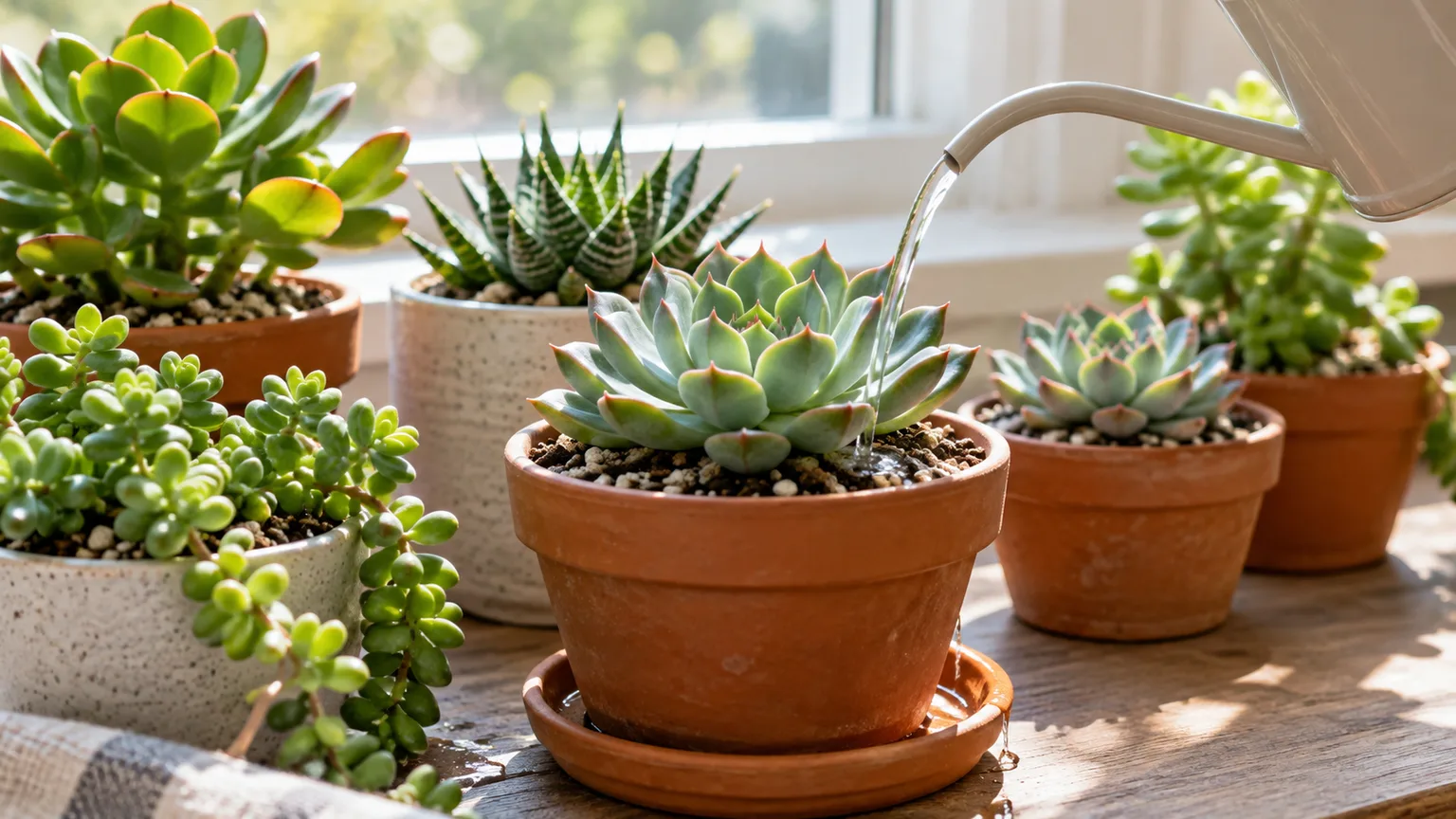
A succulent can go longer between drinks than many houseplants, but it still needs water at the right time. Its fleshy leaves, stems, or roots store water; they do not make the roots immune to dry soil, nor do they let roots sit safely in a potting mix that stays wet. The goal is a thorough drink followed by enough drainage and dry time for the root zone to breathe.
For most desert and semidesert succulents in containers, use this sequence: check the mix below the surface, water when it has dried through most of the root ball, let excess water drain, and empty the saucer. Then check again when conditions change.
A bright, warm, breezy patio pot may dry quickly; a large glazed pot in a cool, dim room can remain damp for much longer. The University of Minnesota Extension’s overview of cacti and succulents describes their need for modest water, abundant light, and well-drained growing conditions.
| Situation | What to do |
|---|---|
| Dry root zone; draining pot; desert-type succulent | Water slowly until the root ball is evenly wet and water exits the hole. Drain the pot, then wait for the next dry-down. |
| Dry surface but cool or damp soil deeper down | Wait. Recheck in a few days; a dry crust is not proof that roots need water. |
| Wet mix and soft or yellowing leaves | Do not add water. Empty standing water and check the pot, mix, and roots. |
| Outdoor bed after useful rain | Count that rain as watering if it soaked the root zone; do not irrigate by schedule alone. |
| Holiday cactus or a plant with a known seasonal cycle | Follow its species-specific routine rather than the desert-succulent rule. |
The quick rule: soak fully, then let the root zone dry
When a typical fleshy-leaved succulent is ready for water, wet the growing medium thoroughly rather than sprinkling a little on the surface each day. In a pot with a drainage hole and a porous mix, pour evenly over the soil until water runs from the bottom.
Allow the pot to finish draining, then tip out water in the saucer or decorative cover. The roots receive moisture across the pot, and the mix can return to an airy state before the next watering.
“Overwatering” usually describes a root zone that stays wet too long, not one proper soak. A full drink followed by fast drainage and an appropriate dry period is different from frequent small doses that repeatedly dampen only the top layer. The West Virginia University Extension guide to succulents likewise recommends soaking container soil until water drains and waiting until the soil is dry before watering again; its seasonal intervals are general examples, not a universal schedule for every home or species.
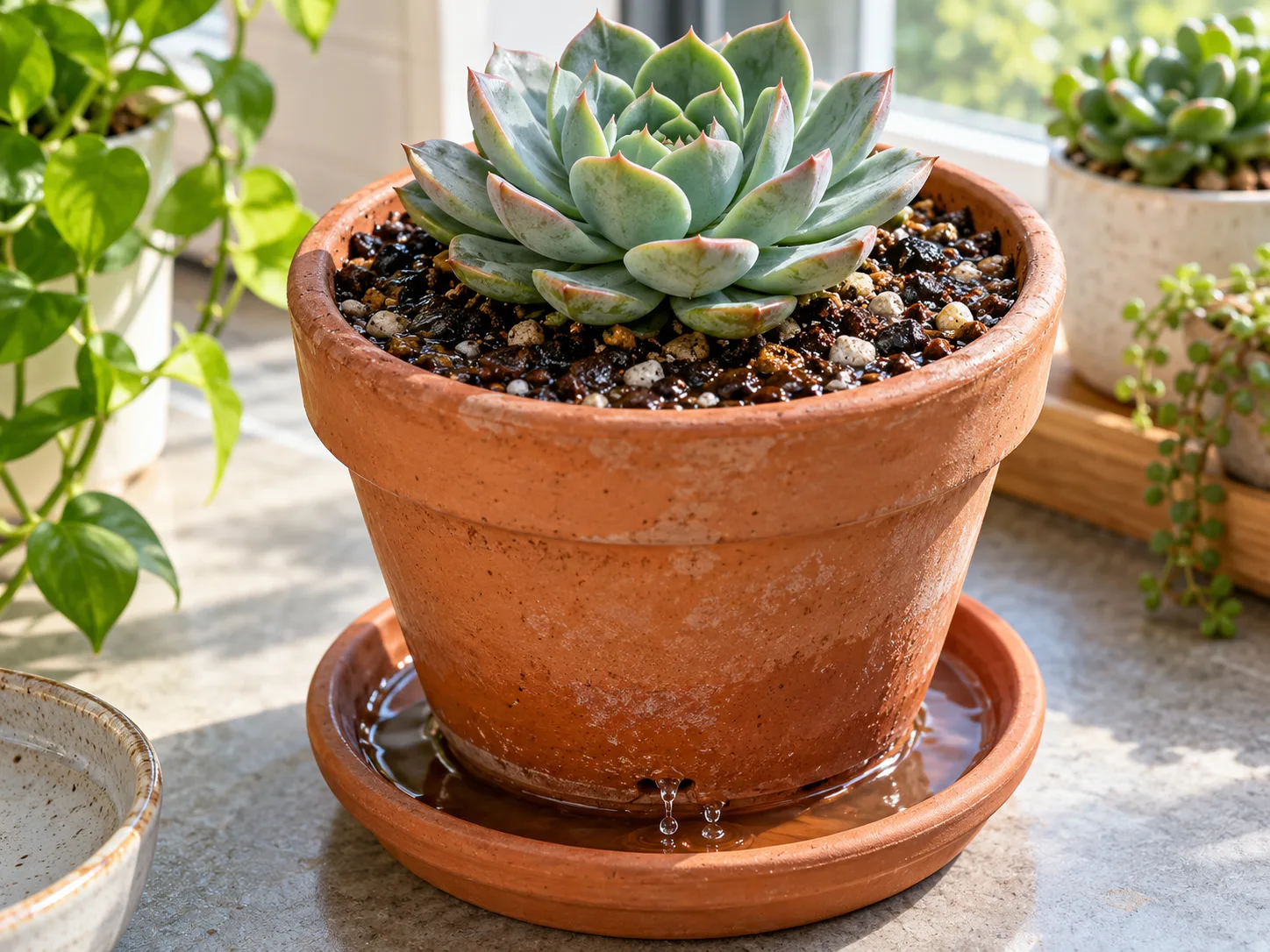
Do not water again just because the surface looks pale or because the plant is on a weekly routine. Instead, decide whether the root zone is dry enough for its species and current conditions. That one change—checking the plant before reaching for the can—prevents both calendar-driven overwatering and months of neglect.
How often should you water succulents? Let dry-down decide
There is no dependable number of days that works for all succulents. Watering frequency changes with species, active growth, root volume, pot depth and material, soil texture, light, temperature, humidity, air movement, and rainfall. A “once a week” reminder can be useful as a prompt to inspect plants; it is not a command to water every pot.
Use a simple decision rule: if the root zone is still cool or damp, wait; if it has dried appropriately and the plant is a desert type in active growth, water thoroughly; if it is dry but the plant is dormant or a specialized species, check that plant’s care requirements before soaking. Check more often during a hot, bright spell or just after moving a plant outdoors, and less often when growth slows, light falls, or several rainy days keep an outdoor pot wet. Inspection frequency can change without watering frequency changing.
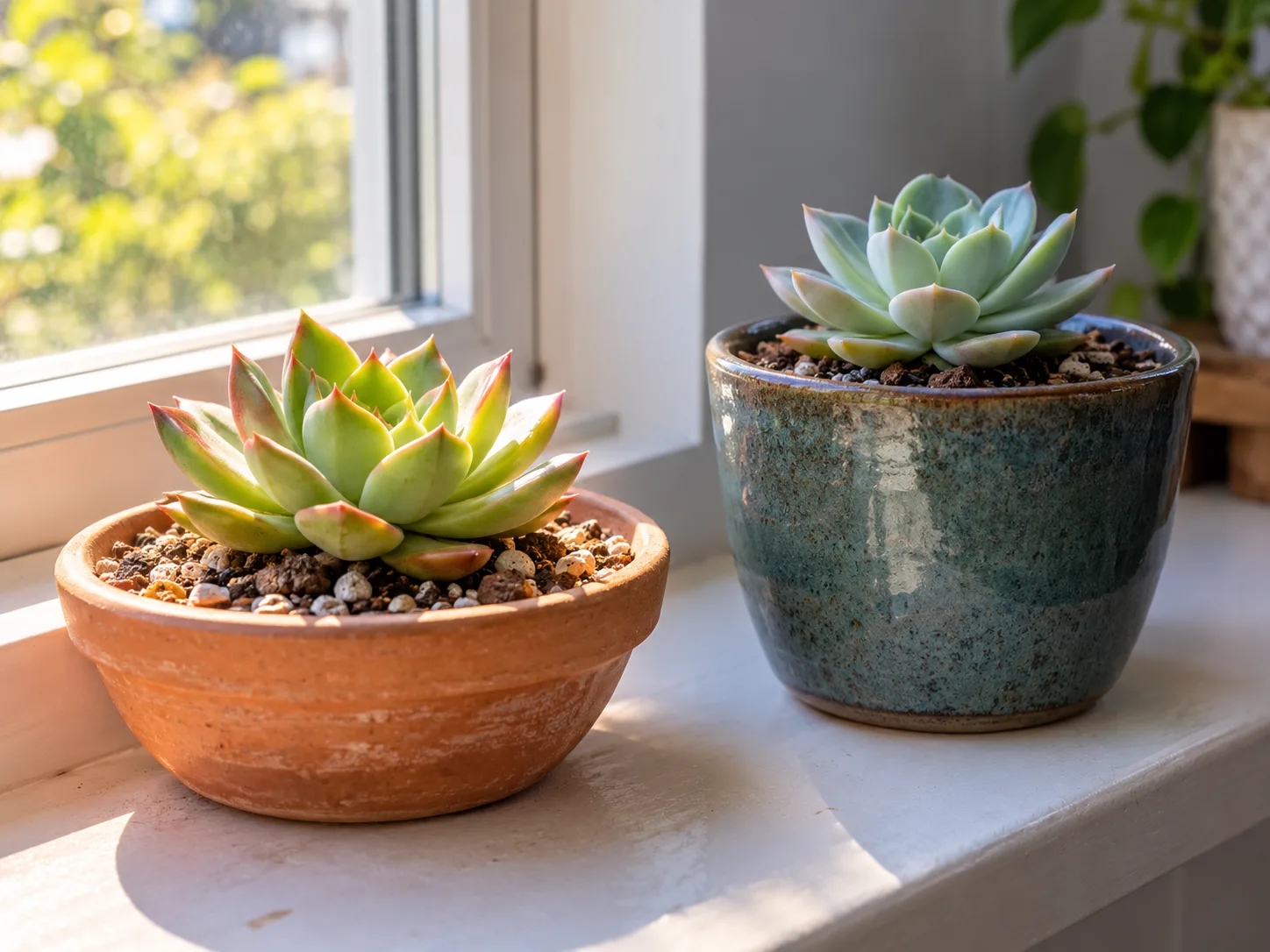
Pot size creates counterintuitive results. A large pot holds more medium and can keep its center damp after the surface dries, while a tiny pot has little reserve and may dry quickly.
A tight cluster of plants also shares the same soil volume; if the species have different water needs, the driest-looking one does not necessarily mean the whole container is ready. When plants are crowded into a mixed arrangement, choose compatible species or water according to the slowest-drying section rather than pouring extra water on one plant’s side.
Check moisture below the surface
The top inch is a useful clue, but it is not the whole root zone. A thick layer of decorative gravel, a deep pot, a moisture-retentive mix, or a pot without free drainage can leave the lower half wet when the surface feels dry. Before watering, inspect at more than one depth and use the pot’s weight as a comparison rather than relying on leaf appearance alone.
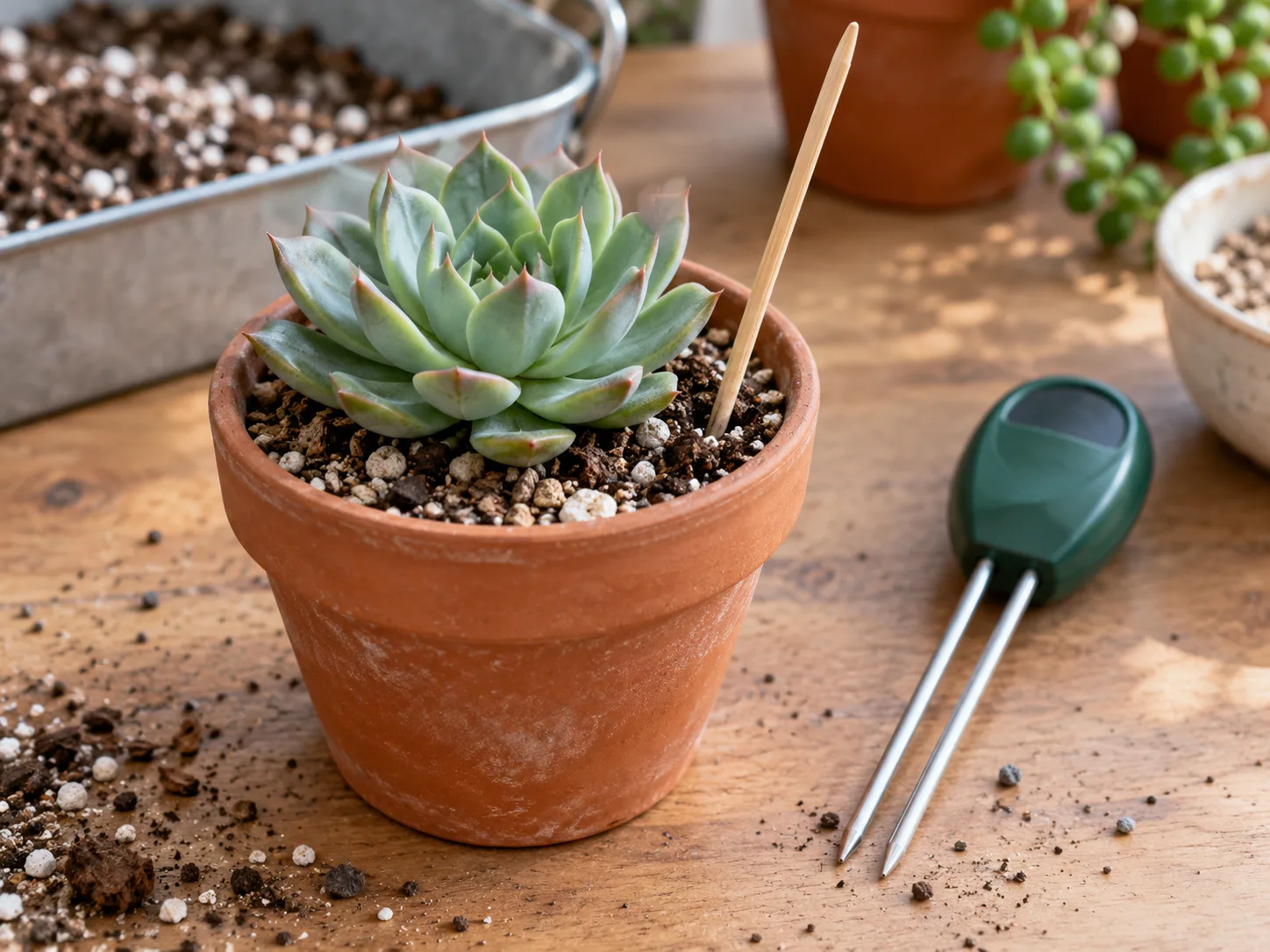
Use a skewer and pot weight together
Slide a clean wooden skewer into the mix near the pot’s edge, avoiding the main stem and roots. Leave it briefly, then pull it out and look for dark, cool, damp particles clinging to it.
If the lower portion is still moist, set the pot back and check again after a few days. For a shallow pot where a skewer is impractical, feel the mix at the drainage hole or gently tip the plant out only if it is stable enough to handle.
Pot weight becomes more useful after you learn its range. Lift the pot just after a thorough watering and again when the mix is dry; the difference teaches you what “light” means for that container.
A naturally lightweight plastic pot may need a different baseline from a heavy ceramic cachepot, so lift the planted inner pot by itself. Epic Gardening’s succulent-watering steps also use soil checks and pot weight as clues because moisture lower in the container can be hard to judge by sight.
Treat a moisture meter as a second opinion
A probe can help with a deep pot, but do not treat one reading as a verdict. Insert it in two or three spots around the root ball and compare the results with a skewer, the pot’s weight, the drainage hole, and how long the mix has been drying. Coarse mineral particles, uneven roots, and a small sensor’s placement can make one reading unrepresentative of the entire pot.
If the readings conflict, wait and check again instead of adding water “just in case.” The plant’s leaves can help, but they cannot settle the question on their own: thirsty roots and damaged, waterlogged roots may both fail to keep leaves firm. Soil condition is the first diagnostic; the plant is supporting evidence.
Water a potted succulent so the whole root ball gets wet
For a draining pot, bring water to the soil surface slowly and distribute it around the root ball, not in one stream against the stem. Continue until water appears through the drainage hole. If the mix is so compacted that water races down the sides without wetting the center, pause briefly and repeat with a slower pour; drainage from the hole matters only if the root ball actually received moisture.
Use room-temperature water and keep it out of the tight center of rosettes when possible. A few droplets on a leaf are not automatically harmful, especially if they dry quickly, but water trapped between close leaves or around a crown can linger in cool, still conditions. A narrow-spout watering can makes it easier to reach the soil beneath an echeveria or aloe without soaking the foliage.
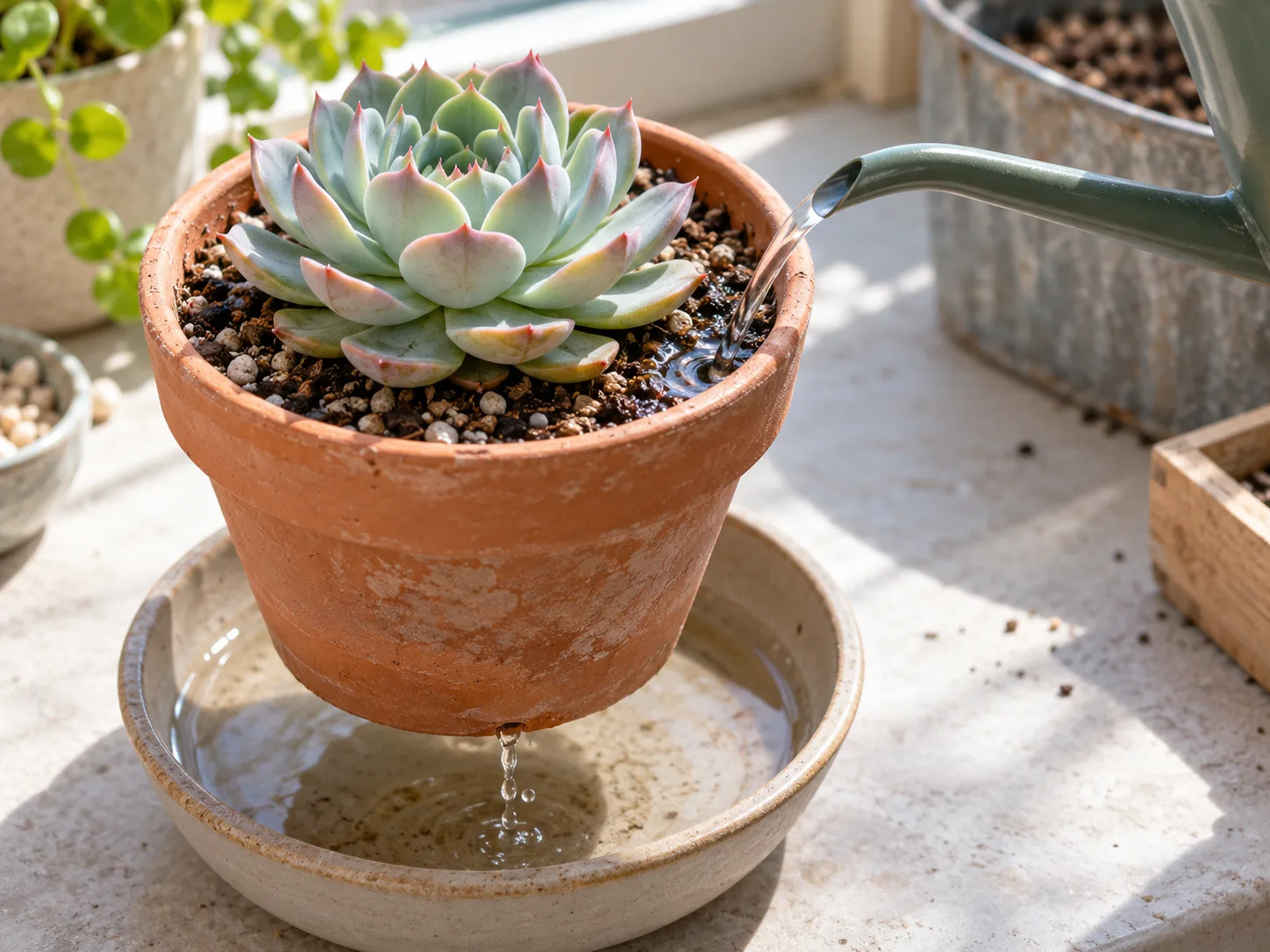
Top-water as the normal method
Top-watering is a clear default for most potted succulents because it shows whether the mix accepts water and lets excess salts move out through the drainage hole. Pour gently around the soil, not just at the stem, and rotate the pot if one side has dried more quickly. Once the stream slows, let the container drain over a sink, tub, or catch tray before returning it to a shelf.
If water sits on top, the mix may be compacted, peat-heavy, or dry enough to repel water. Do not respond by adding tiny amounts every day.
Rewet the root ball carefully, then consider replacing the medium with a more open succulent mix if it remains slow to absorb or slow to dry. A proper watering routine cannot compensate for a medium that has collapsed or a blocked drain hole.
Bottom-water only when it solves a specific problem
Bottom-watering can help a very dry, peat-based mix that has become water-repellent, or a small pot that is difficult to wet evenly from above. Set the draining pot in a shallow basin and let the mix draw water up through its hole.
Remove the pot once the lower mix is moist, let it drain fully, and empty the basin. It is a tool for rewetting, not a way to measure how much water the plant “wants.”
For routine care, bottom-watering has drawbacks: it can leave salts behind because water is not flushing down through the medium, it is easy to forget a pot in a basin, and it cannot fix poor drainage. A top-watered succulent can be healthy; there is no need to use a sink soak every time. Choose the method that wets the entire root zone while letting the container drain afterward.
Fix drainage before changing the schedule
A succulent pot needs an open drainage hole. If the plant is in a decorative container with no hole, keep it in a smaller nursery pot with holes and lift that inner pot out for watering, or move the plant to a suitable draining container. A gravel layer at the bottom does not turn a sealed pot into a draining pot: excess water still has nowhere to leave, and the roots may sit in a wet zone above the gravel.
The mix matters just as much. Use a cactus or succulent medium that dries at a reasonable pace for your room, or improve a peat-heavy mix with coarse mineral material such as pumice or horticultural perlite.
There is no single ratio that works for every climate and container; the practical test is whether water enters evenly, drains freely, and the root ball dries between drinks without becoming hydrophobic. Avoid very fine sand, which can fill air spaces instead of improving them.
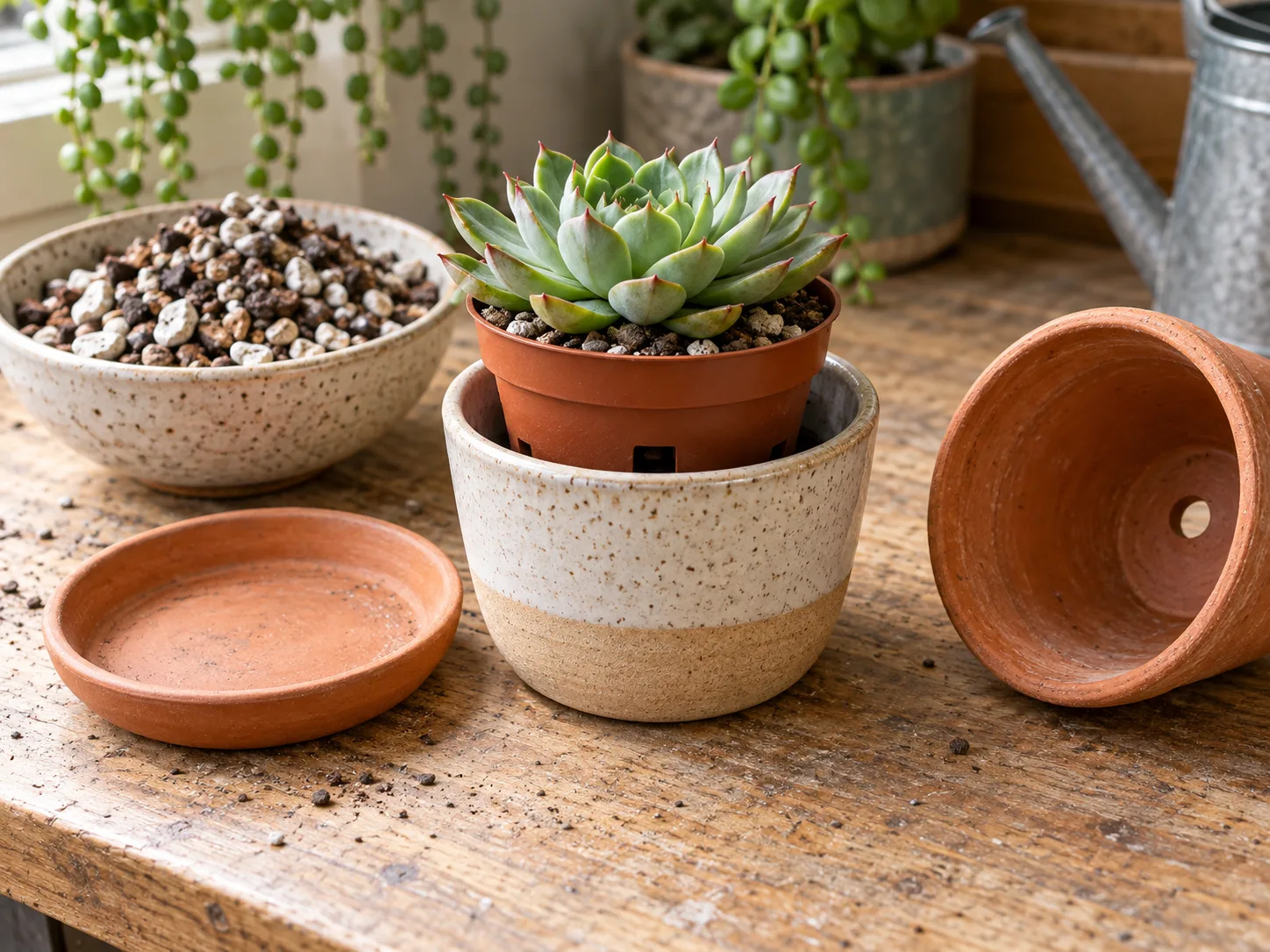
Pot material changes drying speed, but it does not replace a drainage hole. Unglazed terracotta loses moisture through its walls and often dries faster than glazed ceramic or plastic.
A terracotta pot may be forgiving in a humid room; a porous pot in a hot, windy patio can dry quickly. Also check for a cachepot or saucer holding runoff: discard that water after the pot drains rather than letting the roots sit in it.
Adjust for light, temperature, pot size, and growth
Strong light and warm conditions usually support faster growth and faster drying, while low light, cool temperatures, high humidity, and stagnant air tend to slow both. A plant moved from a shaded shop to a sunny balcony may need more frequent checks after acclimation. A plant moved indoors for winter may suddenly use less water because it has less light and air movement, even if the room feels warm to you.
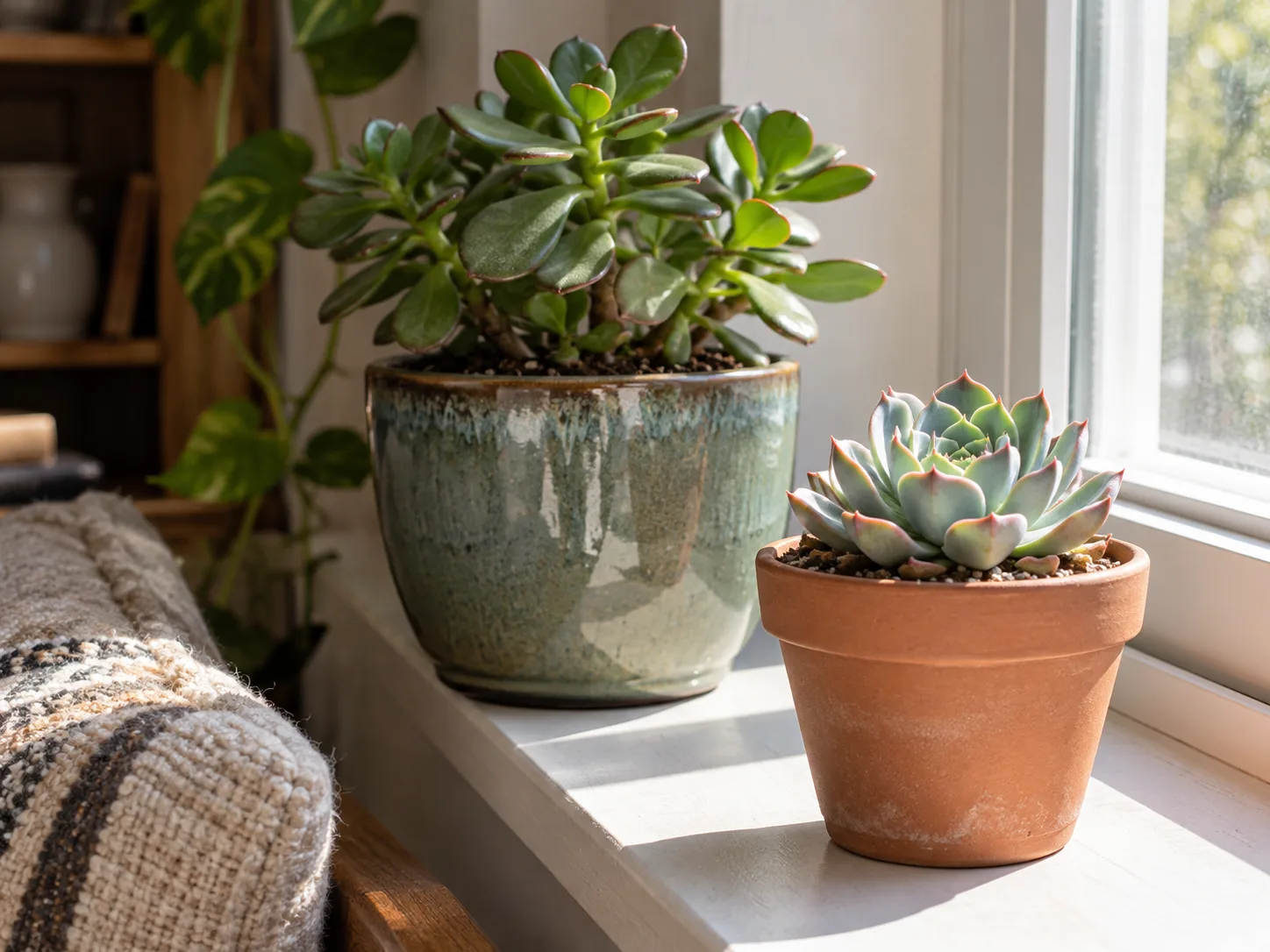
Use the plant’s actual conditions, not the month on the calendar. A shallow terracotta pot near a bright window may be dry when a deep plastic pot across the room is still damp.
Plants under a grow light may keep growing through winter; those in a cool, low-light room may barely use water. If a plant is not growing and its mix is taking much longer to dry, widen the interval rather than trying to maintain last season’s pattern.
Follow the plant’s growth phase, not just the calendar
Many common indoor succulents grow most actively during warmer, brighter months and slow down when days shorten. Their water use can fall with that slowdown, so inspect less often for a reason to water and allow the mix to dry before another soak.
Some groups have different seasonal rhythms, and indoor conditions can shift the usual calendar. New growth is a better clue than a date on the wall.
Do not starve an actively growing succulent simply because it is winter, and do not keep a dormant plant on a summer routine. A plant in a warm, bright room may continue using water; one under cool cloudy light may not.
When you do not know the species, keep a short observation log: date watered, approximate drying time, temperature/light change, and whether the plant produced new growth. A few records make your own conditions more useful than a generic frequency chart.
Water outdoor containers differently from indoor pots
An outdoor pot can dry faster than the same pot indoors because of sun, wind, and warm air, but it can also stay wet longer after repeated storms or cool nights. Rain may water the root ball for you, especially in an exposed position; a roof overhang can prevent rain from reaching it. Start by checking the mix and the drainage hole after weather changes instead of assuming that outside always means more water.
Containers that sit in a saucer, cachepot, or low patio spot can collect runoff. Lift them enough to let water escape and empty any tray; if a heavy rain is coming and a pot drains slowly, temporarily move it under cover.
For a new outdoor plant, increase sunlight gradually and check it more often during the transition. An abrupt move into hot afternoon sun can burn leaves, while overcorrecting with extra water will not repair sun damage.
Better Homes & Gardens separates indoor, outdoor-container, and in-ground succulent watering in its year-round watering guide. The practical takeaway is to use its weekly check as an inspection habit: outdoor conditions may shorten dry-down, but the soil still tells you whether the next watering is due.
Treat garden beds as soil-and-weather problems
In-ground succulents do not follow a potted-houseplant schedule. Their roots can spread beyond a small container, and garden soil, rainfall, slope, mulch, and local climate determine how quickly water leaves the root zone.
First make sure the species is suited to the site and the soil drains well. A succulent in a raised, gritty bed in a dry climate has a different water supply from one planted in compacted clay or a low area that stays saturated.
Newly planted succulents need attention while they establish roots. Water the planting area after planting so the soil settles around the roots, then check the root zone as it dries; do not leave a fresh transplant bone-dry for long stretches just because mature plants are drought-tolerant.
Once established, many hardy sedums and similar landscape succulents need supplemental water mainly during prolonged dry weather, while frequent rain may supply all they need. Use deeper, less frequent irrigation that reaches the root area rather than light daily sprinkling.
For a bed that remains wet after rain, changing the watering calendar is not enough. Improve the planting site with a raised mound or a better-drained area, and avoid placing drought-adapted plants where roof runoff or irrigation overspray collects.
In areas with cold wet winters, moisture combined with cold can be harder on many succulents than a brief dry spell. Protect tender types from frost according to their hardiness, and do not assume a plant that tolerates summer drought will tolerate winter saturation.
Make exceptions for the kind of succulent
“Succulent” describes a way of storing water, not a single family with one care routine. Echeveria, aloe, jade, haworthia, sedum, and many cacti commonly prefer a pronounced dry-down in a fast-draining mix.
Their leaves or stems hold reserves, so they can look plump long after the soil has dried. That reserve buys time; it is not proof that roots can be ignored indefinitely.
Holiday cacti such as Schlumbergera and epiphytic types such as Rhipsalis are cactus relatives from moister, shaded environments than desert barrel or prickly-pear cacti. Their medium can need a different balance of moisture and drying, especially during active growth or flowering. Lithops and other plants with highly specialized seasonal cycles also need species-specific guidance; a generic “water all succulents only when bone-dry” rule can be wrong for them.
If the label is missing, identify the plant before using a long dry period as the default. Look at the form—compact rosette, woody stem, segmented trailing stem, or paired pebble-like leaves—and compare it with a trusted horticultural or botanical reference.
If identification remains uncertain, begin with a draining medium, bright suitable light, and a cautious moisture check, then watch for healthy new growth. Do not group plants with visibly different forms into a shared pot just because both are sold as succulents.
Diagnose thirst and excess water together
A succulent symptom is useful only when paired with what the soil and roots are doing. Drought stress and root rot can both leave leaves wrinkled or floppy because the plant is not maintaining water pressure. Before you water a wilted succulent, check the mix: a dry root ball points to a different next step from a cool, heavy, wet pot.
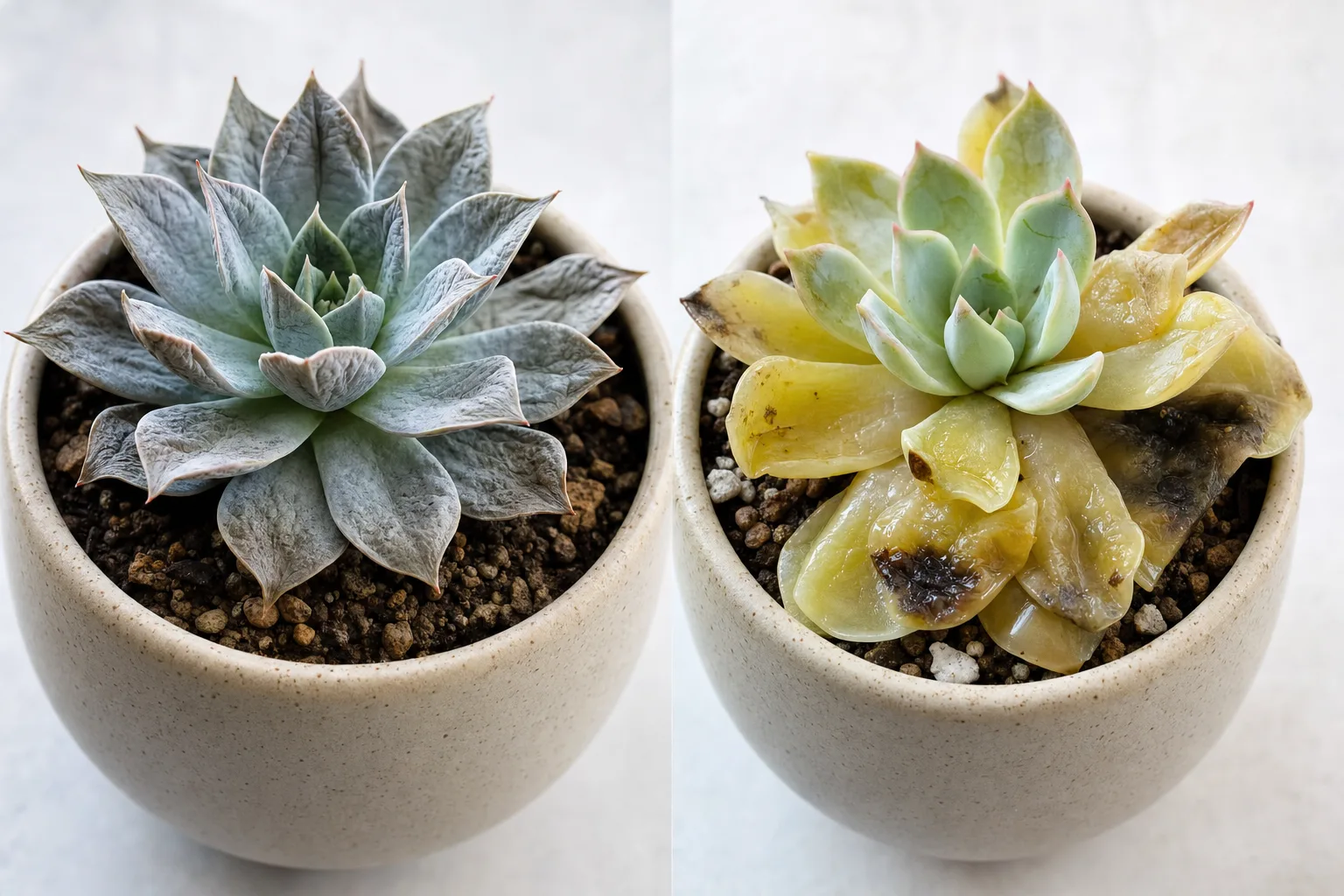
Dry mix with wrinkled or flattened leaves
If the mix is dry through the root zone, the pot feels light, and the leaves are gradually losing firmness or developing wrinkles, water thoroughly and let the pot drain. Do not give only a few drops to a large, dry root ball. If dry peat pulls away from the pot sides or water shoots down the gap, rewet it slowly in stages or briefly bottom-water, then check that the center became moist.
Give the plant time to respond; leaves may not plump up immediately, and older damaged leaves may not recover fully. If the mix was dry but the plant remains limp after a careful drink and the soil drains, inspect roots and the stem base. A plant with dead or shriveled roots cannot take up water well, so repeated watering may deepen the problem rather than cure it.
Thin, papery, or crispy lower leaves can reflect prolonged thirst, but one old leaf drying at the base may be normal as a rosette grows. Look for a pattern across several leaves and compare the rate of change with recent watering and weather. Remove only leaves that are fully dry or detached; do not strip firm leaves to expose the stem.
Wet mix with soft, yellowing, or translucent leaves
If leaves are soft, unusually swollen, yellowing, translucent, or dropping while the soil stays wet, stop watering and empty the saucer. Check that the hole is open and the pot is not sitting inside water. If the mix remains damp far longer than expected or the stem is soft at the soil line, slide the plant out to inspect its roots; healthy roots are usually firm, while decaying tissue is soft and may smell sour.
For limited root damage, remove wet old mix and cut away soft, dark roots with a clean blade. Let the plant and cuts dry in a shaded, airy place before placing it in fresh, dry, porous mix and a draining pot.
Do not water immediately into a recently injured root system; wait until the plant is stable and follow the species-specific repotting guidance. If the crown or stem has rotted through, a firm healthy cutting may be the only salvage option.
Yellowing alone does not prove overwatering. A cold draft, sudden sun, pests, natural aging, and other root problems can produce overlapping symptoms.
Read the leaves together with the root-zone moisture, pot weight, and drainage. If the soil is wet but the roots look healthy, correct the light, temperature, mix, or container issue that is slowing dry-down before resuming the usual routine.
Conclusion
Water succulents when the root zone—not just the surface—has dried enough for that plant and its current conditions. Then wet the mix thoroughly, let the pot drain, and remove standing water. For garden beds, account for rainfall, soil, establishment, and local weather instead of copying a container schedule.
If you remember one thing, make it this: check first, water second. A skewer, the pot’s weight, a clear drainage hole, and a note of how long your mix takes to dry will give you a better routine than any universal day count. Change that routine when light, temperature, growth, or the plant itself changes.



