Episode 4 Plant Tour: Justin Timothy Temple
Tour Justin Timothy Temple's Baltimore apartment from In the Weeds Episode 4 — named plants, rehab-shelf workflow, Birkin care, and cat-proofing a bright indoor jungle.
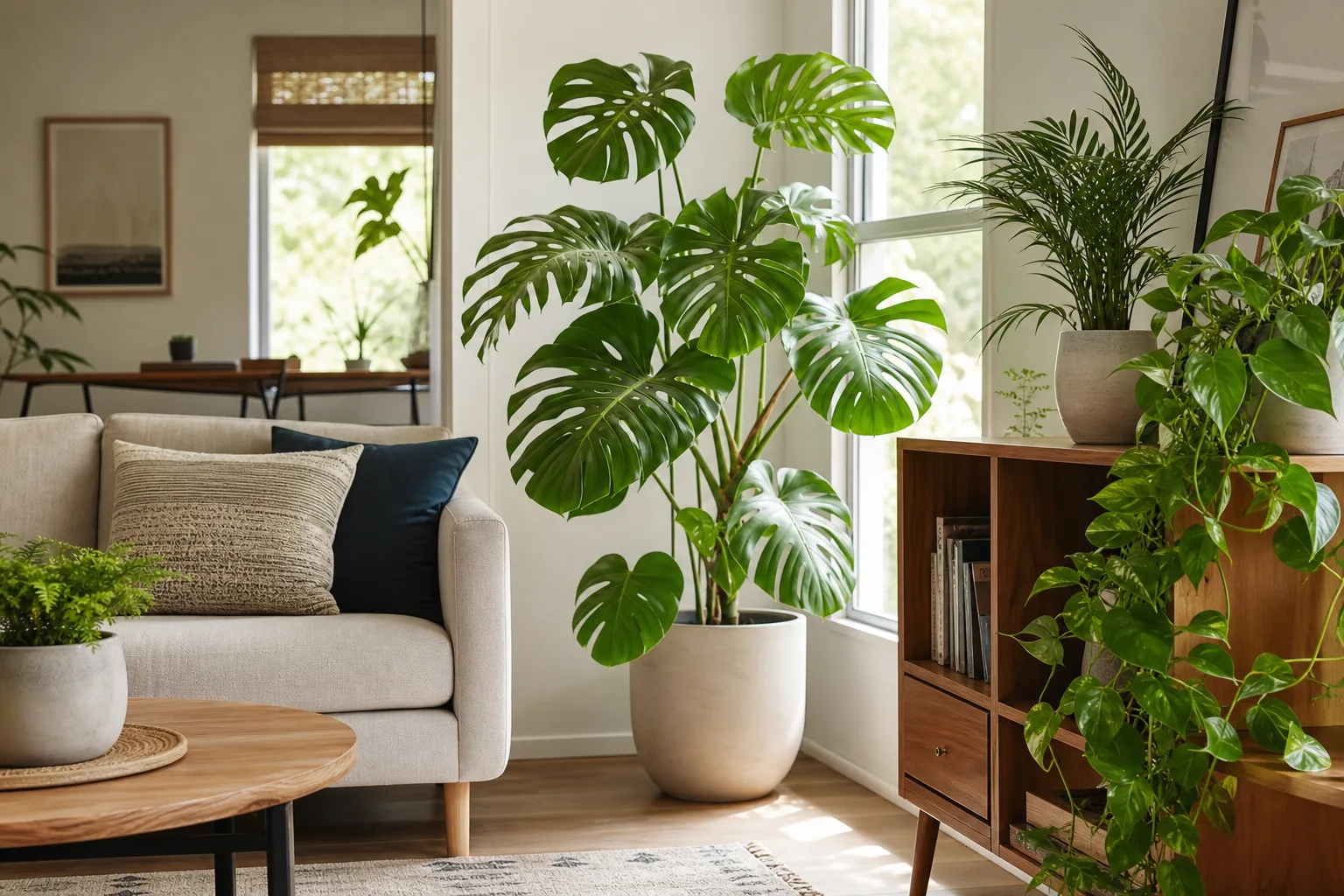
Walk through Justin Timothy Temple’s Baltimore apartment in Episode 4 of In the Weeds With Plant People and you meet two overlapping worlds at once. Justin is a yoga teacher, writer, and creative who documents life as @justintimothytemple — and he is also the human behind Kuhio, Diana Prince, Trixie, The Twins, Manny, Jory, Lafayette, Manny III, and more than 30 named houseplants that share his rooms. The episode is short on screen time but rich in collector logic: giant living-room windows, a birthday Bird of Paradise, a bookshelf rehab station, muted planters, curious cats, and a willingness to gift plant babies instead of hoarding every propagation.
This page treats the tour the way a serious plant parent would — not as background viewing, but as a case study in naming, light placement, rehab workflow, pet friction, and the slow discipline required to keep a bright-apartment collection alive while teaching yoga from home.
Meet Justin Timothy Temple and his Baltimore apartment jungle
Justin lives and teaches in Baltimore, Maryland, where his public profiles describe him as a yoga practitioner focused on consistent, accessible practice — the same temperament that shows up in how he talks about plants. He names specimens, keeps a long-term aloe he bought a decade ago, and treats the living room as the primary light oasis because floor-to-ceiling windows flood the space with usable brightness.
Why a yoga teacher builds a 30-plant indoor collection
Plant collecting and yoga look unrelated until you notice the shared skill: attention without force. Justin’s collection is dense enough to feel like an indoor jungle, but it is not random accumulation. Plants sit where light supports them, struggling pots migrate to a rehab shelf, and extras leave as gifts. That rhythm matches what extension educators recommend for indoor success — match species to available light and watering reality, then expand gradually rather than buying a roomful on impulse.
For viewers browsing collector tours for inspiration, Justin’s setup is a useful middle scale: not 300 pots, but more than a beginner shelf — enough complexity that systems (naming, rehab, gifting) matter.
Why naming houseplants actually improves care
Justin says naming plants “helps us better take care of them” because it gives each specimen identity in the space and helps households keep them straight. That sounds sentimental until you translate it into horticulture.
How Justin’s naming system keeps 30+ plants straight
When every pot has a name, you stop saying “the big green one by the couch” and start tracking individual history: who got repotted last, who drooped after a heat wave, who came home from a friend’s cutting swap. Names become memory hooks that pull you into closer inspection — and inspection is where care actually happens. Drooping Strelitzia leaves, Birkin crisping at the margins, and snake-plant softness at the base all get noticed faster when the plant is someone, not decor.
Practical naming tips borrowed from Justin’s approach:
- One household, one ledger — shared names if partners co-care (Justin and his partner co-manage Celine the snake plant).
- Rename after major events — Manny III signals lineage, not confusion; propagation families stay traceable.
- Pair names with location notes — “Jane, east window” beats a cute name alone.
When naming helps—and when it becomes clutter
Naming every propagation cup sounds charming until you have forty “Baby Manny” labels and no quarantine plan. Use names on long-term residents and sentimental plants; use dates or batch codes on short-term rehab and propagation trays. The goal is faster triage, not a casting list.
Room tour: light, windows, and the living-room oasis
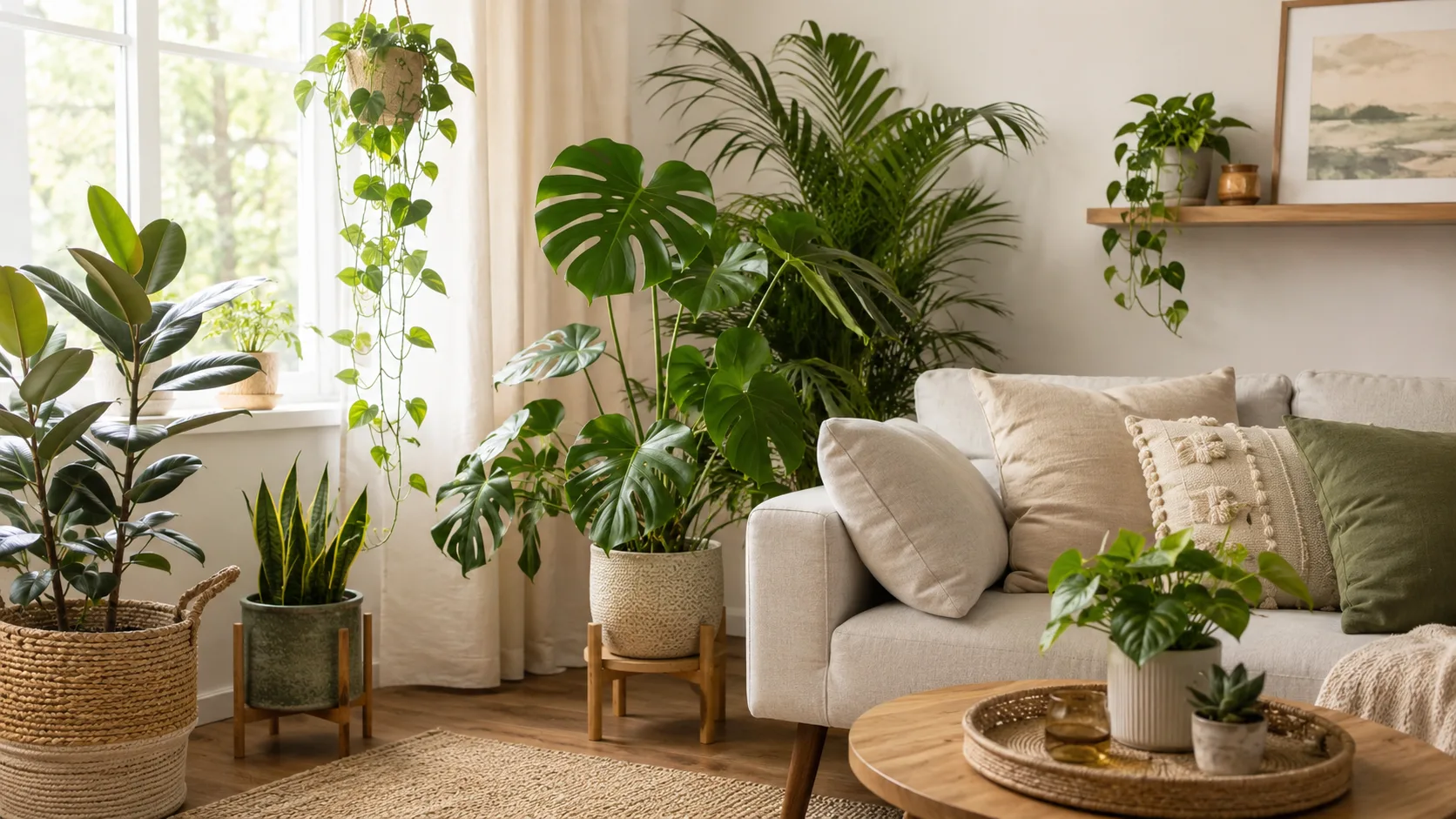
Episode 4 opens in the living room, and the windows do half the storytelling. Bright, streaming light explains why Justin centers the collection there rather than scattering pots into dim hallways.
Giant windows and the Bird of Paradise centerpiece
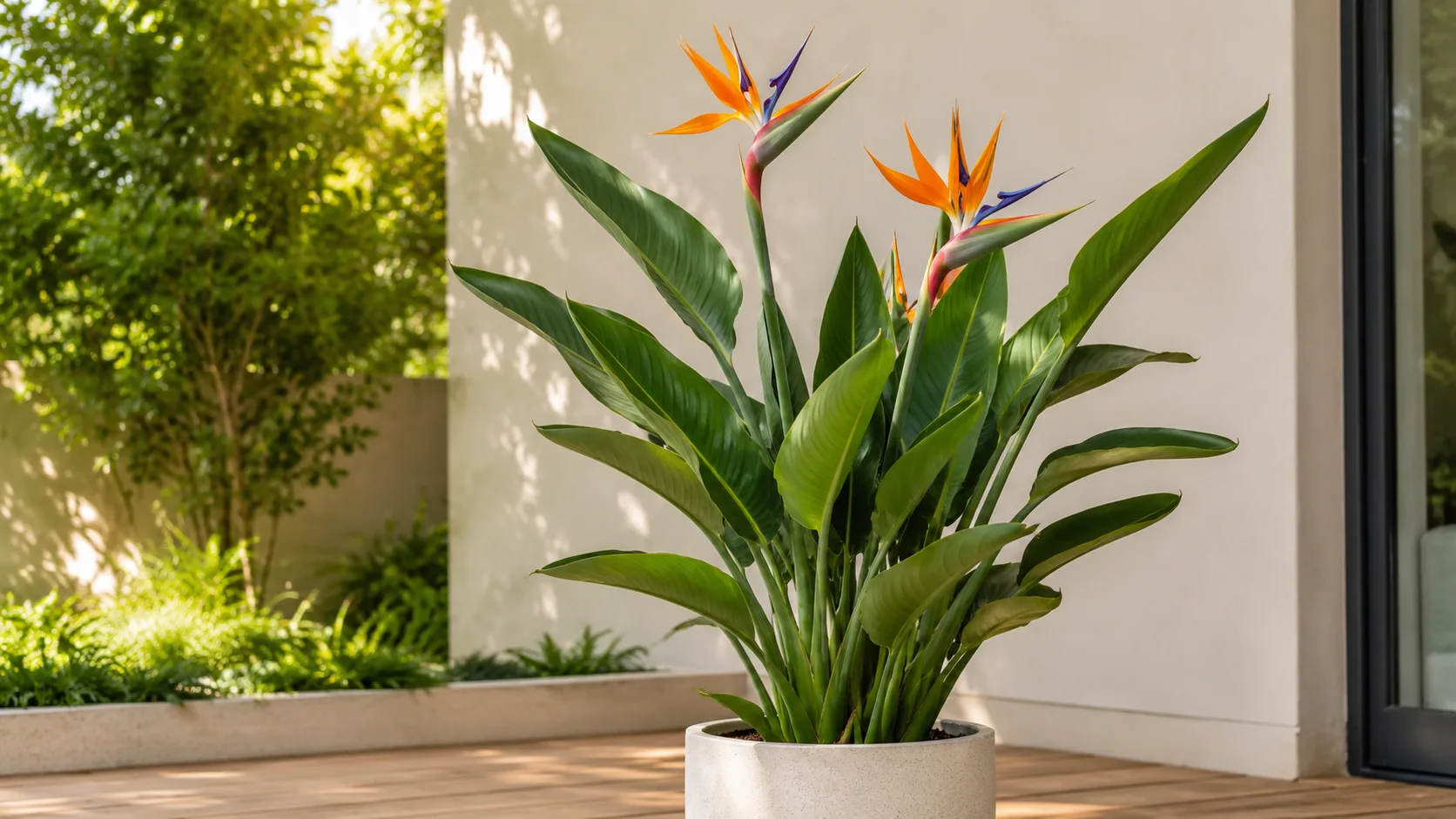
Justin’s most treasured plant is a Bird of Paradise (Strelitzia reginae) — a birthday gift from his partner. In the tour it anchors the bright room the way a mature specimen should: upright paddle leaves, vertical presence, and a clear claim on the best photons in the apartment.
NC State Extension notes that indoor Bird of Paradise wants a well-lit, sunny spot, fertile well-drained soil, regular water and fertilizer in the growing season, and drier winter conditions, with moderate night temperatures around 55–65°F (NC State Extension). That profile matches a south- or west-facing living room in Baltimore — provided leaves do not scorch from direct glass magnification in peak summer.
Bird of Paradise also carries a pet caveat Justin’s cat story makes relevant: the species is toxic to cats, dogs, and horses if ingested (NC State Extension). A treasured BoP near curious cats needs physical barriers — not hope.
What bright-apartment collectors can copy from Justin’s layout
Three layout rules surface from the tour:
- Concentrate light lovers in the window room instead of diluting them through dark bedrooms.
- Keep floor space walkable — jungle density only works when you can still reach each pot for watering and rotation.
- Accept that the “main oasis” pot will be large — mature Strelitzia needs space; plan furniture around the plant, not the reverse.
If your brightest room is also your cat’s favorite sunbeam, treat pet access as a design constraint from day one.
Justin’s signature plants and what they teach
The episode highlights four personalities — each maps to a different collector lesson.
Alvin the aloe: a ten-year beginner plant that survived
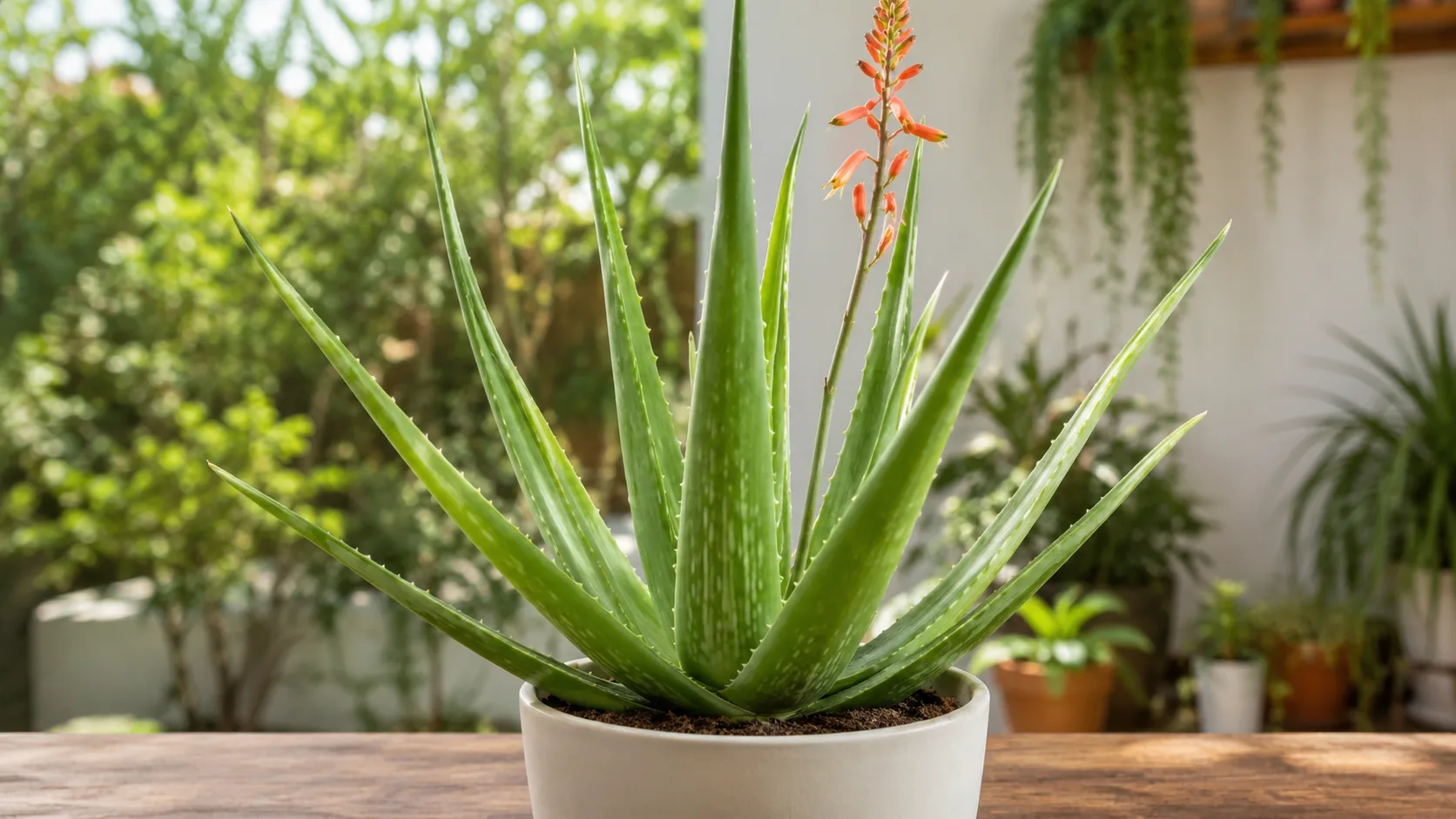
Justin’s first plant purchase, roughly ten years ago, was an aloe (Aloe vera) named Alvin — and he still has it. That longevity matters because aloe is often treated as disposable pharmacy decor rather than a long-lived housemate.
NC State lists aloe as low maintenance, preferring full sun to partial shade, good drainage, and occasional dry periods between waterings (NC State Extension). A decade-old Alvin suggests Justin learned early what many beginners skip: bright light plus restraint on water beats sympathetic overwatering. Aloe on a dim shelf slowly etiolates; aloe in a soggy pot rots. Alvin surviving ten years implies a stable bright perch and a pot that dries.
Jane the Philodendron Birkin: pattern, humidity, and pride
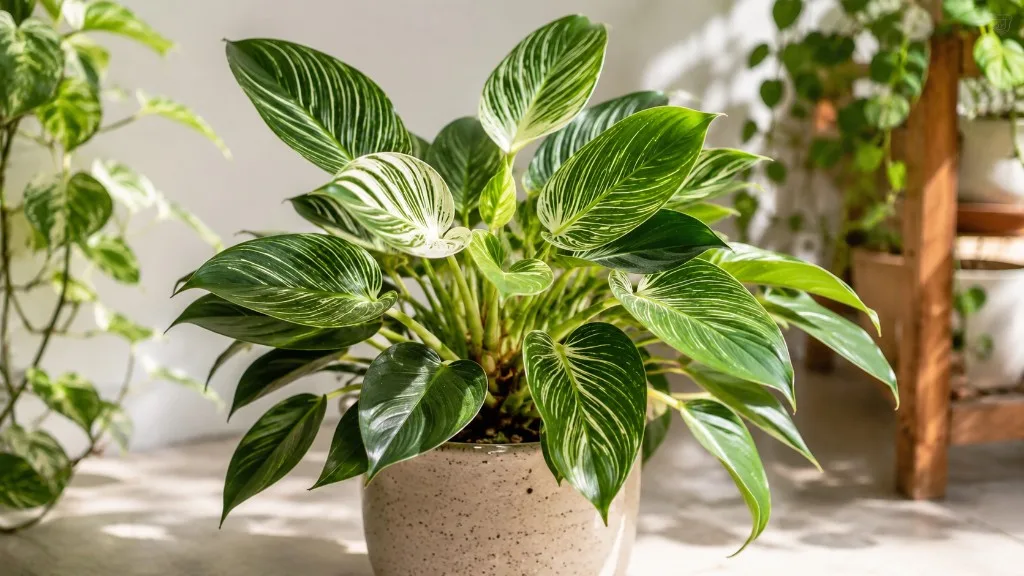
Justin calls his Philodendron Birkin — named Jane — his most unique plant because the white-striped leaf pattern looks like “energy almost speering out from the center.” Birkins are collector catnip: compact, graphic, and Instagram-ready.
Indoors, Birkins want bright indirect light, warm stable temperatures, and consistent humidity — dry air browns those white streaks fast. They are not low-light plants despite their size; place Jane-tier Birkins near but not in harsh direct sun. Because philodendrons appear on the ASPCA toxic plant list for cats, Jane belongs on a secured shelf or hanger in Justin’s cat household, not on a windowsill the cats treat as a highway (ASPCA).
Celine the snake plant: when the “easy” plant still fails
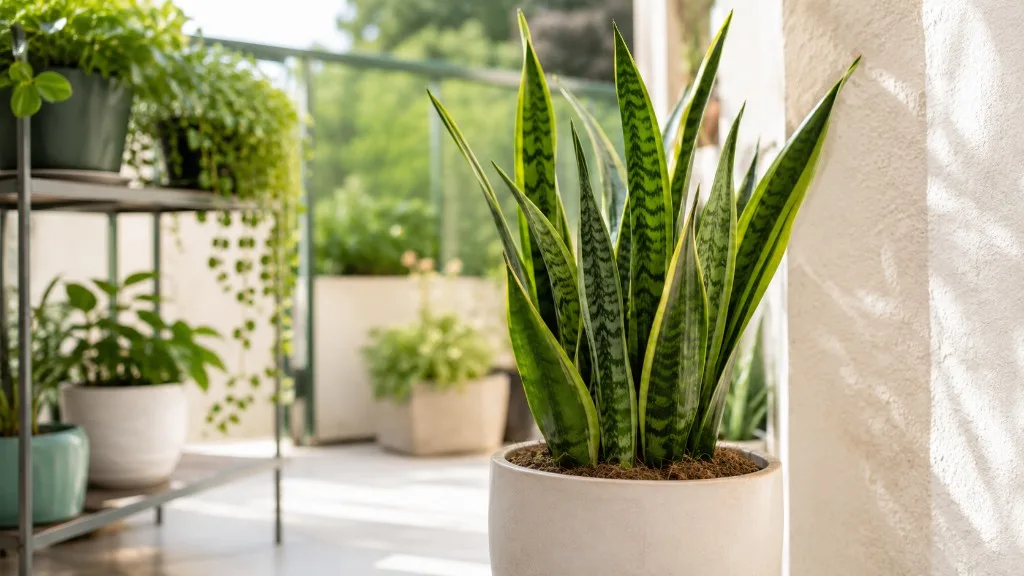
Justin names snake plant (Dracaena trifasciata, formerly Sansevieria) his trickiest plant — a confession every experienced collector understands. Snake plants market as bulletproof; apartments still kill them.
NC State tags the species easy to grow, low maintenance, and tolerant of low light — but also notes toxicity to cats, dogs, and horses (NC State Extension). Common failure modes in bright, busy homes:
- Overwatering in winter when metabolic demand drops
- Oversized pots that stay wet too long
- Low light far from windows despite the “low light tolerant” label — tolerance is not preference
Justin and his partner kept one survivor: Celine. That pattern — multiple attempts, one stable individual — usually means they finally matched pot size, soil drainage, and watering cadence for their specific shelf, not that snake plants are mysteriously cursed.
The rehab bookshelf: Justin’s plant hospital workflow
Every collector needs a rehab zone. Justin’s lives on a bookshelf — pots that need repotting, propagation, or rescue after overwatering or bad light placement wait there until stable.
What goes on the rehab shelf and for how long
Use Justin’s bookshelf model as a triage lane, not storage:
| Situation | Rehab action | Typical timeline |
|---|---|---|
| Overwatered, soft base | Unpot, trim rot, repot dry | 2–6 weeks observation |
| Wrong light (stretching, bleaching) | Move to rehab shelf near target window | 1–3 weeks acclimation |
| Ready to propagate | Cut, callus, water or soil root | 3–8 weeks until pot-up |
| New gift or swap cutting | Quarantine away from main collection | 2–3 weeks minimum |
Keep tools, labels, and dry backup soil at the rehab station so distressed plants do not sit in limbo. When a plant graduates, rename or note the recovery — Justin’s naming habit makes that mental bookmark automatic.
Planter philosophy: muted pots that let foliage lead
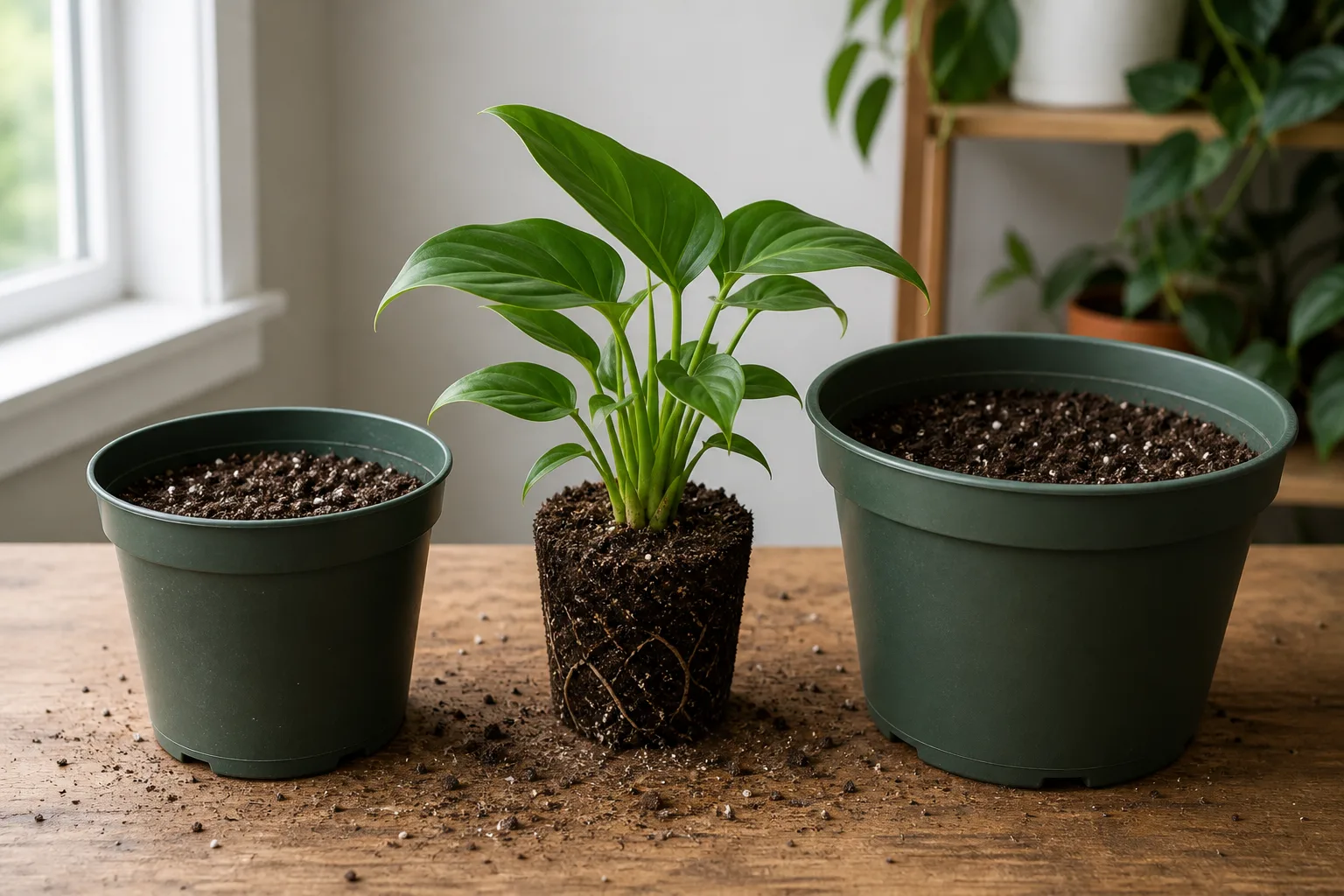
Justin says his biggest expense is planters, not plants. He favors “fancy planters that don’t look fancy” — muted cream and black vessels with clean lines so foliage stays the star.
That choice is smarter than it sounds visually. Loud pots compete with variegated Birkin stripes and BoP silhouettes; neutral containers unify a 30-plus pot room so the eye reads texture and green instead of chaotic ceramic. For collectors scaling up:
- Standardize two neutral tones plus one accent if you need warmth
- Match saucer strategy — hidden saucers for shelves, visible trays for rehab
- Buy planters when repotting, not when impulse-buying plants — Justin’s budget follows container upgrades, not constant new species
Cats, mushrooms, and the Bird of Paradise litter-box incident
Justin shares his apartment with cats that explore the jungle. One cat used the Bird of Paradise pot as a litter box — and mushrooms sprouted in the contaminated soil.
Pet-safe management in a collector apartment
The litter-box episode is funny on video and unpleasant in practice. Cat urine in potting mix shifts pH, salts, and microbial balance, stressing roots and inviting saprophytic fungi (those mushrooms) on organic-rich wet media. Remediation steps:
- Remove contaminated top soil wearing gloves; discard — do not compost indoors.
- Inspect roots for rot; repot into fresh mix and a cleaned or new pot.
- Block access — mesh over soil surface, citrus-scent deterrents on pot rims, or moving BoP to a cat-free zone.
- Verify toxicity before panic about nibbling: BoP, philodendrons, aloe, and snake plants all carry ASPCA cat toxicity flags to varying degrees — ingestion is the medical emergency, not mushrooms alone (ASPCA).
Justin notes mushrooms beat cats eating the plants — dark humor, but the priority order is right: prevent ingestion first, then fix soil biology.
The yoga office: plants as quiet company during practice
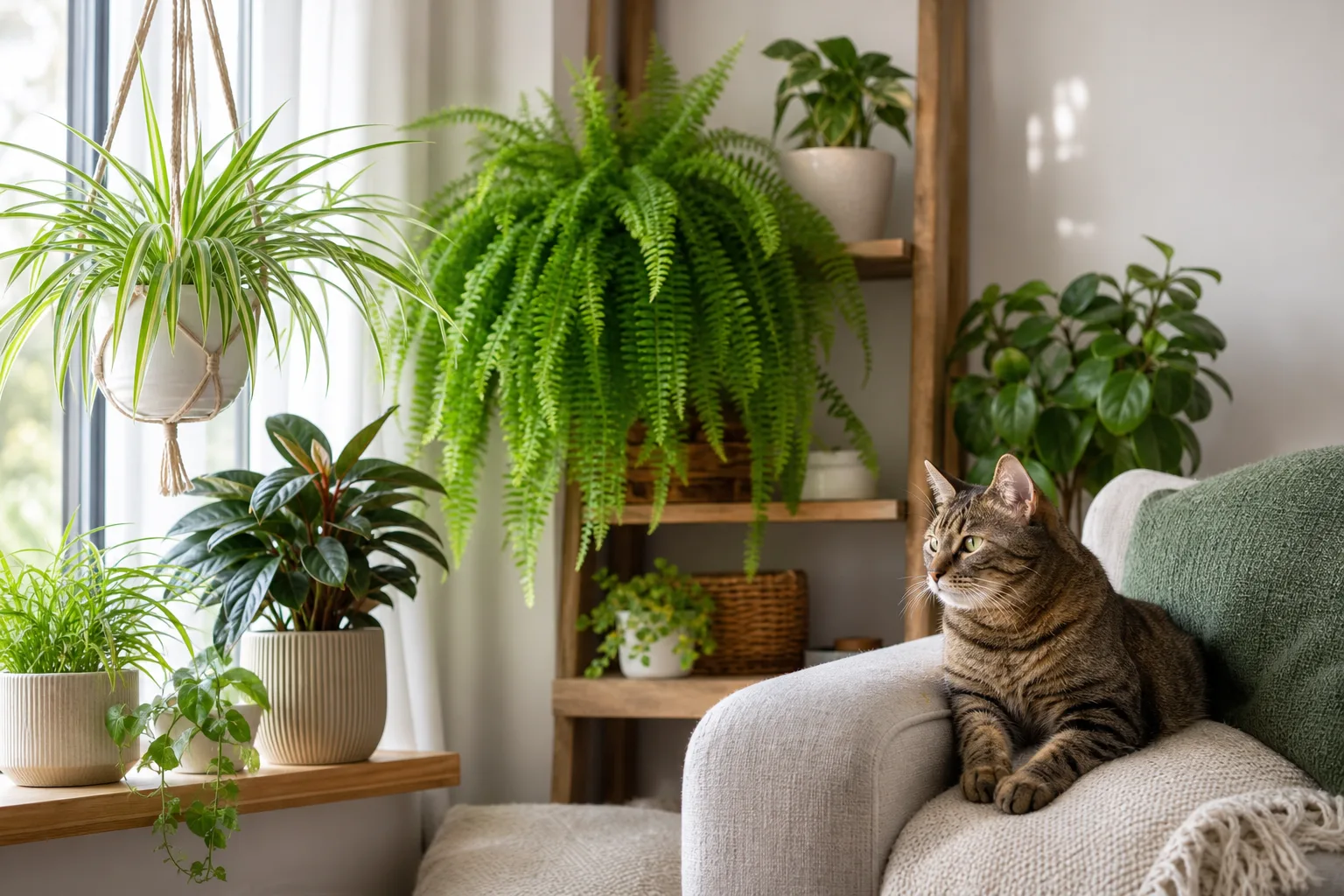
The tour ends in Justin’s office, where he works at a desk and teaches yoga. Plants keep him company during practice, but he is not afraid to part with them — company does not mean attachment to every leaf.
For home-practice rooms, copy the logic:
- Stable, out-of-the-way pots so you do not kick a trailing vine mid-flow
- Humidity lovers grouped away from electronics unless you protect gear
- Camera-aware placement if you film classes — greenery reads well at frame edges without blocking mat space
Plants in a yoga office work best as peripheral calm, not clutter between you and the floor.
Gifting cuttings without becoming a plant hoarder
Justin and his partner love gifting plants — they are not trying to be hoarders, and sharing plant babies with friends and family helps new parents start collections without big-box overwhelm.
Good gifting hygiene:
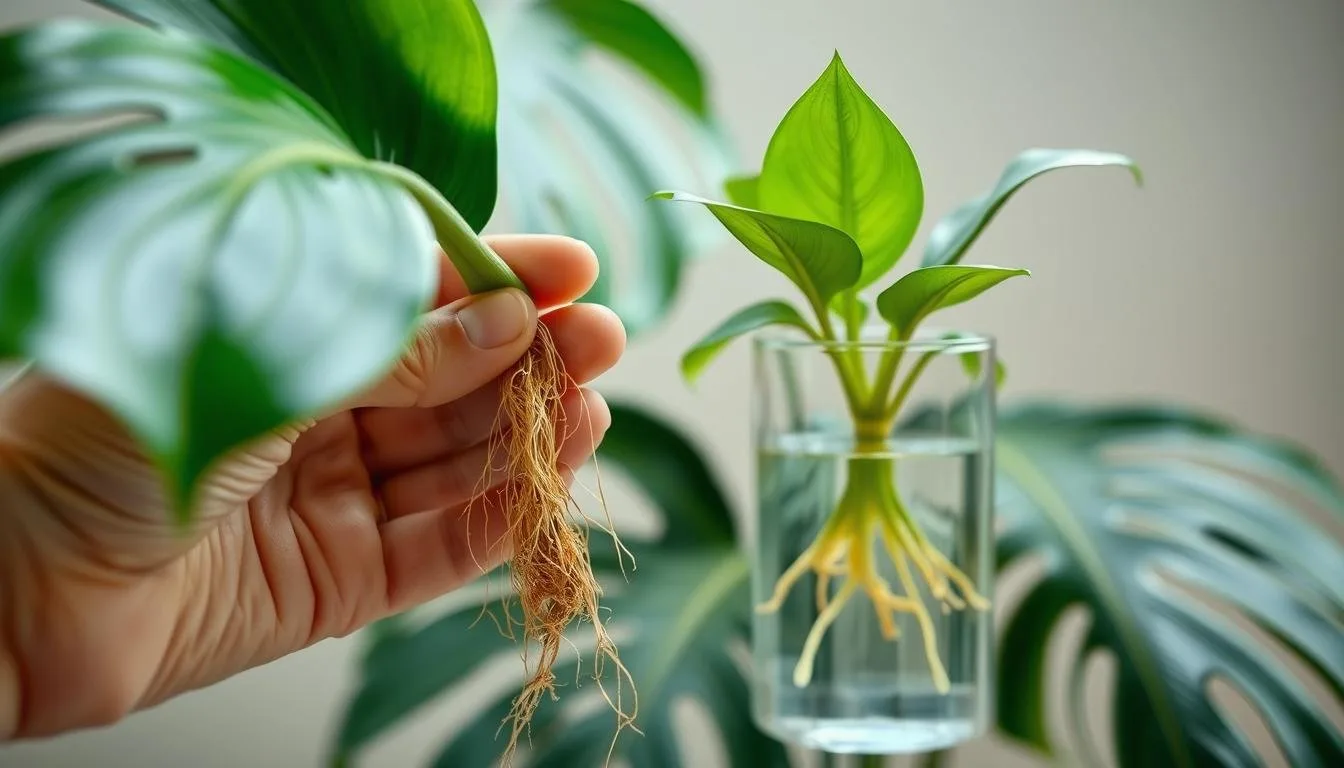
- Root before you gift — water-propagated cuttings with 2–3 inch roots travel better than wet sticks in baggies
- Label the species and include one sentence on light/water — names are fun; care instructions prevent guilt-kills
- Quarantine your outgoing stock too — do not share cuttings from a shelf fighting fungus gnats
- Keep one “mother” plant per species you propagate often; let extras leave like Justin does
Margaret Roach’s propagation conversations with collector Hilton Carter emphasize that sharing rooted babies builds community the same way plant swaps do — the gift is a started relationship, not a burden (A Way to Garden).
Conclusion
Episode 4 is less about rare-plant flexing than about living with plants honestly: names that sharpen attention, a bright living room that earns a Bird of Paradise, a rehab bookshelf for failures, muted planters that frame foliage, cats that remind you soil is biology, and a gifting habit that keeps collection size humane. Justin Timothy Temple’s Baltimore tour works as a template for mid-size apartment collecting — 30-plus plants with systems, not 30-plus plants with hope.
If you take one lesson, make it the rehab shelf: every collector outgrows “easy” plants eventually. The ones that survive — Alvin, Jane, Celine, and that birthday BoP — usually earned a named place, correct light, and a second chance on the bookshelf before they returned to the jungle.