How to Grow Japanese Quince: Planting, Pruning, and Fruit
Learn how to grow Japanese quince: choose a sunny, well-drained site, time pruning after flowering, manage suckers, and harvest its small, tart autumn fruit.
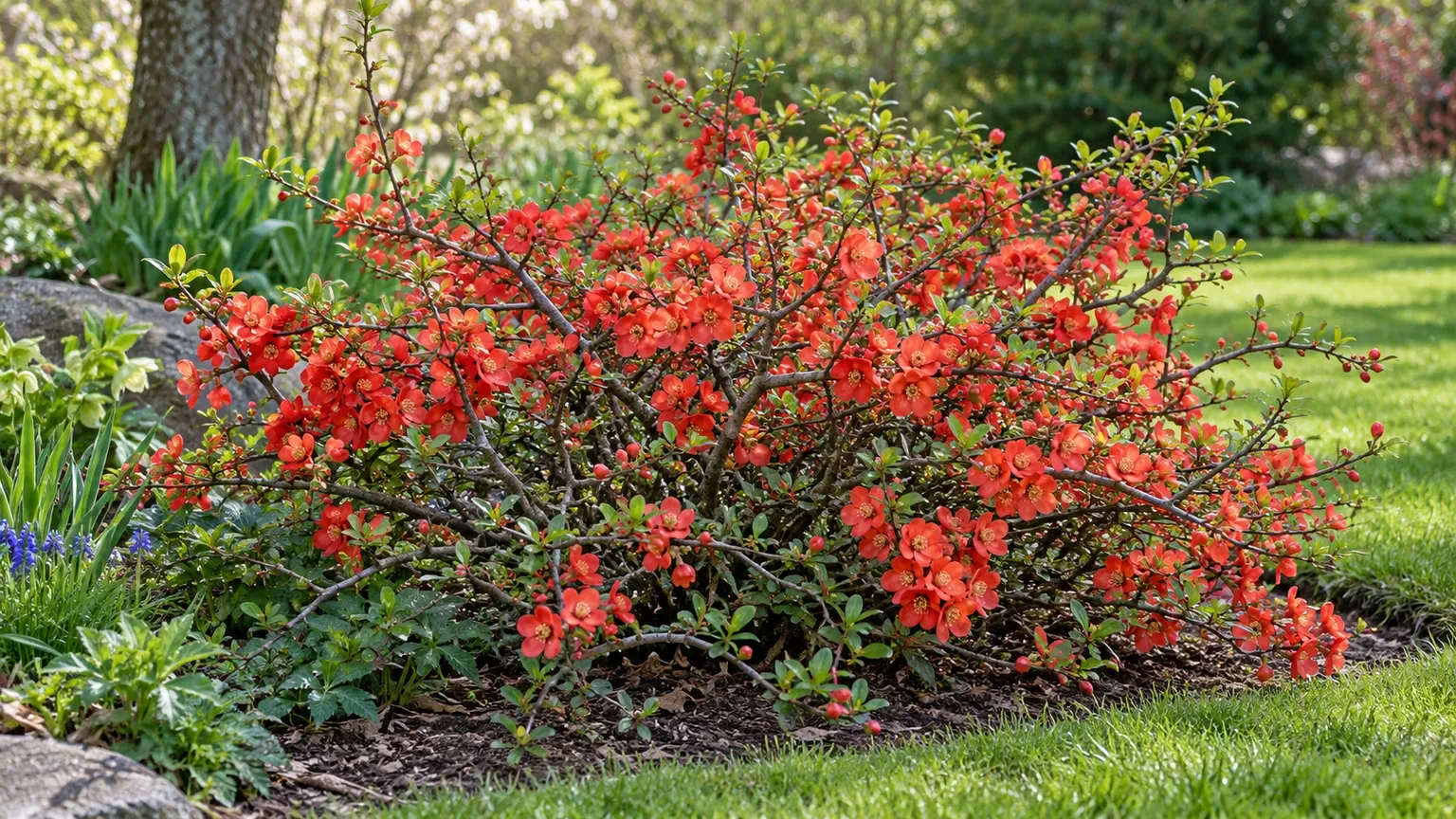
Japanese quince (Chaenomeles japonica) is a low, thorny shrub grown for vivid flowers on bare branches in late winter or spring and small, aromatic fruit in autumn. It is adaptable once established, but choosing a place for its eventual spread and pruning at the right time matter more than following a rigid weekly care calendar. Give it sun, soil that drains, and room to widen; then prune after flowering so you do not cut off the wood carrying next year’s buds.
A naming problem complicates care advice: “Japanese quince” can refer to several plants in the Chaenomeles group, while the true quince grown as a fruit tree is Cydonia oblonga. Check the botanical name on the nursery label before using mature-size or pruning guidance. The compact species described here is C. japonica, also called Japanese flowering quince or Maule’s quince.
What Japanese Quince Is—and Which Plant You’re Buying
Chaenomeles japonica is a deciduous member of the rose family from Japan. It forms a dense, spreading framework of slender, often zigzagging stems with sharp thorns. Its simple, toothed leaves arrive around the time of the bright orange-red flowers, which can open while branches are still mostly bare. The display is concentrated in early spring, sometimes beginning in late winter in mild regions, rather than continuing through summer. NC State Extension describes its open, wide-spreading habit and flowers on old wood; the University of Connecticut Plant Database records a small shrub usually about 3 feet tall.
Plan for width, not height. Reference profiles put a typical plant near 2–3 feet tall and about 3–6 feet wide, while the RHS profile allows a larger spread under favorable garden conditions. Cultivar, age, and growing conditions change the final footprint, so use the nursery’s mature-size tag when available and leave open space around the plant. The thorns make a dense shrub useful as a low barrier, but also awkward beside a narrow path, play area, or spot where you will regularly reach behind it. NC State records the red-flowering selection ‘Atsuya Hamada’ for this species. Because nurseries also use “Japanese quince” for related species and hybrids, verify the botanical name and mature dimensions instead of choosing from flower color alone.
Do not confuse it with Chaenomeles speciosa, often sold as flowering quince, or with Cydonia oblonga, the quince tree grown chiefly for larger culinary fruit. Several Chaenomeles species and hybrids share the common name and can have similar flowers, but their proportions and cultivar traits differ. UIUC’s woody-plant profile notes that C. japonica has shorter, rounder-tipped leaves than C. speciosa. For a practical comparison, see our guide to flowering quince shrubs, which covers a different, generally taller species.
Choose a Sunny, Drained Site With Room to Spread
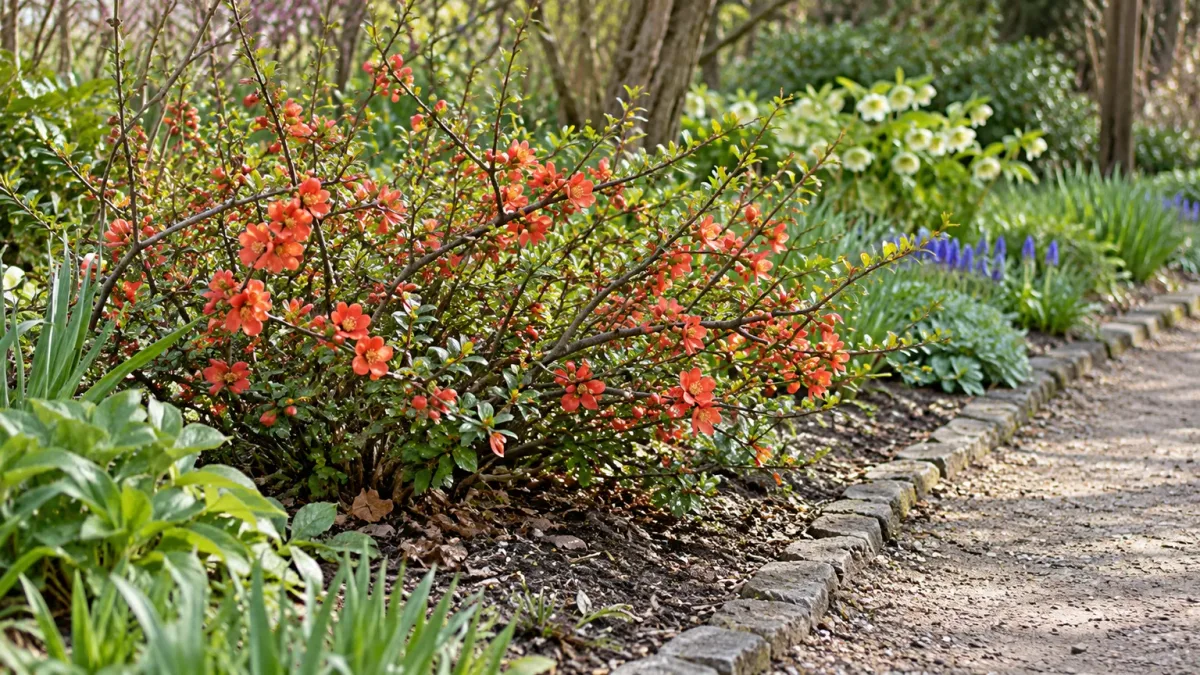
Before buying or planting, picture the mature shrub from above: a broad mound of branches, not a small upright accent. It works at the edge of a shrub border, along an informal barrier, on a bank, or against a wall where the thorny growth will not snag passersby. A low planting that touches a path may look fine at the nursery size and become a maintenance problem once it widens. If you want a hedge, measure the mature width of the particular cultivar and leave enough space between it and the path to reach the ground without putting your arms through the branches. Chaenomeles can also be trained against a wall, as Fine Gardening notes. Install a sturdy wire support before the stems become rigid, choose a few flexible shoots as the framework, and tie them loosely; then shorten unwanted side growth after flowering. This keeps the plant accessible, but it does not make the branches thorn-free, so leave working room in front of the wall.
Light: Full sun gives the best flower and fruit display
Choose a spot with full sun when abundant flowers and fruit are the priority. Japanese quince will grow in partial shade, but fewer direct-light hours usually mean a less generous display and slower drying after rain. The RHS and Fine Gardening’s Chaenomeles profile both allow sun or partial shade and identify stronger flowering or fruiting in a sunnier position. A few hours of afternoon shade can be a reasonable compromise in a hot site; deep shade under dense trees is a poor choice if flowers matter.
Check the light in the season the plant will bloom, not only when nearby trees are bare. A location that seems sunny in early spring may become shaded as a deciduous canopy leafs out. Japanese quince blooms early, so that seasonal shade may not suppress every flower, but a brighter site supports stronger growth and a better chance of fruit later. If the shrub is already established, improve light by selectively thinning nearby vegetation rather than stripping the quince canopy.
Soil: Moist but drained; do not chase a low pH
Drainage matters more than a narrowly defined soil texture. Japanese quince can grow in loam, clay, sand, or chalky soil if water does not remain around the roots for long periods. It tolerates a range of soil reactions; the RHS notes that it is lime tolerant but may develop chlorosis in very alkaline conditions. That is more precise than assuming every plant requires acidic soil. Do not add elemental sulfur, acidifying fertilizer, or iron by default. If leaves yellow while veins stay greener, test soil pH and drainage first, then use a correction recommended for the test result and local soil.
Avoid a low pocket where water pools after rain or irrigation. In heavy clay, planting on a slight mound or choosing a better-drained bed is safer than trying to turn a single planting hole into a pocket of loose potting mix. A sharply different backfill can hold water like a basin. In dry or sandy ground, incorporate a modest amount of finished compost across the planting area and mulch after planting; do not enrich only the hole or bury the crown.
How to Plant Japanese Quince
Plant a container-grown shrub in spring or fall when the ground is workable and not waterlogged or frozen. Fall planting gives roots time to settle before summer heat in mild-winter climates; spring is usually easier in places with severe winters or freeze-thaw cycles. Avoid planting just before a heat wave or during drought if you cannot water consistently. Bare-root stock should be planted during its dormant season according to the supplier’s directions.
Measure the root ball and dig a hole about as deep as it is and several times wider, loosening the surrounding soil rather than digging a narrow, deep shaft. Set the shrub at the same height it grew in its container, with the crown level with or slightly above surrounding grade. Backfill with the excavated soil, firm gently to remove large air pockets, and water slowly so soil settles around the roots. Do not bury the lower stems under a mound of mulch.
Leave the mature spread clear when placing the plant. A single specimen can be attractive at a property edge, but a narrow bed may not leave enough space for a three- to six-foot-wide thorny shrub. When planting a row, use the tagged mature width to set center-to-center spacing rather than packing plants tightly for an instant screen; congestion makes pruning, inspection, and debris removal harder. Keep the first growing season simple: water the root zone when it begins to dry, keep competing weeds back, and avoid heavy fertilizing while the plant establishes.
Watering and Feeding After Establishment
A new shrub needs more attention than an established one. After planting, water deeply enough to moisten the whole root ball and surrounding soil. For the first growing season, check moisture every few days during warm or windy weather, then water when the upper few inches begin to dry. The aim is even moisture while roots spread into native soil, not permanent wetness. Frequency depends on rainfall, soil texture, temperature, and the size of the plant, so a soil check is more useful than a fixed “one inch every week” rule.
Once established, Japanese quince tolerates some dry periods. The University of Connecticut profile lists tolerance of dry soils, and Gardening Know How’s Japanese flowering quince guidance likewise describes drought tolerance while noting that irrigation during dry periods can support growth. Water during a prolonged dry spell when the soil is dry below the surface, especially if the plant is young, flowering, or carrying fruit. One slow soak around the root zone is better than frequent shallow splashes that wet only the surface.
Spread a thin layer of organic mulch over the root area to reduce weeds and slow moisture loss, leaving a clear gap around the stems. Replenish it when it thins rather than piling it against the base. Extra fertilizer is usually unnecessary in average garden soil. If growth is weak, first check sun, drainage, root competition, and pH; feed only if a soil test or clear nutrient deficiency points to a need. Too much nitrogen can favor soft leafy shoots at the expense of flowers and can make a dense shrub harder to manage.
What to Expect Through the Year
Japanese quince earns most of its ornamental value in a short, early-season window. Flower buds form on older wood, then orange to orange-red blossoms open on bare or partly leafed branches. Exact timing shifts with climate and weather: a warm winter can bring an early flush, while a cold spell can postpone opening or damage exposed buds. In a mild region, the first flowers may appear in late winter; elsewhere, expect spring. The shrub may produce a few scattered flowers later, but do not rely on that as a second full display.
After bloom, leaves fill in and the plant puts energy into new shoots. That is when you can prune and shape it; the new growth matures into the older framework that carries later flower buds. During summer, check moisture during drought and inspect young growth for aphids or scale. In autumn, small, apple-like fruits may turn yellow or yellow-green and become fragrant. Fruit set varies by cultivar, pollination, weather, and how much flowering wood remains, so a plant that flowers well is not guaranteed to produce a heavy crop.
The shrub is deciduous and does not offer the same display in every season. Its open tangle can collect fallen leaves, and the thorny bare framework is more conspicuous after leaf fall. Choose it for early color, wildlife interest, or a low barrier rather than expecting evergreen screening or striking autumn foliage. Gardening Know How notes the brief but memorable spring display, while the RHS profile describes the aromatic autumn fruit.
Prune After Flowering to Preserve Next Spring’s Buds
The key timing rule is simple: wait until the flowers fade, then prune if the plant needs it. Japanese quince flowers on old wood, so a routine winter trim can remove buds before they open. The RHS places it in pruning group 2 and recommends post-bloom pruning for early-flowering deciduous shrubs in its group 2 guidance, and NC State Extension specifically recommends pruning after flowering and avoiding severe cuts. If flowers are your main reason for growing the shrub, skip cosmetic pruning in late summer, fall, and winter.
Wear sturdy gloves and long sleeves because a thorn can be hidden behind a branch or caught in the shrub’s center. Use clean, sharp bypass pruners for small stems and loppers for thicker ones; pause between cuts to identify where a branch starts and where it is headed. The goal is not a smooth ball. Preserve the plant’s naturally arching shape and keep access to its base so you can inspect it, pick up fallen leaves, and remove suckers.
Use selective thinning for routine maintenance
Start after flowering by removing dead, broken, or clearly diseased wood. Cut those stems back to healthy growth or to their origin, not halfway through a dead section. Next, look into the center for stems that cross, rub, grow inward, or crowd a younger healthy cane. Remove a few of the oldest or least useful stems close to the ground, choosing cuts that open space rather than flatten the outline.
If one branch extends too far, shorten it to a side branch or a bud that points in the direction you want future growth to go. Avoid shearing every tip to the same height: that may remove flower-bearing wood, stimulate a dense outer shell, and leave the center congested. A light, selective session once a year or every few years is enough for many plants. The RHS assigns this species to pruning group 2: its general method is to cut flowered shoots to strong young growth and remove up to one-fifth of ageing stems each year. Treat that as a ceiling for a dense, mature shrub, not a quota for a young plant or one that already has an open shape. The right amount is the minimum needed to restore access, airflow, or shape while leaving plenty of older branches for next spring’s flowers.
Renovate a neglected plant in stages
A crowded shrub does not need to be reduced to a stump by default. After bloom, remove a portion of the oldest stems at ground level, then wait a year to see how new shoots fill the openings. Repeat if necessary. Staging renewal preserves some flowering wood and makes it easier to see which branches are vigorous before taking more out. The UConn plant profile notes that periodic rejuvenation can improve the plant’s ornamental performance.
You can find advice ranging from severe cutting to cautious thinning for flowering quince. Those recommendations refer to a resilient group of shrubs, but they do not carry the same flower cost. If you choose a one-time renovation because the plant is unsafe, badly damaged, or out of bounds, make it a deliberate reset after flowering and expect fewer blossoms the following season. For a healthy plant whose flowers matter, gradual renewal is the lower-risk approach. If disease is suspected, identify it before choosing a major cut; pruning out a problem at the wrong time can spread it or remove healthy flowering wood.
Control Suckers, Thorns, and Debris
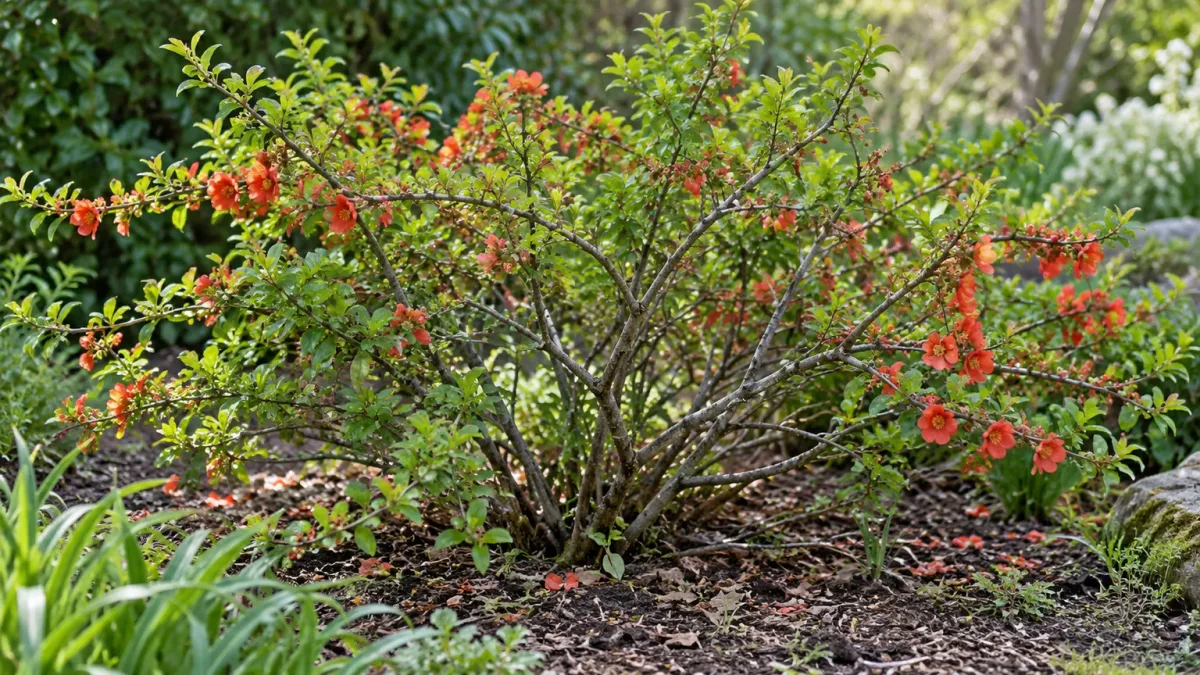
Japanese quince can send up suckers from its roots and widen beyond the original planting point. If you want the plant to stay as a defined clump, inspect the ground around the shrub during the growing season. Where a sucker is attached to a root you can reach, trace it to its origin and sever it there. Snipping shoots at soil level is quick but may not stop them returning from the same root. If the plant is intended as an informal barrier, some spread may be useful; remove only shoots that invade a path, lawn, or neighboring planting.
Do not put a shrub with sharp thorns where people need to squeeze by or where you will have to kneel and weed frequently. Branches can snag sleeves, and fallen leaves may lodge inside the tangle. Keep the base accessible and remove debris on dry days when the thorny framework is easier to see. A layer of mulch can make weed control easier, but do not let it bury emerging shoots you want to keep or touch the stem bases.
The dense habit can provide cover for small wildlife, but it can also shelter pests and make interior problems difficult to inspect. A few minutes checking the center after flowering and again in summer is more effective than letting suckers build into a second thicket. Avoid digging near the main crown just to chase every root fragment; repeated, careful removal of unwanted shoots is usually more practical than disturbing an established root system.
Propagate From Cuttings, Layering, or Seed
Choose a method based on what you want from the new plant. Cuttings and layering are vegetative methods, so they preserve the parent plant’s characteristics more reliably. Seed is useful when you want to experiment, but seedlings may vary and take longer to mature. The RHS recommends semi-ripe cuttings in summer or layering in autumn. Gardening Know How’s propagation guide explains the same distinction between asexual propagation and seed-grown variation.
Semi-ripe cuttings and layering preserve a cultivar
For a semi-ripe cutting, choose a healthy current-season stem after it has begun to firm but is not fully woody. Take several sections about 4–6 inches long, remove leaves from the lower portion, and place each cutting in a clean, free-draining propagation mix. Keep the mix evenly moist, not saturated, and set the pot in bright indirect light. A loose clear cover can help maintain humidity, but ventilate it so condensation does not keep the leaves and stem constantly wet. Rooting time varies with temperature and stem maturity; wait for signs of resistance or new growth before potting on rather than pulling the cutting up to check.
Layering is often less equipment-heavy if a flexible low branch reaches soil. In autumn, bend a section down, lightly wound the underside where it will contact the ground, pin it beneath a few inches of soil, and leave the tip exposed. Keep the spot moist while roots form. Once the layered section is established, sever it from the parent and transplant it in mild weather. The method is slower than buying a nursery plant, but the branch remains supported by the parent while it roots.
Seed is slower and variable
Collect fully mature fruit in autumn, remove the pulp, and rinse the seeds clean. Japanese quince seed needs cold stratification—a sustained cool, moist period that imitates winter—before it is likely to germinate. The UConn database lists cold stratification as necessary; practical duration can vary with seed condition, so use a current seed-starting reference for the batch rather than assuming one refrigerator schedule guarantees germination. Keep stratified seed moist but not waterlogged, then sow it in a free-draining mix and give seedlings strong light once they emerge.
Seedlings are not clones of a named cultivar and may differ in flower color, shape, or fruiting. If you want a particular named plant, ask a nursery for a cutting-grown or layered specimen, or propagate from a branch of that plant. Seed raising is best for gardeners who enjoy experimentation and can wait through the juvenile stage without expecting an exact copy of the parent.
Can You Eat Japanese Quince Fruit?
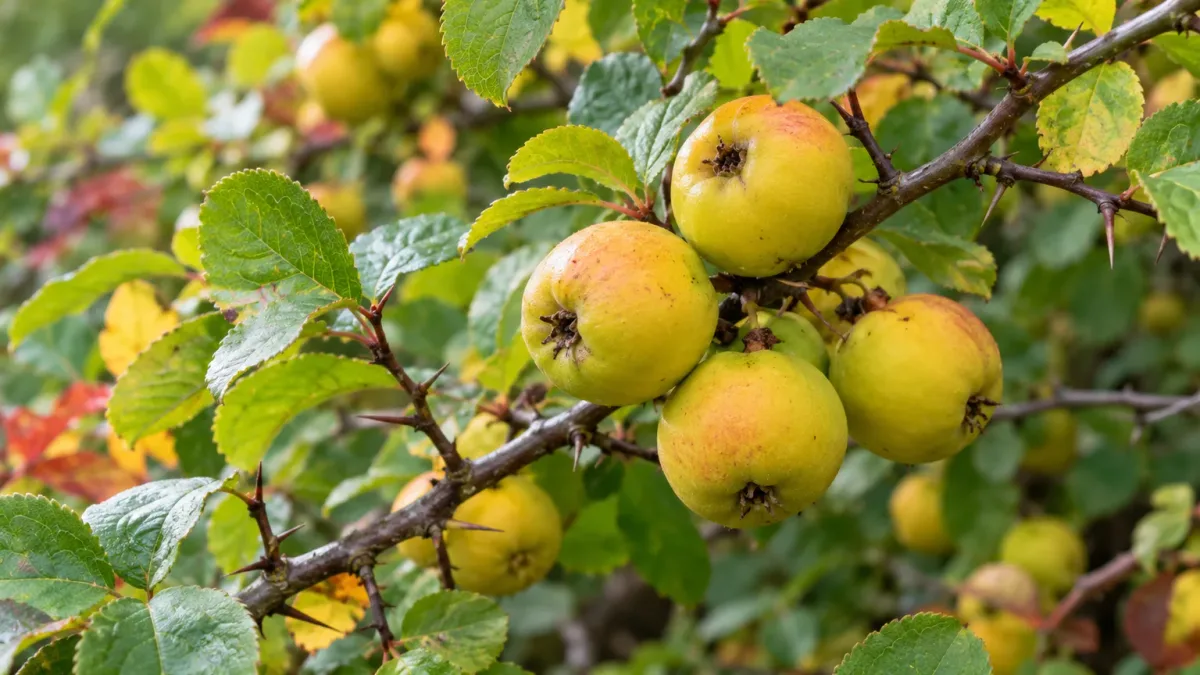
The small yellow or yellow-green fruit is edible when prepared, but it is usually hard, sour, and astringent when raw. Its aroma can be pleasant even when the raw texture is not. The RHS describes the fruit as usable in jams and jellies, and NC State Extension similarly notes its bitter raw taste and use in preserves. Cooking and sweetening are the usual route for turning a small harvest into something enjoyable.
Harvest when fruit has colored and is fragrant, handling the branches carefully because the thorns surround the crop. Wash fruit, follow a tested recipe, and remove the seeds and central core before eating or preserving. The RHS specifically warns that the seeds contain toxins and says they should be removed if the fruit is to be eaten. Do not treat a label such as “edible fruit” as permission to eat every part of the plant or to improvise a preservation method.
A shrub planted mainly for flowers may produce only a modest number of fruits, especially if it has been pruned hard or flowers were damaged by frost. If fruit is the main goal, leave more flowering branches intact and choose a cultivar known to fruit in your region. Keep in mind that C. japonica fruits are much smaller than the large fruit of Cydonia oblonga, the quince tree. That distinction matters when deciding whether the harvest will be worth the thorny picking.
Troubleshoot Sparse Flowers, Yellow Leaves, and Spots
When flowers are scarce, investigate in this order: pruning, light, winter damage, then plant age and general condition. A plant trimmed during winter may have lost its older flower-bearing shoots. If you are unsure when it was cut, avoid further shaping for a full cycle and prune only after the next bloom. A plant in partial shade can live, but moving or thinning around it to improve sunlight may help the display. A new or recently transplanted shrub may also need time to settle before it flowers well.
Cold snaps can damage buds even when the woody plant survives. If buds turn brown after a freeze, wait until the normal bloom window has passed before removing apparently dead stems. Check for living buds or flexible green tissue before making cuts. A sheltered location can reduce exposure, but do not wrap the shrub in a way that traps moisture or rubs buds off branches.
Yellow leaves have more than one possible cause. Interveinal yellowing—yellow tissue with greener veins—can fit iron chlorosis in very alkaline soil; persistently wet roots, drought, and root competition can also reduce leaf color. Test soil pH and inspect drainage before using an iron product or trying to acidify the bed. The RHS warns about chlorosis at very alkaline pH, and the UConn profile also flags high-pH soil. Correct the confirmed site issue rather than treating the leaf color alone.
Spotted leaves or early leaf drop can follow a wet season. NC State identifies fungal leaf spot, and UConn lists apple scab as a possible source of substantial defoliation; both point to the value of good airflow and timely cleanup. Remove fallen infected-looking leaves and avoid keeping foliage wet with unnecessary overhead watering. Aphids often gather on tender shoots; a small population may be monitored or dislodged with water, while scale insects look like fixed bumps on stems or leaves. The RHS pest and disease notes list aphids, scale, fire blight, blossom wilt, and brown rot among potential issues. Blackened, curling shoot tips may have several causes, including disease; photograph the symptom and ask a local extension service to identify it before making extensive cuts or applying a pesticide.
Cold-Weather Care and Winter Damage
Japanese quince is a deciduous outdoor shrub, not a plant that needs to be moved indoors for winter. UConn lists the species for zone 5, but a hardiness label is not a promise that every flower bud will survive every winter. The shrub may live through cold conditions and still lose some flowers to bud injury, especially after a warm spell encourages early development followed by a sharp freeze. Use the cultivar’s own hardiness information and local experience when choosing a planting site.
For a young plant in a cold or exposed garden, apply a modest mulch over the root zone after the soil cools, keeping it clear of stems. A temporary barrier can help prevent rabbit browsing where it is a known problem; UConn lists rabbit damage among liabilities. Established plants usually need little special preparation beyond adequate drainage and avoiding late-season pruning that removes buds. A container-grown shrub is more exposed at the roots than one planted in the ground, so use a sheltered spot and keep the container draining through winter rather than leaving the root ball in standing water.
Conclusion
Japanese quince is a tough, low-growing shrub with a wide, thorny reach and an early flower show worth planning around. Give it sun for the best display, plant it where the mature spread and thorns will not block access, and water more closely while it establishes than after its roots settle. Soil should drain; test before trying to acidify it or correct yellow leaves. Once flowers fade, remove only the branches needed to restore shape and airflow, and renew an old plant over time if you want to preserve some bloom. Choose cuttings or layering for a named cultivar, remove seeds before preparing fruit, and expect cultivar and weather differences rather than a guaranteed flowering or harvest schedule.