Joanna Gaines's 2025 Ranunculus Garden Guide
Explore Joanna Gaines's 2025 ranunculus garden and get a climate plan for choosing corms, planting them, extending blooms, and handling summer dormancy.
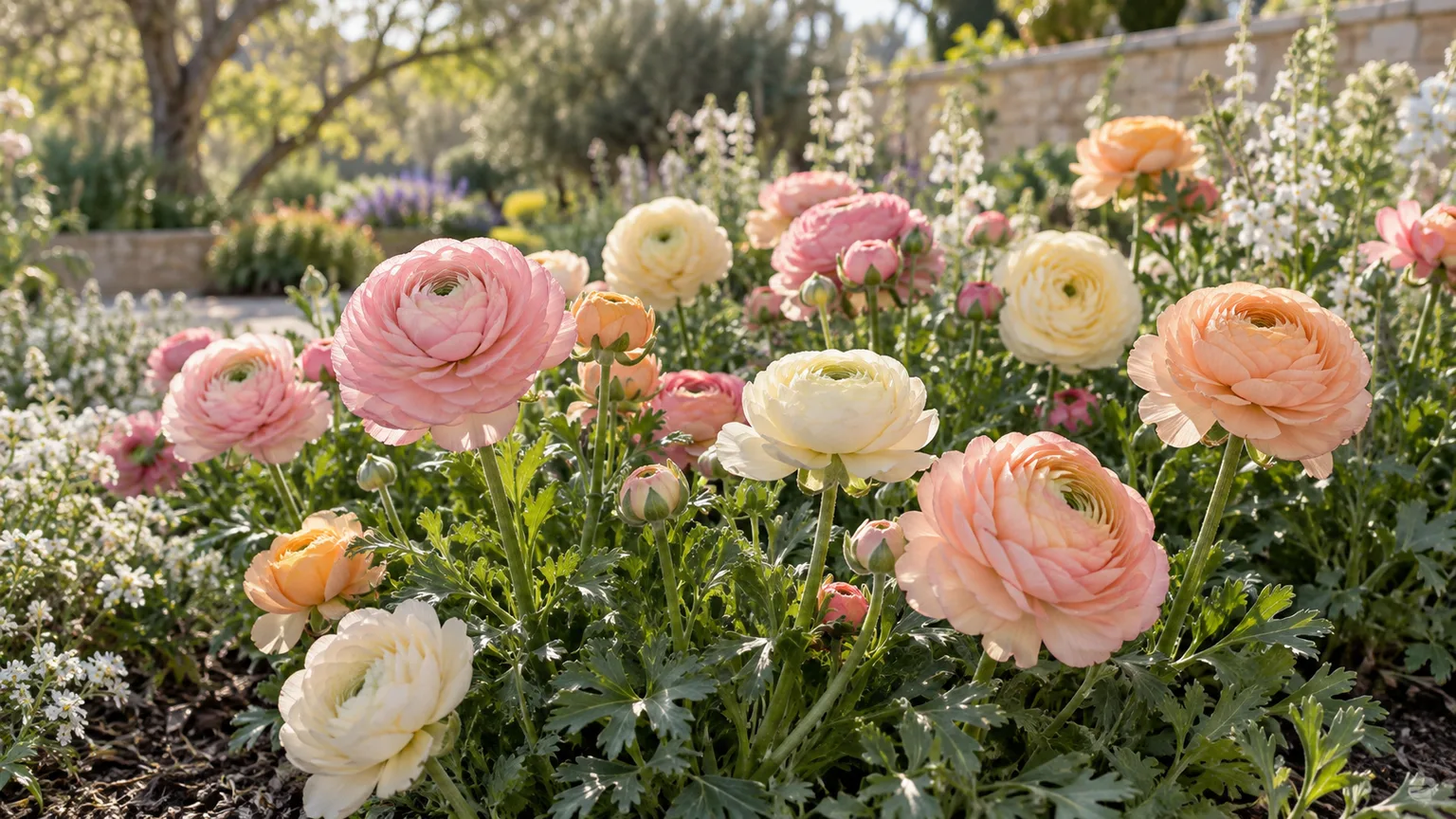
Ranunculus had two memorable moments in 2025: Joanna Gaines featured the ruffled flowers in her spring garden, and 1-800-Flowers.com named ranunculus its Flower of the Year. Those are dated signals from 2025, not a claim that the flower is newly trending in 2026. The lasting appeal is easier to explain: ranunculus gives a spring bed dense color and rose-like layers at a time when many summer flowers have not started.
The practical catch is that florist-style ranunculus is a cool-season crop. It can be glorious when its planting window, soil drainage, and spring temperatures line up, then fade quickly once warmth triggers dormancy. If you want the look, plan around your climate first and treat the flowers as a seasonal feature rather than assuming they will behave like a permanent summer border.
What the 2025 ranunculus story actually was
In a story adapted from the spring 2025 issue of Magnolia Journal, Gaines described trying ranunculus as a new garden experiment. She said the flowers were among the first to bloom after winter, then became a focal point because of their full, layered petals and range of colors. After enjoying the planting, she asked the garden team to add ranunculus around the Magnolia Silos grounds. Magnolia’s spring garden feature is the primary source for what she shared; it does not name a cultivar or give a detailed planting plan.
The “Flower of the Year” label had a separate origin. 1-800-Flowers.com announced ranunculus as its 2025 selection in December 2024, describing the layered blooms as part of its choice. That is a florist company’s annual editorial and merchandising pick, not a horticultural award or a survey proving that every garden would be full of the flower. It helps explain the year’s attention, but it should stay attached to 2025. 1-800-Flowers.com’s Flower of the Year announcement makes the selection and its source clear.
That distinction is useful if you are planning a garden now. You can borrow the colors, flower shape, and seasonal timing from Gaines’s spring display without chasing a trend or copying a specific bed. The better question is whether your local spring stays cool long enough for ranunculus to make a worthwhile show.
Why ranunculus made a strong spring focal point
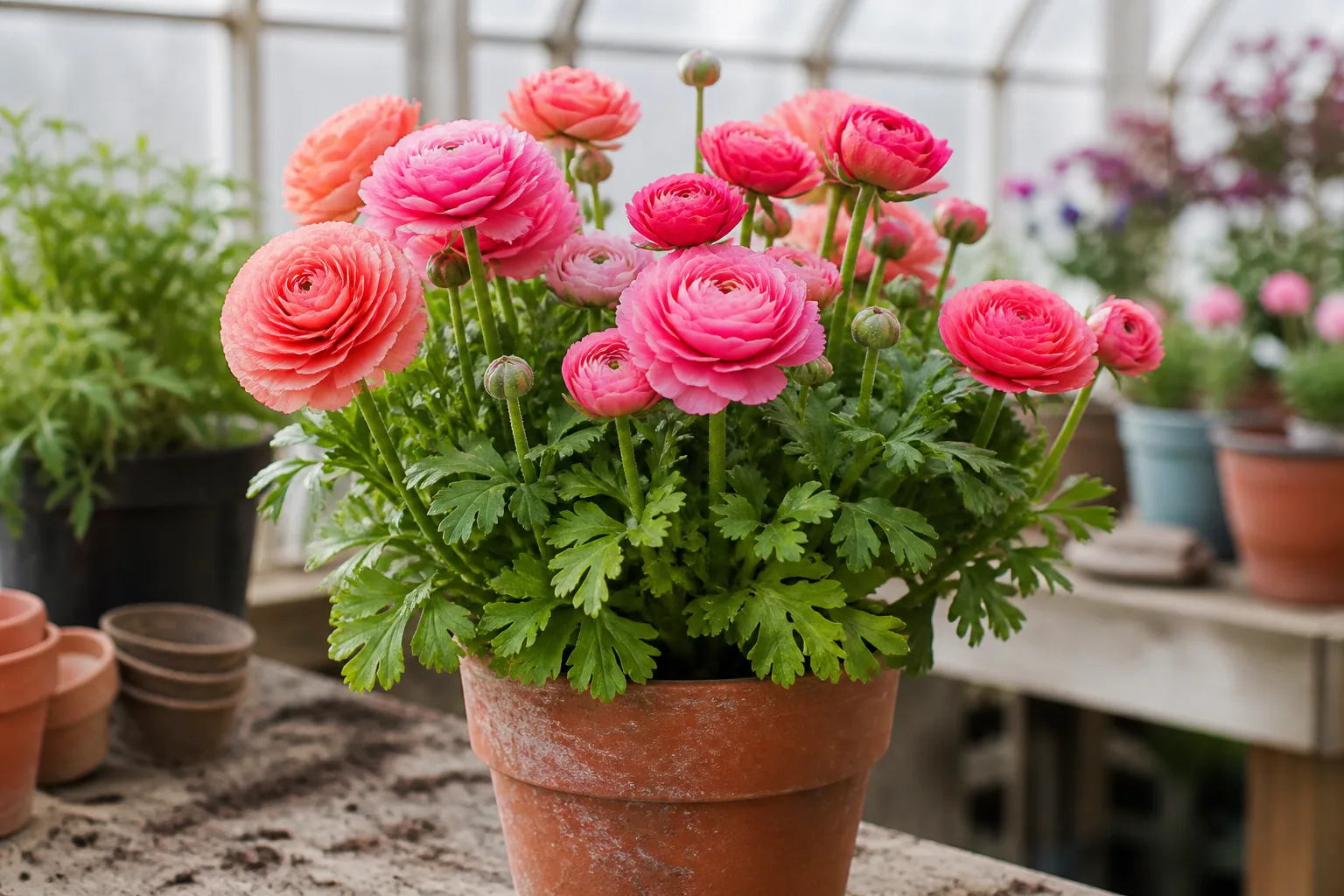
Ranunculus flowers look layered because each bloom carries many thin petals arranged in close whorls. In a mass planting, those rounded flowers read clearly from a distance, while their fine-cut foliage and branching stems soften the ground between blooms. That combination lets them feel lush without needing a shrub-sized plant or a formal hedge behind them.
Color is part of the effect, but repetition does more work than a large assortment. A drift of one or two shades looks intentional; scattered single plants in every color can feel like a collection. Gaines’s story points to color options and depth as part of the appeal, while the 2025 florist feature emphasizes the distinctive layered form. Neither means every bed needs a full rainbow.
Start with florist-style Persian buttercups
“Ranunculus” names a large genus, not one identical garden plant. The showy cut flowers commonly sold as Persian buttercups are Ranunculus asiaticus, grown from claw-shaped tuberous roots that catalogs and gardeners often call corms or bulbs. Other ranunculus species have different habits, flower shapes, and moisture needs, so a general buttercup profile should not be applied blindly to every variety. NC State Extension’s plant profile describes the genus broadly, while the RHS growing guide distinguishes Persian buttercups as useful cut flowers.
That difference also explains why one source may call a ranunculus perennial while another recommends growing it as an annual. The genus includes annual and perennial plants; florist types may persist in some mild, well-drained gardens, but freezing winters, wet dormant soil, pests, and cultivar differences change the outcome. For a first planting, buy a named R. asiaticus variety and plan for one season of flowers. A return next year is a bonus, not the measure of whether you grew it correctly.
Start with the season, not a calendar date
Ranunculus timing follows the cool part of the year. In regions where winters are mild and the soil drains well, growers often plant in autumn so roots establish before the flowers open in spring. Where winter freezes are severe, spring planting or protected growing is more reliable because dormant corms and young plants can be damaged by hard freezes.
Temperature matters after planting, too. Johnny’s Selected Seeds describes commercial ranunculus production as a cool-season crop, with persistent warmth eventually reducing flowering and sending plants toward dormancy. That production guidance is not a thermostat setting for a home bed; it is a reminder to start early enough that flowers develop before sustained heat arrives. Johnny’s grower guidance and Floret’s growing guide both explain why planting season varies by climate and protection.
Fall planting in mild-winter climates
If your garden has a long, mild autumn and winter, fall planting can produce earlier spring flowers. The site still needs excellent drainage: a mild climate does not protect corms from rotting in cold, saturated soil. In areas that receive occasional freezes, a low tunnel or frost cloth can buffer light cold, but it does not make an exposed, waterlogged bed safe through every hard freeze.
Winter survival is not guaranteed by a zone number alone. Floret notes that some growers in USDA Zone 7 and warmer can overwinter corms, while also describing winter cold, drainage, and pest pressure as factors. Treat that as a possibility rather than a promise, especially in a wet winter or a garden with repeated deep freezes. If you are unsure, plant a modest test group and keep replacement corms in your plan.
Spring planting in cold-winter climates
In colder regions, wait until the soil can be worked and use the supplier’s guidance for your cultivar and local frost pattern. Some growers start corms in trays or under cover to gain time, then move established growth outdoors with protection. A spring-planted crop may flower later than an autumn-planted crop, and a very short cool spring can compress the display. That is a climate limit, not proof that the corms were poor quality.
Do not assume a frost cloth can protect corms left in frozen ground all winter. Floret’s guidance warns that severe cold can damage corms, while Johnny’s says unsprouted corms should not be allowed to freeze. In a reliably cold-winter garden, spring planting or protected production is safer than gambling on an unprotected fall planting.
Choose firm, viable corms
Buy corms from a supplier that identifies the variety, size, and planting window, and check the package as soon as it arrives. A dry, firm corm is normal; a soft, mushy, moldy, or strongly sour-smelling one is not. Keep dormant corms dry and cool until planting, away from a damp basement floor or a sealed plastic bag where condensation can collect.
Larger corms often have more stored energy, but size grades and flower performance vary by supplier and cultivar. Compare like with like rather than assuming one vendor’s grade number means the same thing as another’s. If the package includes a regional calendar, spacing, or soaking instructions, use those directions as the baseline; professional cut-flower spacing may be wider than a homeowner wants for a dense ornamental drift.
Soak only when you are ready to plant
Soaking can rehydrate dormant corms, but instructions differ. NC State Extension’s broad guidance says to soak tuberous ranunculus roots for about an hour or water them well after planting; Floret describes a three-to-four-hour room-temperature soak; Johnny’s commercial production instructions call for a longer soak followed by a chilling and sprouting sequence. These are not interchangeable recipes for every variety and garden.
For a small home planting, follow the corm supplier’s directions and do not leave roots submerged longer than instructed. If the supplier recommends a short soak, drain the corms and plant them promptly in prepared soil. Presprouting may help a grower gain time, but it adds handling and a risk of mold if the tray stays soggy or warm. It is optional for many home gardens, not a required rite of passage.
Plant corms for drainage and airflow
Choose a sunny site with loose soil that drains freely. Ranunculus likes steady moisture during active growth, but standing water around dormant or newly planted corms invites rot. If your soil stays wet after rain, use a raised bed or a container with several drainage holes and a free-draining mix rather than digging a deeper hole that acts like a bowl.
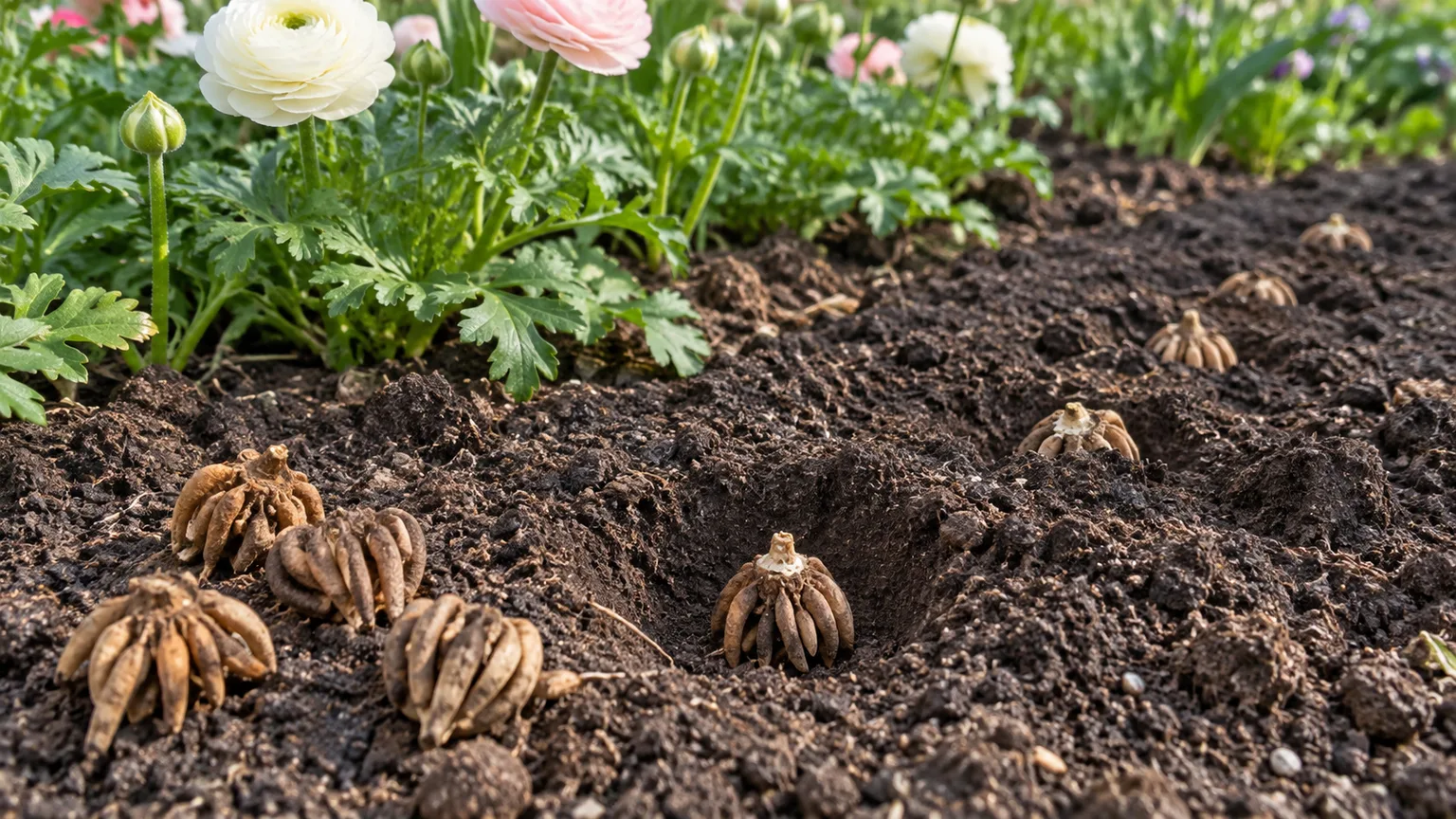
Plant the corm with its pointed “claws” facing down and the crown above them. A practical home-garden starting point is about two to three inches deep, with roughly six to nine inches between corms; adjust to the package and cultivar, since cut-flower strains and ornamental mixes can differ. Cover the corms, water to settle the soil, and then keep the bed lightly moist rather than repeatedly soaking it. Floret’s step-by-step guide gives a useful corm orientation and bed-preparation example, while NC State describes tuberous ranunculus roots and a similar planting depth for the genus.
Spacing is a design choice as well as a growing instruction. Tighter groups make a fuller patch, but leave enough air movement for leaves to dry after rain and enough room to reach flowers for cutting. If a label calls for a wider spacing, use it for tall cut-flower varieties that need straight stems; do not crowd a tall cultivar simply to make the bed look full on planting day.
Keep growth cool, moist, and protected
During leaf and stem growth, water deeply when the upper soil begins to dry, then let excess water drain. A shallow sprinkle every day keeps the surface damp without reaching the root zone and can leave the corms in inconsistent conditions. In containers, check moisture more often because pots warm and dry faster than in-ground beds, but still empty any saucer that holds standing water.
Full sun suits ranunculus in cool spring weather. If your spring turns warm early, morning sun with some afternoon relief can buy a little more time, provided the bed remains bright and airy. Deep shade makes stems reach and can reduce flowering; an overheated, enclosed patio can end the bloom period early. Think of shade as a heat-management tool, not a substitute for adequate light.
Use compost to improve soil structure and follow a balanced fertilizer label if the bed needs feeding. More fertilizer is not a shortcut to more flowers: excess nitrogen can push leafy growth at the expense of sturdy stems, while wet soil can damage roots even when the foliage looks lush. The RHS advises moist soil and notes that ranunculus do not flower well in deep shade. Its guide also cautions that sap may irritate skin, so wear gloves if you know you react to plant sap and wash after handling damaged stems.
Compose a Joanna-inspired border that fits your space
The useful design lesson is to give ranunculus a clear role. Use it as a foreground drift, a repeated color block along a path, or a concentrated cutting patch near the kitchen rather than scattering a few corms across a large border. Repeating the same shades in two or three places makes a small garden feel connected and gives the rounded blooms a visual rhythm.
You also do not need Gaines’s grounds or a large bed. A deep container can hold a small group if the pot drains well, has enough volume for roots, and stays cool enough through spring. Put the pot where you can water and cut flowers easily, and move it out of a hot reflected-heat corner if buds start to dry before opening.
Use color, repetition, and contrasting shapes
Choose a palette before ordering corms. Cream and pale peach read softly against dark foliage; pinks add warmth; a few saturated red, burgundy, or yellow blooms create punctuation. Two related shades plus one accent are easier to repeat than six unrelated colors. If the cultivar photos are unreliable, buy one small color group first and expand after you see the actual flower size and stem height.
Balance the bowl-shaped blooms with neighboring forms that are lighter or more vertical. Fine grasses, airy annuals, and upright sweet peas can keep a dense patch from looking like a flat carpet. Place taller plants where they will not shade the ranunculus while it is growing, and leave access to the stems if you plan to cut them. A flower bed must work from the paths and windows where you actually see it, not only from above in a planting plan.
Pair ranunculus with companions by season
Magnolia’s spring feature lists anemones, sweet peas, wild aster, scabiosa, linaria, lavender, boxwood topiaries, and Orlaya among the other plants in the garden. Treat that as a glimpse of one mixed planting, not a universal companion list: each plant has its own timing, mature size, and water preference. Anemones and other cool-season flowers can echo ranunculus’s early display, while airy stems can add height and movement.
Match conditions before matching colors. Lavender generally prefers sharper drainage and can suffer if placed in a bed kept evenly moist for ranunculus; keep it toward a drier edge or grow it separately. Sweet peas may need a support and can cast shade if placed too close. The simplest approach is to group plants with similar water needs, then use paths, edging, or a container to separate those that prefer drier soil.
Plan the border in two acts. Let ranunculus carry the early spring peak, then let later flowers expand into the spaces as the ranunculus foliage fades. Put that fading foliage behind a low edging plant or among later perennials rather than at the very front of a narrow bed.
This transition makes the seasonal crop feel deliberate and avoids leaving a bare gap when the weather turns warm. It also helps you assess the bed as a whole instead of expecting one short-season flower to carry it from spring into summer.
Cut flowers without sacrificing the bed
Ranunculus is a useful cut flower as well as a garden focal point. Cut in the cool morning when buds show color and feel springy but have not fully opened; the flowers will continue to open in water. Use clean snips low on the stem without tugging on the corm, then put stems into clean, cool water. Floret and Johnny’s both describe a vase life around ten days under good handling, though cultivar, harvest stage, and room temperature can shorten it.
To keep the patch producing, remove spent flowers and cut stems cleanly rather than leaving seed heads on every plant. But do not strip the bed bare if you want the flowers to remain part of the garden scene; cut a few stems from each clump and leave others for display. A small succession of plantings, where the local season is long enough, can spread the harvest window, but warmth will still set the crop’s endpoint.
Let the foliage finish before saving corms
When bloom ends and temperatures rise, the leaves may yellow and die back. That can be the normal dormancy cycle, not a sudden disease. Keep watering modestly while foliage is green, then taper off as it fades; green leaves still replenish the underground storage organ. Avoid cutting healthy foliage at its base just because the flowers are finished.
In a mild climate with a dry summer and excellent drainage, corms may rest in the bed and return. In a wet summer, a heavy soil, or a region with freezing winters, lift them after the foliage has dried, let them dry fully, and store them in a cool, dry, airy place above freezing. NC State Extension’s profile lists dry storage around 50–55°F for tuberous roots, while Floret recommends keeping dormant corms dry and treating their return as uncertain. Label the variety and inspect stored corms before planting; discard any that have softened or developed mold.
Do not lift corms while leaves are still green just to clear the bed. Wait until the plant has finished drawing energy back underground, then brush off loose soil and let the corms dry in a shaded, ventilated place before packing them.
Keep varieties labeled and separate; a quick photo of the bed and its color group can help you decide what to repeat next year. If the stored corms shrivel badly or show soft, dark patches, replace them rather than expecting a weak corm to recover in wet soil.
Troubleshoot the three most common disappointments
Corms disappear or turn mushy: check drainage, planting depth, and storage conditions before buying more. Wet soil or a prolonged soak can rot corms; rodents may also dig them up. Improve the bed or use a container, and protect a small trial planting if animals are common in your garden.
Leaves appear but flowers do not: look first at light and temperature. Deep shade can limit flowering, while a quick warm spell may shorten the crop’s bloom window. If plants are lush but weak, reduce excess feeding next time and move them to brighter, cooler conditions; do not expect fertilizer to reverse heat-driven dormancy.
The display ends soon after it begins: that is common where spring becomes hot quickly. Plant at the start of the local cool season, use an early variety suited to your region, and harvest some flowers while buds are colored to enjoy them indoors. If you need a long summer display, pair ranunculus with later-flowering plants rather than forcing this cool-season flower to carry the border through heat.
Conclusion
Joanna Gaines’s ranunculus garden was a specific spring 2025 story, reinforced that year by a florist’s Flower of the Year selection. Its most transferable idea is seasonal: plant a concentrated patch of layered blooms when your climate gives them cool, bright growing weather, then let other flowers take over as temperatures rise.
Start with a small number of named Persian buttercup corms, prepare a well-drained bed or pot, follow the supplier’s soaking and frost guidance, and judge success by the spring display rather than whether every corm returns. That approach captures the color and texture that made the 2025 garden memorable while fitting the real growing conditions in your own yard.