How to Grow and Care for Joe Pye Weed
Grow Joe Pye weed (Eutrochium) with the right sun, moisture, and spacing. Species ID, propagation, mildew fixes, and pollinator tips for zones 4–9.
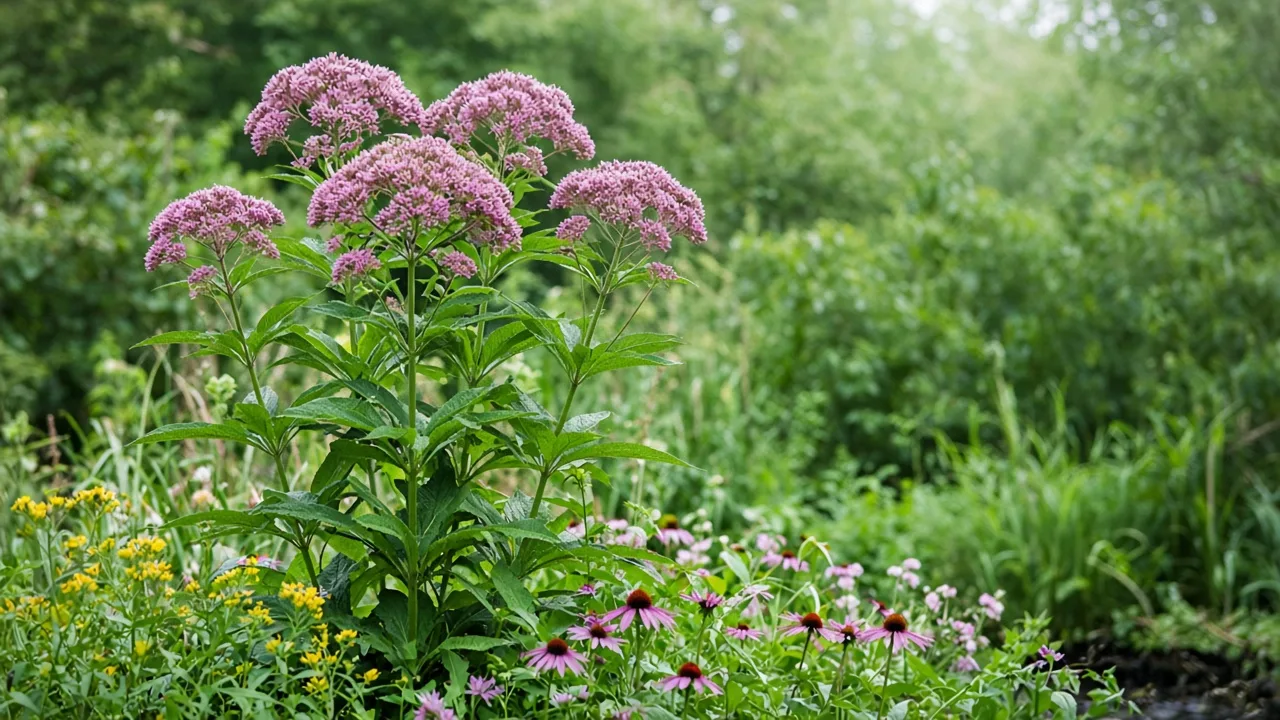
Joe Pye weed is one of those plants people dismiss as a roadside wildflower until they see a mature clump in full bloom — a cloud of dusty pink-purple flowers held six feet above the border, humming with butterflies in late summer when much of the garden has gone quiet. Botanically, most plants sold under this common name belong to the genus Eutrochium, not the old Eupatorium label still printed on some seed packets and nursery tags.
The care is straightforward once you respect one non-negotiable rule: Joe Pye weed wants steady moisture. Give it sun or bright part shade, soil that does not bake dry for days, and enough elbow room for its height, and it becomes a low-maintenance backbone plant for pollinator gardens, rain gardens, meadow edges, and the back of cottage borders. Skip the moisture or cram it into a dry foundation bed, and you will fight scorched leaves, powdery mildew, and stems that flop in the first stiff wind.
What Joe Pye Weed Is and Why Gardeners Grow It
Joe Pye weed is a clump-forming herbaceous perennial in the aster family (Asteraceae). It is native to much of eastern and central North America, where it colonizes moist meadows, woodland edges, stream banks, and drainage ditches. In the garden, its value is architectural height, a long bloom window from midsummer into early fall, and exceptional pollinator draw.
The domed flower heads are composed of hundreds of tiny tubular florets — no ray petals — with a light vanilla fragrance on many species. NC State Extension notes that the inflorescences on Eutrochium purpureum can reach 12 to 18 inches across, making a single plant read like a soft pink umbrella at the back of a bed. Seed heads persist into winter and feed finches and other small birds while adding structure to dormant gardens.
The Eutrochium genus and old Eupatorium names
Taxonomists moved North American “Joe Pye” species out of Eupatorium into Eutrochium around 2000 because of distinct chromosome counts and morphology. You will still see Eupatorium purpureum on older references and seed labels; treat it as the same plant as Eutrochium purpureum. The genus name combines Greek eu (“well”) and troche (“wheel”), referring to the whorled leaves spaced along the stem.
The common name itself comes from a folk story about a Native American healer named Joe Pye who reportedly used the plant medicinally in New England; University of Illinois Extension recounts the legend in its garden history series. Historical medicinal use is not a reason to ingest garden plants today — many native species were used in ways that would not meet modern safety standards.
Joe Pye Weed at a Glance
Use this snapshot before you commit space in the yard:
| Trait | Typical range |
|---|---|
| Botanical genus | Eutrochium (formerly Eupatorium) |
| Plant type | Herbaceous perennial |
| Mature height | 4–7 ft (species and cultivar dependent; hollow species can exceed 8 ft) |
| Spread | 2–4 ft per clump; wider over time by rhizomes or seed |
| Sun | Full sun to partial shade |
| Soil | Moist, fertile, well-drained to occasionally wet; clay tolerant |
| Soil pH | Acidic to alkaline |
| Hardiness | USDA zones 4–9 (NC State lists 4a–9b) |
| Bloom time | July through September in most regions |
| Flower color | Mauve, pink-purple, dusky rose |
| Maintenance | Low, except watering in drought and occasional staking |
| Wildlife | Butterflies, bees, moths; larval host for several native moths |
| Deer | Generally resistant (NC State) |
Joe Pye weed emerges later in spring than many perennials — often a week or two after early risers like golden alexanders — so do not assume the crown died over winter when the bed still looks empty in April.
How to Choose the Right Joe Pye Weed Species or Cultivar
“Joe Pye weed” at a garden center may be labeled only by common name. That is usually fine for a casual pollinator bed, but species differ in height, stem color, moisture demand, and spreading habit. Matching the plant to your site prevents most failures.
Sweet Joe Pye weed (Eutrochium purpureum)
Sweet Joe Pye weed (E. purpureum) is the species most often meant when guides reference Eupatorium purpureum. It is widely distributed across central and eastern North America and typically grows 5 to 7 feet tall and 2 to 4 feet wide. Stems are green with purple at the leaf nodes; leaves appear in whorls of three or four. Flower heads are dome-shaped, vanilla-scented, and pinkish purple.
This species tolerates part shade better than hollow or spotted types and handles a slightly wider moisture range, though it is still not a drought plant. NC State recommends it for cottage gardens, pollinator plantings, meadow edges, and pond margins. Cultivar ‘Little Red’ stays near 3 to 4 feet if you need a shorter sweet-type plant.
Spotted, hollow, and coastal species
Spotted Joe Pye weed (E. maculatum) has purple-speckled or wine-red stems and flat to slightly domed flower heads. It prefers damp meadows and wetter soils, grows roughly 4 to 7 feet tall, and spreads more readily by rhizomes than sweet Joe Pye. Missouri Botanical Garden describes its native range across damp eastern North America and notes whorls of three to six leaves on spotted stems.
Hollow Joe Pye weed (E. fistulosum) is the giant of the group — often 6 to 10 feet in rich, wet soil — with hollow stems and whorls of four to seven leaves. Missouri Botanical Garden notes domed inflorescences up to 18 inches across and vanilla-scented dusky rose flowers. It is the most likely to run by rhizomes and self-seed aggressively in moist beds; treat it as a meadow or large-scale naturalizing plant, not a tight border specimen.
Coastal plain Joe Pye weed (E. dubium) and Steele’s Joe Pye weed (E. steelei) have narrower native ranges along the Atlantic coast and Appalachians, respectively. Nurseries increasingly sell compact E. dubium selections for smaller gardens.
Quick ID cues (from stem and leaf whorls):
| Species | Stem | Leaf whorls | Flower head | Typical height |
|---|---|---|---|---|
| E. purpureum | Green, purple nodes | 3–4 | Domed | 5–7 ft |
| E. maculatum | Purple or spotted | 4–6 | Flat to domed | 4–7 ft |
| E. fistulosum | Green, hollow | 4–7 | Large domed | 6–10 ft |
Compact mildew-resistant cultivars
If powdery mildew has ruined taller types in your garden, start with bred selections rather than fighting the same genetics every year:
- E. dubium ‘Baby Joe’ and ‘Little Joe’ — compact habits near 3 to 4 feet
- E. maculatum ‘Gateway’ — Missouri Botanical Garden describes a bushier 4- to 5-foot plant with wine-red stems and thick rose-pink heads
- E. maculatum ‘Phantom’ and ‘Purple Bush’ — selected for mildew resistance
- E. fistulosum ‘Carin’ and ‘Bartered Bride’ — taller but improved mildew resistance on hollow types
Ask the nursery which species a cultivar belongs to — height and spread follow the parent species more than the marketing name.
Where Joe Pye Weed Grows Best in Your Yard
Joe Pye weed earns its keep where moisture collects or can be supplied without turning the root zone into a swamp. Strong placements include:
- Back of mixed perennial borders where height is an asset
- Pollinator and native-plant gardens paired with ironweed, coneflowers, and native grasses
- Rain gardens and bioswales that intercept roof runoff
- Pond, stream, or ditch margins where soil stays cool and damp
- Meadow or naturalized zones for rhizomatous species with room to spread
Avoid planting at the front of a small bed, against a low window, or in the driest, hottest strip along a south-facing wall unless you plan to irrigate all summer. Joe Pye weed is not a xeric plant; it merely tolerates brief dry spells once established.
Space plants 2 to 4 feet apart depending on species, and give 3 to 6 feet of depth from the front of the border so neighboring perennials are not shaded out by midsummer. In windy, open sites, plant in groups of three or five so stems support one another slightly — but do not rely on crowding alone to prevent flop.
Light, Soil, and Water Requirements
Light
Joe Pye weed grows in full sun (six or more hours of direct light) to partial shade. More sun generally produces taller plants with heavier bloom, while too much shade leads to leggy stems that lean toward light and flop. Missouri Botanical Garden notes that tall stems in part shade are more likely to need support.
Sweet Joe Pye (E. purpureum) accepts dappled shade better than hollow or spotted species. In hot-summer climates, protection from harsh afternoon sun can reduce leaf scorch if moisture slips — but deep shade is still a poor trade.
Soil
Target moist, fertile, humus-rich soil with good drainage. Joe Pye weed tolerates clay, loam, and sand as long as organic matter holds moisture between rains. NC State lists acid to alkaline pH tolerance — you rarely need to amend pH specifically for this plant.
If your native soil is sandy and fast-draining, dig in compost at planting and plan on mulch plus supplemental water. If soil stays soggy for days after rain, raise the planting slightly or choose a rain-garden edge position where water infiltrates rather than pools around the crown.
Matching moisture to your site
Think in terms of consistency, not constant saturation. During the first growing season, keep root-zone soil evenly moist — never bone dry, never waterlogged. After establishment, mature plants can survive short droughts, but Missouri Botanical Garden warns that leaves scorch when soil dries out for extended periods.
A 2- to 3-inch mulch layer of shredded bark or leaf mold helps retain moisture and keep roots cool. Pull mulch a few inches back from stems to reduce rot and mildew pressure. In prolonged heat, water slowly and deeply once or twice a week rather than sprinkling daily — wet foliage overnight encourages powdery mildew.
Planting Joe Pye Weed Step by Step
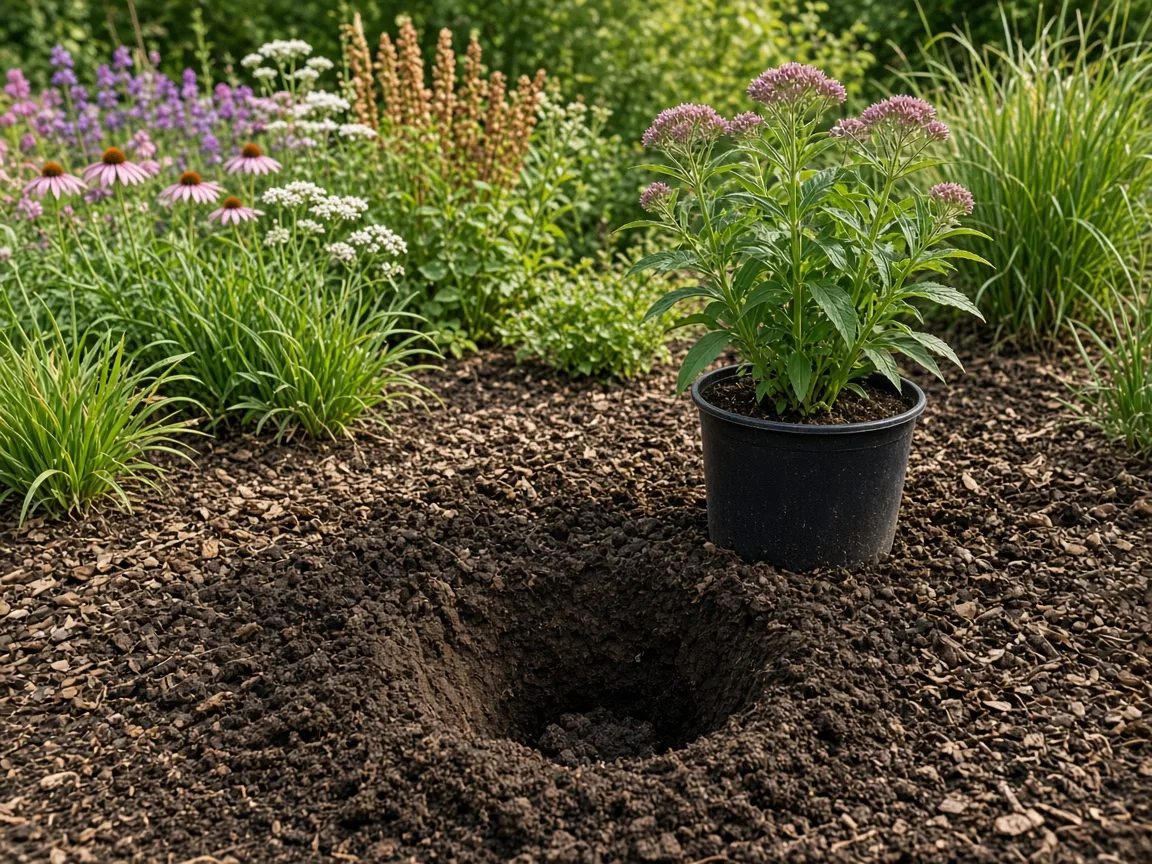
Best planting windows are early spring after the last hard frost or early fall while soil is still warm. Summer planting works in a pinch if you can irrigate reliably.
- Choose the site using the moisture and light rules above. Confirm mature height will not block windows or dwarf neighbors.
- Dig a hole twice as wide as the root ball and equally deep. Loosen circling roots on container plants.
- Set the crown at the same depth it grew in the pot — buried crowns rot; exposed roots dry out.
- Backfill with native soil amended only with compost if the bed is poor. Skip heavy fertilizer at planting.
- Water deeply until the entire root zone is saturated. Build a shallow watering basin for the first month if your soil is fast-draining.
- Mulch and water again when the top inch of soil dries — more often in heat, less in cool wet weather.
Bareroot or division transplants should go in as soon as they break dormancy in spring so roots establish before the tall growth spurt of early summer. If you must move an established clump, early spring is far easier than midsummer.
Fertilizer and Ongoing Care Through the Season
Joe Pye weed in naturally rich, moist soil rarely needs fertilizer. Overfeeding, especially with high-nitrogen products, produces lush soft stems that flop and invite mildew.
If a soil test shows genuine deficiencies, apply a balanced slow-release fertilizer or a thin layer of compost in early spring when new shoots appear — once is enough for the season. GrowIt BuildIt emphasizes that poor bloom more often traces to too little sun or too little water than to missing nutrients.
Through summer, your main job is moisture monitoring. Check soil with your finger or a trowel several inches down. If it is dry and leaves look dull, soak the root zone. If it is wet and plants look yellow, reduce irrigation and improve drainage before adding anything else.
Pinching, Staking, and Controlling Height
Tall Joe Pye weed in rich soil can outgrow its spot or lean after storms. You have three tools — use them in this order:
1. Chelsea chop (pinch stems by half) in early to mid-June, before flower buds form. The plant branches lower and blooms slightly later on more stems. NC State notes that cutting back before early July produces stockier stems and can trigger rebloom on some plants.
2. Staking when chop timing was missed or wind exposure is high. Use grow-through grids or loose corrals installed while stems are still below knee height — tying individual stems after flop often looks unnatural.
3. Cultivar choice for permanent height control. ‘Little Joe’, ‘Baby Joe’, and ‘Gateway’ solve height problems more cleanly than fighting a 9-foot hollow species in a 4-foot bed.
Do not pinch after bud set unless you accept losing that year’s flowers on cut stems.
Propagation by Division, Seed, and Cuttings
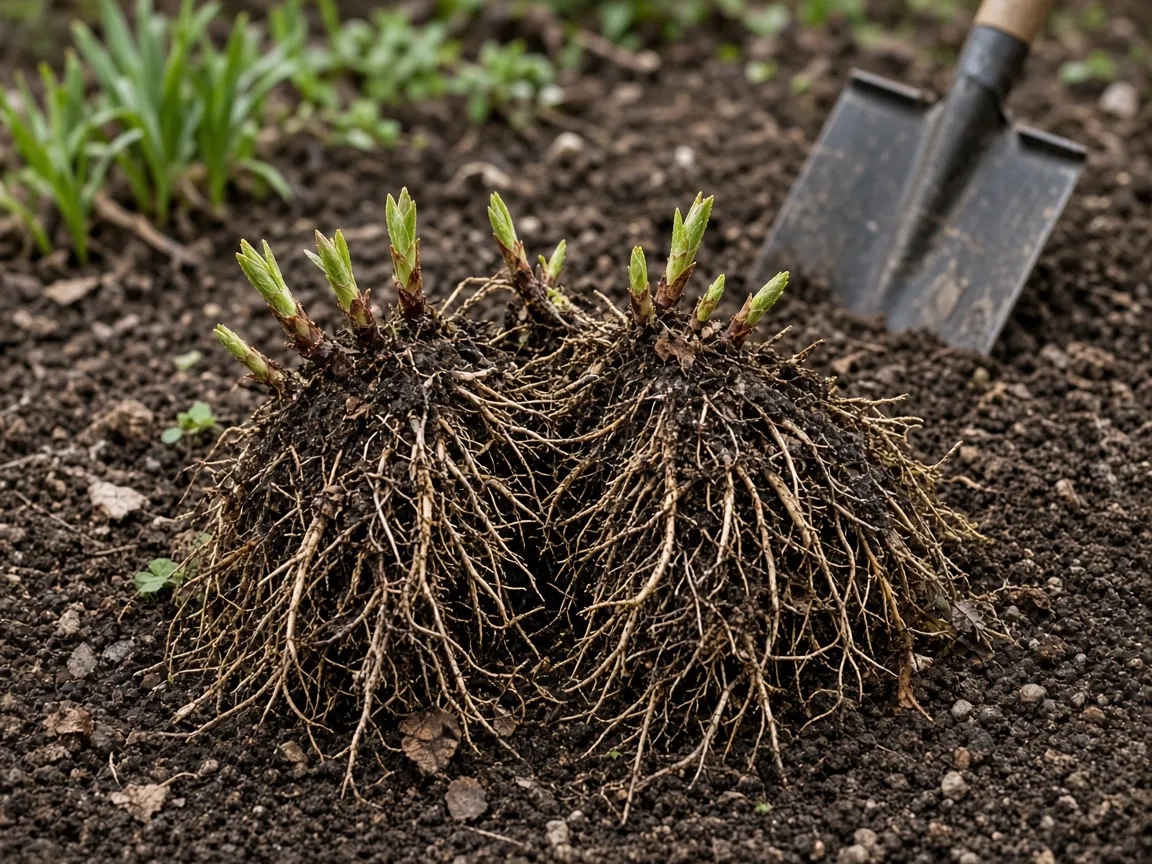
Division (easiest and most reliable)
Divide established clumps every three to five years in early spring as shoots emerge, or in fall after flowering. NC State lists division as a recommended propagation method; GrowIt BuildIt warns that overcrowded centers die out if you never divide.
- Cut a circle around the clump with a sharp spade, staying 2 inches beyond visible shoots.
- Lever the root mass out — Joe Pye roots are fibrous and relatively shallow.
- Split the mass with a spade or pruning saw into sections with at least one shoot and healthy roots each.
- Replant immediately at the same depth and water thoroughly.
Seed (slow but rewarding)
Joe Pye weed seeds need cold, moist stratification — at least 30 to 60 days near 40°F — and light to germinate; do not bury them deeply. GrowIt BuildIt recommends fall direct sowing, winter sowing in vented containers outdoors, or refrigerator stratification before spring sowing.
Press seeds onto moist potting mix, keep them bright and consistently moist, and expect germination in several weeks. Transplant seedlings with two to three true leaves; protect young plants from deer and rabbits, which browse tender growth.
Germination rates are low and variable — division is the practical path for a guaranteed clump.
Stem cuttings
NC State lists stem cuttings taken in late spring as viable. Cut 4- to 6-inch softwood sections, strip lower leaves, dip in rooting hormone if you use it, and place in moist propagation mix under bright indirect light. Cuttings root more slowly than division but clone a favorite cultivar exactly.
Pruning, Deadheading, and Winter Cleanup
Joe Pye weed blooms on new season’s growth. Cut dormant stems to 4 to 8 inches in late fall after frost or late winter before new shoots appear — either timing works. Do not wait until stems are fully leafed out in spring; pruning then removes this year’s flower buds.
Deadheading is optional and usually unnecessary. The dried seed heads are ornamental and feed birds. If hollow Joe Pye is self-seeding where you do not want seedlings, remove seed heads before they shatter — that is a spread-control measure, not a bloom boost.
For wildlife value, consider leaving stems standing through winter. Many native bees nest in pithy perennial stems; cutting everything flush in October removes that habitat. A compromise is to cut half the clump in fall and half in spring, or leave stems until March and then cut before emergence.
Pollinators, Wildlife Value, and Spreading Habits
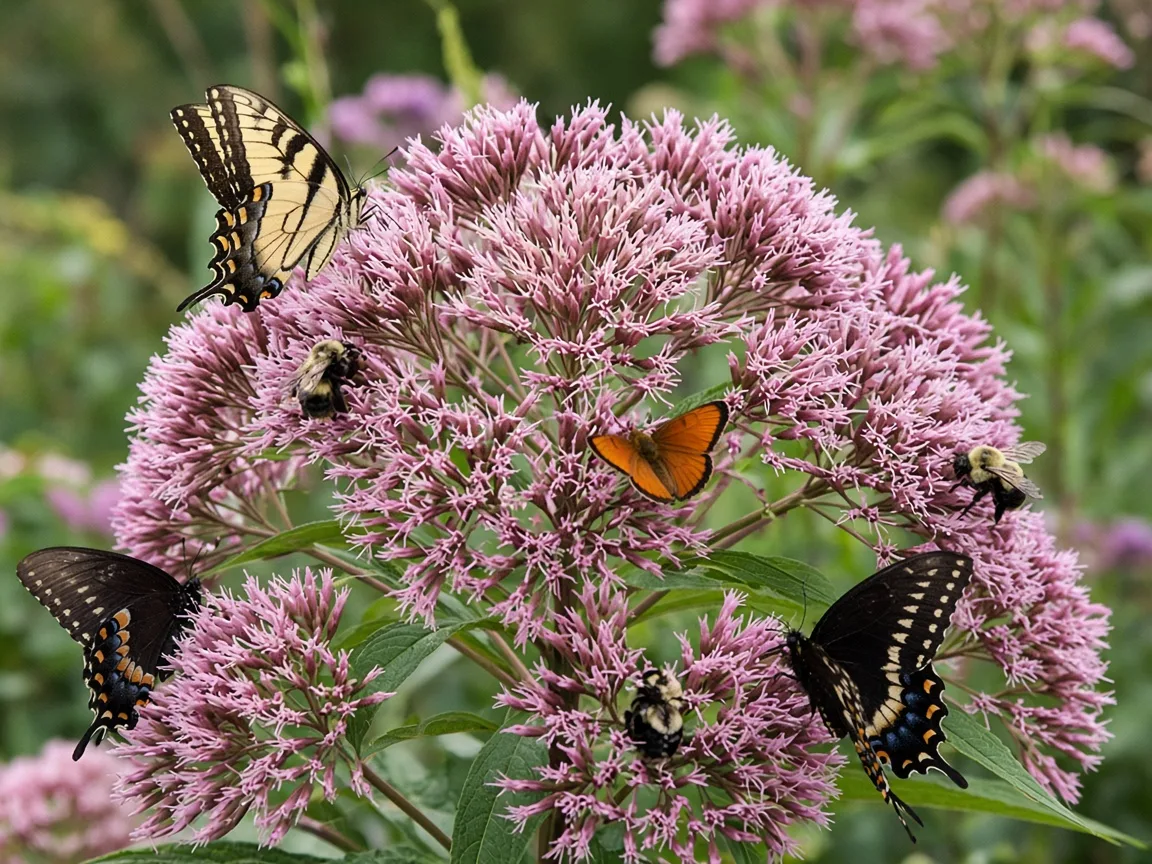
Joe Pye weed is a premier late-summer nectar plant. Butterflies — including swallowtails and monarchs — bees, skippers, moths, and beneficial wasps work the flower domes heavily from July into September, bridging the gap between early-summer perennials and fall asters. NC State notes caterpillars of several native moths feed on foliage, adding larval-host value beyond nectar.
Seed heads supply finches and sparrows in fall and winter. Deer generally browse it less than tender hostas, though young seedlings are vulnerable.
Spreading habits: Native Joe Pye weed is not invasive in North America — it belongs here. It can still spread aggressively in a garden by rhizomes (E. fistulosum, sometimes E. maculatum) and by wind-blown seed. Contain rhizomatous species with a deep root barrier, pull unwanted seedlings in spring, or choose clumping sweet Joe Pye and compact cultivars for tight beds.
Pests, Diseases, and Common Problems
Serious insect damage is uncommon. Most complaints trace to culture, not pests.
Leggy flop: Too much shade, excess nitrogen, or drought stress. Increase sun if possible, reduce fertilizer, water deeply, or Chelsea chop next June.
Scorched, curling leaves: Extended dry soil. Soak the root zone and mulch; scorched leaves do not green up — new growth will look better after correction.
Yellowing in wet soil: Root stress from poor drainage. Aerate, reduce irrigation, or relocate.
Powdery mildew and rust
Powdery mildew — white dusty coating on leaves — is the signature Joe Pye weed disease in humid summers with poor air circulation. It rarely kills the plant but weakens it and looks unsightly.
Prevention beats cure:
- Choose mildew-resistant cultivars (‘Gateway’, ‘Little Joe’, ‘Phantom’)
- Space plants for airflow; do not cram against a wall
- Water at soil level in morning; keep foliage dry overnight
- Remove heavily infected leaves if infection is localized
Fungicides can suppress mildew but are rarely necessary in home gardens if you fix spacing and cultivar choice first. NC State lists powdery mildew and rust (orange-brown leaf spots) as occasional problems; rust is usually cosmetic. Improve airflow and avoid overhead watering before reaching for sprays.
Conclusion
Joe Pye weed rewards gardeners who treat it as what it is: a moist-soil native giant built for late-season pollinators, not a dry-border afterthought. Match species to your site’s water and height limits, plant with generous spacing, keep soil consistently moist especially in year one, and choose compact or mildew-resistant cultivars when space or humidity demands it. Divide clumps every few years, consider leaving winter stems for nesting bees, and you will get weeks of butterfly-covered blooms with far less fuss than the plant’s stature suggests.