Prune Mums After Flowering? The Right Timing
Should you prune mums after flowering? Learn when to deadhead fall container mums, when to cut hardy garden mums, and how to protect next year’s blooms.
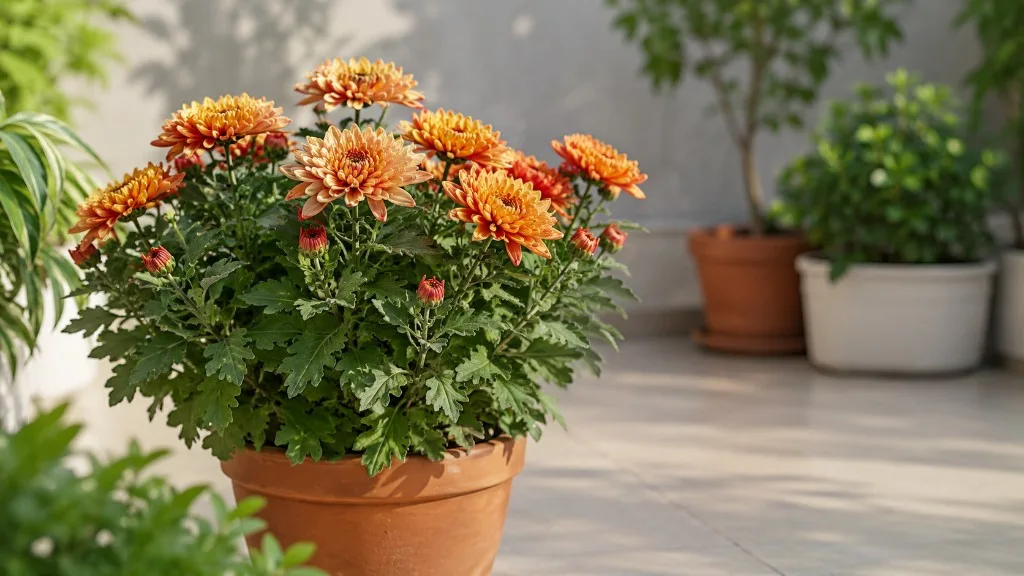
If your mum’s flowers are fading but the plant still has green foliage or unopened buds, deadhead the spent flowers now. If you mean cutting the entire plant down after its fall display, wait for a hardy garden mum to go dormant and do that cleanup in spring instead.
That distinction prevents the most common mum-pruning mistake: treating a quick flower cleanup like a full seasonal cutback. A potted mum bought for porch color needs careful deadheading and steady water while it is blooming; an established garden mum needs its old stems left in place through winter, followed by spring pruning and earlier pinching for a fuller plant next fall.
The short version is simple: remove individual fading flowers to extend the current display, but do not shear a healthy hardy mum to the ground in fall just because flowering is finished. The rest depends on what kind of mum you have, what the stems look like, and whether you are trying to preserve flowers for this season or growth for next season.
The quick answer: deadhead flowers, not the whole plant
Deadheading is the removal of spent flower heads while a plant is still in its flowering season. Penn State Extension describes it as removing faded flowers before the plant invests in seed production, a practice that can improve appearance and extend or repeat flowering on plants that respond to it. On a mum, that usually means cutting a fading flower stem back to a healthy leaf set or branch point, not cutting every stem in the mound.
Use deadheading when the plant has some combination of fading flowers, unopened buds, and healthy green leaves. The cut makes room for buds that are already present and keeps a container from looking like a dome of brown flower heads. It can extend the display, but it is not a reset button: chrysanthemums commonly have much of their fall bud set in place by midsummer, so a plant with every bud already opened cannot be forced into a brand-new flush by removing the old flowers.
Use a full cutback for an established hardy mum only after winter dormancy has ended. In most gardens, that means leaving the old stems standing over winter and cutting them back to a few inches above the soil in spring, once you can see new shoots emerging at the crown. If the plant has diseased or mushy stems, remove those portions promptly; otherwise, intact brown stems are useful winter structure and help you identify where the crown is when spring arrives.
Identify the mum before you cut
The label and growing history matter more than the color of the flower. A florist-style mum forced into bloom for a fall display may not have the same winter tolerance as a garden mum selected for outdoor perennial use, and a plant that spent the summer rooted in a garden bed has had more time to prepare for cold than a late-season pot moved from a greenhouse to a porch.

A blooming seasonal pot and a finished mum can need different care decisions.
Seasonal container mum vs hardy garden mum
Garden mums are the better candidates for returning outdoors, but “hardy” is not a guarantee in every climate or container. UF/IFAS recommends looking for garden mums rather than florist mums when buying potted chrysanthemums for outdoor planting, and notes that garden mums prefer full sun and well-drained soil. The label, cultivar, local winter temperatures, drainage, and planting date all influence survival.
Treat a newly purchased fall pot as a seasonal container display first. It may be worth planting later, especially if it is healthy and you live where garden mums overwinter reliably, but do not assume that keeping the faded flowers attached or cutting the plant hard will determine whether it survives. Root establishment, water stress, cold exposure, and crown protection matter much more.
An established in-ground mum usually has a broad crown with multiple stems emerging from the soil and a history of returning each year. A retail pot is more likely to have many tightly packed stems and a root ball that has been managed for a single, synchronized flush. You can deadhead either one during bloom, but the winter and spring pruning plan is different.
Why flowering stage matters more than the calendar
The word “after” hides two very different moments. A few flowers may be fading while new buds are still coloring up, or the whole mound may have finished and be entering dormancy. Make the decision from the plant’s condition rather than a date printed on the calendar.
If you see tight buds beneath or beside a fading flower, make a selective cut and preserve them. If you see only brown flowers, dry leaves, and no active green growth, stop trying to extend the current display; switch to frost and winter care. Mums respond to day length and cool-season conditions, so moving them indoors under bright evening lights or pruning them heavily at the wrong time will not recreate the natural sequence that triggers fall flowering.
Deadheading vs pinching vs cutback
These three terms describe different jobs, and confusing them leads to poor bloom timing.
| Practice | When it is done | What you remove | Main purpose |
|---|---|---|---|
| Deadheading | During the active bloom season | Individual spent flower heads and their short stems | Keep the display tidy and help remaining buds finish |
| Pinching | Spring through early or midsummer | Tender growing tips, sometimes early buds | Create branching and a compact mound for fall |
| Cutback | Spring on a hardy, overwintered mum | Old dormant stems down to a few inches | Clear winter growth so new shoots can take over |
Pinching is the step that most directly changes the plant’s shape. When you remove a growing tip early enough, side buds can develop into additional branches. A peer-reviewed chrysanthemum study describes decapitation as breaking apical dominance and promoting lateral-bud growth, but that research reflects controlled horticultural production rather than a promise for every garden plant. In practical terms, early pinching gives a mum more places to carry flowers; late pinching can remove the very buds you hoped to enjoy.
Cutback is not the same as deadheading a large number of flowers. It changes the plant’s entire above-ground structure and is best timed around dormancy and new spring growth. A hard fall cut on an otherwise healthy garden mum can remove protective stems before winter without improving the current flowers or next year’s bud set.
How to deadhead a mum without removing future buds
Choose a dry day when the foliage is not wet from rain or heavy dew. Use small bypass pruners or sharp scissors, and clean the blades before moving to another plant; clean cuts and basic sanitation reduce the chance of carrying pathogens into fresh wounds. Gardening Know How and Real Simple both emphasize sharp, clean tools and cutting faded flowers before they become dry seed heads.
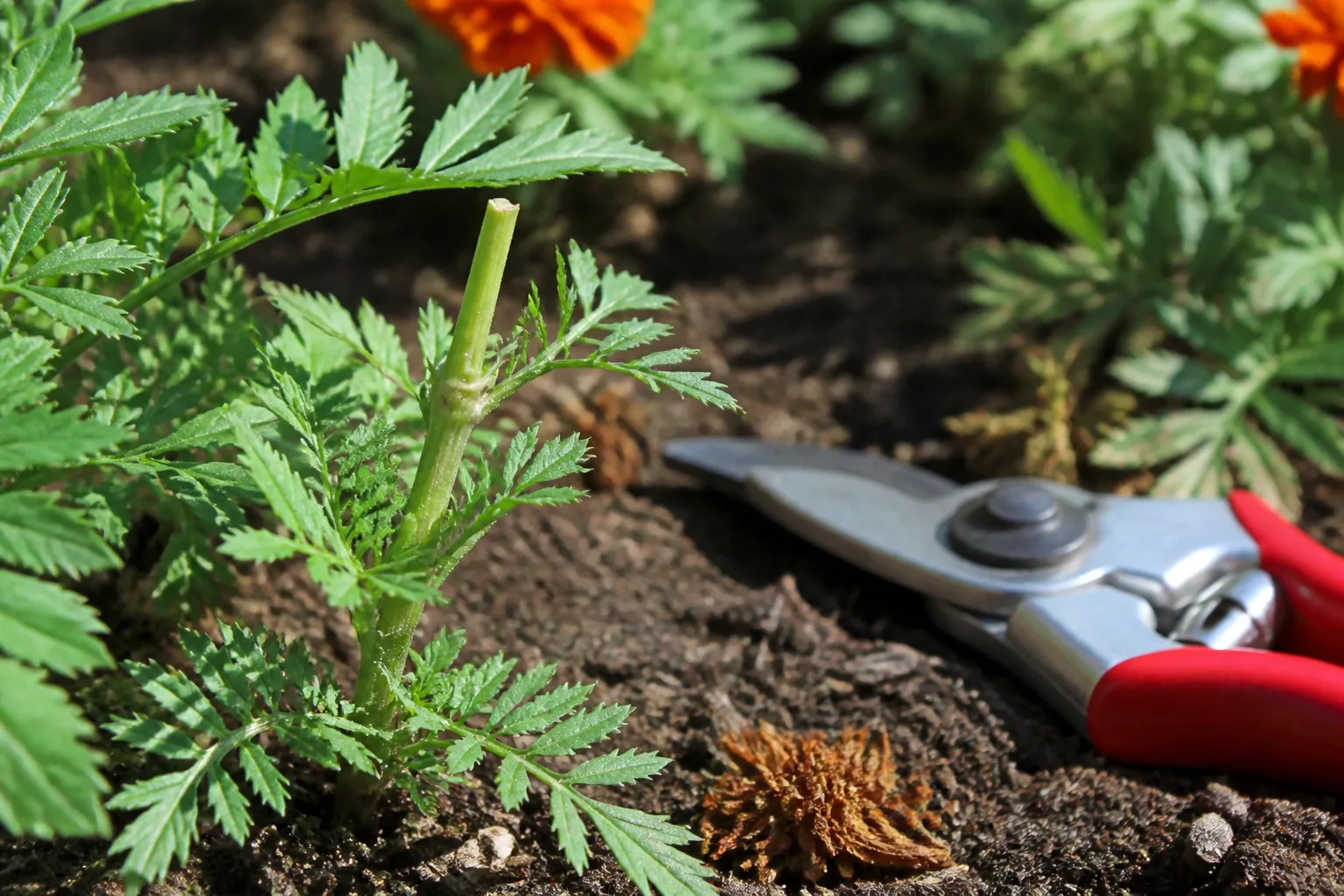
Use this leaf-joint cut logic on a mum stem, while preserving any nearby unopened buds.
Start at the outside of the plant and work inward so you can see the stems you are keeping. Remove flowers that are paling, wilting, or turning brown, but pause at each stem to look for a fresh bud hidden below the flower or inside the mound.
Where to make the cut
Follow the spent flower’s stem downward with your eyes. Make the cut just above a healthy set of leaves, a visible side bud, or a branch junction, low enough that the remaining stub is hidden by the foliage. Cutting immediately below the flower can leave a conspicuous brown stick; cutting far below it can remove a healthy section that still carries buds.
For a single flower, snip the stem above the first strong leaf pair below the bloom. For a cluster, trace the shared stem down to the point where it branches and make one clean cut there if every flower above that point is spent. If one flower is brown but its neighboring buds are still tight, remove only the individual faded flower instead of shearing across the whole top.
Do not twist, crush, or yank thick stems. A clean cut closes more neatly than a ragged tear, and it gives you control around short stems and crowded flower heads. Collect the cut flowers and any yellow or diseased leaves rather than leaving a wet pile inside the plant, where decay can stay in contact with healthy foliage.
How often to repeat it
Inspect a blooming mum two or three times a week during a heavy flush, but do not turn that into a rigid schedule. In cool, dry weather, flowers may hold longer; rain, heat, and a crowded mound can make them fade sooner. Penn State Extension recommends evaluating plants frequently because bloom life varies with the species and weather.
The best moment is when the petals have lost their fresh color and begin to wilt, not weeks after every flower has dried into a brown head. Early, light passes are easier on the plant and on you than waiting until the entire mound needs a major cleanup. If you are short on time, prioritize the outermost brown clusters and any flowers touching wet foliage; leave healthy flowers and concealed buds alone.
When to stop deadheading
Stop deadheading for rebloom when there are no meaningful unopened buds left or when a hard frost has ended the active display. Removing a flower that is already fully finished will not create another flowering cycle if the plant has entered dormancy. At that point, the useful work is keeping the crown from drying out, managing drainage, and deciding whether the plant will stay outdoors or move to a sheltered space.
You can still remove a few ugly, diseased, or collapsed portions after the main display ends. That is sanitation and appearance work, not a promise of more flowers. If the stems are healthy but brown and upright on an in-ground garden mum, leave most of them through winter and defer the main cutback until spring.
When to prune hardy mums for next year
For an established hardy garden mum, the best full-pruning window is usually spring. N.C. Cooperative Extension recommends cutting overwintered mums back to about 3–4 inches above the ground, while Better Homes & Gardens advises cutting to a couple of inches before new growth appears. Those recommendations point to the same practical rule: leave a short stem stub, clear away brittle old growth, and make the cut after the plant has rested but before spring shoots are crowded by last year’s stems.
Do not cut by height alone if you are not sure the plant is alive. A dry stem that snaps easily is dead; a flexible stem may still contain live tissue. If you see no shoots by the time nearby perennials are waking, check whether the crown is firm and whether winter waterlogging or repeated freeze-thaw cycles damaged it before assuming the pruning date was the problem.
Spring cutback after new growth appears
If you are unsure, wait until the crown shows new green growth, then cut the old stems just above the emerging shoots. This gives you a visible target and prevents you from cutting through the crown itself. Remove the debris from around the plant, especially if it is moldy or diseased, and keep the new shoots exposed to light and moving air.
Spring is also a good time to correct the conditions that make a mum weak: a shaded location, compacted soil, a pot that dries in a few hours, or a planting site that stays wet after rain. Pruning can reveal the plant’s structure, but it cannot compensate for a crown sitting in cold, saturated soil.
Pinching for a fuller fall mound
Pinching happens months before the fall flowers, while the mum is actively producing leafy shoots. When new stems reach about 6 inches, remove the tender tip and any very early bud, leaving a strong pair of leaves below the cut. Repeat every 2–4 weeks through spring and early summer, depending on growth rate and the shape you want.
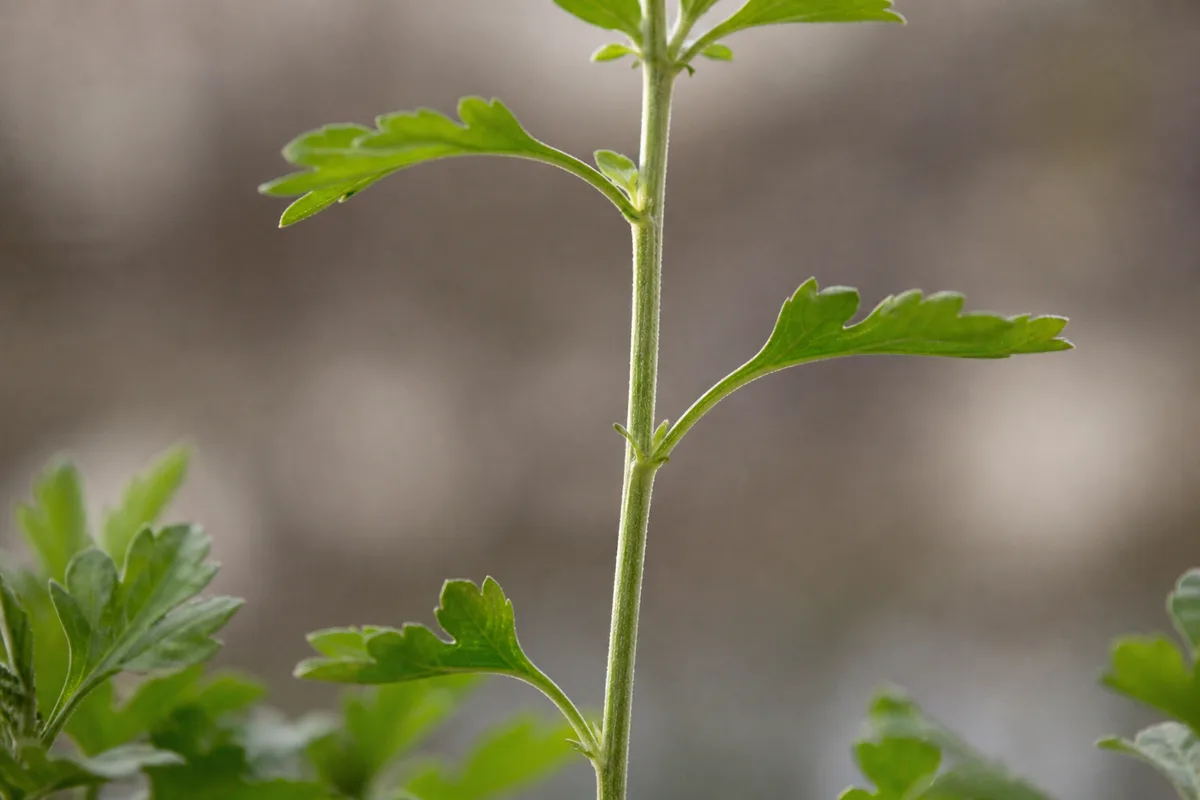
Leaf nodes are the landmarks to preserve below an early-season pinch.
Stop early enough for the plant to build flower buds. Extension guidance commonly places the final pinching around mid-July or the end of July, but your cultivar and climate may shift that window. If a mum normally blooms early, stop sooner; if the plant is already forming its fall buds, do not keep pinching just to make it rounder.
This is the answer to a leggy mum next year, not a late-fall shearing session. Two or three well-timed rounds can produce more branches and a broader mound, while repeated late cuts can delay or reduce the fall display. Mark the last pinch on your garden calendar, but let visible buds overrule the reminder.
Care that keeps post-pruning mums flowering
Deadheading works best when the plant still has enough light, water, and root health to support the buds it already made. The simplest aftercare is not an aggressive fertilizer program; it is steady growing conditions.
Light and temperature
Give mums about 4–6 hours of direct sun, with full sun preferred for established garden mums when the site is not excessively hot. Insufficient light produces weaker, leggier growth and fewer flowers. UF/IFAS notes that mums prefer full sun, while Epic Gardening describes four to six hours daily as a useful target.
Cool nights help preserve a fall display, but a porch pot can still overheat against a south- or west-facing wall during a warm spell. If a container is in deep shade all day, moving it into brighter light is more useful than pruning more aggressively. If the plant is already in bud and a heat wave is speeding flowers open, some afternoon protection can slow the show without putting the mum in permanent shade.
Water and drainage
Aim for soil that is evenly moist but never stagnant. Check the top inch or two with a finger, and lift a pot occasionally so you learn how a well-watered container feels. Water thoroughly when the soil is drying, allowing excess to drain from the bottom, then empty any saucer that keeps the pot standing in water.
Potted mums can dry much faster than in-ground plants, especially in a small nursery pot on a sunny step. N.C. Cooperative Extension specifically warns against letting mums dry completely as well as against overwatering them, and Epic Gardening notes that containers may need checking every day or two while temperatures remain warm. A fixed “twice a week” rule is less reliable than checking the actual soil.
Avoid wetting flowers and foliage unnecessarily when you can water at the soil line. Damp, crowded foliage dries slowly and creates better conditions for fungal problems. Good drainage, sensible spacing, and prompt removal of diseased material protect the plant more effectively than a late fertilizer application.
Troubleshoot before you reach for pruners
Pruning is not always the fix for a mum that looks disappointing. Use the symptom to choose the first action.
| What you see | Most useful first action | Pruning decision |
|---|---|---|
| A few fading heads, many tight buds | Water and deadhead selectively | Cut only spent stems to a leaf set or branch point |
| Brown flowers everywhere, no buds | Check frost, temperature, and overall plant health | Stop pruning for more blooms; shift to cleanup or winter care |
| Tall stems with leaves but few flowers | Check light, late pinching, and excess nitrogen | Do not shear in fall; plan spring pinching and earlier light management |
| Wilted foliage and very dry potting mix | Rehydrate slowly and check whether water runs through | Remove only dead material after the plant recovers |
| Soft crown, sour soil, or persistently wet pot | Improve drainage and inspect roots if necessary | Remove rotting tissue; deadheading will not cure root damage |
| Gray, collapsing flowers or spotted leaves | Improve airflow and remove affected material | Sanitize tools and discard diseased debris rather than spreading it |
If the plant is green and growing but has not opened buds, do not assume it needs more cutting. Mums flower in response to seasonal day length and bud development, and even a perfectly pinched plant can bloom later or earlier than a neighboring cultivar. Outdoor lights that interrupt long, dark nights can also affect bud formation, so check porch lighting before blaming the pruners.
If you have a new pot that has stopped flowering, first ask whether it already bloomed heavily at the nursery. Forced container mums can arrive with much of their available show already spent. Deadheading may tidy the plant and help remaining buds, but the realistic goal may be preserving the foliage and keeping the roots healthy rather than producing a second full dome of flowers.
Overwintering a mum after the flowers fade
For a hardy mum planted in the ground, leave the main stems standing after flowering and through winter unless they are diseased, broken, or collapsing onto the crown. The stems provide a little protection from cold and make the plant easier to locate under snow or mulch. After the ground cools, apply a light layer of mulch around the crown without burying it deeply or trapping wet material against the stems.

A well-drained planting site gives a garden mum more time to establish before winter.
Late-fall planting is a separate risk. A pot transplanted just before a hard freeze may not have enough time to establish roots, even if the cultivar is capable of returning. N.C. Cooperative Extension recommends spring planting as the more dependable way to give perennial mums a full season to develop roots, while fall planting is more successful when it happens well ahead of hard winter conditions.
If you are trying to keep a container mum, move the pot to a cool, sheltered, unheated space before severe cold reaches the root ball. A garage, shed, or basement can work if temperatures remain cool and the plant is not kept next to a heater. Check the soil occasionally and add only enough water to keep the roots from becoming completely dry; a dormant container that stays saturated is more likely to rot.
For a detailed frost plan, see how to protect mums from frost. The key point is that winter survival comes from protecting a living crown and root system, not from cutting the stems as short as possible in October or November.
A simple mum-pruning schedule
Use this as a flexible sequence rather than a rigid calendar:
- While flowers are opening: leave healthy flowers and look for tight buds hidden beneath the mound.
- As individual flowers fade: deadhead to a healthy leaf set or branch junction, then repeat as needed during the display.
- When most buds have opened or frost arrives: stop pruning for rebloom and move to watering, sanitation, and winter decisions.
- Over winter: leave healthy, upright stems on in-ground hardy mums; remove only diseased or dangerous material and keep the crown from sitting wet.
- In spring: once new basal shoots appear, cut old stems back to roughly 2–4 inches above the soil and clear the debris.
- During spring and early summer: pinch new growth when stems reach about 6 inches, repeat every few weeks, and stop before the plant’s bud-forming window.
If the only thing you do today is remove a handful of faded heads without touching green tips and unopened buds, you are probably making the right kind of cut for a blooming container mum. If your plant is an established garden mum that has finished for the year, put the pruners down, mark a spring reminder, and focus on the crown.
Conclusion
So, should you prune mums after flowering? Deadhead fading flowers during the active fall display, but save a full cutback of hardy garden mums for spring. Selective cuts can keep a container or garden mound looking fresh and help remaining buds finish, while late-season shearing cannot create flowers after the plant has completed its bud set.
The best mum-pruning routine is therefore seasonal: deadhead lightly now, leave healthy dormant stems through winter, cut back old growth after spring shoots appear, and pinch early enough next year to build branches before buds form. Pair that timing with bright light, even moisture, good drainage, and clean tools, and the plant has a much better chance of giving you a fuller, longer-lasting fall display.