How to Grow and Care for Liatris (Blazing Star)
Learn how to grow and care for Liatris from corms or seed, with planting depth, watering, drainage, division, bloom, and winter tips for lasting plants.
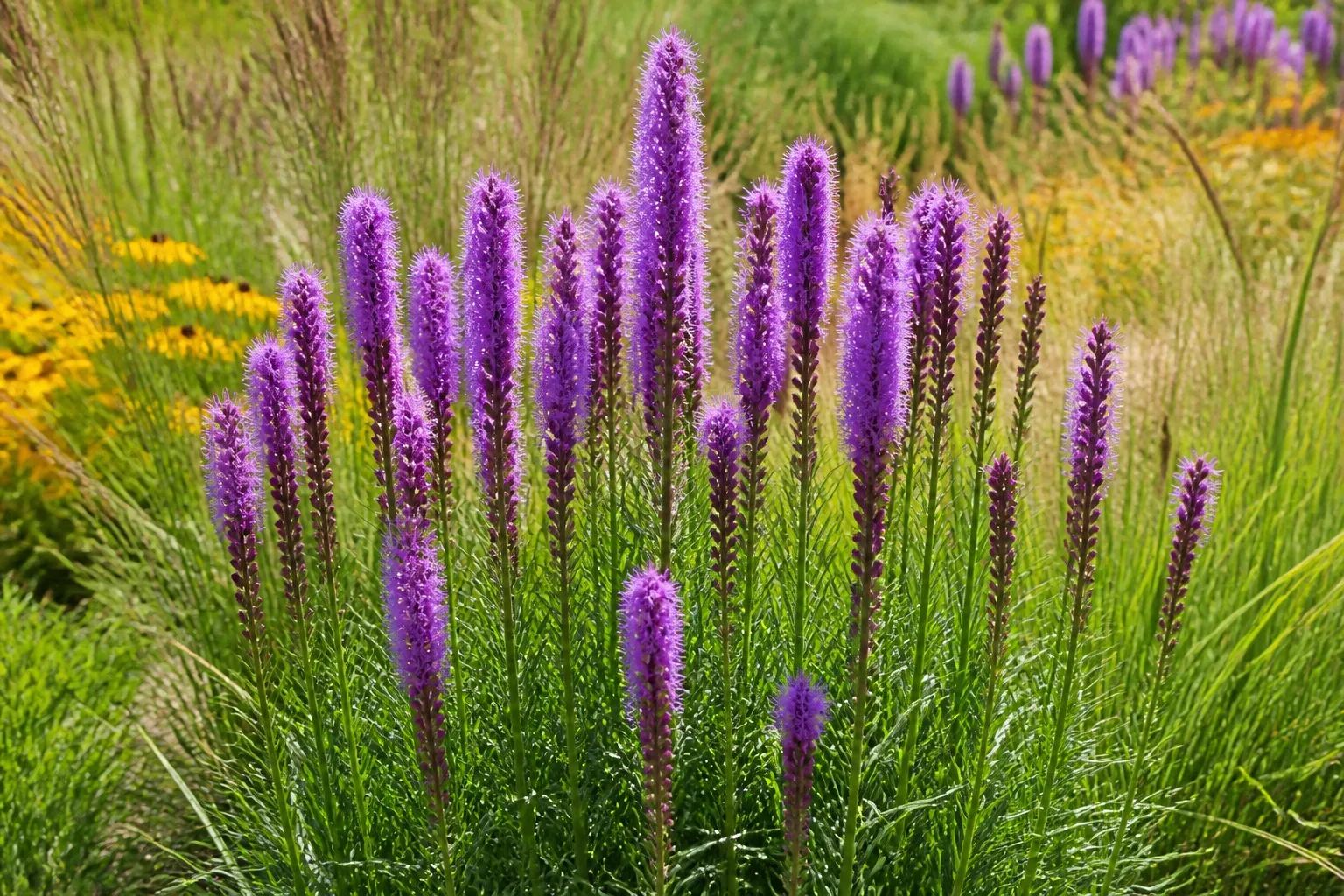
Liatris is a prairie-looking perennial with a surprisingly simple care brief: give it bright sun, keep its roots from sitting in winter water, and resist the urge to feed or water it constantly. The payoff is a clump of upright purple, pink, or white flower spikes that open from the top downward, adding late-summer height when many borders are losing momentum.
The name usually refers to several species, but Liatris spicata is the common garden choice. This guide focuses on the decisions that make the difference in a real bed: whether to buy corms or start seed, how deep to plant, how to read a wet site, when established plants actually need water, and what to do with the stems after flowering.
Liatris at a Glance
| Feature | Practical detail |
|---|---|
| Common names | Blazing star, dense blazing star, gayfeather, spike gayfeather |
| Botanical name | Liatris spp.; Liatris spicata is a common garden species |
| Plant type | Herbaceous, clump-forming perennial growing from a corm or related underground storage structure |
| Mature size | About 1–5 feet tall depending on species and cultivar; L. spicata is often 2–5 feet |
| Light | Full sun is best; some species tolerate light shade with fewer or weaker spikes |
| Soil | Average, sandy, loamy, or clay soil is workable if it drains well |
| Water | Regular moisture while establishing; low supplemental water after roots settle |
| Bloom season | Usually mid- to late summer; timing varies by species and climate |
| Hardiness | Many garden forms are hardy in USDA Zones 3–9, but check the label for the species or cultivar |
| Wildlife and uses | Bees, butterflies, moths, and songbirds; excellent fresh or dried cut flower |
The flower spikes are made of many small, rayless disk flowers rather than daisy petals. UW–Madison Extension describes the genus as a group of native perennials that can arise from corms, rhizomes, or elongated root crowns, which is one reason a planting label matters when you are comparing species (University of Wisconsin–Madison Extension: Liatris).
Why Blazing Star Earns a Place in the Garden
Liatris supplies vertical structure without the broad leaves or heavy visual mass of a shrub. Its narrow, grass-like foliage forms a low clump, then the flower stems rise like purple bottlebrushes above neighboring coneflowers, grasses, sedum, or black-eyed Susans.
The bloom sequence is a useful identification clue and a design advantage: flowers open near the top of the spike first, then work downward. A single stem can look fresh over several days as more of the lower buds open, and a group of stems creates a shifting mix of open flowers and unopened buds rather than one flat flush.
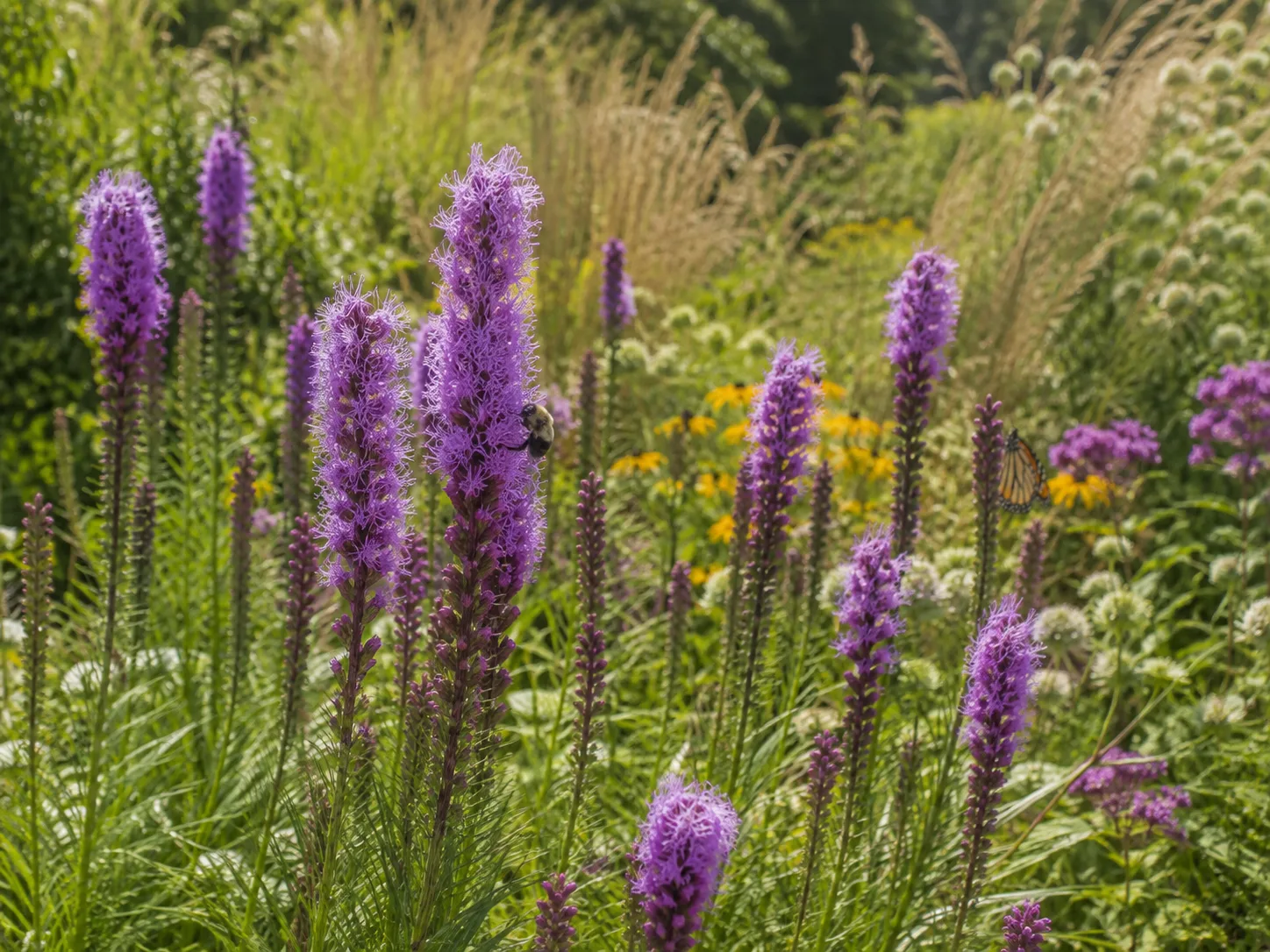
Liatris is also valuable in a wildlife planting. NC State Extension lists bees, butterflies, hummingbirds, moths, and songbirds among the visitors associated with L. spicata, and notes that dead hollow stems can provide nest sites for native stem-nesting bees (NC State Extension Plant Toolbox: Liatris spicata). That does not mean every plant needs to be left untidy everywhere; it means a thoughtful cleanup plan can support wildlife while keeping paths and foundations clear.
Choose a Liatris Species or Cultivar
The best Liatris is not always the tallest or the one with the largest flower catalog photograph. Match the plant to the moisture of your site, the height available at the back or middle of the border, and whether you want a true-to-type color or a more natural drift of seedlings.
Best choices for common garden beds
Liatris spicata, often called dense blazing star, is the default choice for a sunny perennial border. It commonly reaches 2–5 feet and suits mass plantings, rain gardens that drain between rains, native gardens, and cutting rows; in the wild it is associated with moist meadows and marshy places, so it is not the same dry-site plant as every other Liatris.
‘Kobold’ is a compact, deep-purple selection useful toward the front of a border or in a smaller bed. ‘Alba’ and ‘Floristan White’ bring white flowers, while ‘Floristan Violet’ is valued for strong, florist-friendly spikes; ‘Callilepsis’ is another choice when long stems are the priority. Cultivar height and bloom timing can shift with region, soil, and nursery stock, so use the mature dimensions on the current plant label as the tie-breaker.
Gardenia’s overview of the genus is useful for comparing the garden role of compact L. spicata cultivars with dry-site and prairie species (Gardenia: Liatris growing guide). Use that comparison as a starting point, then confirm the species and mature height on the plant tag because “blazing star” is a genus-level common name.
When another species fits better
Liatris aspera is a better candidate for dry, sandy, rocky ground than L. spicata. Its flower spikes are generally more open and its stature can be shorter, which makes it useful where a dense, tall bottlebrush would look out of place.
Liatris pycnostachya, or prairie blazing star, is associated with damp meadows and tall-grass prairie and can reach 2–5 feet. It often blooms later, into August and September, so it can extend the vertical color window in a mixed native planting. UW–Madison Extension identifies these three species as common garden plants and notes that species and environmental conditions strongly affect height and bloom timing (UW–Madison Extension: Liatris species and care).
Give Blazing Star the Right Site
Site selection does more for Liatris than fertilizer does. Before planting, look at the bed after a heavy rain and ask two questions: how long does water remain on the surface, and how quickly does the spot lose afternoon light to a fence, tree, or building?
Full sun, air, and spacing
Give Liatris at least six hours of direct sun whenever possible. It may survive in part shade, especially in a hot region, but shade encourages thinner stems, fewer flower spikes, slower drying of foliage, and a greater chance that a tall plant leans into brighter light.
Space plants about 12–15 inches apart for a connected drift with room for air movement. Use closer visual grouping only if the plants are compact and the site is dry enough to dry quickly; crowded, damp foliage is a more favorable environment for leaf spots and mildew. In a windy site, place taller cultivars among sturdy neighbors rather than isolating one spike where every gust hits it.
Soil drainage is the real requirement
Liatris tolerates a wide range of soil textures, including clay, but “tolerates clay” does not mean “likes a saturated crown.” A clay bed that drains after rain can grow it well; a low pocket that stays slick for days in winter can rot the corm even if the plant looked fine through summer.
Test an uncertain site before buying a large group. Dig a hole about 12 inches deep and wide, fill it with water, let it drain, then fill it again and watch the second fill. If water remains for many hours or the hole is still full the next day, move the planting to a raised or sloped position, improve the bed broadly with organic matter, or choose a drier location. A small pocket of loose soil inside dense clay can act like a bowl, so do not “fix” a wet site by amending only the planting hole.
Liatris generally handles acidic to neutral soil. A soil test is useful when growth is unusually weak, but routine lime or fertilizer is not. Drainage, sun, and planting depth are higher-priority corrections.
Plant Liatris Corms Step by Step
Spring-planted corms are the most reliable route to flowers in the first season. Gardening Know How places the usual planting depth at 2–4 inches and the corm-to-bloom window at roughly 70–90 days under favorable conditions (Gardening Know How: Liatris planting and care). Treat that as a useful range, not a promise: cold soil, a small corm, transplant shock, and a short growing season can delay the show.
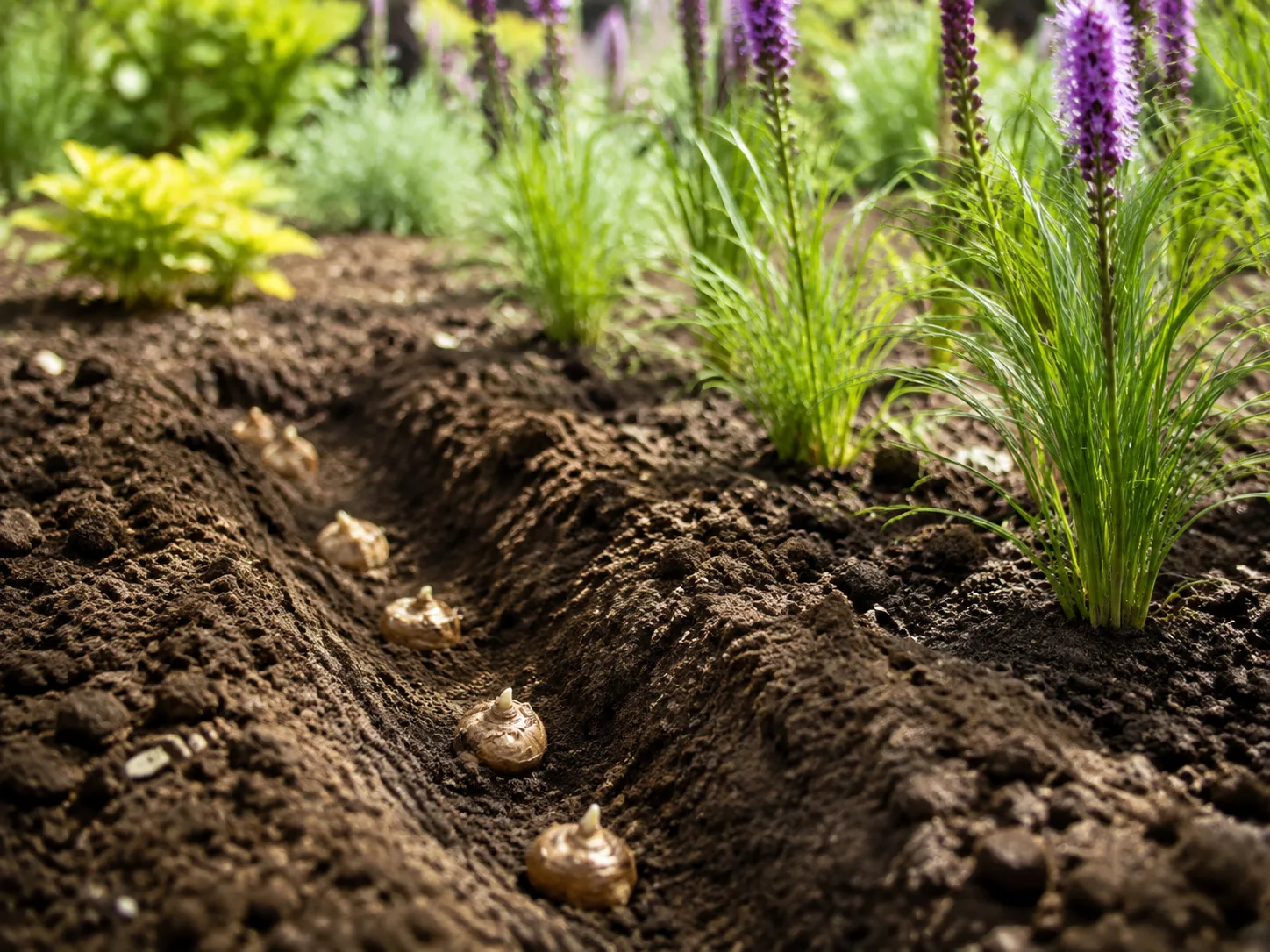
Use this sequence:
- Choose firm corms. They should feel solid rather than hollow, wet, or sour-smelling. Discard pieces that are mushy or covered in spreading rot; a dry papery surface is less concerning than soft tissue.
- Prepare the bed broadly. Loosen the soil at least 8–10 inches deep and remove compacted clods, but do not create a rich, water-holding pocket. If the ground is heavy, a raised bed or gentle mound is safer than a deep amended hole.
- Set each corm correctly. The pointed bud or eye faces upward and the flatter root-producing side faces down. If the shape is confusing, lay it on its side rather than forcing a questionable orientation; the shoot can often curve upward, but an upside-down corm spends energy correcting itself.
- Cover 2–4 inches deep. Use the shallow end of the range in heavy or slow-draining soil and the deeper end in loose, fast-draining soil. Measure from the top of the corm to the soil surface, not from the bottom of the hole.
- Space the plants. Leave 12–15 inches between corms for the mature clump and air movement. A group of several plants makes a stronger visual statement than a single isolated spike.
- Water once, thoroughly. Soak the planting area to settle soil around the corm, then allow the surface to begin drying before watering again. Mark the spot so a late-spring weeding session does not disturb dormant growth.
Plant after the soil is workable in spring and severe frost is no longer likely to heave newly planted material. In climates with mild autumns, fall planting may work, but the site must drain well through winter; spring is the safer default for unfamiliar conditions. Container-grown Liatris can be planted when the root ball is actively growing, but the plant still needs an outdoor dormant period and should not be treated as a houseplant.
Watering Liatris in Year One and Beyond
New corms and nursery plants need water because their roots have not yet explored the surrounding soil. Water deeply enough to wet the root zone, then check the soil before repeating; a calendar that ignores rain and clay is how a drought-tolerant plant gets overwatered.
For the first few weeks, water whenever the upper soil begins to dry and the plant shows it is actively growing. Through the rest of the first season, provide a deep soak during prolonged dry weather rather than frequent shallow sprinkles. Morning watering at the soil line keeps foliage drier and gives the bed time to absorb moisture.
Once established, Liatris usually needs supplemental water only during extended heat or drought. Let the top few inches dry between waterings, but do not let a newly divided clump or a container plant reach the same level of dryness as a mature in-ground clump. Pots dry faster and also heat and chill more quickly, so use a container with drainage holes, a porous mix, and a sheltered winter position.
Start Liatris from Seed or Division
Propagation method changes the timetable and the result. Buy corms when you want the simplest route to first-season flowers, sow seed when you want many plants and can wait, and divide a mature clump when you want a duplicate of a plant whose height or flower color already suits your garden.
Growing Liatris from seed
Fresh seed can be sown outdoors in fall so winter supplies the cold, moist period it needs. For indoor sowing, give the seed about four to six weeks of cold, moist stratification, then sow it barely covered in a sterile seed-starting mix. UW–Madison Extension reports germination in roughly 20–45 days and says seed-grown plants generally wait until their second or third year to bloom (UW–Madison Extension: propagating Liatris).
Keep the mix evenly moist but never waterlogged. Provide strong light after emergence, thin crowded seedlings so air can move, and harden them off before planting outside after the frost risk has passed. A small first-year rosette is not a failed plant; it is building the corm that will support a larger flowering stem later.
For a more hands-on indoor schedule, Farmhouse & Blooms recommends starting seed several weeks before the local last frost and hardening seedlings before planting out (Farmhouse & Blooms: How to grow Liatris). The exact calendar should follow your climate and the seed packet, but the sequence is sound: cold treatment, light covering, strong light after emergence, then gradual outdoor exposure.
Seedlings may not be identical to the parent, especially if you collect seed from a named cultivar. Leave seed heads on plants that you want to naturalize, but expect volunteers to appear where the soil is bare and moisture is favorable rather than in a perfectly predictable circle around the parent.
Dividing established clumps
Divide in early spring just as the narrow leaves emerge, when you can see the growth points and the plant has the full season to re-establish. Fall division can work in regions with a long, mild root-growing window, but spring is less risky where freeze-thaw cycles arrive quickly.
Dig the entire clump with a sharp spade, lift it with as much soil attached as practical, and brush away enough soil to see the corms or thickened roots. Separate sections so each has at least one firm corm or root piece and one visible eye; discard soft, hollow, or completely dried material.
Replant divisions immediately at the same depth as the original plant and water them in. Do not divide a newly planted corm or a small first-year seedling just to make more plants; wait until the clump has enough storage tissue that removing a section will not set it back for several seasons.
Feed, Mulch, and Stake Only When Needed
Liatris is not a heavy feeder, and lean soil often produces more self-supporting stems than rich soil. If a soil test identifies a deficiency, correct that specific issue in spring; otherwise a thin layer of finished compost around, not on, the crown is usually enough.
Avoid repeated high-nitrogen feeding. It can produce lush foliage and soft, tall stems at the expense of sturdy flower stalks, and it does not compensate for too little sun. Keep mulch a few inches away from the crown so moisture and rodents do not remain against the underground storage structure.
Most plants need no stake when grown in sun and average soil. If stems lean, first check light, spacing, and fertility; a discreet ring support installed while stems are still short is better than tying a mature spike into a rigid bundle after it bends.
Extend the Show With Cutting and Deadheading
Cut Liatris when the upper flowers are open and the lower buds still show color. Cut early in the day, strip leaves that would sit below the water line, and place stems in clean water; the unusual top-down opening pattern makes the spike useful as a vertical accent while the lower flowers continue to develop.
For dried arrangements, UW–Madison Extension recommends harvesting when about one-half to two-thirds of the flowers are open, then hanging stems upside down in a protected, dry place for about three weeks or using a suitable desiccant (UW–Madison Extension: Liatris in cut and dried arrangements). Keep dried material away from damp storage, where dense flower heads can mold.
Deadheading is optional. Remove a spent spike when you want a cleaner border or want to reduce reseeding, but leave some heads if you want seed for birds or volunteers. Cutting a flower spike will not make a plant bloom continuously all summer; it may encourage a modest later flush in good conditions, but bloom timing is controlled mainly by species, corm maturity, sun, and the growing season.
Prepare Liatris for Winter and Wildlife
Within its hardiness range, an in-ground Liatris clump usually needs no elaborate winter wrapping. The more important winter task is preventing the crown from sitting in saturated soil, especially after snowmelt or repeated cold rain.
Choose one of three cleanup approaches based on the site:
- Wildlife-first: Leave the dried stems and seed heads through winter, then cut them back in late spring once temperatures are consistently mild and new growth is obvious.
- Balanced: Cut stems to roughly 12–24 inches in late winter, leaving hollow sections standing for stem-nesting bees while removing the top-heavy seed heads.
- Tidy border: Cut dead stems near the ground after they have browned, but do not pile wet leaves or thick mulch over the crown.
NC State Extension specifically notes the value of leaving dead hollow stems for native bees until they disintegrate, so a completely bare winter bed is not the only responsible option. If disease was severe, remove affected foliage and dispose of it according to local guidance rather than composting questionable material; otherwise, leaving healthy stems is a useful habitat choice.
Solve Common Liatris Problems
Liatris problems usually point to a mismatch between the plant and the site rather than a need for more products. Diagnose the pattern first: is the whole clump declining, are only lower leaves spotted, did stems bend after feeding or rain, and does the soil stay wet below the surface?
Floppy stems, mushy crowns, and spotted leaves
Floppy stems are most likely when plants receive too little direct sun, grow in unusually rich soil, are crowded, or face strong wind while top-heavy with flowers. Move future plants to brighter, leaner ground, improve spacing, and use a support ring early in the season; staking a mature stem solves the appearance but not the cause.
Mushy stems or a collapsing crown strongly suggest rot associated with excess moisture. Stop routine irrigation, inspect whether the bed drains, and remove badly rotted plants rather than trying to nurse a soft corm. In the next planting, mound or raise the bed, keep mulch off the crown, and choose a site that dries between rains.
Leaf spots, rust, powdery mildew, or wilt can occur, particularly where foliage stays damp and air movement is poor. UW–Madison Extension lists these diseases among the problems that can affect Liatris and emphasizes sunlight, spacing, and air circulation as prevention (UW–Madison Extension: Liatris diseases). Water at the base, remove heavily affected leaves, disinfect tools between diseased plants, and use a labeled treatment only after you have identified the problem and confirmed that treatment is appropriate for the plant and situation.
No flowers is usually a timing or establishment issue. Seedlings often need two or three growing seasons, small corms may need to bulk up, and a shaded or overfed plant can make leaves without enough stored energy for spikes. Confirm sun and drainage before adding fertilizer, and judge a new planting over a full season rather than digging it up after one late bloom.
Chewed foliage is not automatically a Liatris emergency. The plant is generally considered relatively resistant to deer browsing, but no wildlife-resistant label is absolute; protect young plants if rabbits or deer are actively feeding and look for the actual animal before choosing a control.
Conclusion
Grow Liatris as a sun-loving perennial with a dry-to-average root zone, not as a bog plant simply because one species grows in moist meadows. Plant firm corms 2–4 inches deep in spring for the quickest flowers, or start seed with cold stratification when you can wait for a larger plant; divide established clumps in spring when you want a true-to-type replacement.
The long-term routine is deliberately light: water consistently during establishment, then only through real drought; feed sparingly; support stems only when site conditions demand it; and decide whether fall cleanup should prioritize a tidy bed, bird food, or stem-nesting bees. Get the drainage and light right at the beginning, and blazing star can return each summer with more color, more stems, and very little fuss.



