How to Grow and Care for Longleaf Pine in Your Yard
Longleaf pine needs room, sun, and careful establishment. Find out how to select a seedling, plant it correctly, manage competition, and read needle changes.
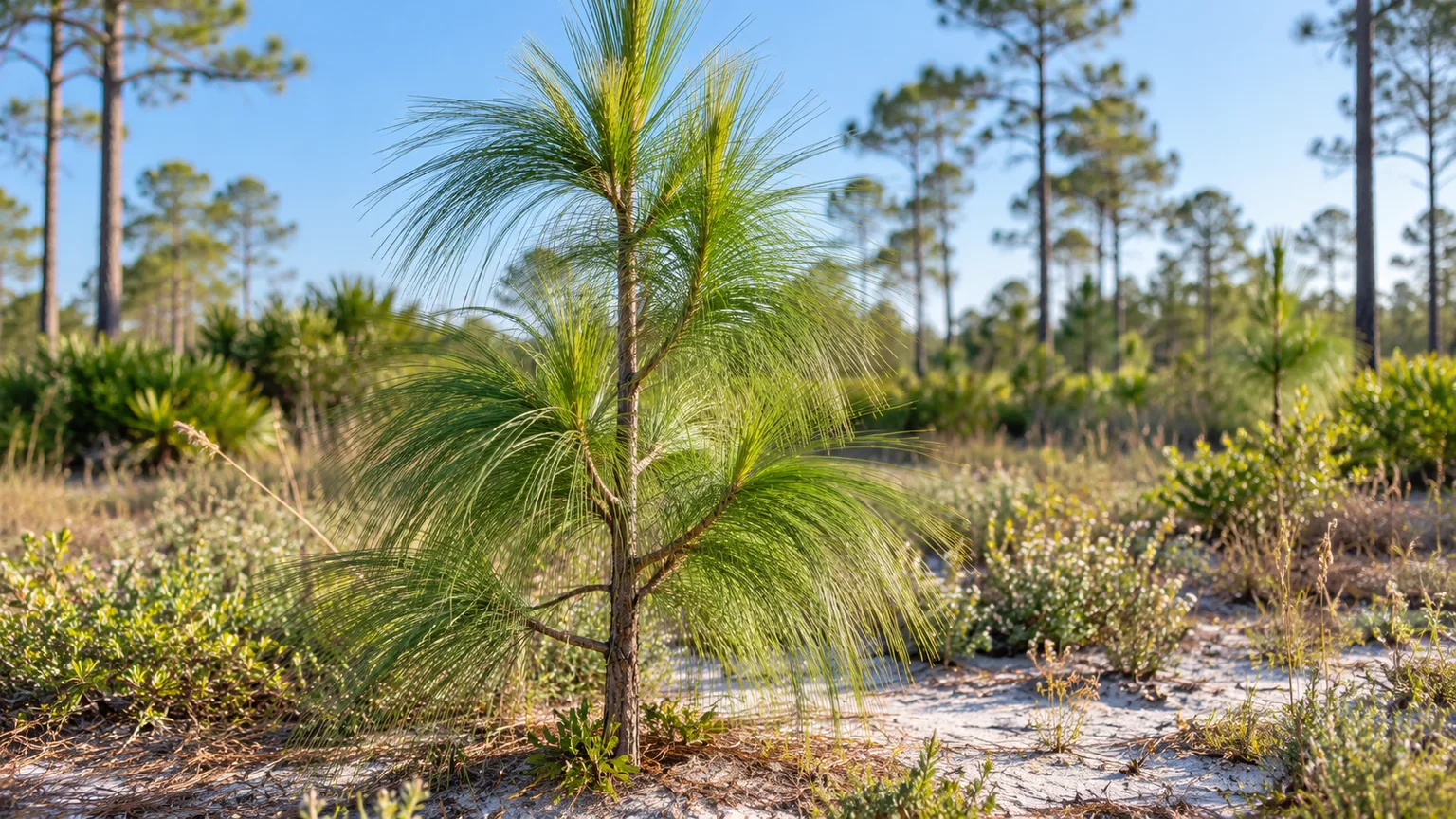
Longleaf pine (Pinus palustris) is a striking evergreen with flexible needles that can reach about 14 inches long, a high, open crown, and large, prickly cones. It is also a tree to choose with care: a mature specimen can reach roughly 60 to 125 feet tall and 30 to 40 feet wide, and a young seedling may spend years looking like a dense tuft of grass before it grows a visible trunk. UF/IFAS Extension Gardenia
The simplest care formula is full sun, well-drained soil, room to grow, and careful establishment. Longleaf pine tolerates drought after it has developed a substantial root system, but a new planting still needs attention to soil moisture and competing grass. Before buying one, make sure the yard can accommodate an eventually towering tree and that your local climate and soil are a reasonable match.
Choose the right home for longleaf pine
Longleaf pine is native to the southeastern United States, especially the Coastal Plain, and is best treated as a regional native tree rather than a universal landscape evergreen. The species occurs across a broader range of landforms than a narrow “sandy soil only” rule suggests, but it performs best with abundant light and drainage that lets excess water move away from the roots. A local native nursery, county Extension office, or state forestry service can help confirm whether the species and seedling source fit your area. USDA Forest Service, Silvics of North America
In a large yard, park-like property, or open woodland edge, the long needles, sculptural bark, and airy mature crown can make it an excellent specimen. It is a poor choice for a small lot where the crown would need repeated shortening, or where branches, cones, resin, and falling needles would constantly land on a roof, driveway, or narrow walkway. The best time to reject a tree is before the planting hole is dug.
Know the grass stage so slow growth does not alarm you
A newly planted longleaf pine may look like a mop of long needles sitting on the soil, with little or no visible trunk. That is its grass stage, a normal juvenile phase in which the seedling invests heavily in its root system and keeps its growing point protected within a tuft of needles near the ground. The form can look more like an ornamental grass than a tree, but it is not a sign that the seedling has been mislabeled or forgotten to grow.
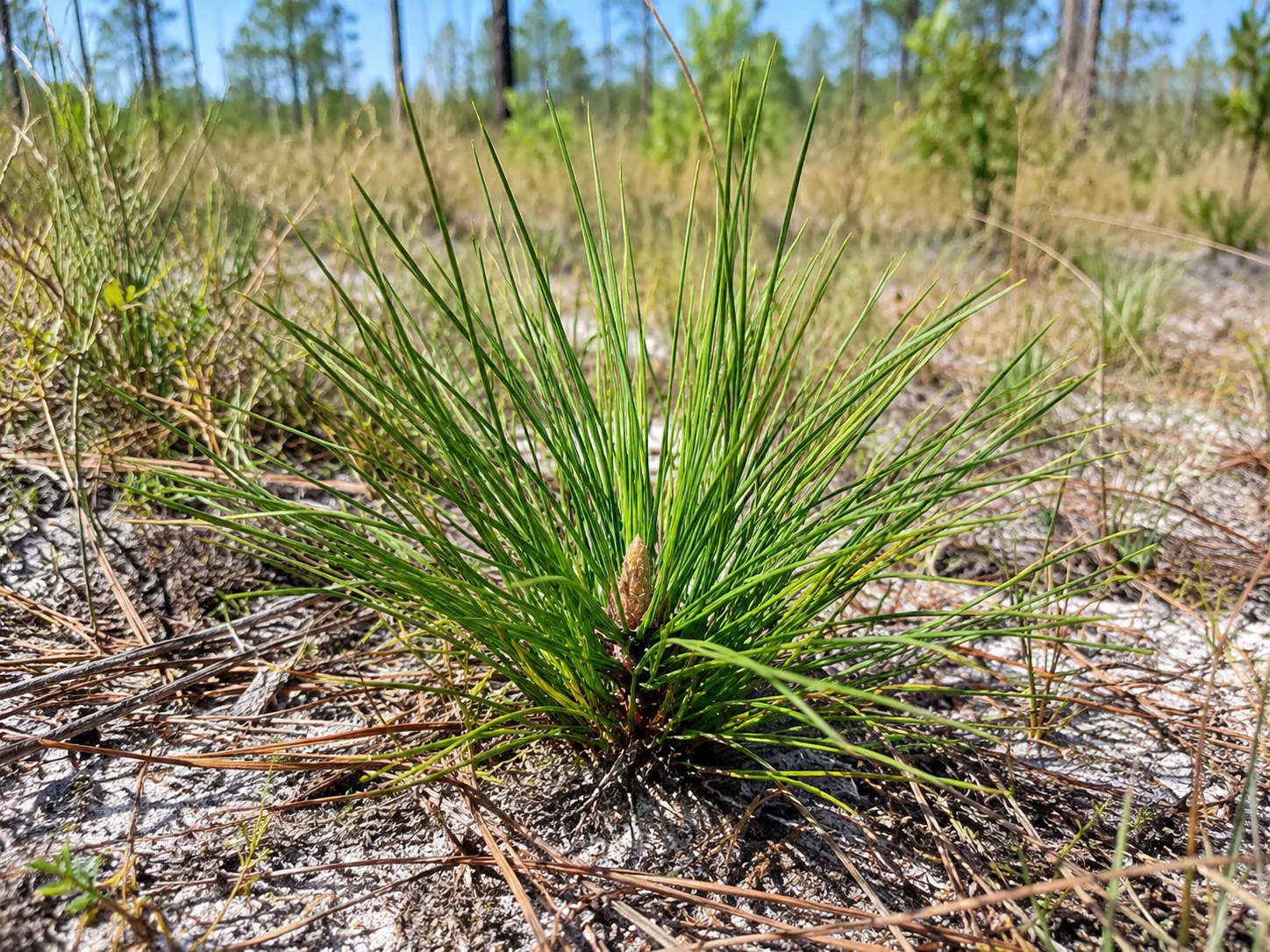
The phase commonly lasts several years. UF/IFAS describes a typical five-to-seven-year grass-like period, while the USDA Forest Service notes that seedlings can emerge from the stage much sooner or persist much longer depending on conditions. Shade and competition for water and nutrients can delay upward growth, so a seedling that remains tufted is a reason to check light, weeds, drainage, and planting depth before trying fertilizer. UF/IFAS Extension USDA Forest Service
Once the tree begins “bolting,” it can shift into faster vertical growth and a bottlebrush-like juvenile shape. Do not use the seedling’s first-year height as the main test of success. Look instead for a living, firm central bud, flexible green needles, and gradual increase in the seedling’s root-collar diameter; a visibly damaged bud, loose root plug, or progressive browning across the whole tuft deserves closer inspection.
Choose a site that suits its mature size and roots
The adult canopy is the most important design constraint. Longleaf pine is not a foundation shrub or a narrow screen: its mature crown may span 30 to 40 feet, and the main stem may eventually rise above nearby houses and most utility wires. UF/IFAS recommends it for large landscapes with plenty of overhead space; it also cautions that needle drop may be unwelcome next to pavement. UF/IFAS Extension
Sun, soil, and drainage
Choose an open position with full sun for the strongest growth. Longleaf pine can tolerate some partial shade, but it is a light-demanding species; heavy shade and dense turf or shrub competition can hold a seedling in its grass stage. In a restoration planting, forest managers may make more involved decisions about canopy density, fire, and understory species. A home gardener can start with the simpler rule: give a single specimen direct light and do not bury it in a crowded bed.
Well-drained sandy or loamy soil is a reliable fit, but texture alone does not decide success. Longleaf pine can adapt to a range of soil types, including some clay, while prolonged standing water and compacted construction fill still make establishment harder. If a spot stays soggy long after rain or has a shallow layer of fill over hardpan, choose another site rather than trying to “fix” the hole with a small pocket of rich potting mix. UF/IFAS Extension Clemson Extension
Soil pH is often naturally acidic in longleaf’s native habitats, but do not add sulfur or other acidifiers without a soil test. The tree’s native distribution reflects local climate and soils, not a requirement that every garden bed be forced into one narrow pH range. If your site is outside the species’ native region or has alkaline soil, ask a local horticulture professional whether longleaf is a sensible choice there.
How much space to leave
Measure the place where the crown will eventually be, not the width of a one-gallon seedling. A 30-to-40-foot canopy means planning for a clear circle at least that wide, with additional breathing room if the branches must stay away from a building or road. Avoid planting under overhead wires or where future tree work would require regular topping; if there is no suitable location, select a smaller native tree.
The root system also needs space beyond the nursery plug. Avoid routinely tilling, trenching, or paving through the future root zone, and protect a young tree from lawn-mower and string-trimmer injuries. Longleaf’s taproot is part of why an established tree can handle dry spells, but it also means that damaging the root system during planting or construction can set the tree back. USDA Forest Service
Buy the right kind of seedling
Most home gardeners will have the best results with a healthy nursery-grown seedling rather than digging a wild plant or trying to raise a specimen from seed. Longleaf’s early root development and juvenile growth make transplanting wild seedlings difficult, and seeds do not stay viable as reliably as some gardeners expect. Look for a reputable nursery or forestry supplier that identifies the tree as Pinus palustris and can explain how its stock was grown.
There is a useful distinction in the advice about container-grown trees. Forest-reforestation guidance often favors containerized plug seedlings because the intact root plug can make handling easier and broaden the planting window. That does not mean every large tree that has sat in a decorative nursery pot is a good purchase: Alabama Cooperative Extension warns that potted landscape specimens may become root-bound and tip as they mature. Ask whether you are buying a purpose-grown plug seedling or an older retail potted tree, and inspect the roots for severe circling or spiraling. USDA Forest Service Alabama Cooperative Extension System
Bare-root and container stock both require careful handling. Bare-root seedlings are usually planted during the dormant season, with roots kept moist and protected from sun and wind between nursery and ground. Container plugs are easier to handle without exposing roots, but they still need to be set at the right depth and watered in. Ask the supplier for regional timing advice; in the Southeast, planting typically begins in the cool season when the soil has adequate moisture rather than according to one fixed date for every county. NC State Extension Texas A&M Forest Service
Plant it at the correct depth
Poor planting depth is an avoidable reason for longleaf seedlings to struggle. For a container plug, keep the terminal bud above the soil and do not bury the entire plug deeply; regional instructions vary slightly, so follow those supplied for the stock and soil. Texas A&M’s planting guide places a container plug slightly above ground level, while NC State’s general pine guidance emphasizes the root collar at or very slightly below grade for longleaf and covering the top of a container to prevent the plug from drying. Together, these instructions point to a practical goal: keep the root collar close to the finished soil line, cover the root mass enough to prevent exposed roots from drying, and never bury the growing bud. Texas A&M Forest Service NC State Extension
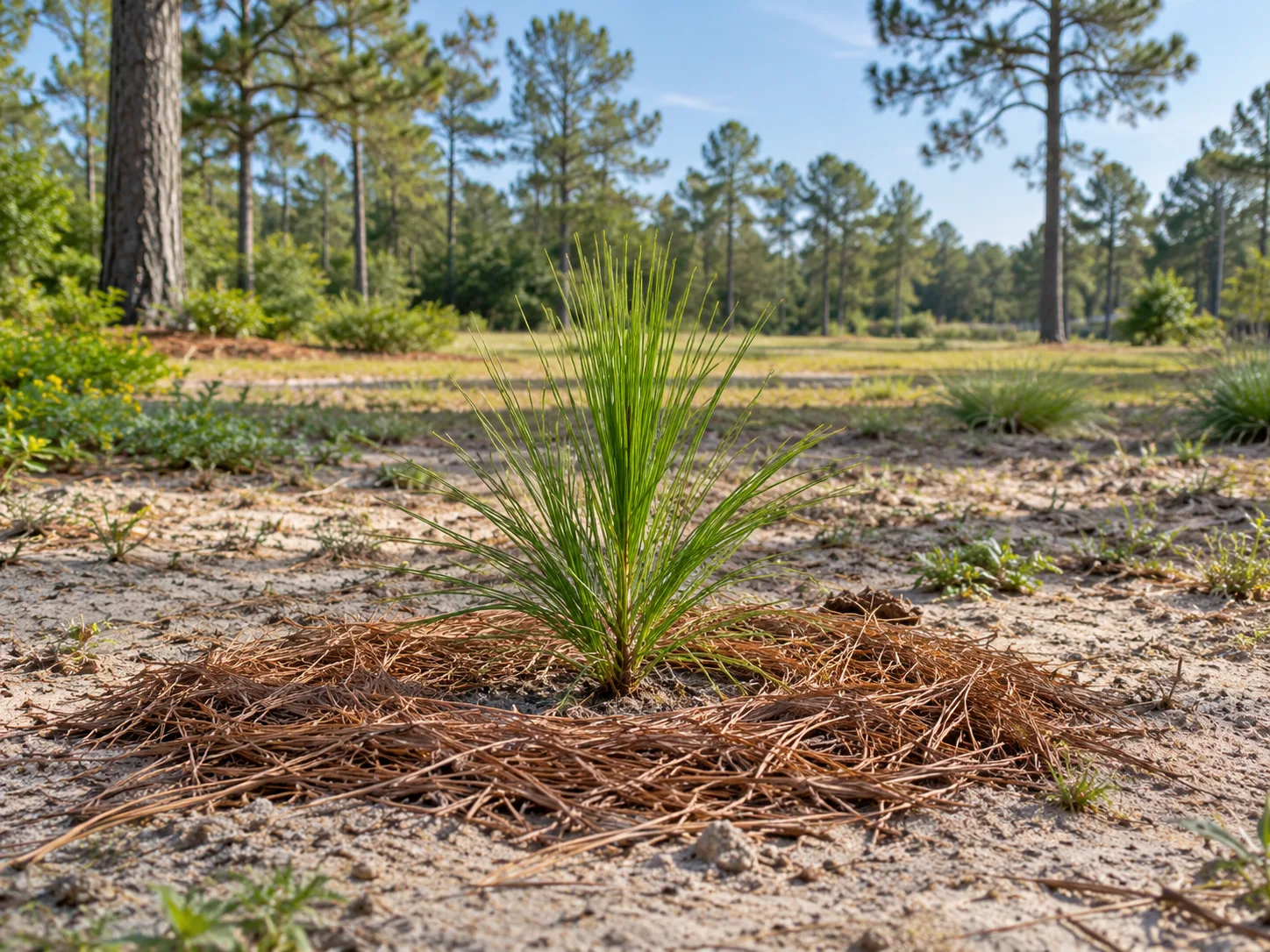
Before planting, water a container plug so it is evenly moist. Dig a hole just deep enough for the root plug and wide enough to place it without bending or crushing the roots; for bare-root stock, make a straight planting slit or hole that lets the roots hang naturally rather than curling into a J shape. Set the seedling, backfill with the site soil, and firm the soil gently so there are no large air pockets. Do not compact it into a hard bowl around the stem.
Water slowly immediately after planting to settle soil around the roots. Recheck the final depth after the soil settles: if the bud or root collar is buried, lift and reset the seedling while the planting is still fresh. A shallow, broad mulch ring can protect the soil and suppress grass, but keep the material pulled back from the stem so it does not conceal the base or hold dampness against the bark.
Water through establishment
Longleaf pine is drought-tolerant once established, but that reputation does not apply to a seedling that has just left a nursery. Early roots are still confined to a small area, and the root plug can dry out faster than the surrounding soil. UF/IFAS advises frequent watering while seedlings establish; the exact interval depends on rainfall, temperature, soil texture, seedling size, and whether the stock is bare-root or container-grown. UF/IFAS Extension
Use the soil as your guide instead of watering every day by habit. Feel or probe the root zone a few inches below the surface near the plug: if it is beginning to dry, water slowly enough to moisten the root ball and surrounding soil; if it remains wet, wait. Sandy sites may dry quickly, while clay can remain saturated and should not be repeatedly watered just because the surface looks dry. As the tree grows and roots spread beyond the original plug, reduce supplemental water, but give it a deep soak during an extended dry spell if the root zone is drying out.
Do not confuse drought tolerance with a preference for constant dryness. Prolonged drought can stress a newly planted tree, while waterlogged soil deprives roots of oxygen. The best routine is responsive: inspect, water when the root zone needs it, and confirm that the site drains between irrigation events. A mulch ring helps slow evaporation, but mulch cannot compensate for a planting spot that floods after rain.
Keep grass and weeds from competing
Grass competes with a young pine for moisture and nutrients exactly where the seedling’s developing roots are trying to expand. Keep turf and aggressive weeds out of a broad ring around the tree, then widen that ring as the crown and root system grow. Hand pulling, shallow cutting, or a suitable mulch layer is often enough for a single garden specimen; avoid deep cultivation near the stem, where it can sever roots.
Competition control does not mean stripping the yard bare or applying herbicide by default. Longleaf pine habitats support a diverse ground layer, and a residential planting can be paired with compatible native plants once the pine is established. During the first few seasons, however, keep competing vegetation from crowding the seedling itself. If you manage a larger acreage, contact a forester or Extension specialist before applying herbicide or planning a prescribed burn; those treatments depend on plant stage, weather, fuel, site conditions, and local regulations.
Fire is an important part of natural longleaf ecosystems, but backyard care is not the place to improvise a burn. A young grass-stage seedling is not invulnerable to fire, and conditions that are safe for a managed forest can be hazardous near homes, roads, and neighboring properties. For one landscape tree, use non-fire competition management unless local forestry professionals have designed and approved a larger property plan. USDA Forest Service University of Florida IFAS Extension
Fertilizer and routine care
Do not add fertilizer automatically at planting. Longleaf pine is adapted to relatively low-fertility sites, and feeding it without evidence of a deficiency may stimulate competing grass or weeds rather than solve the tree’s real problem. First check the basics: enough sun, a living terminal bud, planting depth near grade, adequate moisture, and freedom from standing water or lawn competition.
If a soil test or a local Extension recommendation identifies a nutrient issue, use that guidance and keep fertilizer away from the trunk. Do not spread lawn fertilizer over the root zone simply because the tree is in a lawn. Avoid placing a thick layer of compost against the trunk as well; a thin, surface mulch ring is a better way to conserve moisture and limit weeds without changing the planting hole into a rich, wet pocket.
Routine maintenance is light once the tree is established. Inspect after strong storms for a cracked leader or hanging branch, keep equipment from striking the bark, and remove weeds or vines that climb into the young crown. A mature longleaf can drop needles, large cones, and occasional branches, so plan for cleanup and safe access when choosing the location.
Prune for a strong, natural crown
Most single landscape longleaf pines need little pruning. Preserve the natural central leader and the long, whorled branches that give the tree its distinctive open outline. Remove only dead, broken, or rubbing branches when they are small and reachable; if you must shorten the tree every year to keep it away from a building, the planting site is too tight.
When a branch must be removed, make the cut just outside the branch collar—the slight swelling where it joins the trunk. Do not cut flush into the trunk, and do not leave a long stub. Cutting into the trunk damages the protective branch collar, so leave the natural collar intact. Avoid heavy pruning on a young tree, which reduces the live foliage that supports establishment. Alabama Cooperative Extension System
Large-scale longleaf forestry may include careful limb pruning to produce high-quality timber, with rules about tree height, retained crown, timing, and cut position. Those practices are not a template for shaping a backyard specimen. Do not top the tree to control height, and do not climb it or cut limbs near a roof or power line. Hire an insured arborist for large branches, storm damage, or any work beyond safe ground reach.
Seasonal needle drop or a problem?
Longleaf pine is evergreen, but it does not keep every needle forever. Needles persist for multiple seasons, and older interior needles naturally yellow or brown and drop as the tree replaces them. A modest amount of shedding—especially older needles rather than the newest growth—does not by itself mean the tree is sick. University of Georgia Cooperative Extension
Look at which needles are changing and where. If older needles nearer the interior are affected while the newest tuft stays green and firm, observe the tree and clear only what needs to be removed from paths or lawns. If the terminal bud dies, an entire branch turns brown, the whole crown fades quickly, or the seedling loosens in the soil, investigate water, planting depth, root damage, and possible pests rather than assuming normal turnover.
Weather can change the timing of needle browning, so use progression as well as season. A short dry spell may make a new planting look dull before the older needles begin to shed; the soil check tells you whether it needs water. Needles that brown on the side facing a hot driveway or after construction may point to heat, compaction, or root disturbance. Photograph the same branch over a few weeks if the pattern is unclear, and get a local diagnosis when decline continues or spreads.
Pests, disease, and stress signals
Longleaf pine is generally resilient, but “resistant” does not mean immune to every insect, disease, or injury. UF/IFAS lists borers, sawflies, pine-shoot moths, and pine weevils among possible pests, and notes that bark beetles may attack older trees under stress. Keep the tree healthy by preventing mower wounds, avoiding root-zone compaction, and watering a new planting through dry periods; these measures reduce stress but cannot guarantee a pest-free tree. UF/IFAS Extension
Check for a specific sign before choosing a treatment. Chewed or missing needles, clusters of webbing, resin on the trunk, holes, a dead top bud, and a spreading branch dieback are different clues and do not all call for the same response. Sawfly larvae may feed in groups, while a weevil injury commonly targets the terminal leader; bark beetle activity is more likely to warrant prompt professional evaluation on a declining mature tree. Avoid spraying a broad insecticide without identifying the pest, since treatment timing and permitted products vary and may harm beneficial insects.
Poor drainage, shade, lawn competition, drought, compacted soil, and planting injuries can look like disease because each can cause weak growth or needle discoloration. Inspect the root zone and the pattern of damage first. For rapidly worsening symptoms, resinous cankers, holes in the stem, or a large affected tree, contact your county Extension office or a qualified arborist; do not remove large limbs or apply a pesticide based on a photo alone.
Can you use longleaf pine needles as mulch?
Yes. Fallen longleaf needles, often sold as pine straw, make a light, attractive mulch that helps conserve moisture, limit weeds, and moderate soil temperature. Pine needles are acidic when fresh, but using them as a surface mulch does not usually lower garden-soil pH enough to measure; do not treat them as a substitute for a soil acidifier or assume they will make a bed suitable for acid-loving plants. University of New Hampshire Extension
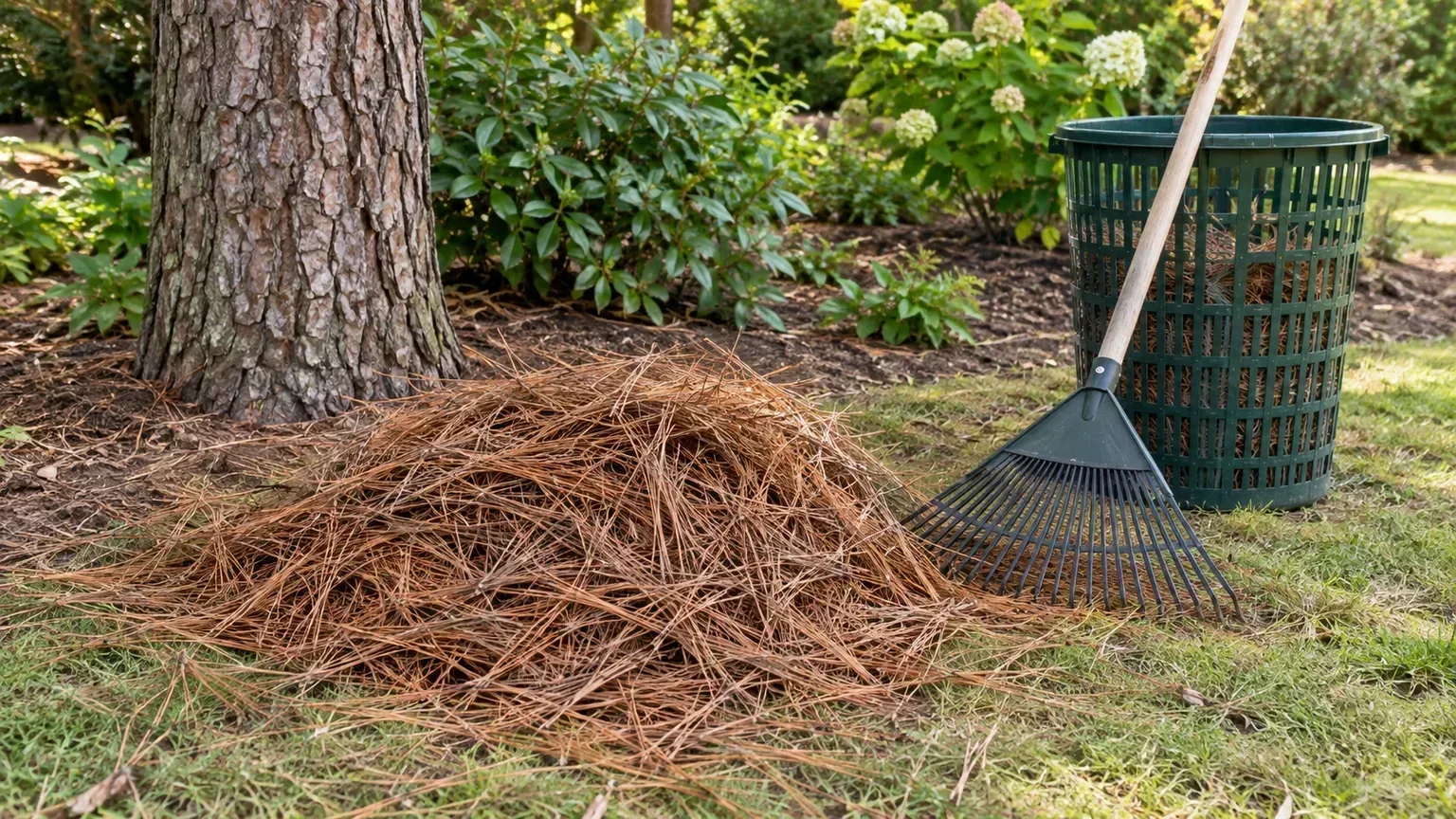
For the tree itself, spread a shallow layer over the root zone and leave a clear gap around the stem. Pine straw can loosen and settle over time, so top it up only when the soil is becoming exposed rather than piling new material over a thick old layer. Keep fallen needles off drains and walkways, and consider the cleanup before planting near a pool, deck, or paved entrance; the same long needles that make the tree distinctive can make a small hardscape inconvenient.
A seasonal care plan
In the cool planting season, check that the site is open, well drained, and large enough for the mature tree. Plant when the soil has adequate moisture, handle bare roots or the container plug carefully, set the root collar close to grade, and water the tree in. If local weather is hot or dry, delay planting or increase monitoring rather than relying on the calendar alone.
During spring and summer, keep the root zone evenly moist while the tree establishes and inspect it after dry, hot weather. Remove grass and weeds from the mulch ring, but do not cultivate deeply or fertilize by habit. Watch for a firm terminal bud and healthy new needles; remember that a seedling can remain tufted for years before beginning obvious upward growth.
In fall and winter, distinguish routine older-needle shed from branch-wide browning or a dead leader. Remove only dead or damaged branches that are safe to reach, replenish a thinning mulch layer without touching the trunk, and check for storm damage. Longleaf pine does not need special winter wrapping across its suitable native range, but seedlings planted near the colder edge of their range may need locally specific siting advice and protection from severe ice or browsing.
Common longleaf pine growing mistakes
The biggest mistake is planting a tree that has no long-term room. A seedling looks small enough for almost any border, but the adult crown can fill a broad area and the trunk will outgrow most residential structures. Set it away from buildings, overhead lines, paved surfaces, and narrow paths, and choose another species if the only available spot requires repeated pruning.
The next frequent problems are burying the seedling too deeply, allowing turf to crowd the root plug, and treating the grass stage as a failure. Correct depth lets roots establish without burying the growing point; a weed-free ring reduces immediate competition; and patience is part of the species’ normal juvenile biology. Check these conditions before buying fertilizer or searching for a disease.
Finally, do not apply forest-management advice uncritically to a backyard specimen. Longleaf ecosystems depend on carefully timed disturbance, but a home landscape tree does not need a DIY controlled burn, routine topping, or repeated limb removal. Follow local Extension guidance for local threats and treatments, and let the tree’s natural form and seasonal litter be part of the design you chose.
Conclusion
Longleaf pine is a rewarding choice when you have a sunny, well-drained site and room for a tree that may eventually tower above the landscape. Its grass-like first years are normal, but establishment still depends on sound nursery stock, correct planting depth, consistent checks on soil moisture, and control of nearby turf and weeds.
Plan for the mature crown before planting, then keep care measured: water a new tree when its root zone begins to dry, avoid routine fertilizer, prune sparingly, and read needle drop in context. If the site is too cramped or wet, choose a better-suited tree. If it fits, a longleaf pine can become a distinctive, long-lived native specimen with an open crown and striking needles.



