How to Grow and Care for Flower of Bristol in Your Garden
Grow Flower of Bristol in sun and evenly moist, well-drained soil. Learn when to plant, start seeds, stake tall stems, and manage self-sowing all season.
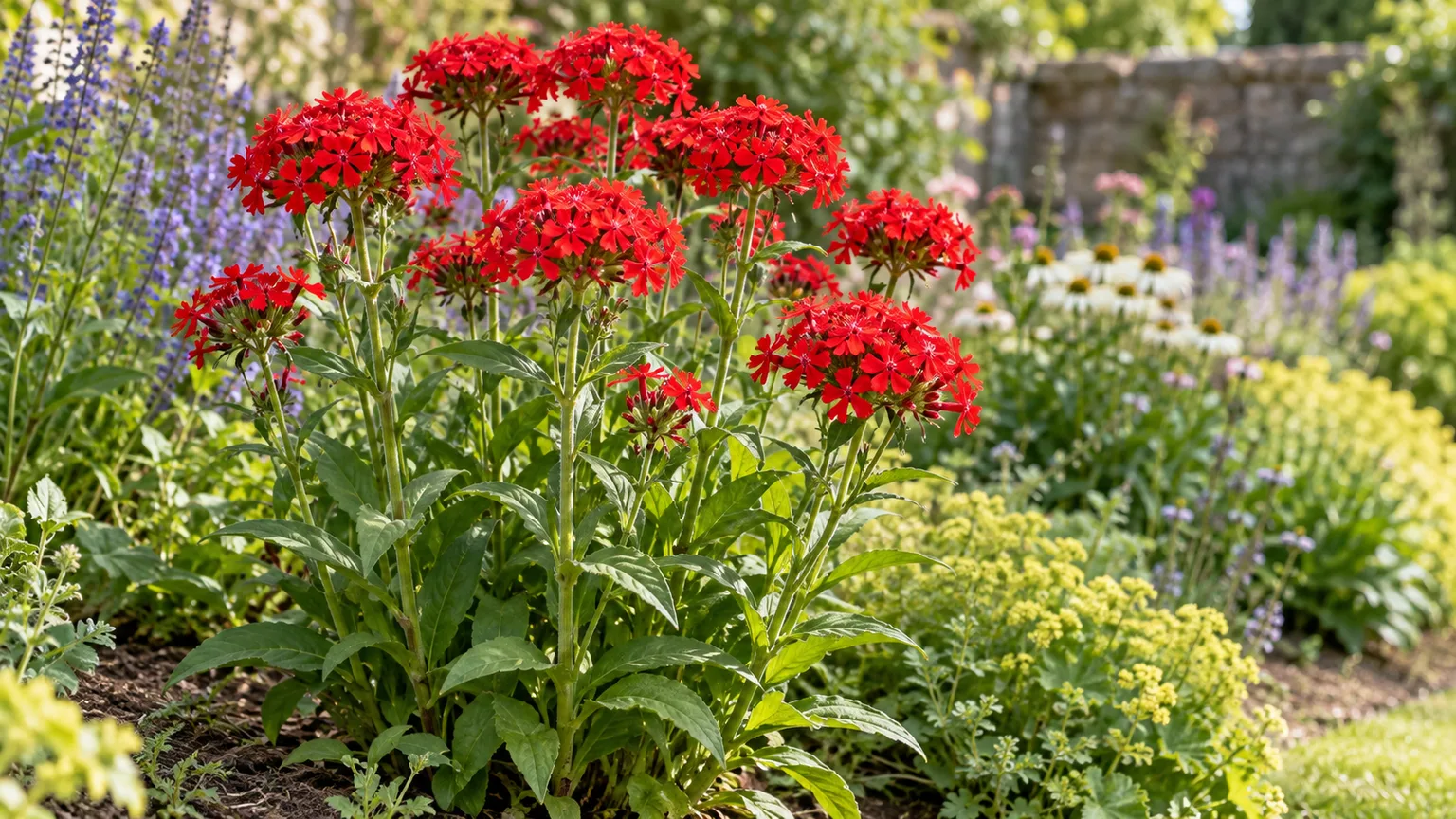
Flower of Bristol earns its place in a border with color you can see from across the garden: sturdy stems rise above green foliage and carry dense scarlet flower clusters in early to midsummer. It is a straightforward perennial once its two main needs are met—bright light and soil that stays lightly moist without turning soggy. Its height, brief main bloom, and willingness to set seed are the details that determine whether it becomes a garden favorite or a plant you have to keep correcting.
Flower of Bristol at a Glance
| Need | Practical target |
|---|---|
| Botanical name | Silene chalcedonica; often sold as Lychnis chalcedonica |
| Plant type | Herbaceous perennial; some plants behave as short-lived perennials or biennials |
| Mature size | About 20–40 inches tall; roughly 12–20 inches wide, depending on growing conditions |
| Light | Full sun is best; partial shade is tolerated |
| Soil | Moisture-retentive but well-drained; loam or sandy soil is suitable |
| Bloom | Usually early to midsummer; exact timing shifts with climate |
| Flowers | Dense, rounded clusters, most often scarlet red |
| Propagation | Seed, division, or basal cuttings |
| Main watch-outs | Drying out during establishment, waterlogged crowns, flopping stems, aphids, and slugs |
NC State Extension describes the plant as an upright, deciduous perennial around 20 to 40 inches tall, with summer flowers; the RHS gives a similar upper height of about 1 meter. Use the range as a planning guide rather than a fixed promise: cultivar, soil, light, and local climate all affect final size. North Carolina Extension Gardener Plant Toolbox and RHS Plant Profile support the basic dimensions and growing conditions.
What Flower of Bristol Looks Like—and What It Is Called
The plant is easy to recognize when it flowers. Each upright stem carries a flat-to-domed cluster of many small, vivid red flowers; the deeply notched petals give each bloom a cross-like outline. The leaves are green and oval to lance-shaped, with lower foliage forming a modest base before the taller flowering stems appear. Pink and white forms are also sold, but scarlet is the classic color.
Names vary across seed packets and garden references. Kew accepts Silene chalcedonica as the botanical name and lists the native range from eastern Europe through Siberia to China. You will still see Lychnis chalcedonica on labels and in older plant references; it refers to the same species. “Maltese cross,” “Flower of Bristol,” “scarlet lychnis,” and “Jerusalem cross” are common names. Kew Plants of the World Online confirms the accepted name and range.
Be careful when shopping by common name alone: some references also use “rose campion” for this plant, while rose campion is commonly sold as the related but different Silene coronaria (formerly Lychnis coronaria). Rose campion has conspicuously silvery foliage and magenta flowers; Flower of Bristol has greener leaves and dense scarlet heads. Check the botanical name and a photo of the mature plant if the tag is vague.
Decide If It Fits Your Garden
Choose Flower of Bristol if you have a sunny or lightly shaded border with soil that does not bake dry for long stretches or stay saturated after rain. Its strong vertical stems work well toward the middle or back of a mixed border, where the bright heads can rise above lower plants without blocking a path. It also suits cottage-style planting and makes a useful cut flower.
The trade-off is that it is not a compact, continuously blooming bedding plant. NC State Extension describes the main bloom as early to midsummer and lasting about two to three weeks; the RHS profile says deadheading can prolong flowering, but neither point guarantees a second full flush. Individual clumps may also be short-lived, and plants can renew themselves by seed. NC State Extension lists the flowers as attractive to bees, butterflies, hummingbirds, and other birds; in North America, treat that as a garden nectar benefit rather than a substitute for locally native host plants. The Old Farmer’s Almanac also cautions that Maltese cross can naturalize, so check local guidance if spreading ornamentals are a concern in your area.
Choose a Sunny, Moist-but-Drained Site
Think of the target as a cool, evenly moist root zone with oxygen around the crown. “Moist” does not mean constantly wet: a plant can wilt in a dry spell and still suffer root or crown problems in soil that stays waterlogged. In a low spot where puddles linger, choose a raised bed or another plant rather than trying to fix the planting hole with a little gravel.
Sun and airflow
Aim for at least six hours of direct sun when you can. NC State lists full sun as the preferred exposure and partial shade as acceptable; the RHS also lists full sun to partial shade. In less light, Flower of Bristol may still grow, but flowering can be lighter and stems may stretch or lean. A sheltered position helps tall stems through gusts, but give the plant enough air movement that foliage dries after rain.
In very hot climates, some afternoon shade can reduce stress, especially while a new plant is establishing. Keep enough morning or midday sun for strong flowering, and do not compensate for shade with extra fertilizer—more lush growth will not make weak stems sturdier. If the site is windy, plant it among medium-height companions or plan a discreet support before the stems elongate.
Soil and drainage
Flower of Bristol is more flexible about soil texture and pH than many flowering perennials. NC State lists loam and sand, good drainage, and a broad pH range; the RHS profile also lists chalk, loam, and sand. That is a reason not to over-correct a bed that is already growing plants well. Drainage and summer moisture matter more than chasing a particular pH number.
If your soil is very sandy and dries quickly, blend compost across the bed and mulch lightly after planting to slow evaporation. If it is heavy clay, improve the site broadly with organic matter or plant on a gentle mound; a small pocket of loose compost inside dense clay can hold water around the root ball. Keep mulch a little away from the crown so the base of the stems is not buried.
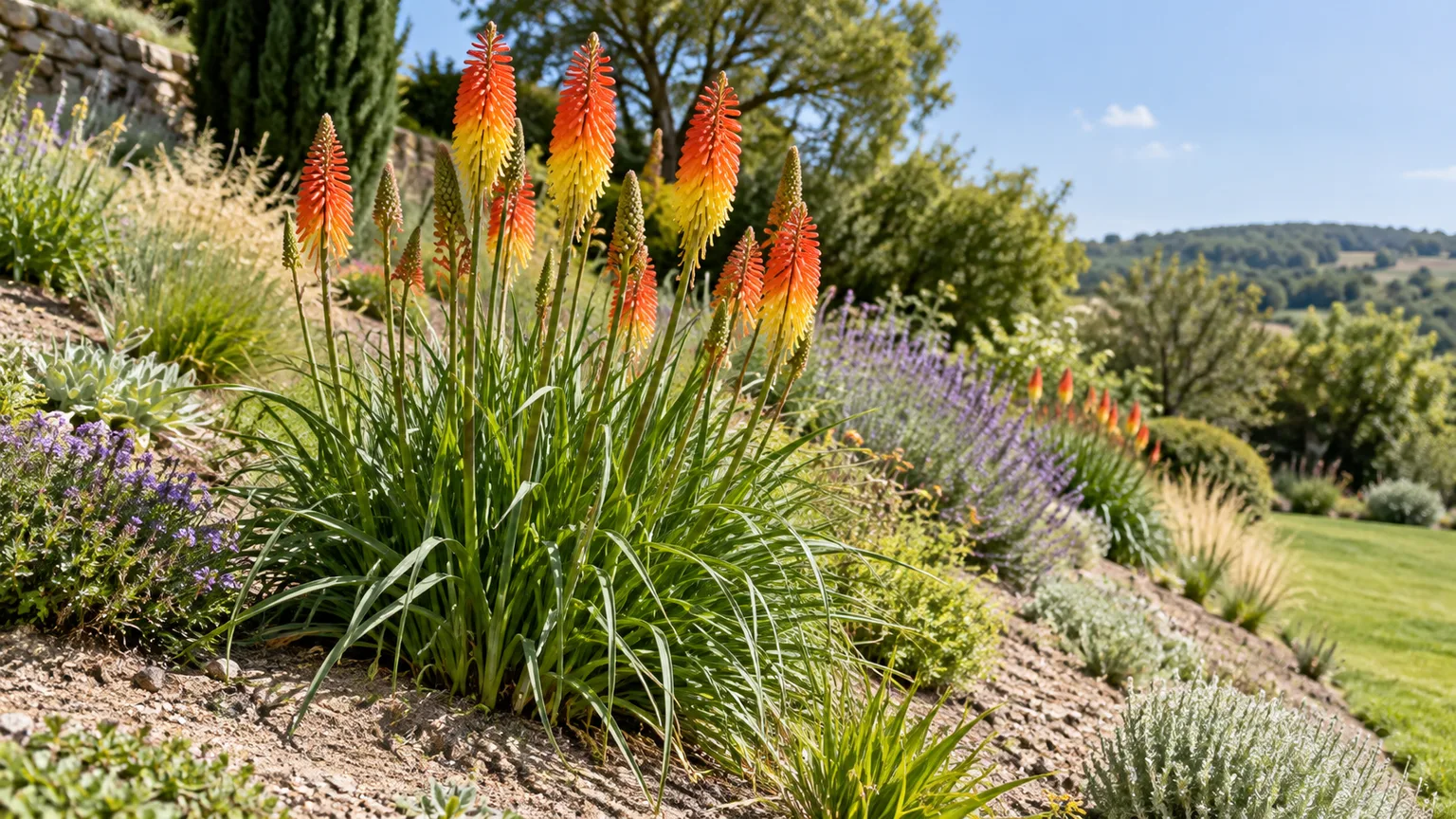
A sunny, open bed gives an upright perennial light and room while helping excess rain drain away.
Planting a Nursery-Grown Flower of Bristol
Plant container-grown starts in spring after the harshest frost has passed, or in early fall where there is enough mild weather for roots to settle before winter. In regions with cold, wet winters, spring is the safer default. Water the pot before planting so the root ball comes out intact, then set the crown level with the surrounding soil rather than burying it.
Allow roughly 12 to 18 inches between plants as a starting point; use more room for a broad cultivar or a humid site where airflow is useful. Water slowly after planting to settle soil around the roots. For the next few weeks, check the root zone every few days and water when the upper inch begins to dry. A small start planted into dry ground needs more attention than an established clump, so do not judge its first-season needs by the plant’s later performance.
Before you dig, think about the mature flower stems and access for maintenance. A single plant can look sparse in a large bed, while a small group at consistent spacing reads as a stronger vertical accent. Place it where you can reach the stems to deadhead or cut flowers without trampling neighboring plants.
Starting Flower of Bristol From Seed
Seeds are a low-cost way to grow several plants and keep a patch going as older clumps fade. Sow fresh seed in a tray or a prepared outdoor bed in spring; mild regions can also sow outdoors in autumn. The RHS Members’ Seed Scheme recommends light covering outdoors and allows up to 30 days for germination at 16–21°C, while RHS Plants says to press its seed onto the surface without covering. Those instructions differ, so do not bury the seed: indoors, press it onto moist mix; outside, use only a fine dusting to keep it from washing away. Keep it evenly damp, and use the timing on your own seed packet when it differs.
Start indoors
Sow about six to eight weeks before your local last-frost date if you want transplant-sized starts for spring. Fill a clean tray or small pots with seed-starting mix, moisten it, then sow the seed thinly and press it onto the surface or barely dust it with fine mix. Keep the surface from drying, but do not leave the tray standing in water. A clear cover can help hold humidity until germination; remove it once seedlings emerge so air can circulate.
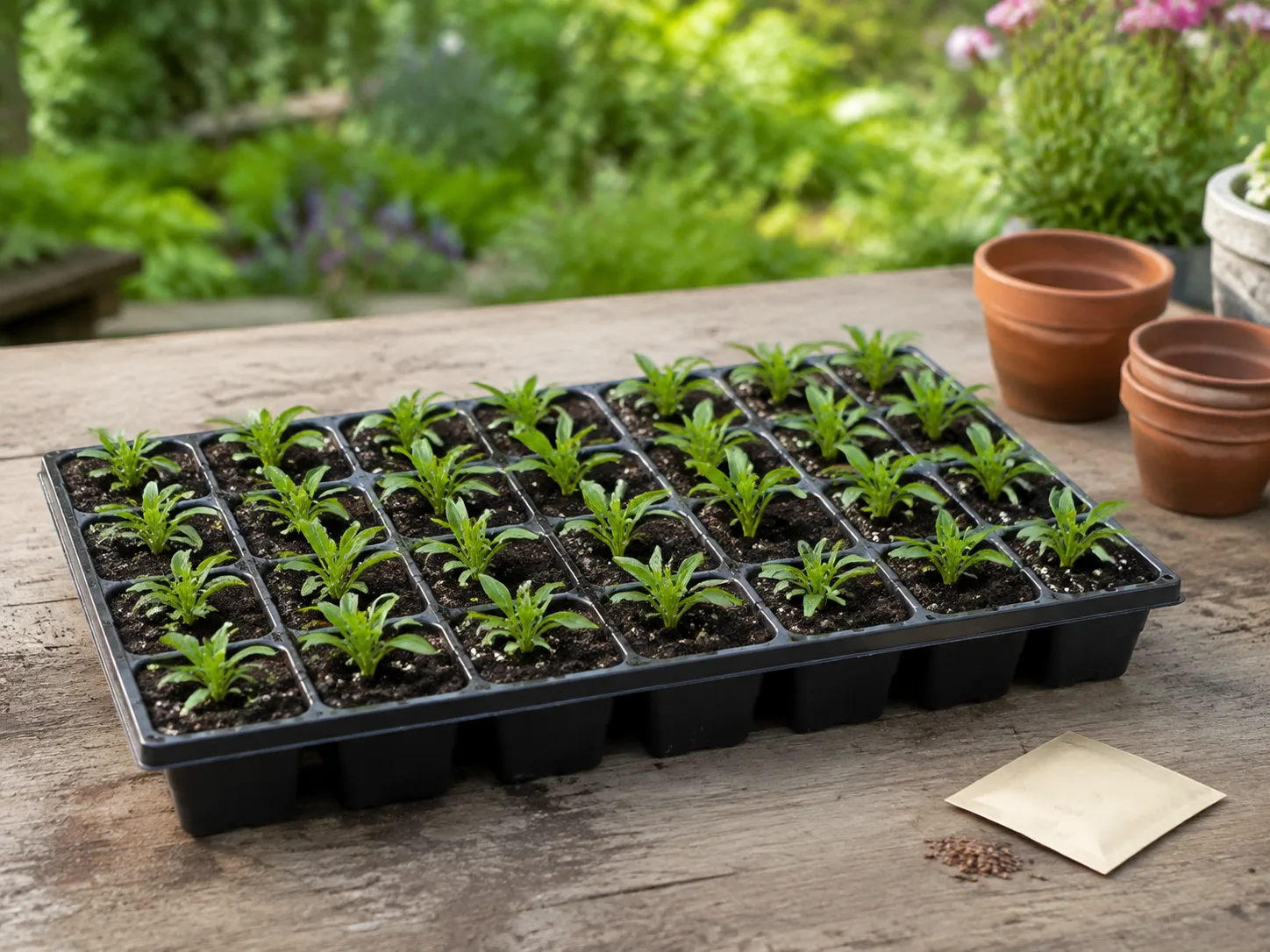
The seedlings need bright light after they emerge. If they grow tall, pale, and threadlike, move the tray closer to a bright window or use a grow light rather than increasing fertilizer. Pot individual seedlings on when they are large enough to handle, then harden them off gradually outdoors for a week before planting. Set them out after frost danger has passed and keep them watered while new roots expand.
Do not be alarmed if a young plant makes a low rosette instead of a flower stalk in its first season. Early indoor sowings may flower in year one under favorable conditions, but late sowing or direct sowing often produces foliage first and flowers later. Keep the rosette weeded and watered through dry spells; it is building the plant that will bloom.
Direct sow outdoors
Direct sow in spring once the soil can be worked and severe frost has passed; in mild climates, autumn sowing is also an option. Rake the surface smooth, scatter seed thinly, and press it into the soil with a light dusting of fine compost. Mark the row and keep the top layer consistently damp until seedlings are established; a gentle spray or fine watering rose is less likely to wash seed into a clump than a hard stream.
When seedlings have several true leaves, thin them to about 12 to 18 inches apart. Crowding may look fuller at first, but it makes it harder to keep stems upright and can prolong leaf wetness in humid weather. If you want a loose, naturalized drift, leave a few seedlings where they land and remove the ones that crowd paths or smaller plants.
Watering and Feeding Through the Season
Water deeply when the root zone begins to dry, then let excess water drain away. During the first growing season, check more often because the root system is still small. Established plants usually need less intervention, but they are not drought specialists: NC State Extension describes the species as needing consistent moisture, and RHS Plants recommends watering during dry spells, especially in the first season.
In hot, dry weather, water at soil level in the morning so the root zone gets moisture before the day heats up. If leaves wilt in the afternoon but recover overnight, check the soil before adding water; heat can cause temporary droop even when the roots are adequately moist. If the soil is dry several inches down, give a slow, thorough soak. If it is wet, improve drainage or reduce irrigation instead of adding more water.
A layer of compost in spring is usually enough feeding for an established border plant. Flower of Bristol is not a reason to use repeated high-nitrogen fertilizer, which can push soft leafy growth that is more likely to lean. If plants are weak across the bed, check light, drainage, and root competition before reaching for a fertilizer; a soil test is more useful than a guess when nutrient deficiency is plausible.
Keep Upright Stems From Flopping
The flower heads are carried high on stems that can reach about 3 feet or more, so wind, shade, crowding, and soft growth can all contribute to leaning. NC State Extension and the RHS profile both note that the height may call for staking, particularly in exposed sites. The easiest fix is to support the plant early, before stems are heavy and already bent.
Use a low peony ring or a few slender stakes around the clump while spring shoots are still short. As stems rise, guide them through the support or loosely tie a small bundle with soft garden twine; leave room for stems to move. For a single stem that has started to tilt, place a stake just outside the root zone and attach the stem at two points with loose loops. Tight wire or a late, rigid tie can scar stems and make them snap in wind.
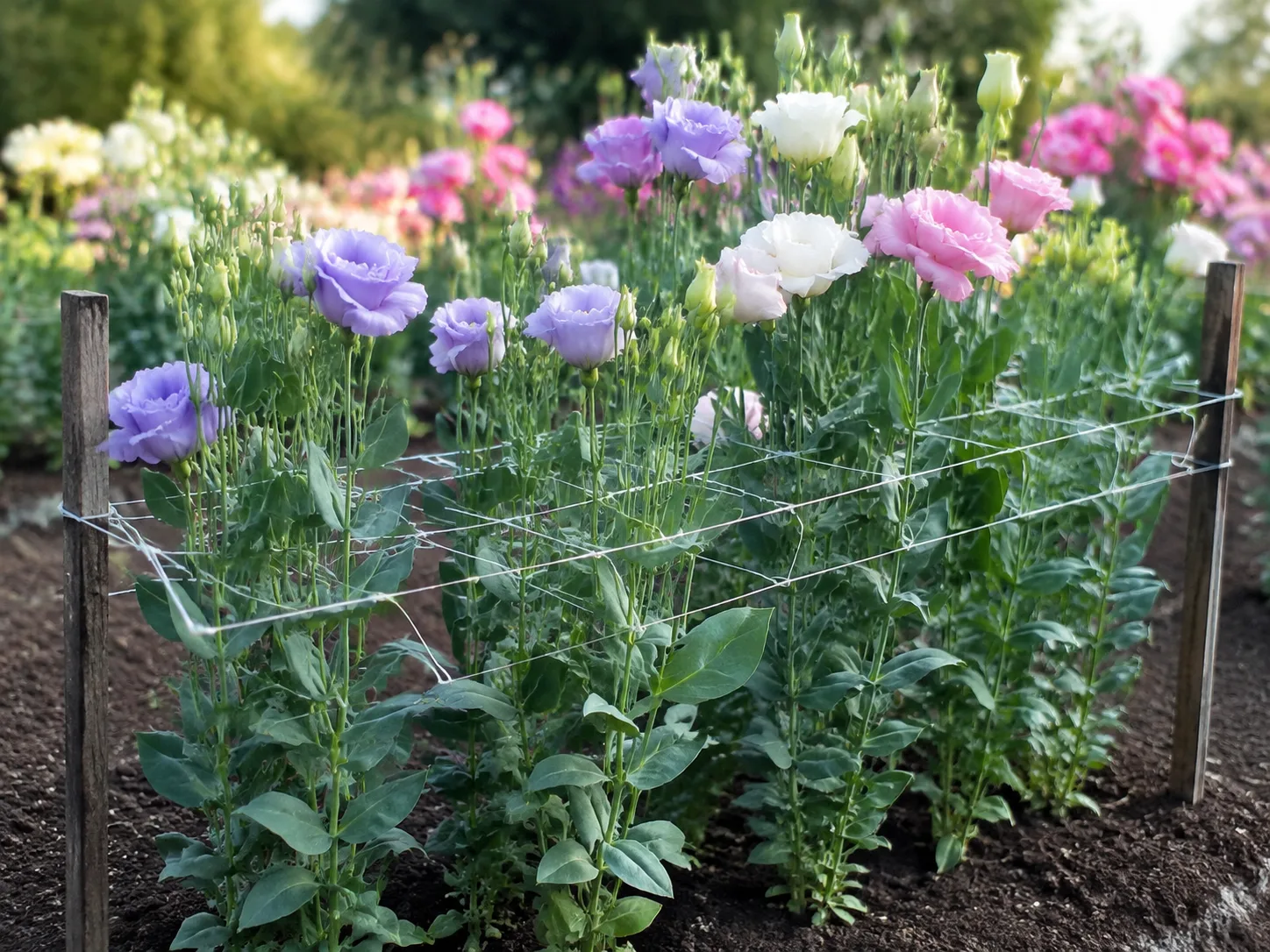
A grid or ring works best when installed early; in a small border, a discreet stake and loose tie can do the same job.
Support fixes the current season’s posture, but also check the cause. A plant in deep shade, over-fertilized soil, or an exposed wind tunnel is more likely to flop again. Move or divide it in a better location if the same stems lean every year.
Deadheading, Seed Saving, and Self-Sowing
When the first flower cluster fades, decide what you want next. Remove the spent stem to the next healthy side shoot or down to the basal foliage if you want a tidier plant and a chance of later side blooms. Cutting spent flowers can extend the display, as the RHS profile notes, but it will not turn a short-season perennial into a flower that blooms continuously all summer.
If you want self-sown replacements, leave a few flower stems to form seed capsules and remove the rest. Capsules are ready when they dry and turn tan, then begin to open; collect them on a dry day into a paper bag and let them finish drying indoors. Store clean seed in a labeled, cool, dry place. Seedlings may appear close to the parent or in nearby open soil, so keep a few and pull the extras while small.
This selective approach gives you more control than either extreme. Deadhead everything and you may have to sow or divide plants to maintain the patch. Leave every head and seedlings can crowd lower perennials. The Almanac describes Maltese cross as able to self-seed and naturalize; that does not mean it is invasive in every region, but it is a good reason to check local plant guidance before letting seed spread widely.
At the end of the season, leave foliage until it yellows or dies back naturally. Remove collapsed or diseased stems, then cut the remaining dead growth to the base in fall or early spring. Do not cut healthy foliage merely because flowering has finished; it is still helping the plant replenish its roots.
Divide or Replace an Aging Clump
Divide an established clump in early spring when new shoots are just appearing. Water the plant the day before, lift around the outside of the crown, and separate the root mass into sections with healthy shoots and roots. Replant divisions promptly at the same depth, water them in, and keep the soil evenly moist while they re-establish. A sharp spade or two garden forks can separate a dense crown with less tearing than pulling by hand.
Division is useful when the center thins, the clump becomes too wide, or you want to move some plants to another bed. It is not required every year. If a plant flowers and then declines, that may be normal for an individual rather than proof that the whole patch is failing; retain seedlings or sow fresh seed so the planting renews itself. The RHS profile recommends division or basal cuttings in early spring, while NC State Extension also includes division and seed.
Growing Flower of Bristol in a Container
The plant is most at home in the ground, where roots have room and moisture levels change more slowly. You can grow it in a container if the pot is broad and heavy enough to resist tipping, has open drainage holes, and is large enough to hold the root ball without drying every few hours. Use a free-draining potting mix and place the pot in a sunny, sheltered spot.
Container soil dries faster than a garden bed, so check it during hot spells rather than following a fixed weekly schedule. Water until excess flows from the drainage holes, then empty any saucer. Use a small ring or stake before the flower stems reach full height; the container’s narrow base makes a top-heavy plant easier to topple. In cold climates, a pot also exposes roots to colder temperatures than the ground, so move it to a sheltered location or insulate the container for winter.
Troubleshoot Weak Growth, Pests, and Disease
| What you notice | Likely cause | First useful step |
|---|---|---|
| Tall stems lean toward one side | Too much shade, wind, crowding, or unsupported height | Improve light or shelter; install a ring or loose stake early |
| Leaves wilt during a dry spell | Root zone has dried, especially in a new planting | Check soil below the surface and water deeply if it is dry |
| Plant wilts while soil remains wet | Poor drainage or a crown kept saturated | Stop extra watering and improve drainage; avoid burying the crown in mulch |
| Flowering is sparse | Insufficient sun, young plant, or recently transplanted roots | Give it more light and a season to establish before feeding |
| Chewed leaves or distorted new growth | Slugs or aphids | Inspect at dusk and on new growth; remove pests and keep the bed tidy |
NC State Extension notes that aphids and slugs may feed on Flower of Bristol and that the plant is generally disease-free. If leaves have holes but the stems are otherwise healthy, inspect for slugs after dark or during damp mornings. If young growth curls or feels sticky, check for aphids and dislodge small colonies with a firm stream of water. Treat a confirmed problem rather than spraying preventively, and follow product labels if you use any garden pesticide.
Persistent collapse in wet soil is a site problem, not a signal to add fertilizer. Lift one struggling plant and inspect the crown: healthy roots should be firm, while soft, dark tissue points to decay. Improve drainage before replanting, or move to a raised section of the bed. For an otherwise healthy but leaning plant, add support and correct the light or wind exposure instead of cutting all flower stems off.
Winter Care
In USDA hardiness terms, NC State Extension lists Flower of Bristol for Zones 3a through 9b. The Old Farmer’s Almanac gives the narrower range of Zones 3 to 7, so check local recommendations and the label for your seed or cultivar rather than treating one broad number as a guarantee. The RHS profile gives the plant an H7 rating—hardy in the most severe European continental climates—and Fine Gardening has documented it thriving in Fairbanks, Alaska; those examples show cold tolerance, but local drainage and growing-season length still matter.
No elaborate winter covering is usually needed in the ground. The more useful protection is to keep water from collecting around the crown. Leave healthy foliage until it dies back, remove the dead stems, and avoid a thick, wet mulch packed against the base. Newly planted divisions need a little more attention than an established clump, especially if the soil freezes and thaws or stays saturated.
Conclusion
Flower of Bristol is a strong choice for a sunny border if you can give it steady moisture, free drainage, and enough room for tall stems. Plant nursery starts in spring, or sow seed lightly and keep the surface damp until it germinates; water new plants more often than established ones and support the stems before they lean.
Its care becomes simpler once you choose how much self-sowing you want. Deadhead most stems for a tidier patch, leave a few to collect seed, and divide or replace plants when a clump thins. The result is a more reliable display of scarlet cross-shaped flowers without trying to force this naturally upright, occasionally short-lived perennial into a different role.



