How to Grow and Care for Loquat Trees
Learn whether your climate can ripen loquats, which grafted tree to buy, how to protect flowers, and when to prune and harvest.
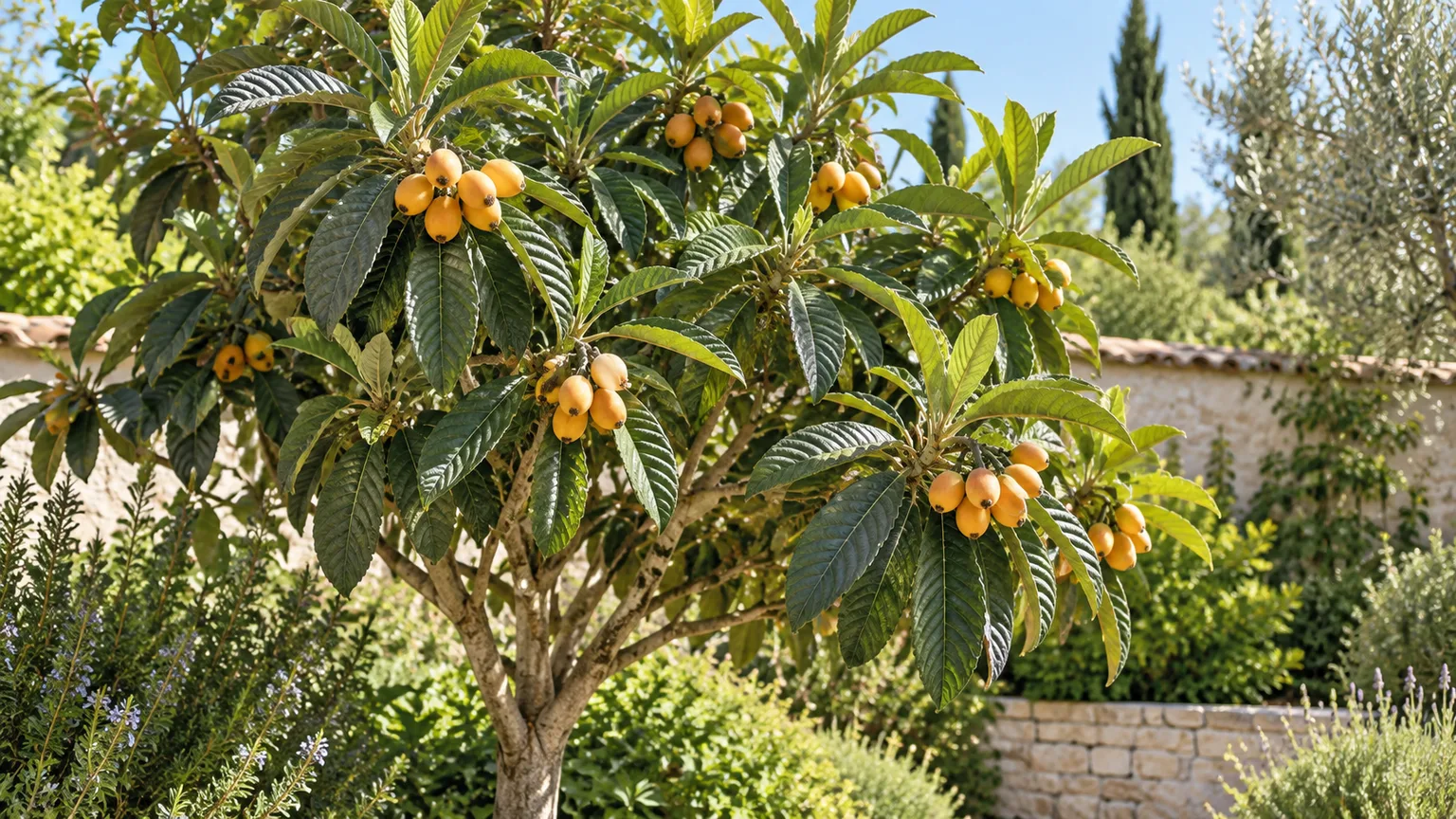
If you want a loquat for its glossy evergreen canopy, it is forgiving in a wider range of places than its reputation as a fruit tree suggests. If you want bowls of golden fruit, start by checking your winter temperatures: loquat flowers and young fruit develop when many gardens are still getting frost.
A loquat (Eriobotrya japonica) is an evergreen tree in the rose family, not a true medlar. It flowers in fall or winter, then carries clusters of fruit that ripen in spring, often about three months after bloom. That unusual calendar is the reason the tree can grow beautifully in a yard yet produce little or no harvest.
The care itself is straightforward: give it sun, avoid waterlogged soil, establish a deep root system, and prune after harvest rather than on a fixed winter schedule. For fruit, a named grafted cultivar and a warm, sheltered site usually matter more than extra fertilizer.
Decide whether your climate can ripen loquats
Loquats suit subtropical and warm-temperate gardens, including places with mild winters and warm springs. They can also be grown farther north as attractive foliage trees, especially in a pot that can be moved into shelter, but a tree that survives winter is not necessarily a tree that can crop reliably.
University of Florida IFAS Extension reports that established loquat trees may withstand temperatures around 8–10°F, while flowers and fruit can be killed below about 27°F. Those are useful reference points, not guarantees for every cultivar or exposure: a brief dip, a long freeze, wind, a tree’s acclimation, and whether the bloom is open all change the outcome. UF/IFAS’s loquat guide explains why the canopy may remain alive after the crop is lost.
Before planting for fruit, look up your typical minimum temperatures and late-winter frost dates, then ask a local extension office or experienced fruit nursery which cultivars crop in your area. If freezes commonly arrive during the tree’s fall-to-winter flowering or spring fruit development, treat fruit as a bonus. A south- or southeast-facing wall can soften exposure, but it cannot reliably protect an open bloom through a hard freeze.
In cool maritime gardens, Gardeners’ World recommends a warm, very sheltered, sunny wall as the best chance for fruit to ripen, while noting that a crop can still be difficult. Treat a wall as a microclimate aid, not a way to change your region’s frost risk.
Tree survival is not the same as fruit survival
USDA hardiness zones describe average annual extreme minimum temperatures; they do not tell you whether a fruit tree blooms during the coldest part of your local year. Loquats bloom when many other fruit trees are dormant, so the timing of a cold snap can matter as much as the winter minimum.
If your site is marginal, buy a young grafted tree and keep it container-grown for its first winters, or plant it where cold air drains away rather than pooling at the bottom of a slope. A sheltered position protects the tree from drying wind and may reduce frost exposure, but choose it for warmth and light together: a shaded wall-side corner may preserve flowers while limiting the energy available for fruit.
Choose a grafted cultivar for your region
Choose a named, grafted loquat if fruit quality and a predictable wait matter. A seedling can take six to eight years to flower and fruit, and its fruit may not resemble the large, sweet loquats that supplied the seed; vegetatively propagated trees often bear much sooner. UF/IFAS describes the difference between seedling and grafted trees.
Cultivar names are useful only when paired with local performance. ‘Champagne’ is known for sweet, aromatic fruit and is recommended in some warm growing regions, while ‘Gold Nugget’ is valued in some cooler coastal climates; University of California Master Gardeners note that cultivar success varies by region, and UF/IFAS trial data do not recommend every cultivar for Florida home landscapes. Ask the nursery where its stock fruited successfully and whether the tree is grafted, rather than choosing from a national list alone. The Sonoma County UC Master Gardener guide compares regional cultivar notes.
A single loquat can set fruit because many cultivars are self-compatible. However, cross-pollination from a different cultivar, seedling, or selection can improve fruit set, size, and total production, according to UF/IFAS. If space permits and fruit is a priority, plant a second loquat within the same yard and keep both accessible to bees and other pollinating insects; there is no need to crowd trees together or plant a second tree solely to keep the first alive.
Find a sunny site with room for the canopy
Give the tree full sun for the strongest growth and best fruiting, with partial shade acceptable where afternoon heat is severe. Loquat leaves are large and dense, so a mature tree can shade nearby beds; depending on cultivar and pruning, it may reach roughly 15–30 feet tall and nearly as wide. North Carolina State Extension’s plant profile describes its site preferences and mature habit.
Leave generous room from buildings, power lines, and other trees before planting. UF/IFAS recommends about 25–30 feet for an unpruned tree; a tree you maintain at a lower height can fit closer, but crowding reduces light and makes fruit picking and canopy care harder. If your yard cannot spare that footprint, plan from the beginning to maintain a compact, open canopy or use a container instead of hoping a mature tree will stay small on its own.
Good drainage is essential. Loquat tolerates a range of soil textures, including clay and sandy soil, but roots suffer where water stands after rain; if your site stays saturated, plant on a broad mound or choose another location. A wall or fence can provide a warm microclimate, but keep the crown open to sun and air and do not wedge the tree where its mature branches will press against a structure.
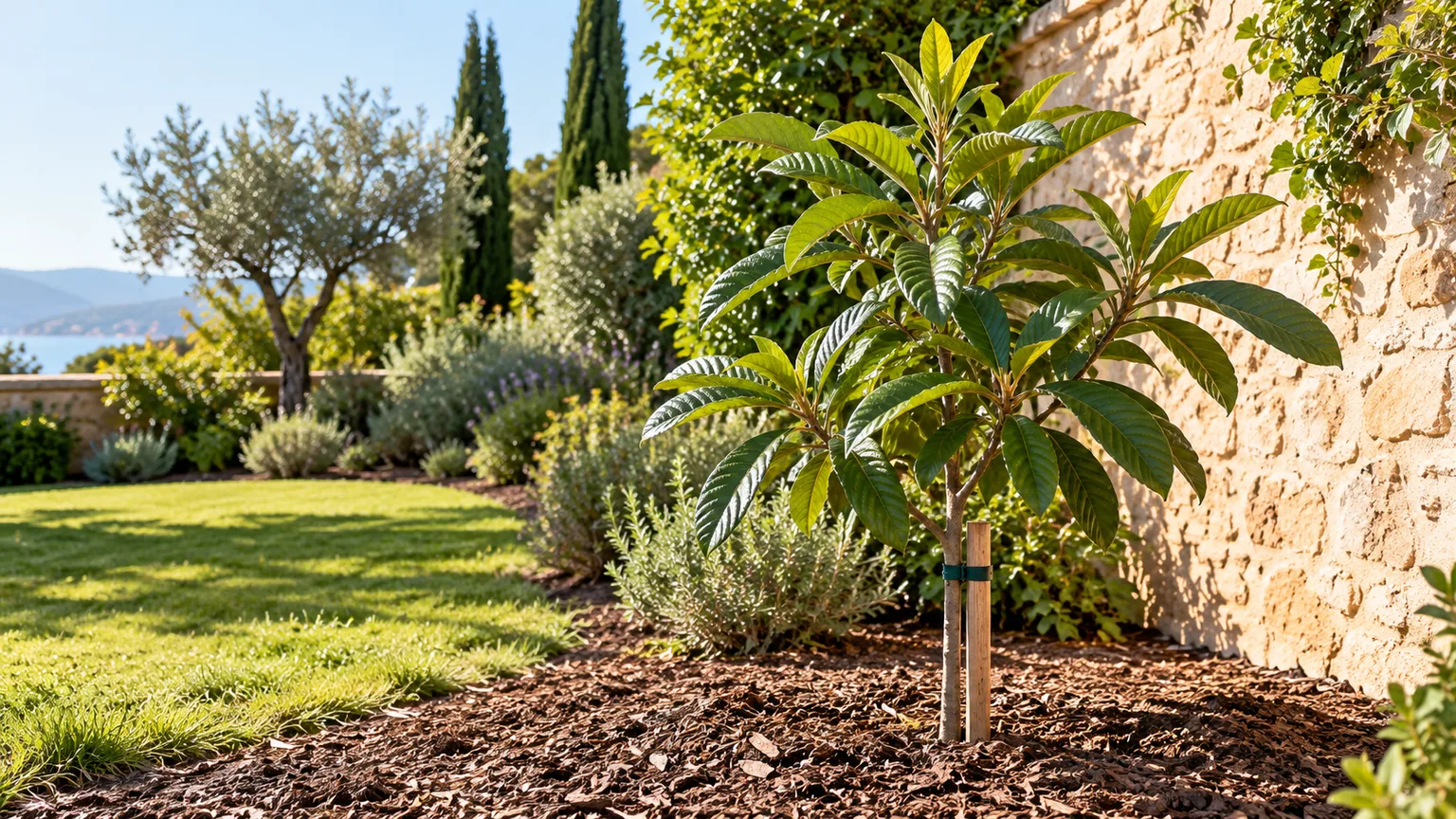
Plant at the correct depth and protect the root zone
Plant in early spring where winter freezes are common, once the soil can be worked and severe cold has passed. In mild-winter regions, fall planting can work if the tree has time to establish before a hot or dry season; avoid planting into flooded winter soil or during a heat wave.
Choose a healthy nursery tree with an intact trunk and roots that are not circling tightly inside the pot. Dig a hole wider than the root ball but no deeper, loosen the surrounding soil, and set the tree so the root flare and top of the nursery root ball sit at or just above the finished soil level. UF/IFAS advises setting the container’s soil surface flush with or slightly above surrounding grade; planting too deep can keep the trunk base wet and impede establishment.
Backfill with the excavated soil, firm it gently to remove large air pockets, and water slowly so the root ball and adjacent soil settle together. Do not put a concentrated layer of fertilizer, rich compost, or potting mix underneath the roots; a sharp change in texture can hold water differently from the native soil and does not replace correct planting depth. Spread a 2–4-inch mulch layer over the root zone, keeping it several inches away from the trunk, and protect the bark from mower and string-trimmer damage.
Stake only if wind or a loose root ball makes support necessary. A young tree should be able to move slightly, which helps it develop a sturdy trunk; use a broad, flexible tie and remove it once the roots hold the tree upright. Keep the area under the canopy weed-free without digging deeply, since damaging surface roots makes water and nutrient stress harder to diagnose.
Water for establishment, then respond to weather
During the first weeks after planting, check the root ball every few days and water before it dries out completely. UF/IFAS suggests watering every other day for roughly the first week, then once or twice weekly during the first couple of months, with later watering adjusted for rain, soil, and heat. The goal is evenly moist soil around new roots, not a permanently wet planting hole.
For the first few years, give a slow, deep soak during prolonged dry spells so water reaches beyond the grass roots near the surface. Once established, a loquat is relatively drought-tolerant, but it still benefits from water while fruit is sizing and during extended drought. UC IPM recommends moderate to regular water and notes that loquats grow well in containers or trained against a fence; in either setting, drainage is as important as supply. UC IPM’s loquat profile is a useful short reference.
Check soil moisture rather than following a rigid weekly timer. If the soil below the mulch is cool and damp, wait; if it is dry several inches down and the weather has been hot, water deeply. Yellowing leaves, slow growth, and a persistently wet root zone can signal overwatering as well as drought, so inspect soil before adding more water.
Fertilize for steady growth without excess nitrogen
Do not fertilize a loquat simply because it is not fruiting. First check whether it receives enough sun, whether winter bloom was damaged, whether it is a seedling or immature graft, and whether the soil drains; fertilizer cannot fix those conditions.
Use a soil test when possible, then choose a balanced fruit-tree fertilizer and follow its label for your region and the tree’s age. UF/IFAS gives Florida-specific recommendations that increase with tree age and divide applications across the year, but those pound-per-tree rates should not be copied blindly into a different soil or climate. Too much nitrogen can drive leafy growth at the expense of flowering and increase fire blight susceptibility; in warm climates, avoid late-season nitrogen that encourages tender growth as the tree enters its bloom period.
Spread granular fertilizer over the root zone rather than against the trunk, water it in as directed, and keep lawn fertilizer from being piled beneath the canopy. If leaves show a persistent nutrient-like symptom, get the soil or leaf diagnosis before adding iron or micronutrients; similar discoloration can come from poor drainage, damaged roots, or a pH issue.
Improve fruit set through pollination and bloom protection
Loquat flowers in terminal clusters during fall or winter, and bees and other insects move pollen among flowers. Many trees produce some fruit alone, but another cultivar nearby can improve set and fruit size; when selecting a partner, favor varieties that flower at overlapping times in your climate. UF/IFAS notes that cross-pollination by another cultivar, seedling, or selection improves fruit set, size, and production.
Cold snaps are the main obstacle in marginal climates. If a forecast freeze threatens a small container tree, move it into a bright, sheltered, frost-free place; for a larger tree, temporary horticultural fleece over the flowering branches may reduce radiative frost exposure, but it does not make the tree frost-proof and must not crush blossoms. Avoid plastic touching flowers, and remove coverings during the day so heat and moisture do not build up.
If a mature tree blooms heavily but sets little fruit, check for frost injury first, then ask whether pollinators can reach the flowers and whether the canopy is too shaded or crowded. A tree loaded with flowers is not proof that a full harvest is coming: cool wet weather can reduce insect activity, and a late frost can damage open bloom or the smallest fruit.
Prune after harvest and keep fruiting tips
Prune soon after the fruit has been harvested, before the next flowering cycle begins. Loquats flower and fruit near branch ends, so a routine winter haircut can remove the very tips that would carry the next crop; pruning timing should follow your local harvest, not a fixed calendar date.
For a young tree, shorten overly long shoots selectively to encourage lower branching and establish a sturdy framework. UF/IFAS recommends tipping shoots longer than about 2–3 feet during the first year or two, then training the tree to a modified central leader or open-center form. On a mature tree, remove dead, damaged, crossing, or inward-growing branches first, then thin a few crowded limbs so light can enter and fruit can be reached without a ladder.
If harvesting from the ground is your goal, maintain a manageable height gradually. UF/IFAS suggests keeping mature trees around 6–12 feet for easier care and harvest, but do not remove the top in one drastic cut: heavy heading can trigger vigorous upright shoots and sacrifice fruiting wood. Use clean, sharp pruners, cut just outside the branch collar, and avoid taking out more canopy than needed in a single season.
Thin and bag clusters before limbs or fruit suffer
A loquat can set more fruit than a branch can carry to a good size. Once the young fruit is visible and the risk of severe frost has eased, thin crowded clusters by removing the smallest or damaged fruit; leaving roughly 4–10 fruits per terminal cluster is a useful starting range, adjusted for variety and branch strength. UF/IFAS reports that thinning can increase fruit size substantially, though the result varies with the tree and crop load.
Thinning also reduces the weight on flexible tips and improves air and light around the remaining fruit. If branches are bending, support them temporarily and reduce the load before they split; a broken limb can take years to replace with fruit-bearing growth.
Where Caribbean fruit fly is a problem, UF/IFAS recommends bagging the entire fruiting panicle with a paper bag. Bag after fruit set and before damage begins, secure it without constricting the stem, and check periodically for trapped moisture or fruit rot. Ask your county extension office which pests are active locally rather than spraying a broad-spectrum insecticide around bloom, when pollinators are visiting.
Harvest by color, firmness, and taste
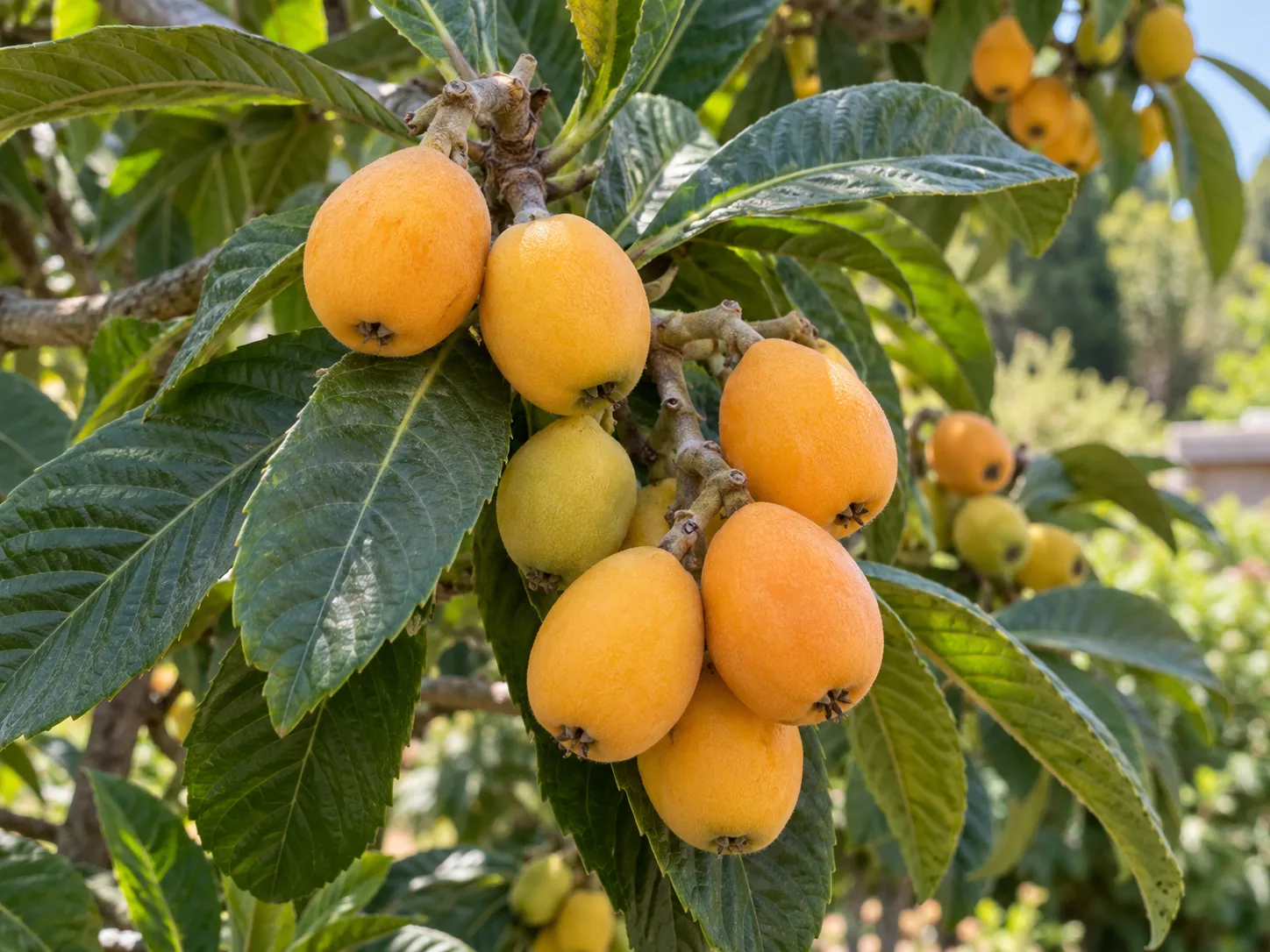
Loquats ripen on the tree and do not improve much after picking, so wait for nearly full color before harvesting. Depending on cultivar, ripe fruit may be yellow, pale orange, or deeper orange; it should give slightly when handled and taste sweet-tart rather than sharply green. Color is a better cue than a national calendar, because the season shifts with cultivar, elevation, winter weather, and local spring warmth.
Start by tasting one fruit from the sunlit outside of the canopy. If it is aromatic and pleasantly sweet with a little firmness, pick the cluster; if it is hard and acidic, leave it for several more days and test again. UC Master Gardeners report that fruit ripens about 90 days after bloom, often from late spring into summer in their region, while UF/IFAS lists a late-winter-to-spring Florida season. Both illustrate why your own tree’s bloom date is more useful than a date copied from another climate.
Clip clusters with clean shears or gently separate individual fruit without tearing the tender skin. Handle the crop carefully because ripe loquats bruise and soften quickly; refrigerate what you will eat soon, or preserve extra fruit as jam, jelly, sauce, or frozen pulp. Published storage advice varies: UF/IFAS says ripe fruit may keep for several weeks in a plastic bag in the refrigerator, while UC Master Gardeners advise eating or refrigerating it within a day or two. Because cultivar and ripeness affect keeping quality, chill the fruit promptly and treat it as perishable rather than relying on the longest estimate.
Grow a loquat tree in a container
A pot is the best option where winter bloom needs protection or the yard cannot fit a mature canopy. Choose a compact, grafted cultivar if available, and use a heavy container with several drainage holes; a loquat can become top-heavy, and a small nursery pot dries too quickly for a woody fruit tree.
Use a free-draining container mix and repot when roots crowd the pot or water runs through immediately without wetting the root ball. A larger pot gives roots more room and buffers moisture swings, but also becomes harder to move; choose the size based on whether you truly need to wheel the tree under cover during frost. Raise the container slightly on pot feet so drainage holes stay clear.
Set the tree outdoors in the sunniest sheltered spot you have during the growing season, and rotate it occasionally so one side does not receive all the light. Container soil warms and dries faster than garden soil, so check moisture more often in warm, windy weather and water until excess drains from the bottom. Empty any saucer after watering; standing water can suffocate roots.
A potted loquat may need light pruning to preserve its shape, but repeatedly cutting it back to force a tiny canopy can remove flowering tips and reduce the crop. Refresh or replace some potting mix when you repot, and follow a fertilizer label written for container fruit trees rather than adding extra feed to compensate for slow growth. Indoors, give it very bright light and a cool, airy winter shelter; it is not an easy permanent houseplant in a dim room.
Diagnose poor crops, pests, and fire blight
When a loquat fails to fruit, work through causes in this order: cold damage, tree age and cultivar, light, pollination, then care. Blossoms that turn brown after a freeze point to frost injury; a tree grown from seed may simply still be juvenile; a shaded canopy may flower weakly; and a single self-compatible tree may produce less than a cross-pollinated one. Avoid “fixing” all four problems with heavy fertilizer, which can create excessive growth without restoring the lost bloom.
A heavy bloom followed by tiny fruit can mean the tree set too many clusters, lacked pollination, or encountered cold during fruit development. Thin the crop after frost risk passes, keep moisture reasonably even while fruit is sizing, and protect clusters from fruit flies where they occur. Some trees also bear more heavily in alternate years, so record bloom and harvest by season before deciding that the tree is failing.
Fire blight is the disease to take seriously. It is bacterial and can cause blossoms and shoot tips to wilt, darken, and remain attached, sometimes with a curved “shepherd’s crook” at the branch tip; similar dieback can have other causes, so confirm the diagnosis with local extension before treatment. UF/IFAS identifies fire blight as a major loquat disease in Florida and notes that excessive nitrogen increases susceptibility; UC IPM also lists fire blight, leaf spot, and scab among disorders associated with loquats.
If fire blight is suspected, avoid pruning in wet weather, clean tools between cuts, and promptly remove affected branches according to local extension guidance. Do not apply a fungicide as if it were a cure for a bacterial disease; any pesticide treatment must be specifically labeled for the plant and problem in your location. Aphids, scale, mites, caterpillars, and beetles may also appear, but identify the pest and assess actual damage before treating a tree that is supporting bees and other beneficial insects.
Match the symptom to the likely cause
- Alive tree, no fruit: check winter flower injury, cultivar maturity, sun, and pollination before changing fertilizer.
- Yellow leaves with wet soil: check drainage and irrigation frequency; root stress can mimic nutrient deficiency.
- Blackened blossom clusters or shoot tips: photograph the damage and ask a local extension office about fire blight diagnosis.
- Small fruit or broken tips: thin crowded clusters earlier and keep the canopy low enough for safe picking.
- Scarring or larvae in fruit: bag panicles before damage and ask extension about the locally active fruit pest.
Grow from a grafted tree or from seed?
Save seed-growing for curiosity, a school project, or rootstock—not for a predictable backyard harvest. Clean a fresh seed and sow it promptly while it is viable, but expect a long juvenile period and a genetically different tree; it may take six to eight years or longer to flower, and fruit flavor, size, and yield are uncertain. UF/IFAS notes that seedlings do not come true to type.
For fruit, buy a grafted named cultivar from a reputable nursery. Grafting preserves the selected fruit traits and shortens the wait; UF/IFAS reports that vegetatively propagated trees may begin bearing one to two years after planting, although weather, age at sale, and establishment determine when a specific tree crops. If you already have a mature seedling with poor fruit, an experienced grafter may be able to top-work it with a named cultivar rather than removing the whole tree.
Eat the fruit and discard the seeds
The ripe flesh is edible; remove the large dark seeds before serving or cooking the fruit. Do not chew or grind the seeds: NC State Extension identifies the seed as the toxic part because it contains cyanogenic glycosides and notes that risk is associated with consuming multiple cracked kernels. The NC State Plant Toolbox profile provides the plant-specific safety detail.
Loquat is sometimes called Japanese medlar, but it is not the true medlar (Mespilus germanica). Loquat is evergreen and bears soft yellow-orange fruit in spring; true medlar is deciduous and its brown fruit is traditionally left to soften after picking. The distinction matters when buying a tree, because a plant sold as “medlar” may not be a loquat.
Conclusion
A loquat is a sensible fruit tree when your site has a warm, sunny growing season and winters mild enough to protect its fall and winter flowers. If your winters are colder, you can still grow it for evergreen foliage, but a container and frost shelter give you more control over the crop than an exposed in-ground tree.
Start with a grafted cultivar chosen for your region, plant it high enough to drain, water deeply while it establishes, and use restrained fertilizer. Let the fruit ripen fully, thin heavy clusters, and prune only after harvest; those few decisions protect the parts of the tree that create next season’s crop.



