6 Lawn Mowing Tips for a Healthier Lawn
Use these lawn mowing tips before the first cut: check growth and soil, clear debris, set the height, sharpen blades, and protect new grass.
The first mow of the season is not a race to see who can start earliest. Your lawn is ready when the grass is growing enough to recover, the soil can support the mower without smearing or rutting, and the machine is set up to remove only a manageable amount of leaf tissue. A sunny date on the calendar cannot tell you those three things.
Use this order before you pull the mower out: look at the grass, test the ground, clear the surface, check the mower, set the deck, and then cut only what the lawn can spare. That sequence handles the six mistakes that cause most first-mow trouble—cutting dormant grass, driving on soft soil, hitting debris, scalping, tearing the leaves, and trying to solve weak growth with unnecessary water or fertilizer.
The First-Mow Test: Growth Beats the Calendar
Spring mowing starts with a condition check, not a month. Cool-season turf such as tall fescue and Kentucky bluegrass can begin growing while nights still feel chilly, while warm-season turf such as bermudagrass, zoysia, and centipedegrass may remain brown until the soil is consistently warm. A lawn in one neighborhood can be ready while another across town is still dormant because of shade, drainage, exposure, or a different grass mix.
How to tell whether grass is actively growing
Look for new green blades emerging through the older canopy, upright growth after rain or irrigation, and enough height that the mower can remove a third without leaving the crown exposed. If the grass still looks uniformly brown and brittle, if you can see the soil between short blades, or if growth has barely changed for a week, wait. Mowing dormant turf removes stored leaf area without giving the plant enough active growth to replace it.
A useful field test is to mark a small patch with a stick or take a quick photo from the same angle every few days. If the blades are lengthening and the lawn has reached your chosen mowing height, it is progressing. If it has only changed color, the change may reflect moisture or temperature rather than enough growth to justify mowing.
There is no universal “first mow” date. NC State Extension’s lawn calendar gives a spring mowing range of 2.5 to 3.5 inches for a tall-fescue and Kentucky-bluegrass blend, but it also says location, terrain, soil, lawn age, and past care should change the schedule. UGA Extension likewise separates cool-season tall fescue from warm-season grasses and ties mowing to active growth, weather, irrigation, and fertility rather than a fixed weekly appointment.
When wet soil means wait
Wet leaves are annoying; saturated soil is a structural problem. If a morning dew has dried from the canopy but the ground still feels spongy under your shoes, postpone the mow. Mower wheels can compact soft soil, leave ruts, smear the surface, and press grass crowns sideways. On a slope, wet footing also increases the chance of slipping or losing control of the machine.
The best test is simple: walk across a representative section. If your shoes sink, leave obvious prints, or pick up mud, the lawn is not ready even if the blade tips look dry. BBC Gardeners’ World makes the same distinction: mow when both grass and soil are dry enough to avoid compaction, rutting, and clumping.
Do not try to “fix” a wet lawn by mowing in a different direction or by lowering the deck. Wait for drainage and airflow to do their work. If one area stays saturated for days, treat that as a drainage or soil-compaction clue rather than a mowing-schedule problem.
Clear the Surface Before Starting
The second job is cleanup. Winter leaves, small branches, stones, toys, hoses, pet items, and forgotten edging wire are not harmless obstacles; a mower can launch them, bend a blade, clog the deck, or damage a hidden irrigation component. Debris also shades the turf and blocks air movement, so clearing it helps the lawn recover even before the first cut.
What to remove and where to look
Walk the lawn slowly in both directions. Rake or pick up leaves, sticks, pinecones, gravel, and clumps of matted material. Check under shrubs and along fences, where wind deposits debris, and inspect the border where a mower wheel may ride over stones or mulch. Move chairs, sports equipment, hoses, and temporary plant supports before starting the engine.
Do not rely on the mower to “find” small objects for you. A stone that is invisible in tall grass can become a high-speed projectile when the blade strikes it. If you see a bare patch filled with gravel or construction debris, rake it out by hand and repair the area later rather than forcing the mower across it.
This cleanup step is also the right time to look for wildlife, exposed roots, and drainage grates. Mark anything that must remain in place. Keep children and pets indoors or well away from the mowing area, and wear eye and hearing protection according to the mower’s instructions. Clearing the surface protects the lawn, equipment, and people at the same time.
Set the Mower for the Lawn You Have
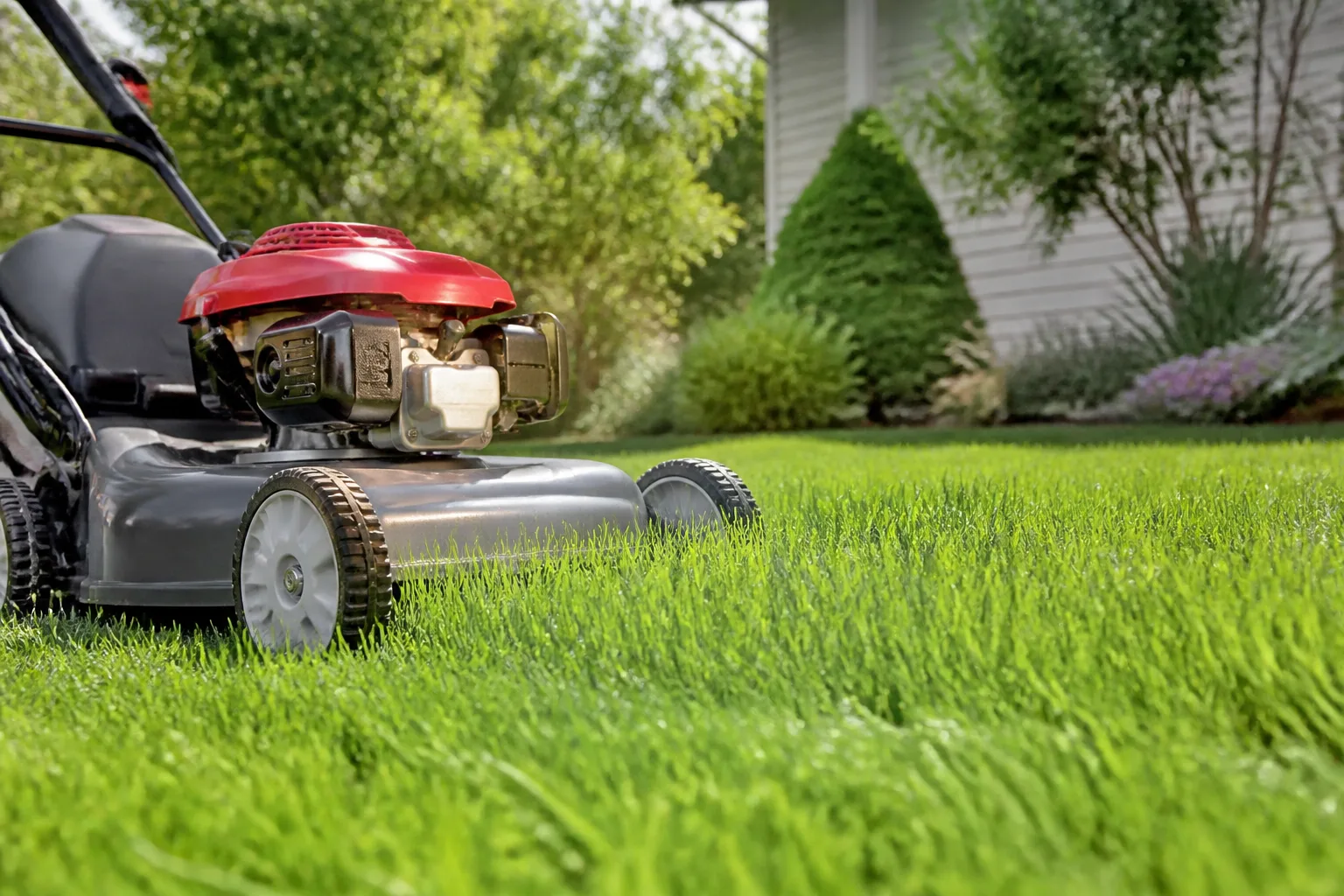
The height setting determines whether mowing is a light trim or a shock. A lawn can look shaggy and still be healthier at a taller setting than it would be after a close, one-time cut. Instead of copying a neighbor’s deck height, identify your grass type if you can, then use the one-third rule as the non-negotiable limit.
The one-third rule in plain math
Remove no more than one-third of the blade height in one mowing. If you want to maintain grass at 3 inches, mow when it reaches about 4.5 inches; removing 1.5 inches leaves 3 inches and stays within the rule. If the lawn reaches 6 inches, dropping the deck to 3 inches in one pass removes half the leaf, which is a scalping event even if the final height looks familiar.
This rule is a growth-management tool, not a demand to mow every seven days. Fast spring growth may require weekly mowing or more, while a dry summer lawn can go longer between cuts. Cornell’s lawn guidance recommends planning around growth rather than the calendar and explains that removing more than a third can stunt root growth. Gardening Know How makes the same practical point: mowing frequency should follow how quickly the grass is growing.
If the lawn has already grown too tall, raise the mower deck and take a partial cut. Leave the remaining height for another day or two, then lower the deck gradually once the lawn has recovered. That extra pass costs less than repairing a scalped, yellow, stressed lawn.
Starting height by grass type
Exact mowing heights depend on cultivar, climate, shade, traffic, and mower type, but these ranges are useful starting points:
| Turf situation | Practical starting range | Adjustment to consider |
|---|---|---|
| Tall fescue or Kentucky bluegrass | About 2.5–3.5 inches | Keep it taller in heat, drought, shade, or heavy traffic |
| Bermudagrass, zoysia, or centipedegrass | About 1–2 inches for many home lawns | Follow the variety’s recommendation; raise the setting in heat or stress |
| Shaded or frequently used lawn | Slightly taller than the sunny baseline | More leaf area helps capture light and recover from wear |
| First mow after winter | Use the upper end of the suitable range | Lower gradually after the lawn is growing consistently |
NC State Extension notes that proper height varies by turf and that higher mowing can support deeper roots, while UGA Extension gives a similar distinction between tall fescue and warm-season grasses. Do not force a warm-season mowing height onto a tall-fescue lawn, or use a short ornamental setting on a lawn that is trying to tolerate summer drought.
Give New Seed and Thin Patches Special Treatment
Newly seeded grass is not ready simply because it is visible. The seedlings need enough root anchoring to withstand the mower wheels and enough blade height to tolerate a cut. Follow the seed supplier’s instructions for the species and wait until the new grass has reached a mowable height—often around 3 to 4 inches for a home lawn—before making a light pass.
When you do mow a seeded area, use a sharp blade, avoid turning sharply on the new patch, and do not park or repeatedly drive over it. Keep the deck high enough to preserve leaf area. If the new area is still sparse, let it fill in before trying to make it look uniform with a close cut. Mowing short does not make seedlings thicken faster; it removes the photosynthetic surface they need to establish.
Thin areas deserve the same restraint. A patch caused by shade, compaction, drought, or traffic will not be repaired by cutting it shorter. Mow the healthy surrounding turf at its proper height, reduce traffic where possible, and diagnose the cause after the surface is dry. If one patch stays thin while the rest of the lawn grows, test soil, inspect drainage, and check whether tree roots or shade are limiting it.
Sharpen, Balance, and Safely Set the Blade
A mower can be mechanically sound and still produce poor grass if its blade is dull, nicked, or unbalanced. The goal is a clean slice, not a tearing action. Ragged ends lose moisture quickly and can turn straw-colored, which makes a healthy lawn look diseased even when the underlying problem is equipment.
Why dull blades leave disease-prone tips
A sharp blade cuts through the leaf cleanly. A dull blade can pull and shred the tissue, leaving ragged tips that dry out and discolor. Gardening Know How’s blade-maintenance guidance recommends checking sharpness and balance before the first seasonal cut and notes that vibration, uneven mowing, and patchy results can point to an unbalanced blade. BBC Gardeners’ World also recommends servicing the mower and replacing or sharpening chipped or blunt blades.
Do not sharpen a blade while it is attached to the mower. For a walk-behind mower, disconnect the spark-plug wire on a gas model or remove the battery on an electric model, follow the owner’s manual, and secure the blade before loosening it. If you do not have a vise, balancer, eye protection, and confidence with the procedure, take the blade to a mower shop. A five-minute shortcut is not worth an accidental start or a badly balanced cutting assembly.
A quick pre-mow mower check
Before the mower enters the lawn, inspect the deck, wheels, height-adjustment levers, discharge chute, and collection bag. Remove caked-on clippings only with the power source disconnected. Confirm that the deck is set evenly on both sides; an uneven setting creates stripes of scalped turf and untouched tall grass in the same pass.
Check the air filter, fuel, battery charge, and safety shutoff according to the manufacturer’s maintenance schedule. Never bypass a safety feature. If the machine rattles, vibrates unusually, smells of burning, or leaves a visibly uneven cut, stop and diagnose it before continuing. A healthy lawn is not a reason to keep using a mower that is behaving unsafely.
Water for Roots, Not for a Green-Up
Early spring watering can help newly seeded areas or turf that is genuinely dry, but water is not a required pre-mow ritual. Wetting the lawn immediately before mowing creates the very conditions you are trying to avoid: soft soil, heavy clippings, clogs, and rutting. Water after checking the root zone, not because the calendar says it is time.
When early-season watering helps
Water newly seeded grass often enough to keep the seedbed from drying, using gentle irrigation that does not wash seed downhill. Established turf usually benefits more from deep, less frequent watering than from shallow daily sprinkles. NC State Extension’s calendar describes watering to a soil depth of 4 to 6 inches for its cool-season lawn example and recommends adjusting for sandy or clay soil.
A screwdriver or soil probe can show whether moisture has moved below the surface. If the tool meets dry, hard soil just below the top inch, water slowly and let it soak rather than flooding the surface. If the soil is already damp several inches down, skip irrigation and let the lawn dry before mowing.
Do not use watering to force a dormant lawn to green up on a hot schedule. Some turf types can enter dormancy during drought and recover when conditions improve, while constant irrigation can encourage shallow roots and disease. Raise the mowing height during heat and drought, and follow local water restrictions where they apply.
Why soil testing comes before routine fertilizer
Soil testing is more useful than guessing from color alone. A yellow-green lawn may reflect low nitrogen, but it can also reflect shade, compaction, poor drainage, drought, disease, or a grass type that is naturally less dark. Applying fertilizer without knowing the soil can push top growth when the lawn really needs better drainage or less traffic.
The City of Lincoln’s lawn-care guidance warns that excessive spring fertilizer can weaken roots, promote disease, and contribute to runoff. UGA Extension also recommends testing soil before applying lime, fertilizer, or other amendments. Use a local Extension soil-testing program when available, follow the lab’s sampling instructions, and treat fertilizer as a targeted input rather than a reflex that belongs in the pre-mow checklist.
Mow in a Way That Leaves the Lawn Better
Once the lawn passes the readiness tests, mow the perimeter first, then make straight passes with a slight overlap. Change the direction periodically so wheel traffic does not keep pressing the same tracks into the soil. On slopes, follow the mower manufacturer’s safety guidance; with a walk-behind mower, side-to-side travel is generally safer than moving straight up and down, but the manual and local conditions take priority.
Clippings, pattern, and cleanup
Short, dry clippings can usually remain on the lawn. They decompose quickly and return nutrients; they are not the main cause of thatch. NC State Extension explains that clippings contribute little to thatch when mowing is frequent and the cut is small, while Cornell emphasizes that returning clippings can reduce the need for fertilizer.
Bag or collect clippings when mowing was delayed and the material is long, wet, or lying in thick mats. Heavy clumps can shade the grass underneath and create a slick surface. If you collect, compost the material where appropriate and follow local yard-waste rules. Never sweep clippings into a street, storm drain, or drainage ditch; return them to the lawn or dispose of them responsibly.
Finish by looking back over the lawn. If you see windrows, clumps, uncut strips, or a gray-brown ragged cast to the tips, stop and correct the mower before making another pass. The best “professional” finish is not a stripe pattern; it is an even cut with no scalped corners, smothering piles, or debris left behind.
What to Do If the Lawn Got Too Tall or Too Wet
Two common delays—rain and a missed mowing—often arrive together. Resist the urge to solve both problems in one aggressive pass. If the soil is wet, wait. If the grass is too tall, plan a staged cut after the ground is firm enough to support the mower.
For overgrown but dry grass, raise the deck, mow slowly, and remove no more than a third of the current leaf height. Empty the bag often if the clippings are long, because a packed chute can reduce airflow and leave clumps. Wait several days for the lawn to recover, then make a second cut at the intended height. Do not scalp down to the target setting just because the lawn looks untidy.
For a wet lawn, improve airflow by clearing nearby debris and leaves, but stay off the soil until it drains. If the same area repeatedly holds water, investigate grade, compacted soil, downspouts, irrigation leaks, or heavy shade. Mowing around the wet spot may preserve the lawn today, but it will not solve the condition that keeps making the spot vulnerable.
If you scalped the lawn, leave it alone long enough to regrow leaf tissue, keep traffic light, and avoid compensating with a heavy fertilizer dose. Water only when the root zone needs it. Brown tips after a dull-blade cut may improve with new growth; widespread yellowing, persistent wilt, or circular dead patches need a separate diagnosis rather than another mow.
Conclusion
The safest first mow is the one you delay until the lawn is actively growing and the soil is firm. Clear the surface, set the deck for the grass type, keep the one-third rule, give new seed extra time, sharpen and balance the blade, and water or fertilize only when the root zone and soil test justify it.
Think of mowing as a stress-management job, not a haircut. A clean, modest cut preserves leaf area, protects roots, reduces clumping, and makes the next decision easier. Once you read the lawn’s growth instead of obeying the calendar, a healthier cut usually takes less effort.